
Professional Gutter Installation in Central Florida
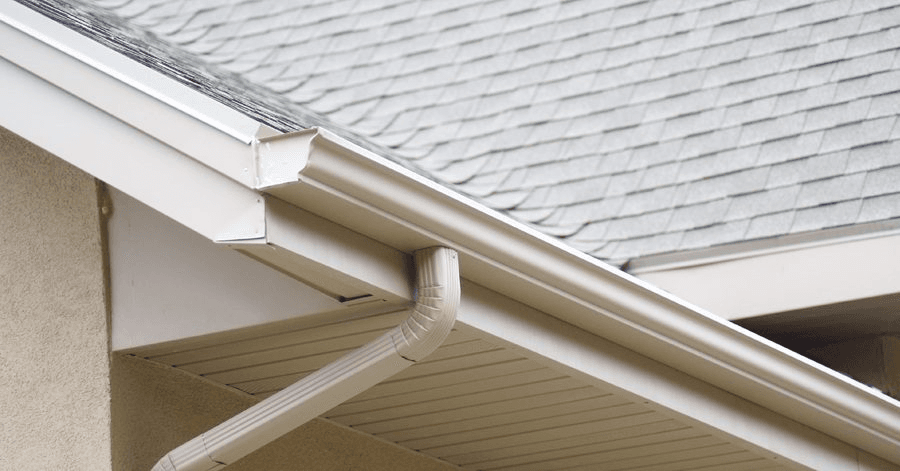
Gutter Materials: Which One Makes Sense for Central Florida
Choosing the right gutter material is one of the first decisions you will face, and the right answer depends on your budget, your home’s architectural style, and how long you want the system to last.
Seamless aluminum gutters are by far the most popular choice in Central Florida, and for good reason. Aluminum is lightweight, corrosion-resistant, and available in dozens of factory-applied colors that match virtually any home exterior. The seamless design is critical because it eliminates the joints every 10 feet that sectional gutters use, and those joints are where leaks start. Seamless gutters are formed on-site from a continuous coil of aluminum using a portable roll-forming machine, so each run is one unbroken piece that fits your home exactly. Aluminum gutters typically cost between $6 and $12 per linear foot installed, making them an excellent value for the performance they deliver.
Galvanized steel gutters offer greater rigidity than aluminum, which can be an advantage in areas prone to falling branches or heavy debris accumulation. However, galvanized steel is heavier, more difficult to work with during installation, and susceptible to rust over time, especially in Central Florida’s humid, salt-influenced air. Steel gutters require periodic painting or coating to maintain their corrosion resistance, adding to the lifetime maintenance cost. They fall in a similar price range to aluminum but typically at the higher end due to the added labor involved in installation.
Copper gutters sit at the premium end of the market, and they deliver a visual impact that no other material can match. The warm, burnished tone of new copper ages into a distinctive green patina over the years, creating a look that suits historic homes, Mediterranean-style architecture, and custom-built properties. Beyond aesthetics, copper is exceptionally durable. It resists corrosion without any coating or treatment, handles thermal expansion and contraction gracefully, and can last 50 years or more with minimal maintenance. The trade-off is cost. Copper gutters run between $25 and $40 per linear foot installed, which puts them in a different category entirely from aluminum or steel. For homeowners who view gutters as a long-term investment and an architectural feature rather than just a utility, copper makes a strong case.
Vinyl gutters are the least expensive option, typically running $3 to $5 per linear foot for materials alone. They are lightweight, easy to install, and will not corrode or rust. However, vinyl has significant drawbacks in Central Florida’s climate. Prolonged UV exposure causes vinyl to become brittle and crack over time. The extreme temperature swings from cool winter mornings to blistering summer afternoons cause vinyl to expand and contract more than other materials, loosening joints and creating gaps. Most professional gutter installers, including our team at Protech, recommend against vinyl gutters for Central Florida homes because the material simply does not hold up long enough to justify even the low initial cost.
Galvalume and zinc-coated steel options have gained some traction in the commercial market, offering better corrosion resistance than standard galvanized steel. These materials work well for larger commercial and multi-family buildings where the gutter system is integrated into a broader drainage plan, but they are less common in residential applications.
Sizing Gutters for Central Florida’s Rainfall Intensity
Getting the gutter size right is not optional in Central Florida. It is the difference between a system that works and one that overflows during every significant rain event.
Standard residential gutters come in 5-inch K-style profiles, which are the most common configuration you will see on single-family homes across the region. The K-style shape, named for its profile that resembles the letter K when viewed from the side, holds more water per linear foot than the older half-round style of the same nominal size. A 5-inch K-style gutter paired with standard 2×3 inch rectangular downspouts can handle the drainage needs of most residential roofs in Central Florida, provided the system is properly pitched and the downspouts are correctly spaced.
However, there are situations where 5-inch gutters are not enough. Homes with large roof areas, steep pitches, or multiple roof planes that converge into a single drainage point generate higher volumes of runoff than a standard 5-inch system can manage. In these cases, upgrading to 6-inch gutters with 3×4 inch downspouts provides significantly more capacity. A 6-inch K-style gutter holds roughly 40% more water than a 5-inch model, and the larger downspouts move that water to grade much faster.
For commercial properties, multi-family buildings, and large custom homes, 7-inch gutters or even box-style commercial gutters may be appropriate. These oversized systems handle the massive water volumes generated by expansive flat or low-slope roofs and are typically part of an engineered drainage plan that includes internal roof drains, scuppers, and overflow provisions.
The Florida Building Code includes requirements for roof drainage that go beyond just having gutters. The code requires that roof drainage systems be designed to handle the rainfall intensity specific to the geographic location of the building. Central Florida’s design rainfall intensity, measured in inches per hour, is significantly higher than most other regions of the country. This means that gutter systems designed for homes in the Midwest or Northeast are often undersized for Florida applications, even if the roof area is identical.
Downspout spacing is another critical factor. The general rule is one downspout for every 20 to 30 linear feet of gutter run, but in Central Florida, erring toward the shorter end of that range is advisable. More downspouts mean faster drainage, less standing water in the gutter troughs, and reduced stress on the gutter hangers during heavy rain events. Each downspout should discharge at least 4 to 6 feet away from the foundation, either through splash blocks, underground drain lines, or downspout extensions that direct water toward a swale or retention area.
Gutter Guards: Are They Worth the Investment in Florida
Gutter guards are one of the most frequently asked-about additions to any gutter installation, and the answer to whether they are worth it depends on your specific situation.
The primary purpose of a gutter guard is to prevent leaves, pine needles, twigs, and other debris from entering the gutter trough and causing clogs. In Central Florida, where live oaks drop leaves year-round, pine trees shed needles constantly, and palm fronds seem to find their way into every crevice, debris accumulation in gutters is a genuine maintenance challenge. A clogged gutter is worse than no gutter at all because it traps water against the fascia board and roof edge, promoting rot, mold, and insect infestation.
There are several types of gutter guards on the market, and they vary enormously in effectiveness and durability.
Micro-mesh guards use a fine stainless steel or aluminum mesh screen stretched over a frame that sits on top of the gutter. Water passes through the mesh while debris slides off the surface. These are generally the most effective guards for Central Florida conditions because the mesh is fine enough to block pine needles and small seeds that pass right through coarser screens. High-quality micro-mesh guards can last the life of the gutter system and require only occasional rinsing to remove pollen and dust buildup.
Reverse-curve or surface tension guards use a solid cover with a curved lip that allows water to follow the curve and drop into the gutter while debris falls off the edge. These work well for large leaves but struggle with pine needles and small debris, which can follow the water curve and enter the gutter. They also change the visual profile of the gutter, which some homeowners find objectionable.
Foam inserts sit inside the gutter trough and allow water to pass through while blocking debris. They are inexpensive and easy to install, but they degrade in UV exposure, collect fine sediment over time, and can become a breeding ground for mold and mosquitoes in Florida’s warm, humid climate. We do not recommend foam inserts for Central Florida installations.
Brush-style guards consist of bristle brushes that sit in the gutter trough. They catch large debris on the bristles while allowing water to flow through. Like foam inserts, they tend to collect fine debris and organic matter that is difficult to clean out without removing the brushes entirely.
For most Central Florida homeowners, a quality micro-mesh gutter guard system paired with annual professional inspection is the best combination of protection and maintenance efficiency. The guards prevent major clogs and reduce cleaning frequency from multiple times per year to once annually or less, while the inspection ensures that the system is performing as designed.
Common Gutter Problems in Central Florida and How to Avoid Them
Even a well-installed gutter system can develop problems over time, especially in Florida’s demanding climate. Understanding the most common issues helps you catch them early and address them before they cause damage to your home.
Improper pitch is the single most common cause of gutter failure. Gutters must be pitched, or sloped, toward the downspouts so that water flows to the discharge points rather than standing in the troughs. The standard pitch is approximately 1/4 inch of drop for every 10 feet of gutter run. Too little pitch and water sits in the gutters, breeding mosquitoes, accelerating corrosion, and adding weight that stresses the hangers. Too much pitch and the gutters look visibly crooked from the ground, which detracts from curb appeal and can cause water to overshoot the low end during heavy rain.
Hanger failure is common with older gutter installations that used spike-and-ferrule hangers driven through the gutter face and into the fascia board. Over time, the spikes loosen as the fascia board expands and contracts with temperature and moisture changes. The gutters begin to sag, pull away from the fascia, and eventually fall during a heavy rain event or windstorm. Modern installations use hidden hangers that clip inside the gutter trough and screw into the fascia with long stainless steel screws, providing a much more secure and durable attachment.
Fascia board rot is a problem that starts behind the gutters where you cannot see it. When gutters overflow or leak at seams, water runs down the back side of the gutter and saturates the fascia board. In Central Florida’s humidity, wet wood rots quickly, and once the fascia is compromised, the gutter hangers lose their anchor point. Replacing rotted fascia board before or during gutter installation is essential. At Protech, we inspect every linear foot of fascia during gutter replacement projects and address any rot before the new system goes up.
Inadequate downspout capacity creates backups in the gutter system even when the gutters themselves are properly sized. If downspouts are too small, too few, or clogged at the transition from gutter to downspout, water backs up in the trough and overflows at the point farthest from the downspout. This is particularly problematic at corners and valleys where multiple roof planes converge and water volume is highest.
Erosion at discharge points happens when downspouts dump water directly onto bare soil or landscaping without any means of dispersal. The concentrated water flow digs channels in the soil, washes away mulch and topsoil, and can undermine walkways, driveways, and patios. Splash blocks, river rock beds, or underground drain lines eliminate this problem by spreading or redirecting the discharge water.
Standing water and mosquito breeding are public health concerns in Florida. The state’s mosquito control programs specifically identify clogged gutters as a significant breeding habitat. A gutter trough holding just a few inches of stagnant water can produce hundreds of mosquitoes per week during warm months, contributing to the transmission of diseases like West Nile virus and Eastern Equine Encephalitis. Keeping gutters clear and properly draining is not just a maintenance issue. It is a health issue.
The Protech Gutter Installation Process
Our gutter installation process is designed to deliver a system that performs flawlessly in Central Florida’s challenging conditions from day one and for many years afterward.
The process begins with a thorough evaluation of your home’s drainage needs. We measure every roof line, identify all drainage points, calculate the square footage of each roof section that feeds into the gutter system, and assess the existing fascia condition. We note any areas where roof valleys concentrate water flow, where tree canopy creates heavy debris exposure, and where landscape grading or hardscape features influence how discharged water should be managed.
Based on this evaluation, we design a custom gutter system that specifies material, size, hanger type and spacing, downspout locations and sizes, and any accessories like gutter guards, rain chains, or underground drain connections. We present this design to you along with a detailed written estimate that breaks down every component so you know exactly what you are getting.
On installation day, our crew arrives with the portable roll-forming machine and the pre-selected coil stock in your chosen color. We form each gutter run on-site to the exact measurements taken during the evaluation. This on-site fabrication means there are no mid-run joints, no pre-cut sections that might not fit perfectly, and no compromise on length or configuration.
We remove the old gutter system if one exists, inspect and repair the fascia board as needed, and install the new gutters using hidden hangers spaced no more than 24 inches apart. In areas prone to high wind or heavy debris loads, we reduce hanger spacing to 18 inches for additional security. Downspouts are attached with stainless steel hardware and sealed at every joint with high-quality sealant rated for outdoor exposure.
After installation, we test the entire system by running water through it from a hose at each end to verify proper flow, check for any leaks at end caps or corners, and confirm that downspout discharge is directed away from the foundation as planned.
The entire process typically takes one day for a standard residential installation. Larger homes, multi-story properties, and commercial buildings may require additional time depending on the scope of the project.
Why Proper Gutter Installation Matters for Your Roof
Many homeowners do not realize that their gutter system directly affects the health and longevity of their roof. The connection between the two systems is more intimate than most people appreciate.
When gutters overflow due to clogs, insufficient capacity, or improper pitch, the water that should be flowing down the downspouts instead backs up and sits against the lower edge of the roof. In shingle roof systems, this standing water wicks upward through capillary action, getting underneath the shingles and saturating the underlayment and roof deck. Over time, this repeated moisture exposure rots the decking along the eave, compromises the starter strip adhesion, and creates an entry point for wind-driven rain during storms.
Ice damming is not a concern in Central Florida, but algae and mold growth absolutely is. Gutters that hold standing water or overflow regularly create a perpetually damp environment along the roof edge. This moisture promotes the growth of algae, moss, and mold on the shingles, which appears as dark streaks or green patches. Beyond the cosmetic issue, algae growth lifts shingle granules and accelerates aging. Properly functioning gutters that move water away from the roof edge efficiently help keep the lower courses of shingles dry and extend the life of the entire roof system.
Soffit damage is another consequence of gutter failure. The soffit panels that close the underside of the roof overhang are directly below the gutter line. When gutters leak or overflow, water runs along the soffit surface, penetrating through vent openings and seams. Wet soffits rot, sag, and provide entry points for pests ranging from insects to raccoons and squirrels. Replacing soffit panels is labor-intensive because it requires working overhead at the roof edge, so preventing the damage through proper gutter function is far more cost-effective than repairing the consequences.
Fascia protection is perhaps the most direct benefit of a well-installed gutter system. The fascia board is the vertical board that runs along the roof edge, and it serves as the mounting surface for the gutter. If the gutter system allows water to run behind it, the fascia deteriorates. Once the fascia is compromised, the gutter loses its structural support and begins to sag or pull away, creating a cascading failure where each problem makes the next one worse.
Cost Factors for Gutter Installation in Central Florida
Understanding the cost structure of a gutter installation helps you evaluate proposals and make informed decisions about your investment. Several factors influence the total project cost beyond just the per-linear-foot price of the gutter material itself.
Linear footage is the primary cost driver. Most residential homes in Central Florida require between 125 and 250 linear feet of gutter, depending on the home’s footprint and roof configuration. At the standard aluminum gutter price range of $6 to $15 per linear foot installed, a typical residential installation falls between $750 and $3,750. Homes on the higher end of the footage range with premium materials, gutter guards, and complex roof configurations can approach $5,000 to $8,000 for a complete system.
The number of corners, end caps, and transitions adds to the cost. Every inside corner, outside corner, and end cap requires custom fabrication and additional sealant work. Homes with complex rooflines that create many short gutter runs with frequent directional changes cost more per linear foot than homes with long, straight runs.
Fascia board condition affects cost because rotted or damaged fascia must be replaced before new gutters can be installed. Replacing fascia board adds $5 to $12 per linear foot depending on the board material, access difficulty, and the extent of the damage. On older Central Florida homes that have experienced years of gutter overflow or complete gutter absence, fascia replacement can represent a significant portion of the total project cost.
Story height and access difficulty influence labor cost. Single-story homes with clear ground access are the most efficient and least costly to work on. Two-story homes require longer ladders or scaffolding. Three-story buildings, steep terrain, and limited access areas all increase the labor component of the project. Properties with extensive landscaping, pools, or screened enclosures near the roofline may require additional care and equipment to avoid damage during installation.
Downspout extensions, underground drain connections, and splash block installations are typically quoted as separate line items because their complexity varies widely depending on the site conditions and the property owner’s preferences. A simple splash block at the base of a downspout might add $15 to $25 per location, while an underground drain line running 20 to 30 feet to a discharge point can add $300 to $600 per downspout.
Gutter guard installation adds $4 to $12 per linear foot depending on the guard type. Micro-mesh guards fall at the higher end of this range, while basic screen guards are at the lower end. When installed concurrently with new gutters, the combined labor is more efficient than adding guards to existing gutters later, so bundling the two services typically provides better overall value.
At Protech, we provide detailed written estimates that break down every component of the project so you can see exactly where your money is going. We do not bundle everything into a single number that obscures the individual cost drivers. This transparency allows you to make informed decisions about which options deliver the best value for your specific situation and budget.
Gutter Maintenance and Long-Term Care
Even the best gutter system requires some maintenance to continue performing at its peak. The good news is that a properly installed system with quality materials requires far less attention than a poor installation.
We recommend a professional gutter inspection at least once per year, ideally in the fall before the winter rain season begins. During this inspection, a technician checks for proper pitch and drainage, examines all hangers for tightness and condition, inspects seals at end caps and corners, verifies that downspouts are clear and properly connected, and looks for any signs of fascia deterioration behind the gutters.
Cleaning frequency depends heavily on your tree canopy exposure. Homes surrounded by live oaks and pines may need cleaning two to three times per year without gutter guards, while homes with minimal tree exposure may only need annual cleaning. Gutter guards reduce but do not eliminate the need for cleaning, as fine debris like pollen, roof granules, and small seeds can still accumulate on the guard surface and need to be rinsed away.
Downspout maintenance is often overlooked but critically important. Downspouts can become clogged at the elbow where they transition from horizontal to vertical, and this clog is invisible from the ground. A simple test is to run a hose into the top of the downspout and verify that water exits freely at the bottom. If flow is restricted, the clog needs to be cleared with a plumber’s snake or by disassembling the elbow section.
Underground drain lines connected to downspouts require their own maintenance. Roots from nearby trees and shrubs can penetrate the drain pipe joints, and sediment can accumulate in low spots. Annual flushing with a garden hose helps keep underground drains clear, but periodic professional cleaning with a drain snake may be needed for older systems.
Seasonal timing for gutter maintenance matters in Central Florida. The best time for a thorough cleaning and inspection is late October or November, after the fall leaf drop from deciduous trees has tapered off but before the winter wet season brings sustained rainfall. A second check in early June, just before the summer thunderstorm season kicks into high gear, ensures that the system is clear and ready to handle the intense daily rainfall that runs from June through September.
Get a Free Gutter System Evaluation
Whether your current gutters are failing, your home has never had gutters, or you are building new and want to start with the right system, Protech Roofing Services is ready to help.
We serve homeowners and businesses throughout Hernando, Citrus, Pasco, Sumter, Polk, Hillsborough, and Pinellas counties with professional gutter installation, replacement, and repair services. Every project starts with a thorough on-site evaluation, a custom system design, and a transparent written estimate. There are no hidden fees and no pressure to make a decision on the spot.
Our gutter installations are backed by workmanship warranties that give you confidence in the quality of both the materials and the labor. We use commercial-grade materials even on residential projects because we believe every home deserves a gutter system that performs reliably in Central Florida’s demanding climate.
Call Protech Roofing Services today at (352) 605-0696 to schedule your free gutter system evaluation. Let us show you how the right gutter system, properly designed and professionally installed, protects your roof, your foundation, and your investment for decades to come.
Related Roofing Services
- Roof Repair – Fix leaks, storm damage, and wear fast
- Total Roof Replacement – Complete tear-off and new roof installation
- Metal Roofing Systems – Standing seam and metal shingle, 40-70 year lifespan
- Commercial Roofing – TPO, EPDM, and flat roof systems for businesses
- Emergency Roof Repair – Same-day 24/7 response for leaks and storm damage
- Storm Damage Restoration – Insurance claims help and full storm recovery
- Insurance Claims Assistance – Documentation, adjuster meetings, and Xactimate estimates
- Roof Financing Options – Low monthly payments, flexible terms, quick approval
- Roofing in Spring Hill, FL – Seamless gutters protecting Spring Hill foundations
- Roofing in Brooksville, FL – Custom gutter systems for Brooksville homes
- Roofing in Hernando County – Gutter and downspout installs across the county
- Roofing in Pasco County – Drainage solutions for Hudson and Dade City homes
- My Safe Florida Home Program – Pair gutter work with program-funded roof upgrades for complete water management