
Roof Replacement in Citrus County, FL
Citrus County’s Two Roofing Worlds: Coastal and Inland
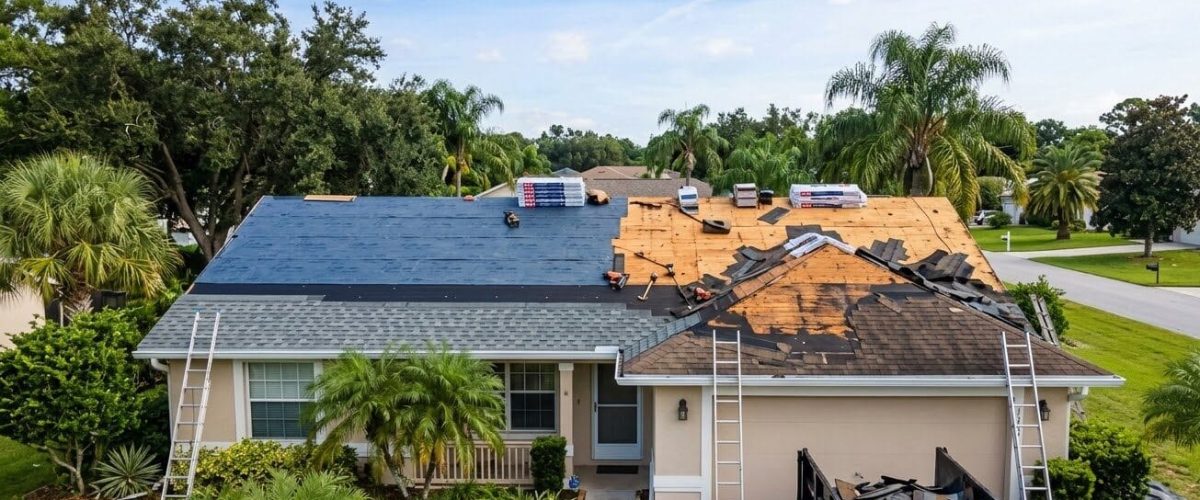
Roof replacement in Citrus County, FL covers a territory that spans two distinctly different roofing environments within the same county. The western half along the Gulf coast, including Crystal River, Homosassa, and the unincorporated coastal communities, falls in the 130 mph basic wind speed zone with salt-air exposure that demands premium materials and coastal-grade fasteners. The eastern half, including Inverness, Floral City, Hernando, and the rural interior, sits in the 120 mph zone with standard inland material requirements. One county, two completely different sets of roofing specifications.
Citrus County has a population of approximately 155,000 residents, making it one of the larger counties in our service area. The housing stock reflects decades of growth from the 1960s through the present, with retirement communities, waterfront developments, planned subdivisions, rural homesteads, and manufactured home parks all represented. Each property type comes with its own roofing considerations, and the material choices that make sense in Crystal River may not be the best fit for a ranch home in Inverness.
Understanding which wind zone your property falls in is the starting point for any Citrus County roof replacement. The wind zone determines the product approval requirements, the installation specifications, and ultimately the cost. We serve the entire county and know the boundary lines, building department procedures, and local conditions that affect every replacement project.
Citrus County Building Division: Permits, Fees, and Inspection Process
All roof replacements in Citrus County require a building permit through the Citrus County Building Division at 3600 W. Sovereign Path in Lecanto. You can reach them at (352) 527-5370. The county uses the Accela online permitting portal for all building permit applications, which has made the process faster and more straightforward over the past few years.
The standard re-roof permit application requires the contractor’s state license number, the Florida Product Approval number for the roofing material being installed, a re-roofing affidavit indicating tear-off or overlay, and a property site plan. Properties in the 130 mph coastal wind zone need additional documentation showing the material’s wind uplift rating and the high-wind nailing schedule specified by the manufacturer.
Permit fees are based on the project’s total value. For a typical residential roof replacement, expect $200 to $400 in permit fees. The county processes most re-roof permits within 1 to 3 business days, though the timeline can stretch during peak season after major storm events when hundreds of applications come in simultaneously.
Two inspections are required for every re-roof in Citrus County: the dry-in inspection and the final inspection. The dry-in inspection happens after the existing roof is removed, any decking repairs are complete, and the new underlayment is installed. The inspector checks the underlayment type and installation, drip edge size and attachment, valley treatments, and deck fastener patterns. The final inspection verifies the finished roof against the approved permit, including nailing patterns, ridge vent placement, and flashing details. Scheduling inspections promptly matters because you can’t install the finish material until the dry-in passes.
Material Recommendations by Citrus County Region
The right roofing material for your Citrus County home depends heavily on where in the county you live. Coastal properties from Crystal River south through Homosassa and the unincorporated Gulf communities face salt-air corrosion that limits material choices. Inland properties around Inverness, Floral City, and Beverly Hills have more flexibility because salt exposure is not a factor.
For coastal Citrus County (Crystal River, Homosassa, Ozello, Chassahowitzka), we recommend aluminum standing seam metal roofing for maximum longevity. Aluminum resists salt corrosion entirely, handles the 130 mph wind zone, and lasts 50 years with a PVDF finish. Stainless steel fasteners are required for any material installed in the coastal zone because standard galvanized nails corrode within seven to ten years at this distance from the Gulf. Architectural shingles work on coastal properties but expect 15 to 20 years of life instead of the 25 to 30 years they’d last inland.
For inland Citrus County (Inverness, Floral City, Hernando, Beverly Hills, Citrus Springs), architectural shingles offer the best value. Products like GAF Timberline HDZ and Owens Corning Duration carry the 120 mph wind rating, come in a wide color selection, and cost less than metal or tile. Standard galvanized fasteners perform well in the inland environment where salt is not a concern. Shingles on inland Citrus County homes reliably last 22 to 28 years with proper ventilation and maintenance.
Metal roofing is growing across the entire county, coastal and inland. In the inland areas, through-fastened metal panels (R-panel, PBR-panel) provide a durable, debris-resistant option at a lower price point than standing seam. Many Citrus Springs and Beverly Hills homes sit among pine plantations where needle accumulation on shingle roofs is a constant maintenance concern. Metal solves that problem permanently. Through-fastened panels run $10,000 to $16,000 for a typical 1,600-square-foot home, which is competitive with premium shingle products.
Hurricane Damage History Across Citrus County
Citrus County’s storm history has driven replacement decisions for thousands of homeowners. Hurricane Idalia in August 2023 was the most recent major event. The storm made landfall in the Big Bend region and pushed significant storm surge into the Nature Coast. Crystal River and Homosassa experienced tidal flooding that reached several feet above normal in low-lying areas. The surge deposited salt and debris on every structure within the flood zone, corroding roof fasteners and degrading sealants even on homes whose roofs survived the wind intact.
Hurricane Hermine in September 2016 made landfall north of Citrus County but delivered damaging winds and flooding to the coastal communities. The Homosassa River area took significant surge, and the sustained rain bands caused water intrusion through aging roofs county-wide. Before Hermine, the 2004 hurricane season brought back-to-back impacts from Charley and Frances within three weeks, each delivering wind and rain that tested every roof in the county.
The roofs that were replaced or repaired after the 2004 hurricanes are now over 20 years old. Many used the best available materials at the time, but two decades of Florida weather has brought them to the end of their useful life. And the emergency repairs done during the 2004 supply shortage sometimes used whatever was available rather than what was optimal. If your roof was replaced after the 2004 storms, it’s time to have it professionally assessed.
Inland Citrus County doesn’t escape storm damage just because the Gulf is further away. Tornado warnings are common during tropical events, and the straight-line winds from severe thunderstorms regularly exceed 60 mph throughout the county. Inverness, which sits at 44 feet above sea level, avoids surge but not wind. The Tsala Apopka Chain of Lakes acts as a funnel for storm winds that accelerate across the open water and hit waterfront homes with concentrated force.
Replacement Costs Across Citrus County’s Different Markets
Citrus County replacement costs vary based on location, home size, material selection, and the existing roof condition. Coastal properties cost 10 to 20 percent more per square foot than identical inland properties because of the premium material and fastener requirements in the 130 mph zone.
For a typical 1,800-square-foot inland Citrus County home (Inverness, Floral City, Beverly Hills), expect these ranges: architectural shingles at $11,000 to $16,000, through-fastened metal panels at $10,000 to $16,000, standing seam metal at $16,000 to $24,000, and concrete tile at $20,000 to $30,000. All prices include complete tear-off, decking repairs, code-compliant underlayment, flashings, ventilation, and permit fees.
For the same 1,800-square-foot home in coastal Citrus County (Crystal River, Homosassa), add 15 to 20 percent: architectural shingles with stainless fasteners at $13,000 to $19,000, aluminum standing seam at $19,000 to $28,000, and concrete tile at $24,000 to $35,000. The premium covers the coastal-grade fasteners, enhanced underlayment, and heavier-gauge flashing that the 130 mph zone requires.
Manufactured home replacements across the county range from $5,000 to $14,000 depending on home size, current roof configuration, and material choice. Mobile and manufactured homes are common throughout Citrus County, particularly in the retirement communities of Beverly Hills, Citrus Springs, and the rural areas east of US 41. We specialize in manufactured home roofing and understand the HUD Code truss limitations that dictate material choices for these structures.
Major Communities and Neighborhoods Across Citrus County
Crystal River sits on the King’s Bay waterfront where the Crystal River and its springs draw visitors and residents alike. Homes here range from 1960s waterfront cottages to modern canal-front construction. The waterfront properties face the highest wind and salt exposure in the county, and metal roofing dominates the newer construction. Older Crystal River homes with shingle roofs are increasingly converting to metal during replacement because the long-term economics favor it in this environment.
Inverness, the county seat, sits around the Tsala Apopka Chain of Lakes in the county’s interior. The downtown historic district contains homes from the early 1900s through the 1950s, many with complex roof lines that require careful craftsmanship during replacement. The newer subdivisions around the Inverness Golf and Country Club and along US 41 feature standard residential construction from the 1980s through 2010s with straightforward replacement profiles.
Homosassa and Homosassa Springs straddle the Homosassa River in the western part of the county. The Old Homosassa waterfront area has some of the county’s most distinctive homes, many built on stilts to handle flooding. These raised structures present unique access challenges during roof replacement that require specialized equipment and rigging. The Sugarmill Woods community southeast of Homosassa is one of the largest planned communities in Citrus County, with thousands of homes in three neighborhoods: Oak Village, Cypress Village, and Southern Woods.
Beverly Hills and Citrus Springs are large planned communities in the county’s interior, built primarily during the 1970s and 1980s as retirement destinations. The housing stock is uniform in age, which means thousands of roofs reaching replacement age within the same decade. Both communities have deed restrictions that require prior approval for certain exterior modifications, including material type and color changes during roof replacement. We help homeowners in these communities navigate the approval process before pulling permits.
Floral City sits in the eastern part of the county along the Withlacoochee State Trail. This small town has a historic downtown with structures dating to the late 1800s and surrounding residential areas from the mid-twentieth century forward. The heavy tree canopy along the Tsala Apopka Chain of Lakes creates conditions similar to what we see in Hernando County’s forested communities: debris accumulation, shade-held moisture, and aggressive algae growth on shingle roofs.
Insurance Landscape for Citrus County Roof Replacements
Florida’s insurance crisis hits Citrus County homeowners from two directions. Coastal properties face the highest premiums in the county because of wind and flood exposure. Inland properties face rising premiums driven by statewide carrier exits and reinsurance cost increases. In both cases, roof condition is the single most controllable factor that determines what you pay for coverage.
The 4-point inspection required for homes over 20 years old evaluates your roof’s remaining useful life. An inspector who finds less than five years remaining will trigger a non-renewal from most carriers. In a county where thousands of homes have roofs from the 2000s and earlier, this inspection is the tipping point that forces the replacement decision for many homeowners who would otherwise keep patching.
A new roof changes the insurance equation significantly. Coastal Citrus County homeowners report premium reductions of $1,500 to $3,500 per year after replacement. Inland homeowners see savings of $400 to $1,200 per year. The wind mitigation inspection after installation documents every storm-resistant feature on the new roof, and each qualifying feature earns a discount that compounds the savings.
For homeowners who’ve been dropped by their carrier and are paying Citizens Property Insurance rates, a new roof can reopen the private insurance market. Carriers that won’t write a policy on a home with a 20-year-old roof will often quote competitive rates on the same home after a new roof is installed. The savings over the remaining life of the roof can offset a significant portion of the replacement cost, making the investment a financial decision as much as a maintenance decision.
Related Roofing Services in Citrus County, FL
- Roof Repair in Citrus County, FL – Targeted roof repairs across Citrus County
- Citrus County, FL Roofing Services – All roofing services in Citrus County
- Roof Replacement Services – Complete roof replacement from Protech Roofing
- Roof Repair Services – Professional roof repair services
- My Safe Florida Home Program – Your replacement may qualify for up to $10,000 in state hurricane mitigation grants