
Roof Repair Spring Hill FL
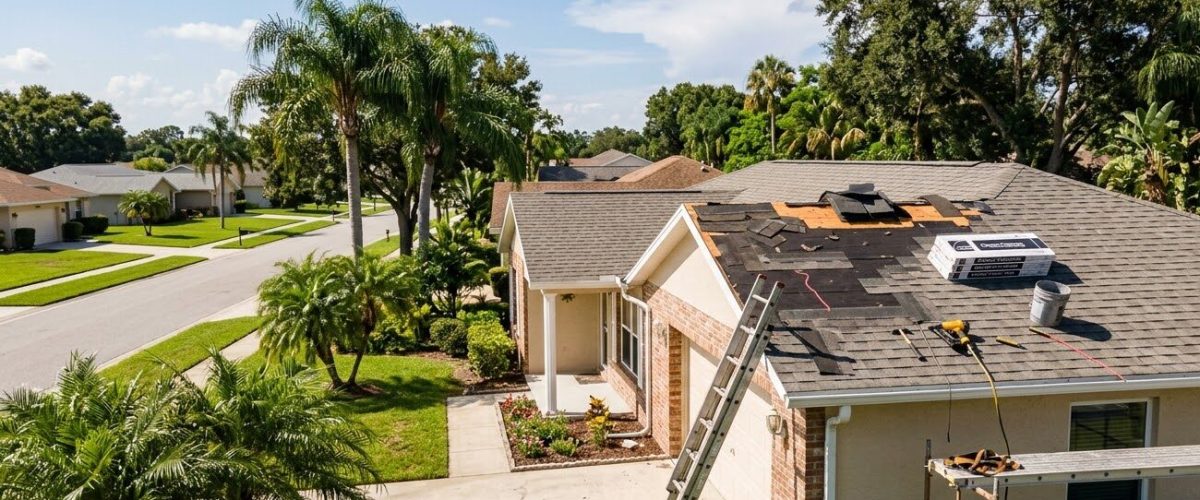
Spring Hill’s Roofing Repair Demand Keeps Growing
Roof repair in Spring Hill, FL serves the largest community in Hernando County by a wide margin. With a 2024 population of nearly 121,000 residents, Spring Hill is home to more people than many incorporated Florida cities, yet it remains a census-designated place under Hernando County jurisdiction. The community stretches across a sprawling footprint of residential subdivisions, planned communities, and commercial corridors that have been developing steadily since the 1970s. That five-decade building timeline means Spring Hill contains roofs of every age, material type, and condition level, from brand new construction to 50-year-old original installations that have survived dozens of hurricane seasons.
The growth pattern here differs from places like The Villages, where most homes went up during a compressed construction window. Spring Hill’s housing stock was built in waves. Older sections near US 19 and Cortez Boulevard date to the 1970s and early 1980s. The Timber Pines community was developed between 1982 and 1998. Heritage Pines, Seven Hills, Sterling Hill, and Glen Lakes followed in the 1990s and 2000s. Newer construction continues pushing east toward the Suncoast Parkway. Each generation of homes used different roofing materials, fastening methods, and building code standards, which creates a wide variety of repair needs across the community.
Spring Hill sits in the 120 mph basic wind speed zone under the Florida Building Code. All roofing materials and installation methods must carry Florida Product Approval for this wind rating. That’s a step above the 115 mph inland zones in neighboring Sumter and Polk counties but below the 130 mph coastal zones on the Gulf barrier islands. Protech Roofing has been repairing roofs across Spring Hill’s diverse housing stock for years, and we know the specific challenges each neighborhood and era of construction presents.
Timber Pines and the 55+ Community Roof Aging Problem
Timber Pines is one of Spring Hill’s most established communities, a 1,400-acre 55+ development with 3,452 homes spread across 57 neighborhoods. The community was built between 1982 and 1998, which means the oldest homes carry roofs that are over 40 years old if they’re still on the original installation. Most homes in Timber Pines have been re-roofed at least once, but the re-roofing timelines vary widely. Some owners replaced roofs proactively in the 2000s. Others waited until leaks forced the issue. And a fair number are sitting on roofs installed 18 to 25 years ago that are now entering their failure window.
Timber Pines features 70 unique floor plans ranging from one-bedroom villas to three-bedroom single family homes. The roof configurations vary accordingly, from simple gable designs on the smaller villas to complex hip-and-valley layouts on the larger homes. The complex roof lines create more intersection points where flashings, valleys, and transitions between roof planes concentrate water flow and wind stress. These are the areas that fail first on aging roofs.
The community association at Timber Pines maintains standards for exterior appearance, and roofing repairs must maintain the aesthetic consistency of each neighborhood. We work with Timber Pines homeowners to match replacement materials to existing installations so repairs blend with the surrounding streetscape. The community’s low HOA fees relative to its amenities mean many residents have chosen Timber Pines specifically for affordability in retirement, and we provide repair solutions that fit fixed-income budgets while meeting all code and community requirements.
Storm History That Shaped Spring Hill’s Repair Needs
Hurricane Idalia in August 2023 brought sustained winds of 115 mph as it crossed through the Big Bend region, and Hernando County caught the southern edge of the storm’s wind field. Spring Hill experienced widespread tree damage, power outages, and roof damage across multiple neighborhoods. Hernando County was declared a disaster area and qualified for FEMA public assistance for debris management and emergency protective measures. The county organized debris removal operations that continued for months after the storm.
Hurricane Helene arrived in September 2024 with storm surge that ran two to three feet higher than Idalia’s surge levels along the Gulf coast. While Spring Hill sits inland of the immediate coastal surge zone, the storm’s wind field caused additional roof damage throughout the community. Residents reported water rising to five feet in low-lying areas within 20 minutes as the storm pushed water inland through the county’s drainage systems. Then Hurricane Milton hit just two weeks later in October 2024, triggering mandatory evacuation orders for parts of Hernando County and causing further wind and rain damage to homes still patched from Helene.
Three major storms in 14 months exposed every weakness in Spring Hill’s aging roof stock. Homes that had minor granule loss before Idalia developed lifted shingles. Lifted shingles that survived Helene became missing shingles during Milton. And the cumulative water intrusion from repeated storm events caused attic moisture damage, mold growth, and structural wood deterioration that made the roof problems much worse than the visible surface damage suggested.
Beyond hurricanes, Spring Hill’s afternoon thunderstorm season runs from May through October with near-daily storms that produce gusty winds, heavy rain, and occasional hail. The thick oak canopy across older Spring Hill neighborhoods means fallen branches and limbs striking roofs during these storms are a regular occurrence. So many of the repair calls we handle aren’t from hurricanes at all. They’re from the routine summer weather that chips away at roofing systems year after year.
Hernando County Permits for Spring Hill Roof Repairs
Since Spring Hill is unincorporated Hernando County, all building permits go through the Hernando County Building Division at 789 Providence Boulevard in Brooksville. The office can be reached at (352) 754-4050 during business hours Monday through Friday, 8:00 AM to 4:00 PM with lobby hours until 3:30 PM. Online permit applications are also available through the county’s web portal.
The permit threshold for repairs follows the standard Florida Building Code guidelines. Minor maintenance work like replacing a few storm-damaged shingles, resealing flashings, or swapping out deteriorated pipe boots doesn’t require a permit. Repairs that involve decking replacement, structural modifications, or re-covering a significant portion of the roof area do require permits and inspections. The 25 percent threshold applies here: repairs covering less than 25 percent of the roof on homes built to 2007 or newer code only need the repaired section to meet current standards.
All materials used on Spring Hill roofs must carry Florida Product Approval for the 120 mph wind speed zone. This is a common source of inspection failures when homeowners hire unlicensed contractors who use materials rated for lower wind zones. The product approval number is printed on every package of shingles, rolls of underlayment, and boxes of flashing material. Our crews verify product approvals on every material before it goes on the roof.
Permit fees in Hernando County scale with project value and generally run $75 to $250 for repair-level work. We handle all permit applications, inspection scheduling, and compliance documentation for Spring Hill homeowners so you don’t have to make trips to the Brooksville office.
Seven Hills, Sterling Hill, and Glen Lakes Repair Considerations
Seven Hills is one of Spring Hill’s most sought-after neighborhoods, featuring a mix of single-family homes built primarily in the 2000s. The relatively young housing stock means most Seven Hills roofs are in the 15 to 22 year age range, right where the first generation of repairs typically becomes necessary. Pipe boot failures, ridge cap deterioration, and localized shingle damage from summer storms are the most common repair needs in this community.
Sterling Hill operates under a Community Development District with a separate homeowners association that enforces deed restrictions and architectural standards. The HOA’s Design Review Board updated their roofing guidelines to allow both shingle and metal roofing with approval and a specific list of requirements when submitting an application. If you’re considering a material change during a repair, contact the Sterling Hill HOA first to understand the current submission requirements. We’ve worked with the Sterling Hill review process and can guide you through the documentation they need.
Glen Lakes sits just north of Cortez Boulevard near Weeki Wachee Springs, featuring approximately 600 homes around a semi-private golf club. The community’s proximity to the Weeki Wachee River system means the local water table sits higher than in the eastern Spring Hill neighborhoods. Roof leaks in Glen Lakes properties can create moisture problems faster because the humid microclimate around the golf course and waterways keeps relative humidity higher than normal even inside the attic space. Catching and repairing leaks quickly in Glen Lakes is more critical than in drier, higher-elevation neighborhoods.
Heritage Pines offers a blend of single-family homes with maintained lawns and established landscaping throughout the community. The mature tree canopy in Heritage Pines means overhanging branches are a constant roof maintenance factor. Falling limbs during storms cause direct impact damage, but the ongoing problem is the debris accumulation in valleys and behind roof penetrations. Leaves, pine needles, and small branches trap moisture against the roof surface, accelerating shingle deterioration and creating conditions for algae and moss growth that compromise the roofing material over time.
Repair Pricing for Spring Hill’s Diverse Housing Stock
The average roof repair in Spring Hill costs around $400 for minor work, but the range spans from $150 for a single pipe boot replacement to $3,000 or more for multi-area storm damage repairs. The wide range reflects the diversity of Spring Hill’s housing stock. A simple gable-roof ranch home from the 1970s with a straightforward shingle system presents very different repair economics than a 2010-era home with a complex hip roof, multiple dormers, and premium architectural shingles.
Standard shingle repairs for wind damage or age-related deterioration run $250 to $850 in Spring Hill. Pipe boot replacements cost $150 to $400 per penetration. Valley flashing repair ranges from $300 to $900. Ridge cap replacement costs $300 to $800 depending on ridge length. Soffit and fascia repairs caused by wind or water damage run $200 to $600 per section. Emergency tarping after storms costs $250 to $700.
Spring Hill’s older homes near US 19 sometimes present additional repair challenges because they were built under earlier code standards with different fastening patterns and material requirements. Bringing a repair section up to current code on a 1975-era home may involve upgrading the nail spacing on replaced decking, adding modern drip edge that wasn’t originally required, and installing current-code underlayment over the repaired area. These code compliance upgrades add modest cost to the repair but bring that section of the roof up to modern performance standards.
We provide written estimates for every Spring Hill repair project with a complete breakdown of materials, labor, and any permit fees. There are no hidden charges and no pressure to approve work beyond what the roof actually needs. Our goal is to extend the life of your existing roof as long as practically possible, and to give you honest guidance about when repairs are no longer the right investment and replacement becomes the better financial decision.
Why Spring Hill’s Oak Canopy Creates Ongoing Roof Maintenance Needs
The mature live oak and laurel oak canopy across Spring Hill’s older neighborhoods is one of the community’s most attractive features. But those trees create ongoing roof maintenance challenges that inland communities with younger, less developed landscapes don’t face. Oak branches that grow over rooflines drop leaves, acorns, and small twigs continuously. During storms, larger limbs break off and strike the roof surface with enough force to crack shingles, dent metal flashings, and puncture underlayment.
The debris that accumulates in roof valleys and behind dormers, chimneys, and HVAC equipment is actually more damaging long-term than the occasional impact hit. Wet leaf debris holds moisture against the shingle surface for days after a rain event. That prolonged contact breaks down the protective granule coating faster than normal weather exposure. And the moisture creates ideal conditions for the blue-green algae (Gloeocapsa magma) that causes the dark streak staining visible on many Spring Hill roofs.
Regular debris clearing from valleys, gutters, and roof penetrations is the most cost-effective maintenance a Spring Hill homeowner can perform. And when we do repair work on homes surrounded by mature oaks, we often recommend zinc or copper ridge strips that release algae-inhibiting ions during rain events. The strips last 10 to 15 years and significantly reduce the algae staining that makes roofs look old before their time. It’s a $200 to $400 upgrade during a repair visit that protects the roof’s appearance and extends the functional life of the shingle surface.
Related Roofing Services in Spring Hill, FL
- Emergency Roof Repair in Spring Hill, FL – 24/7 emergency roof repair services
- Roof Replacement in Spring Hill, FL – Complete roof replacement with quality materials
- Metal Roofing in Spring Hill, FL – Durable metal roofing installation
- Roof Inspection in Spring Hill, FL – Professional roof inspections
- Spring Hill, FL Roofing Services – All roofing services in Spring Hill
- Roof Repair in Hernando County, FL – Countywide roofing services
- Total Roof Replacement – Complete roof replacement services