
Roof Replacement Spring Hill FL
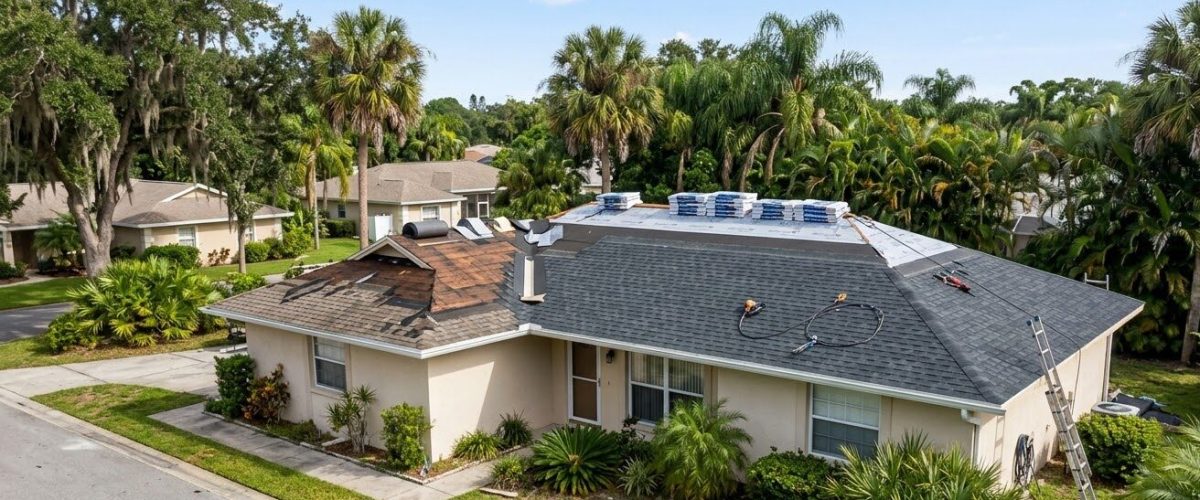
Spring Hill’s Five Decades of Homes Now Need New Roofs
Roof replacement in Spring Hill, FL addresses a housing stock that spans over 50 years of construction. The oldest homes near US 19 and Cortez Boulevard went up in the early 1970s. Developments pushed eastward through the 1980s and 1990s with communities like Timber Pines, Heritage Pines, and Glen Lakes. The 2000s brought Seven Hills, Sterling Hill, and newer subdivisions toward the Suncoast Parkway corridor. Each decade brought different building codes, different roofing materials, and different installation practices. And each generation of roofs reaches end-of-life on its own schedule.
Spring Hill’s 2024 population of roughly 121,000 makes it Hernando County’s largest community and one of the biggest census-designated places in all of Florida. That population translates to somewhere between 45,000 and 50,000 residential roofs within the Spring Hill CDP boundaries. A significant percentage of those roofs are now past their designed service life or approaching the point where replacement becomes more practical than continued repairs.
The 120 mph wind speed zone designation under the Florida Building Code governs every roof replacement in Spring Hill. Materials, fastening patterns, and installation methods all must meet the requirements for this wind rating. This puts Spring Hill one tier above the 115 mph inland zones in Sumter County but below the 130 mph coastal zones along the Gulf barrier islands. Protech Roofing handles replacements across Spring Hill’s full range of home styles, ages, and community standards, from 1970s-era ranch homes to brand new construction.
When Repair Costs Signal It’s Time to Replace
Spring Hill homeowners often ask us the same question: should I keep repairing or just replace the whole thing? The answer depends on the roof’s age, the cumulative cost of recent repairs, and the scope of the current damage. But there are clear signals that point toward replacement being the better investment.
If your roof is older than 20 years and you’ve spent more than $2,000 on repairs in the past three years, replacement usually makes more financial sense. Those repair dollars aren’t extending the roof’s life. They’re just plugging individual failure points while the rest of the system continues degrading at the same rate. You’ll spend the same amount again in the next three years, and again after that, until the cumulative repair cost exceeds what a replacement would have cost.
Widespread granule loss is another clear signal. When you can see the dark fiberglass mat showing through bare spots across multiple roof planes, the shingles have lost their ability to shed water effectively and resist UV damage. Granule loss on one section can be addressed with a spot repair. Granule loss across the entire roof means the material has reached the end of its functional life.
And the insurance trigger is real. Once a Spring Hill roof hits 15 years, Florida law allows insurers to require an inspection before renewing your policy. If the inspector determines the roof doesn’t have at least five more years of useful life, you face premium surcharges, limited coverage, or non-renewal. Proactively replacing before that inspection catches you off guard puts you in control of the timeline and the outcome.
Material Options for Spring Hill’s Climate and Tree Canopy
Spring Hill’s combination of 120 mph wind requirements, heavy afternoon thunderstorms, and mature oak canopy shapes the material conversation differently than in communities without significant tree coverage. The trees influence material selection in ways that aren’t immediately obvious.
Architectural asphalt shingles are the most common replacement choice in Spring Hill, priced at $4.25 to $7.25 per square foot installed. Current products from GAF, Owens Corning, and CertainTeed carry 130 mph wind ratings, algae-resistant granule technology, and 25 to 30 year warranties. The algae resistance matters in Spring Hill more than in most locations because the tree canopy creates shaded, humid conditions on portions of many roofs where Gloeocapsa magma algae thrives. The copper-infused granules in premium shingle lines inhibit that growth and keep the roof looking clean for years longer than standard granules.
Standing seam metal roofing runs $10 to $18 per square foot installed and is increasingly popular in Spring Hill for its impact resistance against falling branches. A large oak limb that would crack and displace asphalt shingles will dent a metal panel without compromising the waterproof seal. Metal’s slick surface also sheds leaf debris more effectively than the textured granule surface of shingles, reducing the moisture-trapping problem that plagues shingle roofs under heavy tree cover. Sterling Hill’s HOA recently updated their guidelines to allow metal roofing with Design Review Board approval, reflecting the growing acceptance of metal in Spring Hill’s residential communities.
Tile roofing, both concrete and clay, appears on some Spring Hill homes, particularly in communities with Mediterranean architectural themes. Tile runs $13.50 to $19 per square foot and delivers a 40 to 50 year lifespan. But tile is heavy, and the truss systems on many older Spring Hill homes weren’t engineered for tile weight. A structural engineering assessment is required before any shingle-to-tile conversion to verify the existing structure can handle the additional load. The assessment adds $300 to $600 to the project cost but prevents a much more expensive structural failure down the road.
Hernando County Permitting for Spring Hill Replacements
Every full roof replacement in Spring Hill requires a building permit through the Hernando County Building Division at 789 Providence Boulevard in Brooksville. The main office number is (352) 754-4050, and they accept online applications through the county portal. Hours are Monday through Friday, 8 AM to 4 PM, with lobby access until 3:30 PM.
The permit application for a full replacement requires the contractor’s license information, a complete scope of work describing the tear-off and installation, and material specifications with Florida Product Approval numbers for the 120 mph wind zone. Protech Roofing submits these applications on behalf of our Spring Hill customers, and we typically receive approval within a few business days for straightforward residential replacements.
Full replacements trigger the current 2023 Florida Building Code requirements across the entire roof system, regardless of the home’s original construction date. That means updated roof deck nailing patterns (6-inch spacing on edges, 12-inch in the field), code-compliant underlayment, drip edge on all eaves and rakes, and proper ventilation meeting the required ratio. Homes built in the 1970s and 1980s, when deck nailing patterns were less stringent and drip edge wasn’t required, need these upgrades during a full replacement. We factor all code compliance work into our estimates so there are no surprises during inspection.
Inspections follow a two-phase process. The dry-in inspection verifies deck attachment, underlayment installation, drip edge, flashings, and any structural connections. The final inspection confirms the completed roof meets all applicable code requirements. We coordinate directly with Hernando County inspectors and handle scheduling for both phases.
Replacing Roofs in Timber Pines and Older Spring Hill Communities
Timber Pines’ 3,452 homes were built between 1982 and 1998, putting the community’s roof stock firmly in replacement territory. Most Timber Pines roofs have been replaced at least once since original construction, but the replacement cycles vary widely across the community’s 57 neighborhoods. Some neighborhoods did coordinated replacements in the 2000s when multiple homeowners contracted the same roofer for volume pricing. Other homes have roofs from scattered years depending on when individual owners chose to act.
Working in Timber Pines requires attention to the community association’s exterior appearance standards. We coordinate material colors with the existing neighborhood aesthetic and provide color samples for homeowner approval before ordering materials. The community association doesn’t require formal architectural review for roof replacements in most cases, but confirming this with your specific neighborhood coordinator before starting avoids any miscommunication.
Older Spring Hill homes from the 1970s and 1980s along the US 19 corridor present unique replacement challenges. Many were built with 3-tab shingles over plywood decking with hand-nailed patterns that don’t meet current code. The tear-off process often reveals decking that needs partial or full replacement due to water damage accumulated over decades. Truss systems on these older homes may need reinforcement at the roof-to-wall connection where modern hurricane straps are installed. We assess these conditions during the initial estimate visit and include all necessary structural and decking work in the proposal.
Glen Lakes, near Weeki Wachee Springs, has the added consideration of higher ground humidity from the nearby river system and golf course irrigation. Attic ventilation is especially important in Glen Lakes homes because the higher ambient humidity means any ventilation shortfall leads to moisture condensation on the underside of the roof deck. During replacements in Glen Lakes, we verify ventilation ratios and recommend upgrades if the existing system falls short of current code requirements. Proper ventilation protects the new roof from the inside out.
Insurance Benefits of a New Roof in Spring Hill
A new roof is the single biggest factor in reducing homeowners insurance premiums for Spring Hill residents. The inland-but-not-far-from-coast location of Hernando County puts Spring Hill in a moderate risk zone where roof condition heavily influences underwriting decisions. An older roof on a Spring Hill home can mean a premium increase of $800 to $1,500 annually compared to the same home with a new roof. Over 10 years, that premium penalty exceeds $10,000, money that would have been better spent on the replacement itself.
Wind mitigation features installed during a replacement project unlock additional discounts. Hurricane clips or straps at every truss connection, a sealed roof deck using peel-and-stick underlayment, and impact-rated shingles each earn separate premium reductions. The combined discounts from full wind mitigation compliance can save $500 to $900 per year on a typical Spring Hill policy. We install these features as standard practice on every replacement and provide the documentation your insurance agent needs to apply the discounts immediately.
After the 2023-2024 hurricane season, several private insurance carriers reduced their appetite for Hernando County policies, pushing more homeowners toward Citizens Property Insurance. Citizens requires shingle roofs to be under 25 years old and tile or metal roofs under 50 years. For Spring Hill homeowners on Citizens policies with aging roofs, replacement before hitting those age limits is a matter of maintaining insurance eligibility, not just preference.
Replacement Costs and What Drives the Final Number
A full roof replacement on a typical 2,000 square foot Spring Hill home runs $8,500 to $14,500 for standard asphalt shingles, $20,000 to $36,000 for standing seam metal, and $27,000 to $38,000 for concrete tile. These ranges include tear-off of the existing roof, full deck inspection with replacement of any damaged sheets, new underlayment and flashings, the installed roofing material, ridge vents, drip edge, pipe boots, and complete cleanup.
The factors that push a project toward the higher end of the range include roof complexity (more hips, valleys, dormers, and penetrations), second-story height requiring additional safety equipment and labor time, decking replacement beyond the typical two or three sheets, structural upgrades needed to meet current code at the roof-to-wall connection, and premium material selections within each product category. We itemize every cost component in our written estimates so you can see exactly where the money goes.
Financing options for Spring Hill homeowners include insurance claim proceeds for storm-damaged roofs, manufacturer financing programs, PACE financing assessed against property taxes over 15 to 25 years, and home equity products. For the many Spring Hill residents on fixed retirement incomes, the PACE option is particularly attractive because it spreads the cost without requiring a credit check or income verification. The annual assessment is often offset by the insurance premium savings from the new roof.
Protech Roofing offers free estimates for roof replacement across all Spring Hill neighborhoods. We assess the current roof, discuss material options that fit your budget and community standards, and provide a detailed written proposal. There’s no obligation, and we won’t manufacture urgency that doesn’t exist. If your roof has five more good years in it, we’ll tell you. And when it’s genuinely time to replace, we’ll make sure the job is done right the first time.
Related Roofing Services in Spring Hill, FL
- Emergency Roof Repair in Spring Hill, FL – 24/7 emergency roof repair services
- Roof Repair in Spring Hill, FL – Professional roof repair services
- Metal Roofing in Spring Hill, FL – Durable metal roofing installation
- Roof Inspection in Spring Hill, FL – Professional roof inspections
- Spring Hill, FL Roofing Services – All roofing services in Spring Hill
- Roof Replacement in Hernando County, FL – Countywide roofing services
- Total Roof Replacement – Complete roof replacement services