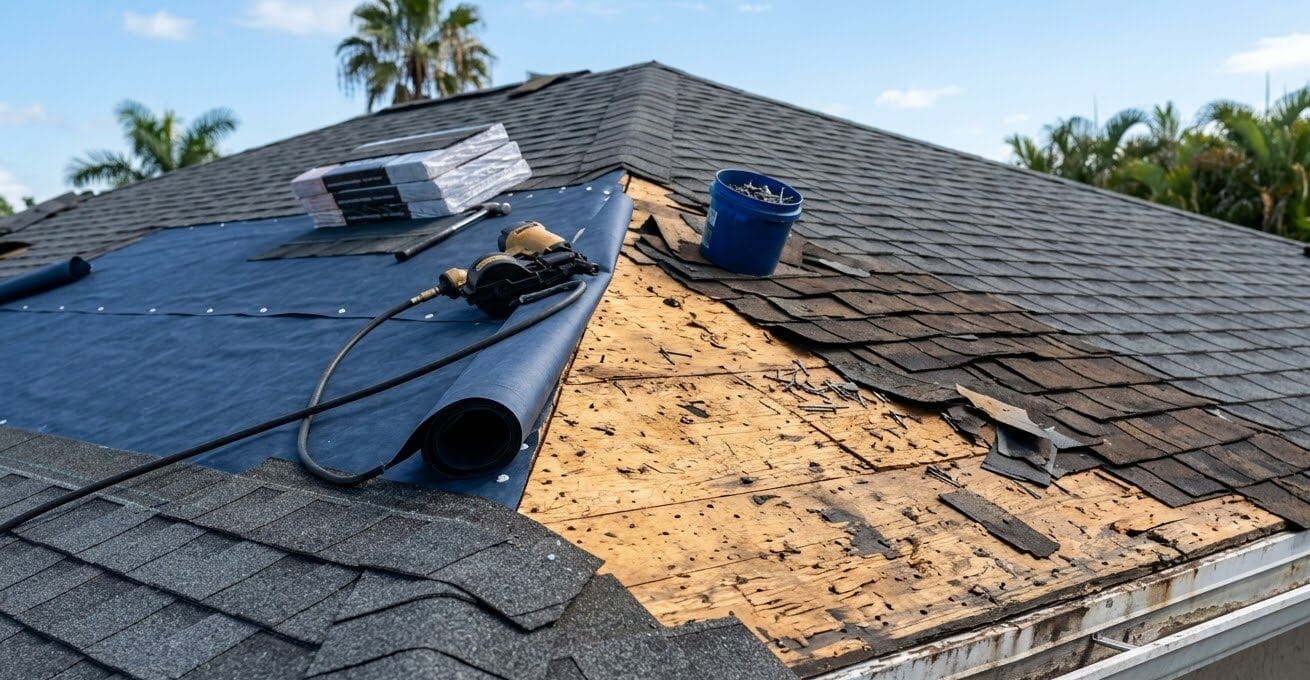
When a storm tears through Central Florida, the damage it leaves behind is only the beginning of what homeowners have to deal with. Filing an insurance claim for roof damage can feel overwhelming, especially when you are already stressed about leaks, structural concerns, and protecting your family. Protech Roofing Services has spent years helping homeowners across the Spring Hill area navigate every stage of the roof insurance claim process, from the initial damage assessment through final repairs. We understand the paperwork, the deadlines, and the tactics insurance companies use to minimize payouts. Our goal is simple: make sure you receive the full compensation your policy entitles you to so your roof gets repaired the right way.
Roofing insurance claims in Florida are not like claims in other states. Florida’s unique weather patterns, building codes, and insurance regulations create a process that requires specialized knowledge. Between hurricane season running from June through November, sudden summer thunderstorms that can drop baseball-sized hail, and tornado activity that spikes in spring, Central Florida homeowners face roof damage risks that most of the country never deals with. Protech’s team has worked with every major insurance carrier operating in Florida, and we know how each one handles claims, what documentation they require, and where disputes typically arise. That experience makes a real difference in the outcome of your claim.
We proudly serve homeowners throughout Hernando, Citrus, Pasco, Sumter, Polk, Hillsborough, and Pinellas counties. Whether you live in a waterfront home in Crystal River, a subdivision in Wesley Chapel, or a rural property outside Bushnell, Protech brings the same level of expertise and attention to your insurance claim. Every roof we inspect gets a thorough, documented assessment that meets the standards insurance adjusters expect to see. We do not cut corners on documentation because we have seen firsthand how missing photos or vague damage descriptions lead to denied or underpaid claims.
The insurance claim process for roof damage in Florida follows a general sequence, but each step has details that can trip up homeowners who have never filed a claim before. Understanding what happens at each stage puts you in a stronger position to get a fair result.
Contact your insurance company promptly. Florida law requires that you report property damage to your insurer within a reasonable timeframe. Under current statutes, you generally have two years from the date of loss to file a claim, but waiting even a few weeks can complicate things. Insurance companies may argue that secondary damage, like mold growth from a leak, happened because you delayed reporting. Call your insurer as soon as you notice damage or suspect damage occurred during a storm. Write down the claim number, the name of the representative you speak with, and the date and time of the call.
Document the damage thoroughly. Before anything gets moved, cleaned up, or temporarily repaired, take photos and video of every area of visible damage. Shoot from multiple angles. Capture wide shots of the full roof line and close-ups of missing shingles, dented flashing, cracked tiles, or torn underlayment. If water has entered the home, photograph the interior damage too, including stained ceilings, wet insulation, and warped drywall. Keep damaged materials if you can. A piece of broken tile or a section of torn shingle is physical evidence that supports your claim.
Schedule a professional roof inspection. This is where many homeowners make their first mistake. They wait for the insurance adjuster to come out and accept whatever that person says. Instead, have a licensed roofing contractor inspect your roof before the adjuster arrives. A professional roofer can identify damage that is not visible from the ground, including bruised shingles that have lost granule adhesion, cracked decking beneath the surface, or compromised drip edges. At Protech, we provide this inspection at no charge for storm damage assessments because we know how important it is to have an accurate picture of the damage from day one.
Meet the insurance adjuster on site. When your insurance company sends an adjuster, you have every right to be present during the inspection, and so does your roofing contractor. Having your roofer there to walk the roof with the adjuster is one of the most effective things you can do to protect your claim. Adjusters are often handling dozens of claims after a major storm. They may spend 20 minutes on your roof and miss damage that a thorough inspection would catch. When Protech meets the adjuster at your property, we point out every area of concern documented in our inspection report, ensuring nothing gets overlooked.
Review the estimate and settlement offer. After the adjuster completes their inspection, the insurance company will send you an estimate and a settlement offer. Read it carefully. Compare the line items against the damage documented in your contractor’s report. Insurance estimates are typically generated using Xactimate software, the same platform professional roofing contractors use. If the insurance company’s estimate is significantly lower than what your roofer documented, you have grounds to dispute it.
File a supplement if the claim is underpaid. It is common for the initial insurance estimate to undervalue roof damage. This does not necessarily mean the insurer is acting in bad faith. Adjusters can miss things, especially after a major storm when they are rushing through inspections. A supplemental claim provides additional documentation, including detailed photos, measurements, and an itemized Xactimate estimate from your contractor, to demonstrate that the repair costs are higher than the insurer initially assessed. Protech prepares and submits supplemental claims on behalf of our customers regularly. In many cases, the supplemental process results in a significantly higher payout.
Complete the repairs. Once the claim is approved and funded, repairs can begin. Florida Building Code requires that all roof repairs and replacements meet current code standards, which in hurricane-prone regions means compliance with the High Velocity Hurricane Zone (HVHZ) specifications or the Florida Building Code Wind standards depending on your county. Permits are required for most roof work, and inspections by the local building department ensure the work meets code. Protech handles all permitting through the relevant county offices, whether that is Hernando County Building Division in Brooksville, Pasco County Building Services in Dade City and New Port Richey, or any of the other jurisdictions in our service area.
Florida homeowner insurance policies generally cover roof damage caused by sudden, accidental events. Understanding what falls under your coverage helps you know when to file a claim and when a repair is simply a maintenance expense.
Hurricane and tropical storm wind damage is the most common claim type in Central Florida. Wind can lift shingles, peel back flashing, crack tile roofs, and in severe cases tear off entire sections of decking. Policies typically cover wind damage, though some carriers in Florida have separate hurricane deductibles that are higher than the standard deductible. Your hurricane deductible is usually calculated as a percentage of your home’s insured value, often 2% to 5%, rather than a flat dollar amount.
Hail damage is covered under most standard policies. Florida does not experience hail as frequently as states in the Midwest, but when hailstorms hit Central Florida, they can cause serious damage. Hail bruises asphalt shingles, cracks clay and concrete tiles, and dents metal roofing and flashing. The damage is often hard to see from the ground, which is why a professional inspection matters.
Fallen trees and limbs that strike your roof during a storm are generally covered. This includes both trees from your own property and your neighbor’s trees. The claim covers the roof repair and often the cost of removing the tree from the structure. However, if a dead or obviously hazardous tree falls on your roof and you had been warned about it previously, the insurer could argue negligence and reduce or deny the claim.
Tornado damage is covered under the windstorm portion of your policy. Central Florida sits in a region that experiences more tornadoes per square mile than many people realize, particularly during the spring months and during hurricane landfalls. Tornado damage tends to be severe but localized, sometimes devastating one home while leaving the house next door untouched.
Lightning strikes can damage a roof directly by splitting structural members or starting a fire. They can also cause secondary damage through power surges that affect electrical systems tied to roofing components like attic fans or solar panel connections. Lightning damage is covered under standard homeowner policies.
There are important exclusions to be aware of. Normal wear and tear is never covered. If your 20-year-old shingle roof is simply aging out, insurance will not pay for a replacement. Neglect and deferred maintenance, such as letting moss or algae growth deteriorate shingles over time, is also excluded. Cosmetic damage, like minor dents in metal roofing that do not affect function, may be excluded depending on your policy language. And critically, flood damage is not covered under standard homeowner insurance. If storm surge or rising water damages your home, you would need a separate National Flood Insurance Program (NFIP) policy or private flood insurance to have coverage.
The hours after a storm are critical. What you do and do not do in that window can directly affect the success of your insurance claim.
Prioritize safety above everything. Do not go on your roof to inspect damage. Wet surfaces, weakened decking, and hidden structural damage make post-storm roofs extremely dangerous. Stay on the ground and look for obvious signs: missing shingles in the yard, visible gaps in the roofline, water staining on ceilings, or daylight visible through the attic. If a tree has fallen on the structure or you see sagging in the roofline, evacuate the home until a professional confirms it is safe.
Document damage from the ground. Use your phone to take photos and video of the exterior from every angle. Capture any debris, fallen tree limbs, damaged gutters, displaced ridge caps, and standing water. If you have photos of your roof from before the storm, those become valuable comparison evidence. Also document the date and time of the storm. News reports and National Weather Service records can verify that a weather event occurred in your area on a specific date, which strengthens your claim.
Make temporary, emergency repairs only. If rain is entering your home through a damaged area, you are expected to take reasonable steps to prevent further damage. This is called your “duty to mitigate” under Florida insurance law. Tarping a damaged section or placing buckets to catch water qualifies. Keep all receipts for materials purchased for temporary repairs, as your insurance should reimburse those costs. However, do not make permanent repairs before the adjuster has inspected the damage. Replacing a section of roofing before it has been documented could mean that damage is never properly recorded in the claim.
Call a licensed roofing contractor before calling your insurance company. This might seem counterintuitive, but having your own professional assessment in hand before the adjuster arrives gives you a significant advantage. You will know the full scope of the damage and can ensure the adjuster does not overlook anything. Protech offers free storm damage inspections across all seven counties we serve, and we can typically get to your property within 24 to 48 hours of a storm.
Do not sign a contract with a storm chaser. After every major storm in Florida, out-of-state roofing crews flood the area, knocking on doors and offering to handle your insurance claim. Many of these operations are not licensed in Florida, carry insufficient insurance, and have no accountability once they leave the area. Some use aggressive Assignment of Benefits (AOB) agreements that sign over your insurance rights, leaving you with little control over your own claim. Work with a locally established contractor who will be here long after the storm season ends.
Preserve all physical evidence. Do not throw away damaged roofing materials, broken tiles, torn underlayment, or anything else that came off your roof. Bag it and keep it in your garage. If the insurance company questions the extent of the damage, physical evidence is hard to argue with.
We have handled hundreds of insurance claims for homeowners across Hernando, Citrus, Pasco, Sumter, Polk, Hillsborough, and Pinellas counties. Our process is designed to maximize your claim payout while keeping you informed every step of the way.
Every claim starts with a free, comprehensive roof inspection. One of our experienced technicians will inspect your entire roof, not just the area where you noticed a problem. Storm damage often extends well beyond what is visible from the ground. We check shingles for wind lift and hail bruising, examine flashing around penetrations and valleys, assess soffit and fascia for wind damage, and look for signs of water intrusion in the attic space.
We produce a detailed damage report with photographic evidence. This report documents every area of damage with high-resolution photos, measurements, and descriptions that match insurance industry standards. The report is formatted so that adjusters can cross-reference each item easily. We have found that a well-organized report significantly reduces disputes and speeds up claim approval.
Our estimates are built in Xactimate, the same software your insurance company uses. This means our line items, pricing, and scope of work are directly comparable to what the adjuster will produce. When both sides are speaking the same language, negotiations are more straightforward and fair.
When the adjuster comes to your property, a Protech representative meets them on site. We walk the roof together, point out every area of documented damage, and ensure that the adjuster’s scope matches reality. This step alone often results in a more accurate initial estimate from the insurance company.
If the insurance company’s offer does not reflect the true cost of repairs, we prepare and submit supplemental claims with additional documentation. Supplemental claims are a normal and accepted part of the insurance process. In our experience, a significant percentage of initial estimates require supplementation because adjusters underestimate repair scope, miss secondary damage, or apply pricing that does not reflect current material costs in the Florida market.
For approved claims, there is no upfront cost to you for the inspection or claims assistance. Our work on the insurance side is part of the roofing project. You pay your deductible, and the insurance proceeds cover the cost of repairs. We never ask homeowners to pay out of pocket for work that their insurance has approved and funded.
Florida’s insurance landscape has undergone major changes in recent years. Homeowners need to understand the current rules to protect their interests.
The two-year filing deadline. Under Florida Statute 627.70132, policyholders must file property insurance claims within two years of the date of loss. If you miss this window, your insurer can deny the claim regardless of how legitimate the damage is. After a busy hurricane season, it is easy to put off filing, especially if the damage seems minor. Do not wait. Even small leaks can become major structural problems, and your ability to file evaporates at the two-year mark.
Assignment of Benefits (AOB) reform. Florida passed significant AOB reform legislation that changed how contractors and homeowners interact during the claims process. AOB agreements, which transfer your insurance policy benefits to a third party (usually a contractor), were once widely abused. The reforms added consumer protections, including the right to rescind an AOB agreement within a specified period. Protech does not require homeowners to sign an AOB. We work with you and your insurance company transparently, keeping you in control of your claim at all times.
HB 837 tort reform and its impact on claims. House Bill 837, passed in 2023, made sweeping changes to Florida’s civil litigation landscape. Among other things, it eliminated one-way attorney fees in property insurance disputes. Previously, if a homeowner sued their insurer and won, the insurer had to pay the homeowner’s attorney fees. That provision gave homeowners significant leverage in disputes. With its removal, homeowners have less legal leverage against lowball offers. This makes it even more important to have strong documentation and a knowledgeable roofing contractor supporting your claim from the start, so disputes can be resolved before litigation becomes necessary.
Citizens Property Insurance Corporation. As private insurers have left the Florida market or raised rates dramatically, Citizens, the state-backed insurer of last resort, has grown to become one of the largest property insurers in the state. If you are insured through Citizens, the claims process follows similar steps but has its own timeline requirements and inspection protocols. Protech has extensive experience working with Citizens claims in all seven counties we serve.
My Safe Florida Home program. The state of Florida offers grants of up to $10,000 through the My Safe Florida Home program to help homeowners strengthen their homes against hurricane damage. Eligible improvements include roof upgrades such as secondary water barriers, improved roof-to-wall connections, and impact-resistant coverings. The program requires a free home inspection first and is available to owners of site-built, single-family homes with an insured value of $500,000 or less. This can offset your out-of-pocket costs significantly if your roof needs upgrades beyond what insurance covers.
Wind mitigation inspections. A wind mitigation inspection evaluates how well your roof and home can withstand high winds. Conducted by a licensed inspector, this report documents features like roof shape, roof-to-wall attachment methods, roof deck attachment, secondary water resistance, and opening protection. Depending on what features your home has, a favorable wind mitigation report can save you between 15% and 45% on your annual homeowner insurance premium. After Protech completes a roof replacement, we recommend scheduling a wind mitigation inspection immediately, because a new roof built to current Florida Building Code standards will typically qualify for the highest available credits.
After years of working with homeowners on claims across Central Florida, we see the same mistakes repeatedly. Avoiding these pitfalls can mean the difference between a fully funded repair and an out-of-pocket expense.
Waiting too long to file. Some homeowners do not realize they have damage until weeks or months after a storm. Others know about the damage but procrastinate on starting the claim process. Both scenarios create problems. The longer you wait, the harder it becomes to connect specific damage to a specific weather event, and the closer you get to that two-year statutory deadline.
Failing to document damage adequately. A few blurry cell phone photos will not support a strong claim. The insurance company needs clear, comprehensive visual evidence of every area of damage. This includes not just the roof surface but also gutters, fascia, soffit, attic spaces, and any interior damage caused by water intrusion. Timestamp your photos and keep them organized by location.
Accepting the first adjuster estimate without question. The insurance company’s adjuster works for the insurance company. Their estimate represents the insurer’s assessment, not necessarily the actual cost of proper repairs. It is your right to get your own estimate and challenge the adjuster’s numbers if they fall short. Many homeowners do not realize this and accept a lowball offer because they assume the adjuster’s word is final.
Signing with storm chasers. We cannot stress this enough. Unlicensed or out-of-state contractors who show up unsolicited after a storm are a persistent problem in Florida. They often do substandard work, use inferior materials, and disappear before warranty issues arise. Worse, if they file inflated claims or engage in fraud using your policy, you could face consequences including policy cancellation.
Not getting an independent professional inspection. Relying solely on the insurance adjuster to identify all damage on your roof is a gamble. Adjusters vary widely in their thoroughness and expertise with roofing systems. An independent inspection by a licensed Florida roofing contractor gives you a complete and objective assessment of the damage.
Throwing away damaged materials. That pile of broken shingles in the yard is evidence. Those cracked tiles you swept into the trash are documentation. Keep every piece of material that came off your roof until the claim is fully settled and repairs are complete. Store them in bags in the garage or on the side of the house. If there is a dispute, physical samples can resolve it.
Making permanent repairs before the adjuster visits. It is understandable that you want to fix a leaking roof immediately. But if you replace damaged sections before the adjuster has a chance to see them, you may have eliminated the evidence needed to support your claim. Emergency tarping is fine and expected. Full repairs should wait until after the inspection and claim approval.
Dealing with roof damage is stressful enough without having to fight your insurance company for a fair settlement. Protech Roofing Services has the experience, the documentation tools, and the insurance knowledge to handle the heavy lifting for you. If your roof has sustained storm damage anywhere in Hernando, Citrus, Pasco, Sumter, Polk, Hillsborough, or Pinellas County, call us for a free storm damage inspection. We will assess the damage, prepare a professional report, and guide you through every step of the claims process. You focus on your family. We will take care of your roof.
Call Protech Roofing Services today at (352) 857-2399 or visit protechroofingservices.com to schedule your free inspection.