
Professional Roof Repair Services in Central Florida
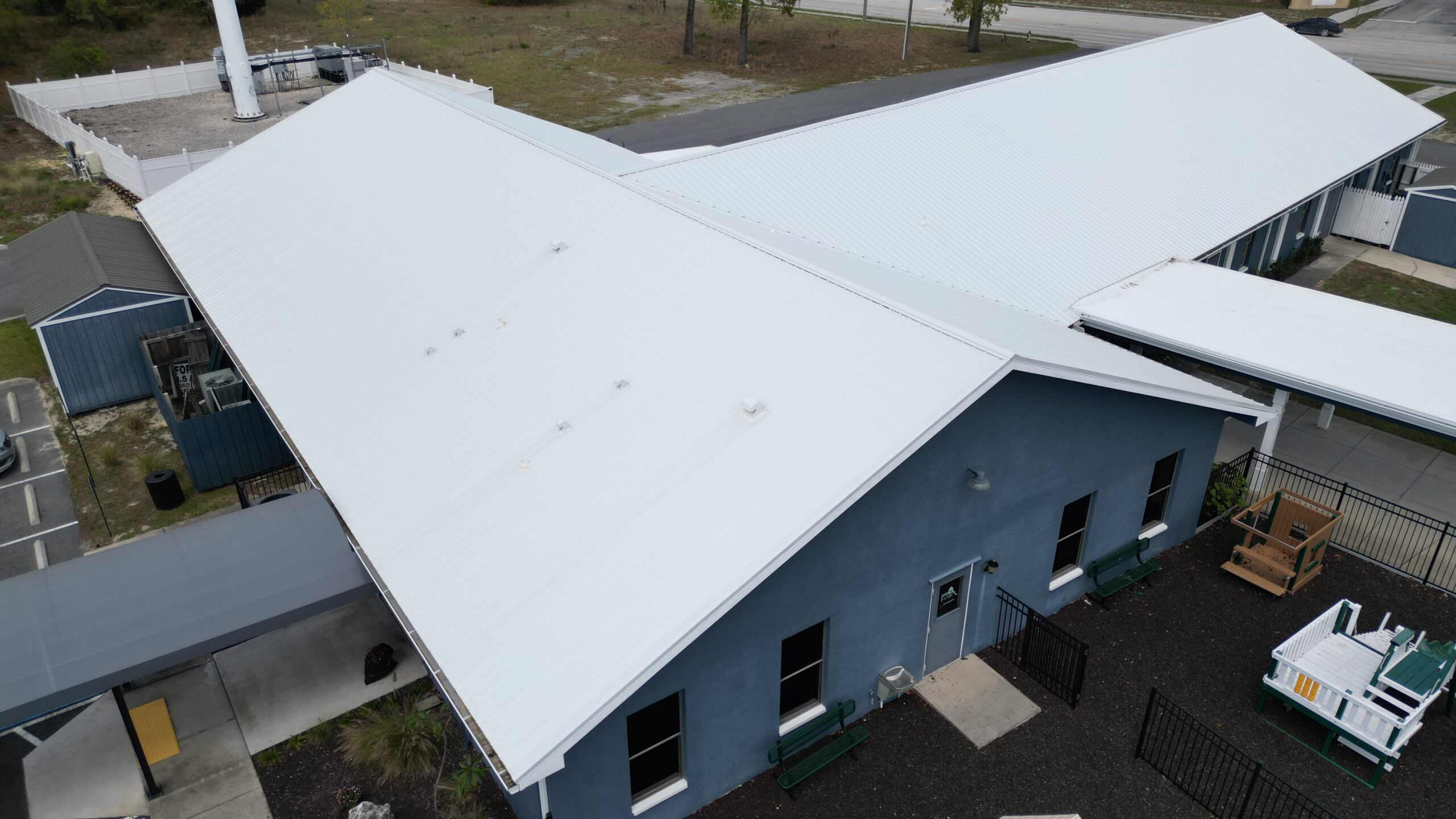
Professional Roof Repair Services in Central Florida
Every homeowner in Central Florida eventually faces the same reality. The combination of relentless UV radiation, tropical storms, and year-round humidity puts extraordinary stress on roofing systems. When that stress leads to leaks, missing shingles, or sagging decking, you need a roof repair contractor who understands the specific conditions that cause roofs here to deteriorate faster than almost anywhere else in the country. Protech Roofing Services, based in Spring Hill, FL, provides professional roof repair across Hernando, Citrus, Pasco, Sumter, Polk, Hillsborough, and Pinellas counties. With GAF certification, HAAG certified inspectors, and a fully licensed and insured team, we diagnose and fix problems at their source rather than covering them up. Call us at (352) 605-0696 to schedule an inspection or get a repair estimate.
Central Florida roof repair is not the same as roof repair in Georgia, the Carolinas, or even North Florida. The intensity of the subtropical climate here creates a unique set of challenges that most general contractors are not trained to handle. Our crews work in Spring Hill, Brooksville, The Villages, Hudson, Dade City, and Inverness every single week. We have seen what happens to roofs in Timber Pines after a season of afternoon thunderstorms. We know how the salt air creeping inland affects flashing in Sterling Hill. We understand why homes in Southern Hills Plantation develop issues that homes twenty miles north simply do not. That firsthand knowledge shapes every repair we perform.
This page covers the specific types of roof damage we encounter across Central Florida, what repairs actually cost, when a repair makes financial sense versus a full replacement, and what the current Florida Building Code requires for any work done on your roof. We believe informed homeowners make better decisions, and better decisions save money in the long run.
Why Central Florida Roofs Fail Faster Than the National Average
The average asphalt shingle roof in a moderate climate lasts 20 to 25 years. In Central Florida, that number drops significantly. A study by the Florida Solar Energy Center found that shingle roofs in the state lose up to 40% of their expected lifespan due to UV exposure alone. That means a roof rated for 25 years might only deliver 15 years of reliable performance here, and that is before you factor in hurricanes, tropical storms, and the daily summer rain cycle.
Several environmental factors work together to accelerate roof degradation in our service area.
UV Radiation and Thermal Cycling
Central Florida receives some of the highest UV index readings in the continental United States. This constant bombardment breaks down the chemical bonds in asphalt shingles, causing them to become brittle, crack, and lose their protective granule coating. You can see the evidence on any roof over ten years old. The granules that once covered the shingle surface end up in your gutters and downspouts.
Thermal cycling makes this worse. On a typical summer day, a roof surface in Hernando County can reach 160 degrees Fahrenheit by early afternoon and then cool rapidly after a thunderstorm drops the air temperature by 20 degrees in minutes. This constant expansion and contraction loosens nails, separates adhesive strips on shingles, and creates gaps where water can penetrate. Over thousands of cycles, even properly installed roofing materials begin to fail.
Humidity and Biological Growth
Central Florida’s average relative humidity hovers between 70% and 90% for most of the year. Roofs in shaded areas, particularly in neighborhoods like Silverthorn and Sherman Hills where mature tree canopies are common, rarely dry out completely. This creates ideal conditions for mold, mildew, and algae growth. While algae staining is mostly cosmetic, mold and mildew can work their way beneath shingles and into the decking. Once moisture reaches the plywood substrate, rot follows.
We frequently find decking damage on homes where the only visible exterior sign was a few dark streaks. By the time staining appears, the biological growth has usually been active for months or years.
Wind and Storm Exposure
Hernando County sits in a wind zone with a basic design speed of 120 to 130 mph. That rating determines how roofs must be built and repaired. Hurricane season runs from June 1 through November 30, but severe thunderstorms with straight-line winds of 60 to 80 mph can occur any month of the year. These events rip shingles, dislodge tiles, bend metal panels, and compromise flashing at every vulnerable point on the roof.
The damage is not always obvious from the ground. Wind can lift a shingle tab just enough to break the sealant bond without tearing the shingle off entirely. Once that bond is broken, every subsequent storm pushes more water underneath. This is why we recommend bi-annual inspections, one before hurricane season and one after, for every homeowner in our service area.
Shingle Repairs and the Problems We See Most Often
Asphalt shingles cover the vast majority of homes across Hernando, Pasco, and Citrus counties. They are affordable, widely available, and perform well when properly installed to current code standards. But they are also the roofing material most affected by Central Florida’s climate.
Cracked and Curling Shingles
UV degradation causes shingles to lose flexibility over time. The edges begin to curl upward or downward, and cracks form across the surface. Curled shingles catch wind more easily, and cracks allow water to reach the underlayment. If the underlayment is also compromised, you have a direct path to the decking and into your attic.
Most shingle repairs for cracked or curling areas fall between $500 and $1,800. The final cost depends on how many shingles need replacement, how accessible the damaged area is, and whether the underlayment beneath them is still in good condition. Minor leak repairs where only a few shingles and a small section of underlayment are involved typically run $400 to $900.
Missing Shingles After Storms
After any significant wind event, we get dozens of calls from homeowners in Spring Hill and Brooksville who have found shingles in their yards. Replacing a handful of missing shingles is straightforward, but the real concern is what happened to the area those shingles were protecting. If the underlayment and decking stayed dry, the repair is minor. If water sat on exposed areas for even a day or two, you could be looking at underlayment replacement and possible decking repair.
We always inspect the full roof when called out for storm damage, not just the obvious missing pieces. Wind damage often extends well beyond what is visible. A shingle that appears intact from the ground may have a broken sealant strip that will fail during the next storm.
Granule Loss and Aging
When shingles lose their granule coating, the underlying asphalt layer is exposed directly to UV radiation. Degradation accelerates rapidly at that point. If your gutters are full of granules every time you clean them, your shingles are nearing the end of their useful life. Spot repairs can buy time, but widespread granule loss usually means the roof is approaching the point where replacement is more cost-effective than continued patching.
As a GAF certified contractor, we install and repair shingles that meet ASTM D3161 Class F wind resistance ratings. This standard ensures shingles can withstand wind speeds consistent with our local design requirements. Using anything less in a 120 to 130 mph wind zone is asking for trouble.
Tile, Metal, and Flat Roof Repairs Across Central Florida
While shingles dominate the residential market, we work on every roofing material found in Central Florida. Each one has its own failure modes and repair requirements.
Clay and Concrete Tile
Tile roofs are popular in communities throughout Pasco County, parts of Hillsborough, and several developments around The Villages. They are durable and long-lasting, but they are not indestructible. The most common tile repair issues we handle are cracked or broken tiles from storm debris, failed mortar at hip and ridge caps, and deteriorated underlayment beneath tiles that appear perfectly fine on the surface.
Tile repairs are more labor-intensive than shingle work because the surrounding tiles must be carefully removed and reset to access the damaged area. Repair costs for clay and concrete tile typically range from $1,200 to $3,500, depending on the scope of work and whether replacement tiles need to be sourced or custom-matched.
One issue specific to tile roofs is that the tiles themselves often outlast the underlayment beneath them. A tile roof may look perfect from the street while the felt or synthetic underlayment underneath has deteriorated to the point where it no longer sheds water. When we inspect tile roofs, we always check the underlayment condition, not just the tiles.
Standing Seam Metal Roofs
Metal roofing has gained significant popularity across Central Florida over the past decade. Standing seam panels offer excellent wind resistance and longevity, but they are not maintenance-free. The most common repairs we see involve failed sealant at panel joints, loose or backed-out fasteners, and corrosion at points where dissimilar metals meet.
Standing seam metal roof repairs typically cost between $1,000 and $3,000. The higher end of that range usually involves addressing corrosion damage or replacing entire panels. The lower end covers sealant renewal and fastener replacement.
In coastal-adjacent areas like parts of Pinellas County and western Pasco, salt air accelerates corrosion at fastener points and seams. Even on homes 15 to 20 miles from the coast, we find corrosion patterns that trace back to salt carried by prevailing winds. Regular inspection and maintenance extends the life of metal roofs dramatically.
Flat and Low-Slope Roofing
Commercial properties and some residential structures in our service area use flat or low-slope roofing systems, primarily modified bitumen and TPO membranes. These systems have their own unique set of challenges in Central Florida’s climate.
Modified bitumen repair costs run approximately $4 to $8 per square foot, while TPO membrane repairs fall in the $4 to $10 per square foot range. The variation depends on the type of damage, how much area is affected, and whether seams need to be re-welded or if full sections of membrane need replacement.
Ponding water is the number one issue we see on flat roofs in Central Florida. Our afternoon thunderstorms can drop two inches of rain in thirty minutes, and if the drainage system is not keeping up, water sits on the membrane. Over time, ponding leads to membrane degradation, seam failure, and leaks. We address both the immediate repair and the drainage issue to prevent recurrence.
Pipe Boot and Flashing Failures Across Hernando County
If there is one category of roof repair that we handle more than any other, it is pipe boot and flashing failures. These small components are the most leak-prone parts of any roof, and they fail with frustrating regularity in our climate.
Pipe Boot Deterioration
Every plumbing vent that exits through your roof has a pipe boot around it. These boots are typically made of rubber or neoprene that seals against the pipe and prevents water from running down the penetration into your home. In Central Florida’s heat, that rubber dries out, cracks, and eventually splits open. The process takes as little as 5 to 8 years in direct sun.
Pipe boot replacement costs between $150 and $400 per boot, depending on the pipe size and the roofing material around it. Most homes have three to six pipe penetrations. We recommend replacing all boots at the same time if more than one is showing signs of deterioration, because they were all installed at the same time and exposed to the same conditions.
Flashing Around Chimneys, Walls, and Valleys
Flashing is the thin metal material installed wherever the roof meets a vertical surface (chimneys, walls, dormers) or wherever two roof planes meet (valleys). It redirects water away from these vulnerable intersections. When flashing corrodes, lifts, or separates from the surfaces it protects, water gets behind it and into the structure.
Flashing repairs range from $200 to $800 depending on the location and extent of damage. Chimney flashing tends to be on the higher end because it involves multiple pieces of step flashing and counter-flashing that must work together as a system. Valley flashing is less expensive per linear foot but can involve more total area.
In neighborhoods like Timber Pines, where many homes were built in the 1980s and 1990s, we frequently find original galvanized flashing that has corroded through. The salt content in Central Florida’s humid air, even this far from the coast, is enough to eventually eat through galvanized steel. We recommend upgrading to aluminum or copper flashing during any repair, as these materials resist corrosion far better in our environment.
Drip Edge and Gutter Line Issues
Drip edge is the metal strip installed along the eaves and rakes of a roof. It directs water into the gutter and prevents it from running back under the roofing material. Missing or damaged drip edge allows water to wick up under the starter course of shingles through capillary action. Over time, this rots the fascia board and can damage the soffit.
We see drip edge damage most often after wind events. A strong gust can peel back poorly fastened drip edge, and once it lifts, it catches every subsequent gust like a sail. The repair itself is straightforward, but the water damage that accumulates before a homeowner notices the problem can be extensive.
When Repair Makes Sense vs. Full Replacement
Not every roof problem requires a full replacement, and not every repair is worth the investment. Knowing the difference saves homeowners thousands of dollars and prevents the frustration of paying for repairs on a roof that should have been replaced.
The General Guidelines We Follow
If the damage is confined to one area of the roof and the rest of the system is in good condition, repair is almost always the right choice. A tree branch that punches through a section of shingles, a localized flashing failure, or a handful of cracked tiles near a valley are all situations where targeted repair makes financial sense.
If the roof is more than 15 years old and showing widespread signs of wear, including granule loss across large areas, multiple leak points, sagging decking, or extensive biological growth, replacement is usually the better investment. Continuing to patch an aging roof becomes a money pit. Each repair buys less time than the last because the surrounding materials are also deteriorating.
The 25% Rule in Florida
Florida has a specific regulation that directly affects this decision. If 25% or more of the roof area is affected by damage or repair work, full code compliance is required for the entire roof. This means the project essentially becomes a re-roof, subject to all current Florida Building Code requirements including updated underlayment, fastening patterns, and wind resistance standards.
This rule exists for good reason. It ensures that major repair work brings the roof up to current safety standards rather than leaving a patchwork of old and new materials with different performance characteristics. But it also means that a repair covering, say, 30% of your roof will cost significantly more than you might expect because it triggers full compliance requirements.
Our HAAG certified inspectors evaluate the full roof before recommending a course of action. We document the condition of every section and provide a clear, honest assessment of whether repair or replacement is the better path. We never push replacement on a roof that can be effectively repaired, and we never recommend patching a roof that needs to be replaced.
Insurance Considerations
Many roof repairs in Central Florida are related to storm damage and may be covered by homeowner’s insurance. We work with all major insurance carriers and can assist with the claims process. Our detailed inspection reports, backed by HAAG certification, provide the documentation insurance companies require.
One important note for homeowners: insurance covers sudden damage from specific events, not gradual wear and deterioration. A leak caused by a tree branch during a storm is typically covered. A leak caused by 15 years of UV degradation is not. When we inspect storm damage, we clearly differentiate between event-related damage and pre-existing wear so there are no surprises during the claims process.
Permits and Code Compliance for Roof Repairs in Florida
Roofing work in Florida is heavily regulated, and for good reason. The state’s exposure to hurricanes and severe weather means that roofing systems must meet stringent standards to protect lives and property. Understanding these requirements helps homeowners make informed decisions and avoid problems down the road.
When Permits Are Required
In Florida, permits are required for all major roof repairs. Minor maintenance like replacing a few shingles or resealing a flashing joint may not require a permit, but anything involving structural repair, significant material replacement, or work that exceeds the 25% threshold absolutely does. Hernando County, Citrus County, and Pasco County all enforce these requirements, and inspectors verify compliance before closing permits.
Working without required permits creates serious problems. It can void your homeowner’s insurance, create liability issues if someone is injured, and cause complications when you sell your home. Title searches reveal unpermitted work, and many buyers will walk away or demand significant price reductions.
Protech Roofing pulls all necessary permits for every job that requires them. We handle the paperwork, coordinate inspections, and ensure that every repair meets or exceeds code requirements. This is not optional for us. It is how we operate on every project.
FBC 8th Edition Requirements
The Florida Building Code 8th Edition, which took effect December 31, 2023, introduced enhanced requirements for roofing work. For homes in wind speed zones of 120 mph and above, which includes all of Hernando County and most of our service area, the code requires enhanced underlayment standards. New roofs and major repairs must include two layers of underlayment.
Fastening requirements are equally specific. The code calls for 8d nails spaced 6 inches on center at edges and 12 inches on center in the field. In high-wind zones, ring-shank nails are required because they resist pull-out far better than smooth-shank nails during uplift events. These details matter. A roof that is not fastened to current standards may look fine on a calm day but can fail catastrophically during a hurricane.
Shingles installed in our area must meet ASTM D3161 Class F wind resistance standards. This classification ensures the shingles can withstand the sustained winds and gusts associated with our 120 to 130 mph basic design wind speed. Not all shingles on the market meet this standard. We exclusively use products that do.
Why Code Compliance Protects You
Some homeowners view code requirements as unnecessary red tape that drives up costs. We understand that perspective, but the data tells a different story. Homes with code-compliant roofs consistently perform better during storms, sustain less damage, and cost less to insure over time. Many insurance companies offer discounts for roofs that meet or exceed current FBC standards.
Code compliance also protects your investment. A properly installed, code-compliant repair integrates with your existing roof system and performs as designed. A shortcut repair that ignores fastening patterns, underlayment requirements, or material standards may hold up for a year or two, then fail when you need it most.
The True Cost of Roof Repair in Central Florida
Understanding repair costs helps homeowners budget appropriately and recognize when a quote is reasonable versus when it is too high or suspiciously low. Labor accounts for approximately 60% of the total cost of most roof repairs, with labor rates in our area running $2 to $7 per square foot depending on the complexity of the work and the roofing material involved.
Cost Ranges by Material Type
Here is what homeowners in our service area can expect to pay for common repairs in 2026.
Asphalt shingle repairs for most issues fall between $500 and $1,800. This range covers everything from replacing a small section of damaged shingles to addressing a moderate area with underlayment damage. Simple leak repairs involving a few shingles and minor underlayment work typically cost $400 to $900.
Clay and concrete tile repairs run $1,200 to $3,500. The higher labor requirement for tile work drives this cost. Tiles must be carefully removed, stored, and reset around the repair area, and matching replacement tiles can sometimes be difficult to source for older installations.
Standing seam metal roof repairs range from $1,000 to $3,000. Panel replacement is at the upper end, while sealant and fastener work falls at the lower end.
Flat roof repairs using modified bitumen cost $4 to $8 per square foot, while TPO membrane repairs run $4 to $10 per square foot. A 200 square foot flat roof repair might cost between $800 and $2,000 depending on the membrane type and extent of damage.
Individual component repairs have their own ranges. Pipe boot replacement runs $150 to $400 per boot. Flashing repair costs $200 to $800 per area depending on complexity and location.
What Drives Cost Variation
Several factors determine where a specific repair falls within these ranges. Roof pitch is one of the biggest variables. Steep roofs require additional safety equipment and slow down production, increasing labor costs. A repair that takes three hours on a 4/12 pitch roof might take five hours on a 10/12 pitch.
Accessibility matters too. A repair on the back side of a two-story home where the truck cannot park nearby costs more than the same repair on a single-story ranch with clear access from the driveway. Material availability can also affect pricing, particularly for tile roofs where specific profiles may need to be ordered.
The extent of hidden damage is perhaps the most significant variable. A repair that appears minor from the outside sometimes reveals rotted decking, damaged trusses, or saturated insulation once we open it up. We always communicate with homeowners before proceeding with any work beyond the original scope, and we provide updated pricing before moving forward.
Recognizing Unrealistic Quotes
If you receive a quote that seems dramatically lower than others, ask questions. Is the contractor pulling permits? Are they using code-compliant materials? Will they provide a warranty? Are they licensed and insured? Many of the repair failures we fix were originally performed by unlicensed handymen or storm chasers who cut corners on materials and installation to offer an attractive price.
A proper repair performed to code with quality materials and backed by a warranty is always less expensive in the long run than a cheap fix that fails in two years.
Seasonal Timing and Preventive Maintenance
Central Florida’s weather patterns create natural windows for roof maintenance and repair. Understanding these cycles helps homeowners stay ahead of problems rather than reacting to emergencies.
Pre-Hurricane Season Preparation
The single most important time to address roof concerns is before hurricane season begins on June 1. Any known issues, whether loose shingles, deteriorated pipe boots, lifted flashing, or minor leaks, should be repaired before the first tropical system threatens. A small problem in April becomes a catastrophic failure during a Category 1 hurricane in August.
We recommend scheduling inspections in March or April. This gives enough time to identify issues, get materials, and complete repairs before the season starts. Waiting until May means competing with every other homeowner who had the same idea, and our schedule fills quickly during that window.
Post-Storm Inspections
After any significant weather event, whether a named hurricane, a tropical storm, or a severe thunderstorm with high winds, a professional inspection is essential. Damage is not always visible from the ground. Lifted shingle tabs, cracked tiles, loosened flashing, and compromised sealant can all occur without any obvious signs until the next heavy rain exposes a leak inside your home.
We offer post-storm inspections throughout our service area. Our HAAG certified inspectors know exactly what to look for and can differentiate between new storm damage and pre-existing conditions. This distinction is critical for insurance claims.
Year-Round Maintenance Tasks
Between professional inspections, homeowners can take several steps to protect their roofs.
Keep gutters and downspouts clear. Clogged gutters cause water to back up under the roof edge, damaging fascia and potentially the decking. In areas with heavy tree cover, like many neighborhoods in Brooksville and Dade City, gutters may need cleaning monthly during fall and spring.
Trim tree branches that overhang the roof. Branches that rub against roofing materials accelerate wear and provide a bridge for biological growth. They also pose a direct impact threat during storms. Keep branches cut back at least six feet from the roof surface.
Watch for interior signs of roof problems. Water stains on ceilings, musty odors in the attic, peeling paint near the roofline, and daylight visible through the roof boards are all indicators that warrant a professional inspection. The sooner a leak is identified, the less damage it causes and the less expensive the repair.
Check attic ventilation. Proper ventilation reduces heat buildup in the attic, which reduces thermal stress on roofing materials from below. Blocked soffit vents, inoperative ridge vents, and disconnected bathroom exhaust fans are all common issues we find during inspections that contribute to premature roof degradation.
Why Homeowners Across Seven Counties Trust Protech Roofing
Protech Roofing Services is not the only roofing contractor in Central Florida, and we would never claim to be the right fit for every homeowner. What we can tell you is exactly what you get when you work with us and why it matters.
We hold GAF certification, which means we meet the manufacturer’s standards for installation quality and business practices. Fewer than 5% of roofing contractors in the country achieve this designation. It allows us to offer enhanced warranty options on GAF products that non-certified contractors simply cannot provide.
Our inspectors hold HAAG certification, the industry’s gold standard for roof inspection and damage assessment. This certification requires extensive training and testing in identifying damage patterns, material failures, and code compliance issues. It is recognized by every major insurance carrier and gives our inspection reports credibility that generic contractor assessments lack.
We are fully licensed by the State of Florida and carry comprehensive general liability and workers’ compensation insurance. This protects homeowners from liability in the event of a jobsite injury and ensures that the work we perform is backed by a legitimate, accountable business.
Our Service Area
We serve homeowners and businesses across Hernando, Citrus, Pasco, Sumter, Polk, Hillsborough, and Pinellas counties. Our crews are on the road every day, working in communities from Inverness to Dade City, from The Villages to Hudson, and everywhere in between. Our home base in Spring Hill puts us in the geographic center of our service area, which means reasonable response times throughout the region.
Whether you live in a 1980s ranch in Timber Pines, a newer construction in Sterling Hill, a golf course home in Silverthorn, or a family home in Sherman Hills or Southern Hills Plantation, we have experience with the specific roofing materials and construction methods used in your community. That local knowledge translates to faster, more accurate diagnoses and repairs that last.
Getting Started
If your roof is leaking, showing signs of wear, or has been damaged by a recent storm, contact Protech Roofing at (352) 605-0696. We will schedule an inspection, provide a detailed assessment of the condition and any recommended repairs, and give you an honest, transparent quote. No pressure, no scare tactics, no unnecessary upsells. Just straightforward roofing expertise applied to your specific situation.
For homeowners who are not currently experiencing problems, we still recommend scheduling a professional inspection if your roof has not been evaluated in the past two years. Many of the most expensive repairs we perform could have been prevented with early detection. A bi-annual inspection before and after hurricane season is the most cost-effective way to protect your home and extend the life of your roof in Central Florida’s demanding climate.
Call (352) 605-0696 today or request your inspection online. We look forward to keeping your roof in peak condition for years to come.