
Roofing Services in Sugarmill Woods, FL
Protech Roofing Services provides deed-restriction-compliant roofing for Sugarmill Woods homeowners in Citrus County. Call (352) 605-0696.
Neighborhoods and Villages We Serve in Sugarmill Woods
Sugarmill Woods is unlike most communities in Citrus County. Planned and developed starting in 1972, this deed-restricted community in southwestern Citrus County was one of the first residential developments in America to blend homes with preserved natural greenbelts. Today, it covers roughly 2,100 acres and is home to thousands of residents who chose this area for its quiet streets, mature tree canopy, golf courses, and strong sense of community. And if you own a home here, finding quality roofing services in Sugarmill Woods, FL should be high on your priority list, because the Florida climate doesn’t treat any roof gently, no matter how well-planned the neighborhood around it.
Protech Roofing Services works throughout every village and neighborhood in Sugarmill Woods. We understand that this community has specific requirements for exterior work, including roofing, and we tailor our approach to meet those standards while delivering the high-quality results your home deserves.
Cypress Village is one of the original and largest sections of Sugarmill Woods. The homes here sit along winding streets shaded by mature oaks and pines. Many were built in the 1970s and 1980s, which means the original roofs have been replaced at least once, and some are approaching the time for a second replacement. The Cypress Village Property Owners Association oversees community standards, though that deed restriction enforcement in Cypress Village has varied over the years. Regardless of the enforcement status, we always recommend roofing materials and colors that complement the community’s established aesthetic. The most common roof types we see in Cypress Village are architectural shingles and tile, with a growing number of homeowners switching to metal for its longevity.
Oak Village has its own set of deed restrictions, including requirements about roof visibility from the street. The Oak Village restrictions specify that roofs should be kept as invisible from street view as possible, which affects material choices, color selection, and even the style of ridge caps and accessories. We’re familiar with these requirements and factor them into every recommendation we make for Oak Village homeowners. If you’re planning a roof replacement in Oak Village, we’ll help you choose a system that meets the architectural control standards while providing maximum protection against Citrus County’s weather.
Southern Woods is the third major neighborhood within the Sugarmill Woods community. This area includes the Citrus National Golf Club (formerly Southern Woods Golf Club) and features homes that range from modest retirement residences to larger custom builds. The golf course setting means many Southern Woods homes have open exposure on at least one side, which can increase wind load on the roof during storms. We account for this exposure when recommending materials and installation methods for Southern Woods properties.
The Sugarmill Woods Country Club area includes homes clustered around the original golf course, which has been a centerpiece of the community since its first nine holes were completed in 1975. These homes tend to be among the older properties in Sugarmill Woods, and many have been through multiple owners and at least one roof replacement. If you’ve recently purchased one of these homes, a professional roof inspection is a smart first step to understand what you’re working with.
Beyond the main villages, the greater Sugarmill Woods area includes pockets of homes along Homosassa Trail and the roads that connect the community to nearby Homosassa and Lecanto. We serve these areas as well, providing the same quality workmanship whether your home is inside the POA boundaries or just outside them.
The Lecanto area, which borders Sugarmill Woods to the east, is another community where we maintain a strong presence. Lecanto serves as the unofficial seat of Citrus County government, and the residential areas between Lecanto and Sugarmill Woods blend together in some spots. Homeowners in this transitional zone get the same attention and quality service as those within the defined Sugarmill Woods boundaries.
Homosassa, to the south and west of Sugarmill Woods, has its own distinct character as a waterfront community known for manatees and the Homosassa Springs Wildlife State Park. The homes in Old Homosassa and the neighborhoods along the Homosassa River face increased humidity and salt air exposure that can accelerate roof wear. We serve the broader Homosassa area and understand the environmental factors that affect roofing in these coastal-adjacent communities.
Why Sugarmill Woods Homeowners Trust Protech Roofing
Choosing a roofing contractor in a planned community like Sugarmill Woods requires a bit more consideration than picking the cheapest bid. The deed restrictions, architectural control requirements, and neighborhood standards mean your roofer needs to understand more than just how to install shingles. They need to understand the community itself.
Protech Roofing Services has built a strong reputation with Sugarmill Woods homeowners because we take the time to understand these local requirements. Before we start any project, we review the applicable deed restrictions and architectural guidelines for your specific village. If Oak Village requires a certain roof profile or color palette, we know that going in. If your POA requires advance notification or approval for exterior work, we’ll work with you to meet those requirements before the first nail is driven.
Our approach to customer communication also resonates with Sugarmill Woods residents. Many homeowners here are retirees who have seen plenty of contractors come and go over the years. They value honesty, clarity, and follow-through. We don’t use high-pressure sales tactics, and we don’t exaggerate the condition of your roof to scare you into a sale. If your roof has five more years of life in it, we’ll tell you that. If it needs replacement now, we’ll explain exactly why and give you a detailed estimate so you can plan accordingly.
Licensing and insurance matter, especially in a community where neighbors talk. Protech Roofing Services is fully licensed by the state of Florida and carries both general liability insurance and workers’ compensation coverage. If a worker were injured on your Sugarmill Woods property while working for an uninsured contractor, you could be liable. That’s a risk no homeowner should take. We eliminate that concern entirely.
We also clean up after ourselves. That might sound like a small thing, but talk to anyone who’s had a roof replaced and they’ll tell you that the cleanup (or lack of it) can make or break the experience. Stray nails in the driveway, shingle debris on the lawn, granules clogging the flower beds. We’ve heard the horror stories from Sugarmill Woods homeowners who used other contractors. Our crews use tarps, magnetic nail sweepers, and careful debris management to leave your property looking as good as (or better than) we found it.
Warranty support is another reason Sugarmill Woods homeowners come back to us. We stand behind our work with a written workmanship warranty, and the materials we install come with manufacturer warranties that we register on your behalf. If something goes wrong after the job is done, we don’t dodge your calls. We come back, assess the issue, and make it right. That kind of accountability is what builds trust in a close-knit community like Sugarmill Woods.
We also understand the unique concerns of Sugarmill Woods homeowners who are snowbirds or seasonal residents. Many homes in the community sit empty for months at a time during the summer, which is unfortunately the prime storm season in Florida. We offer pre-departure inspections so you can leave knowing your roof is in solid condition, and we can perform post-storm checks on your property while you’re away if a major weather event hits the area. This service gives seasonal residents peace of mind knowing someone is watching out for their Sugarmill Woods home even when they’re not here.
Referrals from existing customers make up a large portion of our business in Sugarmill Woods. In a community where neighbors talk regularly at the country club, the civic association meetings, and on the golf course, word spreads quickly about contractors who do good work and those who don’t. We’re proud that our name comes up in positive conversations throughout the community, and we work hard to keep it that way with every project we complete.
Roof Inspections and Maintenance in Sugarmill Woods
Sugarmill Woods sits under a thick canopy of mature trees. Oaks, pines, cedars, and palms shade the streets and yards, giving the community its signature natural feel. But all those trees create specific challenges for roofs. Leaves, pine needles, branches, Spanish moss, and organic debris accumulate on rooftops and in gutters constantly. If that debris isn’t cleared regularly, it traps moisture against the roofing material and accelerates deterioration.
Regular roof inspections are especially important in Sugarmill Woods because of this tree canopy. We recommend at least one professional inspection per year, and twice a year is even better. A spring inspection catches any damage from winter storms and prepares your roof for the summer rain season. A fall inspection assesses the impact of the summer’s storms and clears accumulated debris before the cooler months.
During a Protech roof inspection in Sugarmill Woods, we check every part of your roofing system. We start with an exterior examination of the shingles, tiles, or metal panels. We look for signs of wear, damage, algae growth, and lifted or missing materials. We check all flashings around chimneys, vent pipes, skylights, and wall junctions. The drip edges, fascia, and soffit get a close look for water damage and pest entry points. Gutters and downspouts are checked for proper function and blockages.
We also inspect the attic space whenever access allows. The underside of your roof deck can tell us a lot about what’s happening on top. Water stains, daylight showing through cracks, mold or mildew, and inadequate ventilation are all things we look for from inside the attic. Proper attic ventilation is a common issue in Sugarmill Woods homes, particularly in the older sections of Cypress Village and the Country Club area. When ventilation is insufficient, heat and moisture build up in the attic, cooking the shingles from below and creating conditions for mold growth.
Our inspection report includes photos, descriptions of any issues found, and prioritized recommendations. Some items need immediate attention (active leaks, damaged flashings), while others can be monitored and addressed on a planned timeline. Sugarmill Woods homeowners appreciate this approach because it helps them budget for maintenance without being blindsided by unexpected emergency repairs.
Preventive maintenance services we provide in Sugarmill Woods include debris removal from roof surfaces and gutters, re-sealing of flashings and pipe boots, replacement of cracked or damaged shingles or tiles, algae and moss treatment, attic ventilation improvements, and minor structural repairs. These services are far less expensive than emergency repairs and can add years to your roof’s lifespan. For a community where many homeowners are on fixed incomes, that extended life translates directly to real savings.
Gutter maintenance deserves special emphasis in Sugarmill Woods. The mature tree canopy that gives the community its beauty also drops a constant supply of leaves, pine needles, oak catkins, and small branches onto roofs and into gutters. Clogged gutters cause water to back up under the drip edge, which can rot the fascia and soffit boards over time. We recommend gutter cleaning at least twice a year for Sugarmill Woods homes, and more often for properties with heavy tree overhang. Gutter guard installation can reduce the frequency of cleaning needed, though no guard system eliminates maintenance entirely. During our inspections, we check gutter condition and drainage flow as part of the standard evaluation.
Pest entry through roofing damage is another issue we watch for in Sugarmill Woods. The wooded setting attracts wildlife, and raccoons, squirrels, and rats are opportunistic about finding entry points into attic spaces. Damaged soffit panels, gaps around vent pipes, and deteriorated fascia boards all provide access points. Once animals get into your attic, they can damage insulation, chew on wiring, and create health hazards. During inspections, we identify any potential entry points and recommend repairs to seal them before problems develop.
Building Codes and Permits for Sugarmill Woods Roofing
Sugarmill Woods is an unincorporated community in Citrus County, which means building codes and permits are handled at the county level. The Citrus County Building Division administers the Florida Building Code for roofing projects in Sugarmill Woods, and understanding these requirements is important for any homeowner planning roof work.
A building permit is required for roof replacements in Sugarmill Woods. This isn’t just a bureaucratic hoop to jump through. The permit process ensures that your new roof is installed according to the Florida Building Code, which includes specific requirements for wind resistance, underlayment, fastener patterns, and material ratings. When the job is done, a county inspector checks the work to verify compliance. This final inspection protects you by confirming that the work was done correctly.
The current Florida Building Code (8th Edition) includes several requirements that directly affect Sugarmill Woods roofing projects. Two layers of underlayment are now required for asphalt shingles and several other roofing materials. This double-layer system provides a secondary water barrier if the outer roofing material is breached during a storm. The underlayment has to be installed with specific overlap dimensions and secured with approved fasteners at prescribed intervals.
Fastener requirements in the code specify minimum nail penetration depths, spacing patterns, and the number of nails per shingle based on the wind zone. Citrus County’s wind zone designations determine the minimum design wind speeds that your roofing system must be rated to handle. These specifications aren’t arbitrary. They’re based on decades of storm data and engineering analysis. Following them means your Sugarmill Woods roof is designed to withstand the forces it’s most likely to face.
The change to the 25% rule has been good news for Sugarmill Woods homeowners dealing with partial storm damage. Previously, if more than 25% of your roof was damaged, you had to replace the entire thing. Now, as long as the undamaged portion of your roof meets the 2007 Florida Building Code or later, you can repair just the damaged section. This change has saved many Sugarmill Woods homeowners from unnecessary full replacements after localized storm damage.
Beyond the county building code, Sugarmill Woods homeowners also need to consider their village’s deed restrictions when planning roofing work. While the county controls the structural and safety requirements through the building code, the POA may have additional requirements regarding aesthetics, colors, materials, and the approval process. We recommend checking with your village’s architectural control board before finalizing roofing material and color choices. We can assist with this process and provide material samples and specifications that you can submit for approval.
Protech Roofing Services handles the Citrus County permitting process for all of our Sugarmill Woods projects. We pull the permit, schedule the inspection, and make sure everything passes. You don’t have to make trips to the county building office or figure out which forms to fill out. We take care of the paperwork so you can focus on choosing the right roof for your home.
Choosing the Right Roofing Material for Your Sugarmill Woods Home
Material selection matters more in a deed-restricted community like Sugarmill Woods than it does in most other neighborhoods. Your roof has to perform against Florida’s climate, fit within the community’s aesthetic standards, and deliver good value over its lifespan. Here’s how the most common options stack up for Sugarmill Woods homes.
Architectural asphalt shingles remain the most popular choice in Sugarmill Woods, and for good reason. They offer a solid balance of performance, aesthetics, and cost. Modern architectural shingles are rated for wind speeds of 110 to 130 mph, come in a wide range of colors and profiles, and carry warranties of 30 to 50 years (though actual lifespan in Florida’s climate is typically 20 to 30 years). They work well with the community’s established look, and most architectural control boards approve them without issue. The key is choosing a quality brand and having them installed correctly, especially the starter strips and hip/ridge caps, which are the most vulnerable points during high winds.
Metal roofing has been gaining ground in Sugarmill Woods, particularly among homeowners who are tired of replacing asphalt shingles every 20 years. A standing seam metal roof can last 50 years or more and handles wind, rain, and heat better than almost any other residential roofing material. The initial cost is higher than asphalt, but when you spread that cost over the expected lifespan, the per-year cost of ownership often works out lower. Metal roofs also qualify for energy efficiency credits in some cases because of their heat-reflective properties. The main consideration in Sugarmill Woods is color and profile selection. Some villages may have preferences about metal roof appearance, so checking with your POA before committing is wise.
Tile roofing, both concrete and clay, has a strong presence in Sugarmill Woods. Tile offers exceptional durability (50 years or more), fire resistance, and a distinctive appearance that many homeowners love. The weight of tile is a consideration, though. Your home’s structure has to support the load, which is significantly heavier than asphalt or metal. Older Sugarmill Woods homes that weren’t originally built for tile may need structural reinforcement before tile can be installed. The underlayment beneath tile roofs also needs attention. We see a lot of Sugarmill Woods tile roofs where the tiles look perfect from the ground, but the underlayment underneath has deteriorated and needs replacement. This is a major project because every tile has to be removed and reinstalled, but it’s far less expensive than replacing the tiles themselves.
Flat and low-slope roofing systems appear on some Sugarmill Woods homes, particularly on additions, covered patios, and carport structures. These sections need specialized materials like modified bitumen or TPO that are designed to handle the unique drainage challenges of low-slope applications. If your Sugarmill Woods home has a flat section, make sure it’s getting the attention it needs during inspections. Water pooling on flat roof sections is one of the most common sources of leaks we see in the community.
When helping Sugarmill Woods homeowners choose a roofing material, we consider several factors beyond just cost. How does the material handle Citrus County’s specific wind and rain patterns? Does it resist algae growth in our humid environment? How does it look on the home, and will it meet POA requirements? What’s the total cost of ownership over the expected lifespan? And does the material complement the home’s architecture and the surrounding neighborhood? We walk through all of these considerations with you so the final choice is one you’ll be happy with for years to come.
Energy Efficient Roofing for Sugarmill Woods Homes
Energy costs are a real concern for Sugarmill Woods homeowners, especially during the summer months when air conditioning runs nonstop from May through October. Your roof plays a bigger role in your home’s energy performance than most people realize. The right roofing system can meaningfully reduce your cooling costs, while the wrong one can make your AC work overtime just to keep the house comfortable.
The basic principle is straightforward. Dark roofing materials absorb more solar heat than light-colored materials. That absorbed heat radiates into your attic, raising the temperature well above outdoor ambient levels. On a hot July day in Sugarmill Woods, an attic above a dark asphalt shingle roof can reach 150 degrees or higher. Your air conditioning system then has to overcome that heat load to keep the living spaces below comfortable. A cooler roof means a cooler attic, which means less work for your AC and lower electricity bills.
Cool roof technology has evolved significantly in recent years. Light-colored and specially coated roofing materials now carry Energy Star ratings and can reflect up to 65% of solar energy compared to around 15% for standard dark shingles. This isn’t just about color, either. The granules on modern cool-roof shingles are engineered with reflective properties that bounce infrared radiation away from the roof surface. You can get a dark-colored shingle with cool-roof granules that reflects nearly as much heat as a standard light-colored shingle.
Metal roofing is inherently more energy efficient than asphalt in most configurations. Metal panels reflect solar radiation effectively, especially when finished with light or reflective coatings. Some metal roofing systems also include an airspace between the metal panels and the roof deck, which provides additional insulation value. Standing seam metal with a factory-applied cool-roof coating is one of the best-performing options available for Sugarmill Woods homes in terms of energy performance. For Sugarmill Woods homeowners who are serious about reducing their energy footprint, metal is often the best roofing choice from a purely energy standpoint.
Attic ventilation ties directly into roofing energy performance. Even the most reflective roof won’t keep your attic cool if the ventilation system isn’t working properly. Hot air needs a way to escape from the attic, and cooler air needs a way to enter from the soffits. Ridge vents, soffit vents, and powered attic fans all play roles in this system. During our Sugarmill Woods roof inspections, we evaluate the ventilation and recommend improvements when we find deficiencies. Sometimes adding a few soffit vents or improving the ridge vent can make as much difference in attic temperatures as changing the roofing material.
Insulation is the other half of the energy equation. If your Sugarmill Woods home’s attic insulation has settled, gotten wet, or simply isn’t thick enough by current standards, your roof’s energy performance suffers no matter what material is on top. We don’t install insulation ourselves, but we’ll let you know if we see an insulation problem during a roof inspection and recommend qualified insulation contractors in the Citrus County area.
Radiant barrier products are worth considering for Sugarmill Woods homes. A radiant barrier is a reflective material (usually aluminum foil bonded to a backing) that is installed in the attic to reflect radiant heat away from the living space. When combined with a reflective roof and proper ventilation, a radiant barrier can reduce attic temperatures by 20 to 30 degrees. Some roofing underlayment products now include a radiant barrier on one side, so you get the waterproofing function and the radiant barrier in a single product. We offer these combination products as an upgrade option for Sugarmill Woods roof replacements.
Window-to-wall ratios and home orientation also affect energy performance in Sugarmill Woods. Homes with large west-facing windows and roof planes absorb the most afternoon heat. While you can’t change your home’s orientation, you can mitigate the impact with a reflective roofing system and proper attic ventilation on the hottest-facing slopes. Some Sugarmill Woods homeowners choose to add extra ventilation on the west-facing sections of their roof specifically to combat afternoon heat buildup. We can assess your home’s specific orientation and recommend targeted improvements.
Solar panels are another energy consideration that intersects with roofing. If you’re thinking about solar for your Sugarmill Woods home, the condition of your roof matters. Installing solar panels on a roof that needs replacement in a few years creates a problem because the panels have to come off and go back on when the roof is replaced, adding significant cost. If solar is in your future, coordinate with your roofer to make sure the underlying roof will last as long as the solar system (typically 25 years). We can install a new roof that’s solar-ready, with the appropriate mounting points and structural reinforcement in place.
For Sugarmill Woods homeowners weighing the cost of energy-efficient roofing upgrades, the payback period is worth considering. A reflective metal roof might cost more upfront than standard asphalt shingles, but the energy savings accumulate year after year. In a community where many homeowners are on fixed retirement incomes, the monthly reduction in electricity costs can be meaningful. Over the 40 to 50 year lifespan of a metal roof, the cumulative energy savings can exceed the additional upfront cost several times over. We help Sugarmill Woods homeowners run these numbers so they can make decisions based on actual projected savings rather than guesswork.
Related Roofing Services in Sugarmill Woods, FL
- Roofing Services in Citrus County, FL – County-wide roofing coverage.
- Total Roof Replacement Services – Learn about our full replacement process.
- Roof Repair in Sugarmill Woods, FL – Fix leaks, storm damage, and wear before they get worse.
- Roof Replacement in Sugarmill Woods, FL – Full tear-off and new roof installation for your home.
- Roof Repair in Citrus County, FL – County-level roof repair services.
- My Safe Florida Home Program – Sugarmill Woods residents built before 2008 are eligible for the program
Frequently Asked Questions
Yes. Sugarmill Woods is part of our regular service area in Citrus County. We work in all three villages (Cypress Village, Oak Village, and Southern Woods), as well as the Country Club area and the surrounding Homosassa corridor. We’re familiar with the deed restrictions and architectural control requirements in each village, and we factor those into every recommendation. Whether you need a quick repair, an annual inspection, or a full roof replacement, we’re ready to help.
We provide a written workmanship warranty on every job we complete in Sugarmill Woods. This covers the installation quality, so if a problem arises from how the roof was installed, we come back and fix it at no charge. In addition, the roofing materials themselves carry manufacturer warranties that range from 25 to 50 years for asphalt shingles, 30 to 50 years for metal, and 50 years or more for tile. We register all manufacturer warranties on your behalf and provide you with copies of all warranty documentation.
Yes. Since Sugarmill Woods is in unincorporated Citrus County, the Citrus County Building Division handles permits for roofing projects. A permit is required for roof replacements and major repairs. We handle the entire permitting process for you, from pulling the permit to scheduling the final county inspection. Beyond the county permit, you may also need approval from your village’s architectural control board depending on which section of Sugarmill Woods you live in, especially if you’re changing roofing material or color.
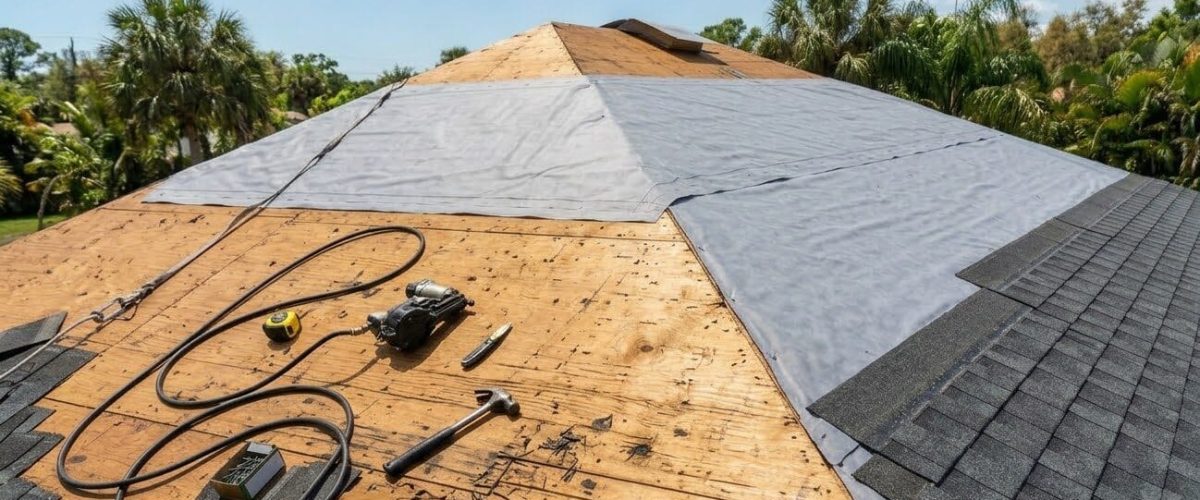
Yes. We provide emergency roof tarping and storm damage response for Sugarmill Woods homeowners. When a storm damages your roof, our priority is getting a tarp secured to prevent further water intrusion. We carry tarping materials and respond as quickly as conditions allow. After the emergency is stabilized, we perform a full damage assessment, document everything for your insurance claim, and schedule the permanent repair or replacement. Sugarmill Woods homeowners can reach us at (352) 605-0696 for emergency situations.
Most residential roof replacements in Sugarmill Woods take between 1 and 3 days, depending on the size of the home, the type of material being installed, and weather conditions. A straightforward asphalt shingle replacement on an average-sized Sugarmill Woods home typically finishes in 1 to 2 days. Metal and tile installations take longer because of the additional precision required. We’ll give you a specific timeline estimate before starting and keep you updated throughout the project. We also coordinate with your POA if advance notice is required for exterior work in your village.