Central Florida Roofing Service
Stone Coated Steel Tile
Stone coated steel tile roofing in Central Florida. Hurricane-rated, fire-resistant, 50-year lifespan. Free estimates. Call (352) 605-0696.
Call (352) 605-0696The term “stone coated steel” describes the construction perfectly, but it helps to understand each layer and what it contributes to the finished product.
What Stone Coated Steel Roofing Actually Is
The term “stone coated steel” describes the construction perfectly, but it helps to understand each layer and what it contributes to the finished product.
At the core is a steel panel, typically 26-gauge galvanized steel or Zincalume-coated steel. Galvanization applies a layer of zinc to the steel surface, creating a sacrificial barrier that prevents the steel from corroding. Zincalume adds aluminum to the zinc coating for even greater corrosion resistance, which matters in coastal and high-humidity environments like Central Florida. This steel core provides the structural strength, impact resistance, and fire resistance that make the product so durable.
On top of the steel, manufacturers apply a base coat that serves as the bonding surface for the stone granules. The granules themselves are natural crushed stone, typically basalt or granite, selected for their color stability and hardness. These granules are pressed into the base coat and then sealed with an acrylic overglaze that locks them in place and provides UV protection. The result is a textured surface that looks remarkably like traditional roofing materials but performs like the engineered metal product it actually is.
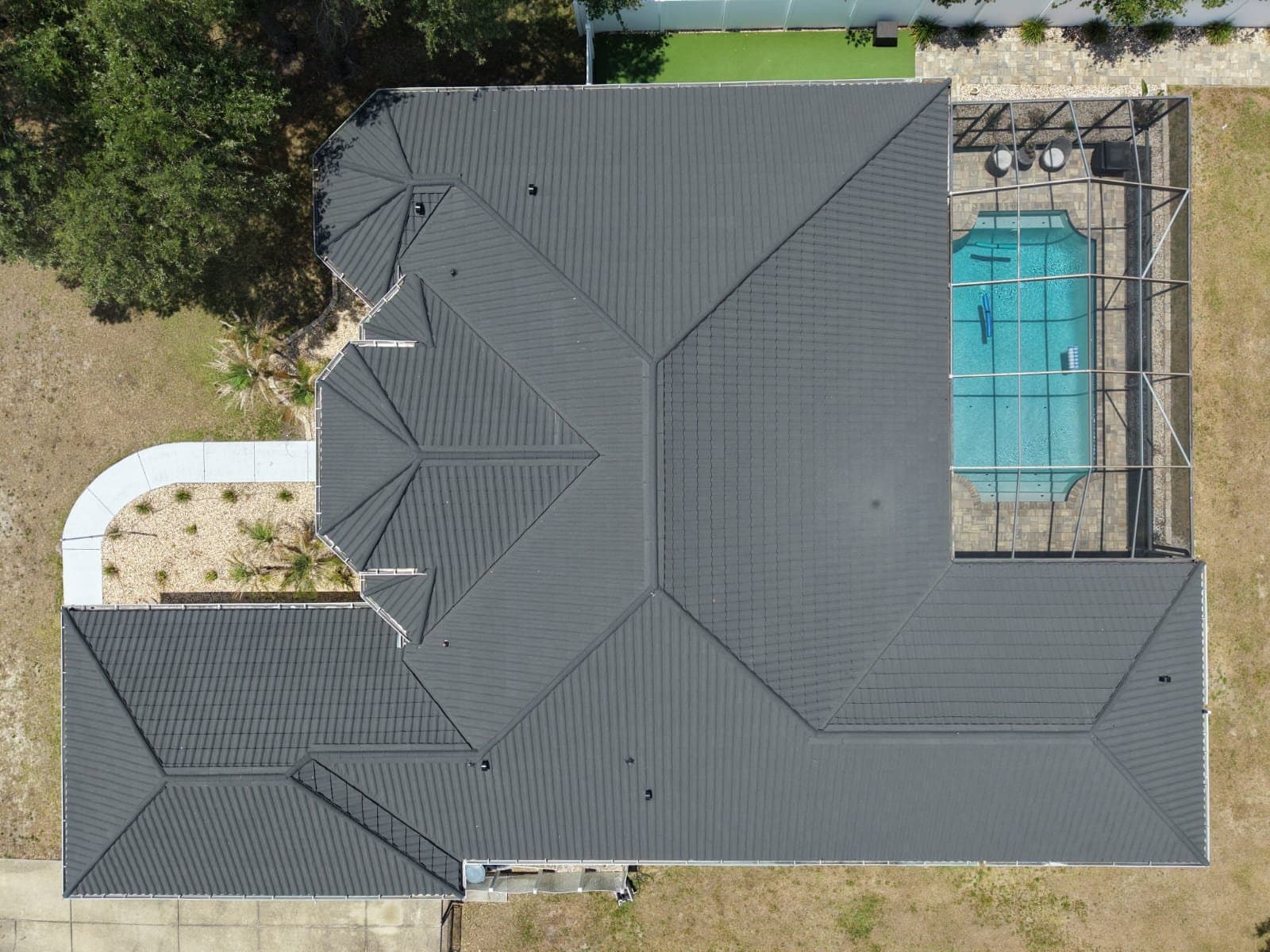
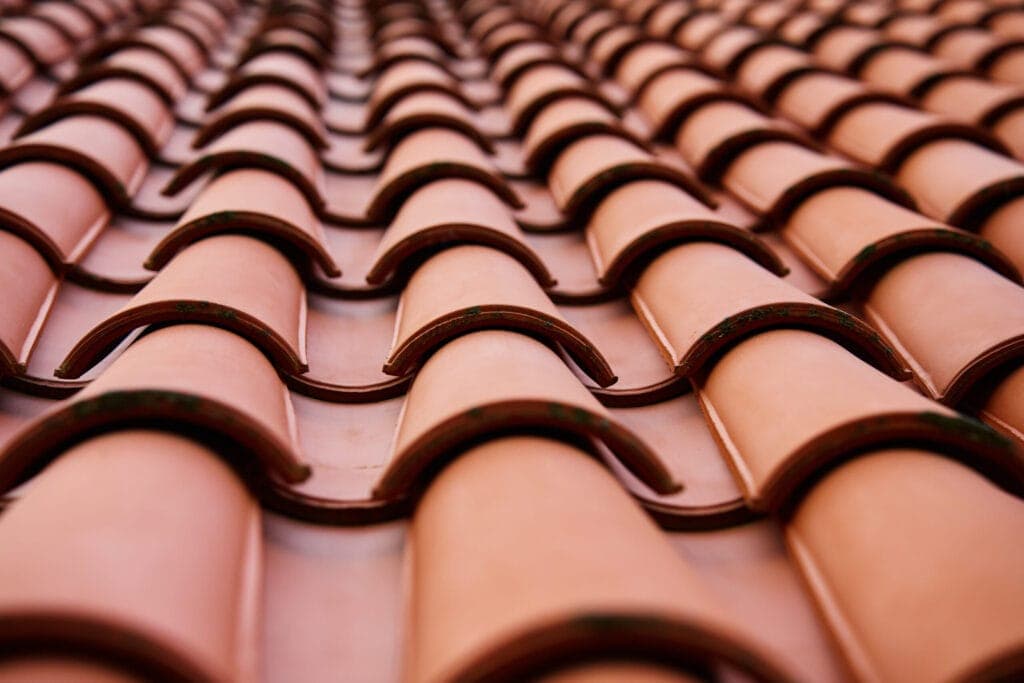
Different profile shapes allow stone coated steel to mimic a variety of traditional aesthetics. Barrel tile profiles replicate the curved look of Mediterranean clay tile. Shake profiles capture the layered texture of wood shake shingles. Slate profiles present the flat, refined appearance of natural stone slate. And shingle profiles offer a clean, classic look that works with virtually any architectural style. From the street, most people cannot tell the difference between stone coated steel and the traditional material it imitates. Up close, the stone granule texture gives it a premium, substantial appearance.
The combination of these layers creates a roofing material that brings together benefits from multiple product categories. You get the fire and wind resistance of metal, the aesthetic versatility of tile or shake, and a weight profile that is dramatically lighter than any of the traditional materials it replaces.
The Weight Advantage and What It Means for Your Home
This is one of the most significant and underappreciated benefits of stone coated steel, and it deserves detailed attention because the implications touch structural integrity, installation cost, and long-term performance.
Stone coated steel panels weigh approximately 1.5 pounds per square foot installed. Compare that to concrete tile at 9 to 10 pounds per square foot, clay tile at 8 to 12 pounds per square foot, and natural slate at 10 to 15 pounds per square foot. Stone coated steel is roughly one-sixth to one-tenth the weight of the materials it visually replicates.
That weight difference matters for several important reasons. First, lighter roofing material places less sustained load on your home’s structural framing. Trusses, rafters, and bearing walls that were designed for a lightweight roofing system like asphalt shingles can accept stone coated steel without any structural modification. This is not always the case with concrete or clay tile, which often require engineered trusses or retrofitted reinforcement to support the additional dead load. If you are reroofing a home that currently has asphalt shingles, switching to stone coated steel is a straightforward transition. Switching to concrete tile might require a structural engineer’s assessment and possible upgrades to your framing.
Second, lighter material means easier and faster installation. Roofers can handle stone coated steel panels without the mechanical lifting equipment sometimes needed for heavy tile. Panels are carried up ladders and positioned by hand. This translates to lower labor costs and shorter project timelines. A stone coated steel installation typically takes two to four days for an average residential roof, compared to a week or more for a concrete tile installation.
Third, the lighter weight reduces the seismic and wind-uplift forces acting on your roof structure. In high-wind events, a lighter roof experiences less inertial force, which means the fastening system has less load to resist. Combined with the interlocking panel design and the direct-to-deck fastening options available for stone coated steel, this weight advantage contributes to the material’s exceptional wind performance.
For Central Florida homeowners who love the look of tile but are concerned about the weight, cost, or structural requirements, stone coated steel provides an elegant solution that sacrifices nothing in terms of appearance or performance.
Wind, Hail, and Hurricane Performance
Central Florida’s weather defines the performance requirements for any roofing material installed here. Between the daily summer thunderstorms, the annual threat of tropical weather, and the occasional severe hailstorm, your roof must handle extreme conditions as a matter of course, not as a rare exception.
Stone coated steel is rated for wind speeds up to 120 mph, which covers the wind exposure of the vast majority of Central Florida locations. This rating is achieved through the interlocking panel design combined with concealed fastening. Each panel locks into the panel below it and beside it, creating a continuous wind-resistant surface with no exposed edges for wind to catch and lift. Fasteners are driven through the top of each panel and concealed by the overlapping panel above, so there are no exposed nail heads to create potential leak points.
Hail resistance is tested at 2.5 inches, which is a substantial hailstone. The steel core absorbs impact energy without cracking, splitting, or shattering. This is a stark contrast to concrete and clay tile, which can crack from hail impact and from falling debris during storms. When a branch lands on a stone coated steel roof, it might dent the panel slightly, but it will not shatter it into pieces that expose the underlayment. That structural resilience means your waterproofing integrity is maintained even after an impact event.
For properties in Florida’s High Velocity Hurricane Zone (HVHZ), stone coated steel carries Miami-Dade product approval. The HVHZ designation covers Miami-Dade and Broward counties and requires roofing products to meet the most stringent wind and impact testing standards in the state. While Hernando, Citrus, and Pasco counties are not within the HVHZ, the fact that stone coated steel meets those standards gives Central Florida homeowners confidence that the material can handle anything our local weather produces.
Stone coated steel has also passed TAS-100 testing, which evaluates resistance to wind-driven rain. This test simulates the conditions of a hurricane where rain is being propelled horizontally by sustained high winds. Products that pass TAS-100 demonstrate that they can prevent water intrusion even when rain is being driven against the roof at extreme angles. In Central Florida, where summer thunderstorms frequently include wind-driven rain, this certification has practical everyday relevance beyond hurricane scenarios.
In HVHZ installations, stone coated steel is often installed using a batten-less method, meaning the panels are nailed directly to the roof deck rather than mounted on horizontal battens. This direct-to-deck installation creates an even stronger attachment because the panel fasteners engage the structural sheathing directly. While batten-less installation is specifically required in HVHZ areas, some Central Florida homeowners opt for it voluntarily to maximize their roof’s wind resistance. Protech can advise you on which installation method is most appropriate for your specific location and exposure.
Cost Comparison and Long-Term Value
Understanding the cost of stone coated steel requires looking at both the upfront investment and the lifetime economics. The initial price is higher than asphalt shingles but competitive with or lower than traditional tile, and the long-term value proposition is compelling.
General pricing for stone coated steel roofing runs between $7.50 and $14.50 per square foot installed. Premium brands command higher prices within this range. DECRA products typically fall between $14 and $18 per square foot. Gerard products range from $13 to $17 per square foot. The variation within each brand depends on the specific profile selected, the complexity of your roof, and regional labor rates.
For a 2,000-square-foot roof (a typical Central Florida home), you are looking at a total installed cost between $15,000 and $29,000, with most projects falling in the $18,000 to $25,000 range. Compare this to concrete tile at $14,000 to $38,000, clay tile at $18,000 to $40,000, or standing seam metal at $16,000 to $35,000. Stone coated steel falls squarely in the middle of the premium roofing market while offering performance characteristics that match or exceed materials at the higher end of the price spectrum.
The 50-year limited transferable warranty is where the long-term value equation tips decisively in stone coated steel’s favor. Asphalt shingles carry 20 to 30-year warranties in their best configurations and often need replacement in 15 to 20 years in Florida’s harsh UV environment. Concrete tile lasts 40 to 50 years but requires underlayment replacement every 15 to 25 years, adding significant maintenance cost to the lifetime equation. Stone coated steel’s 50-year warranty covers the panels, the stone coating, and the fade resistance, giving you confidence that the product will look and perform well for half a century.
The transferability of the warranty adds resale value. If you sell your home during the warranty period, the remaining coverage transfers to the new owner. This is a tangible selling point that differentiates your home in the real estate market. Buyers understand that a warranted roof is one less major expense they will face in the near term.
Insurance savings provide another financial benefit. Many Florida insurers offer premium discounts for homes with impact-resistant, wind-rated roofing materials. Stone coated steel’s 120 mph wind rating and Class 4 impact resistance (the highest rating available) may qualify you for discounts that reduce your annual premium by meaningful amounts. Over the 50-year life of the roof, cumulative insurance savings can offset a significant portion of the initial installation cost. Check with your insurance provider about specific discounts available for your policy.
Noise, Comfort, and the Myths About Metal Roofs
One of the most persistent concerns homeowners raise about any metal-based roofing product is noise. People imagine rain drumming on a barn roof and assume they will hear every raindrop from inside their living room. With stone coated steel, that concern is unfounded, and the reasons are both material and structural.
The stone granule coating on each panel serves as a sound-dampening layer. When rain hits the textured stone surface, the energy is absorbed and scattered by the irregular granule pattern rather than resonating across a smooth metal surface. The acoustic difference between bare metal and stone coated metal is dramatic. Independent testing shows that stone coated steel produces noise levels comparable to asphalt shingles during rainfall.
Beneath the panels, proper underlayment adds another layer of sound insulation. When Protech installs stone coated steel, we use high-quality synthetic underlayment that provides both waterproofing and acoustic benefits. The underlayment fills the gap between the panel and the deck, reducing the air space that could otherwise amplify sound.
Your attic insulation provides the final sound barrier. In a properly insulated Central Florida home, the combination of stone granule coating, underlayment, decking, and attic insulation makes rain noise a complete non-issue. Our customers consistently report that they cannot distinguish rain noise on their stone coated steel roof from what they heard with their previous asphalt shingle roof.
Thermal performance is another area where stone coated steel excels in ways that surprise homeowners. The reflective properties of the stone granule surface bounce a portion of solar radiation before it can heat the panel. Beneath the panel, the air space created by the panel profile (especially in tile and shake configurations) provides a thermal break between the hot outer surface and the roof deck. This ventilated air gap allows heat to dissipate before it transfers through the deck into your attic.
The practical result is a cooler attic and lower air conditioning costs. In Central Florida, where AC accounts for 60 to 70 percent of residential energy bills, any reduction in heat transfer through the roof translates directly to monthly savings. Some homeowners report noticeable improvements in comfort and energy costs after switching from dark asphalt shingles to stone coated steel, particularly in lighter color profiles that reflect more solar energy.
Brand Options and Choosing the Right Product
The stone coated steel market includes several established manufacturers, each with distinct product lines, profiles, and warranty structures. Understanding the differences helps you make an informed selection.
DECRA is the original stone coated steel manufacturer and arguably the most recognized name in the category. Their product line includes the DECRA Tile (barrel profile), DECRA Shake (textured shake profile), DECRA Shingle Plus (dimensional shingle profile), and DECRA Villa Tile (classic S-tile profile). DECRA products are manufactured in the United States and carry a 50-year limited warranty. The brand has a strong track record in Florida, with thousands of installations across the state dating back decades. DECRA’s pricing at $14 to $18 per square foot reflects its premium positioning and extensive warranty support.
Gerard offers a competitive product line with profiles that include the Gerard Canyon Shake, Gerard Barrel Vault (tile profile), Gerard Slate (flat slate profile), and Gerard Heritage (shake/shingle profile). Gerard pricing runs $13 to $17 per square foot, slightly below DECRA for comparable profiles. Gerard products are also backed by 50-year limited warranties and carry the relevant wind, impact, and fire certifications for Florida installation. The brand is well-established in hurricane-prone markets and has a solid reputation for quality.
Boral Steel provides another strong option with a broad profile selection. Boral offers tile, shake, and shingle profiles with a range of color options designed to match regional architectural preferences. Their products carry similar certification to DECRA and Gerard, and their warranty terms are competitive within the category.
Metro Roof Products and Tilcor round out the major players. Metro offers stone coated steel in several profiles with good color variety and competitive pricing. Tilcor manufactures in New Zealand and distributes globally, with products that have performed well in tropical and subtropical climates similar to Central Florida’s.
When choosing between brands and profiles, consider these factors. First, which profile best matches your home’s architecture and your personal aesthetic preference? A Spanish Colonial home looks natural with a barrel tile profile. A Craftsman-style home pairs well with a shake profile. A contemporary home might suit a shingle or slate profile. Second, which colors are available in the profile you prefer? Stone coated steel comes in a wide range of earth tones, from terracotta and weathered timber to charcoal and slate gray. Third, what is the local availability of each brand? Having a manufacturer with strong distribution in Florida means easier access to replacement panels and warranty service down the road.
Protech works with all major stone coated steel brands and can help you compare options based on your specific priorities. We maintain relationships with manufacturer representatives who can provide product samples, color swatches, and detailed specification sheets for your review.
The Installation Process From Start to Finish
Understanding what happens during a stone coated steel installation helps you prepare your home and set realistic expectations for the project timeline.
Pre-installation planning begins with a detailed roof measurement and structural assessment. We verify that your existing roof framing can support the new material (which is almost always the case given how lightweight stone coated steel is), check for any decking damage that needs repair, and confirm the ventilation configuration in your attic. We also review your chosen product, profile, and color, and coordinate material delivery with the manufacturer or distributor.
Tear-off of existing roofing is the first physical step. Your old shingles, tile, or other roofing material is removed down to the deck. Our crews use tarps and ground-level protection to keep debris from damaging your landscaping, and all removed material is loaded into a dumpster for disposal. During tear-off, we inspect the entire deck surface for damage, rot, delamination, or inadequate fastening. Any compromised decking is replaced with new plywood or OSB before proceeding.
Deck preparation includes installing any required ice and water shield membrane at eaves and valleys (required by Florida code in certain applications), followed by the primary underlayment. We install high-quality synthetic underlayment across the entire deck surface with proper overlap at all seams. The underlayment provides secondary waterproofing and the acoustic dampening layer we discussed earlier.
Panel installation begins at the eaves and works upward toward the ridge. Each row of panels interlocks with the row below it, and concealed fasteners secure each panel to the deck. The interlocking system creates a continuous wind-resistant surface. At valleys, hips, ridges, and penetrations, we install purpose-built trim and flashing components that integrate with the panel system to maintain weather-tight integrity at every transition point.
Depending on the installation method, panels may be installed on horizontal battens or directly to the deck (batten-less). Batten installation is standard in most applications and provides a small air gap that aids ventilation and sound dampening. Batten-less installation, where panels are fastened directly to the deck, is used in HVHZ areas and can be specified voluntarily in other areas for maximum wind resistance.
Ridge and hip caps are the final panels installed. These cap pieces cover the joint where two roof planes meet and provide a finished appearance that matches the field panels. Depending on the profile, ridge caps may be roll-formed to follow the contour of the barrel tile or shake texture, maintaining visual continuity across the entire roof.
Cleanup and final inspection close out the project. We perform a magnetic sweep of your property to collect any stray fasteners, remove all debris, and conduct a final quality inspection of the completed installation. We walk the finished roof to verify that every panel is properly engaged, every fastener is seated correctly, and every trim piece is secure.
The entire process typically takes two to four days for an average residential roof. Larger or more complex roofs may take an additional day or two. Weather delays are always possible in Central Florida, but the relatively quick installation timeline keeps the overall project duration manageable.
Maintaining Your Stone Coated Steel Roof
One of the most appealing aspects of stone coated steel is its low maintenance requirement. Unlike tile roofs that need periodic underlayment replacement, or asphalt shingles that require regular inspection for lifting tabs and granule loss, stone coated steel demands very little ongoing attention. But “low maintenance” does not mean “no maintenance.”
Annual visual inspections from the ground are a good practice. Look for any panels that appear displaced, trim pieces that have shifted, or debris accumulation in valleys. If you notice anything that looks out of place, call Protech for a professional evaluation rather than climbing up yourself.
Debris removal from valleys and behind penetrations keeps water flowing freely. Accumulated leaves and pine needles can dam water in valleys and cause it to back up under panel edges. A leaf blower from a ladder can clear most debris without walking on the roof.
Gutter maintenance is just as important with stone coated steel as with any other roofing material. Keep gutters and downspouts clear to ensure water drains away from the eave area efficiently.
Professional inspections every three to five years give you expert eyes on your roof’s condition. We check all flashings, ridge caps, and panel engagement, and we look for any signs of granule loss, coating wear, or fastener issues. Catching a minor issue during a scheduled inspection is always better than discovering it during a storm.
Stone coated steel does not support moss or algae growth as readily as concrete tile or asphalt shingles. The acrylic overglaze and the inorganic stone granule surface provide an inhospitable environment for biological growth. In heavily shaded areas, some algae may eventually develop, but it is far less common and less aggressive than on other roofing materials.
If a panel is damaged by a severe impact, individual panels can be replaced without disturbing the surrounding field. This modular repairability is a significant advantage over standing seam metal, where a damaged panel may require a much larger area to be addressed. Your installer should provide you with a few spare panels at the completion of your installation for exactly this purpose.
Making the Decision: Is Stone Coated Steel Right for Your Home?
Stone coated steel is an exceptional roofing material, but it is not the best choice for every situation. Here is how to evaluate whether it is right for your specific home and circumstances.
Stone coated steel is an excellent choice if you want the aesthetic of tile, shake, or slate without the weight, fragility, or maintenance demands. It is ideal for homes where the existing structure was not designed for heavy tile loads. It is a smart pick for homeowners who plan to stay in their home long term and want a 50-year product that requires minimal maintenance. And it is particularly well-suited to Central Florida, where wind resistance, hail resistance, and thermal performance all matter.
Stone coated steel may not be the best choice if you have a historic home where architectural guidelines require authentic clay tile or natural slate. Some homeowners’ associations have material restrictions that may or may not include stone coated steel; check your HOA covenants before committing. And if your budget constrains you to the most affordable option available, architectural asphalt shingles will cost less upfront, though they will need replacement sooner and will not perform as well in severe weather.
For the vast majority of Central Florida homeowners, stone coated steel represents the best combination of performance, aesthetics, longevity, and value available in the roofing market today. It handles our storms, our sun, our humidity, and our rain with equal competence. It looks beautiful on the roof and holds its appearance for decades. And it comes with warranty protection that outlasts what most other materials can offer.
Call Protech Roofing Services at (352) 605-0696 to schedule a consultation about stone coated steel roofing for your home. We will evaluate your existing roof, discuss your goals and budget, walk you through the available profiles and colors from all major manufacturers, and provide a detailed estimate for your specific project. We serve homeowners throughout Hernando, Citrus, Pasco, Sumter, Polk, Hillsborough, and Pinellas counties. Whether you are in Spring Hill, Weeki Wachee, Homosassa, Hudson, Trinity, or anywhere else in the Central Florida region, Protech brings the expertise and craftsmanship your home deserves.
Your roof is the most important protective system on your home. It faces Central Florida’s harshest conditions every single day. Choosing a material that can meet that challenge for 50 years while looking outstanding and requiring minimal upkeep is one of the smartest investments you can make as a homeowner. Stone coated steel delivers on every one of those criteria, and Protech Roofing Services delivers the installation quality that brings the material’s full potential to life on your roof.
Homeowners across Hernando, Pasco, and Citrus counties have already made the switch to stone coated steel, and the feedback we hear consistently centers on the same themes: they love how it looks, they appreciate the peace of mind during storm season, and they notice the difference in their energy bills. Every installation we complete adds to our portfolio of satisfied customers who chose performance and longevity over the lowest upfront price. When you are ready to explore what stone coated steel can do for your home, Protech is ready to guide you through every step of the process.
FAQ
Frequently Asked Questions
Is there a stone-coated steel installer near me in Central Florida?
+
What is stone-coated steel tile roofing?
+
How long does stone-coated steel tile last?
+
Is stone-coated steel tile suitable for hurricane-prone areas?
+
How does the cost compare to traditional tile or asphalt shingles?
+
Can stone-coated steel tile be installed over an existing roof?
+
How long does stone coated steel roofing last?
+
Is stone coated steel roofing noisy?
+
Can stone coated steel roofing mimic traditional tile?
+
Is stone coated steel roofing energy efficient?
+
Roofing Knowledge
Articles and guides for homeowners
Ready When You Are
Get your free roof inspection today.
No-pressure, written estimate. Same-week scheduling across Hernando County. Call us now or request a visit online.