Central Florida Roofing Service
Commercial Roofing
Commercial roofing near you in Central Florida: TPO, EPDM, metal, and flat roof systems for businesses. Licensed, insured. Free estimates. Call (352) 605-0696.
Call (352) 605-0696The differences between commercial and residential roofing go far beyond square footage. A residential roof is typically a pitched structure covered in asphalt shingles, and the homeowner’s main concern is usually whether it looks good and keeps rain out.
What Sets Commercial Roofing Apart from Residential Work
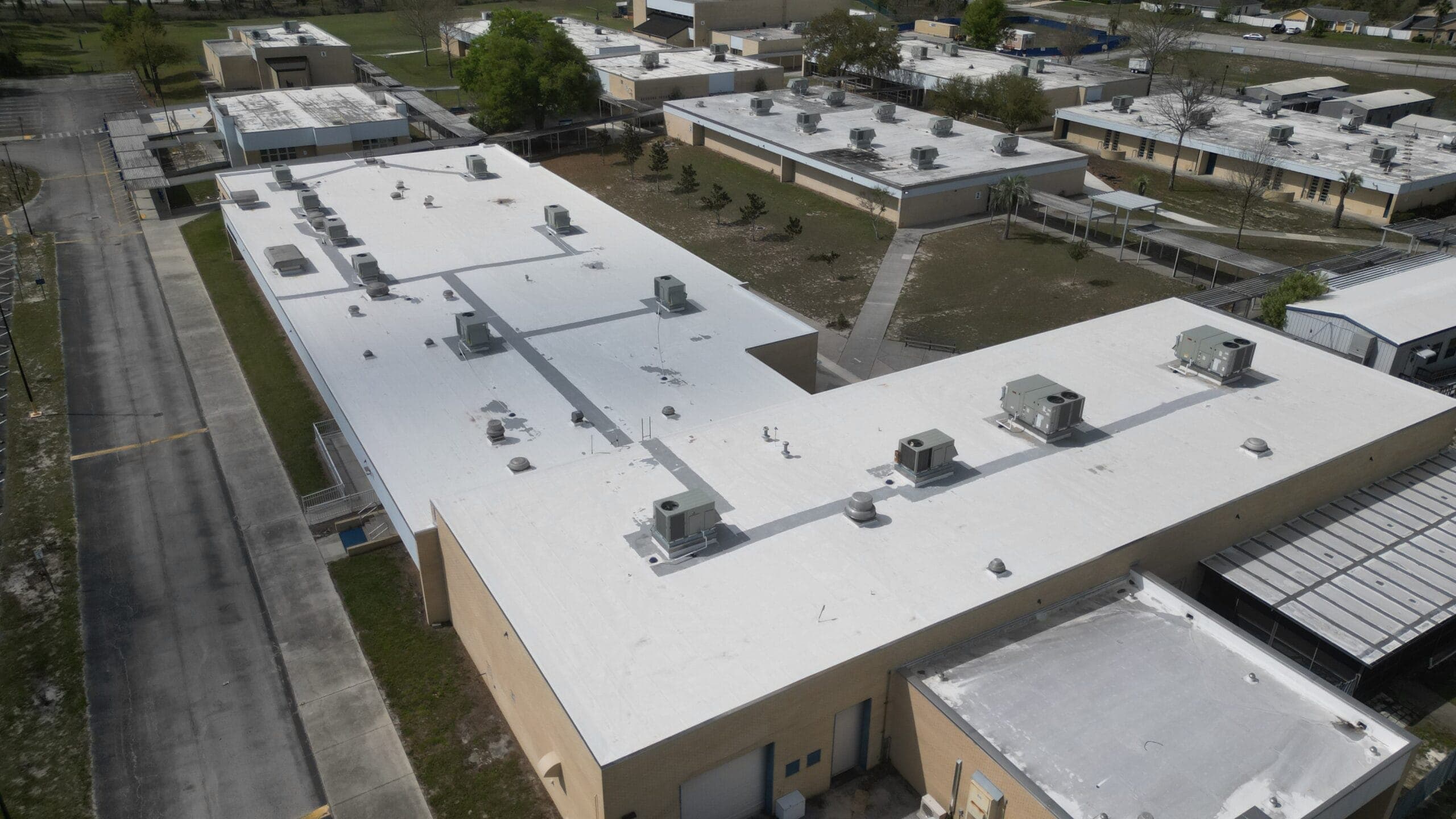
The differences between commercial and residential roofing go far beyond square footage. A residential roof is typically a pitched structure covered in asphalt shingles, and the homeowner’s main concern is usually whether it looks good and keeps rain out. Commercial roofing involves flat or low-slope structures, multiple penetrations for HVAC units and exhaust systems, stricter building codes, longer permit timelines, and materials that most residential contractors have never installed.
Flat roofs do not shed water the way a pitched roof does. Water pools. It sits. In Central Florida, where annual rainfall exceeds 50 inches and afternoon thunderstorms can dump two inches in under an hour, a flat roof with poor drainage will develop ponding water that accelerates membrane deterioration, adds structural load, and voids warranties if left unaddressed for more than 48 hours. Every commercial roof we install includes a drainage analysis. We verify that existing drains, scuppers, and gutters can handle the volume, and we add secondary drainage or tapered insulation to eliminate low spots when the existing system falls short.
Then there is the issue of penetrations. A typical residential roof might have a plumbing vent, a bathroom exhaust, and maybe a chimney. A commercial roof on a restaurant could have 15 or more penetrations for kitchen exhaust hoods, fresh air intakes, HVAC curbs, electrical conduit, gas lines, and satellite equipment. Every single penetration is a potential leak point. Flashing details around these penetrations account for a disproportionate share of commercial roof failures, and getting them right requires training specific to commercial membrane systems.
The structural considerations differ as well. Commercial buildings use steel decking, concrete decks, or wood systems that each require different attachment methods. A TPO membrane on a steel deck gets mechanically fastened. The same membrane on a concrete deck gets adhered. Using the wrong attachment method does not just void the warranty. It can lead to wind uplift failure during a hurricane, and in Florida, that is not a theoretical risk. It is something we see after every major storm season.
We also deal with occupied buildings. A homeowner can leave for the day while roofers work overhead. A warehouse full of product, a medical office seeing patients, or a restaurant serving lunch cannot shut down for two weeks. Commercial roofing requires phased installation plans, noise and debris management, and coordination with the building’s operations. We address all of this before the first material delivery arrives on site.
TPO, PVC, Modified Bitumen, and Metal: Choosing the Right System
Selecting a commercial roofing system is not as simple as picking the cheapest option on a bid sheet. Each material has specific strengths, limitations, and cost profiles that make it better suited for certain buildings and certain budgets. Here is how the main options break down for Central Florida commercial properties in 2026.
TPO (Thermoplastic Polyolefin) has become the most popular single-ply membrane in commercial roofing, and for good reason. Installed costs run $5 to $9 per square foot, which puts a 10,000-square-foot building somewhere between $50,000 and $90,000 depending on insulation requirements, deck condition, and the number of penetrations. TPO reflects UV radiation effectively, which helps with energy costs in Florida’s heat. It resists punctures reasonably well and the heat-welded seams create a monolithic bond that holds up better than adhesive-based seam methods. For most commercial buildings in our service area, TPO delivers the best balance of performance and value.
We recommend a minimum 60-mil membrane thickness for any commercial TPO installation in Florida. The UV exposure here is relentless, and thinner membranes degrade faster. Upgrading to 80-mil adds roughly $0.75 to $1.25 per square foot to the project cost, but it extends the expected service life by 5 to 10 years. On a 10,000-square-foot roof, that upgrade costs $7,500 to $12,500 and delays a full replacement that would cost $50,000 or more. The math works in the building owner’s favor almost every time.
PVC (Polyvinyl Chloride) shares many characteristics with TPO but costs more, typically $8 to $15 per square foot installed. That puts it 10 to 20 percent above TPO on most projects. The premium buys you superior chemical resistance, which matters on buildings where grease, oils, or chemical exhaust contact the roof surface. Restaurants with kitchen exhaust that deposits grease on the membrane, manufacturing facilities with chemical fumes, and buildings near industrial operations benefit from PVC’s resistance to those substances. PVC also has a longer track record than TPO, with some PVC roofs still performing after 30 years in service.
Modified Bitumen remains a solid choice for certain applications, running $4 to $9 per square foot installed. It uses asphalt-based sheets applied in multiple layers, creating a thick, durable surface that handles foot traffic well. Buildings with heavy rooftop equipment that requires frequent service visits benefit from modified bitumen’s walkability. The material also provides redundancy through its multi-layer construction. A puncture in the top layer does not immediately mean a leak, because the base sheet provides a second line of defense. The drawback is that modified bitumen absorbs more heat than reflective single-ply membranes, which increases cooling costs unless a reflective coating is applied.
EPDM (Ethylene Propylene Diene Monomer) costs $5 to $10 per square foot and has been a commercial roofing staple for decades. It handles temperature extremes well and offers good resistance to UV radiation. However, the seams are adhesive-based rather than heat-welded, which makes them the weak point of the system. In Florida’s heat, adhesive-based seams can soften and separate over time. We install EPDM when the building owner specifically requests it or when the existing system is EPDM and a restoration makes more sense than a full tear-off, but for new installations, we typically steer clients toward TPO or PVC.
Standing Seam Metal is an option for commercial buildings with sufficient slope, and it offers the longest potential service life of any commercial roofing system. Metal panels handle wind exceptionally well when properly installed, which is a significant advantage in hurricane-prone Central Florida. The initial cost is higher than membrane systems, but a metal roof can last 40 to 50 years with proper maintenance. We install metal roofing on warehouses, churches, retail buildings, and other commercial structures where the roof slope and budget support it.
Choosing the right system starts with understanding what the building does, what the roof surface deals with, and what the owner’s 10-year and 20-year plans look like. We lay all of this out during the initial consultation so the decision is based on real information rather than a sales pitch for whatever system carries the highest margin.
Apartment, condo, or HOA property? Protech also handles multi-family roofing projects across Hernando County and surrounding areas, with discreet scheduling and minimal disruption to residents.
How We Handle a 10,000-Square-Foot Roof Without Shutting Down Your Business
The question we hear most often from commercial building owners is not about materials or cost. It is about disruption. How long will this take? Will my tenants complain? Can my employees still work? Will customers avoid the building during construction?
These are legitimate concerns, and we plan for them before we ever load materials onto a truck.
A full replacement on a 10,000-square-foot commercial roof typically takes our crews 5 to 10 working days depending on the complexity of the project. That timeline accounts for tear-off of the existing system, inspection and repair of the deck, installation of insulation and the new membrane, flashing of all penetrations, and final inspection. Weather delays can extend that window, and in Central Florida’s summer months, afternoon storms are a near-daily occurrence. We build weather contingency into every commercial schedule.
Phasing is the key to minimizing disruption. Rather than tearing off the entire existing roof on day one and leaving the building exposed, we work in sections. We remove one area, install the new system, and make it watertight before moving to the next section. At the end of every workday, any exposed area gets temporarily sealed. This approach means the building stays operational throughout the project. Rain at 3 AM does not become an emergency.
We coordinate material deliveries to avoid blocking customer entrances, loading docks, or parking areas during peak business hours. For retail buildings, we schedule the loudest work, primarily tear-off and mechanical fastening, during off-peak hours when possible. For medical offices and schools, we work with facility managers to route foot traffic away from active work zones and schedule noisy operations around the building’s schedule.
Debris management is another area where commercial roofing differs from residential. Tearing off a 10,000-square-foot roof generates a significant volume of material that has to go somewhere. We position dumpsters strategically, use chutes to direct debris away from building entrances and pedestrian areas, and clean the site at the end of each day. The goal is that anyone visiting the building barely notices the work happening overhead.
Safety protocols on commercial sites are more involved than residential as well. We maintain fall protection systems, designate exclusion zones below active work areas, and ensure all crew members carry current OSHA certifications. For buildings with multiple tenants or high public traffic, we install signage and barriers that meet local requirements.
The result of all this planning is that your building keeps operating. Your tenants keep paying rent. Your patients keep showing up. Your customers keep walking through the front door. The roof gets replaced, and the disruption stays minimal.
Warranty Programs That Actually Protect Commercial Building Owners
Commercial roofing warranties vary enormously, and many building owners discover the hard way that the warranty they thought they had does not actually cover what went wrong. Understanding the difference between a manufacturer’s material warranty and a full system warranty is critical before signing any contract.
A standard material warranty covers defects in the roofing membrane itself. If the TPO or PVC material breaks down prematurely due to a manufacturing defect, the manufacturer will provide replacement material. But it typically will not cover the labor to remove the failed material and install new material. It also will not cover damage to the building’s interior caused by leaks from the defective product. For a commercial building, the labor and interior damage costs often exceed the material cost by a wide margin.
The warranties worth having are NDL (No Dollar Limit) system warranties from manufacturers like GAF, Carlisle, and Firestone. These warranties cover both materials and labor with no cap on the dollar amount. If the roof fails during the warranty period due to a manufacturing defect, the manufacturer covers the full cost of repair or replacement including labor. NDL warranties are available in terms ranging from 10 to 30 years, and the longer terms require specific installation details, insulation values, and membrane thicknesses.
Here is what most building owners do not realize: NDL warranties are only available through certified contractors. A roofing company that is not certified by the manufacturer cannot offer you an NDL warranty regardless of what their proposal says. Protech Roofing Services holds certifications from GAF, Carlisle, and Firestone, which means we can offer NDL warranties from three of the largest commercial roofing manufacturers in North America. This gives building owners options rather than being locked into a single manufacturer’s system.
These warranty programs also come with maintenance requirements. Most NDL warranties require semi-annual inspections performed by a certified contractor, with documentation submitted to the manufacturer. Skip the inspections, and the manufacturer has grounds to deny a claim. We offer maintenance programs specifically designed to keep commercial warranties valid. Our crews inspect the roof twice per year, document the condition of every seam, flashing, drain, and penetration, perform minor maintenance as needed, and submit the required reports to the manufacturer.
For building owners who plan to hold a property long-term, the 20 or 30-year NDL warranty provides genuine peace of mind. For investors who may sell the property within a few years, these warranties transfer to new owners, which adds real value to the building during a sale. Either way, the warranty only works if the roof was installed correctly by a certified contractor and maintained according to the manufacturer’s requirements. Cutting corners on either front turns a warranty into a piece of paper that means nothing when you need it most.
Permits, Plan Review, and Multi-Jurisdiction Requirements
Commercial roofing projects in Central Florida require permits in every county and municipality we serve. There are no exceptions. Any contractor who suggests otherwise is either unfamiliar with the code or planning to skip the process entirely, both of which create serious problems for the building owner down the road.
The permitting process for commercial roofing is more involved than residential. Commercial projects require plan review, which means the building department examines the proposed roofing system, insulation values, attachment methods, and wind uplift ratings before issuing the permit. This review ensures the proposed system meets the Florida Building Code and local amendments. Plan review timelines vary by jurisdiction. Some departments turn reviews around in a week. Others take three to four weeks during busy periods. We factor this timeline into every commercial project schedule and submit complete, accurate applications to minimize back-and-forth with plan reviewers.
Working across seven counties means dealing with multiple building departments, each with its own processes, fee structures, and inspection requirements. Hernando County runs its building division out of 789 Providence Blvd in Brooksville. Pasco County has its own department with separate processes. When we work in Tampa, we deal with the City of Tampa’s building department rather than the Hillsborough County department. St. Petersburg has its own building department separate from Pinellas County. Citrus, Sumter, and Polk counties each have their own systems as well.
Navigating these different jurisdictions is something we handle completely. The building owner does not need to figure out which department has jurisdiction, what forms to submit, or what fees to pay. We pull the permits, schedule the inspections, and ensure the project passes final inspection. The permit gets closed out properly, which matters when the building owner sells the property or files an insurance claim. An open or missing permit creates complications that far exceed the cost of doing it right the first time.
Florida Building Code compliance is not optional, and the 8th Edition currently in effect includes specific requirements for commercial roofing that did not exist in earlier versions. Wind uplift ratings, fastener patterns, edge metal specifications, and insulation requirements are all dictated by the code based on the building’s location, height, and exposure category. Central Florida sits in a wind zone that requires serious attention to uplift resistance, and hurricane season runs from June through November every year. A roof system that meets code provides the baseline level of protection. Our installations meet or exceed code requirements because the code represents the minimum, not the target.
Inspections happen at multiple stages during a commercial roofing project. The building department inspects the deck condition after tear-off, the insulation and attachment before the membrane goes down, and the completed system before closing the permit. We schedule these inspections to align with our work phases so the crew is not sitting idle waiting for an inspector. Keeping the project moving while hitting every inspection milestone requires coordination that comes from experience working in these jurisdictions consistently.
Energy Code Compliance and Cool Roof Technology
Florida’s energy code, aligned with the International Energy Conservation Code (IECC), places specific requirements on commercial roofing that directly affect material selection, insulation values, and system design. These are not suggestions. They are code requirements that the building department verifies during plan review and inspection.
The R-value requirements for commercial roof insulation depend on the building’s climate zone and the type of construction. Central Florida falls in Climate Zone 2, which has specific minimum insulation values for commercial buildings. Meeting these values typically requires polyisocyanurate (polyiso) insulation boards installed above the deck, and the thickness depends on the R-value target. When we assess an existing commercial roof for replacement, one of the first things we check is whether the current insulation meets current code. If it does not, the new system must include upgraded insulation to achieve compliance. This adds cost but also reduces the building’s energy consumption, often significantly.
Cool roof requirements are another energy code consideration. The Solar Reflectance Index (SRI) measures a roofing surface’s ability to reject solar heat. Florida’s code requires commercial roofs to meet minimum SRI values, which is one reason white TPO and PVC membranes are so popular in this market. A white 60-mil TPO membrane typically achieves an initial SRI above 80, well above the minimum threshold. Dark-colored membranes or built-up roofing systems may not meet the SRI requirement without a reflective coating.
The energy impact of a cool roof in Central Florida is substantial and measurable. A building with a dark, heat-absorbing roof in July can see rooftop surface temperatures above 170 degrees. The same building with a white TPO membrane might see surface temperatures of 110 to 120 degrees. That 50 to 60-degree difference translates directly to reduced heat transfer into the building, lower cooling loads on the HVAC system, and lower electricity bills. For a 10,000-square-foot commercial building, the annual energy savings from a cool roof can run $2,000 to $5,000 depending on the building’s HVAC efficiency, insulation values, and operating hours.
Some building owners view energy code compliance as a burden. We see it as an opportunity to reduce operating costs while meeting legal requirements. The insulation and reflective membrane you are required to install also happen to be the components that save you money every month. The code and the building owner’s financial interest are aligned on this one.
Beyond code minimums, there are utility incentive programs and tax considerations that can further offset the cost of energy-efficient roofing. We help building owners identify applicable programs during the proposal phase so the financial picture is complete before they make a decision.
Proper ventilation ties into energy performance as well. Commercial buildings with inadequate ventilation trap heat in the roof assembly, which degrades insulation performance and shortens membrane life. During every commercial roof assessment, we evaluate the ventilation system and recommend improvements when warranted. Sometimes adding ridge vents or exhaust fans to a commercial roof costs a few thousand dollars but extends the roof’s life by years and reduces cooling costs immediately.
Maintenance Programs That Prevent Six-Figure Surprises
A commercial roof is one of the most expensive components of any building, and the most common way building owners lose money on it is through neglect. A small split in a flashing that costs $300 to repair becomes a $30,000 section replacement when it goes undetected for two years. Ponding water that could be resolved with a drain cleaning leads to membrane deterioration that requires full replacement. The pattern repeats across thousands of commercial buildings every year because the roof is out of sight and out of mind until water starts coming through the ceiling.
Our commercial maintenance programs are structured around the semi-annual inspection schedule that most manufacturer warranty programs require. Twice per year, our crews access the roof and perform a systematic inspection that covers every component of the system.
We check membrane condition across the entire surface, looking for blisters, punctures, tears, or areas where the membrane has thinned from UV exposure. We inspect every seam for separation, lifting, or cracking. We examine all penetration flashings for adhesion loss, cracking, or gaps. We clear debris from drains, scuppers, and gutters, and verify that water flows freely to all drainage points. We check edge metal and coping for secure attachment and proper overlap. We inspect any rooftop equipment for damage to the membrane beneath or around the units. We document everything with photographs and condition ratings.
After the inspection, the building owner receives a detailed report showing the current condition of every roof component, any deficiencies found, recommended repairs with estimated costs, and the overall remaining service life estimate. This report also serves as the documentation required to maintain manufacturer warranty coverage.
Minor repairs identified during inspections get handled on the spot when possible. A loose flashing, a clogged drain, a small puncture from fallen debris: these are 15-minute fixes during a scheduled inspection but potential leak sources if left until the next visit. For larger issues that require scheduling and material procurement, we provide a separate repair proposal with a timeline.
The cost of a commercial maintenance program is modest relative to the roof’s value. For most buildings in the 5,000 to 20,000-square-foot range, twice-annual inspections and minor maintenance run $800 to $2,000 per year. Compare that to the cost of a premature full replacement: $50,000 to $200,000 or more depending on the building size. Maintenance extends roof life, keeps warranties valid, catches problems early, and gives the building owner reliable data for capital planning.
Buildings with flat roofs in Central Florida face particular maintenance challenges. The combination of heavy rainfall, high humidity, and intense UV creates conditions that stress every roofing material. Organic debris from nearby trees holds moisture against the membrane and accelerates deterioration. Standing water from clogged drains creates concentrated stress points. And hurricane season brings the annual risk of wind damage that may not be obvious from ground level but shows up clearly during a roof inspection.
We currently maintain commercial roofs on properties ranging from 3,000-square-foot retail buildings to 50,000-square-foot warehouse facilities across all seven counties in our service area. The building owners who invest in maintenance consistently avoid the emergency calls and six-figure surprises that hit their neighbors who skip it.
Why Central Florida Building Owners Choose Protech Roofing Services
Choosing a commercial roofing contractor is a decision that affects your building’s performance, your operating costs, and your bottom line for the next 20 to 30 years. The roof system installed today will be up there working through every hurricane season, every afternoon thunderstorm, and every 95-degree July afternoon for decades. The contractor you choose determines whether that system performs as designed or becomes a recurring expense.
Protech Roofing Services brings several things to the table that matter for commercial building owners in Central Florida.
We are locally based in Spring Hill, which means we are not flying crews in from another market. When a hurricane passes through Hernando County and you need someone on your roof the next morning, we are 20 minutes away, not four hours. Local presence means faster response for emergencies and better accountability for warranty service.
Our manufacturer certifications from GAF, Carlisle, and Firestone are not just logos on a website. They represent training, testing, and ongoing evaluation that qualify us to install these manufacturers’ premium warranty systems. Building owners get access to NDL warranty programs covering 10 to 30 years because we have met and maintained the standards these manufacturers require.
We work across all seven counties in the Central Florida region, which means we understand the permitting requirements, inspection processes, and code nuances specific to each jurisdiction. A contractor who works primarily in one county and occasionally picks up a job across county lines may not realize that the permit process, fee structure, or inspection requirements differ until they are already on the job. We handle multi-jurisdiction projects routinely.
Our crews are trained specifically for commercial roofing systems. We do not pull residential shingle crews off a house and put them on a 10,000-square-foot TPO installation. Commercial membrane roofing requires different skills, different equipment, and different quality control processes. Our commercial crews weld seams, flash penetrations, and detail edge conditions on commercial roofs every week. That repetition builds the kind of consistency that shows up in leak-free roofs and passed inspections.
Every commercial project we take on starts with a thorough assessment and ends with a closed permit and warranty documentation in the building owner’s hands. In between, we manage the project from material procurement through final inspection, handling scheduling, coordination, safety, and communication throughout. The building owner has a single point of contact and knows exactly where the project stands at every stage.
Commercial roofing is a significant investment. A 10,000-square-foot TPO roof at $50,000 to $90,000 is not a purchase you make casually, and it is not one where the lowest bid serves you well. The lowest bid on a commercial roof usually means thinner membrane, fewer fasteners, rushed installation, and a warranty that covers less than you think. We provide detailed proposals that show exactly what you are getting: membrane type and thickness, insulation type and R-value, attachment method, warranty terms, project timeline, and total cost with no hidden fees.
If you own or manage a commercial building anywhere in Hernando, Citrus, Pasco, Sumter, Polk, Hillsborough, or Pinellas County and you need a roofing contractor who understands the difference between covering a building and protecting a business, call Protech Roofing Services at (352) 605-0696. We will schedule a roof assessment, review your options, and provide a proposal that gives you the information you need to make a confident decision.
We service commercial buildings, retirement community plazas, and town squares across Central Florida — including Spring Hill, Brooksville, Tampa, and the commercial centers of The Villages at Spanish Springs, Lake Sumter Landing, and Brownwood Paddock Square.
FAQ
Frequently Asked Questions
Where can I find a commercial roofing contractor near me for my Florida business?
+
What types of commercial roofing systems do you install?
+
How do you minimize business disruption during commercial roof work?
+
What warranties are available for commercial roofing?
+
How often should a commercial roof be inspected?
+
What are signs that a commercial roof needs replacement rather than repair?
+
Do you offer commercial roofing near me?
+
Roofing Knowledge
Articles and guides for homeowners
Roofing Warranties in Florida: What Voids Them
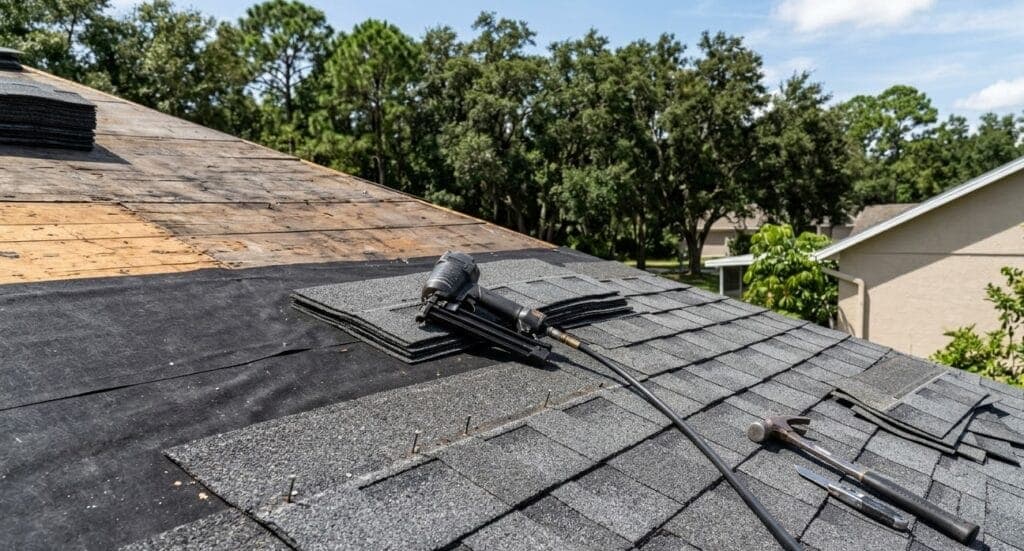
A new Florida roof usually carries two warranties: one from the manufacturer for the product and one from the contractor for the installation. Here is what each covers, what quietly voids them and how to keep your coverage.
Read ArticleSolar Roofing in Florida: Solar Shingles vs Panels (2026)
Every solar system on a Florida roof is either bolted to the roof or is the roof. Here is how panels and solar shingles compare in 2026, what changed with the federal credit, and why the cheapest solar project often starts with a re-roof.
Read Article
Pinellas Flood Zone Roofing: The 49% Rule Explained
Every article calls it the FEMA 50 percent rule. In unincorporated Pinellas County the number that governs your permit is 49 percent, measured against structure value without land. Here is what counts toward it, where a roof replacement actually lands in that math, and why simultaneous permits still aggregate even where the lookback period was repealed.
Read ArticleReady When You Are
Get your free roof inspection today.
No-pressure, written estimate. Same-week scheduling across Hernando County. Call us now or request a visit online.