Roofing Services in Hillsborough County, FL
Protech Roofing Services handles roofing for homes and businesses across Hillsborough County. Call (352) 605-0696 for your free estimate.
Roofing Services We Provide in Hillsborough County
Hillsborough County’s diversity of properties demands a roofing company that can handle just about anything. Protech Roofing Services covers the full range of residential and commercial roofing work, and we bring the same level of attention to a single-family repair as we do to a large-scale commercial installation.
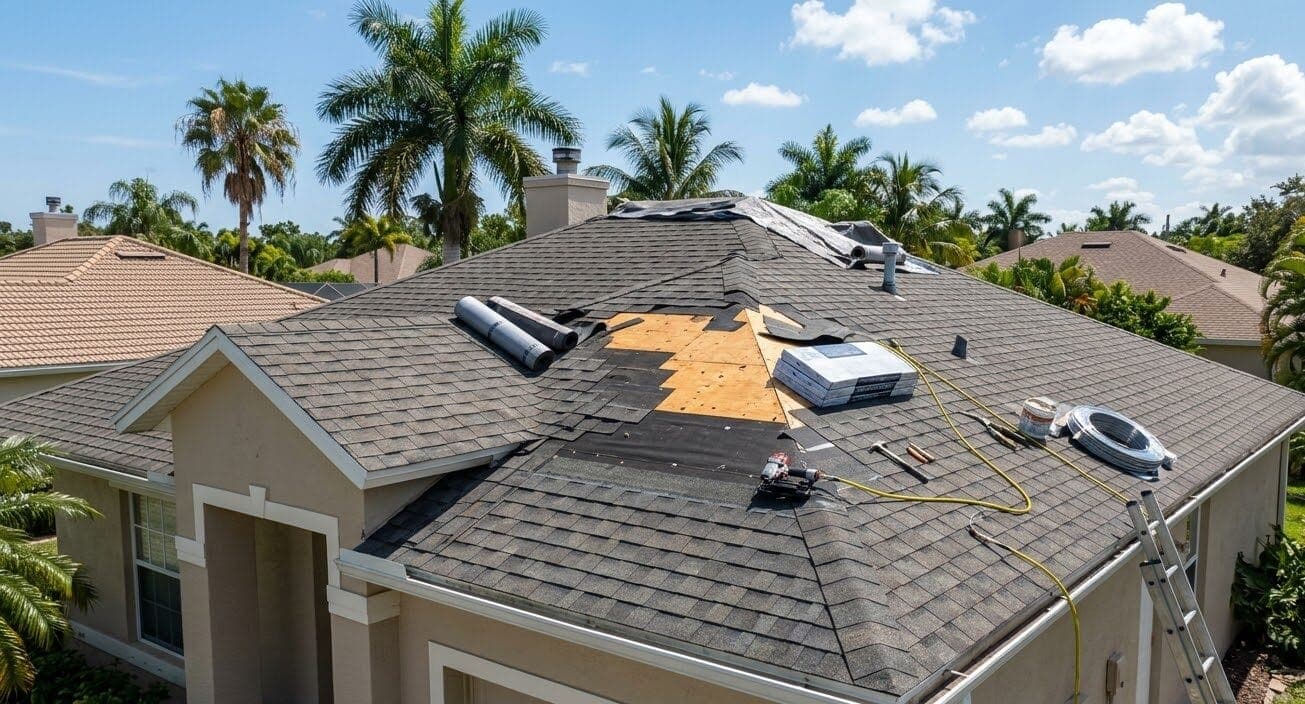
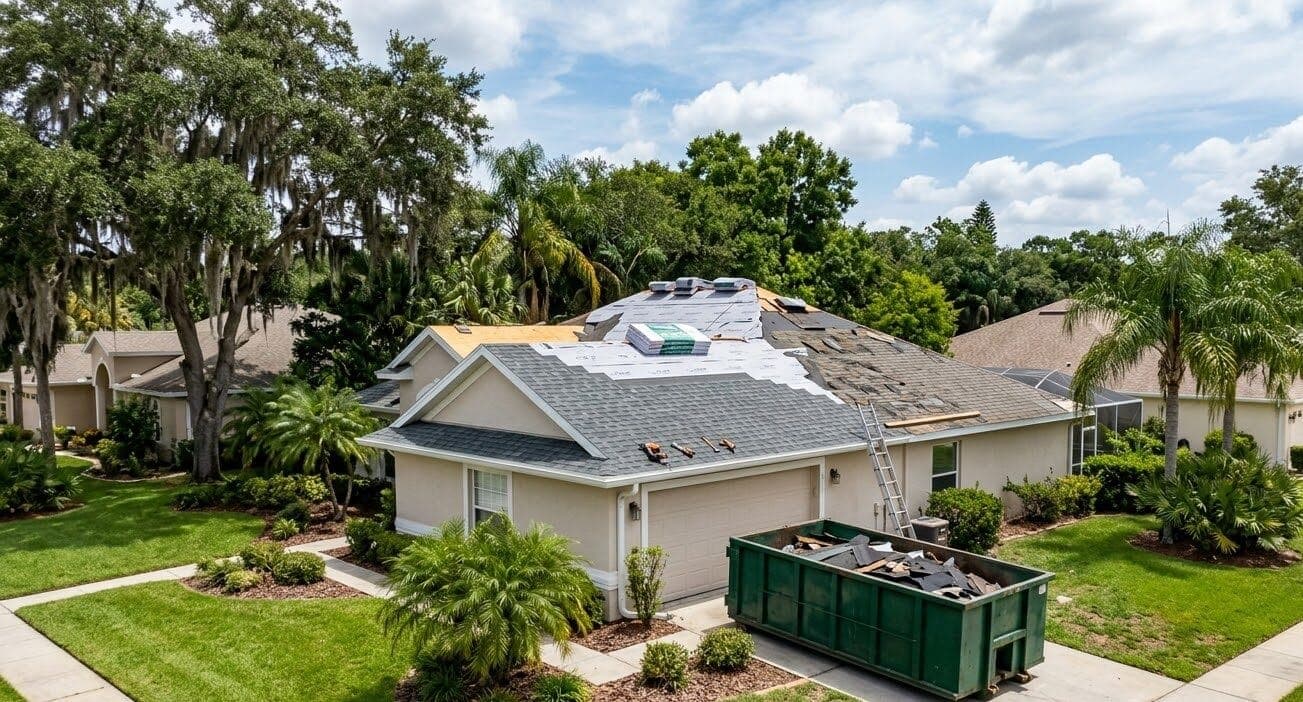
Roof replacement is the core of what we do. When a Hillsborough County roof reaches the end of its functional life, whether from age, storm damage, or accumulated wear, we manage the entire replacement process from start to finish. That begins with a free on-site estimate where we inspect the existing roof, discuss your options for materials and colors, and provide a written quote with no hidden fees. Once you give us the go-ahead, we pull the Hillsborough County permit, order materials, schedule the work, and execute the installation with our trained crew. We work with every major roofing material on the market: architectural and designer asphalt shingles, standing seam and corrugated metal panels, concrete and clay barrel tile, flat roof membranes including TPO, PVC, and modified bitumen, and specialty products for unique applications.
Roof repairs cover a wide range of situations, from the straightforward to the complicated. A few missing shingles after a thunderstorm? That’s a quick fix. A persistent leak that three other roofers have failed to solve? That’s where our diagnostic experience really shows. We don’t just patch over the spot where water is appearing on your ceiling. We trace the leak back to its actual source, which is often several feet away from where the stain shows up, and we fix the root cause. Pipe boot replacements, flashing re-work, valley repairs, ridge cap replacement, tile re-setting, and sealant renewal are all part of our repair repertoire.
Inspections give Hillsborough County homeowners the information they need to make smart decisions about their roof. We offer pre-purchase inspections for buyers considering a home, annual maintenance inspections for current homeowners, post-storm inspections to document damage for insurance claims, and warranty inspections that satisfy manufacturer requirements. Each inspection includes a written report with photos, findings, and recommendations. You’ll know exactly what condition your roof is in, what needs immediate attention, and what can wait.
Gutter systems are an integral part of your roof’s drainage, and we install, repair, and replace gutters throughout Hillsborough County. Smooth aluminum gutters in 5-inch and 6-inch profiles are our most popular option for residential properties. We also install gutter guards to reduce debris accumulation, downspout extensions to direct water away from your foundation, and rain chains for homeowners who prefer a decorative alternative. Properly functioning gutters protect your fascia, soffit, foundation, and landscaping from the heavy rains that Hillsborough County gets every summer.
Soffit and fascia work rounds out our service offerings. These components cover the underside of your roof overhang (soffit) and the board at the edge of the roof where gutters attach (fascia). In Hillsborough County’s humid climate, wood fascia boards rot over time, and soffit panels can be damaged by wind, water, or animal intrusion. We replace damaged sections or complete perimeters using aluminum, vinyl, or composite materials that resist moisture and last much longer than the original wood. And because soffit vents are a critical part of your attic ventilation system, we make sure replacement soffits maintain proper airflow.
Emergency services are available for Hillsborough County property owners dealing with sudden roof damage. When a tree falls on your roof during a storm, or wind peels off a section of shingles and rain is pouring in, you need fast response. Our emergency team provides tarping and temporary stabilization to stop active water intrusion. We prioritize these calls because we know that every hour of delay means more damage to your home’s interior, your belongings, and the structural integrity of the building. After the emergency is contained, we transition into the permanent repair or replacement process.
How Hillsborough County’s Climate Impacts Roofing
Hillsborough County’s climate combines tropical warmth, coastal humidity, intense sun exposure, and seasonal storm activity into a mix that tests every roofing system installed here. If you’re choosing materials, planning maintenance, or wondering why your roof isn’t lasting as long as the warranty suggested it should, the climate is almost certainly a factor.
The Tampa Bay influence on Hillsborough County’s weather cannot be overstated. The bay creates a moisture-laden atmosphere that keeps relative humidity above 70% for much of the year. That persistent moisture affects roofing materials in several ways. Asphalt shingles in Hillsborough County develop algae staining (those dark streaks running down south-facing slopes) faster than identical shingles installed in drier climates. Algae-resistant shingles containing copper granules can slow this process, and we recommend them for most Hillsborough County installations. But even with algae-resistant products, the humid environment promotes the growth of mold and mildew on any organic material, including the wood components of your roof system like decking, rafters, and fascia.
Heat is relentless. Hillsborough County averages more than 240 days of sunshine per year, and summer temperatures routinely hit the mid-90s. But the real story is on the roof surface, where temperatures can reach 150 to 170 degrees Fahrenheit during peak afternoon sun. That kind of heat accelerates the oxidation of asphalt shingles, causes expansion in metal components, softens adhesive sealant strips, and degrades the rubber gaskets around roof penetrations. Over a 20-year period, a Hillsborough County roof absorbs dramatically more heat energy than the same roof would in a northern climate, and that accumulated heat exposure shortens the functional lifespan of almost every roofing material.
Rainfall in Hillsborough County averages around 46 to 52 inches per year, but the distribution is uneven. About 60% of the annual rainfall arrives between June and September in the form of intense afternoon thunderstorms. These storms regularly produce rainfall rates exceeding two inches per hour, and some of the more powerful cells drop three or four inches in under an hour. Your roof and gutter system need to handle these extreme flow rates without overflow or backup. Flat and low-slope roofs are especially vulnerable because water moves slowly across these surfaces, giving it more time to find any weakness in the membrane or flashing.
Wind is a constant concern in Hillsborough County. The county sits in a wind zone that requires roofing materials to be rated for speeds up to 140 mph in most locations, with higher requirements closer to the coast and in certain exposure categories. But you don’t need a hurricane for wind to damage your roof. The severe thunderstorms that fire up nearly every summer afternoon can produce localized gusts of 60 to 80 mph, and downbursts from collapsing thunderstorm cells can generate even higher speeds in very concentrated areas. These wind events peel back improperly fastened shingles, lift unsecured metal panels, and drive rain horizontally under overlapping materials. Proper installation, with correct nail patterns, adequate sealant, and code-compliant attachment methods, is the best defense.
Salt air affects properties in western Hillsborough County and the areas closest to Tampa Bay. While salt exposure is more severe in the immediate coastal zone (Pinellas County, for example), properties within a few miles of the bay still experience enough salt deposition to accelerate corrosion on metal components. Galvanized flashing, exposed fastener metal roofs, and gutter hardware all have shorter lifespans in salt-influenced environments. We recommend stainless steel or higher-grade aluminum hardware for properties in these areas and can advise on materials that resist salt corrosion more effectively.
All of these climate factors combine to create an environment where roof maintenance isn’t optional. Hillsborough County homeowners who skip annual inspections and defer minor repairs often end up facing much more expensive problems down the road. Protech Roofing Services helps you stay ahead of the climate by recommending appropriate materials, performing quality installations, and providing the ongoing maintenance that keeps your roof performing through decades of Florida weather.
Commercial Roofing Throughout Hillsborough County
Hillsborough County is a major commercial and industrial hub, and the county’s commercial buildings have roofing needs that are distinct from residential properties. Protech Roofing Services provides commercial roofing services for businesses, property management companies, HOAs, government facilities, and nonprofit organizations throughout the county.
Most commercial buildings in Hillsborough County feature flat or low-slope roof systems. These roofs are functionally different from the pitched shingle or tile roofs you see on homes. They rely on membrane systems that create a continuous, waterproof barrier across the entire roof surface, with sealed seams, perimeter details, and drain systems designed to move water off the roof without relying on gravity and slope the way a pitched roof does.
TPO roofing is the most popular choice for commercial properties in our area. The white thermoplastic membrane reflects a significant percentage of the sun’s energy, reducing the cooling load on the building and lowering energy costs. In Hillsborough County’s hot climate, the energy savings alone can make TPO a cost-effective upgrade over older, darker roof systems. TPO seams are heat-welded, creating bonds that are actually stronger than the membrane material itself. And the system is lightweight, which means it can be installed on existing structures without adding structural load concerns.
PVC roofing shares many of TPO’s benefits, with the added advantage of superior chemical resistance. For Hillsborough County buildings where the roof is exposed to grease exhaust from commercial kitchens (restaurants, food processing facilities) or chemical fumes from industrial operations, PVC is often the better choice. The material won’t degrade from exposure to oils and chemicals that would damage a TPO membrane. We install PVC systems on commercial properties where the operating environment demands this higher level of chemical resistance.
Modified bitumen remains a reliable option for commercial flat roofs, especially where foot traffic is a consideration. Buildings with rooftop HVAC units, communication equipment, or solar panel arrays need a roof surface that can handle regular maintenance traffic without damage. Modified bitumen’s multi-layer construction creates a thick, durable surface that withstands foot traffic better than single-ply membranes. We install both torch-applied and self-adhering modified bitumen systems depending on the building’s requirements and any fire-related restrictions.
Metal roofing serves a dual role in Hillsborough County’s commercial market. Standing seam metal is an excellent choice for commercial buildings with sloped roofs, such as churches, retail centers, and office buildings with architectural roof features. It offers a 40 to 60-year lifespan, outstanding wind resistance, and very low maintenance requirements. For large-span buildings like warehouses, distribution centers, and agricultural facilities, exposed fastener metal panels provide a cost-effective and durable covering. Hillsborough County’s industrial areas along the I-4 and I-75 corridors have thousands of metal-roofed buildings, and Protech services many of them.
Commercial roof maintenance programs are one of the most important services we offer Hillsborough County business owners. A proactive maintenance schedule catches problems at the $500 stage instead of the $50,000 stage. Our maintenance visits include clearing drains and scuppers, inspecting and re-sealing membrane seams and flashings, checking for signs of moisture intrusion, evaluating the condition of rooftop equipment curbs, and documenting the overall state of the roof. These reports create a maintenance history that supports warranty claims and helps with long-term capital planning.
We understand that commercial roofing projects need to be coordinated around your business operations. Retail stores can’t have a construction zone in their parking lot during peak shopping hours. Restaurants can’t have their dining areas disrupted by overhead noise and vibration. Warehouses can’t have their operations shut down while the roof is open. We work with Hillsborough County business owners to schedule our commercial projects in ways that minimize disruption, whether that means working in sections, scheduling during off-hours, or coordinating with your operational calendar. The goal is always to deliver a quality roof while keeping your business running.
Building Codes and Roof Permits in Hillsborough County
Hillsborough County takes building codes seriously, and for good reason. Florida’s building code is one of the strictest in the nation, with wind resistance, water infiltration, and structural requirements that reflect the real-world dangers of hurricanes and severe storms. Every roof replacement in Hillsborough County requires a permit, and Protech Roofing Services handles the entire permitting process so you don’t have to.
The permitting authority depends on where your property is located within the county. Properties inside the city limits of Tampa go through the City of Tampa Building Services department. Properties in Temple Terrace are permitted through that city’s building division. Plant City has its own permitting process as well. And properties in the unincorporated areas of Hillsborough County, including Brandon, Riverview, Valrico, and many other communities, are permitted through the Hillsborough County Building Services Department. Protech works with all of these jurisdictions regularly and knows the specific requirements, timelines, and inspectors in each one.
The permit application requires detailed information about the project: the property address, the scope of work, the roofing materials being used (with product specifications and approval numbers), the contractor’s license and insurance information, and the estimated project cost. For some projects, especially those involving structural changes, additional engineering documentation may be required. We prepare all of this documentation as part of our standard process. You sign the contract, and we handle the rest.
Florida Building Code requirements for roofing in Hillsborough County include specific standards for wind resistance, underlayment, fastener patterns, flashing installation, and ventilation. The wind speed design requirement for most of Hillsborough County is 140 mph for the basic wind speed, with adjustments based on the building’s exposure category (how open or sheltered the site is) and the importance of the structure. Roofing materials must carry product approvals showing they meet these wind speed requirements when installed according to their approved specifications.
Underlayment requirements in the Florida Building Code are more stringent than in most other states. For shingle roofs, a minimum of one layer of ASTM D226 Type I (15-pound felt) or equivalent synthetic underlayment is required, with specific overlap requirements and enhanced attachment in the first four feet from the eave edge. Many contractors, including Protech, go beyond the minimum by installing peel-and-stick self-adhering underlayment in the most vulnerable areas (valleys, eaves, rakes, and around penetrations) even when the code doesn’t strictly require it. This extra layer of protection provides significant benefit in a county that gets as much wind-driven rain as Hillsborough.
After the roof installation is complete, a final inspection by the county or city building inspector is required before the permit can be closed. The inspector verifies that the materials match the approved plans, the installation follows code requirements, and the finished product meets the standards that protect you and your family. Protech schedules this inspection and is present when the inspector arrives so we can address any questions on the spot. Our goal is to pass every final inspection on the first visit, and our track record reflects that commitment.
Why does any of this matter to you as a homeowner? Because an unpermitted roof can create serious problems. Your insurance company can deny a claim on an unpermitted roof. A buyer’s inspector will flag it during a home sale, potentially killing the deal or forcing you to redo the work with a permit. And if an unlicensed or negligent contractor installs a roof without meeting code, your family’s safety during a storm is compromised. The permit process exists to protect you, and Protech treats it as a non-negotiable part of every roofing project.
Protecting Your Hillsborough County Roof During Hurricane Season
Hurricane season runs from June 1 through November 30, and Hillsborough County sits in one of the most vulnerable parts of the Florida peninsula. Tampa Bay’s geography actually funnels storm surge during certain hurricane approach angles, which amplifies the danger for waterfront and low-lying properties. But even inland areas of the county, from Brandon to Plant City, face significant wind and rain risks from tropical systems. Your roof is the primary barrier between your family and the elements, and making sure it’s ready before storm season starts is one of the most practical steps you can take as a homeowner.
Pre-season inspections are the foundation of hurricane preparedness for your roof. Protech recommends scheduling an inspection in April or May, while there’s still time to address any problems before the storms arrive. During the inspection, we look for loose or damaged shingles, deteriorated flashing, compromised sealants around penetrations, clogged gutters and downspouts, and any other vulnerabilities that could fail under storm conditions. We pay special attention to ridge caps, hip caps, and edge details, which are the areas most susceptible to wind uplift.
If your roof is approaching the end of its expected lifespan, hurricane season is a compelling reason to move up the replacement timeline. A roof with 15-year-old shingles that are curling and losing granules is not going to perform well in 100 mph winds. And a roof failure during an active hurricane creates a catastrophic situation that’s far more dangerous, disruptive, and expensive than a planned replacement during the dry season. We help Hillsborough County homeowners evaluate the remaining useful life of their roof and make informed decisions about whether to repair, maintain, or replace before storm season.
For homeowners whose roofs are in good condition, there are still preparation steps that improve storm performance. Trim any tree branches that overhang the roof or come within striking distance. During high winds, branches become battering rams that can punch through shingles, tiles, and even decking. Clear your gutters and downspouts completely. During a heavy tropical rain, a clogged gutter system sends water cascading over the fascia and can push moisture under the drip edge. Inspect your attic from inside, looking for any daylight coming through the roof (which indicates holes or gaps) and checking that ventilation components are secure and functional.
After a storm passes through Hillsborough County, resist the urge to climb on your roof to check for damage. Wet roofing surfaces are extremely slippery, and structural damage may not be visible until weight is applied to the weakened area. Instead, inspect from the ground using binoculars, or call Protech for a professional post-storm inspection. We have the equipment, training, and insurance to safely assess storm damage on any type of roof.
If your roof does sustain storm damage, document everything you can see from ground level with photos and video before any temporary repairs are made. Then call your insurance company to report the claim and call Protech at (352) 605-0696 for emergency tarping and damage assessment. The documentation we provide during our assessment becomes a key part of your insurance claim, and our detailed reports help ensure you receive fair compensation for the actual damage.
One more thing that Hillsborough County homeowners should keep in mind: your roof’s wind resistance is only as good as its installation. A shingle rated for 130 mph winds will fail at 80 mph if it’s nailed in the wrong spot or if the adhesive strip wasn’t properly activated. This is why choosing a qualified, licensed roofing contractor matters so much. Protech installs every roof to meet or exceed the code requirements for wind resistance, because in Hillsborough County, hurricane season isn’t a question of if but when.
Waterfront and Coastal Roofing Challenges in Hillsborough County
Hillsborough County has hundreds of miles of shoreline along Tampa Bay, the Hillsborough River, the Alafia River, and numerous smaller waterways. Properties near these bodies of water face a unique set of roofing challenges that inland homes don’t encounter, and addressing these challenges requires materials and techniques tailored to the coastal and waterfront environment.
Salt air is the most persistent threat to waterfront roofs in Hillsborough County. The salt carried in air coming off Tampa Bay gradually corrodes metal components on your roof. Galvanized steel flashing, standard aluminum gutter hardware, exposed screw heads on metal roofing, and even the metal strips in ridge vents all experience accelerated corrosion in salt-influenced environments. The corrosion doesn’t happen overnight, but over five to ten years, it can compromise the integrity of these components enough to allow water infiltration. For waterfront properties, we specify marine-grade or stainless steel hardware, upgraded aluminum alloys, and protective coatings on all exposed metal surfaces.
Wind exposure is amplified near water because there are no trees, buildings, or terrain features to break the wind’s path before it reaches your roof. Properties along the bay, in neighborhoods like Ballast Point, Davis Islands, Bayshore, and Apollo Beach, sit in higher wind exposure categories under the Florida Building Code. That means stricter fastening requirements, enhanced underlayment, and sometimes structural reinforcement to handle the increased wind loads. Protech factors these exposure conditions into every waterfront roofing project, specifying materials and installation methods that meet the code requirements for the specific location.
Moisture exposure is constant for waterfront properties. The proximity to water creates a microclimate with even higher humidity than the county’s already-humid baseline. Roofs on waterfront homes stay damp longer after rain, dew forms more frequently, and the continuous moisture promotes algae, mold, and fungal growth on every surface. This affects not just the roof’s appearance but its structural integrity over time. Wood components rot faster. Adhesive bonds degrade sooner. And any breach in the waterproof barrier allows moisture-laden air into the attic space, where it can condense on cooler surfaces and create hidden water damage.
Material selection for Hillsborough County waterfront properties deserves careful consideration. Metal roofing with appropriate protective coatings (Kynar/PVDF finishes on standing seam systems) offers excellent performance in salt air environments and can last 40 to 50 years with minimal maintenance. Concrete tile is another strong option because the material itself is impervious to salt corrosion, though the underlayment beneath it still needs to be premium quality to handle the increased moisture exposure. If you prefer asphalt shingles, choose a product with algae-resistant granules and pair it with a high-quality synthetic underlayment rather than traditional felt.
For waterfront property owners considering a new roof or replacement, we strongly recommend scheduling a consultation where we can evaluate your property’s specific conditions. The orientation of the building relative to the water, the distance from the shoreline, the surrounding tree cover and adjacent structures, and the building’s height and shape all influence which materials and installation techniques will give you the best long-term performance. There’s no one-size-fits-all answer for waterfront roofing, but Protech’s experience with Hillsborough County’s waterfront properties gives us the knowledge to recommend the right solution for your situation.
Regular maintenance is even more important for waterfront roofs than for inland properties. The accelerated wear from salt, moisture, and wind means that small problems develop faster and become bigger problems sooner. An annual inspection and maintenance visit can extend the life of your waterfront roof significantly by catching issues while they’re still minor. We clean debris from valleys and gutters, re-seal any areas where sealant is deteriorating, check metal components for early signs of corrosion, and verify that all flashing and edge details are intact and properly sealed.
Related Roofing Services in Hillsborough County, FL
- Total Roof Replacement Services – Learn about our full replacement process.
Frequently Asked Questions
Start by documenting the damage with ground-level photos and video. Then contact your insurance company to report the claim and get a claim number. Next, call Protech Roofing Services at (352) 605-0696 to schedule a professional damage assessment. We provide detailed documentation with photos, measurements, and a written scope of repairs that supports your claim. We also meet with your insurance adjuster on-site to walk the roof together and make sure all damage is identified. Do not sign an Assignment of Benefits (AOB) agreement with any contractor, and be cautious of storm chasers who appear at your door after severe weather.
The best time for planned roof work in Hillsborough County is during the drier months from October through May. The reduced rainfall makes scheduling more predictable and decreases the risk of weather delays during the project. Spring is particularly popular because homeowners want their roofs in top condition before hurricane season begins in June. However, Protech performs roof replacements and repairs year-round. Even during the rainy season, we monitor weather closely and plan our work around the afternoon thunderstorms that are typical during summer months.
Yes. We provide free, no-obligation estimates for all residential and commercial roofing projects throughout Hillsborough County, including Tampa, Brandon, Riverview, Valrico, Plant City, Temple Terrace, and all unincorporated areas. One of our experienced estimators will visit your property, inspect the roof, discuss your options for materials and approach, and provide a detailed written quote that breaks down costs for materials, labor, permits, and any additional work. There is no pressure to make a decision on the spot.
We recommend a professional roof inspection at least once per year for most Hillsborough County properties. Homes with roofs older than 15 years, waterfront properties, homes surrounded by mature trees, and any property that has experienced storm damage should be inspected twice per year. The ideal schedule is a spring inspection before hurricane season and a fall inspection after summer storm season ends. Regular inspections identify minor problems before they become major expenses and help maintain your manufacturer warranty coverage.
Protech provides two layers of warranty protection. The first is the manufacturer’s warranty on the roofing materials, which covers product defects and varies by material type, typically ranging from 25 years to lifetime coverage for shingles and 20 to 50 years for metal and membrane systems. The second is our workmanship warranty, which covers the quality of the installation itself. We also offer access to enhanced manufacturer warranty programs through our certifications, which extend coverage and reduce prorated depreciation. All warranty terms are provided in writing before your project begins.