Plant City, FL
Roof Repair in Plant City, FL
Roof repair in Plant City, FL. Leak, storm, shingle, and tile repair by Protech Roofing. Call (352) 605-0696 for a free inspection.
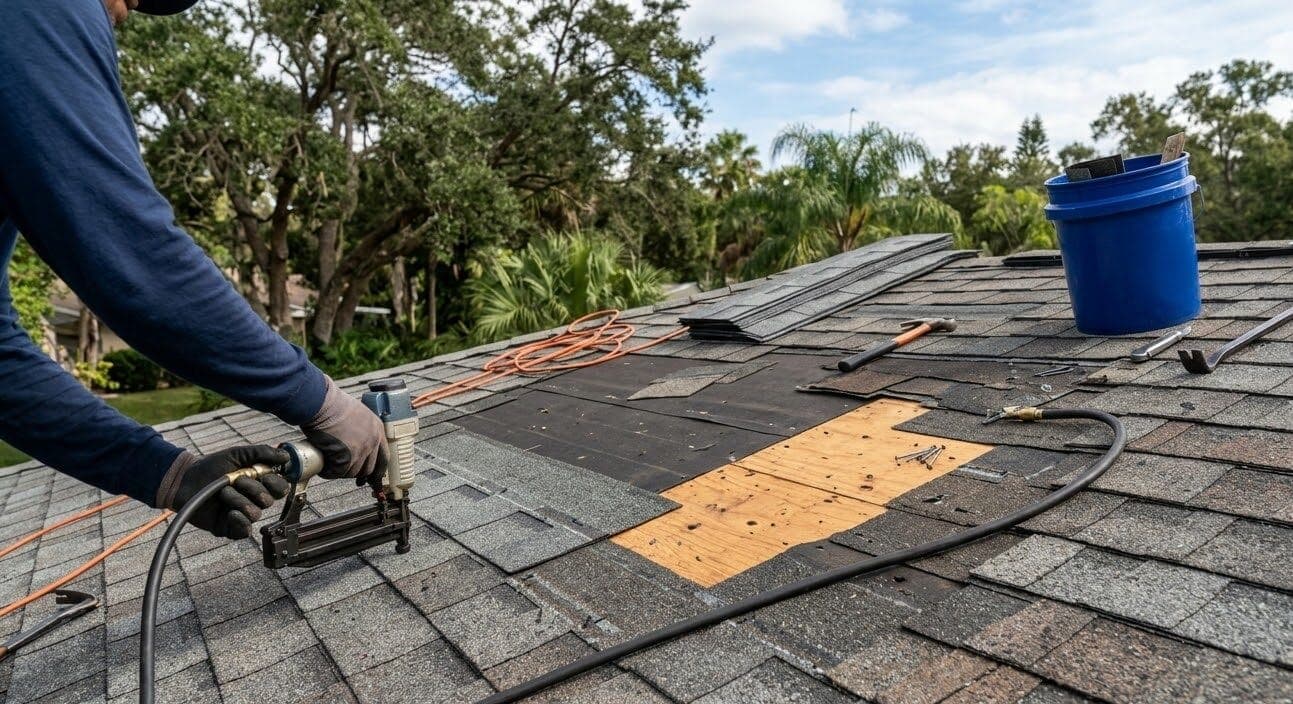
Call (352) 605-0696From the 1920s cottages near downtown to the 1970s ranches across Walden Lake and the farmhouses out by the strawberry fields, Plant City roofs carry damage that looks different from block to block. Protech Roofing handles roof repair jobs of every size for Plant City homeowners, chasing leaks, patching shingles, reseating cracked tile, and reinforcing flashing before minor issues become expensive problems. Call (352) 605-0696.
You Are Viewing
Roof Repair for homeowners and businesses in Plant City, part of Hillsborough County, FL, Florida.
Where Plant City Leaks Actually Start
Roof repair in Plant City, FL starts with one question: where is the water really coming in? Homeowners almost always point at the ceiling stain in the bedroom and assume the shingle directly above it is the problem. But water rarely enters a roof directly above where it drips. In Plant City, where 49 inches of annual rain fall mostly in heavy summer convective storms, water tracks sideways across underlayment, runs down the edges of plywood sheets, and chases the slope of the decking until it finally finds a drywall seam to drip through. We have chased leaks from a ceiling stain in a Walden Lake kitchen all the way back to a cracked plumbing-vent boot 18 feet up the slope.
The usual Plant City leak sources are predictable once you have seen enough of them. Pipe-boot rubber cracks within 8 to 12 years in Florida heat. Step-flashing at sidewall transitions pulls away as thermal cycling works the sealant. Chimney flashing on the older 1950s and 1960s ranches off Alsobrook Street tends to be the original, which means the lead or galvanized metal has corroded through at the water line. Valley metal that was not properly integrated with the underlayment during a previous re-roof funnels water under the shingles instead of over them. And on the concrete-tile roofs around Walden Lake, a single broken tile can hide a tear in the underlayment that only leaks during wind-driven rain from the southwest.
When we get a leak call in Plant City, the first thing we do is walk the roof and photograph everything, then go into the attic (where accessible) and trace the water stain along the decking from the drip point upslope. We find the real entry point, fix it, and document the repair with photos for your records. A $250 pipe-boot replacement is a lot cheaper than the $4,000 drywall and insulation repair waiting for you if that boot leaks untreated through a rainy season.
Storm Damage Repair After Milton's 13 Inches of Rain
Plant City caught 13 inches of rain during Hurricane Milton on October 9, 2024, the heaviest inland rainfall total in the region during that storm. More than a year later, we are still working through the repair backlog. Some homeowners had visible damage the day after landfall, missing ridge caps, cracked tile, displaced shingle tabs, bent drip edge, and we handled those first. But the harder Milton calls are the ones that only showed up six or eight months later. Decking that got wet during the storm dried out inconsistently under intact shingles. Rot spread quietly through the OSB or plywood. The shingle surface finally gave up one afternoon when a summer thunderstorm pushed a little more water into a soft spot, and suddenly there is a ceiling stain that was not there yesterday.
Storm-damage repair on Plant City roofs follows a specific sequence. We inspect the full roof, not just the area the homeowner is worried about, because Milton rarely hit just one slope. We document the damage with photographs and measurements tied to specific elevations and roof sections. We write a detailed report your insurance adjuster can actually use. And then we make the repair, whether that is patching a localized area or opening up the roof to replace soft decking before the new shingles go down.
Insurance adjusters in Plant City have been stretched thin since Milton. A clean, thorough damage report from a licensed roofing contractor speeds the claim significantly and reduces the risk of a denied or under-paid claim. We do this documentation work as part of the repair process at no extra charge for our customers.
And if your Plant City roof has been leaking since the storm and you are still waiting on a claim, call us anyway. We can tarp the damaged area to stop active water intrusion while the insurance process works itself out. Tarping is almost always covered as a mitigation expense under Florida homeowner policies.
Shingle Repair on Plant City's 1950s to 1970s Ranches
The 1950s, 1960s, and 1970s concrete-block ranches that fill most of central Plant City make up a big share of our shingle-repair workload. These homes were built before the modern Florida Building Code, and most of them have been re-roofed at least twice by now. The quality of those previous re-roofs directly affects what we find when we get on top today.
The most common shingle issues we see on Plant City ranches are wind-lifted tabs, granule loss, cracked and curling shingles, and failed adhesive strips. Wind-lifted shingles are the number one repair call because the adhesive strip that holds a shingle flat against the one below can break after a strong wind event, and once that seal is gone, the shingle flaps in every subsequent storm until it tears loose. Older three-tab shingles are especially vulnerable because their adhesive strips degrade faster than the strips on modern architectural shingles. We repair these by replacing the affected shingles with matched product and hand-sealing the tabs above them.
Granule loss is the slow killer on these roofs. Plant City sits in 70 to 80 percent humidity most days, and UV radiation breaks down the asphalt coating on shingles while the granules protect the substrate. Once the granules start shedding into the gutters and the asphalt is exposed to direct sun, deterioration accelerates. By the time you can see bare patches on the shingles from the driveway, the damage is advanced enough that the question shifts from repair to replacement.
Cracked and curling shingles follow granule loss. The asphalt dries out, loses flexibility, and cracks along stress lines. Curling happens when the bottom layer contracts faster than the top. Both create entry points for water. We can patch isolated damage on an otherwise healthy roof, but when the cracks and curls are spread across whole slopes, patching a 19-year-old ranch roof with new shingles just delays the replacement by a season or two.
Tile Repair for Walden Lake and Newer Subdivisions
Concrete tile covers a significant share of roofs in Walden Lake, Knights, Cork, and the newer Park Road subdivisions that went in from the late 1980s onward. Tile is a durable roofing material that can last 40 to 50 years under good conditions, but Plant City tile roofs still have predictable repair needs.
Cracked and broken tiles are the most common issue, and they usually come from foot traffic rather than weather. A pest-control technician, a handyman, or a previous roofer walked the wrong part of the tile and cracked it without noticing. The crack sits under the overlapping tile above and goes undetected for years, until a wind-driven rain from an unusual direction pushes water through the crack and into the underlayment. If the underlayment is the original 90-pound felt from the 1990s install, the water finds a seam and makes it into the decking.
We repair cracked tile by carefully lifting the overlapping tile above, removing the broken piece, inspecting the underlayment beneath (if it is compromised, that has to be addressed too), and installing a matched replacement tile. On older Walden Lake roofs where the original tile color is no longer manufactured, we pull matching tiles from less-visible parts of the roof and replace those with the closest available new color, so the repair is invisible from the front street while the new tiles go on the back slopes.
Ridge and hip tile issues are another common repair. The mortar or foam under the ridge tiles breaks down over time, and individual ridge pieces lift or slip during wind events. We reset ridge and hip tiles with current-code adhesive and mechanical attachment, which holds up significantly better than the original mortar beds on 1990s installs.
Underlayment failure is the hidden issue on older Plant City tile roofs. The tiles can look fine from the driveway while the underlayment beneath them has rotted through from 25 years of condensation and minor water intrusion. When that is the case, a tile repair is not a repair anymore, it is a full re-felt that requires lifting every tile, replacing the underlayment, and setting the tiles back down. We do that work when the roof warrants it and we tell you honestly when a spot repair will not hold.
Farmhouse and Rural Roof Repairs Around the Strawberry Fields
The rural sections of Plant City, the 12,000 acres of strawberry farmland, the Wish Farms operations, and the farmhouses along Trapnell Road and Knights Griffin Road, have their own repair profile. Most of the residential structures out here are older wood-frame farmhouses with metal or shingle roofs, and the outbuildings, barns, equipment sheds, and packing houses are predominantly metal.
Metal-panel repairs on these rural structures usually come down to two issues: fastener failure and panel seam separation. The exposed-fastener metal panels that are common on agricultural buildings rely on neoprene or EPDM washers under the screw heads to keep water out. Those washers deteriorate in 10 to 15 years of Plant City UV and heat, and once they fail, every fastener hole becomes a potential leak path. We re-fasten or replace the washers, and when the original panels are past saving, we replace sections or recommend a full metal re-roof.
Seam separation on older metal panels, particularly the exposed-fastener profiles from the 1980s and 1990s, happens when thermal cycling works the panel laps loose over years. The fix is a combination of sealant, butyl tape, and sometimes additional fasteners along the seam to lock the panels back together.
On the farmhouse shingle roofs out here, the issues are similar to the in-town ranches: wind-lifted shingles, cracked pipe boots, and flashing failure at the chimney. But the repair logistics are different because the properties are larger, access can be more complex, and the repairs often involve multiple buildings on one property. We bundle the work when it makes sense.
Flashing and Fastener Repairs That Prevent Bigger Problems
Flashing seals the transitions between the roof surface and anything vertical: walls, chimneys, dormers, and where two slopes meet in valleys. In Plant City's thermal environment, roof-surface temperatures on a dark shingle can exceed 160 degrees on an August afternoon while nighttime temperatures drop into the 70s. That 80 to 90 degree daily swing cycles the metal flashing constantly, and the sealant that bonds flashing to the roof cracks and separates over years.
Valley flashing takes the worst abuse on Plant City homes because valleys concentrate water flow from two converging slopes. When a valley seal fails, water enters at high volume during every summer thunderstorm. We see more interior water damage from valley flashing failures than from any other single cause on Plant City homes that are otherwise in reasonable condition.
Pipe-boot replacement is some of the best-value roof repair work available. A boot replacement runs $150 to $400 per boot installed, and a proactive replacement of all the boots on a 15-year-old Plant City roof, say three or four of them, costs far less than the interior water damage one failed boot can cause in a single rainy season.
Fastener issues on Plant City roofs usually show up at the drip edge and the starter course. If the previous roofer used nails that were not long enough, or placed them in the wrong zone of the shingle, wind loads eventually work the shingles loose. We re-nail or replace damaged starter courses and drip edge sections as part of repair work, and we document what we find so you have a record of the roof's condition.
When Plant City Repairs Stop Making Sense
The question every Plant City homeowner eventually faces: repair or replace? There is no universal answer, but there are clear thresholds.
Repair makes sense when the damage is isolated to less than 25 percent of the roof, the surrounding material is still in good condition, and the roof has at least five years of useful life remaining. A hail-damaged section on a 10-year-old architectural shingle roof is a repair situation. A blown-off ridge cap on a 12-year-old roof otherwise in good shape is a repair. A leaking pipe boot on a roof with solid shingles around it is a repair.
Replacement makes more sense when damage is widespread, the existing material is deteriorated beyond the immediate damage, or the roof is already close to the end of its rated lifespan. If a 22-year-old three-tab shingle roof on a Springhead ranch loses a section in a storm, patching just that section leaves you with new shingles on an aging system that will fail somewhere else within a year or two. The insurance math usually works the other way in these cases too. If the storm damage triggers enough of a claim, the settlement can fund a full re-roof, and you end up with a new 25-year system instead of a patched 22-year system.
Plant City roofs caught by Milton that are now 20 to 25 years old often fall into this gray zone. We walk through the numbers with you honestly. We do not push replacements on roofs that can be repaired, and we do not patch roofs that are genuinely done. When we inspect your Plant City home, you get photos, a written scope, and an explanation of why we are recommending what we are recommending. You can get a second opinion if you want one, and we will tell you the same thing either way.
More in this area
Other roofing services in Plant City
FAQ
Frequently Asked Questions
How much does roof repair cost in Plant City, FL?
+
Does Plant City require a permit for roof repairs?
+
How much Milton storm damage have you repaired in Plant City?
+
How long does a typical Plant City roof repair take?
+
Can Protech Roofing repair cracked tile on Walden Lake homes?
+
From the Blog
Stay informed about roofing in Florida.
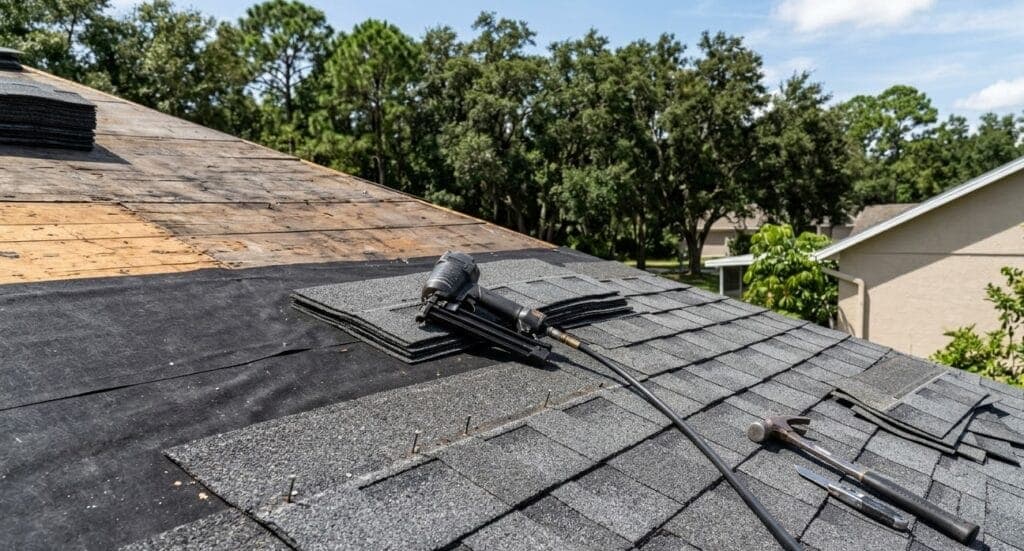
Roofing Warranties in Florida: What Voids Them
A new Florida roof usually carries two warranties: one from the manufacturer for the product and one from the contractor for the installation. Here is what each covers, what quietly voids them and how to keep your coverage.
Read Article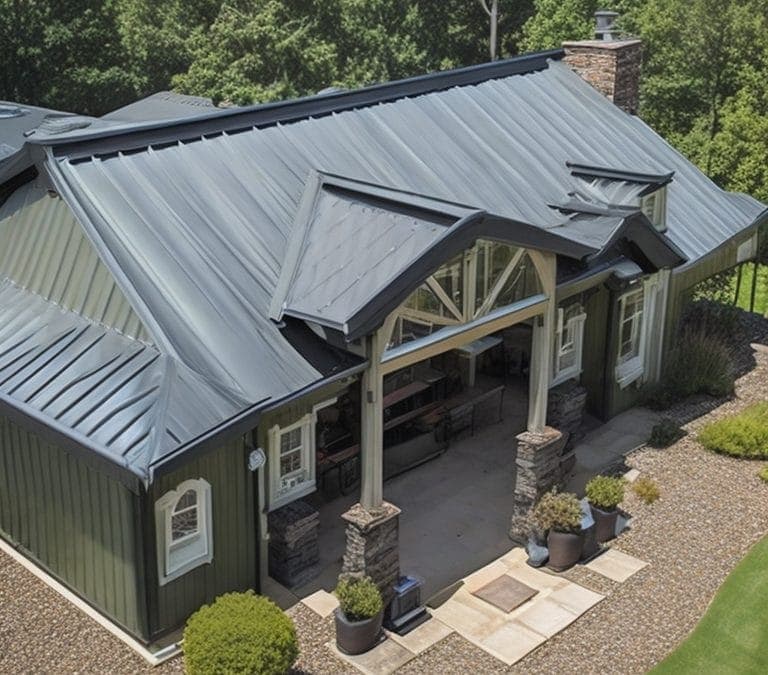
Best Roof Color for Florida Heat: Cool Roofs Explained
Florida test homes show a white shingle saves only 3 to 5 percent on cooling while reflective white metal or tile saves 18 to 26 percent. Here is how to choose a roof color that actually keeps your attic cooler.
Read Article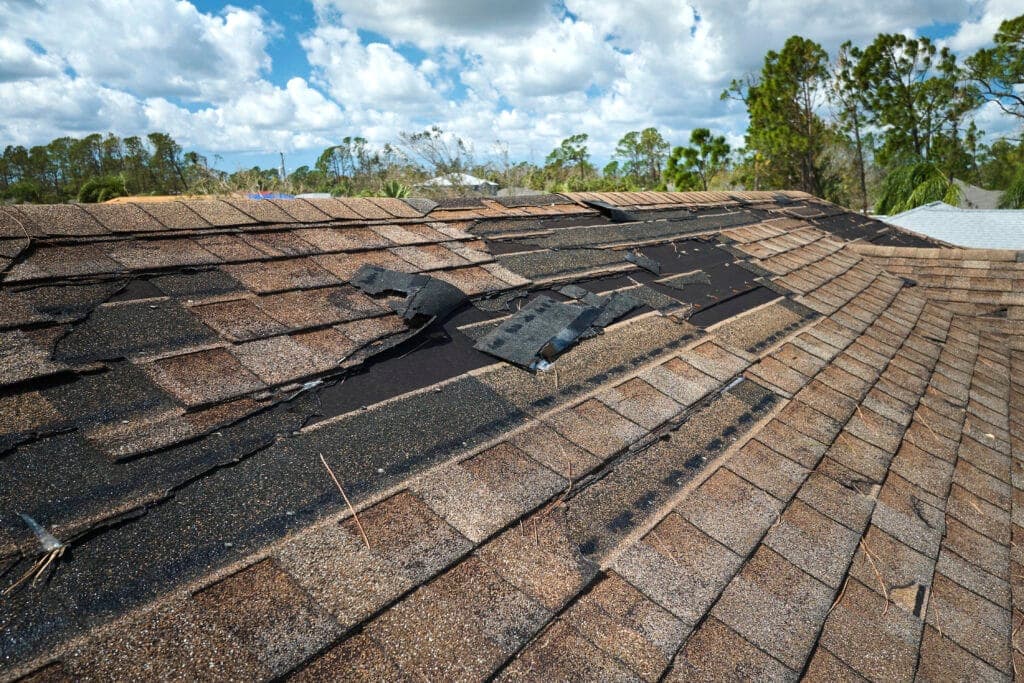
Roof Underlayment in Florida: The Hidden Layer Explained
Underlayment is the layer that decides what happens to your house when wind strips the shingles. Here is how felt, synthetic and peel-and-stick compare, what Florida code requires on a re-roof, and what each option costs in 2026.
Read ArticleReady When You Are
Get your free roof inspection today.
No-pressure, written estimate. Same-week scheduling across Hernando County. Call us now or request a visit online.