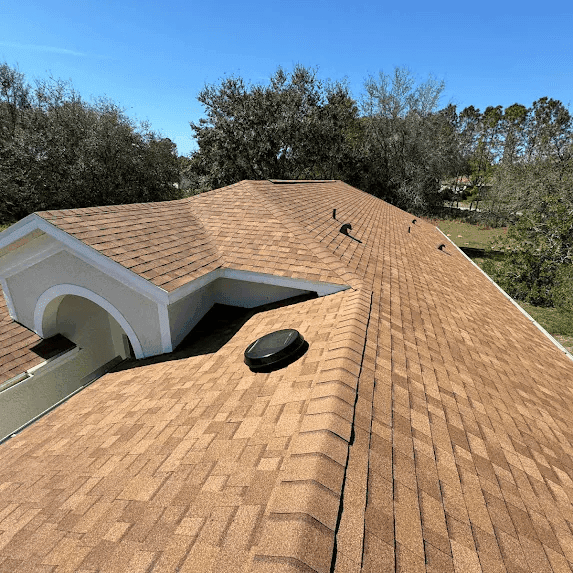
Central Florida Roofing Service
Total Roof Replacement
Roof replacement near you in Central Florida: shingle, tile, and metal, fully permitted and code-compliant. Financing available. Free estimates. Call (352) 605-0696.
Call (352) 605-0696Not every roof problem calls for a replacement. A missing shingle here, a minor leak around a pipe boot there.
When Patching Stops Working and Full Replacement Becomes the Smarter Move
Not every roof problem calls for a replacement. A missing shingle here, a minor leak around a pipe boot there. Those are straightforward repairs that a good roofer can knock out in an afternoon. But there comes a point where the math shifts, and continuing to patch an aging roof turns into a money pit.
The general rule in Florida roofing is the 25% threshold. If 25% or more of your roof deck or covering is damaged, current Florida Building Code requires that any replacement work bring the entire roof into compliance with the latest standards. That means you cannot just replace one slope and leave the rest. Once you cross that line, the whole system has to meet the FBC 8th Edition requirements. This is not optional. Inspectors enforce it, and insurance companies verify it.
Beyond code triggers, there are practical signs that full replacement makes more sense than continued repairs. If your roof is 15 to 20 years old with architectural shingles, or 20 to 30 years old with tile, and you are calling a roofer more than once a year for leaks, the underlying felt and deck are likely compromised. Water intrusion causes deck rot, and once plywood starts deteriorating, spot repairs become band-aids on a much bigger problem.
Here is what we see regularly in Spring Hill, Brooksville, Hudson, and Dade City. A homeowner patches a few areas after a storm, maybe gets through two more years, and then the next hurricane season brings a different angle of wind-driven rain that exposes all the weak points at once. At that point, the accumulated repair costs often exceed half the price of a full replacement, and they still have an old roof with no warranty protection.
We also see this pattern with homes that went through Hurricane Irma in 2017, got partial repairs, took additional damage from Idalia in 2023, and then got hit again by Helene and Milton in 2024. Three or four rounds of storm damage on the same aging roof is a clear signal. The system has exceeded its useful life.
If you are unsure whether your roof needs replacement or just another repair, we provide honest assessments. We photograph every problem area, show you the deck condition from the attic side, and lay out the numbers for both options so you can make an informed decision. Call us at (352) 605-0696 to schedule an inspection.
Material Options and What Actually Performs in the Florida Climate
Choosing a roofing material in Central Florida is not the same as choosing one in Ohio or Colorado. Our climate punishes certain materials and rewards others. Here is a straightforward breakdown of what is available, what it costs, and how it holds up in our environment.
Asphalt Shingles
Asphalt shingles remain the most popular choice across Hernando County and the surrounding areas, and for good reason. They offer the best balance of cost, appearance, and wind resistance when installed correctly.
3-Tab Shingles run $2 to $5 per square foot installed. They are the most affordable option but also the thinnest and least wind-resistant. In a 120 mph wind zone like ours, 3-tab shingles are rated for 60 to 70 mph, which means they are vulnerable in any tropical storm or hurricane. We generally steer homeowners away from 3-tab unless budget is the absolute top priority and they understand the trade-off.
Architectural Shingles cost $5 to $9 per square foot and represent the sweet spot for most Central Florida homeowners. These are thicker, heavier, and carry wind ratings up to 130 mph when properly fastened. They come with 30-year to lifetime warranties depending on the product line. On a typical 2,000 square foot home, a full architectural shingle replacement runs $10,000 to $18,000 depending on roof complexity, accessibility, number of layers to tear off, and the specific product selected.
Luxury Asphalt Shingles fall in the $9 to $17 per square foot range and mimic the look of natural slate or cedar shake. These are premium products with the highest impact and wind ratings in the asphalt category. For homeowners in The Villages, parts of Brooksville, or upscale neighborhoods in Hillsborough County, luxury shingles offer a high-end appearance without the weight requirements of real stone or tile.
Metal Roofing
Metal roofing has gained tremendous popularity in Florida over the past decade, and for good reason. It handles heat, wind, and rain better than almost any other material available.
Exposed Fastener Metal Panels are the more affordable option at $8 to $15 per square foot. The fasteners are visible on the surface and require periodic maintenance because the rubber washers around each screw degrade over time in our UV environment. They are a solid choice for utility buildings, workshops, and budget-conscious homeowners.
Standing Seam Metal is the premium option, running $12 to $23 per square foot. The seams are raised and the fasteners are concealed beneath the panels, which eliminates the washer degradation issue entirely. Standing seam systems carry wind ratings that exceed 150 mph, which is above our design wind speed in Hernando County. They reflect solar heat, reducing cooling costs by 10 to 25 percent. They last 40 to 60 years with minimal maintenance. On a 2,000 square foot home, a standing seam installation typically ranges from $24,000 to $46,000.
For homeowners planning to stay in their home long-term, standing seam metal is one of the best investments available. The upfront cost is higher, but the combination of longevity, energy savings, insurance discounts from wind mitigation, and near-zero maintenance makes the total cost of ownership competitive with cheaper materials over a 30-year window.
Tile Roofing
Tile is a staple of Florida architecture. You see it everywhere from Tampa to The Villages, and it has a long track record in our climate.
Concrete Tile runs $7 to $19 per square foot. It is heavier than clay, but more affordable and available in a wide range of profiles including flat, barrel, and S-tile. Concrete tile handles wind well, resists fire, and typically lasts 40 to 50 years.
Clay Tile is the premium tier at $12 to $21 per square foot. It carries the classic Mediterranean and Spanish Colonial look, resists fading better than concrete, and can last 75 years or more with proper underlayment maintenance. A clay tile roof on a 2,000 square foot home can easily exceed $30,000, but the lifespan makes it a generational investment.
The critical factor with all tile roofing in Florida is the underlayment system beneath the tiles. Tiles themselves rarely fail. What fails is the waterproofing layer underneath, which typically needs replacement every 20 to 25 years even when the tiles are still in excellent condition. We always discuss this lifecycle cost with homeowners considering tile.
Our Recommendation
For most homeowners in our service area, we recommend either architectural shingles with a high wind rating or standing seam metal. Architectural shingles offer the best value for homeowners on a moderate budget. Standing seam metal is the best long-term investment for homeowners who can handle the higher upfront cost. Tile makes sense for homes where the architectural style calls for it and the structure can support the weight.
What a Complete Tear-Off and Reinstallation Looks Like
A lot of homeowners have never been through a full roof replacement before, and the process can feel overwhelming if you do not know what to expect. Here is exactly how we handle it at Protech Roofing Services, step by step.
Pre-Installation
Before any crew shows up at your house, we have already completed a detailed inspection, measured your roof using aerial imaging combined with physical measurements, selected the materials with you, pulled the permit from your county building department, and scheduled the delivery of materials to your property. Material delivery usually happens one to two days before the crew arrives. Shingle pallets or metal panels get staged on your driveway or in your yard.
We also walk through the property and note anything that needs protection. Landscaping along the house perimeter, outdoor furniture, vehicles in the driveway, pool screens, and air conditioning units all need to be protected from falling debris. We use tarps, plywood barriers, and dedicated dump zones to control the mess.
Day One: Tear-Off and Deck Inspection
The crew arrives early, typically between 6:30 and 7:00 AM. Roofing work starts early in Florida because afternoon heat and the daily summer thunderstorms make late-day work unsafe and inefficient.
The first task is stripping the existing roof down to the deck. Every shingle, tile, or panel comes off. Every piece of old felt or synthetic underlayment gets removed. Every nail gets pulled. This is the most labor-intensive part of the job and also the loudest. Neighbors will hear it.
Once the deck is exposed, we inspect every sheet of plywood or OSB. Any soft spots, delamination, or rot gets cut out and replaced with new sheathing. In Central Florida, we commonly find deck damage around plumbing penetrations, along valleys, and at eave edges where water has been wicking up behind old drip edge for years. On a 20-year-old roof, replacing 5 to 15 sheets of decking is normal. On roofs with chronic leak histories, it can be more.
Day One to Two: Underlayment and Flashing
With a solid deck confirmed, we install the underlayment system. Under the FBC 8th Edition, roofs in our area require two layers of underlayment. In zones rated at 120 mph and above, which includes all of Hernando County, self-adhering modified bitumen is required. This is a rubberized membrane that seals around nail penetrations and provides a secondary water barrier if the primary roofing material is ever compromised during a storm.
We install new drip edge along all eaves and rakes. We replace or install step flashing at every wall junction, chimney, and dormer. We install new pipe boot flashings around every plumbing penetration. We seal all valleys with either woven integration or dedicated valley metal, depending on the roofing material.
This phase is where the real waterproofing happens. The shingles, metal panels, or tiles you see from the ground are the first line of defense. The underlayment system is the second line, and in Florida, that second line matters more than in most states.
Day Two to Three: Primary Roofing Material Installation
With the underlayment and flashing complete, the crew installs the primary roofing material. For architectural shingles, this means starter strips along eaves, then full shingle courses working from the bottom up, with each row offset to prevent water tracking. Every shingle gets fastened with 8d ring-shank nails, six inches on center at the edges and twelve inches on center in the field. In our wind zone, ring-shank nails are required because smooth-shank nails can back out under the sustained negative pressure that hurricanes create on roof surfaces.
For metal roofing, the process involves installing panel clips, running panels from eave to ridge, and mechanically seaming the joints. For tile, it involves setting a tile batten system and individually setting each tile.
Ridge caps, hip caps, and any specialty trim pieces go on last. Then the crew cleans up the entire property. We run magnetic nail sweepers across the yard, driveway, sidewalks, and street to pick up any stray nails.
Final Inspection
Once the installation is complete, we schedule the final inspection with the county building department. The inspector verifies that the installation meets all FBC 8th Edition requirements, confirms the permit is properly closed, and signs off on the work. We do not consider the job complete until the inspection passes. This is important because an open or failed permit can create serious problems when you sell your home or file an insurance claim down the road.
The entire process, from tear-off to final inspection, takes two to five days for most residential roofs depending on size, complexity, and weather.
Permits, Inspections, and the FBC 8th Edition Requirements
Florida is one of the most heavily regulated states in the country when it comes to roofing, and that is a good thing. The Florida Building Code exists because we live in one of the most storm-prone regions on the planet, and poorly installed roofs get people hurt and cause catastrophic property damage.
Every full roof replacement in Florida requires a permit. It does not matter if you live in Hernando County, Pasco County, Citrus County, Sumter County, Polk County, Hillsborough County, or Pinellas County. The requirement is universal. Any contractor who suggests skipping the permit to save time or money is a contractor you should walk away from immediately. An unpermitted roof can void your insurance coverage, create title problems when you sell, and leave you exposed to fines.
The FBC 8th Edition, which is the current code standard, includes several requirements that directly affect how your roof gets installed in Central Florida.
Underlayment: Two layers of approved underlayment are required. In areas with a basic design wind speed of 120 mph or greater, which covers Hernando County and most of our service area, one layer must be self-adhering modified bitumen. This rubberized membrane creates an airtight seal around every fastener penetration and prevents water infiltration even if the primary roofing material is stripped away in a hurricane.
Fastening Requirements: The code specifies 8d nails at 6 inches on center along sheathing edges and 12 inches on center in the field for roof decking. For the roofing material itself, ring-shank nails are required in high-wind zones because they resist pull-through forces that smooth-shank nails cannot handle. Every nail matters. A roof with 10,000 nails that are each installed at the correct depth and spacing performs dramatically differently than one where the crew rushed and missed specifications.
The 25% Rule: If 25% or more of your roof covering is damaged, repaired, or replaced within any 12-month period, the entire roof must be brought up to current code. This provision prevents patchwork repairs on aging roofs that do not meet modern wind resistance standards. It is one of the most common triggers for full replacement after storm damage.
Impact Resistance: In certain areas and for certain insurance benefits, impact-rated materials (Class 3 or Class 4) may be required or strongly incentivized. Products like GAF’s HDZ shingles carry SBS-modified polymer technology that provides enhanced impact resistance.
Ventilation: Adequate attic ventilation must be maintained or improved during a replacement. Proper intake at the soffits and exhaust at the ridge prevents moisture buildup that accelerates deck deterioration from underneath.
At Protech Roofing Services, we pull every permit ourselves, schedule and attend all required inspections, and provide homeowners with a complete permit closeout package when the job is done. We never ask a homeowner to deal with the building department directly.
Insurance, Hurricane Deductibles, and How to Maximize Your Claim
Insurance is one of the most confusing and frustrating parts of roof replacement for Florida homeowners. The rules have changed significantly over the past few years, and understanding how your policy works before you file a claim can save you thousands of dollars.
Understanding Your Hurricane Deductible
Most Florida homeowners insurance policies include a separate hurricane deductible that is higher than the standard deductible. This hurricane deductible is typically 2% to 5% of your dwelling coverage amount. On a home insured for $350,000, a 2% hurricane deductible is $7,000. A 5% hurricane deductible is $17,500. That is a significant out-of-pocket expense before your insurance coverage kicks in.
This means that if your roof sustains $15,000 in storm damage and your hurricane deductible is $7,000, your insurance will cover $8,000. You are responsible for the first $7,000.
It is critical to know your deductible amount before hurricane season arrives. Many homeowners are shocked to discover their out-of-pocket exposure after a storm. Review your policy now. If you are unsure what your deductible is, call your agent and ask specifically about the hurricane deductible versus the standard all-perils deductible.
Filing a Storm Damage Claim
When your roof sustains storm damage, the timeline matters. Document the damage immediately with photos and video. Contact your insurance company to file a claim. Then call a licensed roofing contractor for a professional inspection and damage assessment.
We strongly recommend getting a contractor inspection before the insurance adjuster visits. A trained roofer will identify damage that an adjuster might miss, and having a detailed damage report with photographs gives you a stronger starting point for your claim.
At Protech Roofing Services, we provide detailed damage assessments with photo documentation that homeowners can share with their insurance company. We also meet with adjusters on-site when needed to walk the roof together and ensure all damage is accounted for. We do not charge for storm damage inspections in our service area.
Wind Mitigation Inspections and Premium Savings
This is the single most effective way to reduce your insurance costs in Florida, and most homeowners either do not know about it or have not taken advantage of it.
A wind mitigation inspection is a standardized assessment of your roof’s ability to resist wind damage. The inspector evaluates your roof covering, roof deck attachment method, roof-to-wall connections, opening protection, and roof shape. Based on the findings, your insurance company applies credits to your premium.
A new roof with proper code-compliant installation typically qualifies for the maximum credits available. Homeowners who get a wind mitigation inspection after a full roof replacement commonly save 15% to 45% on their annual insurance premiums. On a $4,000 annual premium, that is $600 to $1,800 per year in savings. Over 10 years, those savings can offset a significant portion of the roof replacement cost.
We recommend scheduling a wind mitigation inspection within 30 days of completing your new roof. We can refer you to certified inspectors in Hernando, Citrus, Pasco, and the surrounding counties.
My Safe Florida Home Program
The state of Florida offers grants of up to $10,000 through the My Safe Florida Home program for wind mitigation upgrades. If you are planning a roof replacement anyway, you may qualify for grant funding that covers a portion of the cost, particularly for upgrades like impact-rated materials, improved roof deck attachment, or secondary water barrier installation.
Eligibility requirements include homestead exemption, a home insured value of $500,000 or less, and a completed wind mitigation inspection. The application process takes time, so we recommend looking into this well before you schedule your replacement.
A Note About Contractor-Directed Insurance Claims
Be cautious of any roofing company that offers to “handle everything with your insurance” or promises to get your entire roof covered with zero out-of-pocket cost. Assignment of Benefits (AOB) abuse was a massive problem in Florida for years, and while recent legislation has curbed the worst practices, some companies still use aggressive tactics that can leave homeowners caught in the middle of disputes between the contractor and the insurance company.
We work with your insurance company, but we work for you. We provide honest assessments, accurate pricing, and straightforward communication. We will never inflate a claim or pressure you into unnecessary work.
Roof Replacement Costs in Central Florida: Real Numbers for 2026
Let us talk about actual costs. Pricing varies based on material, roof size, complexity, accessibility, number of layers to tear off, and the extent of any deck repairs needed. Here are real 2026 numbers for a standard 2,000 square foot home in our service area.
Asphalt Shingle Replacement
| Component | Cost Range |
|---|---|
| 3-Tab Shingles (material + labor) | $4,000 – $10,000 |
| Architectural Shingles (material + labor) | $10,000 – $18,000 |
| Luxury Asphalt Shingles (material + labor) | $18,000 – $34,000 |
| Tear-off (one layer) | Included |
| Tear-off (second layer, if present) | $1,000 – $2,500 additional |
| Deck repair (per sheet) | $75 – $150 |
| Permit and inspection | $200 – $600 |
| Underlayment upgrade to self-adhering | Often included in our area |
The most common project we complete is an architectural shingle replacement on a 2,000 square foot home with a single layer tear-off, 5 to 10 sheets of deck replacement, new underlayment, and all new flashing. That project typically lands between $12,000 and $16,000.
Metal Roof Replacement
| Component | Cost Range |
|---|---|
| Exposed Fastener Panels | $16,000 – $30,000 |
| Standing Seam | $24,000 – $46,000 |
| Trim and accessories | Included |
| Additional structural support (if needed) | $1,500 – $4,000 |
Metal roofing costs more upfront but requires virtually no maintenance and lasts two to three times longer than asphalt. When you factor in insurance savings from wind mitigation credits and reduced energy costs from reflective metal surfaces, the lifetime cost often comes out lower than replacing an asphalt roof twice over the same period.
Tile Roof Replacement
| Component | Cost Range |
|---|---|
| Concrete Tile | $14,000 – $38,000 |
| Clay Tile | $24,000 – $42,000 |
| Tile batten system | Included |
| Structural evaluation | Sometimes required |
Tile roofs are heavier than shingle or metal systems. Some older homes in Spring Hill and Brooksville were originally built with shingle roofs and do not have the truss engineering to support tile weight. A structural evaluation may be needed before switching from shingle to tile, and reinforcement adds cost.
What Drives Price Differences
Two homes on the same street with the same square footage can have vastly different roof replacement costs. Here is why.
Roof Complexity: A simple gable roof with two planes and no penetrations is the cheapest to roof. A complex hip roof with multiple dormers, skylights, chimneys, and valleys requires significantly more labor and material. Every penetration, angle change, and valley adds flashing work, cutting, and detail time.
Pitch (Steepness): Roofs steeper than 7/12 pitch require additional safety equipment and slower installation. This adds labor cost. Very steep roofs, like those on two-story homes with decorative steep gables, can add 15% to 25% to the labor cost.
Accessibility: If your roof is surrounded by landscaping, pool enclosures, power lines, or other obstructions, the crew needs more time for setup, debris management, and material staging.
Existing Layers: Florida code allows a maximum of two layers of asphalt shingles. If your current roof already has two layers, both must come off, which doubles the tear-off labor and disposal costs.
Deck Condition: A roof with extensive deck damage from long-term leaks can need 30 or more sheets of plywood replaced. At $75 to $150 per sheet including labor, that adds $2,250 to $4,500 to the project.
We provide detailed written estimates that break out every line item so you know exactly what you are paying for. No hidden fees, no surprise charges after the work starts.
Apartment, condo, or HOA property? Protech also handles multi-family roofing projects across Hernando County and surrounding areas, with discreet scheduling and minimal disruption to residents.
Why Manufacturer Certifications and Warranty Tiers Matter
Not all roof warranties are created equal, and the difference between a standard manufacturer warranty and a premium contractor-backed warranty is significant.
When you buy a shingle, the manufacturer offers a base warranty that covers defects in the product itself. If the shingle delaminates, cracks, or fails prematurely due to a manufacturing flaw, the manufacturer will cover the material. But that base warranty does not cover labor, and it does not cover problems caused by improper installation.
This is where contractor certification programs change the equation.
GAF Golden Pledge Warranty
Protech Roofing Services is a GAF-certified contractor, which qualifies us to offer the GAF Golden Pledge warranty. This is GAF’s highest tier of warranty protection, and it includes coverage that the standard warranty does not.
The Golden Pledge warranty provides 50 years of material defect coverage, 25 years of coverage for manufacturing defects that cause leaks, and 25 years of labor coverage for workmanship issues. The labor coverage is the key differentiator. If something goes wrong with the installation within that 25-year window, GAF covers the cost to fix it, including labor. With a non-certified contractor, you get the base material warranty only, and any labor costs for repairs come out of your pocket.
To maintain GAF certification, we complete annual training, follow GAF’s specific installation protocols, and submit to periodic quality inspections. This is not a rubber-stamp program. GAF holds certified contractors to measurable standards.
Other Manufacturer Certifications
We carry certifications from multiple manufacturers, not just GAF. For metal roofing systems and tile products, we follow manufacturer-specific installation requirements that are often more stringent than minimum code. These certifications ensure that our installations qualify for the maximum warranty coverage available on each product line.
What This Means for You
When you compare quotes from different roofing contractors, look beyond the bottom-line price. Ask what warranty comes with the installation. A quote that is $2,000 cheaper but only includes a standard manufacturer warranty with no labor coverage is not actually a better deal. If an installation problem surfaces in year five, the cheaper contractor’s customer pays for the repair out of pocket. Our customer calls GAF, and the repair is covered.
Warranty protection is especially important in Central Florida where hurricane exposure means every roof faces extreme stress regularly. A warranty that covers both materials and workmanship is not a luxury. It is a necessity.
Hurricane Preparedness and How a New Roof Changes Your Risk Profile
Living in Central Florida means living with hurricane risk. There is no way around it. Hernando County sits in a zone with a basic design wind speed of 120 to 130 mph, which means the Florida Building Code requires roofs to withstand sustained winds at those speeds. But code minimums are exactly that: minimums.
The hurricane history of our area over the past decade tells the story. Hurricane Irma in 2017 brought widespread wind damage across Central Florida. Many roofs that were 15 or 20 years old at the time lost significant sections of shingles and soffit material. The damage was concentrated on older installations that predated the stricter wind resistance provisions in newer code editions.
Then came Hurricane Idalia in 2023, which tracked closer to our area and brought storm surge to coastal sections of Hernando and Citrus counties along with strong winds inland. Homes with newer, code-compliant roofs fared dramatically better than those with aging systems.
And in 2024, Hurricanes Helene and Milton hit within weeks of each other. Back-to-back storms are the worst-case scenario for a damaged roof because the first storm opens vulnerabilities that the second storm exploits. Homeowners who had recently replaced their roofs reported minimal to no damage, while those with older roofs experienced compounding problems from the double impact.
A new roof installed to current FBC 8th Edition standards with proper underlayment, ring-shank fasteners, and high-wind-rated materials is simply in a different category of storm resistance than a 15-year-old roof with original felt and smooth-shank nails.
Beyond the Roof Itself
A roof replacement is also an opportunity to upgrade other wind-resistance features of your home. During a reroof, we can upgrade your roof-to-wall connections to hurricane clips or straps if your home has older toenail connections. We can ensure soffit panels are properly secured. We can install or improve attic ventilation to prevent internal pressure buildup during a storm. Each of these upgrades improves your wind mitigation inspection score, which directly reduces your insurance premiums.
Some homeowners in Spring Hill, Dade City, and The Villages use a roof replacement as the centerpiece of a broader wind hardening project. New roof, new hurricane clips, impact-rated garage door, impact windows or shutters. When the full package is in place, insurance savings can reach 40% to 50% compared to an unmitigated home.
Choosing a Roofing Contractor in Central Florida: What to Verify
The roofing industry in Florida has a well-documented problem with unlicensed, uninsured, and fly-by-night contractors. After every hurricane, out-of-state crews flood in, collect deposits, and either do substandard work or disappear entirely. Even outside of storm season, the quality gap between legitimate contractors and cut-rate operators is enormous.
Here is what to verify before signing a contract with any roofing company.
Active Florida License: Every roofing contractor in Florida must hold a current state license issued by the Department of Business and Professional Regulation (DBPR). You can verify any contractor’s license status online in about 30 seconds. Our license is current and has been since we started operations.
Insurance Coverage: Require a current Certificate of Insurance showing both general liability and workers’ compensation coverage. If a worker is injured on your property and the contractor does not carry workers’ comp, you could be held liable. This is not a theoretical risk. It happens regularly in Florida.
Local Presence: A contractor based in your community has a reputation to maintain. They are not going to disappear after cashing your check because you might run into them at the grocery store. Protech Roofing Services is based right here in Spring Hill and has been serving Hernando County and the surrounding areas for years. Our trucks are in your neighborhood every week.
Manufacturer Certifications: As we discussed above, certifications from GAF, Owens Corning, CertainTeed, or other major manufacturers mean the contractor has completed training and meets quality standards that go beyond the minimum license requirements.
Written Contract with Scope of Work: Never accept a handshake deal or a one-page estimate with no detail. Your contract should specify the exact materials being used (including product names and colors), the scope of tear-off and deck repair, the underlayment system, the fastening schedule, the permit responsibility, the payment schedule, the warranty terms, and the estimated timeline. Our contracts cover all of this and more.
Reviews and References: Check Google reviews, BBB ratings, and ask for references from recent projects in your area. A contractor who has been doing quality work for years will have a long track record of satisfied homeowners willing to vouch for them.
Permit Responsibility: The contractor should pull the permit in their name and handle all inspections. If a contractor asks you to pull the permit as the homeowner, that is a red flag. It often means they do not have a valid license or are trying to avoid accountability for code compliance.
Available By City
Total Roof Replacement in cities across our service area
Total Roof Replacement in Alachua
Roof replacement in Alachua, FL. Protech Roofing installs new shingle, metal, and tile roofs for homes near th
Total Roof Replacement in Brooksville
Roof replacement in Brooksville, FL. Shingle, metal, and tile options from Protech Roofing. Call (352) 605-069
Total Roof Replacement in Bushnell
Roof replacement in Bushnell, FL. Sumter County seat, 115 mph wind zone. Call (352) 320-0062 for a free estima
Total Roof Replacement in Clearwater
Roof replacement in Clearwater, FL. Shingle, tile, and metal by Protech Roofing. 130 to 150 mph code. Call (35
Total Roof Replacement in Dade City
Roof replacement in Dade City, FL. Historic homes and modern builds across Pasco County’s county seat. Call (3
Total Roof Replacement in Dunedin
Roof replacement in Dunedin, FL. Shingle, tile, metal for 130 and 150 mph coastal zones. Call (352) 605-0696 f
Total Roof Replacement in Gulfport
Roof replacement in Gulfport, FL. Shingle, tile, metal to 130 mph coastal code. Historic cottage tear-off. Cal
Total Roof Replacement in Hernando Beach
Roof replacement in Hernando Beach, FL. Canal-front homes built for 130 mph coastal winds. Call (352) 605-0696
Total Roof Replacement in Hudson
Need roof replacement in Hudson, FL? Protech Roofing Services handles coastal and inland homes. Call (352) 605
Total Roof Replacement in Inverness
Roof replacement in Inverness, FL. Lakeside roofing for Citrus County homes near Tsala Apopka. Call (352) 605-
Total Roof Replacement in Largo
Roof replacement in Largo, FL. Shingle, tile, metal, 130 mph code, retiree financing. Protech Roofing. Call (3
Total Roof Replacement in Oldsmar
Roof replacement in Oldsmar, FL. Shingle, tile, metal to 130 mph code. Insurance-driven replacements welcome.
Total Roof Replacement in Pinellas Park
Roof replacement in Pinellas Park, FL. Shingle, tile, metal, 130 mph code, Pinellas Park permits. Call (352) 6
Total Roof Replacement in Plant City
Roof replacement in Plant City, FL. Shingle, tile, and metal by Protech Roofing. 130 mph code. Call (352) 605-
Total Roof Replacement in Safety Harbor
Roof replacement in Safety Harbor, FL. Shingle, tile, metal to 130 mph code. Insurance-driven replacements wel
Total Roof Replacement in Seminole
Roof replacement in Seminole, FL (Pinellas). 130 mph code, 55+ HOA design review, insurance appeals. Call (352
Total Roof Replacement in Spring Hill
Roof replacement in Spring Hill, FL. Serving 120,000+ residents with 120 mph wind rated systems. Call (352) 60
Total Roof Replacement in St. Petersburg
Roof replacement in St. Petersburg, FL. Shingle, tile, and metal re-roofs by Protech Roofing. Call (352) 605-0
Total Roof Replacement in Tampa
Roof replacement in Tampa, FL. Shingle, tile, metal to 130 mph code. Insurance-driven replacements welcome. Ca
Total Roof Replacement in Tarpon Springs
Roof replacement in Tarpon Springs, FL. Historic district design review, 130 to 150 mph code, tile tear-off. C
Total Roof Replacement in Temple Terrace
Roof replacement in Temple Terrace, FL. Shingle, tile, metal by Protech Roofing. Call (352) 605-0696 for a fre
Total Roof Replacement in The Villages
Roof replacement in The Villages, FL. Protech Roofing is licensed across Sumter, Lake, and Marion counties for
Total Roof Replacement in Timber Pines
Roof replacement in Timber Pines, FL. Protech Roofing delivers ARC-compliant roof installs for homes in this 5
Total Roof Replacement in Weeki Wachee
Roof replacement in Weeki Wachee, FL. Hernando County roofing pros with 120 mph wind rated installs. Call (352
FAQ
Frequently Asked Questions
How do I find a roof replacement contractor near me in Central Florida?
+
How do I know if I need a total roof replacement?
+
How long does a full roof replacement take?
+
Does insurance cover roof replacement?
+
Which roofing system is best for Florida?
+
How do I find roof replacement near me?
+
Roofing Knowledge
Articles and guides for homeowners
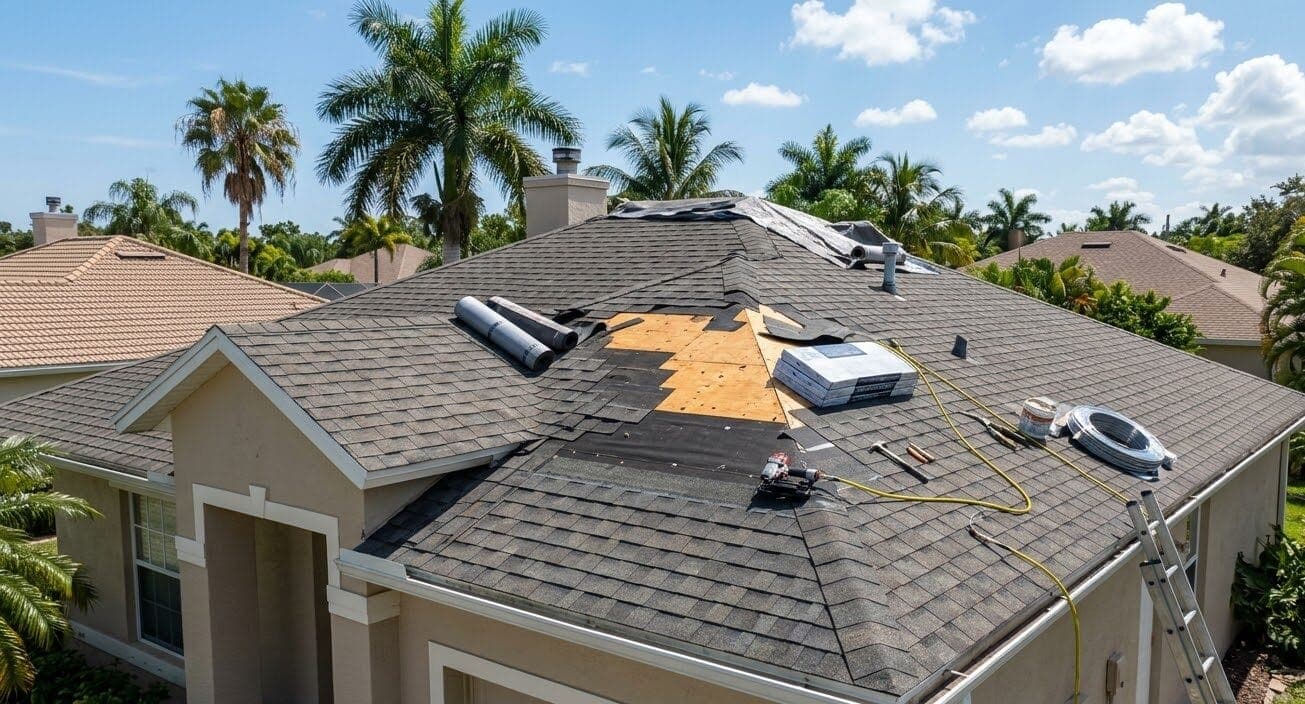
How Long a Roof Replacement Takes in Florida: 2026 Guide
A Florida shingle re-roof takes one to three days of physical work and about two to four weeks from contract to closed permit. Here is what happens each day, how metal and tile change the schedule and what causes delays.
Read Article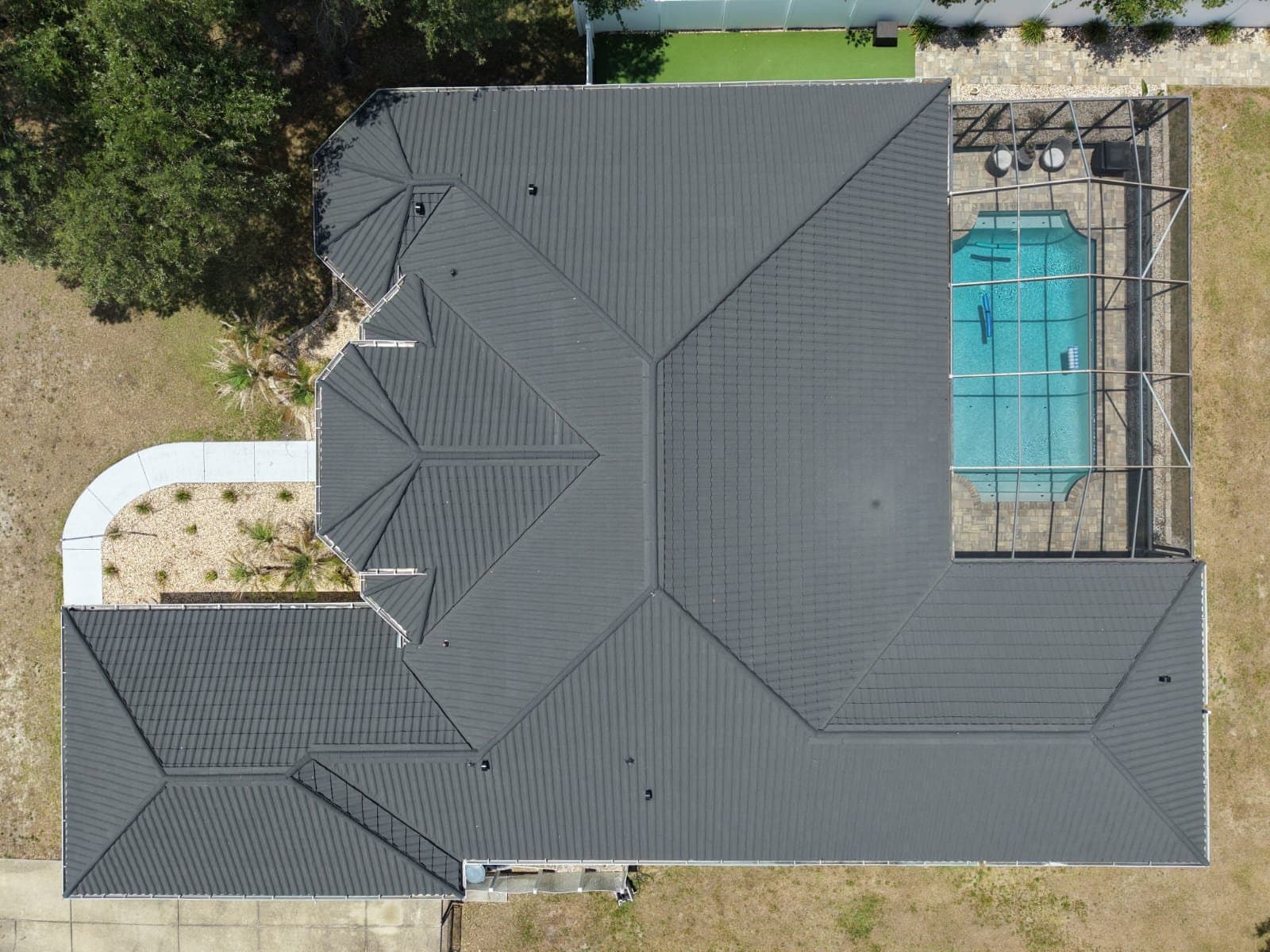
Metal Roof Cost in Florida 2026: Per-Sqft Guide
Metal roofs in Florida run about $8 to $23 per square foot installed, depending on the system. Here is what standing seam, stone coated steel and exposed fastener panels cost, what a typical home pays and how to compare quotes.
Read Article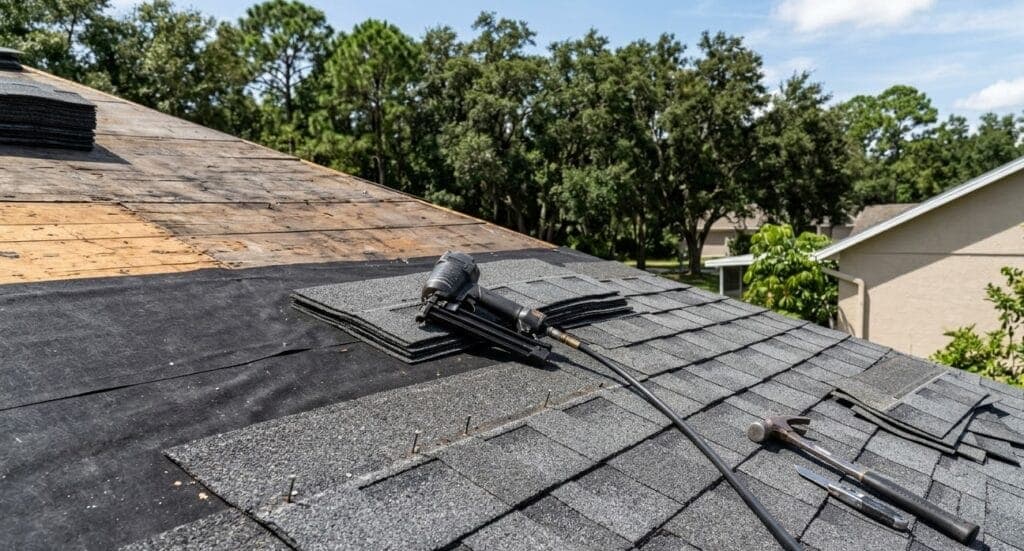
Roofing Warranties in Florida: What Voids Them
A new Florida roof usually carries two warranties: one from the manufacturer for the product and one from the contractor for the installation. Here is what each covers, what quietly voids them and how to keep your coverage.
Read ArticleReady When You Are
Get your free roof inspection today.
No-pressure, written estimate. Same-week scheduling across Hernando County. Call us now or request a visit online.