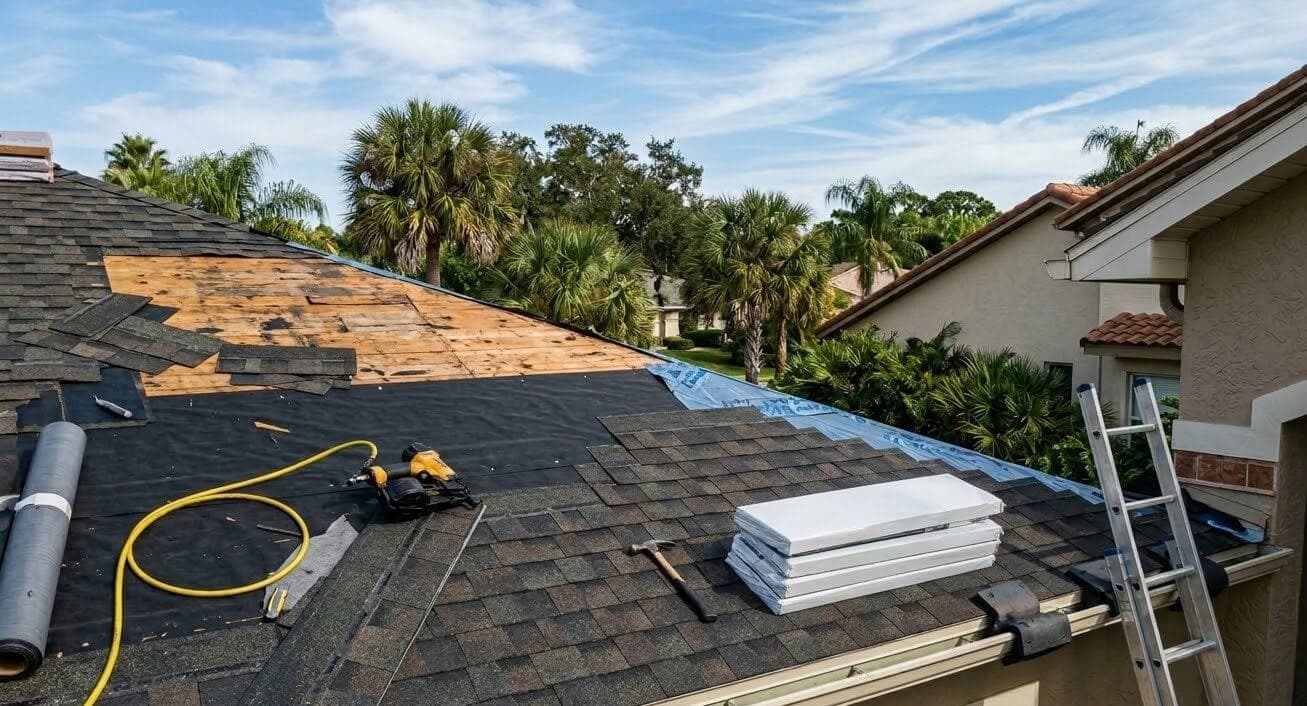
Pinellas Park, FL
Roof Replacement in Pinellas Park, FL
Roof replacement in Pinellas Park, FL. Shingle, tile, metal, 130 mph code, Pinellas Park permits. Call (352) 605-0696 for a free estimate.
Call (352) 605-0696Protech Roofing Services replaces roofs for Pinellas Park homeowners across the 33781 and 33782 ZIP codes, from the 1950s ranch grid near Park Boulevard to the 1980s townhomes in Park Place and the newer reroofs north of 78th Avenue. Our crews run inland Pinellas routes out of Brooksville every week, and we have put shingle, tile, metal, and flat-membrane systems on Pinellas Park homes for 18 years. Whether you are staring down a non-renewal letter, an insurance inspection flag, or a 20-year-old shingle roof that's finally giving up, call (352) 605-0696 for a free inspection and a written quote.
You Are Viewing
Roof Replacement for homeowners and businesses in Pinellas Park, part of Pinellas County, FL, Florida.
When Pinellas Park Homes Actually Need Roof Replacement
If you searched for roof replacement in Pinellas Park, FL, you probably already know the roof is on borrowed time. Maybe an insurance inspector flagged it last renewal. Maybe a neighbor up the block just did theirs after Milton. Maybe you walked the backyard after the last storm and saw granules piled at the downspouts. Whatever pushed you to look, the replacement conversation usually starts the same way. Is this a real replacement, or can we stretch another few years with targeted repairs? Protech Roofing Services answers that honestly on every inspection. We've been replacing roofs across Pinellas County since 2008, and we don't push a tear-off on a roof that still has useful life. Call (352) 605-0696 and we'll tell you where your roof actually sits.
That said, Pinellas Park's housing stock pushes a lot of roofs into the replacement window. Median construction year in the city is 1978, which means a big share of homes are on their second or third roof. Asphalt shingle systems in inland Pinellas typically last 15 to 20 years before the combination of UV, 70 to 80 percent humidity, and hurricane-season wind stress drives them into visible failure. Tile can run 40 to 50 years but the underlayment beneath it almost never does, so tile roofs at the 25 year mark often need a tile-off-and-reset with new underlayment even if the tile itself is fine. Metal roofs installed in the early 2000s are just now entering their first fastener-check cycle, but most are still holding up well.
The fastest replacement trigger in Pinellas Park right now is insurance. Citizens and most private Florida carriers dropped roughly 90,000 Tampa Bay policies over the past two years, and homeowners in this city have absolutely felt it. If you received a non-renewal letter flagging roof age or condition, a proactive replacement is almost always cheaper than scrambling to find coverage in Citizens at non-renewal-panic pricing. We document everything we do for insurance appeals at no charge for our customers.
Material Options for Pinellas Park's Inland Climate
Pinellas Park sits inland from both the Gulf and Tampa Bay. That matters when picking materials because it means salt-air exposure is moderate rather than severe, but humidity and UV intensity are still fully in play. Here's how the main roofing systems line up for Pinellas Park homes.
Architectural asphalt shingle. Still the most common Pinellas Park roof for good reason. A properly installed GAF Timberline HDZ or similar architectural shingle with algae-resistant copper granules runs a 15 to 20 year realistic life in this climate, carries a 130 mph wind rating when nailed to the six-nail pattern, and costs less than any other system. It works on virtually every Pinellas Park ranch or townhome and passes HOA design review in the few deed-restricted pockets of the city. Budget range for a typical 1,500 square foot Pinellas Park ranch runs around 12,000 to 18,000 dollars installed depending on tear-off complexity and decking condition.
Concrete or clay tile. Tile is less common in Pinellas Park than in St. Petersburg or Clearwater because the housing stock is younger and more modest, but it's still a good option. Tile handles Florida sun better than any other material, holds up to 130 mph wind-code fastening patterns, and can run 40 to 50 years with proper underlayment. The cost is roughly double that of shingle, and the weight requires a decking and framing check before we quote. Tile makes the most sense on a Pinellas Park home where the owner plans to stay long-term and wants to stop thinking about the roof.
Standing-seam metal. Metal is growing fast in inland Pinellas. Aluminum standing-seam panels resist the moderate salt corrosion that moves in from both coasts, reflect enough heat to measurably reduce attic temperatures, and carry 40 to 50 year warranties. The cost runs 60 to 90 percent above architectural shingle but the life-cycle math is often favorable because the roof outlasts two shingle cycles. Metal shingle profiles are a middle option that mimic traditional shingle and tile profiles and pass HOA design review more easily than standing seam.
Modified bitumen or TPO on flat sections. Many Pinellas Park homes have low-slope add-on sections over Florida rooms, carports, or rear additions. These sections fail separately from the main shingle roof and we replace them with a modified bitumen torch-down or a TPO overlay depending on the existing substrate. Flat replacement runs 8 to 14 dollars per square foot and has to be engineered for positive drainage to prevent ponding.
130 mph Code, ASCE 7-22, and Florida Product Approval
Pinellas Park enforces a 130 mph design wind speed on every permitted roof under the Florida Building Code 8th Edition 2023, which uses ASCE 7-22 as the reference standard. The city is inland from both the Gulf and Tampa Bay, so it sits at the baseline 130 mph zone rather than the 150 mph barrier island zone that covers Clearwater Beach, Madeira Beach, and Belleair Shore. Every component we install has to carry a Florida Product Approval Number matched to that wind rating.
What that means in practice on a Pinellas Park tear-off. Asphalt shingles are nailed to the 130 mph enhanced pattern with six nails per shingle, not the four-nail pattern that's still legal in some inland counties. Tile gets mechanically attached or foam-adhered to the product-approval specification for 130 mph. Metal gets engineered clip spacing matched to the panel profile and the product approval. Underlayment is synthetic, sealed at laps, and run up any wall transition to the appropriate height. Drip edge goes in before the underlayment at the eaves and after the underlayment at the rakes. Every one of these details shows up on the product approval form we submit to the city, and an inspector verifies them during the dry-in and final inspections.
Cut corners on any of these details and two things happen. The insurance wind-mitigation credit, which can be 15 to 35 percent of the policy premium, goes away. And the manufacturer's warranty voids, which means a defect five years later becomes the homeowner's problem instead of the manufacturer's problem. We do not do cash-under-the-table work. Every Pinellas Park roof we put on goes through permit and inspection.
Permit Process Through Pinellas Park Building Division
Roof replacement permits inside Pinellas Park city limits go through the Pinellas Park Building Division at 5141 78th Avenue N. The process is straightforward but the paperwork has to be right the first time or the turnaround stretches. Here is how we handle it on every Pinellas Park job.
After the homeowner signs the contract, we submit the permit application with the full product approval package for whatever system is going on the roof. That includes the shingle or tile or metal panel product approval, the underlayment product approval, the fastener schedule, and the existing roof ownership affidavit. For homes with a notice of commencement required by lender or mortgage, we handle the filing. Turnaround on a clean permit application usually runs three to ten business days in Pinellas Park depending on workload.
Once the permit is issued, we schedule the tear-off. Dry-in inspection happens the same day the old roof is off and the new underlayment is down. The inspector verifies the decking condition, the underlayment product, the nailing pattern, and any repairs to compromised decking. Most Pinellas Park homes pass dry-in the first time. After dry-in, we install the new roof system. Final inspection happens when the system is complete, the drip edge and flashing are in place, and any penetrations are sealed. We close the permit at final. All of that is included in the quote.
Insurance Non-Renewal, SB 808 and HB 815
The insurance side of Pinellas Park roofing is the single biggest force pushing replacement decisions right now. Citizens Property Insurance, the state carrier of last resort, dropped around 90,000 Tampa Bay region policies over the past two years. Private carriers routinely inspect at the 10 or 12 year roof-age mark, and a report that flags curling shingles, missing granules, soft spots, or flashing gaps can trigger a non-renewal letter 30 days before renewal. That's not enough lead time to shop coverage and complete a tear-off, so homeowners in that window often end up in Citizens at higher premiums until they can get the new roof on and the wind-mitigation credit applied.
Citizens itself treats a standard or architectural shingle roof as old at 25 years and a tile, slate, clay, metal, or concrete roof as old at 50 years. Most private carriers track the same thresholds. If your Pinellas Park home is within three years of either line, a proactive replacement is almost always cheaper than reacting to a non-renewal. And a new roof qualifies for the full wind-mitigation discount, which can run 15 to 35 percent of the premium for five years until the next inspection.
Relief is coming. Senate Bill 808 and House Bill 815 both take effect July 1, 2026 and prohibit Florida carriers from refusing to write or renew a policy solely because of roof age. Carriers can still non-renew on condition, so a deteriorated roof is still a problem, but pure age-based cancellation ends. For Pinellas Park homeowners, this is the most important legislative change of the decade. If you're being pressured to replace solely on age and your roof is in solid condition, the math changes after July 1, 2026. We help homeowners think through the timing and document condition for insurance appeals at no charge when we do the work.
What to Expect During a Pinellas Park Tear-Off
Every Pinellas Park roof replacement follows the same basic sequence, but the details matter and the homeowner experience depends on getting them right. Here is what to expect on a typical Pinellas Park ranch tear-off.
Day zero is protection. We tarp landscaping, cover the pool if there is one, move patio furniture, and set up a debris staging plan that works within Pinellas Park's tight lot lines. On a standard 60-foot lot with 8 to 15 feet between houses, we stage a dumpster at the curb when the city approves it or on plywood-protected driveway when it doesn't. We haul off the same day on most jobs because the side yard isn't wide enough for a week of staged debris. Day one through two is tear-off and dry-in for a standard 1,500 to 2,500 square foot home. We strip the old roof down to the deck, inspect every plank or sheet for rot, replace anything compromised, and install synthetic underlayment before the city inspector arrives for dry-in. If the home has plank decking, we document spacing and add OSB overlay where the product approval requires it.
Day two through three is the new roof install. Shingles, tile, metal, drip edge, step flashing, ridge vent, and pipe boots all go in to the product approval specifications. We vacuum the driveway with magnetic nail sweepers at the end of every day and again at the end of the job. Final inspection typically closes out the permit within a week of completion. Most Pinellas Park homeowners are back to normal within three to five days of crew arrival on the typical project.
More in this area
Other roofing services in Pinellas Park
FAQ
Frequently Asked Questions
How much does a roof replacement cost in Pinellas Park, FL?
+
How long does a roof replacement take in Pinellas Park?
+
Do I need a permit for a roof replacement in Pinellas Park?
+
Will Pinellas Park insurance carriers still drop my policy based on roof age?
+
What material makes the most sense for a Pinellas Park replacement?
+
From the Blog
Stay informed about roofing in Florida.
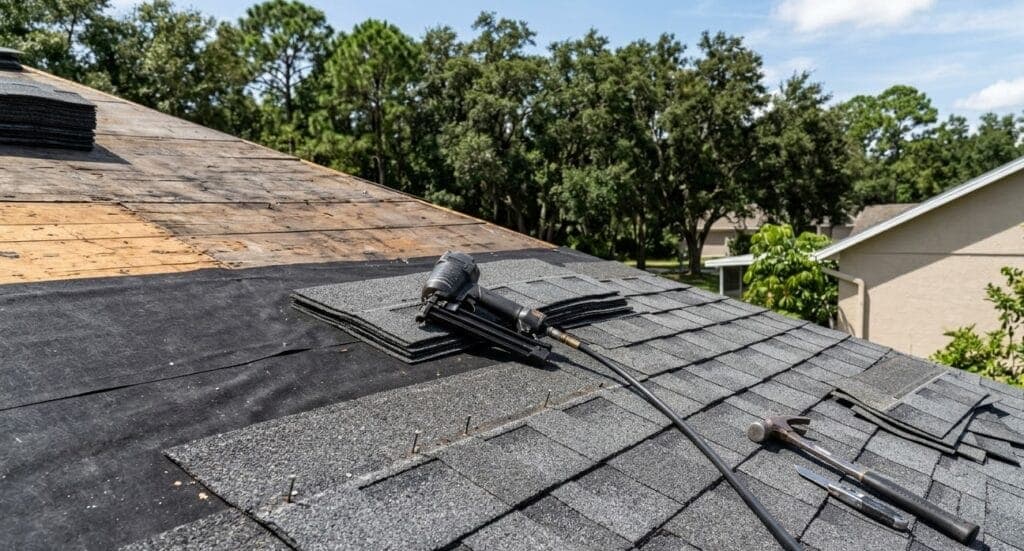
Roofing Warranties in Florida: What Voids Them
A new Florida roof usually carries two warranties: one from the manufacturer for the product and one from the contractor for the installation. Here is what each covers, what quietly voids them and how to keep your coverage.
Read Article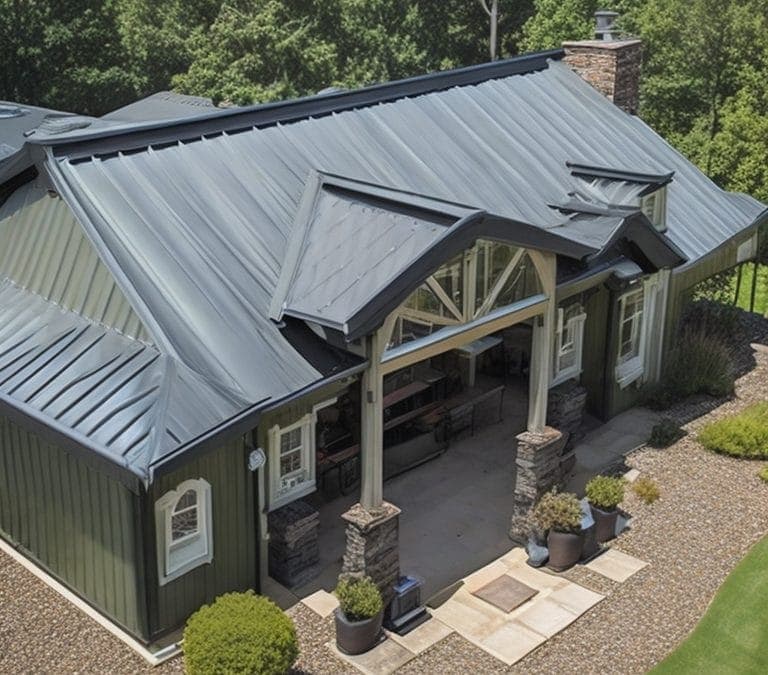
Best Roof Color for Florida Heat: Cool Roofs Explained
Florida test homes show a white shingle saves only 3 to 5 percent on cooling while reflective white metal or tile saves 18 to 26 percent. Here is how to choose a roof color that actually keeps your attic cooler.
Read Article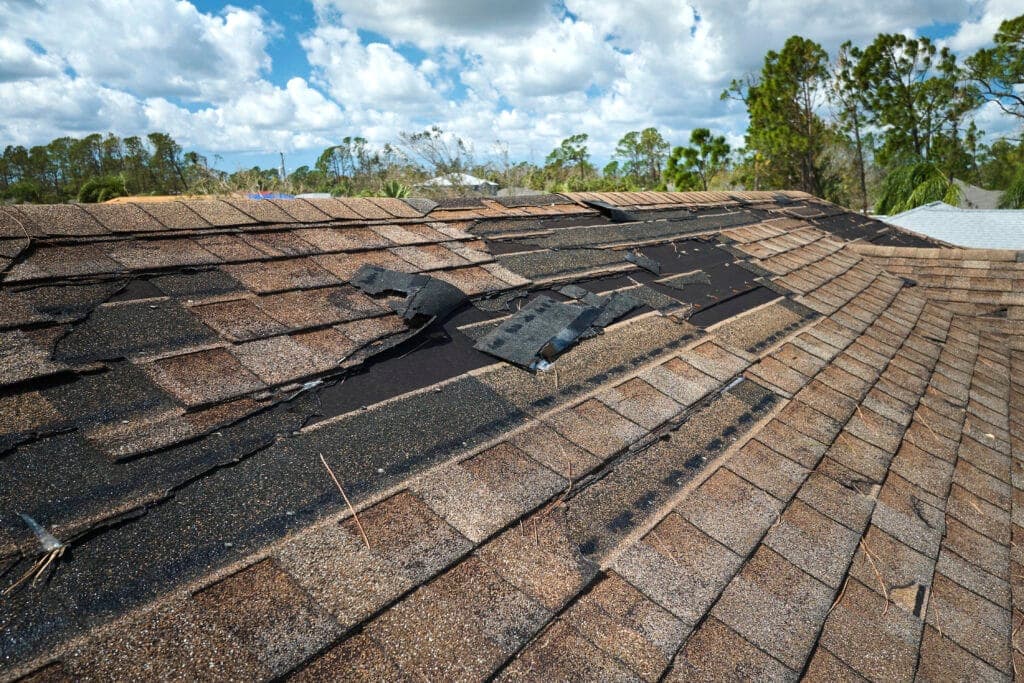
Roof Underlayment in Florida: The Hidden Layer Explained
Underlayment is the layer that decides what happens to your house when wind strips the shingles. Here is how felt, synthetic and peel-and-stick compare, what Florida code requires on a re-roof, and what each option costs in 2026.
Read ArticleReady When You Are
Get your free roof inspection today.
No-pressure, written estimate. Same-week scheduling across Hernando County. Call us now or request a visit online.