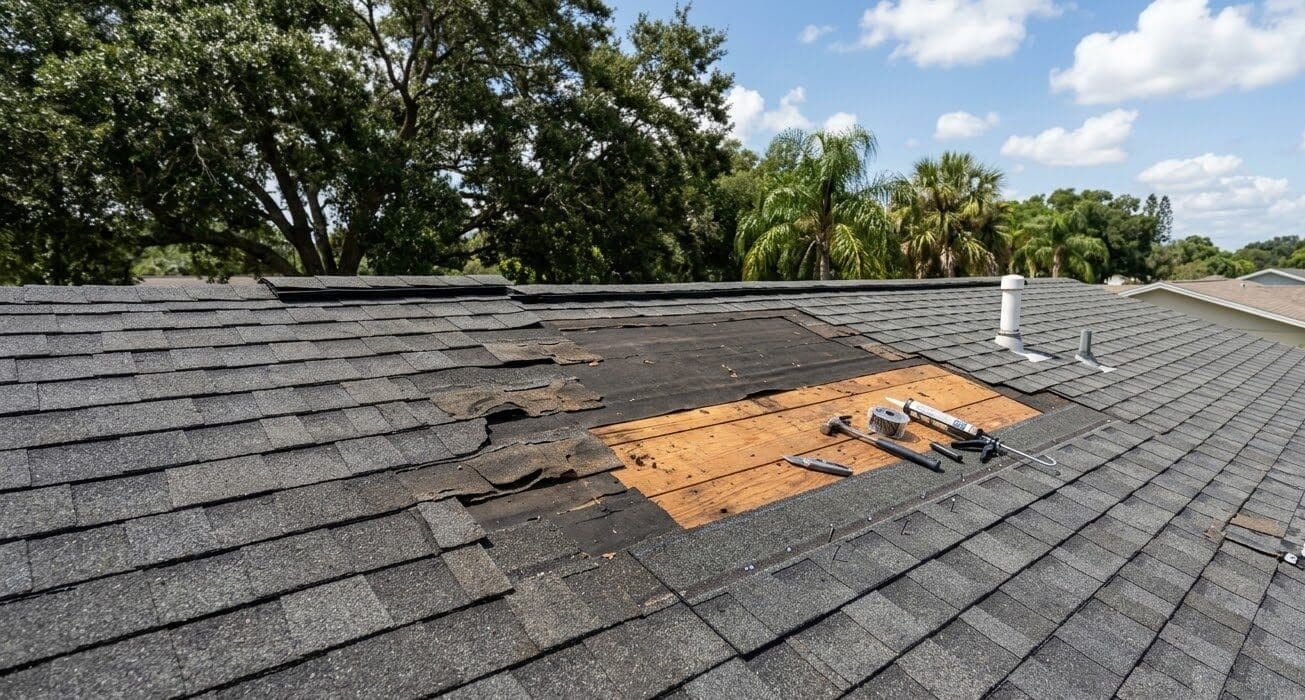
Pinellas Park, FL
Roof Repair in Pinellas Park, FL
Roof repair in Pinellas Park, FL. Post-Milton leak patches, 1970s ranch shingle fixes, flashing and pipe boots. Call (352) 605-0696.
Call (352) 605-0696Protech Roofing Services handles roof repair jobs for Pinellas Park homeowners across the 33781 and 33782 ZIP codes, from the 1950s ranch belts near Park Boulevard to the 1980s townhomes in Park Place and the mobile home parks along 66th Street North. Our trucks run inland Pinellas routes out of Brooksville every week, and we have been tracking Pinellas Park's post-Milton repair patterns street by street since October 2024. Whether you are staring at a fresh ceiling stain, a missing ridge cap, a cracked pipe boot, or a rusted step flashing on a 1960s concrete-block home, call (352) 605-0696 for a free inspection and a written quote.
You Are Viewing
Roof Repair for homeowners and businesses in Pinellas Park, part of Pinellas County, FL, Florida.
Where Pinellas Park Leaks Actually Start
If you searched for roof repair in Pinellas Park, FL, there's a good chance you're standing under a ceiling stain, chasing a drip into a light fixture, or noticing granules pooling at a downspout after the last storm. We've been fixing roofs in Pinellas County since 2008, and the honest truth most homeowners don't hear is that the stain on the ceiling is rarely directly under the actual leak. Water runs along rafters, follows the underside of decking, pools on drywall, and surfaces three or four feet away from where it really entered. So when we get a repair call from a ranch near 62nd Avenue North or a townhome in Park Place, the first thing we do isn't climb the roof. It's read the ceiling.
On Pinellas Park homes, the top five leak entry points in our own service log are cracked pipe boots around plumbing vents, rusted or separated step flashing where the roof meets a chimney or wall, missing ridge caps blown off during Hurricane Milton, corroded nail heads on older three-tab shingles, and lifted tabs on the front-facing slope that let wind-driven rain get under. A professional roof repair in Pinellas Park, FL starts with a full photo survey of the roof surface, then a ceiling-side attic inspection to trace the water path if the entry point isn't obvious from above. We write the report, we share the photos, and we quote only what the roof actually needs. Call (352) 605-0696 and we'll have a truck out this week.
The sustained rainfall and gusts that Milton pushed into Pinellas County on October 9, 2024 found every weak seam in the older parts of Pinellas Park. More than a year later, we're still catching leaks that were never reported at the time because the homeowner thought the stain was old. It isn't. If you have a new discoloration on a ceiling or wall that wasn't there before October 2024, it is almost certainly a post-Milton leak and the damage grows with every thunderstorm.
Post-Milton Damage Patterns Across Pinellas Park
Milton was a Category 3 at landfall roughly 40 miles south of Pinellas Park. The city didn't take the direct eye, but it caught sustained tropical storm winds with gusts well above hurricane strength and bands of heavy wind-driven rain for hours. The repair patterns we saw across the grid weren't uniform. Homes on the older blocks between Park Boulevard and 62nd Avenue North, many with original 1950s plank decking under the shingles, showed a spike in ridge-cap failures and lifted tabs along the front-facing slopes. Homes on the 49th Street corridor and the newer reroofs north of 78th Avenue had fewer shingle issues but more flashing leaks because the storm pushed water sideways into joints that had been fine in straight-down rain for years.
What that meant in our repair log: central Pinellas Park calls were heavy on three-tab shingle replacement and plank-decking nail pops. Eastern 33781 calls were heavy on low-slope carport and Florida-room leaks because add-on sections never got the same build spec as the original roof. Western calls near the mobile home parks along 66th Street North were heavy on aluminum panel reseals and seam separations. When we schedule a repair visit, we already have a shortlist of likely issues based on the address and the roof type. That shortens inspection time to about an hour and keeps the homeowner's day on track.
Two specific failures have become our most common post-Milton repair in the city. Lifted ridge caps on 12 to 20 year old architectural shingle roofs, and cracked pipe boots on any roof past 10 years. Both are fixable without a full replacement if caught within a season or two. Both will escalate into replacement territory if ignored another hurricane season.
1970s-Era Roof Issues on Pinellas Park Ranches
Median construction year in Pinellas Park is 1978. That single number shapes what we find under the shingles. A typical central Pinellas Park ranch was framed with 2x6 rafters on 24-inch centers, sheathed with 1x6 plank decking running perpendicular to the rafters, and finished with a first-generation asphalt shingle roof that has since been replaced once or twice. If that original plank decking was never resheathed, it's still there today under whatever roof is on the house. Plank decking isn't a defect, but it behaves differently than modern plywood or OSB, and the repairs reflect that.
Plank gaps expand and contract with humidity more aggressively than sheet goods, which telegraphs through asphalt shingles as visible ridges or small dips on the roof surface within a few seasons. When we repair a damaged area on plank-decked homes, we verify the plank spacing, check for nail-pop damage at the plank edges, and in some cases add a half-inch OSB overlay across the exposed planks before setting new underlayment and shingles. That's the only way to get a flat, clean repair surface on older Pinellas Park homes without resheathing the entire roof.
A related 1970s-era issue is decking rot around vent penetrations. The original galvanized vent collars on these homes have usually rusted through at some point, and if a previous owner swapped the boot without checking the decking around the pipe, there's often a pie-slice of soft wood underneath. We cut out and patch that section before we set the new boot, otherwise the new boot is installed against compromised structure and fails early. And on homes where a spray-foam insulation retrofit was added in the 2000s or 2010s, we pull attic panels where accessible to confirm no hidden moisture trapped against the underside of the decking.
Shingle Repair on Pinellas Park's Dense Grid Housing
Pinellas Park's tight post-war grid means homes sit close together, often 8 to 15 feet apart on 60-foot lots. That density matters for shingle repair in a few practical ways. Eaves often overhang into a neighbor's airspace, which means ladder placement, debris containment, and tear-off staging all have to be planned around the property line. We run a tarp barrier between the work house and the adjacent lots, and we haul off the same day because the side yard isn't wide enough to stage debris for a week.
The shingle repair process itself on a Pinellas Park ranch starts with a hand-seal test on the surrounding tabs. If tabs on the same slope lift with light pressure, we're looking at an entire slope re-seal or a full replacement, not a spot repair. Asphalt three-tab shingles hit their useful-life limit on the Pinellas grid at about 15 to 18 years because the adhesive strips degrade faster in the heat and humidity here than in inland Florida. Architectural shingles get a little longer. If the lifted area is isolated and the surrounding tabs seal well, we replace the damaged tabs with a matching product, re-nail with the six-nail 130 mph pattern, and hand-seal the new tabs with roofing cement to force-cure the adhesive strip.
Color matching is a real challenge on older Pinellas Park reroofs. A shingle installed in 2005 has UV-faded for 20 years. A new shingle in the same line from the same manufacturer will look brighter and slightly off. We tell homeowners upfront: a repair patch will never be invisible from the street. If a clean visual match matters more than the repair cost, a slope-wide shingle replacement is usually the better call.
Pipe Boots, Flashing, and Fastener Failures
Pipe boots and flashing are the sneaky failures on Pinellas Park roofs. They aren't visible from the ground, they fail quietly, and by the time the homeowner sees a ceiling stain, water has been running down the pipe or behind the flashing for weeks or months. Every home we inspect gets a full pipe-boot and flashing survey, and on roofs past 10 years old we almost always find at least one component that needs replacement.
Pipe boots are the rubber or thermoplastic collars that seal around plumbing vent pipes. In Pinellas Park's heat and UV, the rubber degrades within 8 to 12 years, cracks along the top edge, and pulls away from the pipe. Water runs down the pipe into the attic with every rain. Replacement boots in the 150 to 400 dollar range stop the leak before it costs thousands in drywall and insulation. On homes within a mile of Tampa Bay or the Gulf Intracoastal, we default to lead or thermoplastic boots rather than standard rubber because the chloride salt in the air shortens rubber life even further.
Flashing seals the transitions between the roof surface and anything vertical: walls, chimneys, dormers, and valley lines. Step flashing at wall transitions, drip edge along the eaves, and valley flashing all see different failure modes. On Pinellas Park homes built in the 1960s and 1970s, the original step flashing was often galvanized and has rusted through at the bottom lip. We swap to aluminum or coated steel during a repair and re-seal the joints with a polyurethane sealant rated for UV exposure. Valley flashing failures are the most expensive flashing repair because valleys concentrate water from two converging slopes, and a gap in the seal moves a lot of water into the decking fast.
When Pinellas Park Roof Repair Stops Making Sense
Every repair call eventually hits a threshold where replacement is the smarter money. In Pinellas Park, that threshold arrives earlier than it would on a newer inland house because the combination of 1978 median build year, humidity, UV intensity, and hurricane exposure stacks up against the shingle. Here is how we think about it on the roof during an inspection.
Repair makes sense when damage is localized, under 25 percent of the slope, and surrounding material has five or more years of remaining useful life. A wind-torn section on a seven year old architectural shingle roof is a repair. A cracked pipe boot on a 10 year old roof is a repair. A single run of step flashing with pinhole rust is a repair. These jobs typically run 200 to 1,500 dollars and take a half-day to a full day.
Replacement makes more sense when damage is widespread, surrounding material is past its rated lifespan, or the insurance non-renewal threshold is already looming. Pinellas Park shingle roofs that hit 20 years are usually in the replacement conversation whether or not they have a visible leak, because most private carriers and Citizens now treat 25 years as the formal cutoff for shingle coverage and inspectors routinely flag roofs two to three years before that line. If an insurance inspector has already visited your Pinellas Park home and the carrier is asking for documentation, we can help. We write condition reports and photo surveys for insurance appeals at no charge for our repair customers.
More in this area
Other roofing services in Pinellas Park
FAQ
Frequently Asked Questions
How much does roof repair cost in Pinellas Park, FL?
+
Do I need a permit for a roof repair in Pinellas Park?
+
Can you still fix Hurricane Milton damage on my Pinellas Park roof?
+
My 1970s Pinellas Park ranch has plank decking. Can you still repair it?
+
How fast can Protech get to a Pinellas Park roof emergency?
+
From the Blog
Stay informed about roofing in Florida.
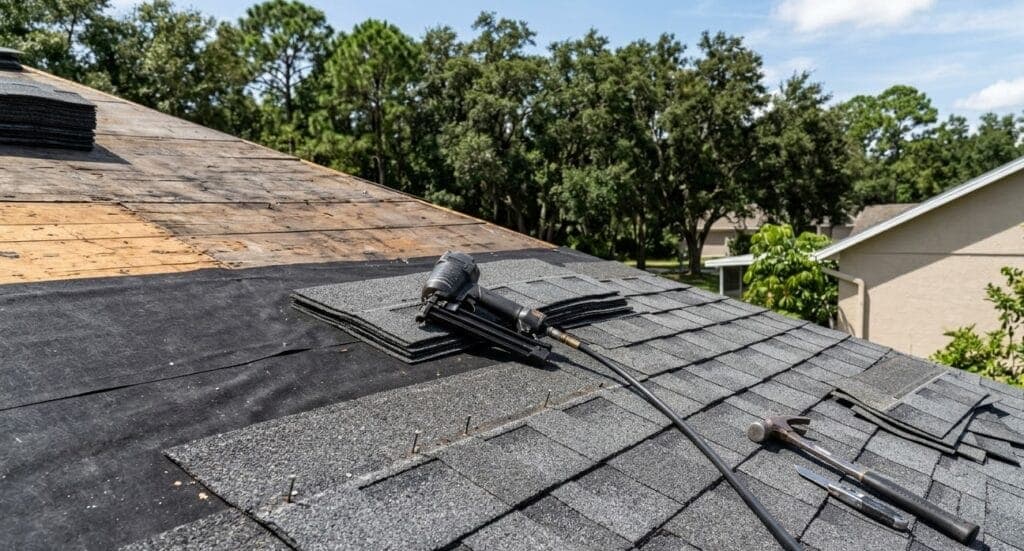
Roofing Warranties in Florida: What Voids Them
A new Florida roof usually carries two warranties: one from the manufacturer for the product and one from the contractor for the installation. Here is what each covers, what quietly voids them and how to keep your coverage.
Read Article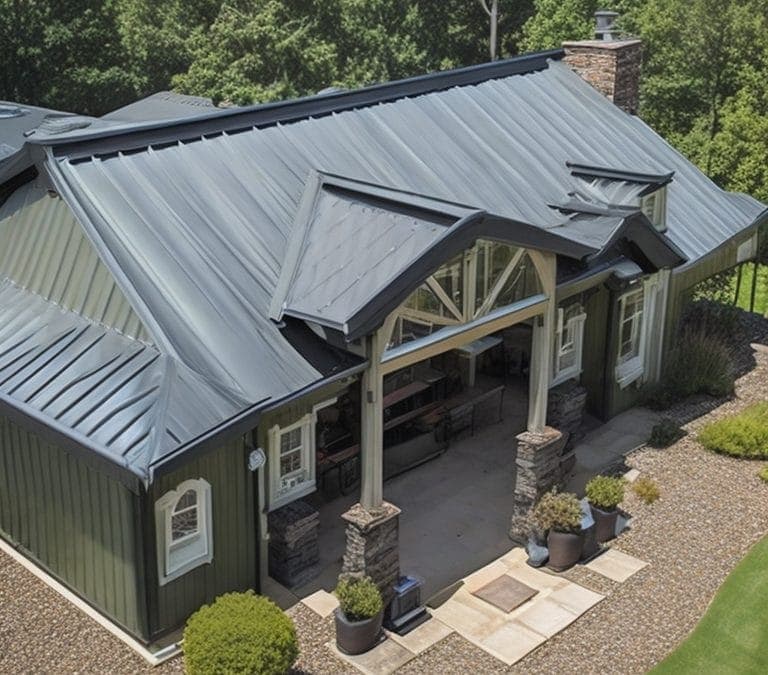
Best Roof Color for Florida Heat: Cool Roofs Explained
Florida test homes show a white shingle saves only 3 to 5 percent on cooling while reflective white metal or tile saves 18 to 26 percent. Here is how to choose a roof color that actually keeps your attic cooler.
Read Article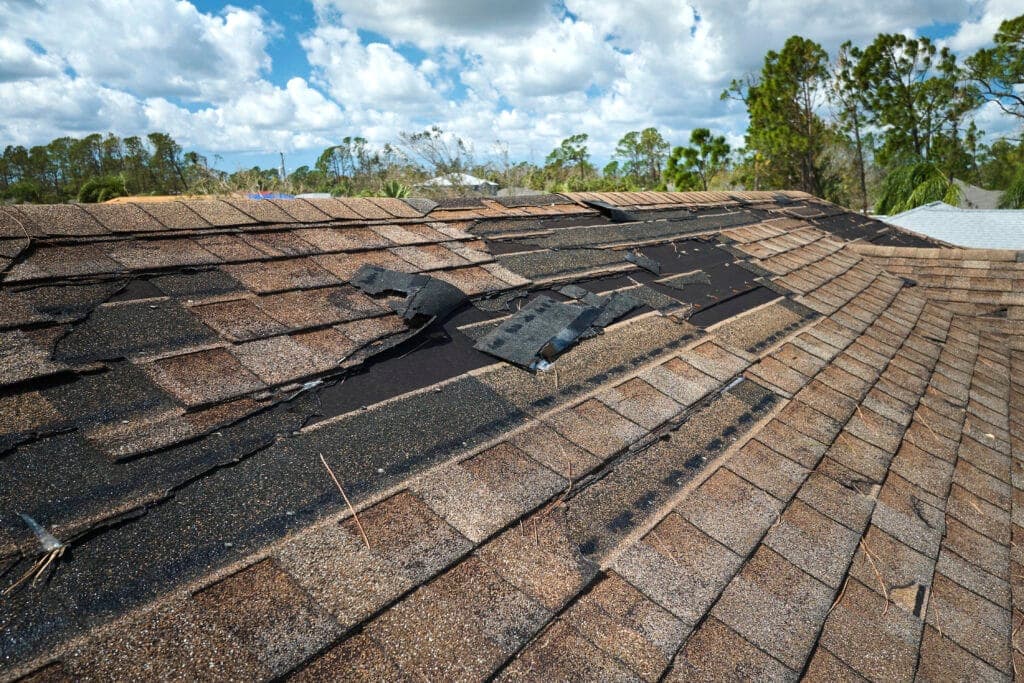
Roof Underlayment in Florida: The Hidden Layer Explained
Underlayment is the layer that decides what happens to your house when wind strips the shingles. Here is how felt, synthetic and peel-and-stick compare, what Florida code requires on a re-roof, and what each option costs in 2026.
Read ArticleReady When You Are
Get your free roof inspection today.
No-pressure, written estimate. Same-week scheduling across Hernando County. Call us now or request a visit online.