Central Florida Roofing Service
Roof Coating
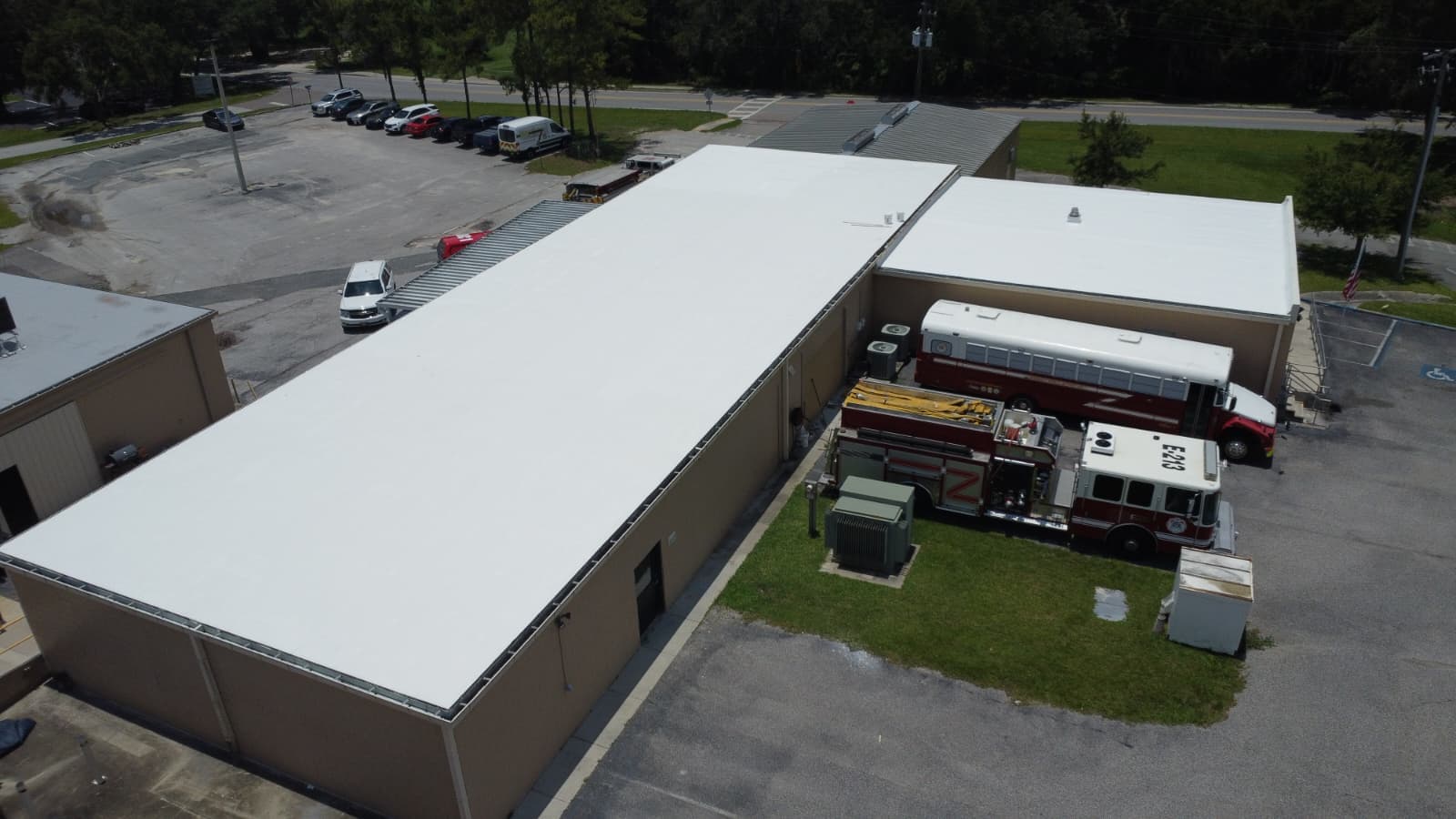
Roof coating near you in Central Florida: reflective, waterproof coatings that extend flat and metal roof life. Free estimates. Call (352) 605-0696.
Call (352) 605-0696Types of Roof Coatings and Which Works Best in Florida
Not all roof coatings are created equal, and the right choice depends on your roof type, your primary goals, and the specific conditions your roof faces. Central Florida’s climate narrows the field considerably because whatever you apply needs to handle extreme UV exposure, standing water from tropical downpours, high humidity, and temperature extremes from cool winter mornings to summer afternoons that can push surface temperatures above 160 degrees Fahrenheit.
Silicone roof coating is the top performer for Central Florida conditions, and it is the coating we recommend most frequently at Protech. Silicone’s defining characteristic is its resistance to ponding water. Unlike other coating types that can soften, swell, or break down when water sits on the surface for extended periods, silicone remains stable and maintains its waterproofing integrity even under standing water. This matters enormously in Florida because flat and low-slope roofs, especially on commercial buildings, frequently hold water after heavy rain events. Silicone also offers excellent UV resistance, retaining its flexibility and reflective properties far longer than other coating types in high-UV environments. It does not become brittle or crack over time, which is a significant advantage in a climate where thermal cycling subjects the roof surface to constant expansion and contraction. The typical installed cost for silicone coating ranges from $2.50 to $4.00 per square foot, depending on the substrate preparation required and the number of coats applied.
Acrylic roof coating is the most affordable option, typically running between $1.50 and $2.50 per square foot installed. Acrylic coatings are water-based, easy to apply, and available in a wide range of reflective colors. They provide good UV protection and solid waterproofing performance on properly sloped roofs where water does not pond. The limitation of acrylic in Central Florida is precisely that ponding water issue. Acrylic coatings can re-emulsify when exposed to prolonged standing water, which means the coating softens and can wash away. For steep-slope residential roofs where water sheds quickly, acrylic can be an excellent and budget-friendly choice. For flat and low-slope roofs that hold water even temporarily, silicone is the safer bet.
Elastomeric roof coatings are formulated to stretch and recover, accommodating the thermal expansion and contraction that every roof surface experiences throughout the day. The name comes from their elastic properties, which allow the coating film to bridge small cracks and gaps in the substrate without tearing. Elastomeric coatings work well over a variety of substrates including metal, concrete, built-up roofing, and modified bitumen. They offer good waterproofing and reflective properties, though they typically do not match silicone’s ponding water resistance. Costs fall in the middle range, generally $2.00 to $3.50 per square foot installed.
Polyurethane roof coatings come in two formulations: aromatic and aliphatic. Aromatic polyurethane is tougher and more abrasion-resistant, making it a good base coat for roofs that receive foot traffic from maintenance personnel. Aliphatic polyurethane is UV-stable and retains its color and reflective properties better than aromatic formulations, making it the preferred top coat. A two-coat polyurethane system with an aromatic base and aliphatic top provides excellent durability and weathering resistance, but at a higher cost than silicone or acrylic. This system is most commonly specified for commercial and industrial roofs where foot traffic and mechanical equipment create wear concerns that other coating types cannot handle.
Spray polyurethane foam with a protective coating is a hybrid approach that combines insulation and waterproofing in a single application. SPF is sprayed onto the roof surface where it expands to fill gaps, seams, and irregular substrate surfaces, creating a monolithic insulation layer. A protective coating, typically silicone or elastomeric, is then applied over the foam to protect it from UV degradation. This system delivers outstanding thermal performance and can dramatically reduce cooling costs, but it requires specialized equipment and experienced applicators. It is most commonly used on large commercial flat roofs.
When Coating Beats Replacement
The decision between coating an existing roof and replacing it entirely comes down to the condition of the existing system. A coating is not a repair for a failing roof. It is a maintenance and life-extension treatment for a roof that is still structurally sound but showing signs of age and weathering.
Coating makes sense when the roof membrane or surface material is intact but has lost its protective properties. Asphalt built-up roofs that have become dry and brittle on the surface, metal roofs with surface corrosion but sound seams and fasteners, single-ply membranes that are showing UV degradation but have not developed leaks, and spray foam roofs whose original coating has worn away are all strong candidates for recoating.
Coating also makes sense when the budget does not support a full replacement but the roof needs attention now. A quality coating system buys you 10 to 15 additional years of service life, giving you time to plan and budget for an eventual replacement while protecting the building in the meantime. The cost difference is dramatic. A full roof replacement on a 10,000 square foot commercial building might cost $80,000 to $120,000 or more, while a coating system for the same building typically falls between $15,000 and $40,000 depending on the coating type and substrate preparation needed.
Coating does not make sense when the roof deck is compromised. If the structural decking beneath the roofing material is water-damaged, rotted, or sagging, no coating will fix that problem. The decking must be replaced, which means the roofing material above it must be removed. At that point, you are doing a tear-off and replacement, not a coating.
Coating does not make sense when the existing system has widespread active leaks. If water is entering the building through multiple points, the membrane or material has failed beyond what a coating can address. Individual leak points can often be repaired before coating, but if the damage is too extensive, replacement becomes the more practical and more durable solution.
Coating does not make sense when the existing system has reached the end of its structural life. Materials fatigue and break down internally over time, and there comes a point where the substrate can no longer support a coating system properly. A qualified inspector can evaluate the remaining service life of your existing roof and tell you honestly whether coating will deliver the extended performance you are paying for.
At Protech, we never recommend a coating when replacement is the better option. Our reputation depends on delivering results that last, and putting a coating over a failing system is a recipe for callbacks and customer dissatisfaction. If your roof is a good candidate for coating, we will tell you. If it needs replacement, we will tell you that too.
Energy Savings and Cool Roof Benefits
One of the most compelling reasons to invest in a roof coating in Central Florida is the potential for significant energy savings. The science behind this is simple: a reflective roof surface bounces solar energy back into the atmosphere instead of absorbing it and converting it to heat that transfers into the building below.
Central Florida roofs absorb enormous amounts of solar radiation. A dark-colored asphalt shingle roof can reach surface temperatures of 150 to 170 degrees Fahrenheit on a typical summer afternoon. That heat conducts through the roof deck, into the attic space, and eventually into the conditioned living area below. Your air conditioning system works harder and runs longer to combat this heat gain, driving up electricity bills throughout the cooling season, which in Central Florida runs roughly eight to nine months of the year.
A reflective roof coating can reduce surface temperature by 50 to 80 degrees Fahrenheit compared to an uncoated dark roof. That reduction translates directly into reduced heat transfer through the roof assembly and lower cooling demand inside the building. Studies consistently show that reflective roof coatings reduce cooling energy consumption by 10 to 25 percent, with the higher end of that range applying to buildings with poor attic insulation or older HVAC systems that are already working hard to keep up with the heat load.
The Solar Reflectance Index, or SRI, is the standard measurement for a roof surface’s combined reflective and emissive properties. Florida’s energy code and many local utility incentive programs use SRI values to determine compliance and eligibility. High-SRI roof coatings, particularly white and light-colored silicone and acrylic formulations, meet and often exceed the cool roof thresholds established by programs like ENERGY STAR and the Cool Roof Rating Council.
Beyond direct energy savings, cool roof coatings reduce the urban heat island effect in densely developed areas. Neighborhoods where every roof is absorbing and re-radiating heat create localized warming that raises ambient temperatures for everyone in the area. Each roof that converts to a reflective surface contributes to lowering the overall temperature burden on the community.
There are also benefits to the roof system itself. Reducing surface temperature reduces thermal stress on the roofing materials, which slows the aging process. A roof that stays 50 degrees cooler during peak sun hours experiences less expansion and contraction, less UV degradation, and less thermal cracking than one that is absorbing all that solar energy. This means the coating not only extends roof life through its waterproofing and surface protection properties but also by reducing the environmental stress that breaks roofing materials down.
For commercial building owners, the energy savings from a roof coating can offset a significant portion of the coating cost within the first few years. When combined with the avoided cost of premature roof replacement, the financial case for coating becomes very strong.
The Roof Coating Application Process
A professional roof coating application is not a weekend DIY project. It requires proper surface preparation, the right materials applied at the correct thicknesses, and favorable weather conditions throughout the application and curing process.
Surface preparation is the most important step in any coating project, and it is where the difference between a professional application and a shortcut really shows. The existing roof surface must be clean, dry, and free of loose material, debris, dirt, grease, and biological growth. For most substrates, this starts with pressure washing at a pressure high enough to remove surface contaminants but controlled enough not to damage the underlying material. For metal roofs with corrosion, wire brushing or mechanical preparation of rusted areas may be required. For single-ply membranes, specific cleaning agents matched to the membrane chemistry are used to ensure proper adhesion.
After cleaning, any existing damage must be repaired. Seam separations, punctures, cracks, and deteriorated flashing are addressed with repair materials compatible with both the existing substrate and the coating system being applied. Reinforcing fabric or mesh is embedded in the coating at these repair points to provide additional strength and crack bridging capability.
Priming may be required depending on the substrate and the coating type. Some coatings adhere directly to clean substrates without a primer, while others require a specific primer to achieve the bond strength needed for long-term performance. Skipping the primer when it is needed is one of the most common shortcuts that leads to coating failure, so this step should never be omitted based on assumptions.
The coating itself is applied using airless spray equipment, rollers, or a combination of both, depending on the coating material and the roof configuration. Spray application provides the most uniform coverage and is preferred for large, open roof areas. Roller application is used for detail work around penetrations, edges, and complex geometry. The coating is applied in multiple passes to achieve the specified dry film thickness, which is typically measured in mils (thousandths of an inch). A quality silicone coating system, for example, is typically applied at 20 to 30 mils dry film thickness, which requires multiple coats with drying time between each pass.
Weather conditions during application and curing are critical. The roof surface must be dry, the ambient temperature must be within the manufacturer’s specified range (typically above 50 degrees Fahrenheit and below 100 degrees), and no rain should be expected for at least 24 to 48 hours after application. In Central Florida, this means roof coating projects are typically scheduled during the drier months or during windows of clear weather between rain events. Our team monitors weather forecasts closely and will delay application rather than risk applying coating in conditions that could compromise adhesion or curing.
The entire process for a residential roof coating project typically takes two to four days, including preparation, repair, and coating application. Commercial projects vary widely depending on the roof size, but a 10,000 to 20,000 square foot commercial roof typically takes five to eight working days from start to finish.
Florida Building Code and Roof Coating Regulations
Understanding how roof coatings fit into Florida’s regulatory framework helps you plan your project and avoid unexpected complications.
The Florida Building Code generally treats roof coating as a maintenance procedure rather than a re-roofing activity, provided the coating does not add structural load beyond what the existing system was designed to support. This classification means that many roof coating projects do not require a building permit, which simplifies the process and reduces cost. However, the specifics can vary by local jurisdiction. Some counties and municipalities have adopted local amendments that impose additional requirements, so it is always worth checking with your local building department before starting work.
When a roof coating is applied as part of a broader re-roofing project, such as when the existing system is being repaired and coated as an alternative to tear-off and replacement, permitting requirements may apply. The distinction typically comes down to whether the coating is maintaining the existing system or effectively creating a new roofing system. Professional contractors like Protech understand these distinctions and handle the permitting process when required.
Product approval is an important consideration for any roof coating applied in Florida. The Florida Building Commission maintains a database of approved products, and coatings used in commercial applications or in conjunction with permitted work should carry a valid Florida Product Approval number. This approval confirms that the product has been tested and certified for use in Florida’s specific wind, moisture, and UV conditions.
Energy code compliance adds another dimension for commercial buildings and new construction. Florida’s energy code establishes minimum roof reflectance values for certain building types and climate zones. Roof coatings that meet these reflectance thresholds can help a building achieve energy code compliance, which may be relevant during renovations, additions, or changes of use that trigger energy code review.
Warranty considerations are worth discussing with your coating contractor. Most professional-grade roof coatings carry manufacturer warranties ranging from 10 to 20 years, depending on the product and the application specifications. These warranties typically cover material defects and, in some cases, labor for reapplication if the coating fails prematurely. However, manufacturer warranties usually require that the coating be applied by an approved contractor following the manufacturer’s specific application procedures. At Protech, we are authorized applicators for the coating systems we install, which means your manufacturer warranty is fully valid and enforceable.
Coating Different Roof Types
Different roofing substrates respond differently to coating systems, and the preparation and product selection must account for the specific characteristics of your existing roof.
Metal roofs are among the best candidates for coating because metal is inherently durable and long-lasting. The typical failure mode for metal roofs is not structural. It is surface degradation through corrosion, fading, and sealant failure at seams and fasteners. A roof coating addresses all three of these issues. Silicone and elastomeric coatings adhere well to properly prepared metal surfaces, bridge gaps at seam overlaps, and seal around exposed fasteners that may have loosened over time. The reflective properties of white coating also reduce the thermal cycling that causes metal panels to expand and contract, which in turn reduces stress on fasteners and seams.
Built-up roofing (BUR) systems, the traditional “tar and gravel” roofs common on older commercial buildings, are excellent coating candidates when the membrane is still intact beneath the surface gravel. The preparation process involves removing loose gravel, cleaning the surface, and repairing any blisters, splits, or delamination in the built-up layers. A silicone coating over a properly prepared BUR system seals the surface and restores waterproofing without the cost and disruption of tearing off multiple layers of built-up material.
Modified bitumen roofs are common on both commercial and residential flat roof sections. The cap sheet on a modified bitumen system provides the waterproofing and UV protection, and over time it loses its protective granule surface and becomes vulnerable to cracking and splitting. Coating a modified bitumen roof after 10 to 15 years of service can extend its life significantly, particularly with silicone or elastomeric coatings that accommodate the material’s natural thermal movement.
Single-ply membranes like TPO and EPDM can be coated, but substrate preparation and coating selection require careful attention. TPO roofs must be properly cleaned and may require a specific primer depending on the TPO formulation and the coating being applied. EPDM rubber roofs require a compatible primer that bonds to the rubber surface, as many standard coatings do not adhere well to EPDM without proper preparation.
Concrete and tile roofs can also benefit from coating, particularly for waterproofing and reflective purposes. Concrete flat roofs develop hairline cracks over time that allow water intrusion, and an elastomeric or silicone coating bridges these cracks and restores the waterproof surface. Tile roofs, while inherently long-lasting, can benefit from a reflective coating applied to the individual tiles to reduce heat absorption and extend the life of the underlayment beneath the tiles.
Spray polyurethane foam roofs absolutely require a protective coating because the foam itself degrades rapidly under UV exposure. The original protective coating on an SPF roof typically lasts 10 to 15 years before it needs to be reapplied. Recoating an SPF roof with silicone is a straightforward maintenance procedure that preserves the foam’s insulation and waterproofing properties for another decade or more.
Maintaining Your Roof Coating for Maximum Performance
A roof coating is not a set-it-and-forget-it solution. While coated roofs require less maintenance than uncoated ones, regular inspection and occasional attention ensure that the coating continues to perform at its best throughout its rated service life.
We recommend a professional inspection of coated roofs at least once per year, with additional inspections after any significant storm event. During these inspections, we look for coating wear at high-traffic areas, any mechanical damage from equipment installation or maintenance activity, sealant condition around penetrations and edges, ponding water patterns that may have changed due to settling or drain issues, and biological growth that can compromise the coating surface.
Cleaning a coated roof periodically helps maintain its reflective properties. Dirt, pollen, algae, and organic debris accumulate on the surface over time and reduce the SRI value, diminishing the energy savings that the coating provides. A simple pressure wash at low to moderate pressure restores the reflective surface without damaging the coating. In most cases, annual cleaning is sufficient, but roofs under heavy tree canopy or in areas with significant air pollution may benefit from more frequent cleaning.
Minor repairs and touch-ups are normal over the life of a coating system. HVAC technicians stepping on the roof, antenna installations, animal activity, and wind-blown debris can all create localized damage to the coating surface. Catching and repairing these spots quickly prevents water from reaching the substrate and compromising the system. Most coating manufacturers supply repair materials that can be applied over the existing coating to restore protection at damaged points.
When the time comes for a full recoat, typically 10 to 15 years after the initial application, the process is much simpler than the original installation because the substrate is already sealed and prepared. The existing coating is cleaned, any repairs are made, and a new coat is applied over the top. This recoat cycle can theoretically be repeated multiple times, extending the life of the underlying roof system almost indefinitely as long as the structure remains sound.
Common Mistakes to Avoid with Roof Coatings
The roof coating industry, like any construction trade, has its share of shortcuts, misconceptions, and outright bad practices. Knowing what to watch for helps you avoid costly mistakes and choose a contractor who will do the job right.
Applying coating over a dirty or unprepared surface is the number one cause of premature coating failure. Some contractors rush through the preparation phase to save time and labor cost, applying coating over dirt, debris, biological growth, or loose material that prevents proper adhesion. The coating may look fine initially, but within months it begins to peel, blister, or delaminate. At that point, the entire coating must be removed and the preparation done properly before reapplication, doubling the total cost. Insist on seeing the preparation work before the coating goes on, and do not accept a quote that seems unusually low compared to competitors, as the difference is almost always in the preparation.
Using the wrong coating type for the substrate or conditions is another common mistake. A contractor who only carries one type of coating will recommend that product for every roof, regardless of whether it is the best match. Acrylic on a flat roof that ponds water. Silicone over a substrate that needs a primer the contractor did not supply. Elastomeric on a metal roof without addressing rust and corrosion first. Each of these mismatches leads to underperformance or failure. A professional coating contractor evaluates the substrate, the conditions, and the performance requirements before recommending a specific product.
Insufficient coating thickness compromises performance even when the right product is applied to a properly prepared surface. Manufacturers specify minimum dry film thicknesses for their products, and those specifications exist because the coating needs a certain thickness to deliver its rated waterproofing, UV resistance, and reflective properties. Applying the coating too thin saves material cost but shortens the service life and may void the manufacturer warranty. Professional applicators measure wet film thickness during application to verify that the dried coating will meet the minimum specification.
Ignoring drainage problems before coating is a missed opportunity that can undermine the entire project. If the roof has areas of significant ponding water due to structural settling, clogged drains, or inadequate slope, applying a coating over those conditions means the coating will be subjected to standing water stress from day one. While silicone handles ponding water better than other coating types, addressing the underlying drainage issue before coating provides a much better long-term outcome. Adding tapered insulation, clearing drain lines, or installing additional drains during the coating project eliminates the ponding problem rather than just tolerating it.
Choosing a contractor based solely on the lowest bid is tempting but risky. Roof coating is a product-and-labor combination where quality in both categories determines the outcome. A low bid often means thinner application, less thorough preparation, cheaper product, or all three. The result is a coating that fails years before it should, leaving you with the cost of removal and reapplication on top of the original investment. At Protech, we price our coating projects to deliver the performance and durability that our clients expect, and we stand behind that work with warranties that we fully intend to honor.
Schedule Your Free Roof Coating Evaluation
If your roof is more than 10 years old and you are starting to think about what comes next, a roof coating evaluation could reveal options you did not know you had. Many homeowners and building managers assume that an aging roof means a full replacement, but coating technology has advanced to the point where a quality application can deliver performance comparable to a new roof at a fraction of the cost.
Protech Roofing Services provides free roof coating evaluations throughout Hernando, Citrus, Pasco, Sumter, Polk, Hillsborough, and Pinellas counties. During our evaluation, we assess the condition of your existing roof, determine whether it is a good candidate for coating, identify the optimal coating type for your specific situation, and provide a detailed written estimate that includes all preparation, repair, and application costs.
We do not believe in high-pressure sales tactics or one-size-fits-all recommendations. Every roof is different, and the right solution for your building depends on factors that can only be assessed through an on-site inspection by an experienced professional.
Call Protech Roofing Services today at (352) 605-0696 to schedule your free evaluation. Let us show you how a professional roof coating can extend the life of your roof, reduce your energy costs, and protect your property for years to come.
Cool roof coatings and silicone restoration systems are popular for both commercial flat roofs and certain residential applications across Central Florida — including the commercial centers and villa-style buildings around The Villages.
FAQ
Frequently Asked Questions
Where can I find a silicone roof coating contractor near me?
+
How long does roof coating last in Florida?
+
Can any roof be coated?
+
Is roof coating waterproof?
+
Do I need a permit for roof coating?
+
Do you offer roof coating near me?
+
Roofing Knowledge
Articles and guides for homeowners
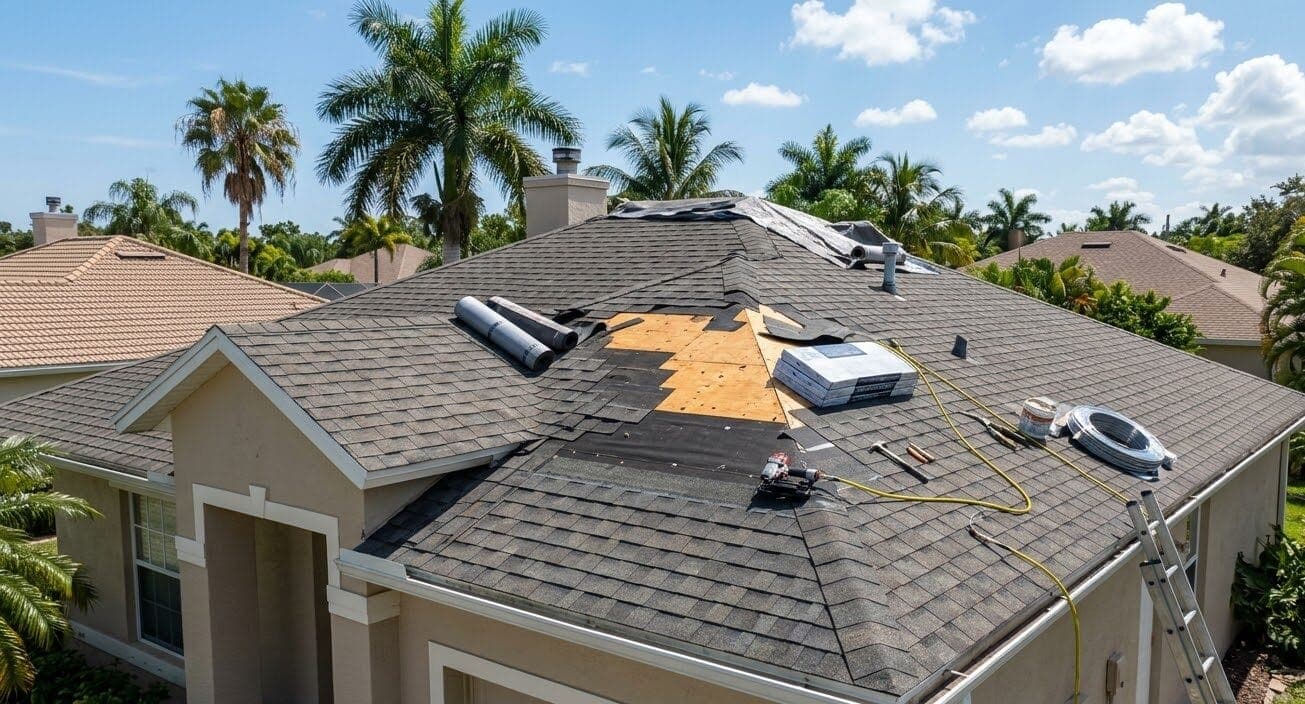
How Long a Roof Replacement Takes in Florida: 2026 Guide
A Florida shingle re-roof takes one to three days of physical work and about two to four weeks from contract to closed permit. Here is what happens each day, how metal and tile change the schedule and what causes delays.
Read Article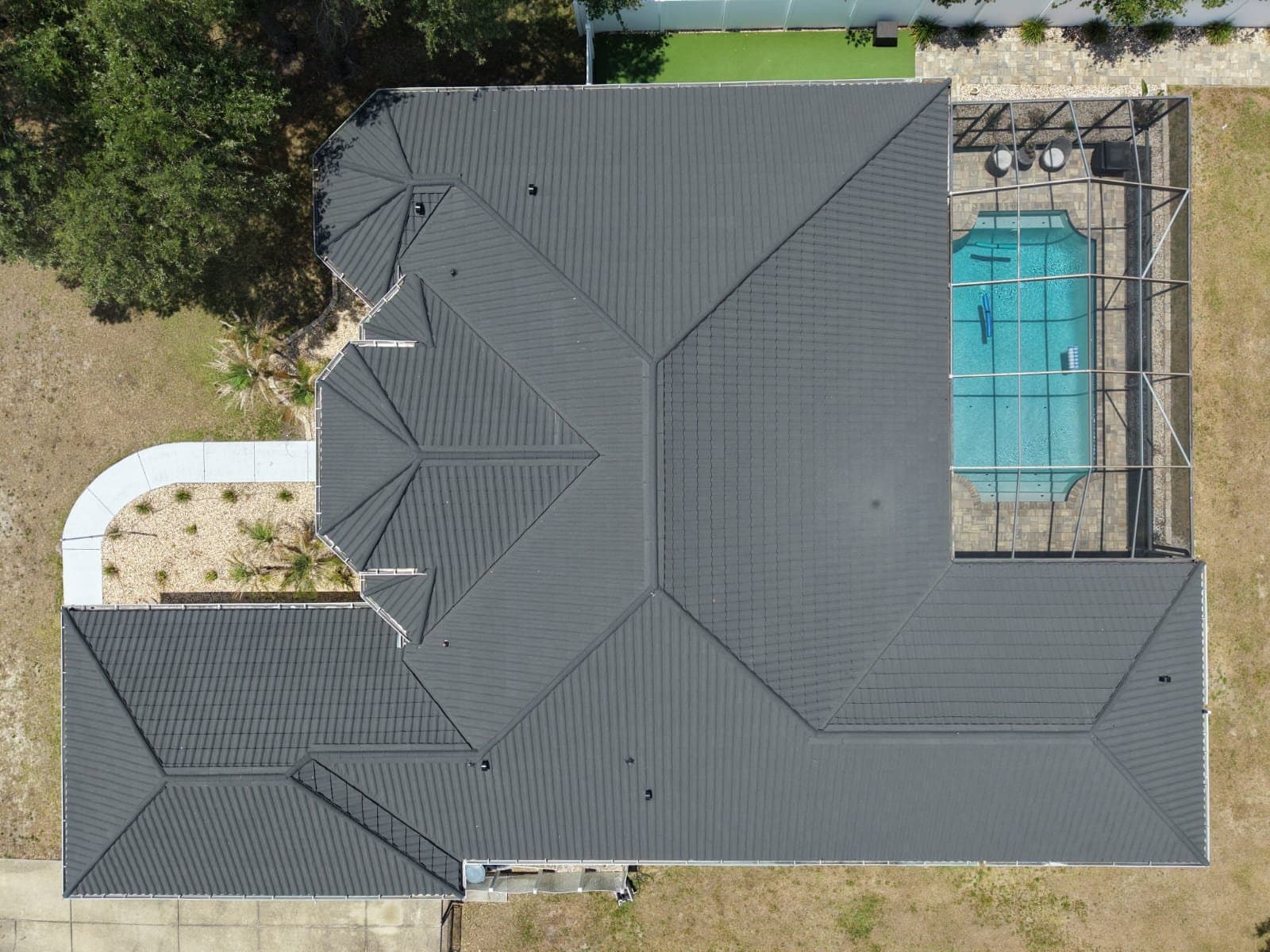
Metal Roof Cost in Florida 2026: Per-Sqft Guide
Metal roofs in Florida run about $8 to $23 per square foot installed, depending on the system. Here is what standing seam, stone coated steel and exposed fastener panels cost, what a typical home pays and how to compare quotes.
Read Article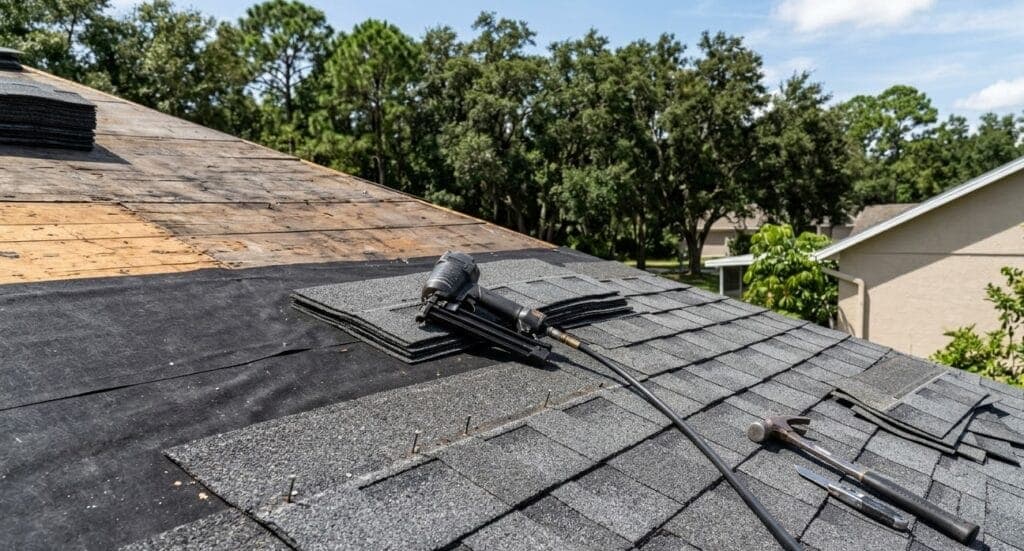
Roofing Warranties in Florida: What Voids Them
A new Florida roof usually carries two warranties: one from the manufacturer for the product and one from the contractor for the installation. Here is what each covers, what quietly voids them and how to keep your coverage.
Read ArticleReady When You Are
Get your free roof inspection today.
No-pressure, written estimate. Same-week scheduling across Hernando County. Call us now or request a visit online.