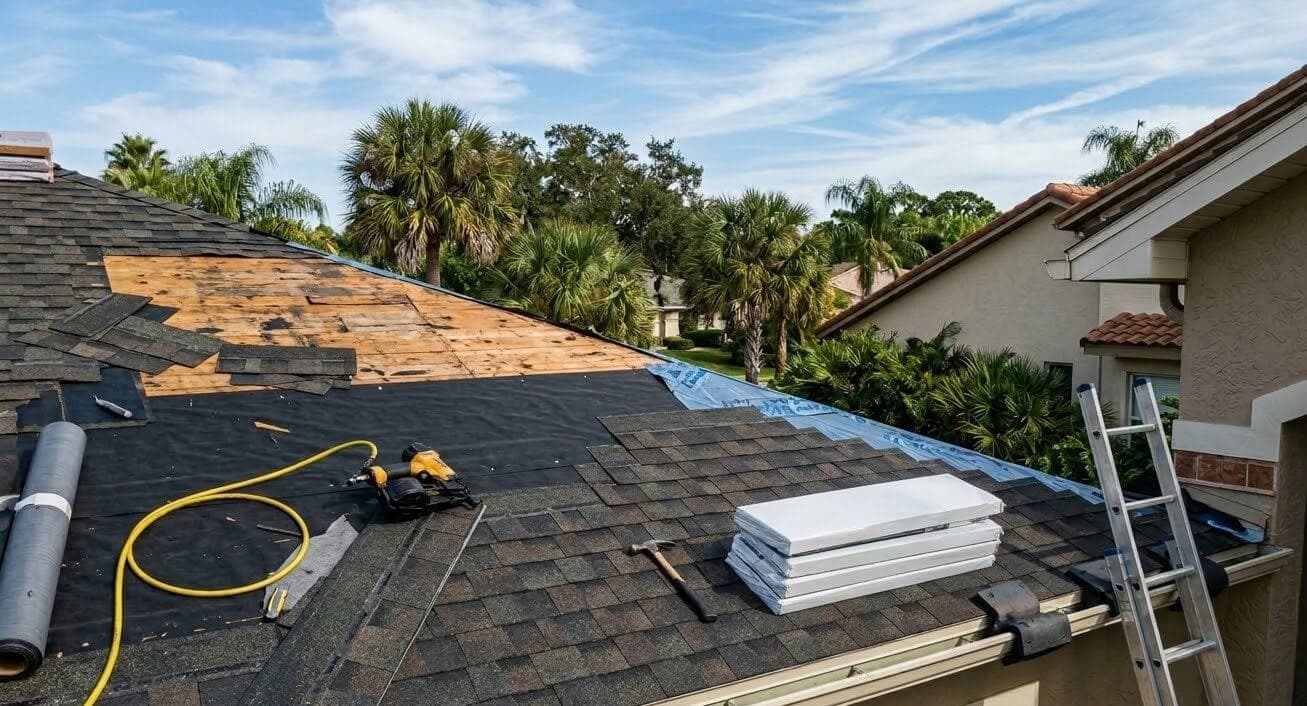
Clearwater, FL
Roof Replacement in Clearwater, FL
Roof replacement in Clearwater, FL. Shingle, tile, and metal by Protech Roofing. 130 to 150 mph code. Call (352) 605-0696 for a free estimate.
Call (352) 605-0696A roof replacement on a Clearwater home is a bigger decision today than it was five years ago. Between 130 mph mainland code, 150 mph barrier-island code, the insurance non-renewal wave, and the Gulf salt air that eats anything marginal, choosing the right material and the right installer matters. Protech Roofing has been installing new roofs across Pinellas County since 2008. Call (352) 605-0696 for a free replacement quote.
You Are Viewing
Roof Replacement for homeowners and businesses in Clearwater, part of Pinellas County, FL, Florida.
Material Options for a Clearwater Replacement
Roof replacement in Clearwater, FL comes down to four material families, and which one is right depends on where your home sits, what your HOA allows, what your insurance carrier wants to see, and what you want the roof to look like. We install all four, and we walk you through the tradeoffs honestly.
Architectural asphalt shingle is still the most common replacement choice for mainland Clearwater. Good architectural shingles with algae-resistant copper granules run a 25 to 30 year manufacturer warranty in this climate, install quickly, match most HOA guidelines, and keep replacement cost lower than tile or metal. On a 2,000 square foot Skycrest or Oak Grove home, architectural shingle replacement typically runs $12,000 to $18,000 depending on slope, decking condition, and access.
Concrete tile and clay tile are the traditional Harbor Oaks and Countryside choice. Tile lasts 50 years or more, handles UV and humidity beautifully, and carries the historic look for Mediterranean-Revival homes. Downsides are weight (tile requires the decking to be engineered for the load) and cost (tile runs 60 to 100 percent more than shingle on the same home). We default to concrete barrel tile on most mainland tile installs and true clay tile on historic Harbor Oaks homes where the profile and color must match.
Standing-seam aluminum metal is our default recommendation for any barrier-island property and any mainland home within 1,500 feet of salt water. Aluminum resists the chloride corrosion that shortens the life of shingle and steel metal on the coast. A properly installed standing-seam aluminum roof lasts 40 to 50 years, reflects enough summer heat to drop attic temperatures, handles 150 mph wind with engineered clips, and carries a PVDF factory finish that does not chalk or fade for decades. Cost runs $22,000 to $35,000 on a typical Clearwater home, depending on profile and complexity.
Modified-bitumen and TPO are the options for flat-roof sections like lanai covers, carports, and additions. These systems are not full-roof replacements in most cases, but they are part of a lot of full-roof scopes where the main roof is pitched and a lanai cover is flat.
Wind Code: 130 mph Mainland vs. 150 mph Clearwater Beach and Island Estates
Clearwater has two wind zones, and the replacement scope changes between them. Mainland Clearwater is a 130 mph design wind speed under the Florida Building Code 8th Edition 2023 with ASCE 7-22 load calculations. Clearwater Beach, Island Estates, Sand Key, and other barrier-island addresses are 150 mph. Exposed waterfront parcels within 600 feet of open Gulf or Intracoastal water push into higher exposure categories and can effectively require 160 mph design assumptions on certain assemblies.
On a 130 mph mainland job, architectural shingle goes down with six nails per shingle, ring-shank deck nails, peel-and-stick underlayment at eaves and valleys, and sealed hip and ridge components. Every product has to carry a Florida Product Approval Number rated for the address, and we submit those FL numbers to the City of Clearwater Building Division with the permit application. On a 150 mph barrier-island job, the nailing pattern gets tighter, the underlayment runs full-field peel-and-stick instead of just eaves and valleys, and tile needs foam adhesive plus mechanical attachment at ridges and hips. Metal clips get spaced closer. Drip edge gets specified in a heavier gauge with extra fastener density.
Cutting corners on any of this is a silent disaster. A shingle install that passes visual inspection but misses the six-nail pattern voids the manufacturer warranty, voids the insurance wind-mitigation credit, and lifts in the first storm. We document every step of the install with photos so you have the evidence the code was met if a carrier asks later.
Permits Through the City of Clearwater Building Division
Most Clearwater replacement permits go through the City of Clearwater Building Division at 100 South Myrtle Avenue, downtown Clearwater, phone 727-562-4567. Unincorporated Pinellas County pockets (some parts of Island Estates and the fringe of the city) route through the Pinellas County Building Division at 509 East Avenue in Clearwater, 727-464-3888 instead.
We handle the whole permit on your behalf. That means we submit the Florida Product Approval numbers for every major component, the ASCE 7-22 wind design paperwork, the manufacturer installation specs, and the contractor license and insurance. Typical turnaround from submittal to approval runs three to ten business days depending on season and workload, and we schedule the dry-in inspection before the shingle or tile or metal goes back on top of the underlayment. Final inspection happens after the roof is complete, and the permit closes when the inspector signs off. Every step gets photo-documented and added to your project file.
Harbor Oaks and other historic-district addresses add one more step. The Clearwater Historic Preservation Board reviews scope that changes visible exterior elements, which on a roof can include tile color, profile, or metal appearance. We have handled that coordination often enough to know what the board expects in a submittal package.
Insurance Non-Renewal and Why Replacement Timing Matters in Clearwater
The Clearwater insurance picture has been rough for two years. Citizens Property Insurance, Florida's carrier of last resort, has dropped around 90,000 Tampa Bay policies to manage exposure. Private carriers now routinely send inspectors to Clearwater homes at the 10 to 12 year mark, and an inspection report that flags curling shingles, broken tile, rust streaking on metal, or granule loss can trigger a non-renewal letter with 30 days of notice before renewal.
Citizens itself currently treats a standard or architectural shingle roof as old at 25 years. Tile, slate, clay, metal, and concrete are treated as old at 50. If your Clearwater roof is within five years of either threshold, scheduling a proactive replacement before the non-renewal arrives is almost always cheaper and less stressful than scrambling the month before renewal with a cancellation letter in hand.
Relief is on the way. Senate Bill 808 and House Bill 815 take effect July 1, 2026 and prohibit Florida carriers from non-renewing solely on roof age. Carriers will still be able to non-renew on roof condition, so condition matters either way, but pure age-based cancellation ends on that date. For Clearwater homeowners stuck in the current squeeze, timing the replacement against either your current policy renewal or the July 2026 rule change can save thousands. We walk every replacement customer through that math as part of the quote.
What the Tear-Off, Dry-In, and New Install Look Like in Clearwater
A typical Clearwater shingle replacement on a 2,000 square foot mainland home is a two to three day job. Day one is tear-off. We pull the old shingles, the underlayment, the flashing, and the drip edge, and load it all into a dumpster set on the driveway with plywood underneath to protect the concrete. We inspect every square foot of decking as it is exposed, marking any soft or rotten plywood for replacement. Decking replacement is quoted as an add-on by the sheet because there is no way to know the condition until the old roof comes off.
Day two is dry-in. We install drip edge, peel-and-stick underlayment at eaves and valleys (or full-field on 150 mph addresses), synthetic felt across the rest of the field, pipe-boot flashing, step flashing at walls, and kickout flashing above any wall termination. The dry-in inspection happens before the new covering goes on top. On tile and metal installs, dry-in is day one or day two depending on size. On tile, we also install battens or direct-set adhesive before the tile goes down. On metal, we install the clip pattern next.
Day three is the new covering. Shingle goes down fastest. Tile takes longer because of the weight and the hand-setting. Standing-seam metal takes the longest per square foot but does not have to match field-cut tile to ridge tile. Final cleanup includes a magnetic sweep of the driveway, walkway, and planting beds to collect stray nails, and a final walk-through with you before we leave. Our fee includes permit, tear-off, new materials, install labor, dumpster, and final inspection. The only variables are decking replacement by the sheet and any add-on like skylight replacement or attic ventilation upgrade.
Replacement Planning for Harbor Oaks, Oak Grove, and Barrier-Island Clearwater Homes
Every Clearwater replacement carries a neighborhood-specific plan, and the differences are not cosmetic. A Harbor Oaks 1920s Mediterranean home on the National Register needs tile profile matching, coordination with the Clearwater Historic Preservation Board, copper flashing for waterfront salt exposure, and decking verification because plank sheathing from the original build is still under many of these roofs. We have pulled shingle overlays off Harbor Oaks homes and found two or three previous layers on top of the original 1920s decking. A proper replacement there means removing everything down to plank, adding a half-inch OSB overlay where plank movement has created gaps, then building the new system on a stable plane.
Oak Grove ranches from the 1950s through 1970s need their own planning. The original decking was often 1x6 pine planks fastened with smaller nails than current code requires, and the framing was sized to carry shingle weight. Switching from shingle to concrete tile on an Oak Grove ranch requires a structural engineer's letter confirming the rafters can carry the added dead load. We tell homeowners that up front so the tile dream does not turn into a surprise engineering bill. A direct shingle-to-shingle or shingle-to-metal replacement is much simpler.
Clearwater Beach and Island Estates replacements are their own world. Everything is 150 mph code, every fastener is stainless or copper, every flashing is PVDF-coated aluminum or copper, and access is usually tighter because of narrow street parking and close-set homes. We schedule dumpster drop and material staging carefully on barrier-island jobs, and we coordinate with the homeowner on parking and deliveries to avoid the fines that Clearwater Beach issues for obstruction on narrow residential streets. Sand Key condominium replacements add another layer of coordination because the HOA board, the building manager, and the individual unit owner all have a say in scheduling.
Countryside and Coachman Ridge HOA replacements need architectural review approval before we start. Submitting a proposed profile, color, and material sample to the HOA committee takes two to four weeks in most cases, and we front-load that work so the approval is in hand before the permit application goes in. Skipping that step and installing first is a mistake we have seen other contractors make, and it can end with the HOA demanding a tear-off and re-install at the homeowner's expense.
More in this area
Other roofing services in Clearwater
FAQ
Frequently Asked Questions
How much does roof replacement cost in Clearwater, FL?
+
What is the wind code for a roof replacement in Clearwater?
+
Where do I pull a permit for a Clearwater roof replacement?
+
Will my Clearwater insurance carrier non-renew my policy because of roof age?
+
How long does a roof replacement take on a Clearwater home?
+
From the Blog
Stay informed about roofing in Florida.
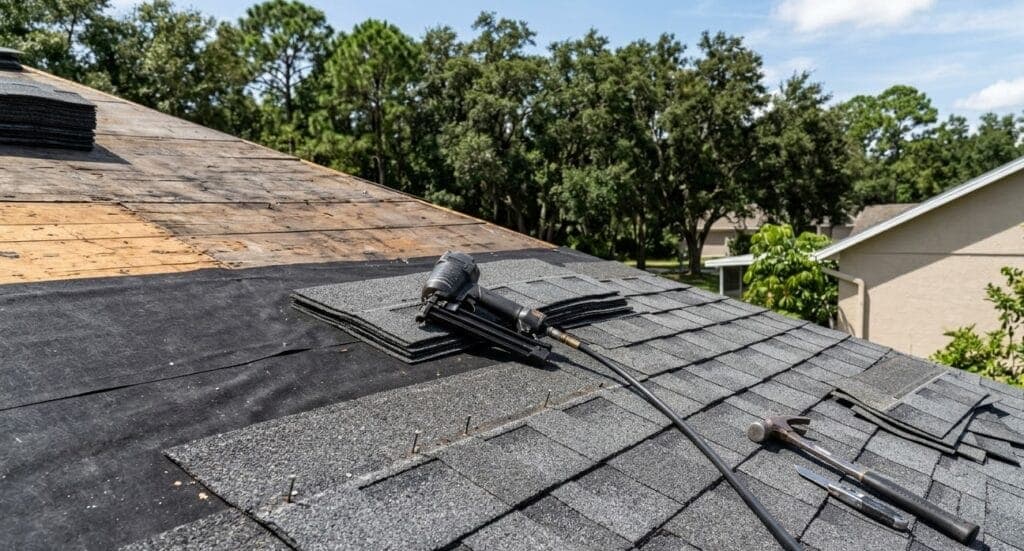
Roofing Warranties in Florida: What Voids Them
A new Florida roof usually carries two warranties: one from the manufacturer for the product and one from the contractor for the installation. Here is what each covers, what quietly voids them and how to keep your coverage.
Read Article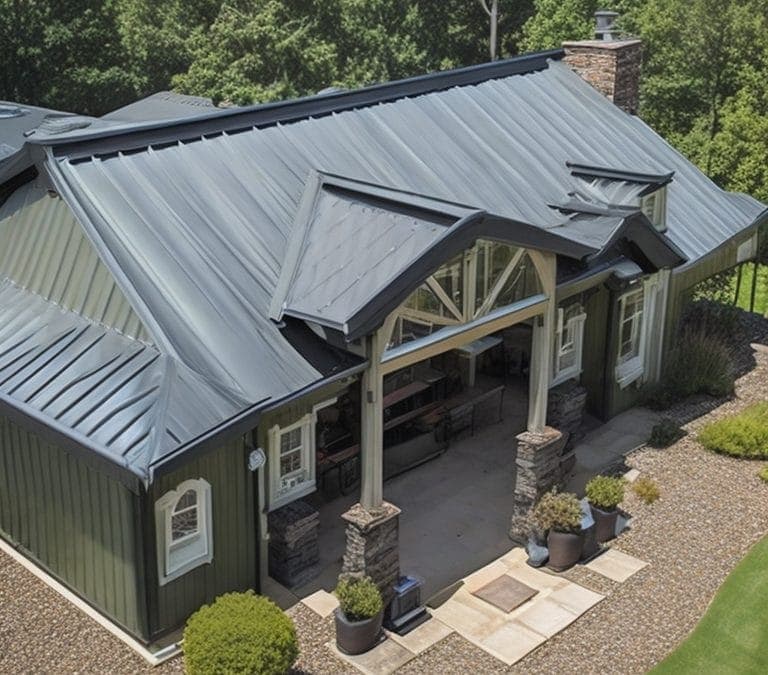
Best Roof Color for Florida Heat: Cool Roofs Explained
Florida test homes show a white shingle saves only 3 to 5 percent on cooling while reflective white metal or tile saves 18 to 26 percent. Here is how to choose a roof color that actually keeps your attic cooler.
Read Article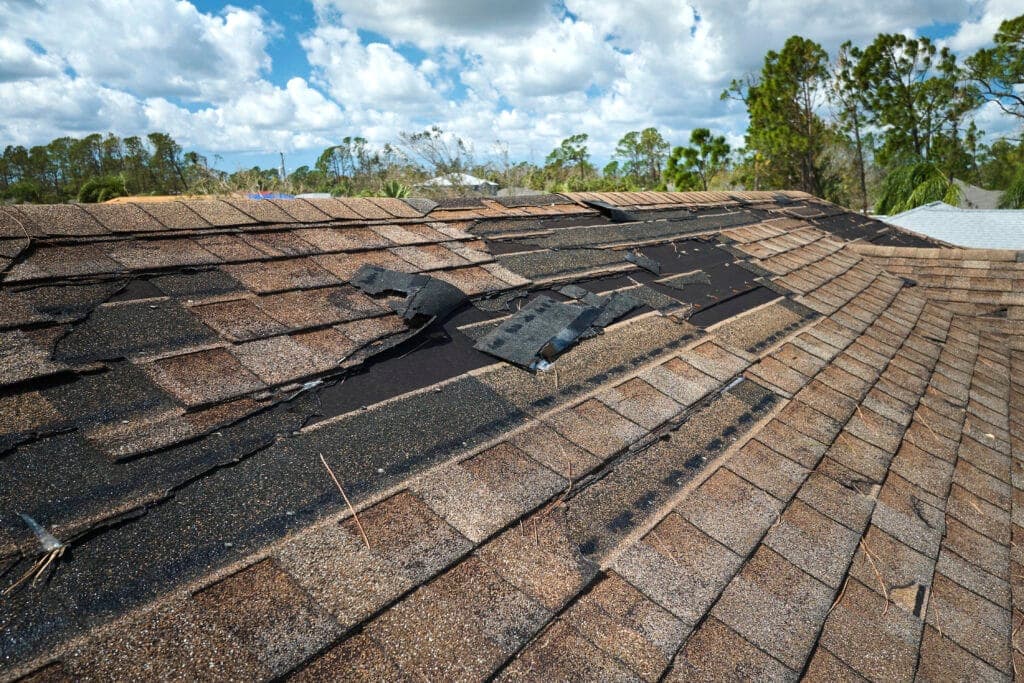
Roof Underlayment in Florida: The Hidden Layer Explained
Underlayment is the layer that decides what happens to your house when wind strips the shingles. Here is how felt, synthetic and peel-and-stick compare, what Florida code requires on a re-roof, and what each option costs in 2026.
Read ArticleReady When You Are
Get your free roof inspection today.
No-pressure, written estimate. Same-week scheduling across Hernando County. Call us now or request a visit online.