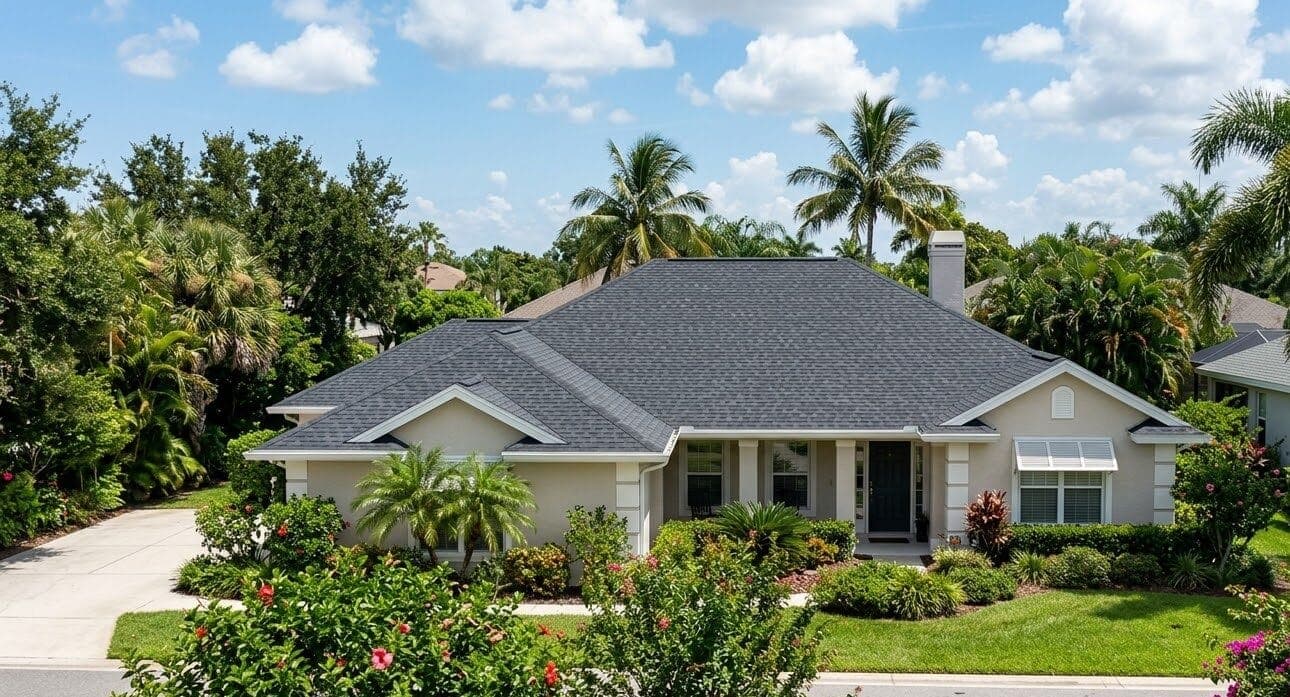
Clearwater, FL
Metal Roofing in Clearwater, FL
Metal roofing in Clearwater, FL. Standing-seam aluminum for coastal homes. 150 mph rated. Call (352) 605-0696 for a free quote.
Call (352) 605-0696A properly engineered metal roof on a Clearwater home lasts 40 to 50 years, survives 150 mph wind on the barrier islands, shrugs off the salt air that eats steel fasteners on shingle roofs, and reflects enough summer heat to drop attic temperatures through August. Metal is the long-term answer for coastal Pinellas, and Protech Roofing has been installing it across Clearwater since 2008. Call (352) 605-0696 for a free quote.
You Are Viewing
Metal Roofing for homeowners and businesses in Clearwater, part of Pinellas County, FL, Florida.
Why Metal Wins on Coastal Clearwater Homes
Metal roofing in Clearwater, FL has moved from a niche choice to a default recommendation on any property near salt water, and the reasons are cumulative. Clearwater Beach, Island Estates, Sand Key, and waterfront Harbor Oaks all deal with chloride salt deposits that settle on the roof every night. Those chlorides shorten the life of asphalt shingles, corrode galvanized steel fasteners, and attack cheap metal alloys with the wrong coating. A shingle roof on a barrier-island property may last 15 years instead of the 25 it would last inland. A standing-seam aluminum roof does not have the same problem, because aluminum does not rust and PVDF factory coatings resist chloride attack for decades.
Wind is the second reason. Clearwater's 150 mph barrier-island wind zone and 130 mph mainland wind zone both test every fastener, every lap, and every edge detail on a roof. Metal systems with engineered clips and concealed fasteners handle that stress better than shingle with exposed nail heads. The clips let the metal panels expand and contract with temperature swings without prying loose, which is how most field failures happen on lower-quality metal installs. Protech Roofing uses Florida Product Approval-rated systems with clip spacing that matches the wind zone, and we document the install with photos for the insurance wind-mitigation credit.
Heat is the third reason. A Clearwater August averages 91 degrees with 75 percent humidity. A dark shingle roof absorbs that heat and drives attic temperatures to 150 degrees or higher, which turns attic HVAC ductwork into a heat sink and pushes electric bills up. Light-colored PVDF-coated aluminum reflects 60 to 70 percent of solar radiation, and attic temperatures can drop 20 to 30 degrees on the same day. The utility savings over a 40-year roof life often cover the cost difference between metal and shingle.
Aluminum Mandatory on Clearwater Beach and Island Estates
On every metal install within 1,500 feet of the Gulf or the Intracoastal, we specify aluminum instead of steel. The reason is chloride salt chemistry. Steel, even galvanized or Galvalume-coated steel, corrodes where the coating gets scratched, cut, or penetrated by a fastener. In dry inland conditions that corrosion is slow and mostly cosmetic. In Clearwater Beach or Island Estates salt air, the same scratches become active corrosion sites within months. We see steel metal roofs on barrier-island properties that are rust-streaked by year 10 and leaking at fastener penetrations by year 15.
Aluminum does not have that problem. Aluminum forms a self-passivating oxide layer that resists chloride attack, and the PVDF factory coatings on name-brand metal systems (Kynar 500 or Hylar 5000 formulations) add another barrier that holds up for 40 to 50 years. Cost is slightly higher than steel, but the life-cycle math on the beach is unambiguous. A $28,000 aluminum standing-seam roof that lasts 45 years beats a $22,000 steel roof that needs major repairs at year 15 and full replacement at year 25.
We also specify stainless or copper fasteners on every barrier-island install. A panel that is aluminum and a fastener that is galvanized steel is still going to fail at the fastener, because galvanic corrosion accelerates between dissimilar metals in the presence of salt moisture. Stainless fasteners or copper-coated stainless fasteners remove that failure mode. It is a small cost add on a big install, and it is non-negotiable on our Clearwater Beach and Island Estates jobs.
Standing-Seam vs. Metal Shingle for Countryside HOAs
Standing-seam metal is the go-to residential profile on most Clearwater homes. Vertical panels run from eave to ridge with concealed clips underneath, no exposed fasteners on the main field, and factory-sealed side laps. The look is clean, modern, and distinctly architectural. Most Clearwater neighborhoods allow standing seam. Some do not.
Countryside, Coachman Ridge, and several other 1980s and 1990s Clearwater HOAs have design guidelines that restrict or prohibit standing-seam metal because the vertical rib pattern does not match the neighborhood aesthetic that was established when the homes were built. In those neighborhoods we install metal shingle instead. Metal shingle systems use stamped aluminum or steel panels that mimic the profile of traditional architectural shingle or spanish tile, install with concealed clips the same way standing seam does, and pass the HOA design review that standing seam fails. The material cost is slightly higher than standing seam on a per-square basis, but the install labor is similar, so the total project cost difference is modest.
We handle the HOA coordination as part of our estimate process. On a Countryside or Coachman Ridge job we pull the HOA design guidelines, submit the proposed metal profile and color, and coordinate with the architectural review committee before scheduling the work. That front-end coordination saves the homeowner from buying a $25,000 roof that gets rejected by the HOA after install and has to come off.
PVDF Coatings and Why They Matter in Clearwater
The coating on a metal panel is as important as the metal itself in Clearwater's climate. Metal roofs come in three coating families, and they perform differently in Pinellas sun and salt. SMP (silicone-modified polyester) is the cheapest option, lasts 15 to 20 years before chalking and fading show, and is fine for an inland garage or a barn but not appropriate for a primary residence on the coast. PVDF (polyvinylidene fluoride, sold under brand names like Kynar 500 and Hylar 5000) is the premium coating, resists UV fade and chalking for 40 to 50 years, holds color consistently, and carries 30-plus year finish warranties from name-brand manufacturers.
Every metal roof we install in Clearwater uses a PVDF coating as standard. SMP is an option we will only quote if a homeowner specifically asks about it, and we explain the tradeoff before taking the order. On a coastal or near-coastal Clearwater property, PVDF is not an upgrade. It is the correct specification for the location. The finish warranty paperwork goes into the project file along with the Florida Product Approval numbers and the install photos.
Color selection matters too, because darker colors absorb more solar radiation and heat the attic more. Most Clearwater metal installs go with light colors (bone white, silver, light bronze, light gray) to maximize solar reflectance. Harbor Oaks and other historic-district addresses may use specific colors to match the neighborhood aesthetic, and we coordinate those choices with the Clearwater Historic Preservation Board when scope requires.
Lifespan and Summer Heat Performance in 91-Degree Clearwater
A properly installed standing-seam aluminum roof with PVDF coating on a Clearwater home has a realistic service life of 40 to 50 years. The metal panels themselves can last 60 or 70 years, but clips, fasteners, and sealants at penetrations and terminations age out earlier. Most metal replacements we see on old installs are driven by clip or sealant failure rather than the panel itself, and proactive maintenance at year 25 or 30 can extend the roof another 15 to 20 years for a fraction of the cost of replacement.
On summer heat performance, the difference between shingle and metal is something a Clearwater homeowner feels on the electric bill. A dark architectural shingle roof can hit 160 degrees on the surface in July or August. That heat radiates into the attic, bakes the HVAC duct insulation, and pushes air handlers to run longer. A light-colored PVDF-coated aluminum roof stays 30 to 50 degrees cooler on the surface in the same conditions, and attic temperatures drop 20 to 30 degrees. Electric bills on 2,500 square foot homes in Skycrest, Morningside, and Countryside have dropped $30 to $80 a month after switching from dark shingle to light metal, which compounds to thousands of dollars over the service life of the roof.
Noise is the question a lot of Clearwater homeowners ask before signing. A properly installed metal roof over code-compliant decking with synthetic underlayment and standard attic insulation sounds about the same as a shingle roof from inside the house during rain. The stereotype of metal roofs being loud comes from agricultural barns and pole buildings where the metal sits directly on purlins with no decking and no insulation underneath. Residential metal over decking does not have that problem.
Insurance, Wind Mitigation, and Permits for Clearwater Metal Installs
A new metal roof on a Clearwater home qualifies for the full set of wind-mitigation discounts on the OIR-B1-1802 form, and the combined premium savings over the life of the roof can run into the tens of thousands of dollars. Metal systems installed with engineered clip spacing and proper roof-to-wall connections typically score high on every item: covering type and install date with current Florida Product Approval, hip geometry where applicable, secondary water resistance from peel-and-stick underlayment, and deck attachment upgraded to current code during the tear-off. We document every install with photos and the Florida Product Approval numbers, then provide the 1802 inspection report directly or coordinate with a third-party inspector for the homeowner's carrier.
Permits go through the City of Clearwater Building Division at 100 South Myrtle Avenue, 727-562-4567, for most addresses. Unincorporated Pinellas County pockets route through the Pinellas County Building Division instead. We pull the permit on your behalf and submit the Florida Product Approval numbers for the specific metal system, clips, fasteners, underlayment, and flashing accessories. The dry-in inspection happens before the metal panels go on top of the underlayment, which is different from shingle jobs where the dry-in is inspected with underlayment only. Metal installs have an intermediate inspection at clip placement on some job types. Final inspection closes the permit when the roof is complete.
Insurance underwriting for homes with new metal roofs has been favorable in Clearwater over the past two years, even as shingle-roof policies have tightened. Private carriers view metal as a lower-risk covering, and several Pinellas carriers apply additional discounts specifically for metal installs beyond the standard wind-mitigation credits. We provide the paperwork carriers want to see at policy bind, and we coordinate with your agent if there are questions about the install or the product approval. The combined savings on premium, plus the 40 to 50 year service life, plus the lower annual maintenance cost compared to aging shingle, is what moves Clearwater homeowners from thinking about metal to actually signing the contract.
More in this area
Other roofing services in Clearwater
FAQ
Frequently Asked Questions
How much does a metal roof cost in Clearwater, FL?
+
Is metal roofing allowed in Clearwater HOAs like Countryside and Coachman Ridge?
+
Why is aluminum better than steel for Clearwater Beach metal roofs?
+
Does a Clearwater metal roof meet 150 mph wind code for barrier islands?
+
How long does a metal roof last on a Clearwater home?
+
From the Blog
Stay informed about roofing in Florida.
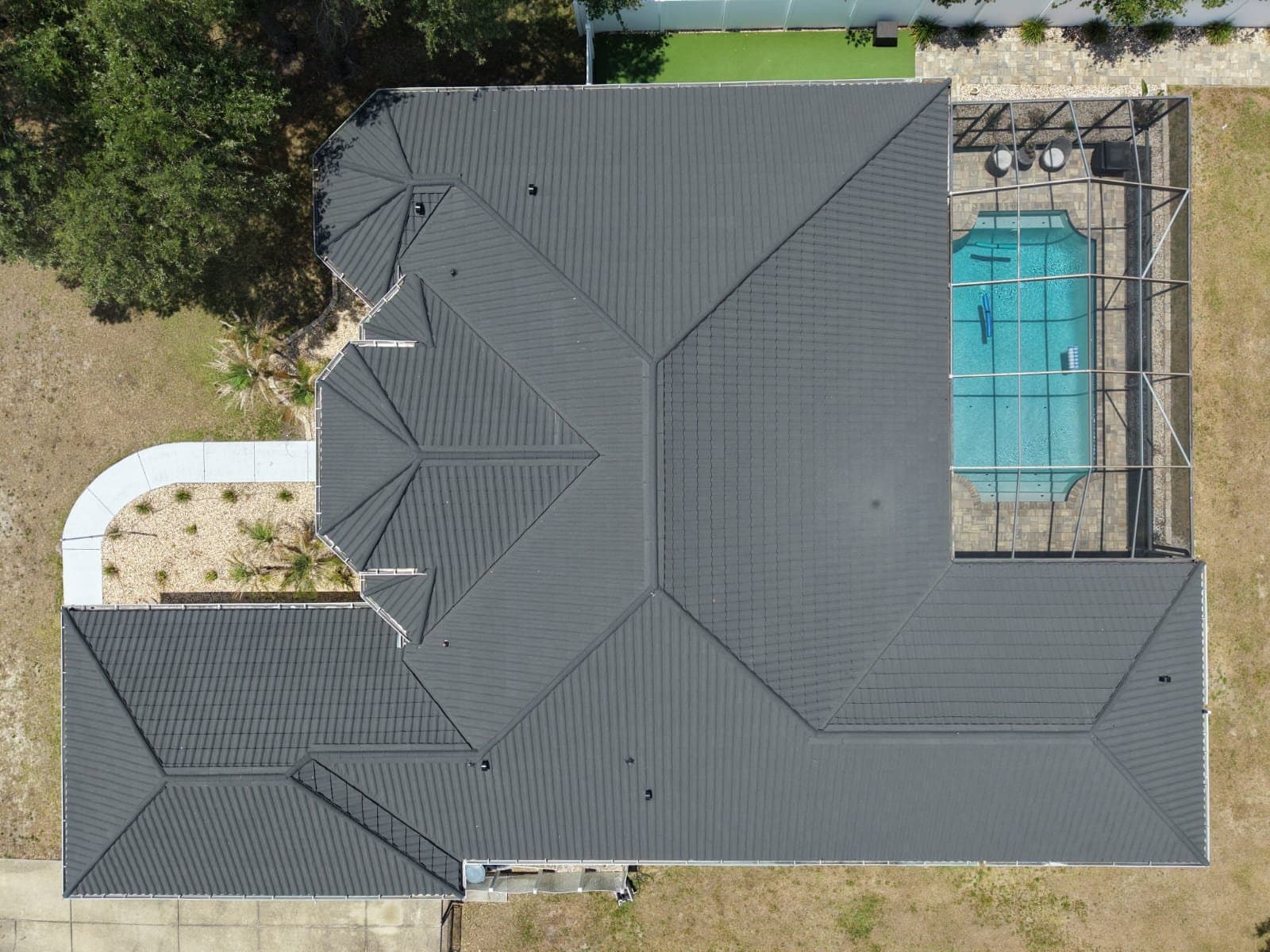
Metal Roof Cost in Florida 2026: Per-Sqft Guide
Metal roofs in Florida run about $8 to $23 per square foot installed, depending on the system. Here is what standing seam, stone coated steel and exposed fastener panels cost, what a typical home pays and how to compare quotes.
Read Article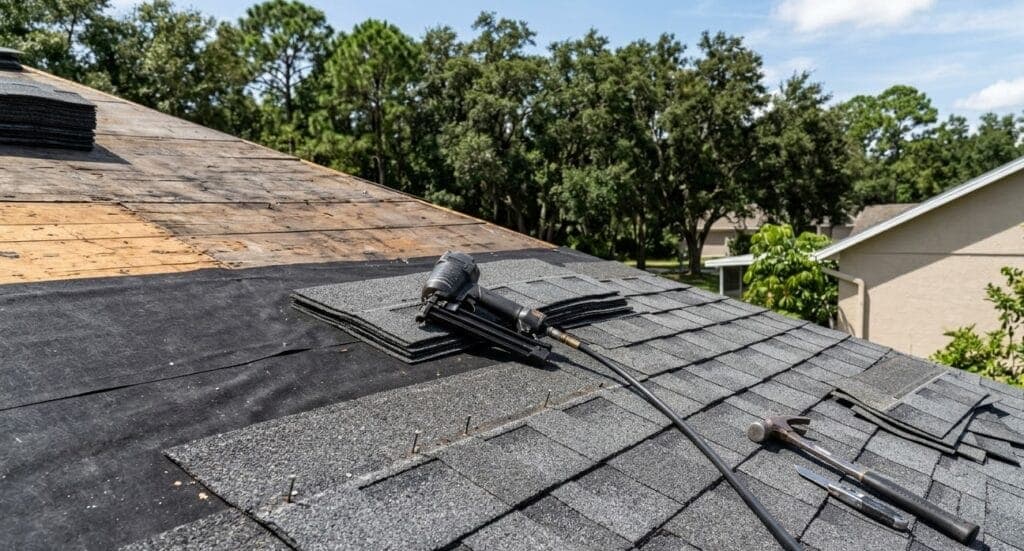
Roofing Warranties in Florida: What Voids Them
A new Florida roof usually carries two warranties: one from the manufacturer for the product and one from the contractor for the installation. Here is what each covers, what quietly voids them and how to keep your coverage.
Read ArticleSolar Roofing in Florida: Solar Shingles vs Panels (2026)
Every solar system on a Florida roof is either bolted to the roof or is the roof. Here is how panels and solar shingles compare in 2026, what changed with the federal credit, and why the cheapest solar project often starts with a re-roof.
Read ArticleReady When You Are
Get your free roof inspection today.
No-pressure, written estimate. Same-week scheduling across Hernando County. Call us now or request a visit online.