Blog
How to Finance a Roof Replacement in Florida: 6 Options Ranked by What They Actually Cost
Call (352) 605-0696Most homeowners shop roof financing by monthly payment, and that is how a $14,000 roof turns into $32,000. Two sources can shrink the principal before any lender is involved, and after that the ranking is not what the rate sheet suggests: a personal loan at 12.21 percent costs $4,775 in interest over five years, while a PACE assessment at 9.99 percent costs $18,402 over twenty. Here are six real paths, with the rates that were on the board in September 2026, all run against the same $14,000 Florida roof.
The Number You Finance Is Not the Number on the Quote
Most homeowners start roof financing at the wrong place. They take the quote, take it to a lender, and shop for the lowest monthly payment. That sequence costs real money, because two things can shrink the principal before any lender is involved, and every dollar you remove from the principal is a dollar you never pay interest on.
How much is a dollar of principal worth? On a 20-year PACE assessment at 9.99 percent, every $1 financed costs $2.31 by the time it is paid off. At 6 percent over the same 20 years it costs $1.72. On a 15-year home equity loan at 8.13 percent it costs $1.73. So the cheapest financing decision available to you is almost never a lender choice. It is reducing the amount that gets financed at all.
This guide ranks six real financing paths with the rates that were actually on the board in September 2026, runs all of them against the same $14,000 roof so the comparison is apples to apples, and explains why the option with the second-lowest interest rate on this list is also the single most expensive way to pay for a Florida roof.
Step Zero: The Two Sources You Do Not Repay
Before a loan, there are two pots of money that are not loans. Neither one is automatic, and both have deadlines.
The first is your insurance policy, if the damage was caused by a covered event rather than by age. Florida law gives you one year from the date of a hurricane to file a new claim, and 18 months for a supplemental claim, which is a much tighter window than the old standard and the reason old storm damage goes unpaid. The details of that clock are in our guide to Florida hurricane claim deadlines, and the claim process itself is in the 2026 roof insurance claims guide. Two policy terms decide how much of the roof the carrier pays for: replacement cost value pays what a new roof costs today, while actual cash value subtracts depreciation for the age of the roof, which on a 14-year-old shingle roof can cut the payment nearly in half. Read that line in your policy before you assume a number.
The second is the My Safe Florida Home program, which is a matching grant, not a loan. The state pays $2 for every $1 the homeowner spends, up to a $10,000 cap. On a $14,000 project, that math means the state covers $9,333 and you cover $4,667, and low-income homeowners can qualify for the full amount with no match required. The program received $352 million when it reopened on August 4, 2025, with eligibility narrowed to low and moderate income homeowners under HB 811, and the 2026-2027 state budget reappropriated over $405 million across My Safe Florida Home and the condo pilot, much of it pointed at a backlog of roughly 45,000 homeowners who already have completed inspections. Being in that queue is the single highest-value thing you can do before borrowing. The application walkthrough is in our My Safe Florida Home grant guide, and we handle the mitigation side of the work through My Safe Florida Home projects.
Run both of these first. A $14,000 roof with an approved claim and a grant match can become a $3,000 financing problem, and $3,000 is a fundamentally different decision than $14,000.
The $14,000 Benchmark Every Option Gets Run Against
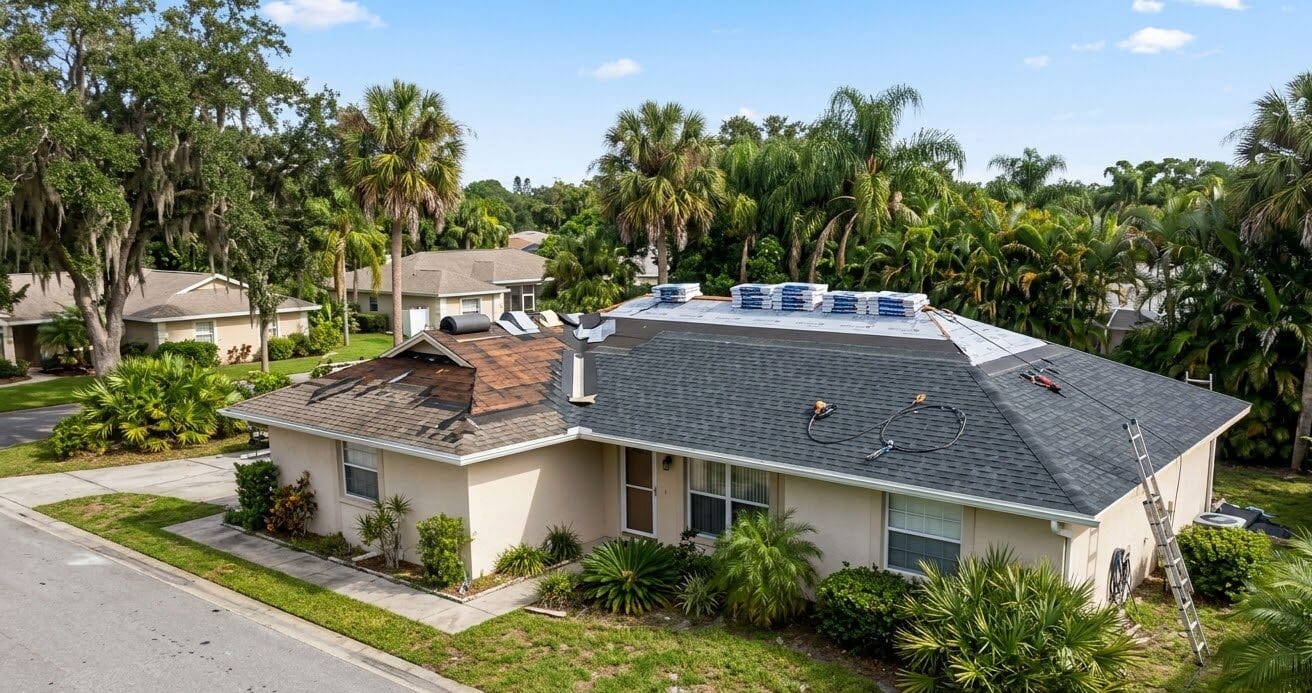
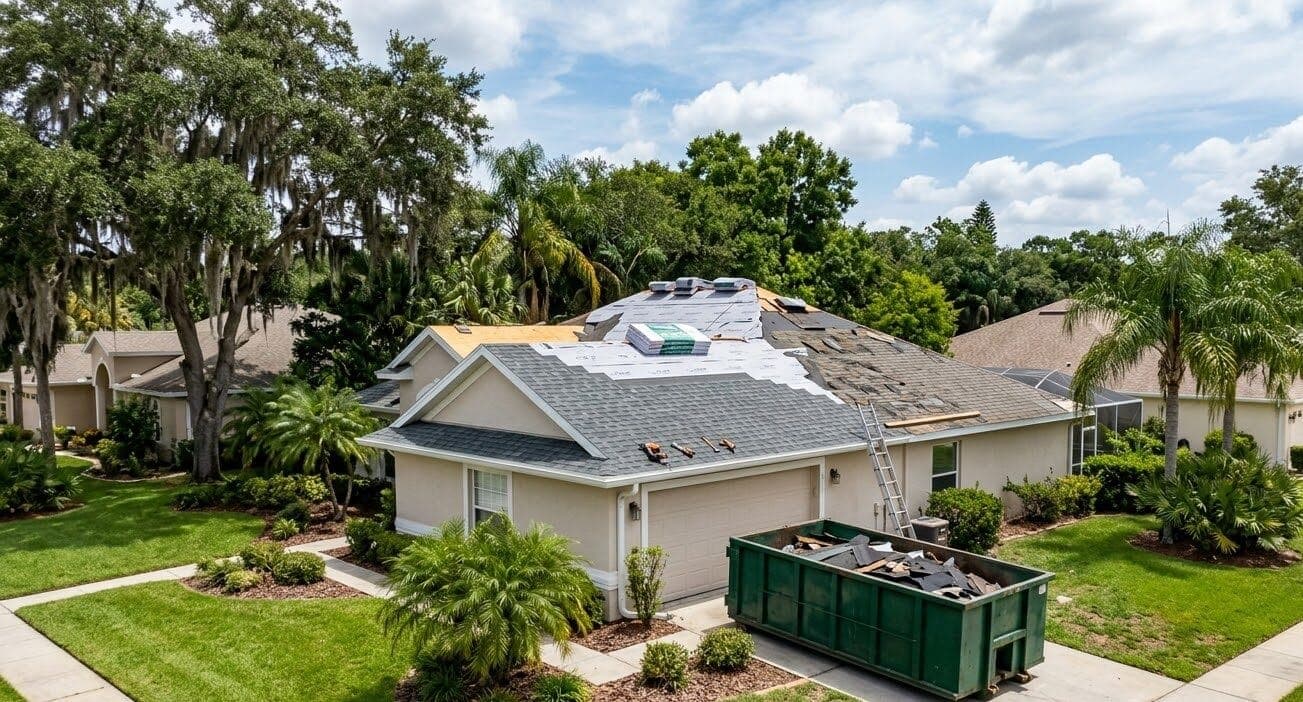
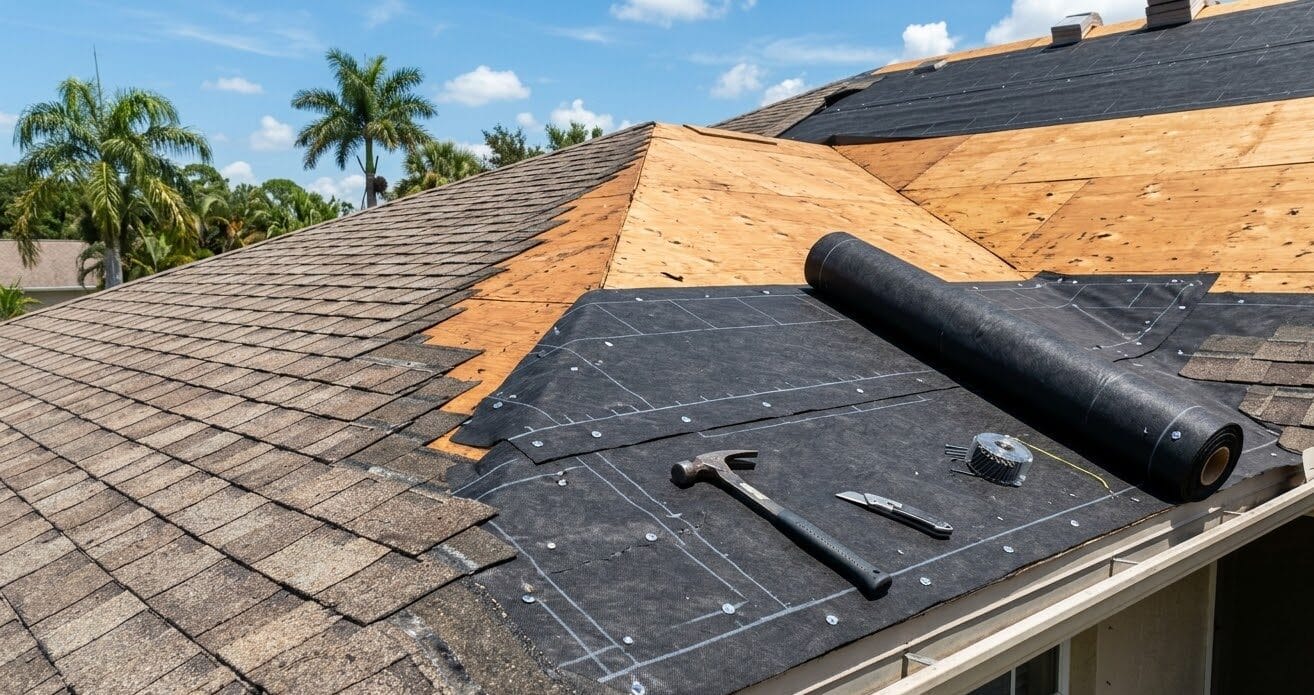
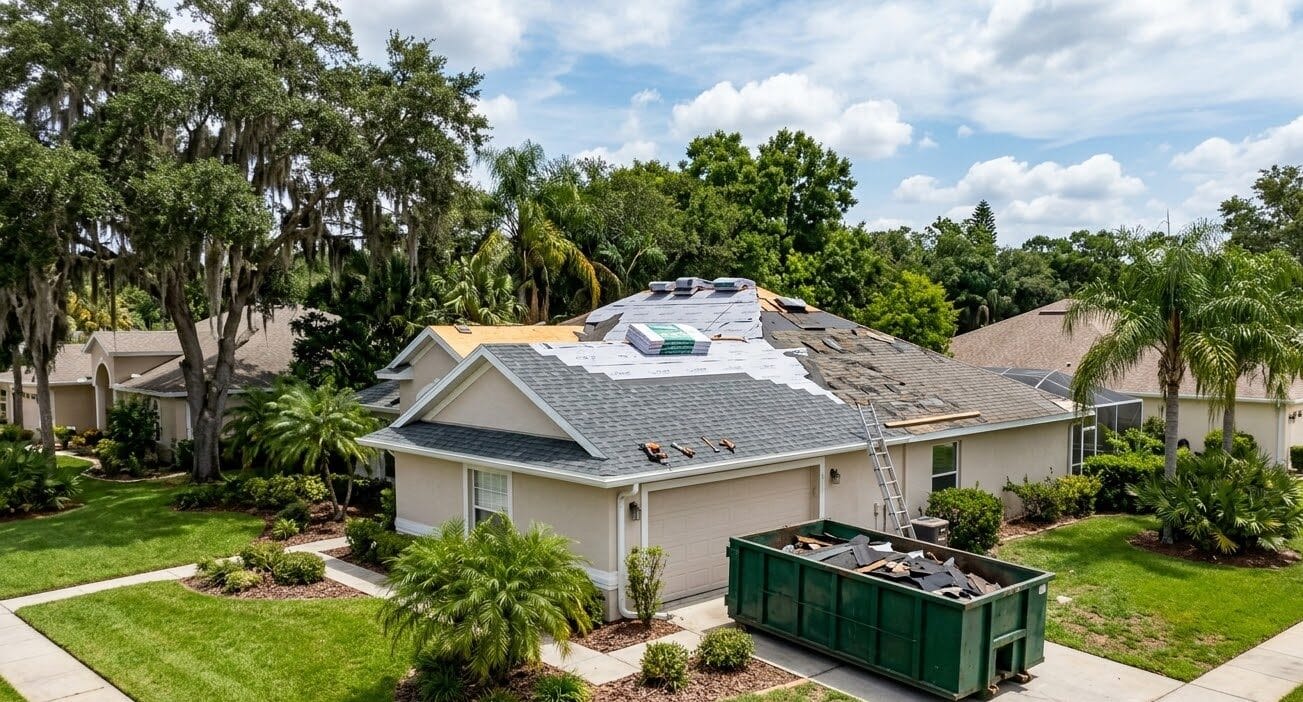
The most common project we complete is an architectural shingle replacement with a single-layer tear-off, five to ten sheets of deck replacement, new peel-and-stick underlayment and all new flashing. In Spring Hill and Brooksville that lands between $12,000 and $16,000 for most homes, and the full breakdown by material sits in our Florida roof replacement cost guide. For this article, every option below is priced against $14,000 financed, so the numbers are directly comparable.
One note on how to read them. A monthly payment tells you whether you can make it through next month. Total interest tells you what the decision cost. Both matter, and they frequently point in opposite directions.
Option 1: HELOC or Home Equity Loan, the Cheapest Real Money
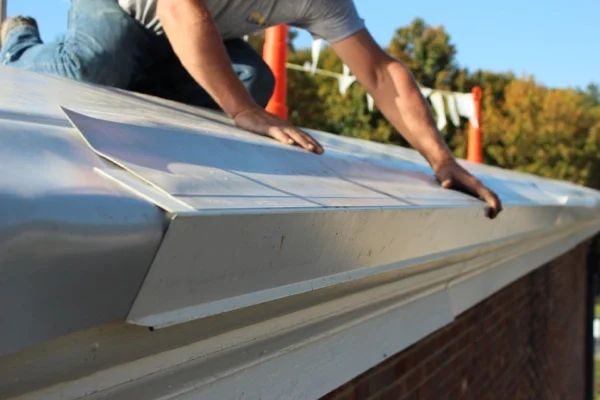
Equity-secured money is the lowest-rate capital available to a homeowner with equity. Bankrate's September 9, 2026 survey of large home equity lenders put the national average HELOC rate at 7.26 percent and the average fixed home equity loan at 8.13 percent. Curinos data for stronger files, meaning a 780 or better score and a combined loan-to-value under 70 percent, came in lower at 7.09 percent variable and 7.42 percent fixed.
On $14,000, here is what those rates buy:
- HELOC at 7.26 percent, amortized over 15 years: about $128 per month and $9,018 in total interest.
- Fixed home equity loan at 8.13 percent over 15 years: about $135 per month and $10,272 in total interest.
- HELOC in interest-only draw: about $85 per month, $1,016 a year, and a balance that does not move. This is the trap. Interest-only draw periods end, and when the repayment period starts the payment jumps on a balance you never reduced.
The cost of this option is not the rate, it is the process. You need real equity, an appraisal or automated valuation, and typically two to six weeks. A HELOC also carries a variable rate, so the 7.26 percent is a snapshot and not a promise. If your roof is actively leaking, this path is often too slow, which is why it is worth setting up a HELOC before you need it.
Option 2: FHA 203(k) Limited, Powerful But Only at One Moment
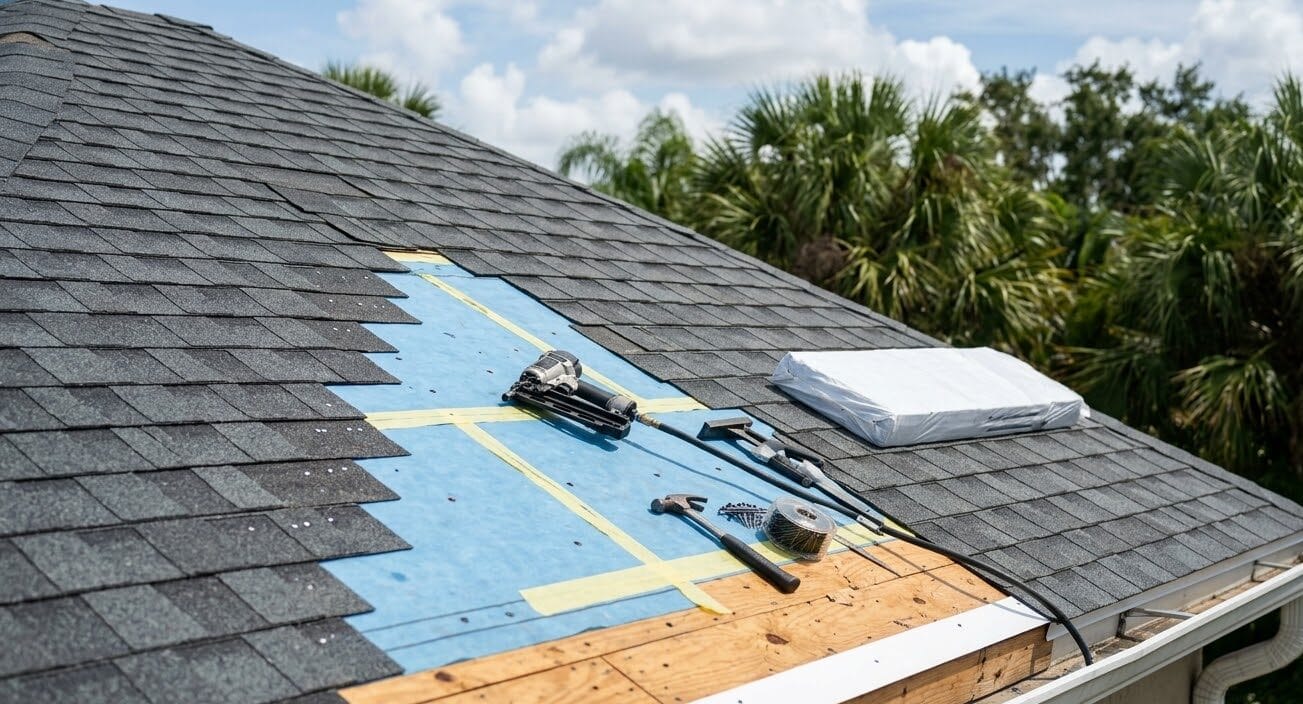
The FHA 203(k) is a renovation mortgage, and the Limited version was built for exactly this kind of work. HUD raised the Limited 203(k) cap from $35,000 to $75,000 in 2024, roof replacement is explicitly an eligible repair, and the rehabilitation has to be completed within nine months. The Standard 203(k) handles structural work and is bounded by the regular FHA loan limits, which for 2026 run up to $541,287 for a single-family home in low-cost counties and higher in high-cost markets.
The catch is timing, and it is absolute. A 203(k) is a mortgage, so it only exists at purchase or refinance. You cannot call a lender on Tuesday and get a 203(k) for a roof on a house you already own outright at a rate you like. Where it is genuinely excellent is buying a house in Hernando, Citrus or Pasco that will not pass a 4-point inspection because of the roof. The roof gets rolled into the purchase mortgage at mortgage rates, the funds are escrowed and released to the contractor, and you close on a house that other buyers walked away from.
Two costs to price in: FHA mortgage insurance, and the fact that the roof money is amortized over 30 years alongside the house. That is cheap per month and expensive over time, which is the theme of this entire article.
Option 3: PACE, the Option That Changed Twice and Costs the Most
PACE stands for Property Assessed Clean Energy. It is a special assessment on your property, repaid through the annual property tax bill rather than through a loan servicer, and in Florida it lives in statute at section 163.08. Two things reshaped it recently. SB 770 in 2024, chapter 2024-273, took effect July 1, 2024 and created sections 163.081 through 163.087, splitting residential PACE into its own statute with consumer protections and a contractor registration process. Then a federal CFPB rule took effect in March 2026. The practical result in 2026 is that availability is county-by-county and depends on a local ordinance, the administrator roster has churned, and underwriting is stricter than the marketing from a few years ago suggested.
The mechanics are genuinely different from a loan, and that is the appeal:
- No credit check to qualify, because the assessment attaches to the property rather than to your credit profile.
- Fixed rates of roughly 6 to 12.99 percent according to the Florida PACE Funding Agency.
- Repaid on your property tax bill, in annual installments.
- Term limited by useful life, so a roof can stretch to about 20 years while an air conditioner cannot.
- Capped at 20 percent of the just value of the property without written consent from your mortgage holder.
Now the arithmetic, which is where the enthusiasm should stop. $14,000 at 9.99 percent over 20 years is about $135 a month, which sounds identical to the home equity loan. But it runs for 240 payments instead of 180, so the total comes to $32,402 and the interest alone is $18,402. You would pay more in interest than the roof cost. At the bottom of the range, 6 percent over 20 years, interest is $10,072. At the top, 12.99 percent, interest is $25,341.
There is a second cost that never shows up on the payment schedule. The assessment is a lien that rides with the property tax bill, and it complicates both selling and refinancing. Some mortgage lenders require it to be paid off at closing, which can quietly turn a 20-year plan into a lump sum due on the day you sell. PACE has a real place: no equity, a credit file that will not clear a bank, and a roof that cannot wait. Go in with the total, not the monthly.
Option 4: Contractor Financing, and the One Question That Exposes It
Nearly every roofing company in Florida offers financing through a third-party lender, and the headline offer is usually 0 percent for 12 to 24 months. The money is real, but it is not free, and understanding who pays for it protects you.
Home improvement lenders charge the contractor a dealer fee. Industry reporting puts that fee in a 3 to 15 percent range, with the pattern being consistent: standard-rate plans, around 9.99 percent APR, carry low fees of roughly 0 to 2 percent, while subsidized 0 percent promotions carry the high ones. Service Finance, which dominates roofing and HVAC dealer programs, runs roughly 7 to 11 percent on 0 percent promos. That fee is a cost of doing business, and most shops build it into the price book so the cash price and the financed price match.
Which gives you the single most useful question to ask any roofing salesperson: is the cash price different from the financed price? If the answer is no, and 0 percent is available, the promotion is genuinely valuable to you. If the answer is yes, you are paying the dealer fee, and it is worth comparing. A 15 percent fee embedded in a $14,000 financed price means the same job would be roughly $12,174 in cash.
Then test the promo against your own budget honestly. Clearing $14,000 inside an 18-month 0 percent window takes $778 a month. If you cannot sustain that, the balance converts at the deferred rate, which is usually high, and sometimes retroactively. On the standard product instead, 9.99 percent over a 144-month term is about $167 a month with $10,081 in interest. That is a fair number, competitive with equity money, and it closes in days rather than weeks.
Option 5: Personal Loan, Ugly Rate and Surprisingly Cheap Total
An unsecured personal loan has the worst rate on this list and, for many homeowners, the second-best total cost. Bankrate's monitor put the average personal loan rate at 12.21 percent as of September 2, 2026 for a 700 FICO borrower, while Credible's marketplace data for the week ending September 6 showed 14.36 percent on three-year terms and 17.92 percent on five-year terms for borrowers above 720. The overall market spans roughly 6 to 36 percent depending on the file.
- $14,000 at 12.21 percent over 5 years: about $313 per month, $4,775 in total interest.
- $14,000 at 14.36 percent over 3 years: about $481 per month, $3,314 in total interest.
- $14,000 at 17.92 percent over 5 years: about $355 per month, $7,294 in total interest.
Compare the first line to Option 3. A personal loan at 12.21 percent costs $4,775 in interest. A PACE assessment at 9.99 percent costs $18,402. The PACE rate is 222 basis points lower and the total is almost four times higher, because the term is 20 years instead of 5. That single comparison is the most important thing in this article.
Personal loans also carry no lien, need no appraisal, and often fund in one to three business days, which matters when water is coming through a ceiling. The cost is the payment: $313 to $481 a month is a real bite, and unlike a HELOC there is no interest-only cushion.
Option 6: Cash-Out Refinance, Almost Always the Wrong Tool in This Market
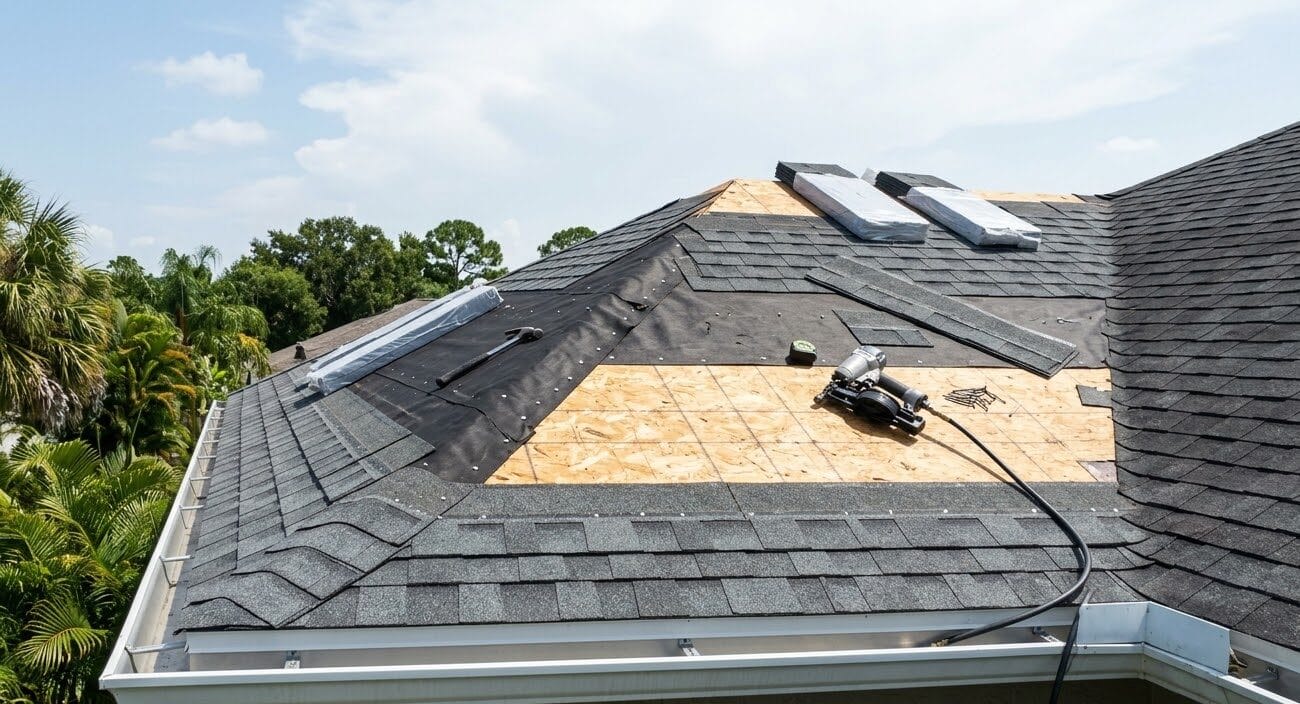
Freddie Mac's survey put the 30-year fixed at 6.76 percent on September 10, 2026, up from 6.71 percent the week before. Mortgage money is the cheapest money in the economy, and $14,000 amortized over 30 years at 6.76 percent is only about $91 a month, the lowest payment on this entire list.
It is also a trap for most Florida homeowners, for a reason that has nothing to do with the roof. If you bought or refinanced between 2020 and early 2022, your existing rate is likely in the 3s. A cash-out refinance does not add $14,000 at 6.76 percent, it re-prices your entire mortgage balance at 6.76 percent. Trading a 3.5 percent rate on $280,000 to access $14,000 costs far more than any roof. Add closing costs of roughly 2 to 5 percent of the new loan.
And even in the best case, watch the term: $14,000 over 30 years at 6.76 percent generates $18,723 in interest. This option makes sense in exactly one situation, which is when your current rate is already above market and you were going to refinance anyway. Then rolling the roof in is nearly free. Otherwise, skip it.
The Ranking, and Why Interest Rate Is the Wrong Sort Key
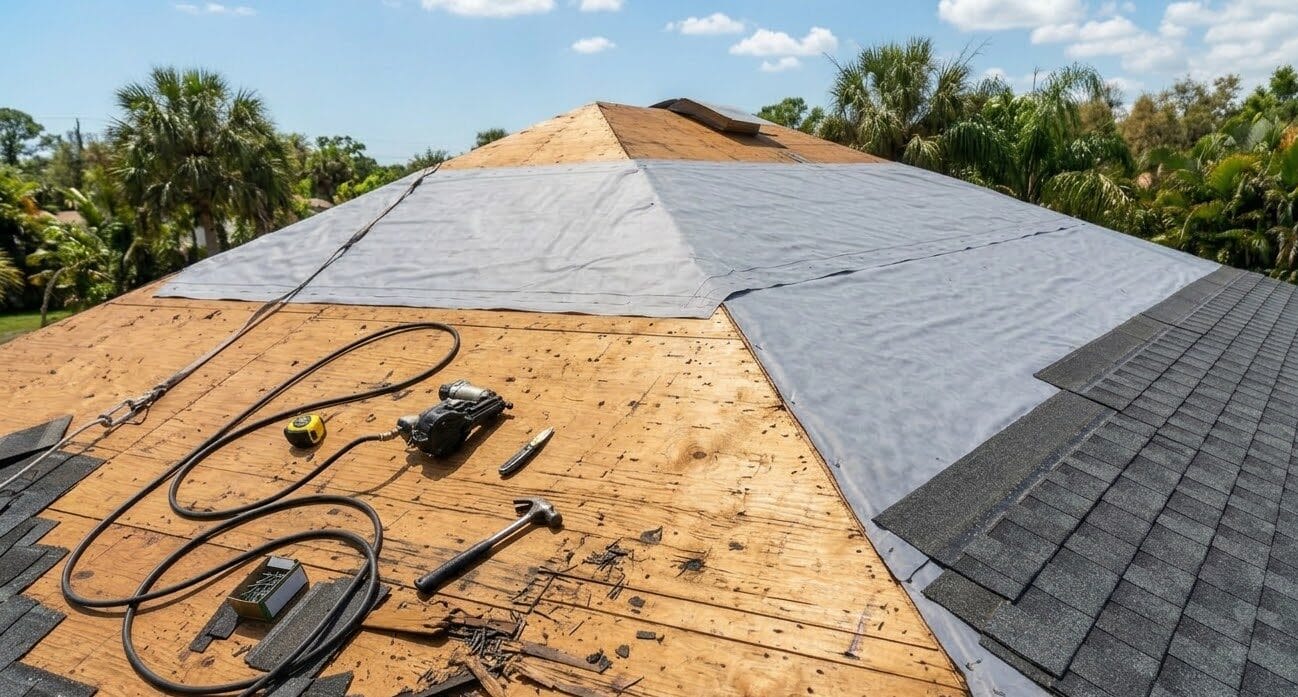
Ranked by what they actually cost a typical Hernando County homeowner on a $14,000 roof, cheapest to most expensive:
- 1. HELOC or home equity loan, 7.26 to 8.13 percent: $9,018 to $10,272 in interest over 15 years. Requires equity and patience.
- 2. FHA 203(k) Limited: mortgage-rate money up to $75,000, but only available at purchase or refinance. When it applies, nothing beats it.
- 3. Personal loan on a short term, 12.21 to 14.36 percent: $3,314 to $4,775 in interest over 3 to 5 years. Highest payment, lowest total dollars, no lien.
- 4. Contractor financing: excellent at true 0 percent when the cash price equals the financed price and you can clear the promo. Fair at 9.99 percent, $10,081 in interest over 144 months.
- 5. PACE, 6 to 12.99 percent: $10,072 to $25,341 in interest over 20 years, plus a lien on the tax bill. The access-of-last-resort option, and priced like it.
- 6. Cash-out refinance at 6.76 percent: lowest payment at $91, $18,723 in interest, and it re-prices your whole mortgage. Wrong tool unless you were refinancing anyway.
Notice what the ranking does not follow. It is not sorted by interest rate. Cash-out refinance has the lowest rate on the list and sits last. PACE at 6 percent beats a personal loan at 17.92 percent on rate and loses on total. Term dominates rate, because interest is a function of both the rate and the number of years you carry the balance.
The Rule That Keeps You Out of Trouble: Match the Term to the Roof
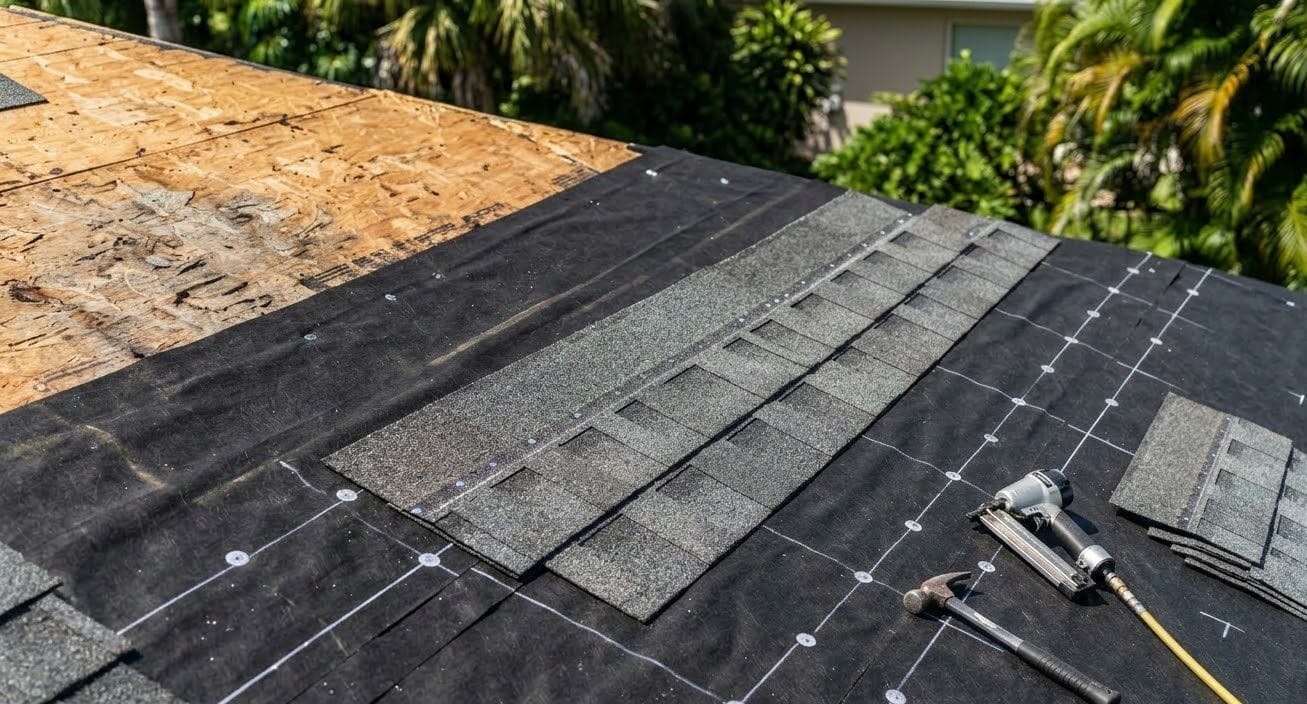
Architectural shingles in Florida last 15 to 20 years, and that is with correct ventilation and no hurricane taking a bite out of the middle of it. Three-tab runs 10 to 15. So a 20-year payment plan on a shingle roof means the last few years of payments are for a roof that is at or past the end of its service life, and possibly for a roof that has already been replaced.
Florida's own PACE statute encodes this idea: the financed term cannot exceed the useful life of the improvement. Treat that as a floor, not a target. If you are financing architectural shingles, a term of 10 years or less keeps you clearly inside the asset's life. If you are financing standing seam metal with a 40 to 50 year life, a longer term is defensible, and that is one of the real financial arguments for metal roofing systems over shingles when the two quotes are close.
Four Florida Specifics That Change the Number You Finance
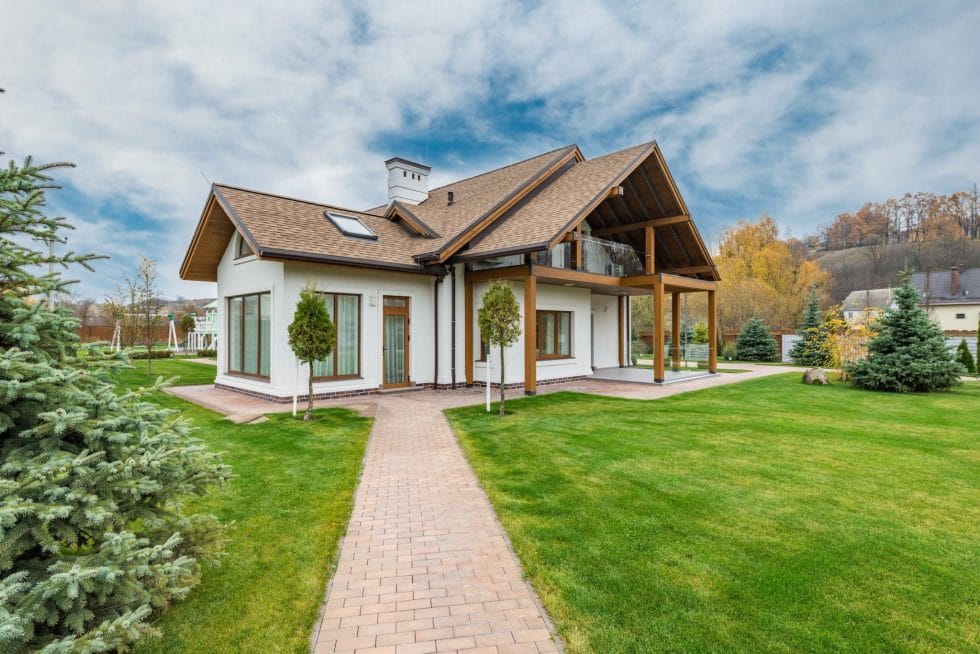
- Nobody can legally cover your deductible. Florida Statute 489.147 prohibits a contractor from offering a rebate, gift, gift card, cash, coupon or waiver of an insurance deductible in exchange for a roof inspection or an insurance claim. Knowingly paying, waiving or rebating a deductible with intent to defraud is insurance fraud punishable as a third-degree felony. The statute also requires roofing contracts to carry notice of these prohibitions, and if that notice is missing you can void the contract within 10 days of signing. An unlicensed person violating the section can be fined up to $10,000 per violation. If a salesperson offers to eat your deductible, the offer itself is the warning.
- Deck repair is discovered, not quoted. Rotten sheathing only becomes visible after tear-off, and it runs $75 to $150 per sheet with the average home needing 5 to 15 sheets. That is $375 to $2,250 that can land mid-project. Ask for a written per-sheet allowance in the contract so your financing amount does not need to be amended on day two.
- Permits are real line items. Permits and inspections run $200 to $600 in Hernando and Pasco County, and they are not optional. A quote without them is not a lower price, it is an incomplete one.
- The new roof lowers your premium, which helps fund the payment. A compliant replacement with proper secondary water resistance and verified attachment earns wind mitigation credits, and the process for capturing them is in our wind mitigation inspection guide. Your annual insurance savings should be part of the payment math, because it is the one recurring number that moves in your favor.
The Sequence That Saves the Most Money
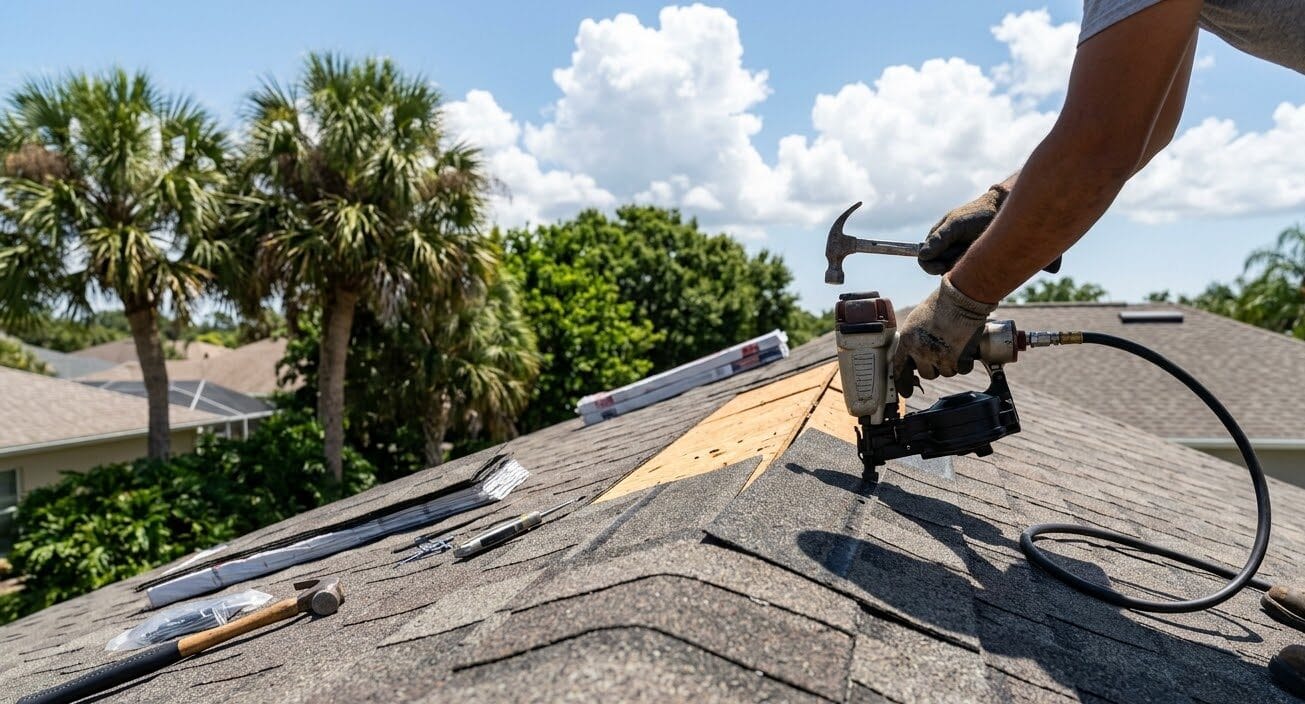
Do these in order, because each step lowers the amount the next step has to cover:
- Document the roof before anything else. A dated inspection with photos is what supports a claim and what tells you whether you are looking at a repair or a replacement. Start with a roof inspection, and if the damage is localized, roof repair may end the conversation for a few thousand dollars instead of fourteen.
- File the claim if the cause was a covered event, inside the one-year hurricane window, and know whether your policy pays replacement cost or actual cash value. Claims help is available through insurance claims assistance.
- Get into the My Safe Florida Home queue, since the match is worth up to $10,000 and the inspection is free.
- Price the job properly with permits, deck allowance and underlayment specified, so the financed number is the final number.
- Choose the loan for the remainder, sorted by total interest rather than payment, with a term no longer than the roof's service life.
If you want the actual numbers for your house rather than a benchmark, call our team at (352) 605-0696. We will measure the roof, write an itemized estimate you can hand to any lender, and tell you honestly whether you are looking at a repair, a shingle roof installation or a metal system. We are licensed in Florida under CCC1335878 and we work across Spring Hill, Brooksville and Pasco County. The roof is going to get replaced either way. What is negotiable is how much the money costs.
FAQ
Frequently Asked Questions
What is the cheapest way to finance a roof in Florida in 2026?
+
Is PACE financing a good idea for a roof in Florida?
+
Can I get a new roof with no money down in Florida?
+
Does My Safe Florida Home pay for a full roof replacement?
+
Can a roofing contractor pay my insurance deductible?
+
Can I use an FHA 203(k) loan to replace just a roof?
+
Related Articles
More guides for Florida homeowners
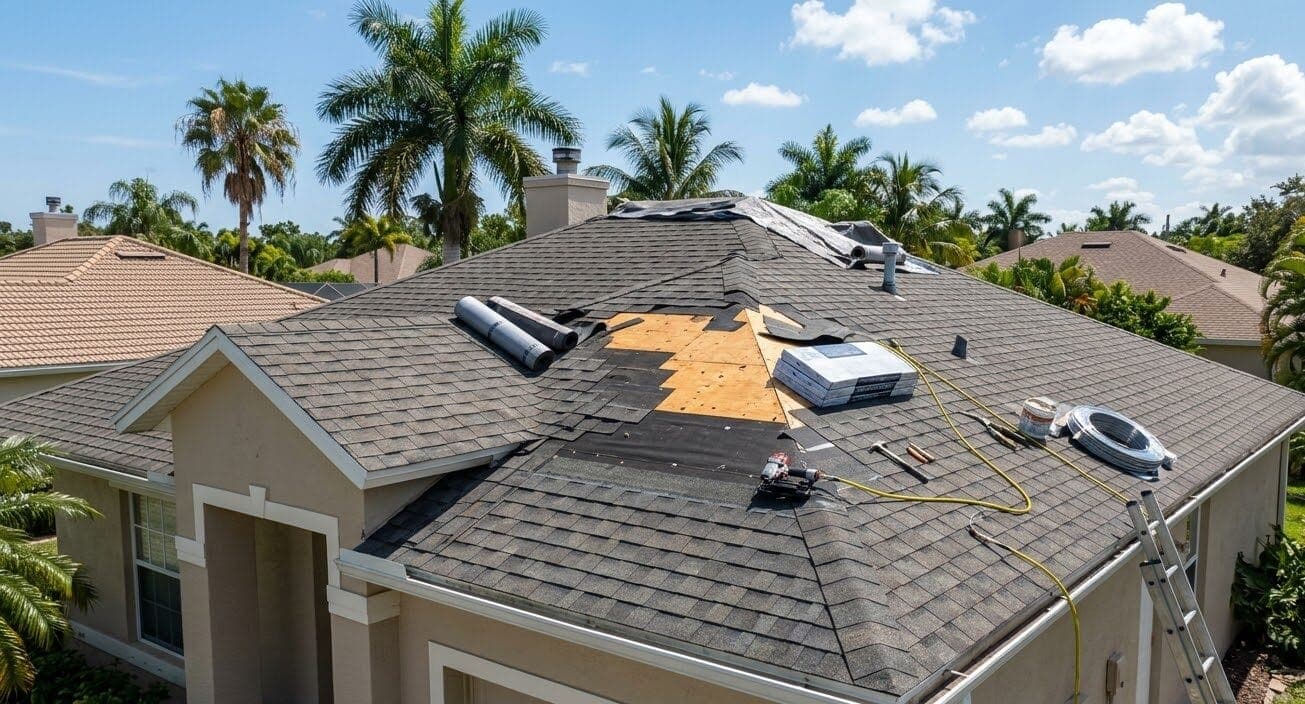
How Long a Roof Replacement Takes in Florida: 2026 Guide
A Florida shingle re-roof takes one to three days of physical work and about two to four weeks from contract to closed permit. Here is what happens each day, how metal and tile change the schedule and what causes delays.
Read ArticleBest Shingles for Florida: Impact-Rated Class 4 Guide
The best shingle for a Florida home is usually a Class H architectural shingle installed as a full system. Here is how 3-tab, architectural and Class 4 impact-resistant shingles compare on cost, wind, insurance and lifespan.
Read Article
Metal Roof Cost in Florida 2026: Per-Sqft Guide
Metal roofs in Florida run about $8 to $23 per square foot installed, depending on the system. Here is what standing seam, stone coated steel and exposed fastener panels cost, what a typical home pays and how to compare quotes.
Read ArticleReady When You Are
Get your free roof inspection today.
No-pressure, written estimate. Same-week scheduling across Hernando County. Call us now or request a visit online.