Blog
Florida Hurricane Claim Deadlines: Why Filing in 30 Days Beats the 1-Year Limit
Call (352) 605-0696Ask a Florida homeowner how long they have to file a hurricane claim and the answer is usually one year. That is correct, and it is also the least useful true fact in the whole process. The one-year bar is the point at which your claim stops existing. It is not the point at which filing still works. Between the day the storm crosses your county and that outer wall sit five other statutory clocks, four of which belong to your insurance company, and every one of them behaves differently depending on how early you started. This is the whole calendar in one place, with the statute numbers, the exact day counts, and the reason experienced adjusters and roofers both push homeowners to file inside the first month.
Six Clocks Start the Day the Storm Crosses Your County
Florida property insurance law is not one deadline. It is a set of interlocking timers, some running against you and some running against your carrier, and they were rewritten substantially in December 2022. If your mental model of claim deadlines came from Hurricane Irma or from a neighbor who filed in 2019, that model is out of date by years.
Here is the full set, and then each one in detail:
- 1 year: your deadline to report a new or reopened claim, under Florida Statute 627.70132.
- 18 months: your deadline to report a supplemental claim on the same loss, same statute.
- 7 calendar days: your insurer's deadline to acknowledge your communication, under 627.70131(1)(a).
- 30 days: your insurer's deadline to physically inspect the property after receiving proof-of-loss statements, under 627.70131(3)(b).
- 60 days: your insurer's deadline to pay or deny the claim after receiving notice, under 627.70131(7)(a).
- 10 business days: the pre-suit notice you must file with the state before suing your carrier, under 627.70152.
Notice the shape of that list. Your obligations are measured in months. Your carrier's obligations are measured in days, and every one of them is triggered by an action you take. Nothing on the carrier's side of the ledger starts until you file. That is the entire argument of this article in one sentence.
Clock One: One Year to Report, and What Date of Loss Really Means
Florida Statute 627.70132 bars a claim or a reopened claim unless notice was given to the insurer, in accordance with the terms of the policy, within one year after the date of loss. These numbers took effect on December 16, 2022, when the Legislature cut the reporting window for a new or reopened claim from two years to one, and cut the supplemental window from three years to 18 months.
The part that catches people is the definition of date of loss, because for weather it is not the day you noticed the damage. The statute is specific: for claims resulting from hurricanes, tornadoes, windstorms, severe rain or other weather events, the date of loss is the date the hurricane made landfall, or the date the tornado, windstorm or severe rain event is verified by the National Oceanic and Atmospheric Administration.
That distinction quietly eats months of real claims. A homeowner who finds a ceiling stain in March, traces it to a storm the previous September and assumes the clock starts in March is wrong by six months. The clock started at landfall, whether anyone was looking at the ceiling or not. Slow leaks, attic damage and lifted-but-not-missing shingles are exactly the failure modes that surface late, and they are exactly the ones that run out of runway.
The practical defense is an inspection right after the storm, not a claim right after the discovery. Documenting the roof while the event is fresh is what turns a March discovery into a September-dated file, and the photo and receipt discipline that makes that work is laid out in detail in our guide to the 72-hour roof damage documentation window.
Clock Two: Eighteen Months for the Supplemental Claim
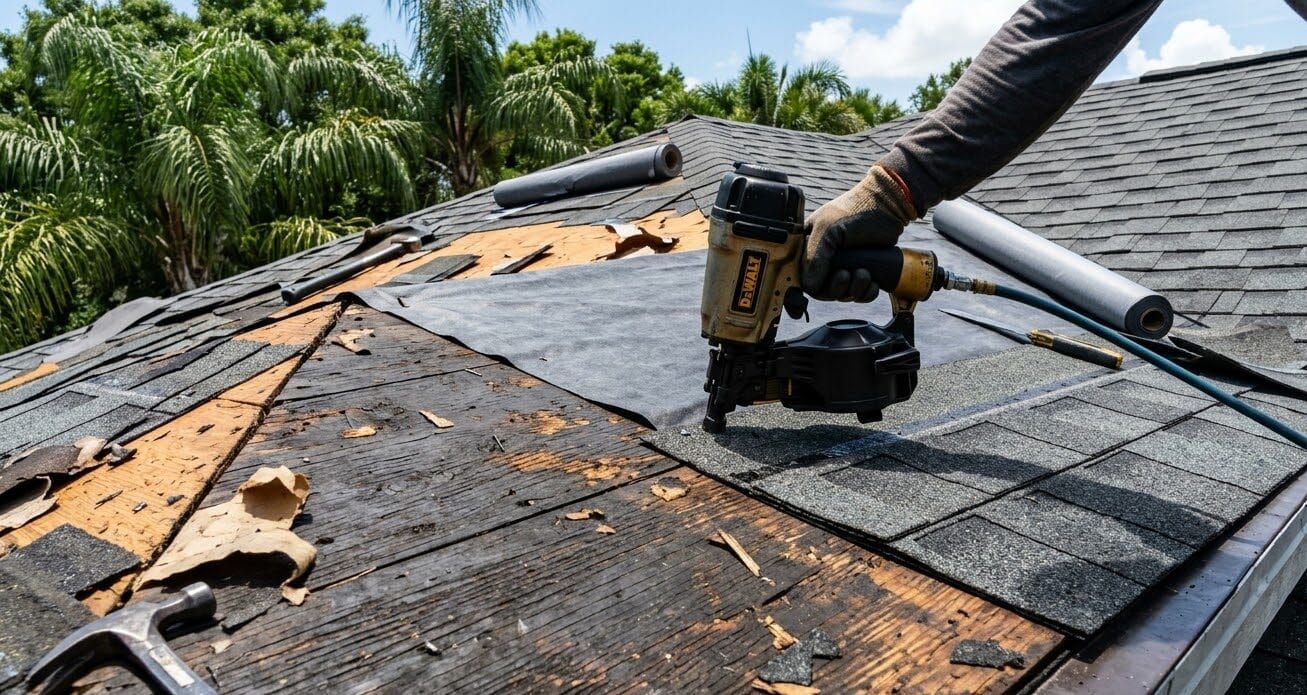
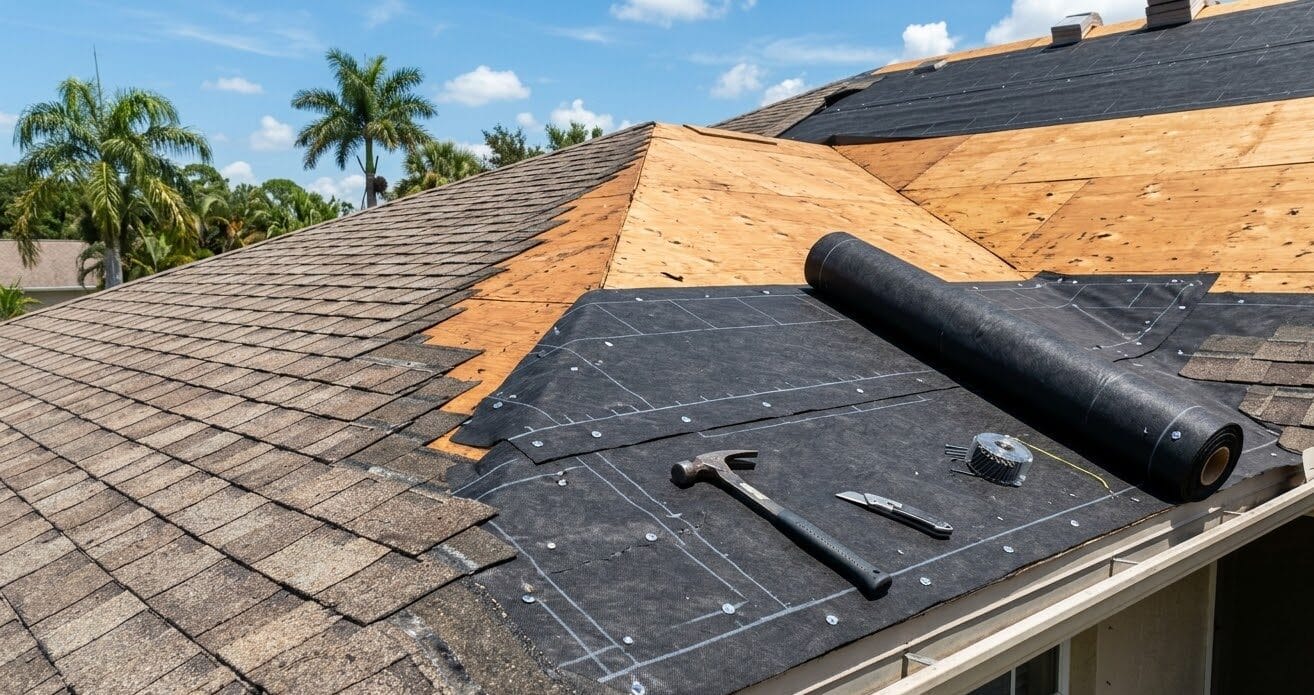
A supplemental claim is what you file when the original settlement turns out to be short: the crew opens the roof, finds rotted decking that nobody could see from the surface, and the real scope exceeds the paid scope. Under the same statute, a supplemental claim is barred unless notice was given within 18 months after the date of loss.
Eighteen months sounds generous until you count backward through a real claim. Report at month ten. Inspection and adjustment take six weeks. Settlement lands at month twelve. You are now scheduling a contractor in a post-storm market where the good crews are booked eight to twelve weeks out. Tear-off happens at month fifteen, and that is the first moment anyone can see the decking. You have three months left to document, price and file the supplemental, and you are doing it while living in a house with an open roof.
Report at month one instead and the same sequence puts tear-off around month five, with thirteen months of supplemental runway behind it. Same policy, same statute, same damage. The only variable that changed was when you picked up the phone.
Clocks Three Through Five: What Your Insurer Owes You, and When

This is the half of the calendar most homeowners never see, and it is the half that gives you leverage. Florida Statute 627.70131 puts hard day counts on the carrier.
Seven calendar days to acknowledge. Under subsection (1)(a), the insurer must review and acknowledge receipt of your communication within seven calendar days, unless payment is made within that period. Silence past day seven is not normal carrier slowness. It is a missed statutory obligation, and it is worth a dated written follow-up that says so.
Seven days to begin the investigation, 30 days to inspect. Subsection (3)(a) requires the insurer to begin its investigation within seven days of receiving the proof-of-loss statements, and subsection (3)(b) requires any physical inspection of the property to happen within 30 days of receiving those statements. If your carrier is at day 40 with no adjuster on the roof, that is the specific subsection to cite.
Sixty days to pay or deny. Subsection (7)(a) requires the insurer to pay or deny the claim, or a portion of it, within 60 days after receiving notice of an initial, reopened or supplemental claim. This is the big one. It converts an open-ended waiting game into a dated obligation, and it is why the day you file is worth writing down.
Every one of these three clocks is triggered by your filing. File in week one after the storm and your carrier owes you a coverage decision inside 60 days, while independent adjusters are still available and while the damage still looks like the storm caused it. File at month eleven and you get the same 60 days, but you get them in a file where the carrier's first question is why you waited. Preparing properly for the inspection itself matters as much as the timing, and we walk through that separately in how to run the adjuster meeting on your roof.
Clock Six: Ten Business Days Before You Can Sue
If the claim goes bad, you cannot go straight to court. Florida Statute 627.70152 makes a pre-suit notice a condition precedent to filing suit under a residential or commercial property insurance policy. You must give the Department of Financial Services written notice of intent to initiate litigation, on the department's form, at least 10 business days before filing suit.
Two details matter. First, the notice cannot be given before the insurer has made a determination of coverage, which means the 60-day pay-or-deny clock has to run out before this one can even start. Second, the notice has to state with specificity the acts or omissions of the insurer that give rise to the suit, including a denial of coverage. Vague grievance letters do not satisfy it.
Stack the timeline honestly. Coverage determination at day 60. Pre-suit notice filed. Ten business days is two calendar weeks. You are at roughly day 75 before a lawsuit is even filable, and a filed lawsuit is the beginning of a process, not the end of one. There is also a lower-friction path most homeowners never hear about: the Department of Financial Services runs a property insurance mediation program under Florida Statute 627.7015, and the insurer bears the cost of it. It resolves a meaningful share of disputes without anyone hiring a lawyer.
Why Thirty Days Beats Three Hundred Sixty-Five
The one-year bar is a wall, not a target. Four things degrade between month one and month eleven, and none of them are in the statute.
1. Causation gets arguable. A lifted shingle photographed nine days after landfall is storm damage. The same shingle photographed nine months later, after two more squall lines and a summer of 95-degree thermal cycling, is a wear-and-tear argument the carrier will make and sometimes win. Every week you wait adds an alternative explanation to the file that costs you nothing to prevent and a lot to rebut.
2. Consequential damage becomes your problem. Policies exclude damage that results from the insured's failure to mitigate. Water that entered through a storm-opened roof on day one and rotted the decking by month eight is a fight over whether you had a duty to tarp it. Water that entered on day one and got tarped on day two is not a fight at all. That is why emergency dry-in gets treated as urgent, and why emergency roof repair and tarping is the first call, before the claim call.
3. The supplemental window closes behind you. Covered in detail above. The 18-month supplemental clock does not restart when you file. It runs from the same date of loss, so every month you delay the initial claim is a month subtracted from your ability to correct a lowball settlement.
4. Capacity disappears, then comes back at a price. After a landfall event, licensed crews, adjusters, engineers and materials all get consumed in the same eight weeks. Filing early puts you in the front of that queue. Filing late puts you in it twice, once for the claim and once for the repair.
The 2026 Season Makes This Easier to Ignore, Which Is the Risk
NOAA's initial May 2026 outlook called for 8 to 14 named storms, 3 to 6 hurricanes and 1 to 3 major hurricanes, with a 55 percent chance of a below-normal season. In early August the agency revised it down: 7 to 13 named storms, 2 to 6 hurricanes and 0 to 2 major hurricanes, and it raised the probability of a below-normal season from 55 percent to 75 percent. A very strong El Nino pattern expected to hold through the fall is the reason, and El Nino suppresses Atlantic development through wind shear.
For context, an average season runs 14 named storms, seven hurricanes and three major hurricanes. So 2026 is genuinely quieter than normal, and that is good news.
It is also exactly the year to be careful, for a reason that has nothing to do with meteorology. A quiet season produces the storm that does not get its own news cycle: a tropical storm or a Category 1 that crosses the peninsula, takes shingles off a few thousand roofs and never becomes the thing everybody is talking about. Those are the events where homeowners do not file, because it did not feel like a disaster. The statute does not care how the event felt. NOAA verification of a windstorm or severe rain event sets a date of loss the same way a named hurricane's landfall does, and the one-year clock starts the same way.
Worth noting for anyone planning ahead: a documented wind mitigation inspection also lowers premiums independently of any claim, and the credit categories are explained in our Florida wind mitigation inspection guide.
The First Thirty Days, Dated
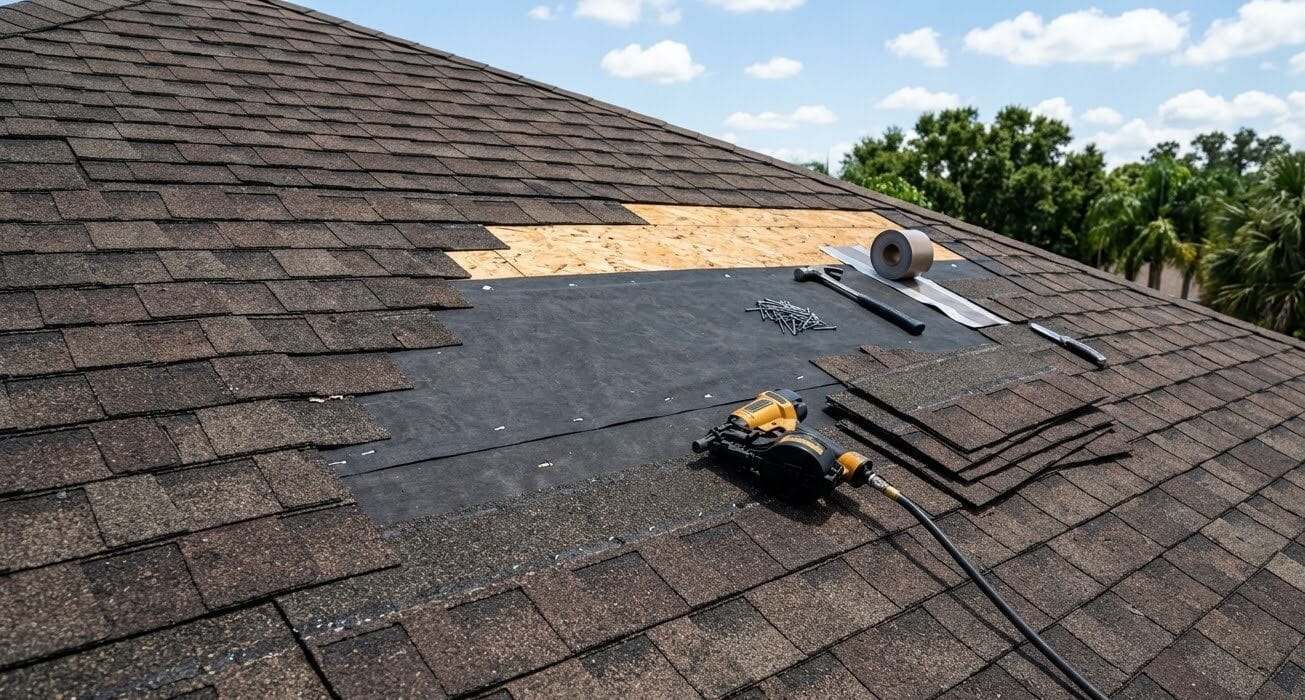
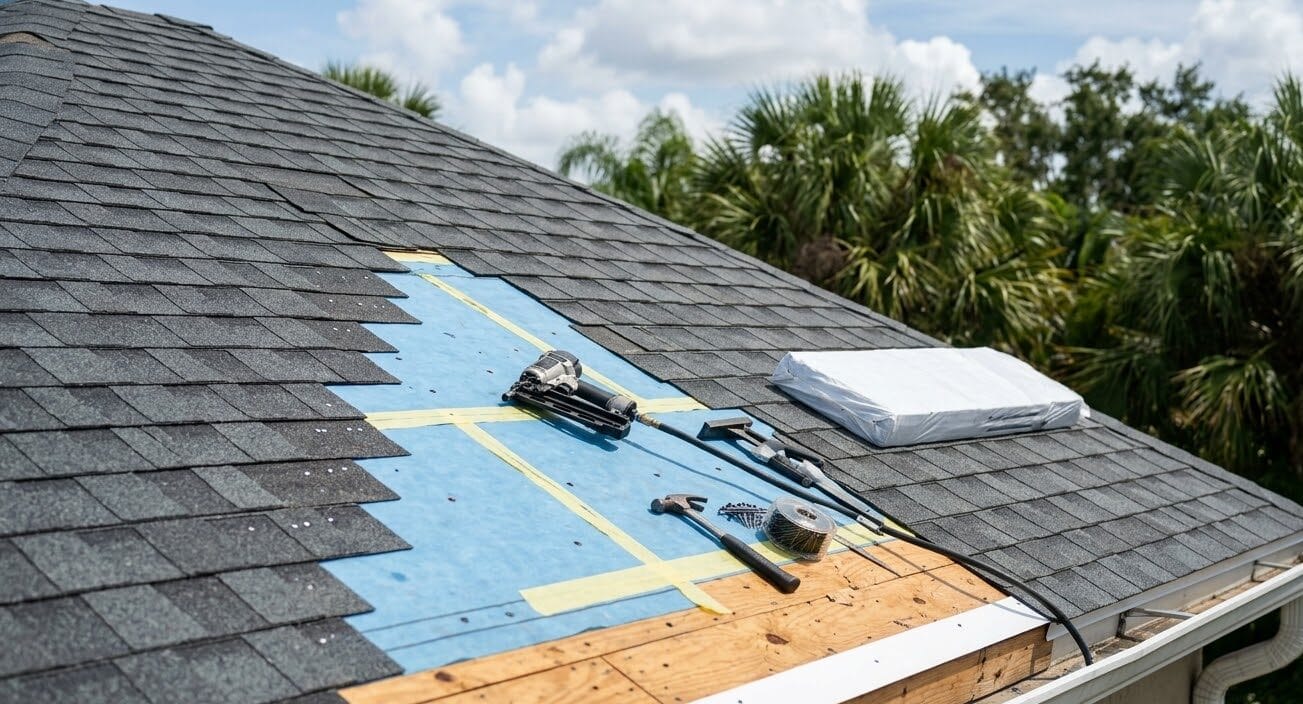
Here is the sequence that keeps every clock working in your favor.
- Day 0 to 3: photograph everything from the ground and from inside the attic, with timestamps on. Do not climb a storm-damaged roof. Write down the date of landfall or the NOAA event date, because that is your legal date of loss, not the date you noticed.
- Day 1 to 5: get emergency dry-in or tarping done and keep the invoice. This satisfies your duty to mitigate and it is reimbursable. The invoice date is your evidence that you acted.
- Day 3 to 10: get an independent roof inspection with a written report, separate from whatever the carrier eventually sends. A documented pre-existing condition report, if you have one, is worth more than any argument you can make later. This is what a licensed roof inspection produces, and it is the document that ends most causation disputes before they start.
- Day 5 to 14: file the claim in writing. Note the date. Your carrier's 7-day acknowledgment and 60-day pay-or-deny clocks now both start from here.
- Day 12 to 21: if there is no acknowledgment by day seven after filing, follow up in writing and cite 627.70131(1)(a) by subsection. Carriers respond differently to a letter that names the statute.
- Day 20 to 30: have your own roofer present at the adjuster inspection. Two people on the roof, one of whom works for you, changes what ends up in the scope.
That is a 30-day sequence that leaves eleven months of statutory margin untouched. The point of the margin is that you never need it.
If the Deadline Has Already Passed
Two things are still worth knowing, and neither is a loophole.
First, confirm the actual date of loss before you conclude you are late. If the damage traces to a NOAA-verified event more recent than the storm you had in mind, your clock may be newer than you think. This is genuinely worth ten minutes of checking, because homeowners routinely misattribute damage to the memorable storm rather than the responsible one.
Second, the reporting deadline in 627.70132 and the statute of limitations for suing on the policy are different things with different lengths. Reporting late is usually fatal to the claim; that is what the statute is for. But if you reported on time and the dispute is about the settlement rather than about the notice, you are in a different analysis entirely, and it is worth a conversation with a licensed public adjuster or attorney rather than a blog post.
What we can do is the part that sits underneath all of it: put a licensed, dated, written assessment of your roof's actual condition in your hands, which is the document every one of these clocks eventually argues about. Protech Roofing has run storm claims across Hernando, Pasco and Citrus counties since 2008, including throughout Spring Hill, and we handle both the inspection and the insurance claims assistance side so the scope that gets submitted matches the damage that is actually up there.
If a storm has crossed your county in the last year and nobody has been on your roof since, call (352) 605-0696 or start on the contact page. An inspection this month is worth more than a claim next spring, and the statute is the reason why.
FAQ
Frequently Asked Questions
How long do I have to file a hurricane damage claim in Florida?
+
What counts as the date of loss for a Florida hurricane claim?
+
How long does my insurance company have to pay or deny my claim in Florida?
+
Can I sue my insurance company right away if my Florida claim is denied?
+
Is the 2026 hurricane season expected to be active in Florida?
+
Why should I file within 30 days if I legally have a year?
+
Related Articles
More guides for Florida homeowners
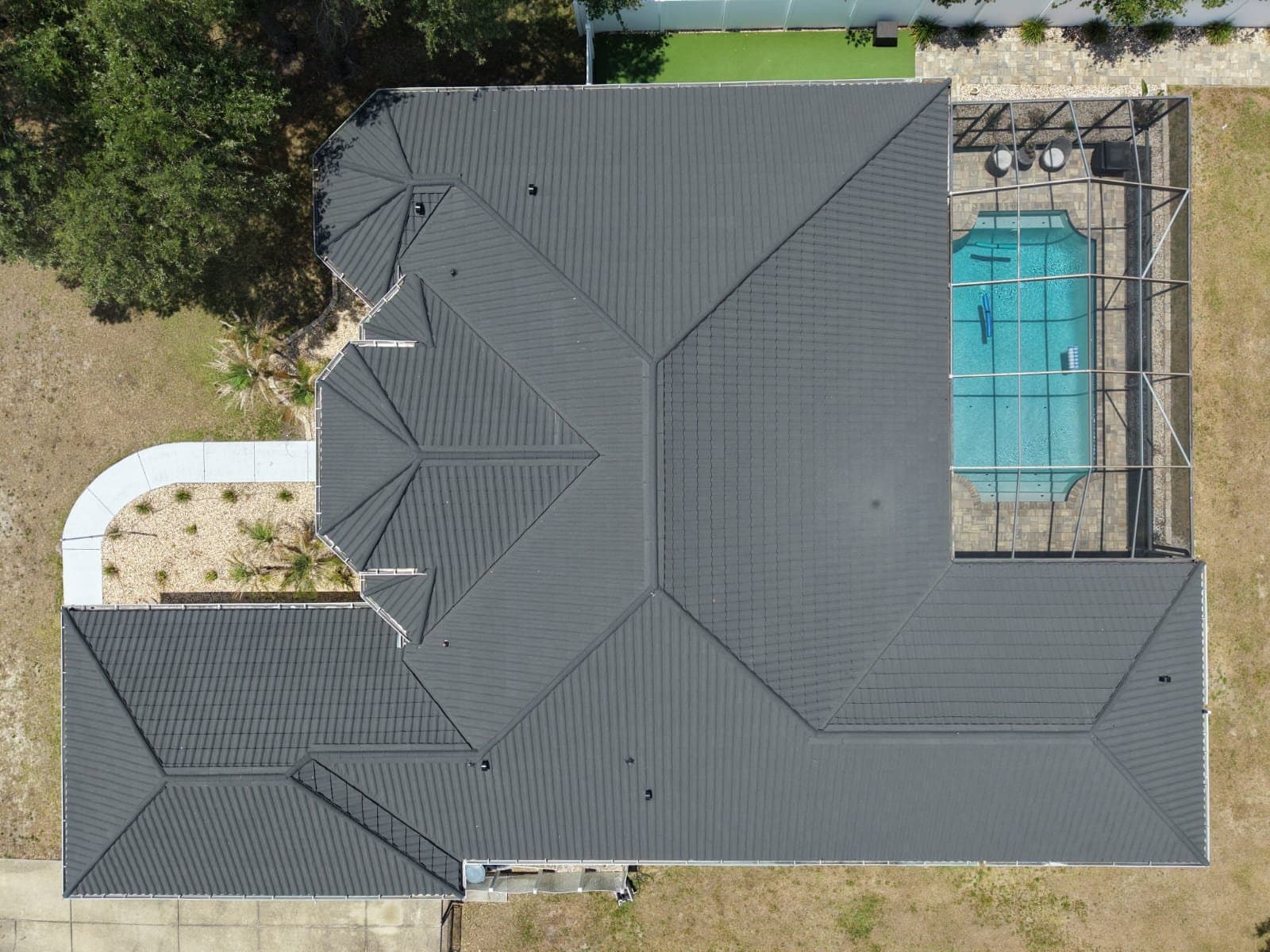
Metal Roof Cost in Florida 2026: Per-Sqft Guide
Metal roofs in Florida run about $8 to $23 per square foot installed, depending on the system. Here is what standing seam, stone coated steel and exposed fastener panels cost, what a typical home pays and how to compare quotes.
Read Article
Roofing Warranties in Florida: What Voids Them
A new Florida roof usually carries two warranties: one from the manufacturer for the product and one from the contractor for the installation. Here is what each covers, what quietly voids them and how to keep your coverage.
Read Article
Best Roof Color for Florida Heat: Cool Roofs Explained
Florida test homes show a white shingle saves only 3 to 5 percent on cooling while reflective white metal or tile saves 18 to 26 percent. Here is how to choose a roof color that actually keeps your attic cooler.
Read ArticleReady When You Are
Get your free roof inspection today.
No-pressure, written estimate. Same-week scheduling across Hernando County. Call us now or request a visit online.