Blog
Insurance Adjuster Meeting for Roof Damage: 9 Things to Say and 3 to Never Mention
Call (352) 605-0696The adjuster's inspection is the meeting that decides your roof claim. Everything before it is preparation, and everything after it is negotiation, but the number that lands in your settlement letter is shaped in the 30 minutes the adjuster spends on your roof. Most Florida homeowners walk into that meeting with no plan, answer questions they should not answer, and let the adjuster inspect alone. This guide fixes that. Here are the nine things to say and show, the three things to never say, and how to handle the lowball estimate that usually follows. If a storm just hit, call Protech at (352) 605-0696 and we will meet the adjuster with you.
The 20 Minutes Before the Adjuster Arrives Decide the Claim
An insurance adjuster is not your enemy, but they are not your advocate either. They work for the carrier, they inspect dozens of roofs a week, and their job is to scope the damage that the policy covers and nothing more. That is not a conspiracy, it is the design of the transaction. Your job in the meeting is simple: make sure they see every piece of legitimate damage and record its cause correctly. Everything in this guide serves that one goal.
Before the adjuster ever climbs the ladder, get four things ready. Have your policy and declarations page printed, so you know your deductible, your coverage type, and whether you carry replacement cost value or actual cash value. Have your dated storm photos organized, not dumped, with the most important shots flagged. Have any emergency repair receipts, including tarping, in one folder. And have your roofing contractor scheduled to be on site, ideally arriving before the adjuster does.
That last point is the one homeowners skip and later regret. A reputable Florida roofer meets the adjuster as a matter of routine, walks the roof first, and knows exactly what to point out. The difference between a claim that pays for a full replacement and one that pays for a patch is often just whether a knowledgeable set of eyes was standing next to the adjuster. We explain the timing that makes or breaks coverage in the 72-hour roof damage window.
The 9 Things to Say and Show During the Inspection

Be present, be polite, and be factual. Let the adjuster lead the inspection, but do not be passive. Walk the property with them and make sure the following nine items are on the record before they come down off the roof.
- The date of loss: State the specific storm and date the damage occurred. A dated event ties your claim to a covered peril and starts the clock in your favor.
- Every interior sign of water: Ceiling stains, wall discoloration, attic moisture. Water travels laterally, so the interior evidence proves the roof failed even where the exterior looks intact.
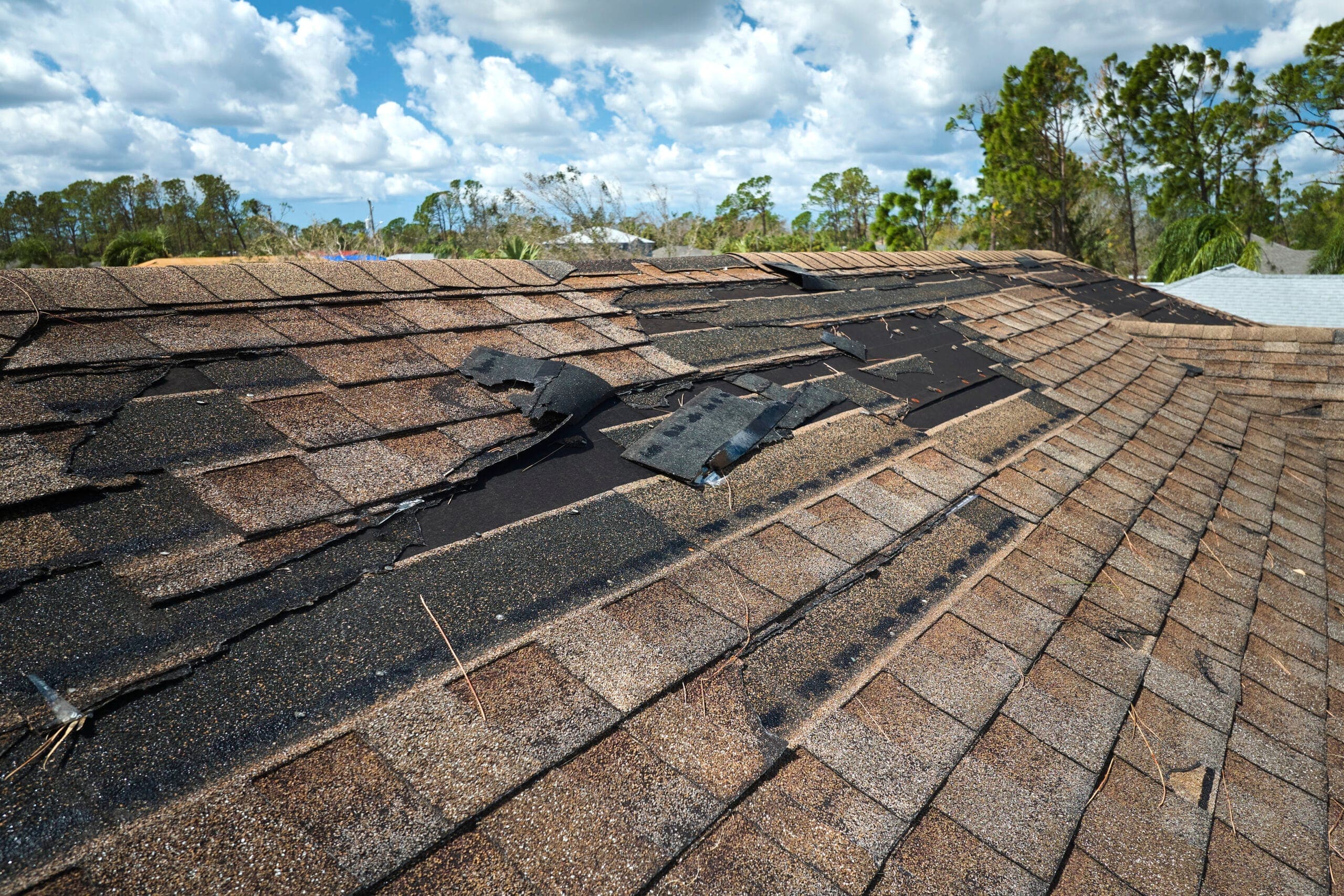
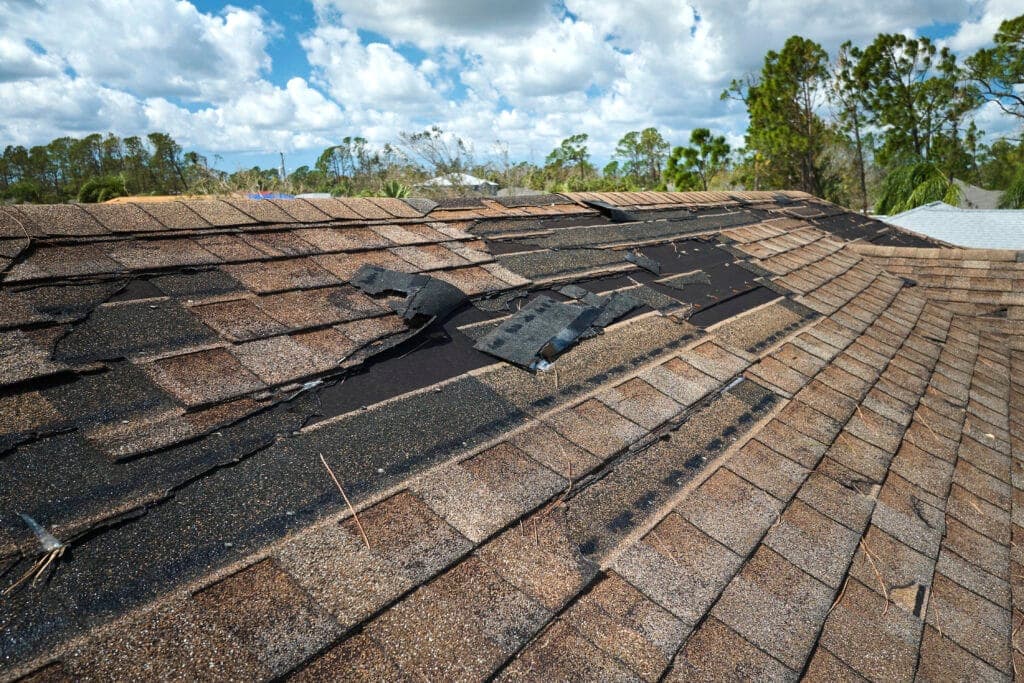
- Lifted, creased and missing shingles: Point them out individually. Wind damage is often a crease at the seal line that is invisible from the ground.
- Granule loss in the gutters and at downspouts: Piles of granules are physical evidence of impact and age acceleration that the adjuster should photograph.
- Damaged flashing, vents and boots: These are common leak points and are frequently missed in a fast scope.
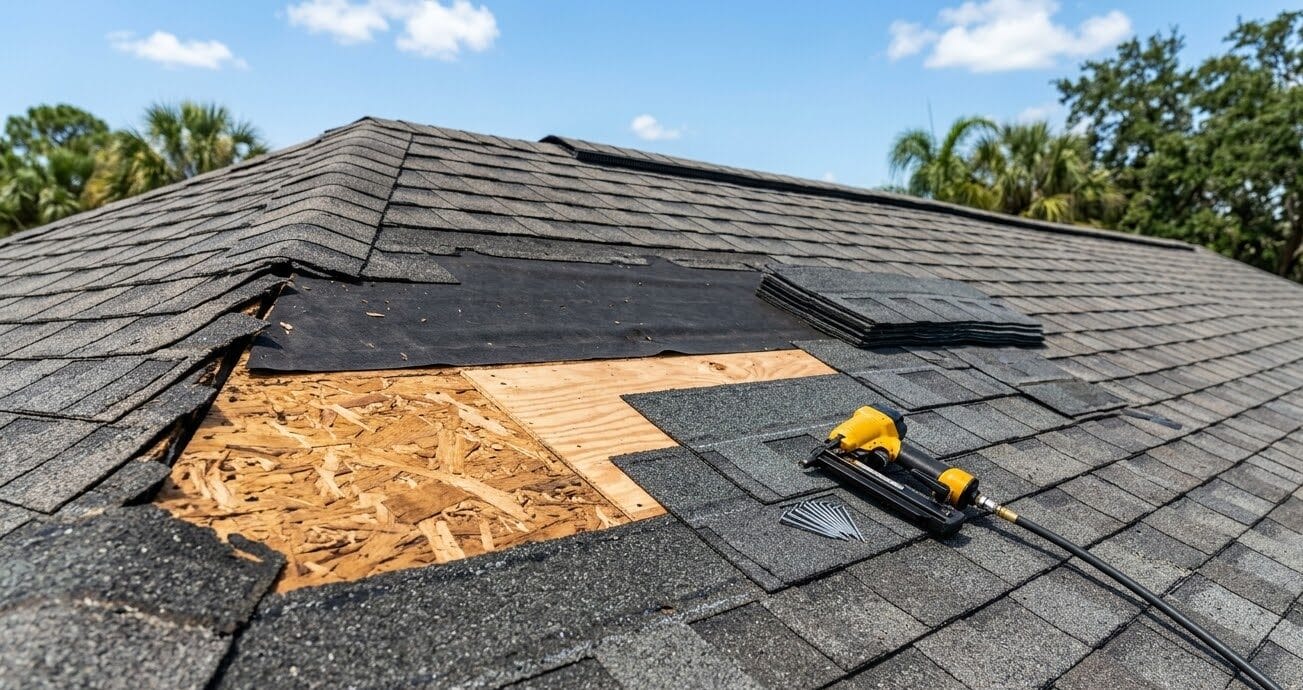
- Soft or spongy decking: If the roofer found deck damage during their walk, make sure the adjuster documents it, because it changes the scope from surface to structural.
- Collateral damage: Dented gutters, screens, fascia, soffit and vents corroborate a wind or hail event and strengthen the roof claim.
- Your organized photo summary: Hand over a short, labeled set, not 200 images. Highlight the shots that show cause and date.
- Applicable code requirements: Florida code can require a full replacement when a percentage of the roof is damaged, and code upgrades may be owed under your policy. Let your roofer raise this on the roof.
Notice what these have in common. Every one is a fact you can show, not an opinion you are offering. You are guiding the adjuster's eyes, not arguing the claim. The full field version of this walk is in the post-storm roof inspection checklist.
The 3 Things to Never Say
A few sentences, said casually, can shrink or sink a claim. These are the three to keep out of your mouth entirely.
- "The roof was already getting old." Age is the carrier's favorite reason to apply depreciation or deny. Do not volunteer the roof's age or condition. If asked, state facts you know and let the physical damage speak.
- "I think the leak started a while ago." Speculating that damage is long-term hands the adjuster a wear-and-tear denial. Report when you first observed damage, not a guess about when it began.
- "Whatever you think is fair is fine." Never accept a verbal number or waive your right to review the written estimate. The inspection is not the negotiation, and agreeing on the roof forfeits leverage you will need later.
The theme again: do not speculate about cause or timing, and do not settle on the spot. Answer honestly and specifically about what you observed and when, and leave the interpretation of cause to the evidence and to your roofer.
Have Your Roofer There, and Have Them There First

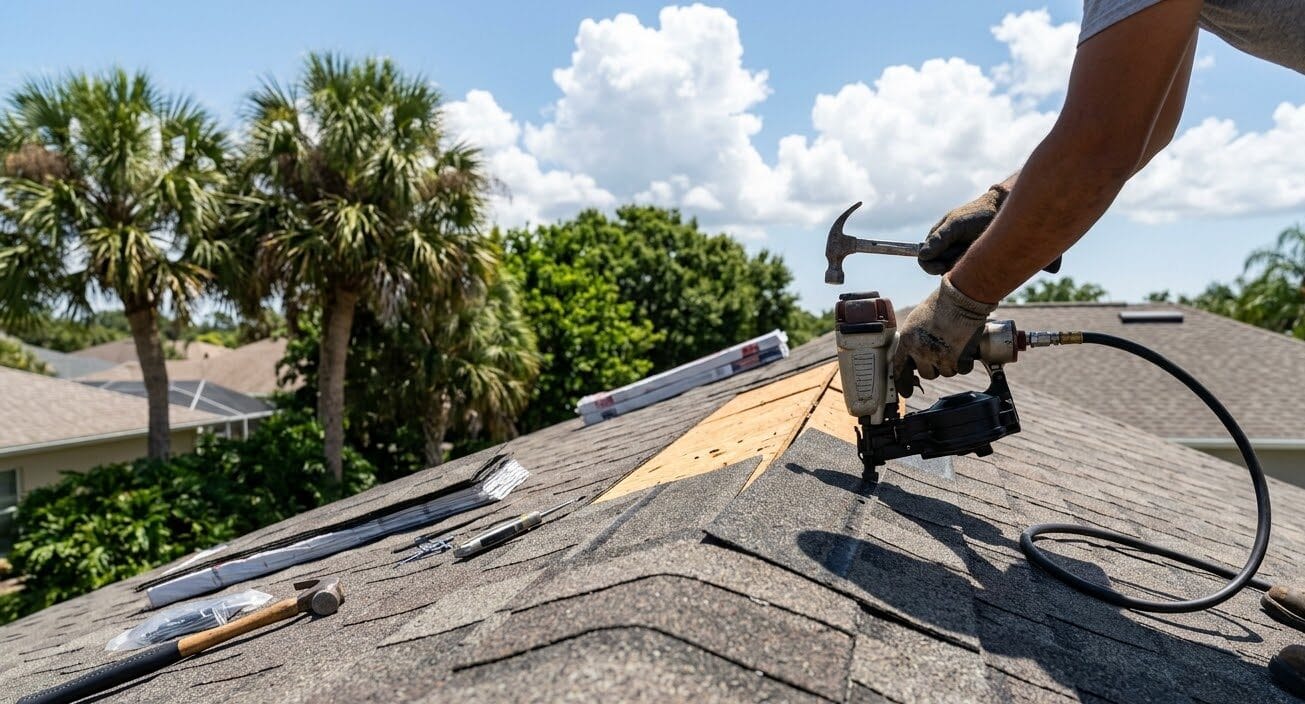
The best single move a homeowner can make is to have a licensed roofer meet the adjuster. Have them arrive before the adjuster so they can do their own assessment and know precisely what to point out. During the inspection, the roofer speaks the same technical language as the adjuster, references code, and puts damage on the record that an untrained eye would walk past.
This is not adversarial and it is not inflating anything. It is making sure the scope reflects the actual condition of the roof. Adjusters cover a large territory under time pressure, and a fast scope misses real damage far more often than it invents fake damage. A roofer on the roof next to them corrects that in real time. That is exactly what our insurance claims assistance is built to do, and it pairs with a full roof inspection so nothing on your roof goes undocumented.
How Florida's Claim Clock Works Against You
Timing is not a detail in a Florida roof claim, it is a coverage issue. Carriers scrutinize the gap between the date of loss and the date the claim is reported, and a long gap is an easy argument for a denial based on long-term deterioration rather than a covered storm. The lesson is to inspect, document and file quickly, and to make sure the adjuster's report reflects a specific storm date.
Florida law also sets outer deadlines for filing hurricane and windstorm claims, and those deadlines are far longer than the practical window in which a claim is easy to prove. Do not treat the statutory limit as your target. The claim that pays cleanly is the one filed with fresh, dated evidence, not the one filed months later when the carrier can question whether the storm or simple age caused the damage. The full breakdown of Florida roof claim rules is in our Florida insurance roof claims guide.
When the Adjuster's Estimate Comes Back Low
Expect the first estimate to be lower than the real cost of the work. That is normal, not necessarily bad faith. A fast scope misses items, and the carrier's pricing does not always match local Florida labor and material costs. The estimate is a starting point, not a final answer.
When the number is short, your roofer files a supplement: a documented request for the missing line items, backed by photos, code requirements and manufacturer specifications. On Florida roof claims, the supplement process commonly recovers several thousand dollars that the initial scope left out, frequently in the range of $4,500 to $8,000. That is not padding the claim, it is getting paid for legitimate, code-required work the first inspection skipped.
Understand your coverage type before you evaluate any number. A replacement cost value policy pays to replace the roof with like kind and quality, releasing the recoverable depreciation once the work is done. An actual cash value policy subtracts depreciation and keeps it. Knowing which one you hold tells you whether a low first check is the whole story or just the first payment. We cover that distinction in will insurance cover your roof.
The Documentation to Hand Over, Organized
Give the adjuster a clean, organized package. Volume is not persuasion. A tight, labeled record is far more useful than a phone full of unsorted photos.
- Dated damage photos: Exterior and interior, taken as soon after the storm as possible, with the key shots flagged.
- The policy and declarations page: So deductible and coverage type are not in question during the walk.
- Emergency repair receipts: Tarping and temporary work are usually reimbursable, and they prove you acted to prevent further damage.
- Prior inspection or maintenance records: Evidence the roof was in sound condition before the storm undercuts a wear-and-tear argument.
- Your roofer's assessment: A written scope from a licensed contractor the adjuster can compare against their own.
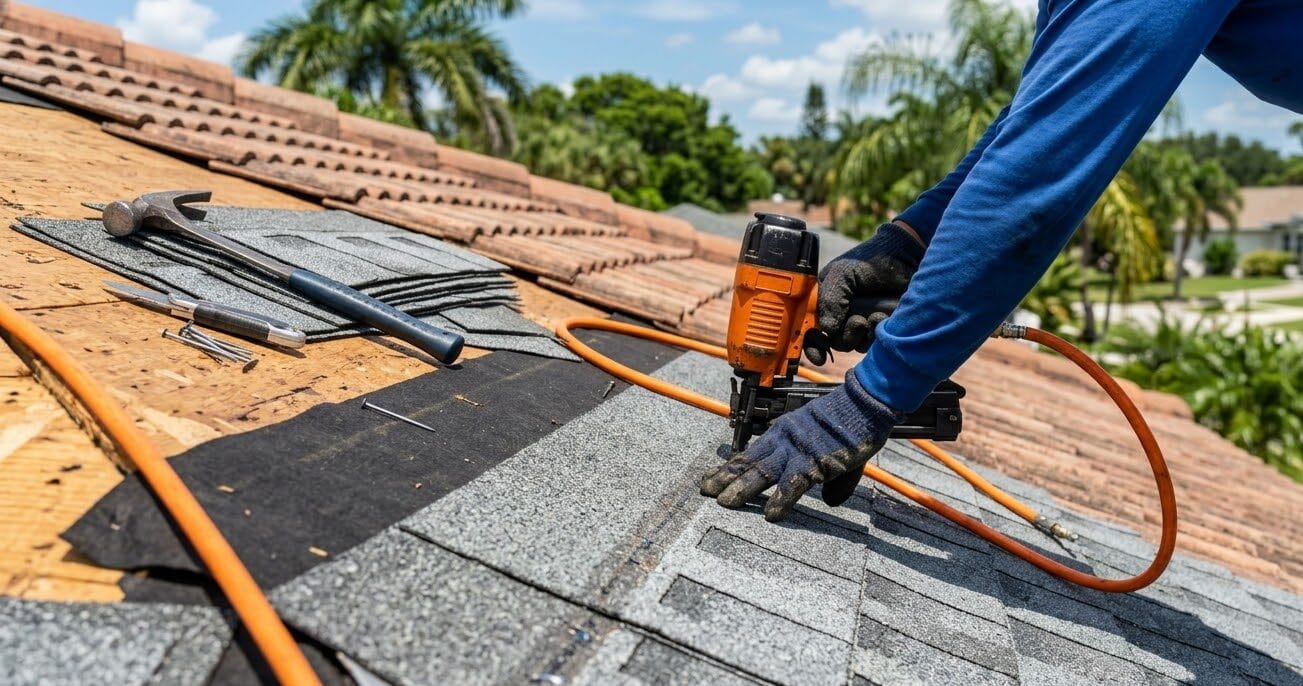
Preventing further damage is not optional. Every Florida policy requires the homeowner to mitigate, which is why a tarp and photos taken within days matter both for the roof and for the claim. If you need that emergency work done right, that is what storm damage restoration handles first.
After the Meeting: What Comes Next
The adjuster leaves, and within a week or two you receive a written estimate and, on a replacement cost policy, a first check for the actual cash value. Read the estimate line by line with your roofer. Compare it against the contractor's scope, identify what is missing, and let your roofer handle the supplement. Do not cash a settlement as final until you and your roofer agree it covers the real work.
Protech Roofing meets adjusters with homeowners across Hernando County and the Summerfield area, including Brooksville, Spring Hill and Weeki Wachee. If a storm has hit your roof and an adjuster visit is coming, request a roof assessment or call (352) 605-0696, and we will walk the roof before the adjuster does.
FAQ
Frequently Asked Questions
Should I be home when the roof insurance adjuster comes?
+
What should I not say to a roof insurance adjuster?
+
Should my roofer be at the adjuster meeting?
+
What happens if the insurance estimate is too low?
+
How long do I have to file a roof claim in Florida?
+
What is the difference between RCV and ACV on my roof claim?
+
Related Articles
More guides for Florida homeowners
Roof Underlayment in Florida: The Hidden Layer Explained
Underlayment is the layer that decides what happens to your house when wind strips the shingles. Here is how felt, synthetic and peel-and-stick compare, what Florida code requires on a re-roof, and what each option costs in 2026.
Read Article
Florida Tile Roof Problems: Repair vs Re-Roof (2026)
Tile lasts for decades, the underlayment under it does not. Here are the tile roof problems Florida homeowners see most, what each repair costs in 2026, and how to tell when a repair is enough and when it is time to re-roof.
Read Article
Solar Roofing in Florida: Solar Shingles vs Panels (2026)
Every solar system on a Florida roof is either bolted to the roof or is the roof. Here is how panels and solar shingles compare in 2026, what changed with the federal credit, and why the cheapest solar project often starts with a re-roof.
Read ArticleReady When You Are
Get your free roof inspection today.
No-pressure, written estimate. Same-week scheduling across Hernando County. Call us now or request a visit online.