Central Florida Roofing Service
Gutter Repair
Gutter repair for sagging, leaking, or storm-damaged gutters in Hernando, Pasco, Citrus, and The Villages. Rated 4.9 on Google. Call (352) 605-0696.
Call (352) 605-0696What Gutter Repair Covers, and When a Fix Is the Right Call
A gutter system is a short list of parts. There is the trough itself, the hangers that hold it to the house, the seams and end caps that keep it watertight, the outlets where water drops into the downspouts, the downspouts and elbows that carry it down, and the fascia board that everything is screwed into. When a gutter stops working, it is almost always one or two of those parts that failed, not the whole run.
Gutter repair means finding the part that failed and restoring it so the system carries water off the roof and away from the house again. In practice that usually looks like one of these jobs:
- Refastening or rehanging a section that has started to sag or pull off the fascia.
- Resealing a seam, corner, or end cap that drips during and after rain.
- Correcting the pitch on a run that holds standing water instead of draining.
- Reattaching, rerouting, or replacing a downspout or elbow that has been crushed, knocked loose, or disconnected.
- Replacing a single bent or torn section after a limb, a ladder, or a storm hit it.
- Addressing the rotted fascia board behind a gutter that will not hold a fastener anymore.
This page is for the gutter that is physically failing. If your gutters are simply full of leaves and pine needles, start with gutter cleaning, because a clogged gutter can look broken when it is not. If you are tired of cleaning and want to keep debris out, see gutter protection. If your home has no gutters, or the system is beyond saving, gutter installation covers new systems from design to downspout placement. Repair sits between those three: the gutters are worth keeping, and one part of them needs to be made right.
The reason to fix a failing gutter quickly is simple. A gutter that leaks or overflows does not fail quietly. It moves the water problem somewhere else: into the fascia board, onto the soffit, against the stucco or block wall, into the flower bed next to your foundation, or onto the screen enclosure over your pool. The gutter is the cheapest part of that chain to fix, and the longer it fails, the more of the chain gets involved.
Warning Signs You Can Spot From the Driveway
You do not need to climb a ladder to know whether your gutters need attention. Most failures leave marks you can see from the ground, especially in the day or two after a heavy rain.
- A dip in the gutter line. Stand at the corner of the house and sight down the gutter. It should run in a straight line with a slight, even slope toward the downspout. A belly between two points means hangers have loosened or the fascia behind them has softened.
- A gap between the gutter and the fascia. If you can see daylight between the back of the gutter and the board, water from the roof edge is likely running behind the gutter instead of into it.
- Drips from corners and ends after the rain stops. Seams and end caps are sealed joints. When the sealant fails, they drip steadily, and they keep dripping long after the storm passes.
- Water sheeting over the front lip. If the gutter is clean and still overflows in a hard storm, the run may be pitched wrong, the outlet may be too small for the roof area feeding it, or a downspout may be blocked below the visible part.
- Stains and streaks on the gutter face. Dark lines, white mineral streaks, or rust trails on the outside of the gutter show where water has been running over or through it.
- Peeling paint or dark spots on the fascia and soffit. This is the sign homeowners most often miss, and it is the most important one. It usually means water has been getting behind the gutter for a while.
- A trench in the mulch or a crater at a downspout. Washed-out soil, exposed roots, or a muddy hole near a corner means water is landing in the wrong place or a downspout has come apart.
- Standing water days after rain. If you can see water in the gutter from a second-floor window, or you notice mosquitoes clustering near the roof edge, the gutter is holding water it should be draining.
One sign alone is worth a closer look. Two or three together, especially fascia staining combined with a sag or a gap, usually means the repair is overdue and the board behind the gutter needs to be checked as part of the job.
What Florida Weather Does to a Gutter Run
Gutters in Central Florida work harder than gutters in most of the country, and they fail for reasons that are specific to this climate. Understanding those reasons helps explain why a repair has to address the cause, not just the drip.
Rainy season downpours
From roughly June through September, afternoon thunderstorms can drop a large amount of rain in a short window. A gutter that handles a gentle shower fine can be overrun in twenty minutes of a summer storm. When a run is pitched too flat, has one undersized outlet, or carries water from a large roof valley, it overflows at the same spot every afternoon. Over time that repeated overflow soaks the fascia, wears the landscape below, and stresses the hangers with the weight of standing water. Water is heavy, and a gutter that holds it instead of draining it is carrying a load it was never meant to carry.
Hurricane season wind
Hurricane season runs from June 1 through November 30, and it is not only named storms that cause damage. Strong gusts from tropical systems and severe thunderstorms get under the roof edge, flex the gutter outward, and work fasteners loose a little at a time. Falling limbs from live oaks and pines bend sections and crush downspouts. Many gutter repairs we see in the fall are the delayed result of a storm months earlier that loosened a run without visibly dropping it.
Live oaks, pines, and constant debris
The tree canopy across Spring Hill, Brooksville, and the older neighborhoods of Hernando and Citrus counties is beautiful and hard on gutters. Oak leaves, catkins, acorns, and pine needles pack into troughs and outlets. A clogged gutter is not a broken gutter, but a gutter that stays clogged for a season holds wet debris against its own seams and against the fascia, and that is how a cleaning problem turns into a repair problem.
Humidity and wood rot
Fascia boards in this climate rarely get a chance to dry out fully. When water gets behind a gutter, the wood stays damp, and damp wood softens. Once the fascia softens, screws and hangers lose their bite, the gutter sags, more water gets behind it, and the cycle speeds up.
Salt air near the coast
Homes in Hernando Beach, Hudson, and other areas close to the Gulf deal with salt air, which speeds up corrosion on exposed metal. Fasteners, hangers, and downspout straps are often the first parts to go. When steel fasteners are used on aluminum gutters, the two metals can react with each other in moist, salty air, and the corrosion shows up as staining and loosened attachments.
Sandy soil and where the water lands
Much of the region sits on sandy soil, and parts of Hernando and Pasco counties are well known for sinkhole activity. That makes the end of the downspout as important as the gutter itself. A downspout that has come loose, or one that dumps water right against the foundation, concentrates thousands of gallons a year in one spot next to your home. Fixing where the water exits is often part of a gutter repair, not an extra.
The Five Repairs That Fix Most Failing Gutters
Every house is different, but the same handful of repairs account for most of the gutter calls we get. Here is what each one involves and why it matters.
1. Rehanging a sagging or pulling section
A sag happens when hangers loosen, when they were spaced too far apart to begin with, or when the fascia behind them can no longer hold a fastener. A proper repair does not just push the gutter back up and drive the old screw into the old hole. It means fastening into solid wood, adding support where spacing was too wide, and confirming the run still slopes toward its outlet once it is back in place. If the fascia is soft, the board has to be addressed first, or the new fastener will fail the same way the old one did.
2. Resealing seams, corners, and end caps
Joints are where gutters leak. Corners, end caps, and the seams between sections all rely on sealant, and the Florida sun and heat wear that sealant out over the years. A good reseal means removing the old, failed material and cleaning the surface so the new sealant actually bonds. Smearing fresh sealant over old, cracked sealant on a dirty surface tends to last one rainy season.
3. Correcting the pitch
A gutter needs a gentle, consistent slope toward each downspout. Over time, settling, loose hangers, and storm stress can flatten that slope or even reverse it in a section, so water pools in the middle of the run instead of draining. Correcting the pitch means resetting the run so water moves to the outlet, which also takes weight off the hangers and stops the standing water that attracts mosquitoes.
4. Fixing downspouts, elbows, and outlets
Downspouts take a beating. Lawn equipment hits them, ladders lean on them, storms knock them loose, and the bottom elbow gets crushed by foot traffic or a car door. A downspout repair can mean reattaching sections, replacing a crushed elbow, adding straps so it stays put, clearing a blockage hidden inside, or extending the discharge so the water lands well away from the foundation. If the gutter overflows at one end every storm, the fix is sometimes at the outlet: one downspout carrying more roof area than it can handle.
5. Replacing a damaged section
When a limb bends a gutter, or a section has corroded through, the right repair is often to replace that section rather than patch it. The goal is a replacement that matches the existing profile and color closely enough that the run looks continuous and the joints seal properly. Matching an older system is not always possible, and when it is not, it is worth knowing before work starts so you can decide whether a longer run makes more sense.
The Board Behind the Gutter: Fascia Rot Changes the Job
The single most important thing to understand about gutter repair is that a gutter is only as solid as the board it hangs on. The fascia is the horizontal trim board along the roof edge, and on most homes in this region the gutter is fastened directly to it. When that board rots, no amount of new hangers or sealant will keep the gutter in place.
Fascia rot is common here for the reasons covered above: humidity, repeated overflow, and water running behind a gutter that has pulled away. It often starts out of sight, on the back side of the board or at the end of a run near a corner. By the time paint is peeling on the front, the wood behind it may already be soft.
That is why an honest gutter repair includes checking the fascia wherever the gutter has sagged, pulled away, or leaked. If the board is sound, the repair stays simple. If it is soft, the board needs to be repaired or replaced before the gutter goes back on, and sometimes the soffit underneath has taken water too. Skipping that step is the most common reason a gutter repair fails a second time in the same spot.
If you are seeing damage to the trim boards themselves, mention it when you call so the fascia and soffit get a close look during the visit. On many homes, the gutter repair and the fascia repair are really one job, and doing them together is the only way to make either one last.
It is also worth knowing that the roof edge plays a part. The drip edge is the metal flashing along the edge of the roof deck that directs water off the shingles and into the gutter. If it is missing, bent, or installed in a way that sends water behind the gutter, the fascia will keep getting wet no matter how good the gutter is. Because we are a roofing company, we look at the roof edge and the gutter as one system, and if the leak is actually coming from the roof, we will tell you so. Our roof repair and leak detection pages cover that side of the problem.
Fix It or Replace It: An Honest Way to Decide
Not every failing gutter should be repaired. Sometimes the honest answer is that you would be paying to fix one part of a system that is wearing out everywhere. Here is a practical way to think about it.
Repair usually makes sense when
- The problem is in one or two places, like a single sagging run, one leaking corner, or a crushed downspout.
- The gutters are otherwise in good shape: no widespread corrosion, no dents along every run, and joints that hold up elsewhere.
- The fascia is solid, or the soft spots are limited to small, local areas.
- The overflow has a specific cause, such as one outlet or one run with bad pitch, rather than the whole system being too small for the roof.
Replacement usually makes more sense when
- Seams and corners are leaking all around the house, not just in one spot.
- The gutters are corroded through, or the metal has thinned to the point that fasteners will not hold.
- The system is pitched wrong almost everywhere, so fixing it would mean rehanging nearly every run anyway.
- The gutters are too small for the roof area and overflow even when clean and properly pitched.
- The fascia is rotted along long stretches and has to come down regardless.
- You cannot find a section that matches the profile or color of what is there.
When replacement is the better choice, gutter installation covers how a new system is planned and sized for your roof.
If a new roof is coming soon
There is one more case to consider. If your roof is near the end of its life and you expect to replace it in the near future, think about timing before spending heavily on gutters. A roof replacement involves the roof edge and drip edge, and gutters are often taken down and rehung as part of that work. In that situation, it often makes sense to make the gutters safe and functional now with a targeted repair, and plan the bigger gutter decision alongside the roof replacement. That way you are not paying for gutter work twice.
Whatever the situation, the decision should come from what is actually on your house, not from a sales pitch. If repair will solve it, repair is the answer.
What Moves the Price of a Gutter Repair
Gutter repair is not priced by the foot the way a new installation often is, because no two repairs involve the same work. Instead of quoting a number that will not match your house, here are the factors that actually change the scope and the cost, so you know what to ask about.
- How many failure points there are. One corner reseal is a small job. A sag on the front, two leaking corners, and a crushed downspout on the side is a bigger one, even though each piece is simple.
- The condition of the fascia. This is the biggest variable. If the board behind the gutter is sound, the repair stays contained. If it is soft, the wood has to be repaired or replaced before the gutter goes back up.
- Height and access. Single-story homes are simpler. Two-story walls, steep slopes below the roof edge, and gutters above a screened pool enclosure or lanai all take more care and more setup.
- Matching existing materials. Replacing a section means matching the gutter profile and color. Common profiles are easy. Older or less common profiles can be harder to match.
- Downspout routing. Reattaching a downspout is quick. Rerouting one, adding an extension, or dealing with a buried drain line that has clogged or broken is more involved.
- Whether the roof edge is involved. If the drip edge or the shingles along the eave are part of the problem, that work is roofing work and should be scoped separately so you can see each piece.
Whatever company you hire, ask for a written scope that names each part being repaired: which runs, which corners, which downspouts, and whether fascia work is included. A vague line that says "repair gutters" makes it hard to compare quotes and hard to know what was actually done. A clear scope protects you and makes it obvious if a repair fails in a spot that was supposed to be fixed.
It also helps to know what is really clogged versus what is really broken before work starts. If your gutters are packed with debris, a cleaning may need to come first so the actual damage can be seen. Our gutter cleaning service handles that, and it often reveals whether you need a repair at all.
Gutters After a Storm: Documentation and Insurance
After a tropical storm, a hurricane, or a severe thunderstorm with high wind, gutters are often the first visible damage. A bent run or a downspout lying in the yard is easy to spot. What is harder to spot is the damage that came with it: lifted shingles along the eave, a bent drip edge, or a section of fascia that cracked when a limb hit the gutter.
If storm damage is part of the picture, the order of operations matters:
- Photograph everything first. Take pictures of the gutters, the downspouts, any debris that hit the house, and the fascia and roof edge from the ground before anything is moved or cleaned up.
- Look at the roof, not only the gutter. Wind strong enough to pull a gutter loose is often strong enough to damage the roof edge above it. Gutter damage can be the clue that leads to a larger roof claim.
- Keep water away from the house in the meantime. If a downspout is off, setting it so water drains away from the foundation until it is repaired helps limit further damage.
- Understand your deductible. Many Florida homeowners policies carry a separate hurricane deductible, and it is often larger than the cost of a gutter repair on its own. Whether a claim makes sense usually depends on whether the roof was damaged too.
Protech provides free storm damage inspections, and many of our customers ask us to be present when the adjuster comes out. When we meet the adjuster at your property, we point out every area of concern from our inspection, including gutters, fascia, and the roof edge, so nothing gets overlooked. Our insurance claims assistance page explains how that process works, and storm damage restoration covers the larger repairs that sometimes follow. If the damage is active and water is getting into the house, our emergency roof repair page is the place to start.
We cannot tell you in advance whether your policy will cover a given repair. That depends on the policy, the deductible, and what the adjuster finds. What we can do is make sure the damage is documented accurately from the start, which is what gives a claim its best footing.
Gutter Repair From Brooksville to The Villages
Protech Roofing works out of two offices, and gutter repair is available from both.
Hernando, Pasco, and Citrus counties
Our headquarters is at 9035 Jayson Dr, Brooksville, FL 34613. From there our crews serve Spring Hill, Brooksville, Weeki Wachee, Hernando Beach, and Hudson, along with homes across Pasco and Citrus counties. Homes near the Gulf here deal with salt air on their fasteners, and sandy soil and sinkhole risk make downspout discharge worth getting right. Call the Brooksville office at (352) 605-0696.
The Villages and the Summerfield office
Our Summerfield office is at 10935 SE 177th Place, Ste 404-M7, Summerfield, FL 34491. It serves The Villages, Lady Lake, Wildwood, Belleview, Summerfield, and south Ocala. The Villages sits on the line where Sumter, Lake, and Marion counties meet, and this office covers all three. Where a gutter runs over a lanai or screened enclosure, a clean, well-pitched gutter matters even more, because overflow lands right on the screen and the patio below. Call the Summerfield office at (352) 320-0062.
Why homeowners call a roofer for gutter repair
Gutters, fascia, and the roof edge work as one system, and most gutter problems that keep coming back have a cause in one of the other two. Calling a roofing company means the person looking at your gutter also knows how to read the drip edge, the shingles along the eave, and the board behind it. Protech is rated 4.9 on Google by homeowners across Central Florida, and we would rather tell you a small repair will do than sell you a system you do not need.
If your gutter is sagging, leaking, overflowing, or lying in the yard after a storm, call the office closest to you. Tell us what you are seeing from the ground, send photos if you have them, and we will help you figure out whether it is a cleaning, a repair, or something bigger.
FAQ
Frequently Asked Questions
Can a sagging gutter be fixed without replacing the whole run?
+
Why does water pour over the front of my gutter during hard rain even after it was cleaned?
+
How can I tell if the fascia behind my gutter is rotting?
+
Will my homeowners insurance pay to repair storm-damaged gutters?
+
Should I repair my gutters before hurricane season or wait until after?
+
Roofing Knowledge
Articles and guides for homeowners

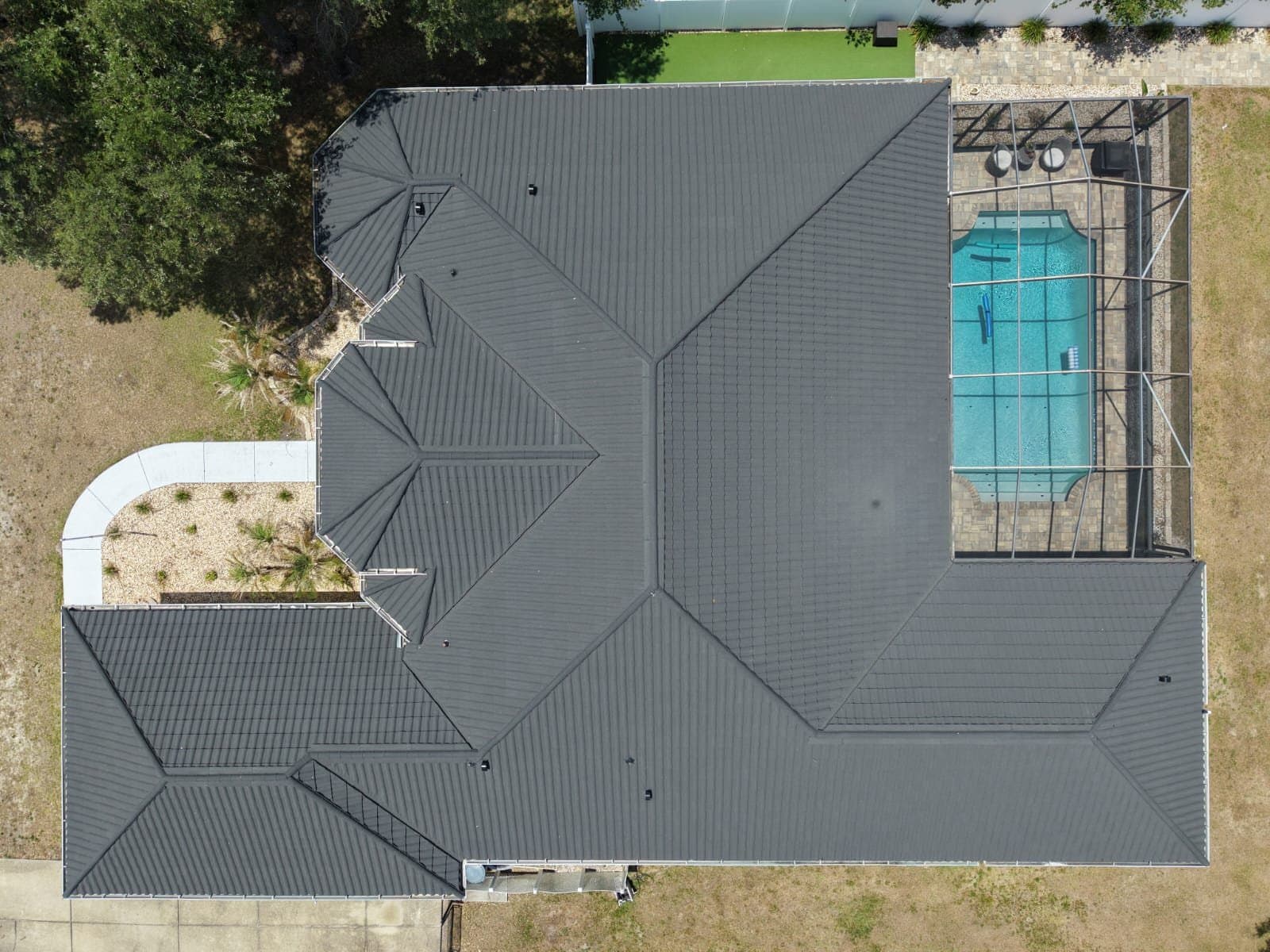
Florida Tile Roof Problems: Repair vs Re-Roof (2026)
Tile lasts for decades, the underlayment under it does not. Here are the tile roof problems Florida homeowners see most, what each repair costs in 2026, and how to tell when a repair is enough and when it is time to re-roof.
Read Article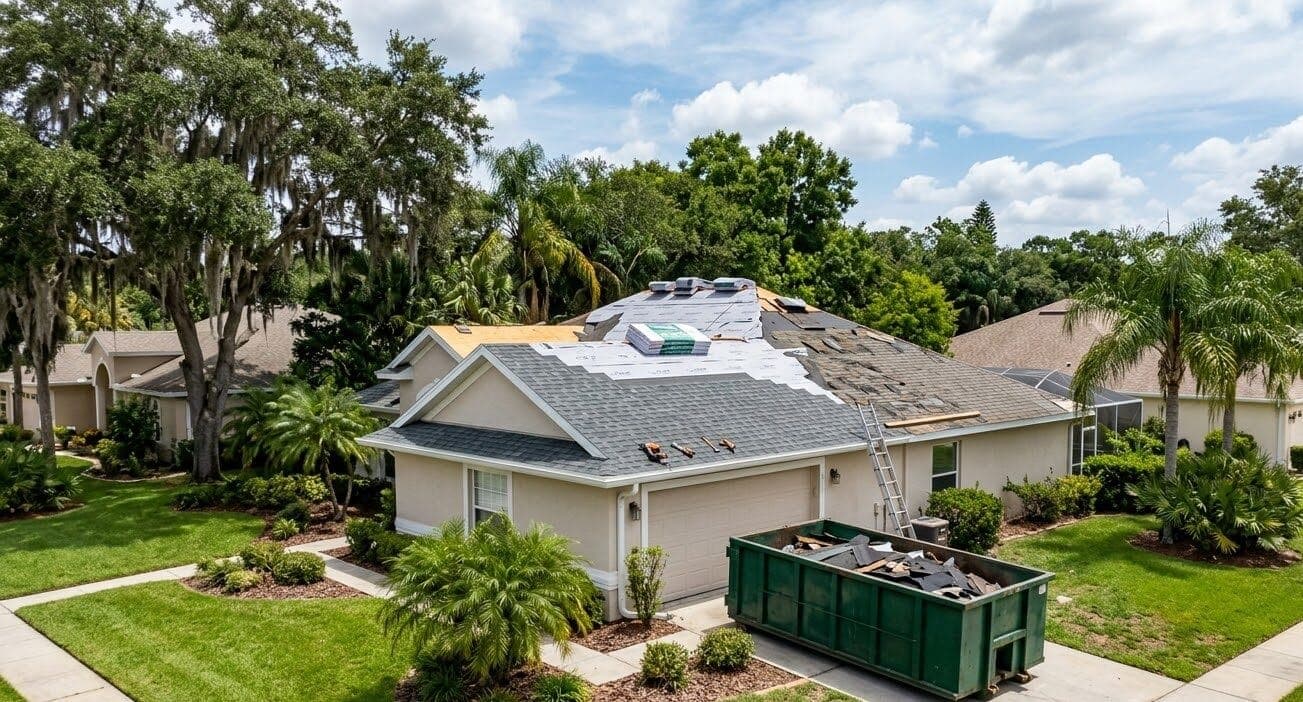
Skylights in Florida: Install, Leaks and Hurricane Ratings
A skylight is a deliberate hole in the one assembly built to keep water out. Florida code puts it through a 9 pound 2x4 at 34 mph and 9,000 pressure cycles. Here is what that means for specifying one, why they leak here, and what replacement runs in 2026.
Read Article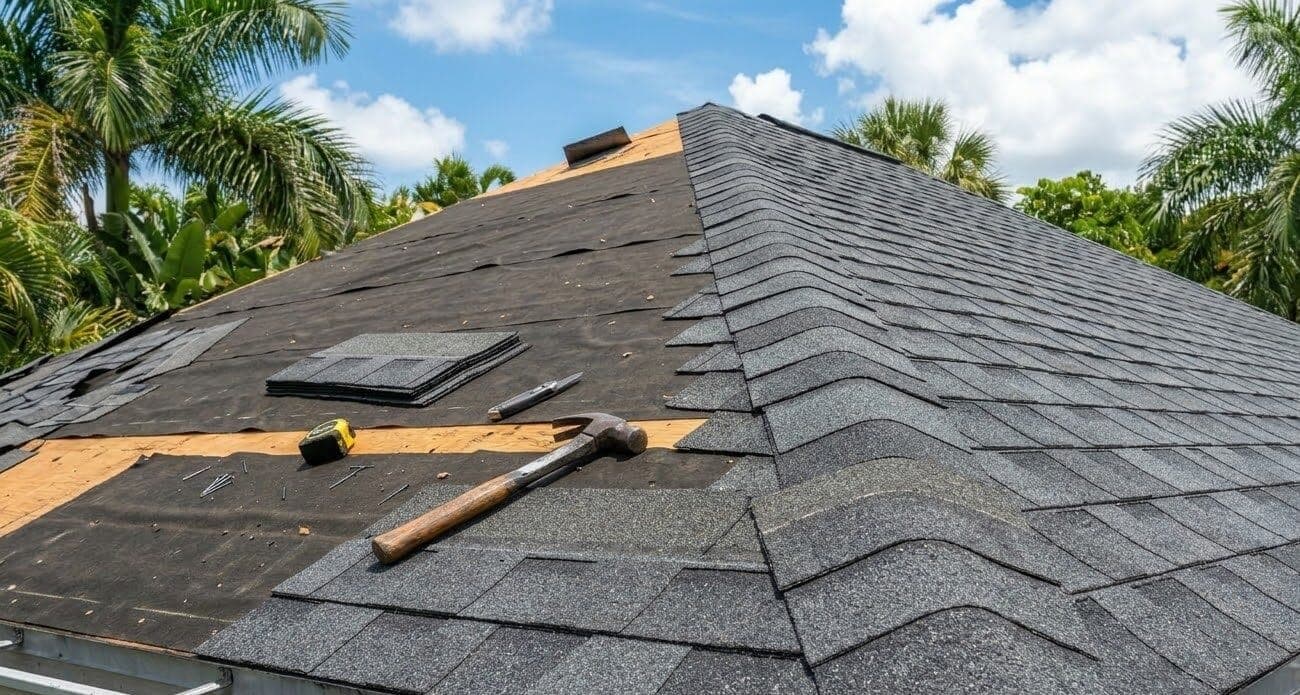
Soffit and Fascia Repair in Florida: Rot and Wind Failure
Soffit gets filed under trim until a panel is hanging down. University of Florida testing shows a 2 foot overhang fails 12 to 26 percent below its own rated pressure while a 1 foot overhang survives twice it. Here is what that means for your house, your corners and your fascia.
Read ArticleReady When You Are
Get your free roof inspection today.
No-pressure, written estimate. Same-week scheduling across Hernando County. Call us now or request a visit online.