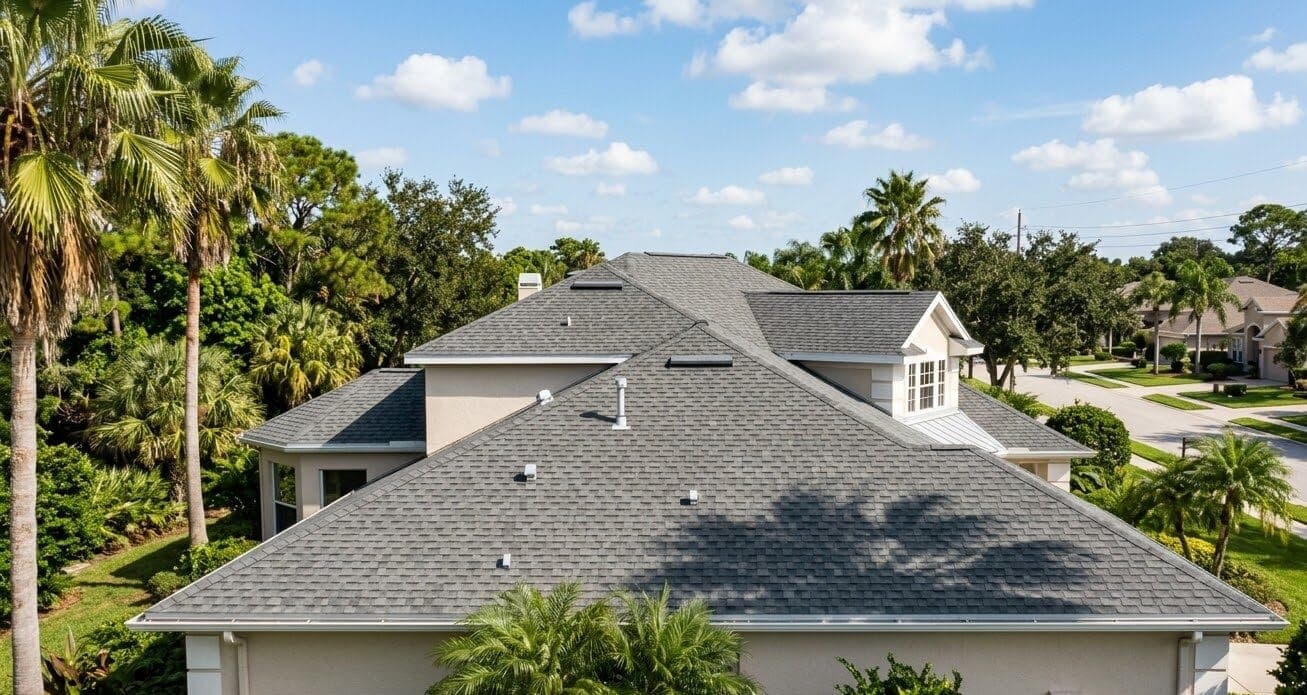
Service Area
Roofing Services in Lake County, FL
Lake County, FL roofers: roofing contractor for roof repair, replacement, inspections in Leesburg, Clermont, Tavares, Eustis, Mount Dora. Call (352) 605-0696.
Call (352) 605-0696Roofing Across Lake County, From Lady Lake to Clermont
Lake County is 14 incorporated municipalities plus a wide unincorporated area, and the roofs in them were built in different decades, for different buyers, out of different materials. Protech Roofing Services works across all of it: Astatula, Clermont, Eustis, Fruitland Park, Groveland, Howey-in-the-Hills, Lady Lake, Leesburg, Mascotte, Minneola, Montverde, Mount Dora, Tavares and Umatilla, along with unincorporated communities such as Sorrento, Paisley, Astor and Yalaha.
The office covering Lake County is at 9035 Jayson Drive, Brooksville, FL 34613, and the direct line is (352) 605-0696. We are rated 4.9 on Google. The work behind that rating is the unglamorous kind: leaks traced to the actual entry point instead of the nearest stain, soft decking replaced instead of covered over, permits pulled by us, final inspection passed before anyone calls the job finished.
A county page earns its place only if it tells you something a homeowner two counties over would not need to know. So this one stays specific to here: the 125 mph design wind speed the building code holds Lake County to, the permit process the county actually runs and who runs it, the storm history that keeps surfacing in insurance conversations, and the housing mix that decides which repairs are even possible on your house.
Here is the full range we handle in the county, with one crew and one permit per job:
- Roof repair and leak detection and repair
- Total roof replacement and shingle roof installation
- Metal roofing systems, tile roof repairs and stone coated steel tile
- Storm damage restoration and emergency roof repair
- Roof inspections, regular maintenance and roof coating
- Gutter installation, gutter protection and gutter cleaning
- Insurance claims assistance and the My Safe Florida Home program
- Commercial roofing, commercial flat roofing, multi-family roofing and new construction roofing
What the 125 MPH Wind Zone Changes About Your Roof
The Florida Building Code, 8th edition, holds roof design in Lake County to a design wind speed of 125 mph (ASCE 7-22, Risk Category II, 3 second gust). That is an inland number. Parts of the Florida coast are designed to 170 mph and above. The gap is not academic. It decides fastening patterns, edge details, and how much of your budget goes into parts of the roof you will never see once the last shingle is down.
The clearest example is nailing. The code requires a minimum of four nails per shingle in areas with a design wind speed up to roughly 120 mph, and six nails per shingle in higher wind zones. Which schedule applies to your job is a code question, answered by the requirements in force for your address and confirmed with the building department, not by whatever the crew has always done. It is also invisible from the driveway once the roof is finished, which is exactly why it gets skipped by the wrong contractor.
Wind does not load a roof evenly either. Pressure concentrates at corners, along the perimeter, and at the ridge, which is why those zones get tighter fastener spacing than the middle of a field. Most wind failures do not start in the center of a slope. They start at an edge, where a metal drip edge was short-nailed or a starter course was not sealed, and then the wind gets underneath and peels. A roof that fails this way usually looks fine right up until it does not.
There is a second reason the number matters: code is the minimum, not the target. Our installations meet or exceed code requirements because the code describes the least you can legally do. If your current roof went on years ago, it was built to whatever edition was in force then, with whatever fastening schedule applied at the time. Replacing it means it comes back to today’s standard, which is one of the few upgrades that pays you back on the insurance side as well as the weather side.
Storm Damage: What Lake County Has Already Lived Through
Lake County is inland, and inland gets read as safe. The record says otherwise. On February 2, 2007, the Groundhog Day tornado outbreak put an EF-3 tornado through Lady Lake that killed 8 people, and a second tornado in the Lake Mack area that killed 13. That is 21 deaths inside this county in a single night, with more than 500 homes damaged or destroyed, many of them in manufactured home communities.
Hurricanes reach here too, even without the coastal wind speeds. Lake County has had federal disaster declarations tied to Hurricane Milton in 2024, Idalia in 2023, and both Nicole and Ian in 2022. Going further back, the county has accumulated 32 declared natural disasters since 1953, against a national average of 19 per county. That is not a marketing statistic. It is the reason your insurer asks about your roof age before it asks about anything else.
After a storm, the damage that matters is usually not the damage you can see. Missing shingles are obvious. What we look for is lifted shingles that resealed crooked, hail bruising that crushed the mat without tearing it, flashing that shifted at a valley or a penetration, soffit and fascia pulled by wind, and water staining in the attic that says the roof has been leaking since the storm without ever dripping onto a ceiling. Any of those can sit quietly for months and then show up as rotted decking.
If a storm has just passed over your part of the county, the sequence that protects you is simple: get the roof covered so it stops taking water, get it documented properly, then decide on scope. Our storm damage restoration and emergency roof repair pages cover how we work through that, including the full roof inspection a project manager runs in the week after tarping to build the repair scope.
Permits and Inspections in Lake County: How It Actually Works
For roof work in the unincorporated area of Lake County, permits come from the Lake County Building Services Division (Growth Management), at 315 W. Main Street, Tavares, FL 32778, phone (352) 343-9653. All building permit applications in the county, roofing included, are submitted entirely online through the county’s Accela Citizen Access portal. There is no counter line to stand in.
Residential re-roof permits in Lake County are what the county calls auto-issue. The fee is generated and the permit issues automatically when the application package is submitted, following the county’s official re-roof checklist. That sounds like a free pass, and it is not. Inspections can still be required on site by the Building Division under Florida Building Code section 110. The speed is in the paperwork, not in the oversight.
This is where people get burned. An auto-issued permit means the paperwork moved fast, not that anyone has looked at the work. A permit that issues in minutes and then never gets its required inspection closed leaves an open permit attached to the property, and open permits surface at the worst possible moment, usually when the house is under contract.
At Protech, pulling the permit and carrying the job through the final inspection is part of the service, not something we hand back to the homeowner. We prepare and submit the application, and we see the inspection through. Which office has jurisdiction depends on whether your address sits in unincorporated Lake County or inside a city limit, and that gets confirmed before we apply either way. On the commercial side we do the same thing at a larger scale: we handle the entire permitting and inspection process, and permit fees, plan preparation, and inspection coordination are included in our project pricing.
The practical question to ask any roofer bidding your job is short: who pulls the permit, and who closes it? If the answer involves you signing as owner-builder, you have just been handed the liability along with the paperwork.
Repair or Replace: How We Read a Lake County Roof
Most people call about a stain on a ceiling, and a stain is a poor map. Water travels along decking and framing before it drops, so the wet spot inside is often several feet from the hole outside. Guessing costs you twice: once for the repair that does not work, once for the damage that kept spreading while everyone assumed it was fixed.
So we look properly. A leak call starts with an on-site inspection and a thorough visual examination of the roof, then the attic where it is accessible, checking for daylight penetration, water staining on decking, and moisture in the insulation. When the visual pass is not conclusive, thermal scanning narrows the suspect area, and a moisture meter pressed directly against decking, insulation, and framing gives precise moisture content readings rather than an opinion. When imaging and meters point to a general zone but not an exact point, we run water on specific areas of the roof in a systematic pattern while a second technician watches the attic from inside. That is how you confirm a penetration point instead of assuming one.
Every image we take is saved as part of your permanent inspection record. That record is what makes a future insurance conversation short.
A full roof inspection covers more ground: the condition of your shingles or tiles, the integrity of the underlayment, the condition of flashing at all penetration points, the health of the decking, and whether your ventilation is actually doing anything. Those five answers decide the repair-or-replace question honestly. Isolated damage on a roof with sound decking, good underlayment, and years of service life left is a repair. Widespread fastener failure, saturated or delaminating decking, brittle shingles across multiple slopes, or underlayment that has aged out under otherwise fine tile is a replacement, and patching it just buys a few months at full price.
Tile roofs deserve a specific note, because they confuse the math. The tile itself can outlast the system beneath it. When the underlayment under a tile roof reaches the end of its life, the tile can often be lifted, the underlayment replaced, and the tile reset. That is a different job from a tear-off, and it is worth knowing which one you are being quoted.
Housing Stock, Roof Types, and What That Means Here
Lake County’s housing inventory includes 135,287 single-family detached homes and 29,908 mobile or manufactured homes. That second number is the part most roofing pages ignore, and it changes the conversation. Manufactured homes have different roof structures, different attachment realities, and a different exposure profile in high wind, which the 2007 outbreak demonstrated in the hardest possible way. The right answer for a manufactured home is often not the same product a stick-built neighbor should buy.
Age matters as much as type. The county’s own Housing Element found that at the 2000 census, 41% of owner-occupied homes in unincorporated Lake County were less than 10 years old, against 33% in the incorporated areas. That is the signature of a growth wave concentrated through the 1990s in the unincorporated parts of the county. Run the arithmetic forward and a home built in that wave is now well past 25 years old, which means its original roof has either been replaced once already or is long overdue for someone to look at it seriously. If you bought a home out here and have never seen a roof permit in the property record, that is worth an inspection this season rather than next.
On material, the county gives you real options because the wind zone is inland rather than coastal:
- Architectural shingles remain the default for most single-family homes. See shingle roof installation for how we build them, including the fastening schedule the code requires here.
- Metal holds up well against wind uplift and sheds Florida rain fast. See metal roofing systems.
- Concrete and clay tile lasts a long time on the surface, and the underlayment beneath it is usually what ages out first. Repairs and underlayment work are covered on tile roof repairs.
- Stone coated steel tile gives the tile profile with a metal panel underneath. See stone coated steel tile.
Gutters get treated as an afterthought and should not be. Lake County rain arrives in volume, and water that sheets off an unguttered edge works on the fascia and the foundation at the same time. We design, install, and protect gutter systems, and present the design with a written estimate that breaks down every component so you know what you are buying. We also recommend a professional gutter inspection at least once a year.
Insurance Claims After Roof Damage
Storm claims are won or lost on documentation created before the adjuster arrives, not on argument afterward. We provide the storm damage inspection at no charge, because having an accurate picture of the damage from day one is what keeps the rest of the process honest.
What that inspection covers: shingles checked for wind lift and hail bruising, flashing examined around penetrations and in valleys, soffit and fascia assessed for wind damage, and the attic space checked for signs of water intrusion. Everything gets photographed into a report. Many of our customers ask us to be present when the adjuster inspects the property, and we do that. When we meet the adjuster, we walk through every area of concern documented in our report so nothing gets quietly left off the scope.
We do not control what a carrier decides, and any roofer who tells you they do is selling you something. What we control is that the damage is found, recorded, and presented clearly. The full process is laid out on insurance claims assistance.
One step gets skipped constantly and costs real money: after we complete a roof replacement, schedule a wind mitigation inspection right away. A new roof built to current Florida Building Code standards will typically qualify for the highest available credits, and those credits apply to your premium going forward. The inspection is quick. Waiting a year to do it just means a year of paying the old rate on a new roof.
My Safe Florida Home in Lake County
The My Safe Florida Home Program is available in Lake County, and it is the most underused thing on this page. The program provides a free wind mitigation inspection using the standard OIR-B1-1802 form, the same form insurers use, so the inspection has value even if you go no further.
Beyond the inspection, the program offers a 2:1 matching grant of up to $10,000 for the improvements the inspection recommends. Roofing improvements are squarely in scope, including roof-to-wall attachment and roof-deck attachment, which are the two connections that decide whether a roof stays on the house in a high wind event. In a county that has taken tornado damage and repeated hurricane declarations, those are the connections worth strengthening.
Eligibility, funding availability, and application windows are set by the state, not by us, and they change. What we can do is the roofing work the inspection calls for, built to current code and documented so the paperwork matches. Start on our My Safe Florida Home page, then call us with the inspection report in hand and we will tell you what it means for your roof.
Choosing a Roofer in Lake County: What to Check Before You Sign
Licensing here has a wrinkle worth knowing. A contractor working only within unincorporated Lake County can operate on a Certificate of Competency issued by Lake County Building Services through its Contractor Certification office. The alternative is a state license from the DBPR, which is valid across the entire county and the rest of Florida. Both are legitimate. They are not equivalent in reach. Ask which one the company holds, and ask before you find out that your address falls outside where they are allowed to work.
Three more questions that separate serious bidders from the rest:
- Who pulls the permit, and who closes it? If the answer puts your name on the application, the liability just moved to you.
- Is the proposal itemized? A real proposal breaks out what you are getting rather than showing one number. On commercial work we itemize tear-off and disposal, deck repairs, insulation, membrane, flashings, drainage modifications, permits, and warranty, with no hidden fees, and the same discipline applies to residential scopes.
- What happens if the decking is bad? Nobody knows the condition of your deck until the old roof comes off. The right answer is that it gets shown to you and priced openly, not discovered as a surprise line item after the fact.
Commercial and multi-family owners in Lake County have a separate set of concerns, and we cover them on their own pages: commercial roofing, commercial flat roofing (TPO for general use, PVC for restaurants, chemical environments, or owners who want the longest available warranty), multi-family roofing, and new construction roofing. Our commercial maintenance programs run on the semi-annual inspection schedule most manufacturer warranty programs require, with crews examining every seam, flashing, penetration detail, drain, and field area for damage, separation, ponding, or wear.
For homeowners, the version of that is simpler: get on a regular maintenance schedule, and get an inspection before hurricane season rather than after your first leak.
To start anywhere in Lake County, from Umatilla to Montverde, call (352) 605-0696. Tell us the town, the roof type if you know it, and what you are seeing. We will tell you whether it needs an inspection, a repair, or a full replacement, and we will pull the permit either way.
FAQ
Frequently Asked Questions
Do I need a permit to replace a roof in Lake County?
+
Yes. Roof replacements and re-roofs require a building permit, and in unincorporated Lake County those come from the Lake County Building Services Division at 315 W. Main Street in Tavares, with applications submitted online through the county’s Accela Citizen Access portal. Residential re-roof permits in the county are auto-issue, meaning the fee is generated and the permit issues automatically on submission, but on-site inspections can still be required under Florida Building Code section 110. Protech pulls the permit and carries the job through final inspection as part of the service, so it is not your paperwork to chase.
What wind speed does a new roof in Lake County have to be built for?
+
The Florida Building Code, 8th edition, uses a design wind speed of 125 mph for Lake County (ASCE 7-22, Risk Category II, 3 second gust). That is an inland figure, well below the 170 mph and higher required along parts of the Florida coast. It affects real installation details: the code requires at least four nails per shingle in areas designed up to roughly 120 mph and six nails per shingle in higher wind zones, so the fastening schedule for your job comes from the code as it applies to your address, not from habit.
Does Lake County really get serious storm damage this far inland?
+
It does. The Groundhog Day tornado outbreak of February 2, 2007 produced an EF-3 tornado that killed 8 people in Lady Lake and another that killed 13 in the Lake Mack area, 21 deaths in this county in one night, with more than 500 homes damaged or destroyed. Lake County has also had federal disaster declarations tied to Hurricanes Milton, Idalia, Nicole, and Ian, and has accumulated 32 declared natural disasters since 1953 against a national average of 19 per county.
Which Lake County cities and towns do you cover?
+
All 14 incorporated municipalities: Astatula, Clermont, Eustis, Fruitland Park, Groveland, Howey-in-the-Hills, Lady Lake, Leesburg, Mascotte, Minneola, Montverde, Mount Dora, Tavares and Umatilla. We also work in the unincorporated communities, including Sorrento, Paisley, Astor and Yalaha. The office covering Lake County is at 9035 Jayson Drive, Brooksville, FL 34613, reachable at (352) 605-0696.
Will you help with my roof insurance claim?
+
Yes. We provide the storm damage inspection at no charge, checking shingles for wind lift and hail bruising, flashing at penetrations and valleys, soffit and fascia, and the attic for water intrusion, then documenting all of it in a report with photos. Many customers ask us to be present when the adjuster inspects the property, and we walk the adjuster through every documented area of concern. After a replacement is complete, schedule a wind mitigation inspection right away, since a roof built to current Florida Building Code standards typically qualifies for the highest available credits.
From the Blog
Stay informed about roofing in Florida.
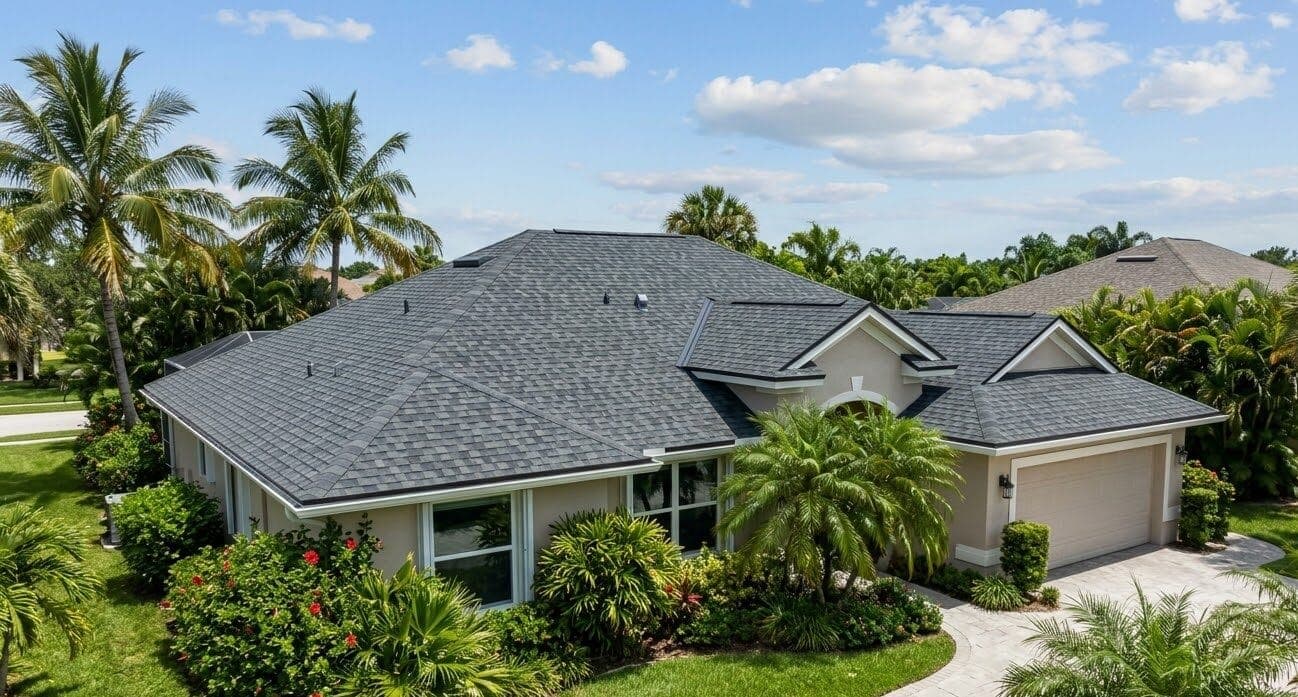
Polk County Roofing 2026: Lakeland, Winter Haven, Bartow
Most roofing guides treat a county as one market. Polk is not one market and it is not one permit office. Six cities run their own building departments, the county division covers only unincorporated land, and the address on your deed decides which portal your contractor files in, which fee schedule applies and how the inspections get scheduled. Add a housing stock with a median build year of 1992 and the fourth fastest population growth in the country, and Polk becomes the Central Florida county where the paperwork, not the shingle, is most likely to delay your roof.
Read Article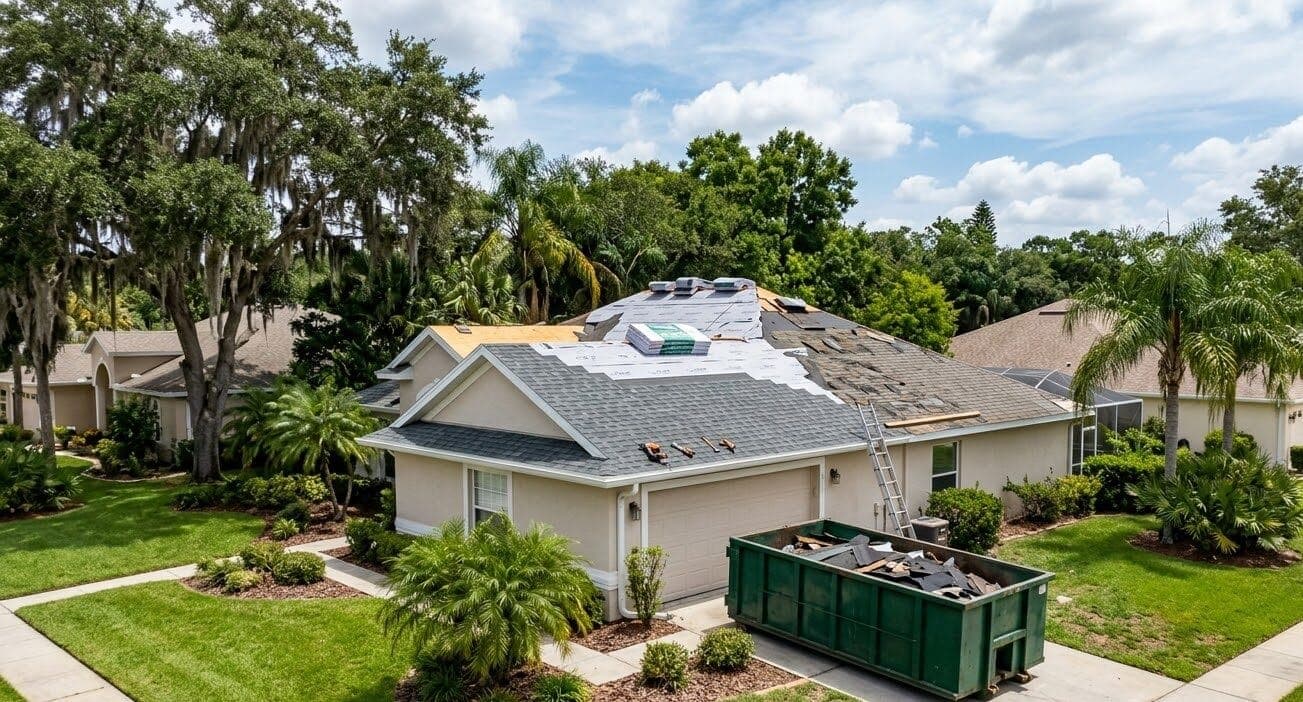
Roofing in Lakeland FL: Polk County Contractor Guide
Lakeland sits far enough inland that its roofs escape the two things that drive coastal prices up: the highest wind-speed requirements and constant salt air. This guide breaks down what a roof replacement really costs in Lakeland in 2026, why Polk County jobs commonly run $2 to $3 per square foot below comparable coastal work, the wind code that shapes your price, and how to pick a contractor.
Read ArticleReady When You Are
Get your free roof inspection today.
No-pressure, written estimate. Same-week scheduling across Hernando County. Call us now or request a visit online.