Blog
Polk County Roofing: Six Building Departments, One County, and Why Your Permit Address Changes the Job
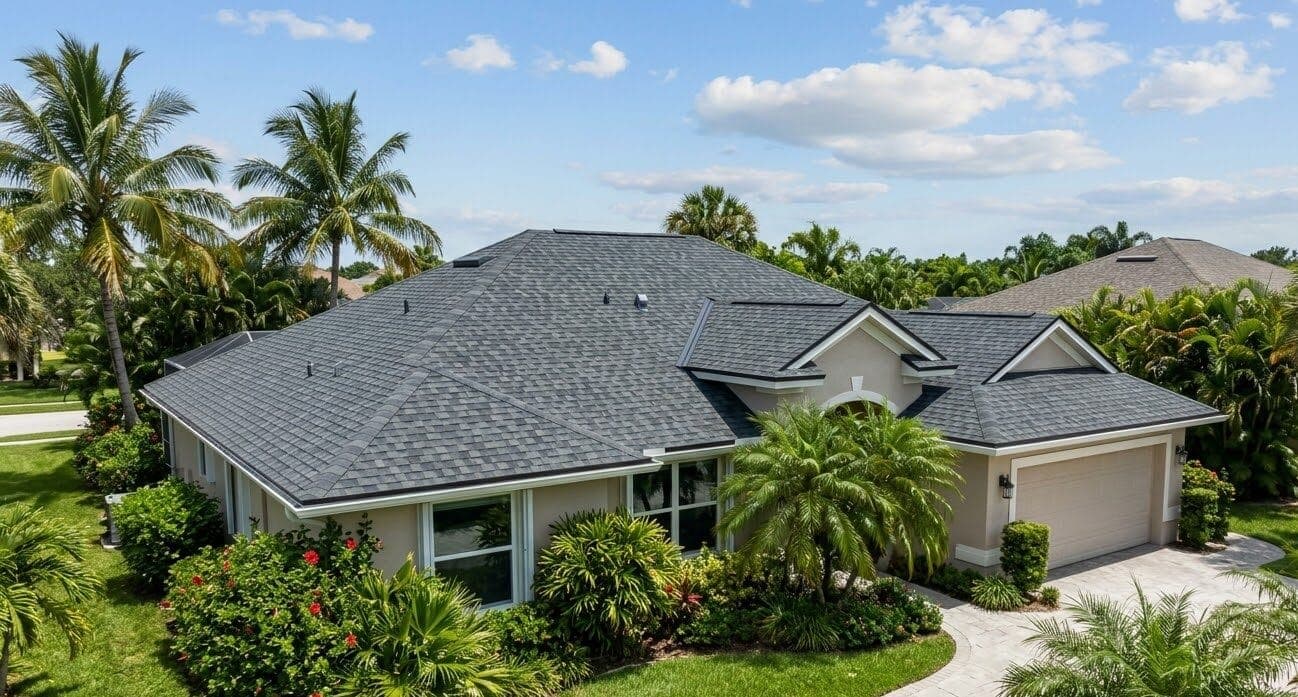
Call (352) 605-0696Ask five Polk County homeowners what a roof permit costs and you will get five different answers, and all five can be correct. Polk is one county with six independent building departments inside it, plus a county division that only has jurisdiction over unincorporated land. A house on Lake Hollingsworth in Lakeland, a house three miles outside Winter Haven city limits and a house in downtown Bartow follow three different permitting paths for identical work, with different fee schedules, different portals and different inspection scheduling. This guide maps that, then covers what actually drives the price of a Polk County re-roof in 2026: the county's inland wind numbers, a housing stock whose median build year is 1992, and a growth rate that keeps pulling out-of-area crews into the market. Protech Roofing (license CCC1335878) works the inland corridor from a Brooksville hub, and inland code paths are genuinely different from coastal ones.
Polk County Is Six Permit Jurisdictions, Not One
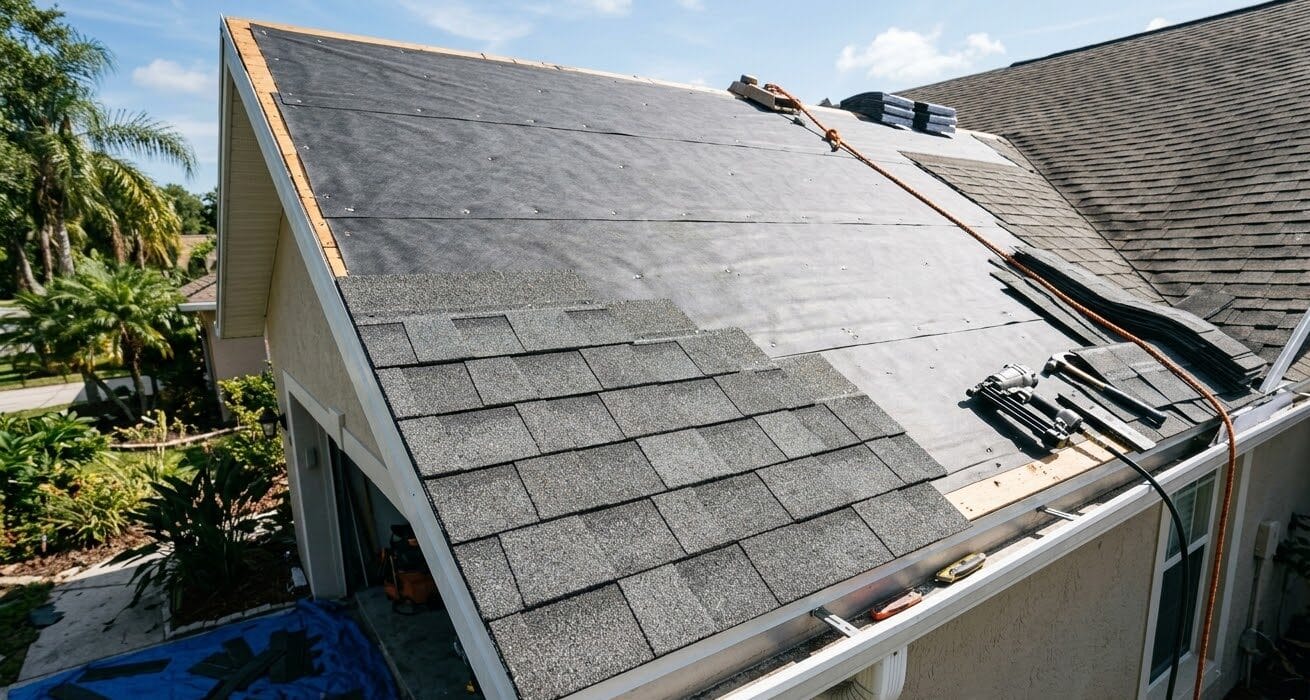
This is the single fact that trips up more Polk County roof projects than any code provision, and almost nobody explains it before the contract is signed. The Polk County Building Division, part of the Development Services Department, issues permits for unincorporated Polk County only. It has no authority inside a city limit.
Six municipalities run their own building departments with their own portals, their own fee resolutions and their own inspectors:
- Lakeland: Building Inspection Division, filed through the city's iMS online permitting system. Reachable at 863-834-6012.
- Winter Haven: Building Department, filed through the eSuite permits portal. Reachable at 863-291-5695.
- Bartow: Building Department, with a published fee schedule that is unusually transparent. Reachable at 863-534-0157.
- Haines City, Auburndale and Davenport: each with its own department and its own submission process.
- Unincorporated Polk County: the county Building Division, filed through the Polk County Access Portal running on Accela Citizen Access. Plans examiner line is 863-534-6080.
Why this matters to you and not just to your contractor: a roofer who works Polk regularly holds active accounts in several of these systems and knows which one your parcel falls under before quoting. A roofer who does not will discover it after the contract is signed, which is where the two-week delays come from. When you get a quote, ask which office will issue the permit and ask them to name it. The answer takes four seconds from someone who works the county and produces an uncomfortable pause from someone who does not.
The confusion is worst on the edges. Lakeland, Winter Haven and Haines City have all annexed aggressively, and a neighborhood built in 1998 as county land may be inside a city limit today. Your property tax bill, not your mailing address, is the reliable tell. A Lakeland mailing address does not mean a Lakeland permit.
What the Permit Actually Costs, With Bartow's Math Worked Out
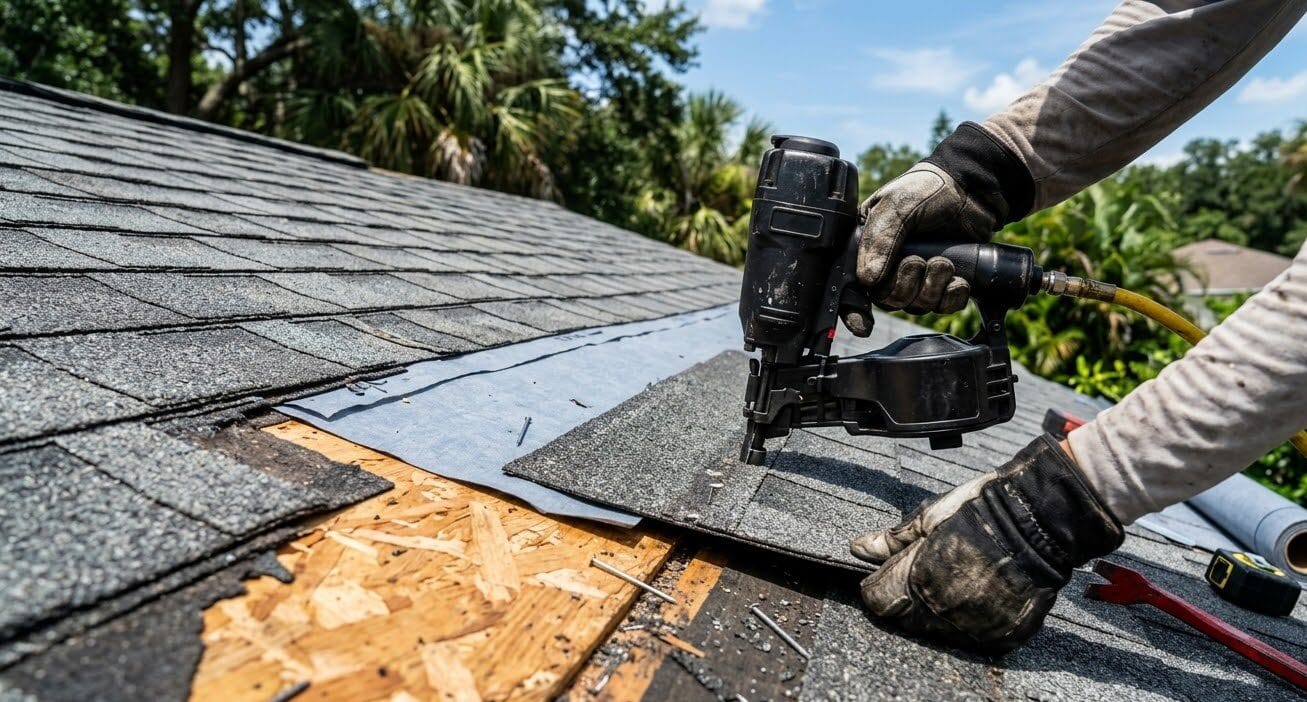
Permit fees are a small line on a re-roof but they are the line most often left out of a verbal quote, and the structure differs by jurisdiction in ways that are worth understanding.
Bartow publishes the cleanest schedule, so it makes the best worked example. The building permit fee is $42.00 for the first $1,000 of valuation, plus $5.00 for each additional $1,000 or portion thereof. On top of that sit a plan review fee of 50 percent of the building permit fee, a $3.00 archive fee, a $5.00 education fee and a $25.00 residential safety inspection fee.
Run that on a real job. A $14,000 architectural shingle replacement in Bartow: $42.00 for the first thousand, plus $5.00 times thirteen for the remainder, which is $65.00, giving a building permit fee of $107.00. Plan review at 50 percent adds $53.50. Archive, education and the safety inspection add $33.00. Total: $193.50. On a $9,000 job the same math lands at roughly $156.00.
Lakeland structures its fees separately and adds a State of Florida surcharge of 2.5 percent of the building permit and plans review fees on top of the schedule. The Polk County Building Division works from its Construction Fees Resolution and prices re-roofs on valuation or on roofing squares depending on the submission. Winter Haven sets fees by resolution with the schedule on file at the city.
The practical takeaway is not the exact dollar figure, which changes. It is that a legitimate Polk County re-roof quote has a permit line in it, in the $150 to $400 range for a typical single-family job, and a quote with no permit line is either absorbing it silently or planning to skip it. Neither is good news for you.
The Three Inspections a Polk County Re-Roof Has to Pass
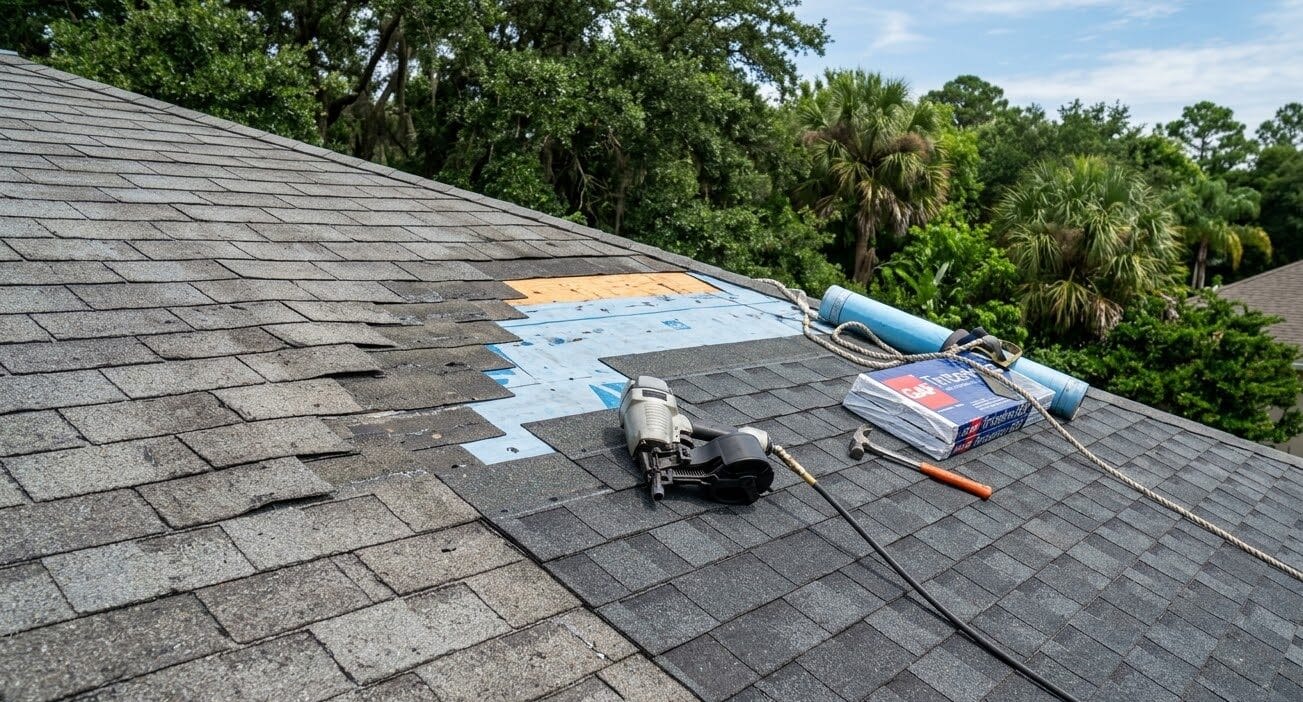
A permitted re-roof in Polk County is inspected three times, and the middle one is the one homeowners never hear about:
- Dry-in: after the underlayment is installed and before the covering goes on. This is where the inspector confirms the secondary water barrier and the underlayment fastening pattern.
- Nail-off or in-progress: the deck fastening inspection, verifying that the sheathing is attached to the framing to current code before anything covers it. The Polk County Building Division is explicit that contractors are responsible for scheduling an in-progress inspection for the day roofing work is done on all roofs, with no exceptions.
- Final: after the covering, flashing, ridge and penetrations are complete.
Two site requirements go with those. The permit card has to be on the job site, and so do the manufacturer's installation instructions for every roofing material being used. That second requirement is not bureaucratic decoration. It is how the inspector verifies that the fastening pattern and the underlayment being installed match the product approval the permit was issued against, and it is the fastest way to catch a crew installing to a generic pattern rather than to the manufacturer's high-wind schedule.
Polk County also runs virtual inspections through VuSpex for many inspection types, which in practice shortens the gap between a crew finishing dry-in and being cleared to load shingles. And the permit itself expires if no inspection is scheduled within 180 days, with each passed inspection resetting that clock. That last rule quietly protects you: a job that stalls after tear-off cannot sit open indefinitely without someone noticing.
If you want a documented condition report before any of this starts, a professional roof inspection gives you the deck condition, the remaining service life and the scope in writing, which is also what makes competing quotes comparable.
The 25 Percent Rule: When a Repair Needs a Permit
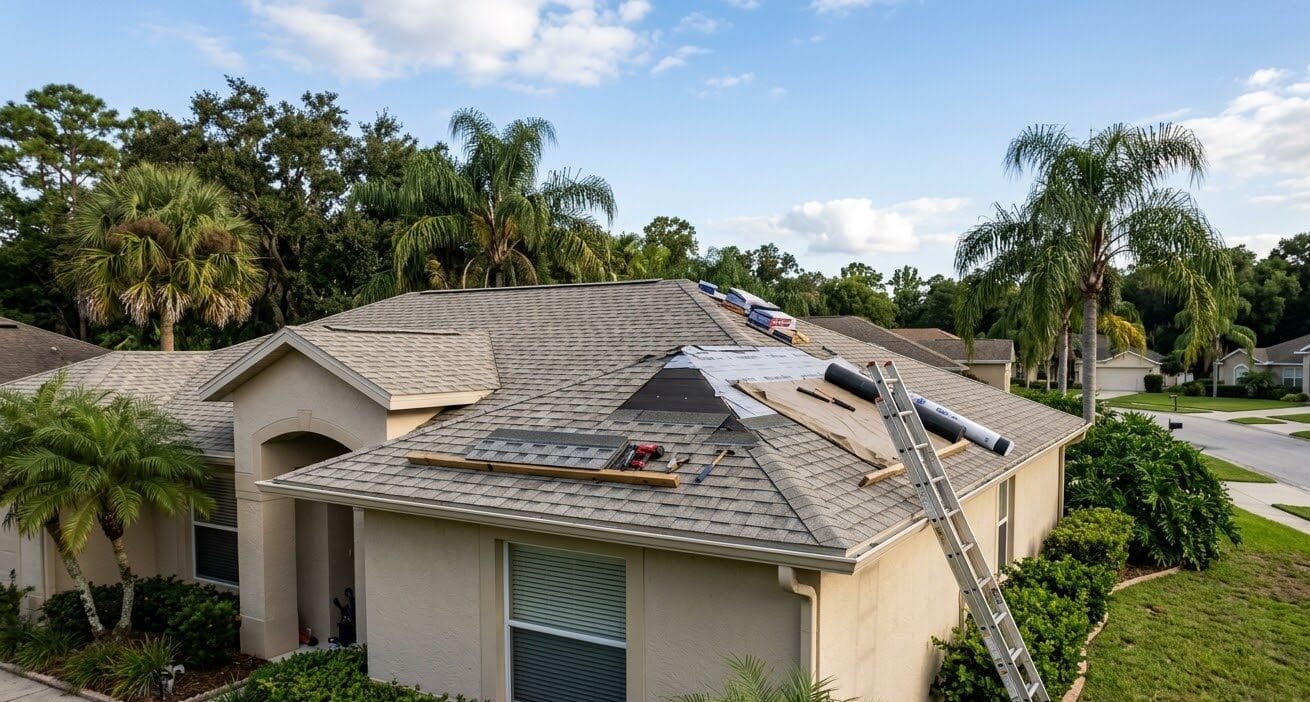
All re-roofing in Polk County requires a permit, including mobile homes and park trailers, and including the installation of insulated roof coverings. The exception is narrow: minor roof repairs of less than 25 percent, as determined by the Building Official or the Plans Examiner Supervisor based on the type and location of the damage, do not require a permit.
Read that carefully, because two words in it do a lot of work. The threshold is determined by the Building Official, not by the contractor and not by you. A roofer who tells you your job comes in at 24 percent so no permit is needed is making a determination he does not have the authority to make. If the repair is close to the line, the safe move is a phone call to the jurisdiction before work starts, not after.
The 25 percent figure also interacts with the Florida Building Code's roof repair provisions, which the 2026 code cycle adjusted. We covered what changed in the 2026 Florida Building Code roof changes, and the short version is that the scope of what triggers a full-system upgrade has moved more than once in the last three code cycles. If your last roof repair was under an older edition, do not assume the same answer applies now.
For genuinely small work, a permitted roof repair is still usually the right economic call on a roof under fifteen years old. The mistake is letting a repair grow section by section across three visits until you have paid for most of a replacement without getting one.
Lakeland, Winter Haven and Bartow Are Three Different Roof Markets
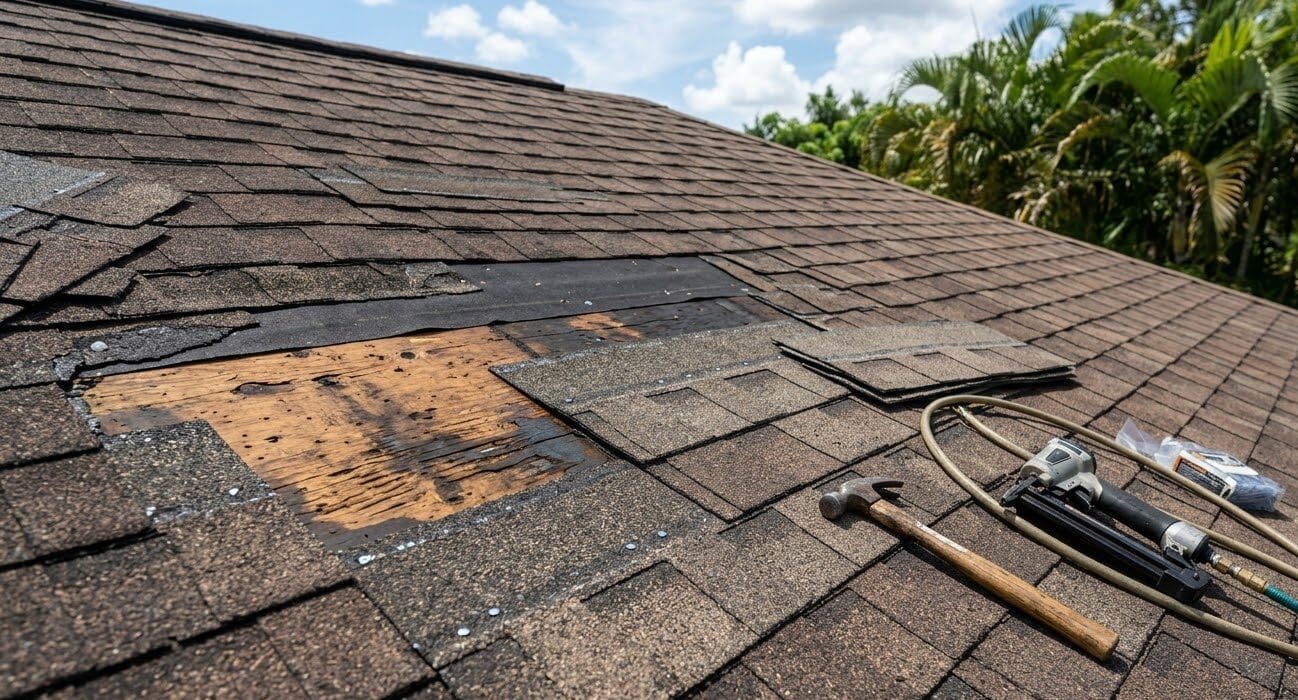
Polk's three anchor cities share a wind zone and share nothing else that matters to a roof.
Lakeland is the largest city in the county at roughly 128,000 residents, and it carries the widest spread of housing eras of the three. The Dixieland and Lake Morton areas hold genuinely old stock with complicated rooflines, multiple dormers and low-slope porch tie-ins that make a re-roof a detailing job rather than a shingle job. Meanwhile the north and south growth corridors are full of 1990s and 2000s subdivisions on simple gable and hip layouts. Same city, same code, quotes that legitimately differ by 40 percent on the same square footage. The city-specific cost breakdown lives in our Lakeland roofing guide.
Winter Haven is the fastest mover, growing at roughly 3.75 percent a year to about 64,600 residents. Its defining feature for roofing is the Chain of Lakes. Homes on the water get more direct wind fetch across open surface than an equivalent house four blocks inland, they get more tree canopy from mature waterfront lots, and they get more organic debris load in the valleys and gutters. Winter Haven also has a deep bench of 1960s and 1970s ranch homes whose original decking is 1/2 inch plywood or, on the oldest, board sheathing. Re-nailing that to current fastening schedule at the nail-off inspection is a real line item and it is the most common surprise on a Winter Haven quote.
Bartow is the county seat and reads differently again. It has a concentration of historic and phosphate-era homes with steep pitches, and steep pitch is a labor multiplier on every roofing system. It also has the most transparent permit fee schedule of the three, which cuts both ways: it is easy to verify what your contractor is charging you for the permit, so verify it.
Polk County's Wind Numbers and What They Buy You
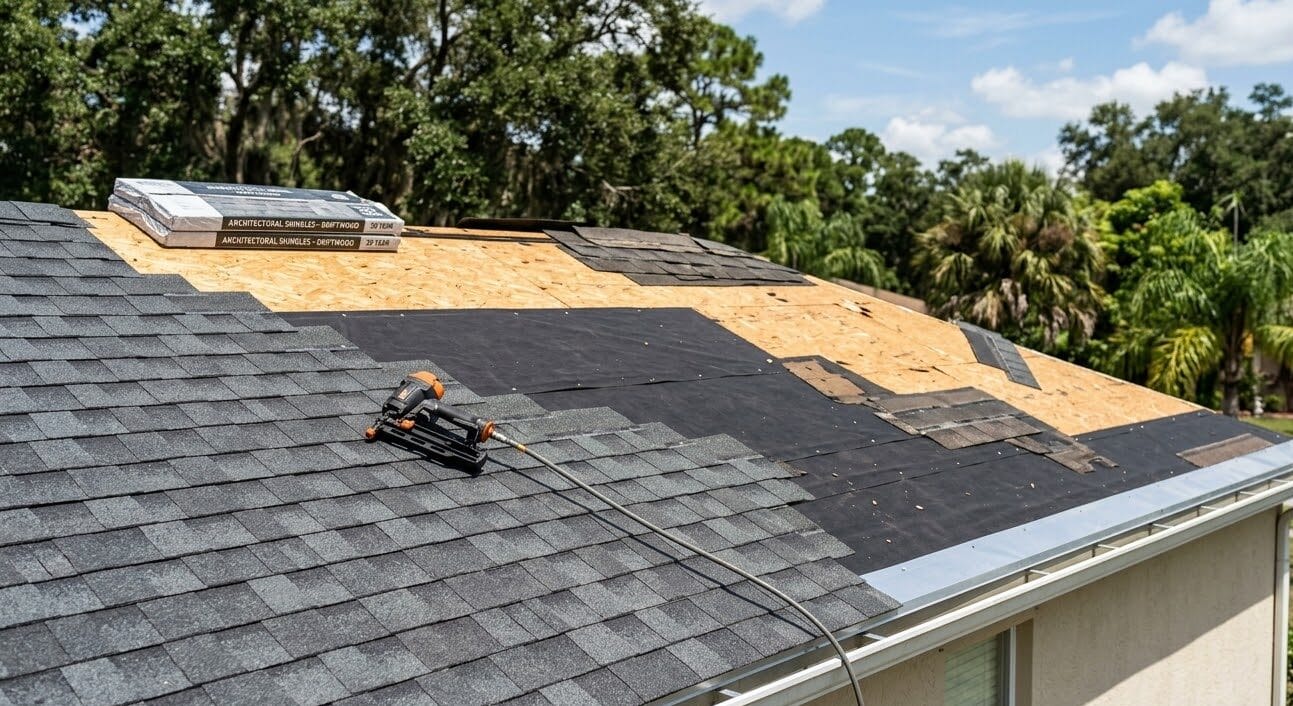
Polk sits inland, roughly equidistant from the Gulf and the Atlantic, and that geography is worth real money on a roof. Ultimate design wind speed across most of Polk County runs in the 120 to 140 mph band, commonly cited at roughly 130 mph for the county. Coastal Florida counties run higher, and the highest-velocity coastal zones run higher still.
The practical consequence is that a 120 to 140 mph design speed is met by mainstream, competitively priced systems. You are specifying a high-wind fastening schedule and proper edge metal, not jumping to the heaviest coastal-rated assemblies. Polk is also outside the wind-borne debris region, which is triggered within one mile of the mean high water line where an Exposure D condition exists upwind and design speed is 130 mph or greater. No Polk County parcel meets that geographic test, which is why opening protection is not a code trigger here the way it is in a coastal county.
Do not read any of that as permission to under-spec. Hurricane Milton crossed Central Florida as a mature system and inland Polk took sustained wind that found every roof with marginal edge metal, short nails or a deck that was never re-nailed. Inland is a discount on the code minimum, not a discount on workmanship. The systems that hold up here are the ones where the fastening pattern actually matches the product approval, which is exactly what the nail-off inspection exists to verify.
Where the inland position pays a second dividend is insurance. A documented wind mitigation inspection converts specific construction features into premium credits, and inland homes frequently qualify for the same credits at lower construction cost than coastal homes. The mechanics are in our guide to the Florida wind mitigation inspection.
A 1992 Median Build Year Means Polk Is Due Right Now
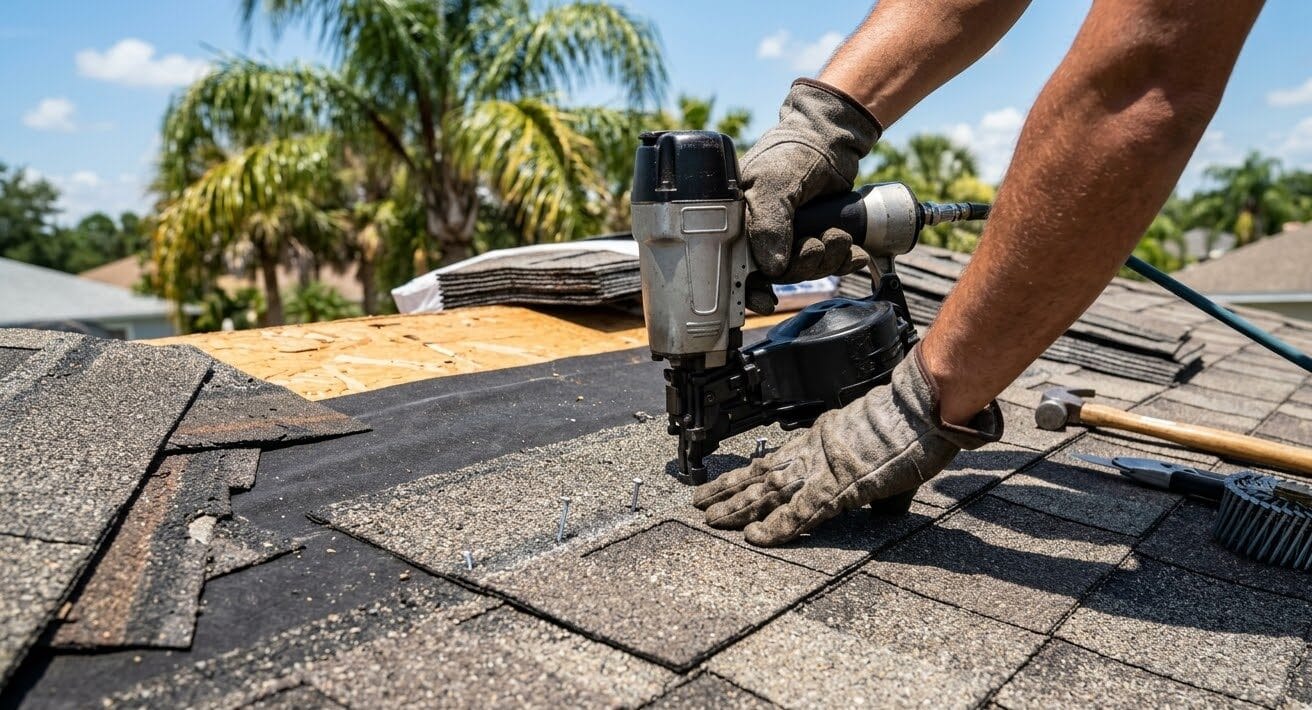
The median construction year for housing in Polk County is 1992. That single number explains most of the county's roofing demand in 2026.
A house built in 1992 has had one roof replaced already, somewhere in the 2010 to 2018 window, on a three-tab or early architectural shingle. That second roof is now eight to sixteen years old. In Florida's UV load and thermal cycling, an architectural shingle rated for 30 years on the package realistically delivers 15 to 20 years, and a three-tab delivers noticeably less. Which means a very large share of Polk County's housing stock is inside the window right now where the honest answer to repair or replace starts tipping toward replace.
The tells are consistent and you can check most of them from the ground with binoculars. Granule loss showing dark patches in the shingle field. Shingle edges curling or cupping at the corners. Soft or wavy lines in the deck read across the roof plane. Rusted or lifting drip edge. Dark streaks radiating from valleys, which are usually organic growth rather than damage but tell you moisture is sitting where it should be shedding. Any two of those together on a roof over twelve years old is worth a documented inspection rather than a wait-and-see.
For an aging Polk roof there are three sensible paths. A total roof replacement in architectural shingle, which is what most of this stock gets. An upgrade to impact-resistant Class 4 shingle, which costs more up front and commonly earns an insurance discount that recovers part of the difference. Or a move to standing seam metal, which carries the highest up-front number and the longest service life, and which makes the most sense on a house the owner intends to keep for twenty years.
Growth, Out-of-Area Crews and a License Check That Takes Two Minutes
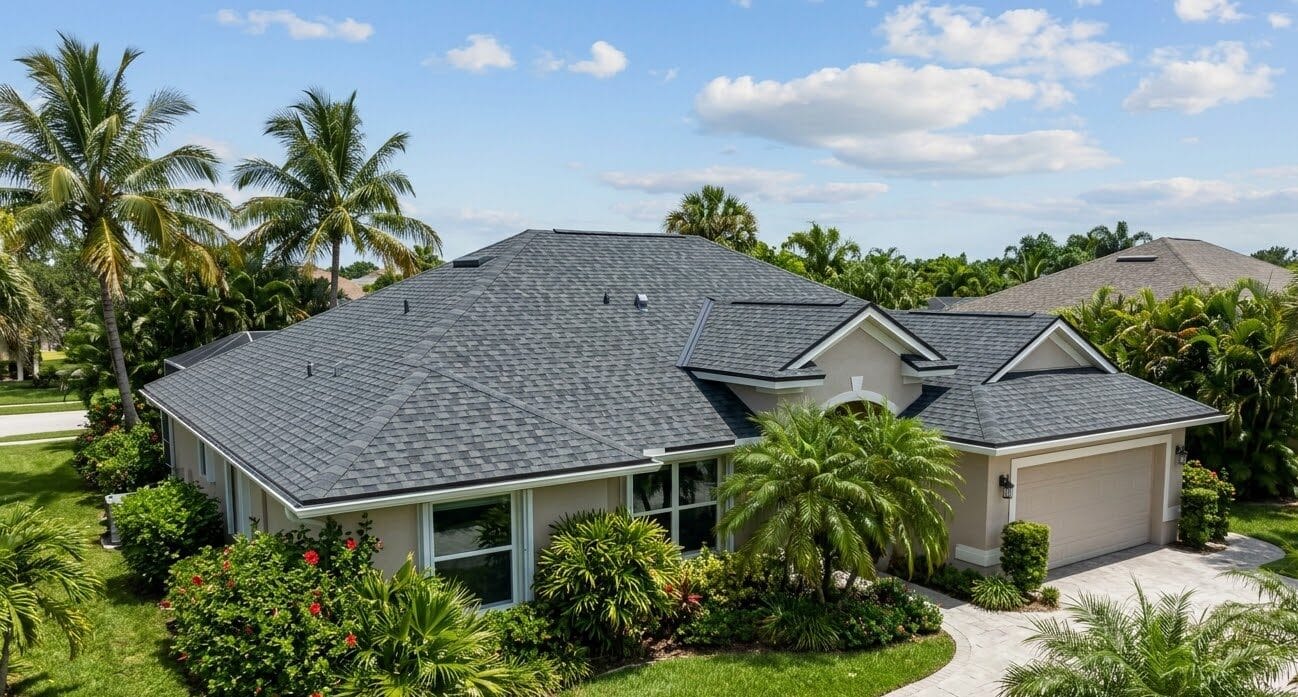
The Lakeland and Winter Haven area grew 2.7 percent from 2024 to 2025, fourth fastest in the United States, and Polk County passed roughly 874,800 residents in 2025 with University of Florida projections putting it over a million by 2030, ahead of earlier schedules. Fast-growing markets with aging roofs attract crews from outside the area, and after any named storm that flow becomes a flood.
Florida law gives you two specific tools here, and both are free.
First, the license. Florida roofing contractors hold a state license and the number is verifiable through the Department of Business and Professional Regulation. Ask for the number, look it up, and confirm the name on the license matches the name on the contract. A salesman working under someone else's license number is a common arrangement and it is the one that leaves you with no recourse when the workmanship warranty is tested in year three.
Second, the solicitation rules. Florida Statute 489.147 defines a prohibited advertisement as any written or electronic communication that encourages a consumer to contact a contractor for the purpose of making a roof damage insurance claim without stating, in at least 12-point type and at least half the size of the largest font used, that the consumer is responsible for the insurance deductible and that it is insurance fraud punishable as a third-degree felony for a contractor to knowingly pay, waive or rebate any part of that deductible. Violations carry fines up to $10,000 plus license suspension or revocation.
Translated into a doorstep test: if the flyer on your door or the text on your phone offers a free roof, promises to handle your deductible, or leaves the deductible language off entirely, you are looking at a contractor operating outside the statute. What that predicts about the fastening pattern on your deck is not encouraging. If you do have a legitimate storm claim, an insurance claims assistance process run by a licensed roofer documents the damage properly and keeps you on the right side of the same statute.
What a Polk County Re-Roof Costs in 2026, All In
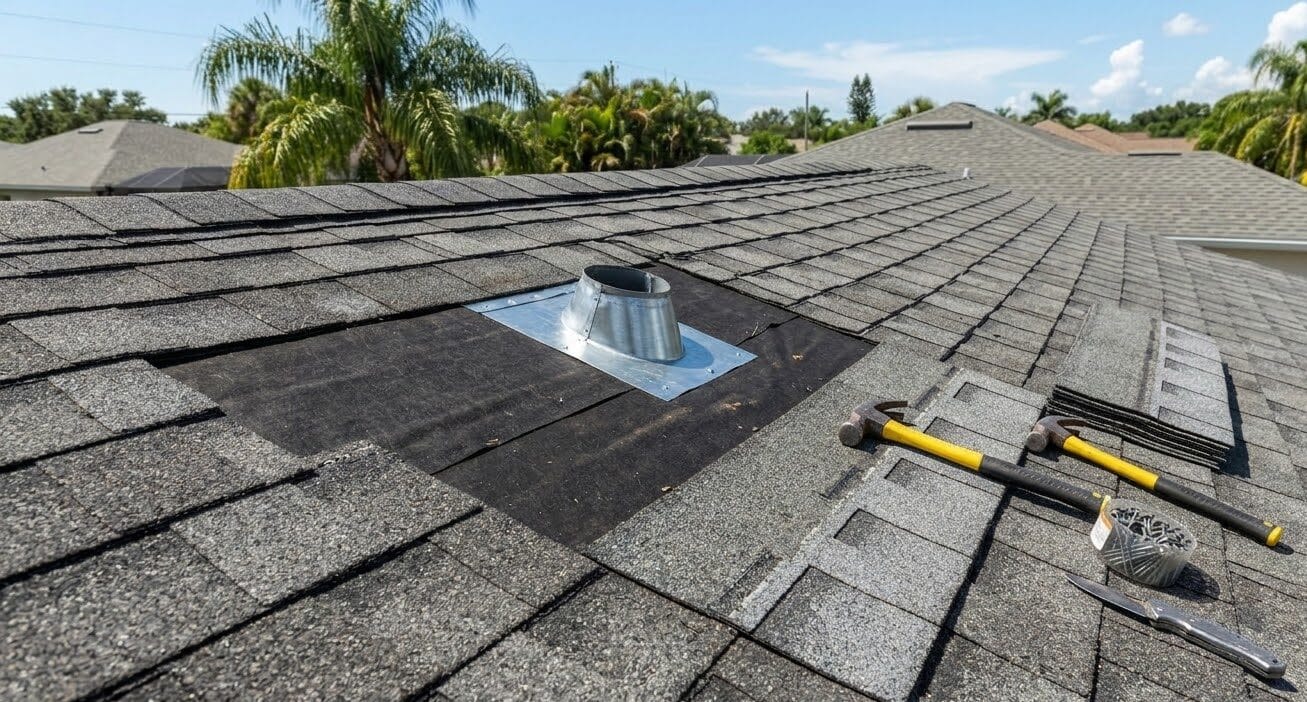
These are current Polk County numbers, quoted per roofing square, where a square is 100 square feet of installed roof surface, and then as a total on a typical single-story home of 2,000 to 2,100 square feet. Figures include tear-off, deck inspection, underlayment, flashing, ridge venting, the covering, cleanup and permits.
- Architectural asphalt shingle: roughly $350 to $500 per square installed, or about $8,500 to $14,000 on that house. Labor alone in the Lakeland and Winter Haven market runs about $200 to $350 per square, which sits below Tampa and Orlando.
- Impact-resistant Class 4 shingle: commonly $10,000 to $16,500 on the same house, frequently earning an insurance credit that offsets part of the premium.
- Concrete or clay tile: around $600 to $1,000 per square, driven by weight, structural verification and labor.
- Standing seam metal: roughly $700 to $1,200 per square, or about $17,000 to $30,000 installed, with the longest service life in the group.
Three items move a Polk quote outside those ranges legitimately. Deck re-nailing or sheathing replacement, which is common on Winter Haven and Bartow homes from before 1980 and which you will not know the extent of until tear-off. Pitch, where anything above 7:12 adds staging and slows every crew on the roof. And roofline complexity, where dormers, valleys, chimneys and low-slope porch tie-ins multiply the flashing work that actually determines whether the roof leaks. A quote that is materially cheaper than the range above is usually cheaper because one of those three was assumed away rather than measured.
Hiring in Polk County: What to Ask Before You Sign
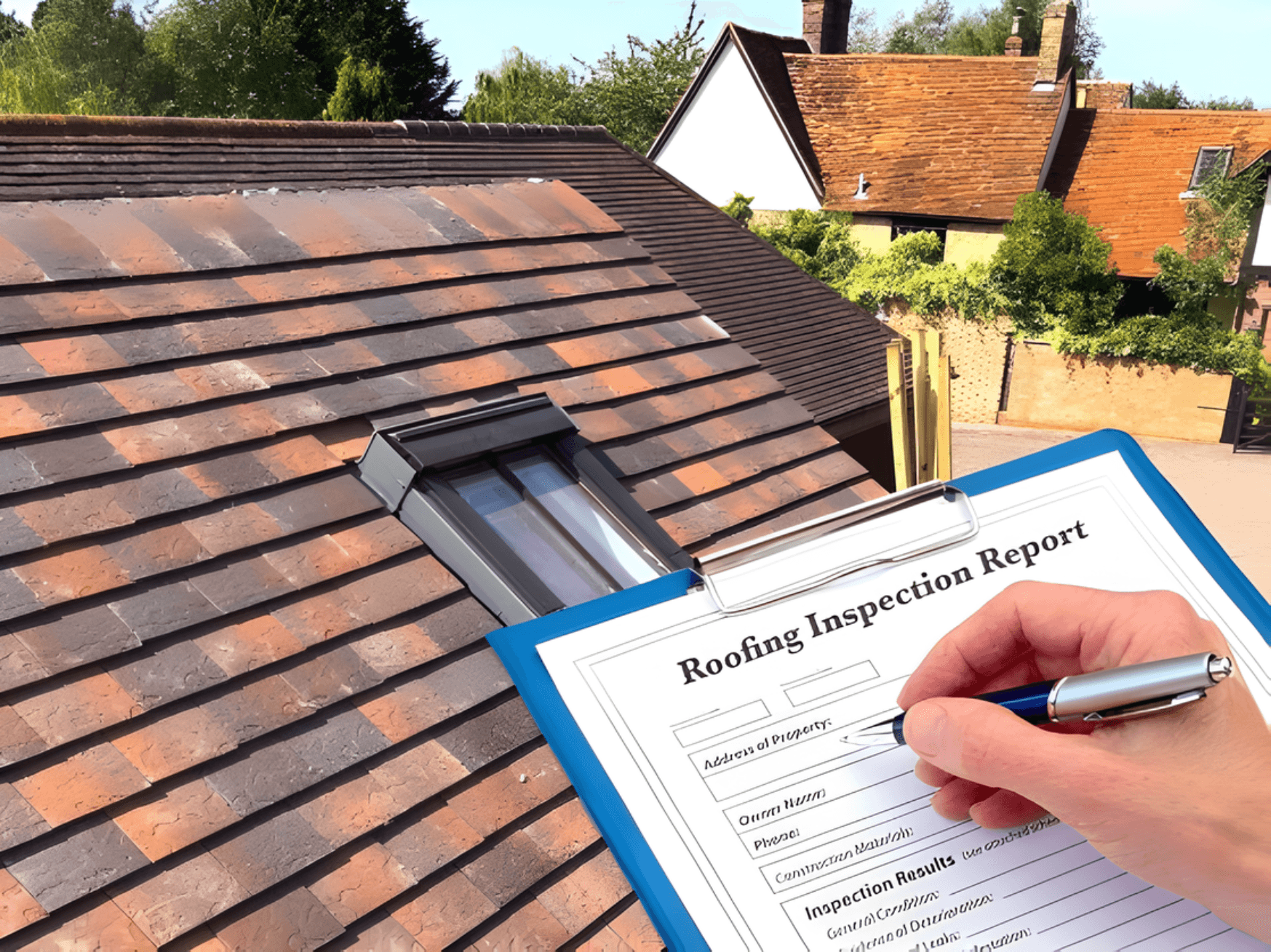
Six questions separate a contractor who works this county from one who is passing through:
- Which building department issues the permit for my address, and do you already have an account in that portal?
- What is your state license number, and does the name on it match the name on this contract?
- What design wind speed are you quoting to, and which product approval is the fastening schedule taken from?
- What is the allowance for deck re-nailing and sheathing replacement, and what is the per-sheet price if we go past it?
- Who schedules the dry-in, nail-off and final inspections, and will the permit card and manufacturer instructions be on site?
- Is the permit fee a separate line on this quote, and what is it?
A contractor based outside Polk County can do excellent work here, and a contractor with a Polk address can do poor work here. Location is not the variable. What matters is whether the crew that shows up is running to a written scope against a named product approval, whether the permit was pulled in the correct jurisdiction, and whether someone is standing on the roof at nail-off rather than reading about it afterwards. Protech Roofing runs the inland Central Florida corridor from its Brooksville hub, including Plant City on Polk's western edge, and inland work gets specified differently from coastal work here as a matter of routine because the failure modes and the code triggers genuinely differ.
If your roof is at the age where the question is repair or full replacement, call the team at (352) 605-0696 or start on the contact page and we will inspect it and put the scope in writing before quoting a number on it.
FAQ
Frequently Asked Questions
Who issues the roof permit in Polk County, FL?
+
Do I need a permit to repair my roof in Polk County?
+
How much does a roof permit cost in Polk County?
+
What inspections does a re-roof need in Polk County?
+
What is the design wind speed for roofs in Polk County?
+
How much does a new roof cost in Polk County in 2026?
+
How do I check whether a Polk County roofer is legitimate?
+
Related Articles
More guides for Florida homeowners
Roofing Warranties in Florida: What Voids Them
A new Florida roof usually carries two warranties: one from the manufacturer for the product and one from the contractor for the installation. Here is what each covers, what quietly voids them and how to keep your coverage.
Read ArticleSolar Roofing in Florida: Solar Shingles vs Panels (2026)
Every solar system on a Florida roof is either bolted to the roof or is the roof. Here is how panels and solar shingles compare in 2026, what changed with the federal credit, and why the cheapest solar project often starts with a re-roof.
Read Article
Pinellas Flood Zone Roofing: The 49% Rule Explained
Every article calls it the FEMA 50 percent rule. In unincorporated Pinellas County the number that governs your permit is 49 percent, measured against structure value without land. Here is what counts toward it, where a roof replacement actually lands in that math, and why simultaneous permits still aggregate even where the lookback period was repealed.
Read ArticleReady When You Are
Get your free roof inspection today.
No-pressure, written estimate. Same-week scheduling across Hernando County. Call us now or request a visit online.