Blog
Wind Mitigation Inspection in Florida: How the OIR-B1-1802 Form Cuts Your Hurricane Premium
Call (352) 605-0696A wind mitigation inspection is the cheapest paperwork in Florida homeownership and one of the most valuable. For around a hundred dollars, a licensed inspector documents the storm-resistant features your home already has on a single statewide form, and your insurer is required by law to discount the windstorm part of your premium for each one. This guide explains the seven features the inspector rates, how much the credits are actually worth, and what changed on the 2026 version of the form. Call (352) 605-0696 for a free roof assessment before your inspection.
What a Wind Mitigation Inspection Actually Is
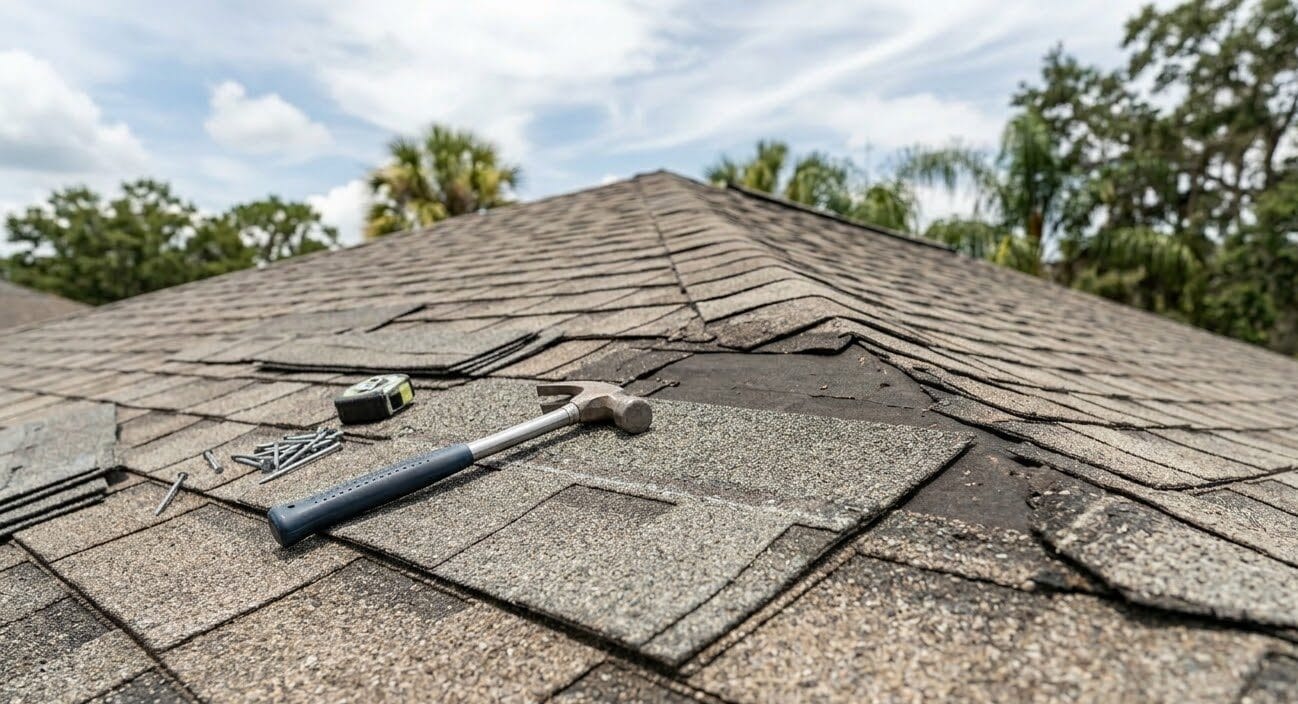
A wind mitigation inspection is a short, focused survey of the features that help your home resist hurricane-force wind. A Florida-licensed inspector, usually a general contractor, building inspector, architect, or engineer, walks the roof and attic, photographs a defined list of construction details, and records what they find on one standardized state form. That form is the OIR-B1-1802, the Uniform Mitigation Verification Inspection Form, and every property insurer licensed in Florida is required to accept it. You do not negotiate the format, and no carrier can demand its own version.
The inspection does not test whether your roof leaks or how many years it has left. It answers a narrower question: how well is this house built to hold together in high wind. That distinction matters, because a roof can be old and still earn strong wind credits, and a newer roof can miss them if it was not built or documented to the right standard. If your roof has real age or storm history, pair the wind mitigation inspection with a post-storm roof inspection so you see both pictures at once.
Why It Saves Money: The Windstorm Portion of Your Premium
Your Florida home insurance premium is not one number. A large slice of it, often the single largest slice on the coast and across storm-prone counties, is the windstorm portion, the part that prices the risk of hurricane damage. Wind mitigation credits do not touch the fire or liability portions. They discount the windstorm portion, and because that portion is so big in Florida, a percentage off it turns into real dollars.
This is not a courtesy discount that a carrier can withhold. Under Florida Statute 627.0629, insurers are required to offer premium discounts, credits, or rate differentials for construction features that reduce hurricane loss. Once a licensed inspector verifies a qualifying feature on the OIR-B1-1802, the carrier has to apply the matching credit. The inspection is simply how you prove the features exist so the mandated discount can be triggered. Homeowners who never get inspected are usually paying the full, undiscounted windstorm rate by default.
The Seven Features the Inspector Checks
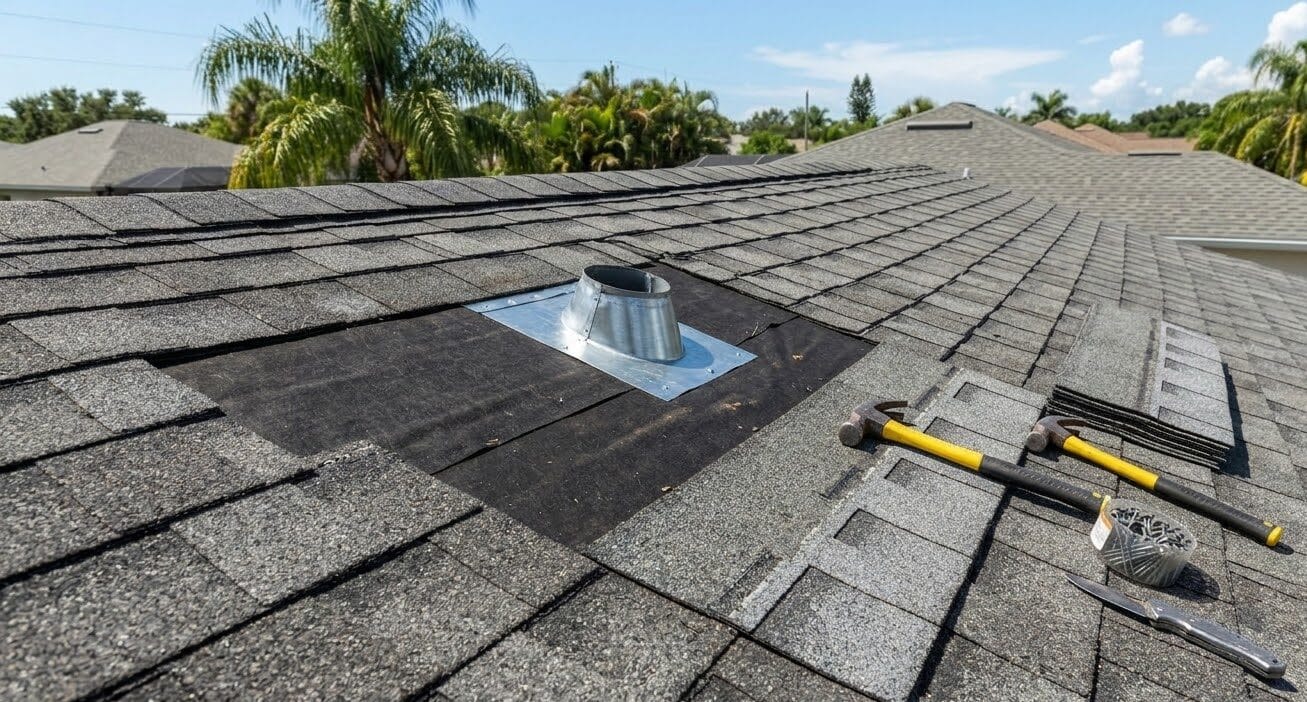
The OIR-B1-1802 rates a defined set of construction features, and each one maps to a credit. Knowing what they are tells you where your discounts come from and, if you are re-roofing, which upgrades pay you back for years.
- Building code and permit history: the year the home was built and, for the roof, when it was permitted. Homes built or re-roofed under the stronger post-2001 Florida Building Code start from a better baseline.
- Roof covering: whether the covering (shingles, tile, metal) carries a Florida Product Approval or Miami-Dade Notice of Acceptance showing it meets the current code. Documentation is what earns this one, which is why the product approval number matters.
- Roof deck attachment: how the plywood or decking is nailed to the trusses. Longer nails at tighter spacing hold the deck down in uplift and earn a stronger credit than short, widely spaced fasteners.
- Roof-to-wall connection: how the roof is tied to the walls, rated from toe nails at the bottom up through clips, single wraps, and double wraps of metal strapping. This is frequently the single most valuable credit on the form.
- Roof geometry: the shape of the roof. A hip roof, which slopes on all four sides, sheds wind better than a gable and earns a meaningful credit for it.
- Secondary water resistance: a sealed layer, such as a self-adhering membrane over the deck seams, that keeps water out if the covering blows off. Present or absent, and it earns a credit when present.
- Opening protection: whether windows, doors, and other openings are protected to an impact-rated standard by impact glass or code-approved shutters. Full, rated protection on every opening earns the credit; a single unprotected opening can cost it.
Two of these deserve special attention because they carry the most weight. The roof-to-wall connection and the roof geometry credits are often where the largest savings sit, which is why builders who understand insurance frame hip roofs with double wraps whenever the design allows. If a new build or major addition is in your plans, our sister company covers how these choices get engineered in the best roof for hurricanes in Florida guide.
How Much You Can Actually Save

The honest answer is that it depends on how many features your home already has, and the range is wide. A home that earns only one or two credits might see a modest reduction on the windstorm portion. A home that earns most of them, a hip roof, a well-nailed deck, double-wrap straps, secondary water resistance, and full opening protection, can see the windstorm portion cut by roughly a quarter to nearly half. Because that portion is the biggest part of many Florida premiums, the dollar savings often run into the hundreds or low thousands per year.
Set that against the cost. A wind mitigation inspection typically runs around one hundred dollars, sometimes less, and the credits usually pay it back on the very first renewal. In many cases the inspection pays for itself several times over in year one, then keeps paying for the life of the form. There are very few home-related expenses in Florida with that kind of return, which is why skipping the inspection is quietly one of the most expensive choices a homeowner can make.
The credits also stack with other savings paths. If your goal is to add features you do not yet have, a state cost-share program can help fund the upgrades that then earn the credits. We cover eligibility and how to apply in our My Safe Florida Home grant guide.
What Changed on the 2026 Form
The OIR-B1-1802 was revised, and the updated version (Rev. 04/26) became mandatory on April 1, 2026. The Florida Cabinet approved it in September 2025, and it was built on the state's 2024 Residential Wind-Loss Mitigation Study. If you are getting inspected now, this is the version that matters.
The headline change is documentation. Inspectors now have to provide more specific evidence for each feature rather than checking a box, including roof permit numbers, product approval or Notice of Acceptance numbers for the covering, and installation years. In practice that makes a well-documented report harder for a carrier to dispute, and it makes your own paperwork more important. If you have your roof permit and the product approval number for your shingles on hand, the inspector can verify features that might otherwise be marked unknown, and unknown almost always defaults to no credit.
The form is valid for up to five years, provided you do not make material changes to the structure and no inaccuracies are found. So a single inspection can drive five renewals of savings. When you re-roof or replace windows, get a fresh inspection, because those are exactly the changes that add new credits.
How to Prepare So You Do Not Leave Credits on the Table

Most lost credits are not lost because the feature is missing. They are lost because the inspector could not verify it and had to mark it unknown. A little preparation prevents that.
- Gather your roof permit. The permit and its date establish the code your roof was built to. Your county building department can pull it if you do not have a copy.
- Find your product approval numbers. The Florida Product Approval or Miami-Dade NOA for your roof covering, impact windows, or shutters is what proves they meet code. Keep these with your closing documents.
- Clear attic access. The roof-to-wall connection and deck attachment are verified from inside the attic. If the inspector cannot get in and see the straps, they cannot credit them.
- Note recent upgrades. New shingles, a re-nailed deck, added secondary water resistance, or new impact windows all change your credits. Point them out so nothing gets missed.
If your roof is older and the inspection reveals it is losing you credits rather than earning them, replacing it can flip the math, because a modern re-roof can add deck attachment, secondary water resistance, and a documented covering all at once. Our 2026 roof replacement cost guide shows where that lands on price, and the credits it unlocks help offset it. The same documentation you gather for wind mitigation also strengthens a claim later, which our Florida roof insurance claims guide walks through.
When to Get One, and Why the Roof Comes First

Get a wind mitigation inspection when you buy a home, when you re-roof, when you add impact protection, and any time your current form is nearing five years old. Buyers especially should not wait, because the credits can start on your first policy rather than your second renewal. And because so many of the seven features live in the roof, the roof is where the biggest credits are won or lost.
That is where we come in. Protech Roofing installs and documents roof systems across Hernando, Marion, and the surrounding counties, and we make sure the covering, deck attachment, roof-to-wall connection, and secondary water resistance are built and papered to earn every credit the form allows. We are GAF Master Elite certified, licensed and insured, with a 4.9-star rating across 557 plus verified reviews. Before you re-roof, ask us to walk the features that drive your insurance, and before hurricane season, run through our Florida hurricane prep checklist.
Call (352) 605-0696 for a free roof assessment, ask about the My Safe Florida Home program, or see how our insurance claims specialists put this same documentation to work.
FAQ
Frequently Asked Questions
How much does a wind mitigation inspection cost in Florida?
+
How much can a wind mitigation inspection save me?
+
What features does a wind mitigation inspection check?
+
What changed on the 2026 wind mitigation form?
+
How long is a wind mitigation inspection good for?
+
Is my insurer required to give me wind mitigation discounts?
+
Related Articles
More guides for Florida homeowners
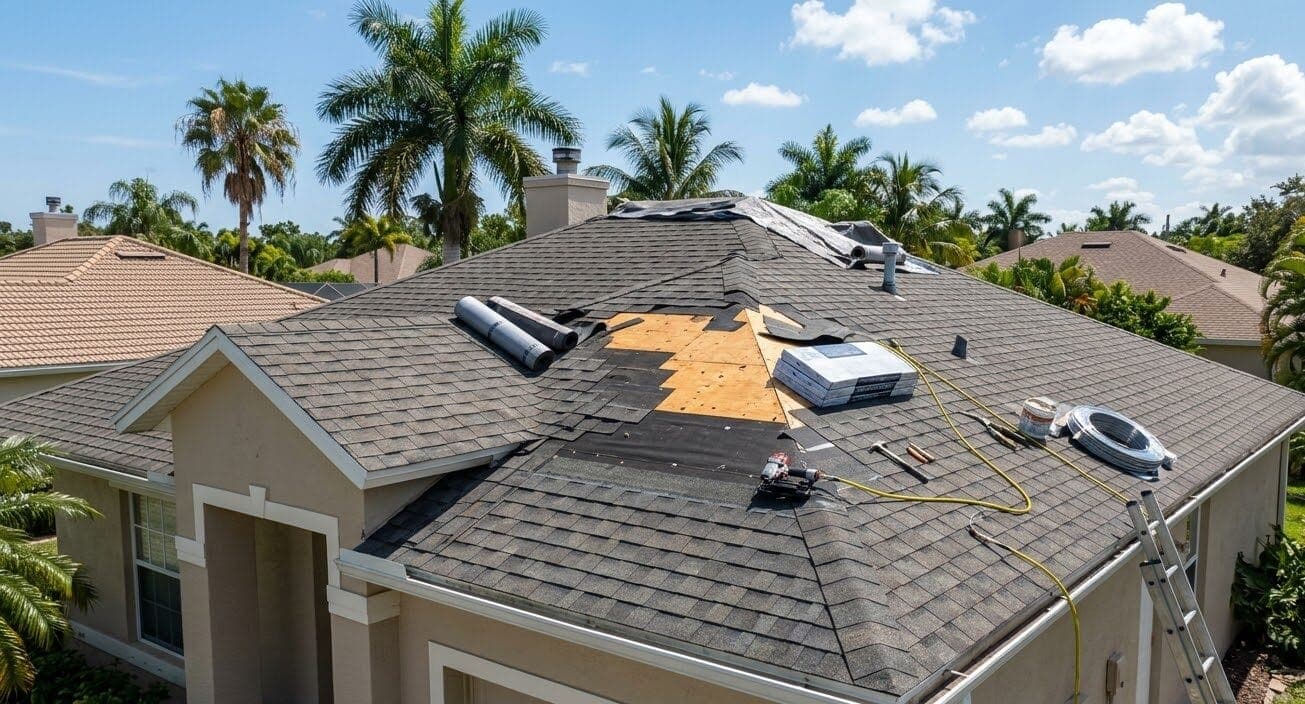
How Long a Roof Replacement Takes in Florida: 2026 Guide
A Florida shingle re-roof takes one to three days of physical work and about two to four weeks from contract to closed permit. Here is what happens each day, how metal and tile change the schedule and what causes delays.
Read ArticleBest Shingles for Florida: Impact-Rated Class 4 Guide
The best shingle for a Florida home is usually a Class H architectural shingle installed as a full system. Here is how 3-tab, architectural and Class 4 impact-resistant shingles compare on cost, wind, insurance and lifespan.
Read Article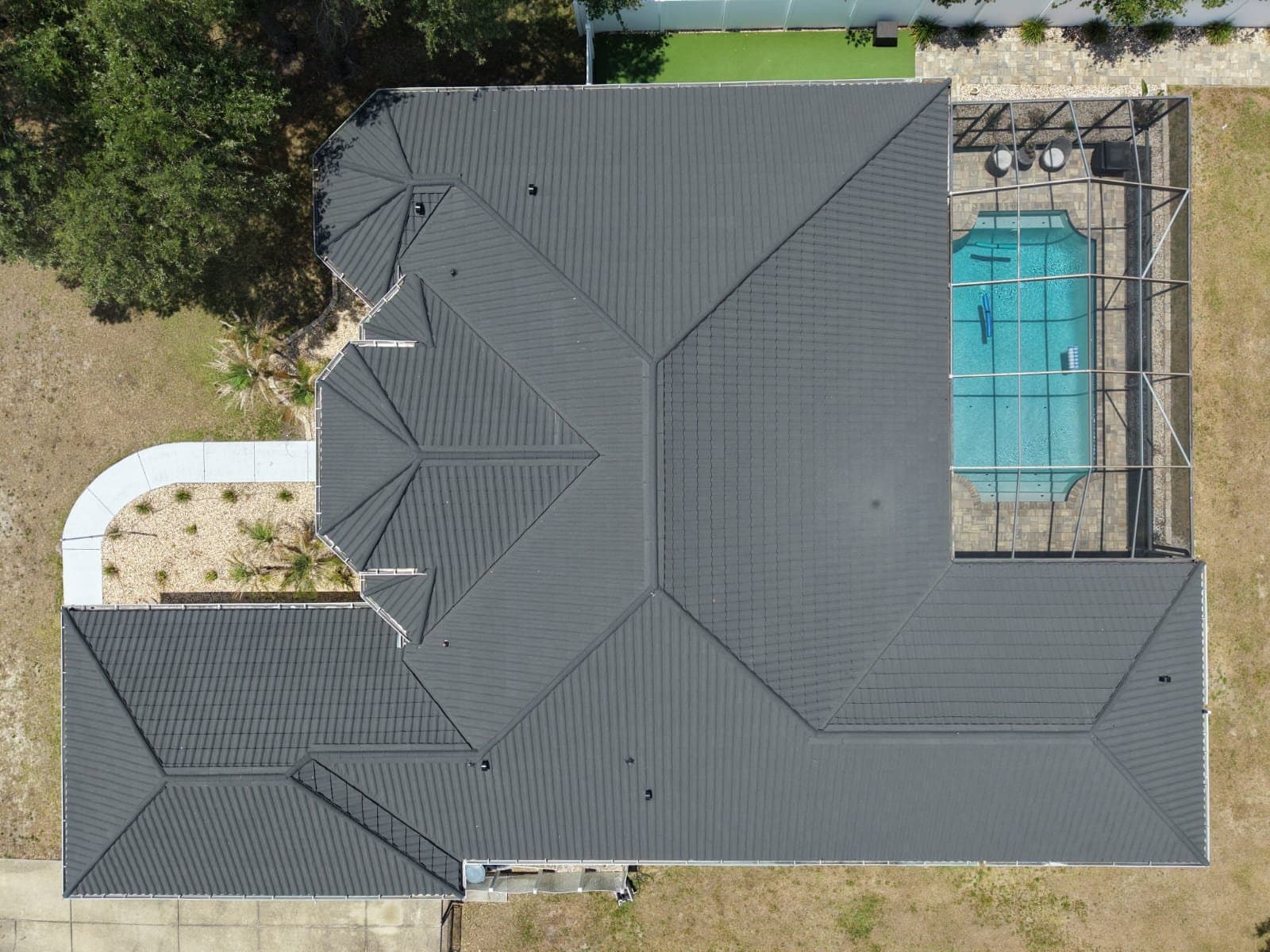
Metal Roof Cost in Florida 2026: Per-Sqft Guide
Metal roofs in Florida run about $8 to $23 per square foot installed, depending on the system. Here is what standing seam, stone coated steel and exposed fastener panels cost, what a typical home pays and how to compare quotes.
Read ArticleReady When You Are
Get your free roof inspection today.
No-pressure, written estimate. Same-week scheduling across Hernando County. Call us now or request a visit online.