Call (352) 605-0696

Blog

What Type of Roof Is Best for Hurricanes in Florida?

Call (352) 605-0696

Hurricane season runs June 1 to November 30, and the roof above your Florida home is the single most exposed surface during a storm. This guide compares metal, stone-coated steel, tile, and architectural shingles by wind rating, hurricane category survivability, cost, and insurance savings, so you know exactly which roof to pick before the next one makes landfall. Call (352) 605-0696 for a free pre-season inspection.

Florida’s Wind Requirements: What Your Roof Must Survive
Florida Building Code divides the state into wind zones based on proximity to the coast and historical storm data. Hernando County sits in a 120 mph design wind speed zone. Every roof installed here must be engineered to resist sustained winds at that speed without losing its covering, flashing, or structural attachment.

That 120 mph rating is not the maximum gust your roof might face. It is the minimum design threshold. A strong Category 3 hurricane produces sustained winds of 111 to 129 mph with gusts exceeding 150 mph. Your roof’s ability to survive that event depends on three factors: the type of covering, the quality of attachment to the deck, and how well the deck is fastened to the trusses.

No roofing material is hurricane-proof. But some perform dramatically better than others under extreme wind loads. Here is how the three most common residential roofing materials in Central Florida compare when a hurricane makes landfall.
Hurricane Categories: What Each Storm Tier Means for Your Roof
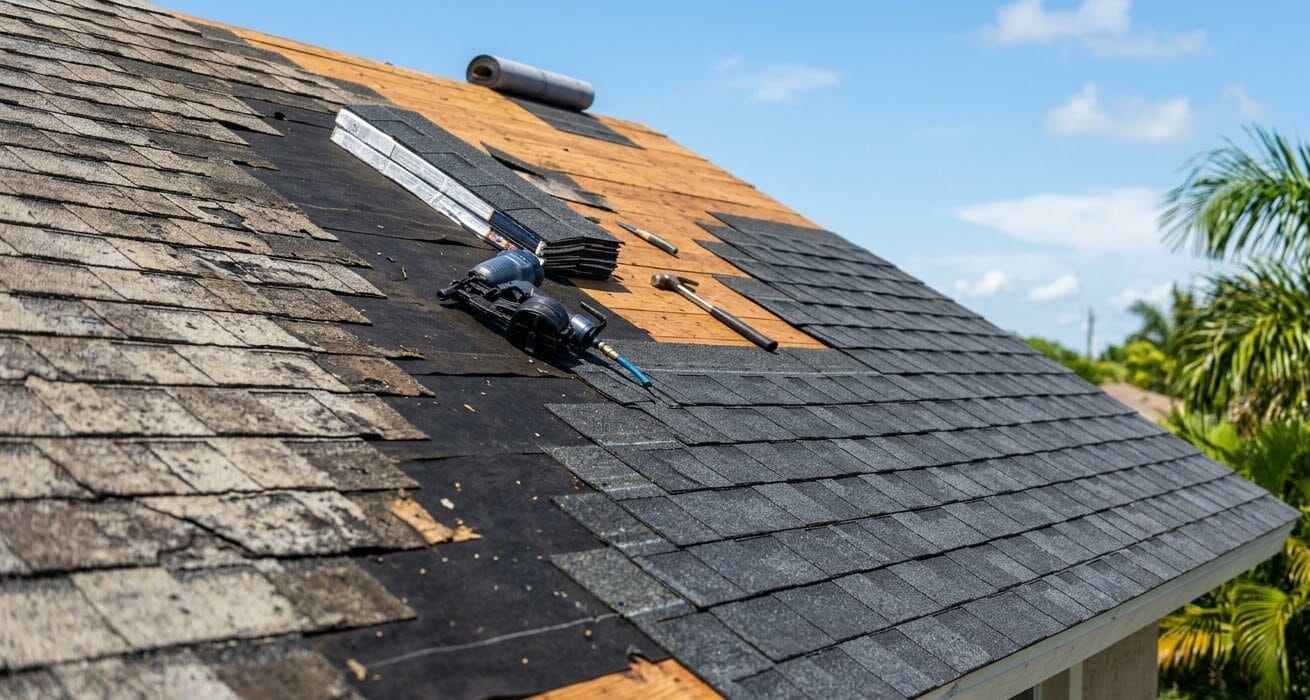
The Saffir-Simpson scale ranks hurricanes by sustained wind speed. Gusts often run 25 to 40 percent higher than the sustained number, and your roof has to survive both. Here is how each category translates to roof performance in Hernando, Pasco, Citrus, and Sumter counties.

CategorySustained WindWhat Survives
Tropical Storm39 to 73 mphAny code-compliant roof. Loose shingles and old flashing fail first.
Category 174 to 95 mphAll quality materials survive when properly installed. Architectural shingles with 6-nail patterns hold.
Category 296 to 110 mph130 mph shingles, tile with clips, and metal all perform well. Older 110 mph shingles begin to lift.
Category 3111 to 129 mphMetal and tile hold. Shingle roofs show partial failure: ridge caps lift, leading-edge tabs tear.
Category 4130 to 156 mphStanding seam metal stays sealed. Tile resists uplift but individual tiles crack from debris. Shingle roofs fail in sections.
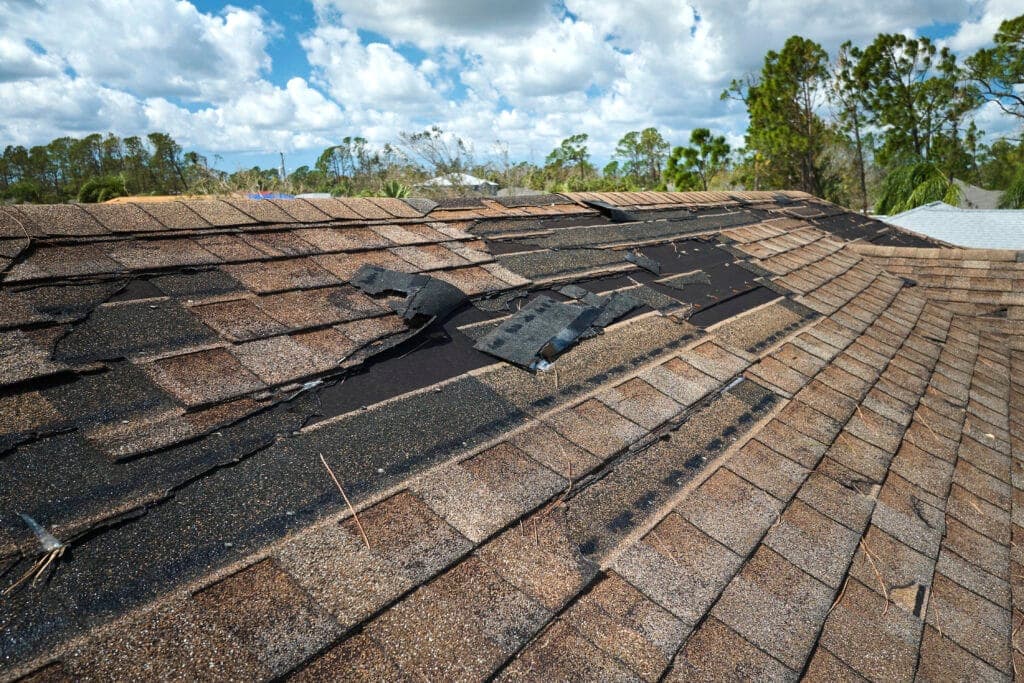
Category 5157+ mphStanding seam metal performs best. Tile rooftops lose individual tiles. Shingle roofs commonly suffer total covering loss; deck attachment becomes the survival factor.

Hernando County has not taken a direct major-hurricane landfall in modern records, but Hurricane Idalia (Category 3 at landfall, 2023) and Hurricane Helene (Category 4, 2024) both brought tropical-storm-to-Category-1 conditions inland to Brooksville and Spring Hill. A roof built for the minimum 120 mph code threshold is the baseline. A roof built for 140 mph or higher is what gets you through the bad season without an insurance claim.
Metal Roofing: The Strongest Option for Hurricane Country

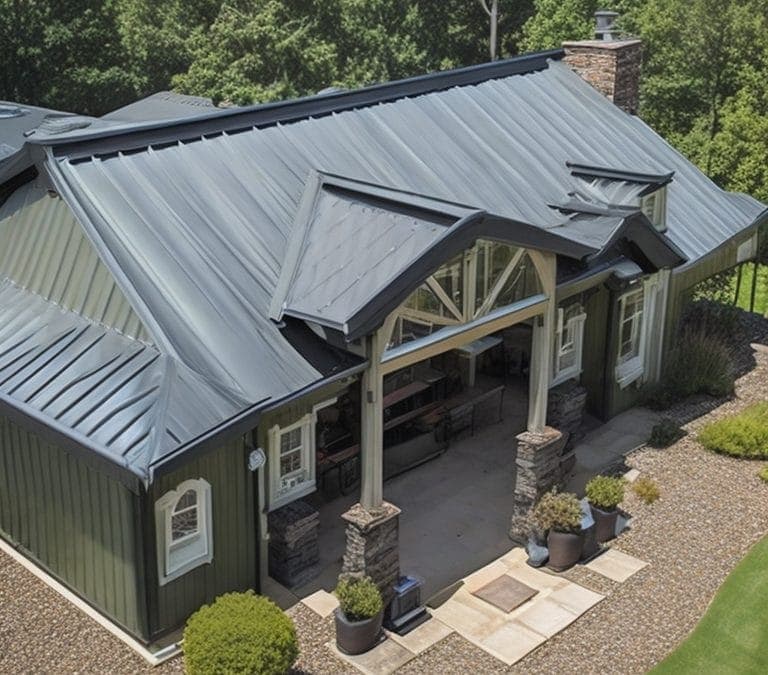
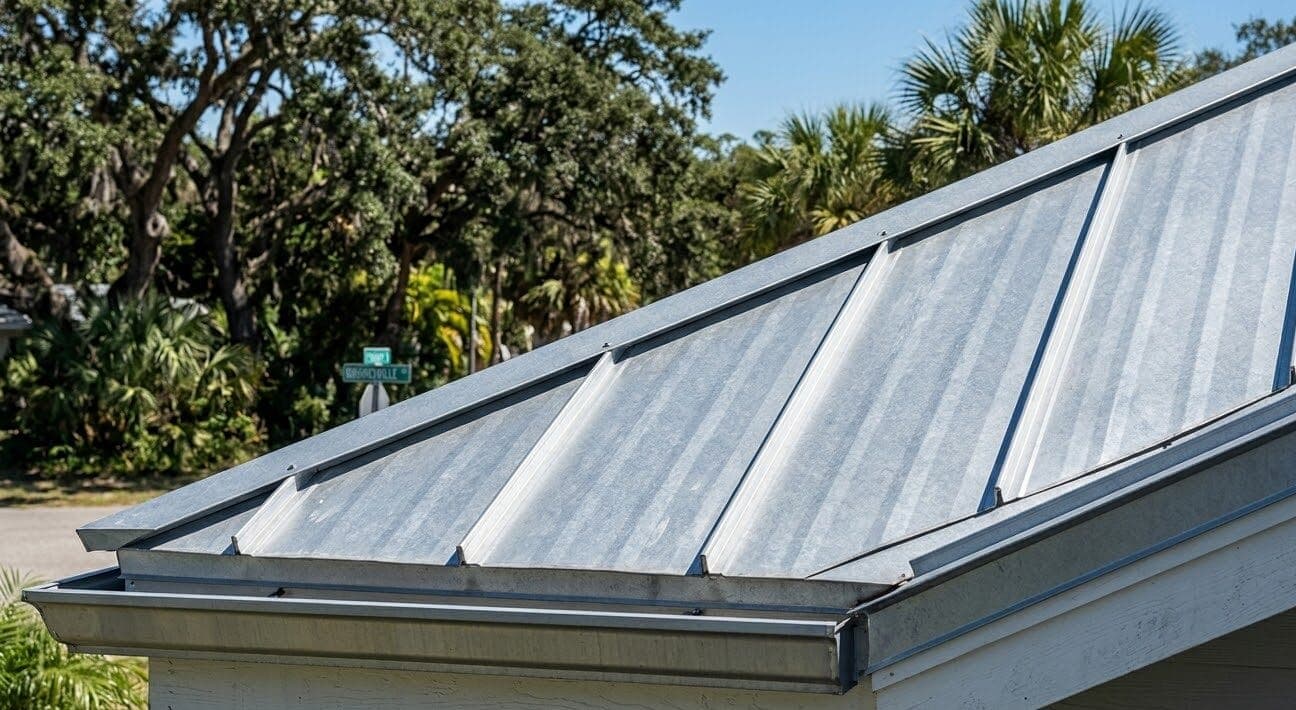
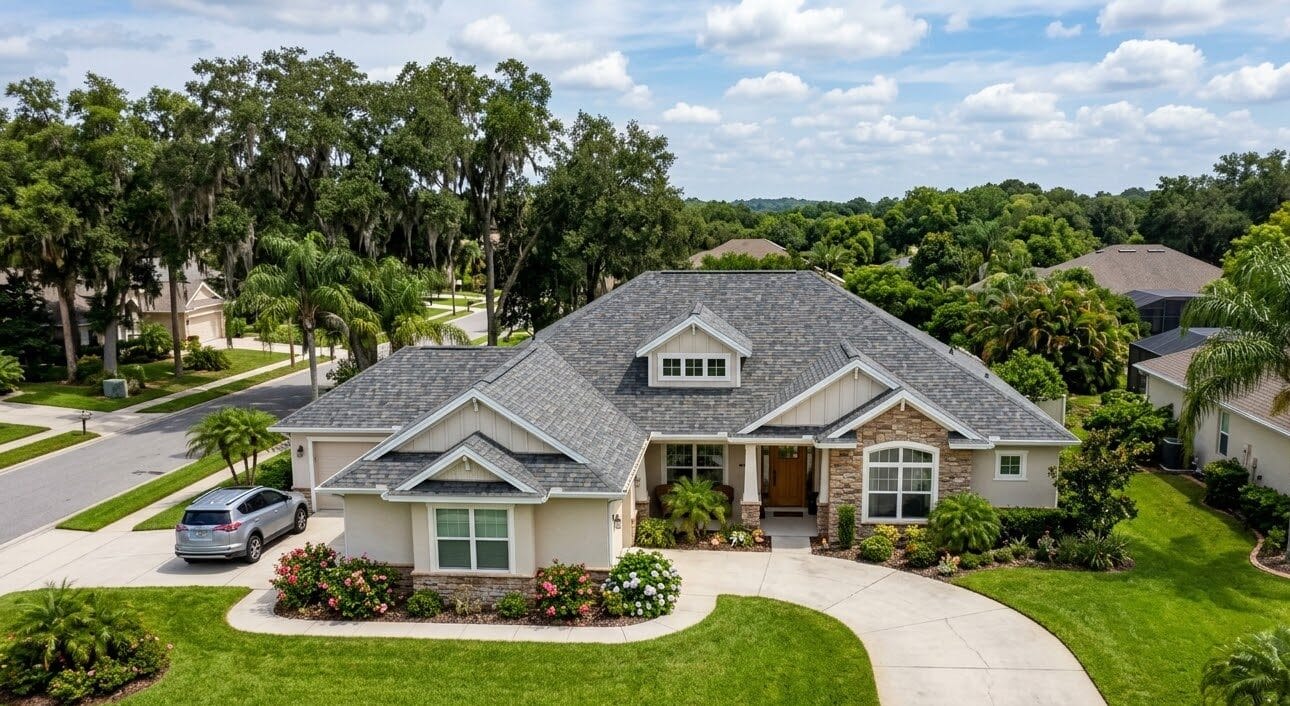
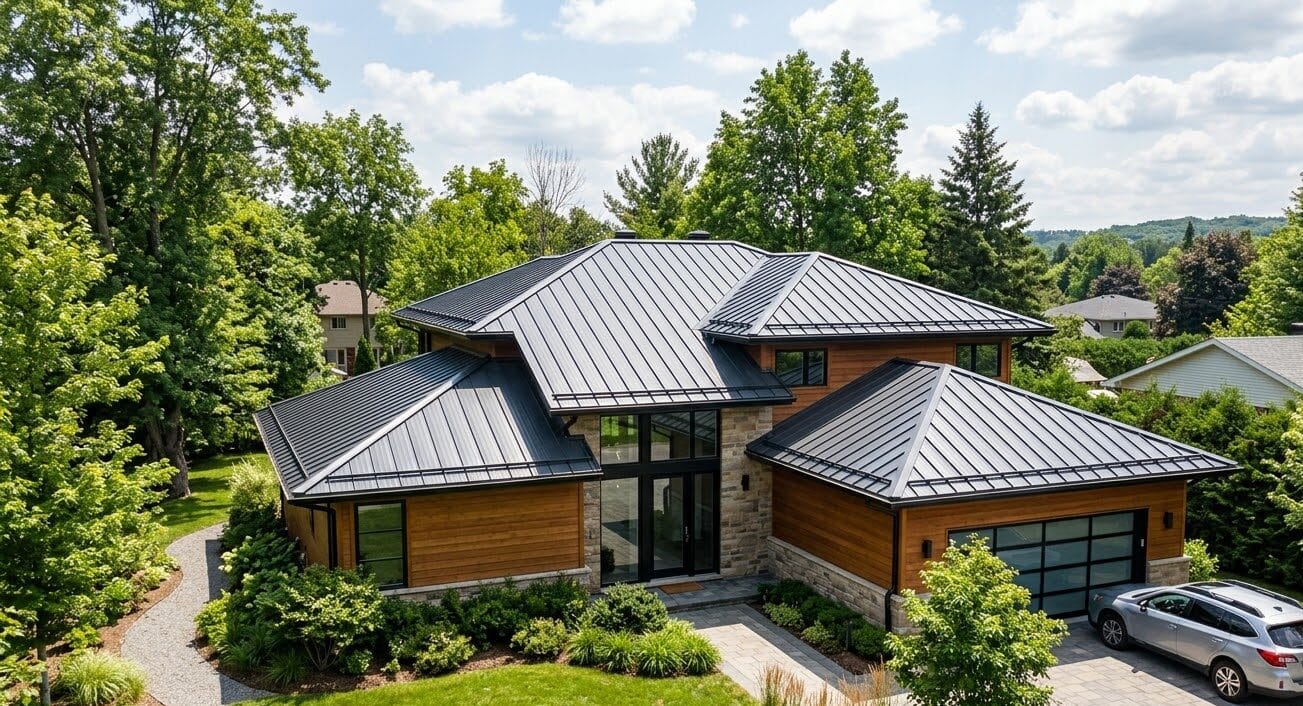
Standing seam metal roofing is the top performer in hurricane conditions for a simple mechanical reason: the panels interlock along concealed seams with no exposed fasteners. Wind cannot get beneath the surface to create uplift because there are no tabs, edges, or nail heads to catch.

Metal roofing panels are tested to withstand wind speeds of 140 to 180 mph depending on the profile and gauge. In real-world hurricane events, standing seam roofs consistently show the lowest failure rates of any residential material. After Hurricane Michael hit the Florida Panhandle as a Category 5 in 2018, post-storm surveys found that metal roofs sustained the least damage across all building types.

Pros for Hurricane Protection

  • Interlocking panels resist uplift better than any other residential material
  • No granules to lose in wind-driven rain, maintaining waterproof integrity
  • Impact resistant against airborne debris at higher gauges (24 and 26 gauge)
  • 40 to 50 year Florida lifespan means fewer replacements and less exposure over decades
  • Best insurance discounts when combined with proper deck attachment and SWR

Considerations

Metal costs 50 to 100 percent more than shingles upfront. Exposed fastener panels (the cheaper metal option) do not perform as well as standing seam because the fasteners create potential wind entry points. For true hurricane resistance, standing seam is the recommended system.

Tile Roofing: Heavy and Durable, with a Weakness

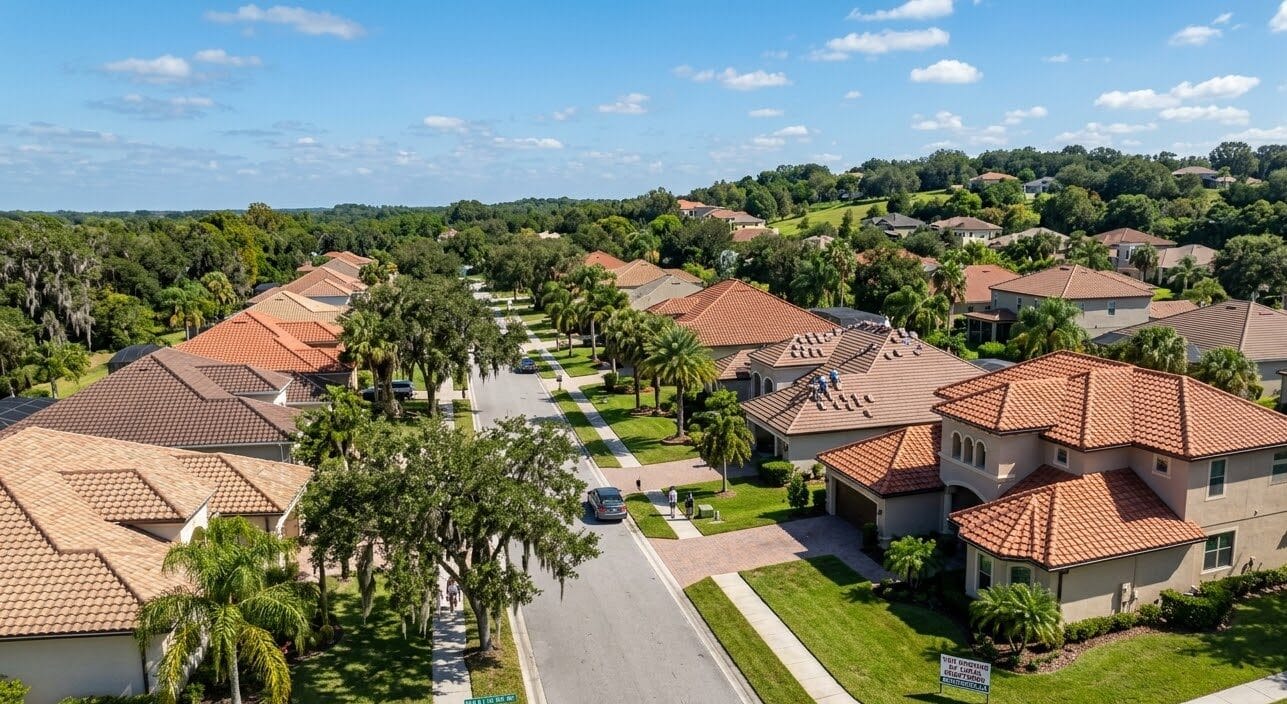
Concrete and clay tiles are individually heavy, which works in their favor during hurricanes. A concrete tile weighs 9 to 12 pounds per square foot compared to 2 to 4 pounds for shingles. That mass makes tiles harder for wind to lift. When properly installed with mechanical fasteners (clips or nails through the nose), tile roofs perform well in sustained winds up to 150 mph.

The weakness is debris impact. While a tile roof resists wind uplift, individual tiles can shatter when struck by airborne objects. A broken tile does not necessarily mean a leak because the underlayment beneath provides secondary protection. But a roof with multiple broken tiles after a storm needs immediate repair to prevent water intrusion before the next rainfall.

Pros for Hurricane Protection

  • Heavy weight resists wind uplift naturally
  • Non-combustible and resistant to flying ember exposure
  • 40 to 75 year tile lifespan (though underlayment fails at 15 to 20 years in Florida)
  • Strong insurance credits when combined with proper fastening and SWR

Considerations

Tile is the heaviest residential roofing material. Older homes in Spring Hill and Brooksville may need structural reinforcement before tile can be installed. Individual tiles are vulnerable to shattering from debris, and replacement tiles must match the existing profile and color. The underlayment beneath the tiles must be replaced every 15 to 20 years, which is a costly tile-off and re-set process.

Stone-Coated Steel: The Underrated Florida Option

Stone-coated steel is the option most Hernando County homeowners have never heard of, and it is often the best compromise between performance, looks, and weight. It is a steel panel with a stone granule surface bonded on top, designed to look like architectural shingle, slate, shake, or barrel tile while performing like metal.

The wind rating is the headline: stone-coated steel from manufacturers like DECRA and Boral Steel is tested to 120 mph wind uplift with hail and debris impact, with some profiles certified to 140+ mph in Florida HVHZ applications. It also carries a Class 4 impact rating (the highest available), which earns the strongest hail and debris insurance discounts in Florida.

Why It Works for Florida

  • Light weight (1.4 lbs per sq ft) means no structural reinforcement, unlike tile
  • Looks like tile or shake, so it passes most HOA and ARC reviews including The Villages
  • Class 4 impact rating qualifies for the best wind mitigation credits
  • 50-year warranty is standard from the major manufacturers
  • No underlayment swap required at year 15 to 20, unlike concrete tile

Considerations

Stone-coated steel costs more than architectural shingle (typically $18,000 to $32,000 installed on a 2,000 sq ft home) and slightly more than concrete tile in some profiles. It is a specialty product, so it requires an installer trained on the specific manufacturer system. Protech installs DECRA and similar systems across Central Florida. See our stone-coated steel tile page for product details and warranty terms.

Architectural Shingles: Affordable but Most Vulnerable

Architectural shingles are the most common roofing material in Hernando County because of their lower cost and attractive appearance. Modern architectural shingles are rated for 110 to 130 mph wind uplift, which meets Florida Building Code requirements. GAF Timberline HDZ shingles, which Protech installs, carry a 130 mph limited wind warranty.

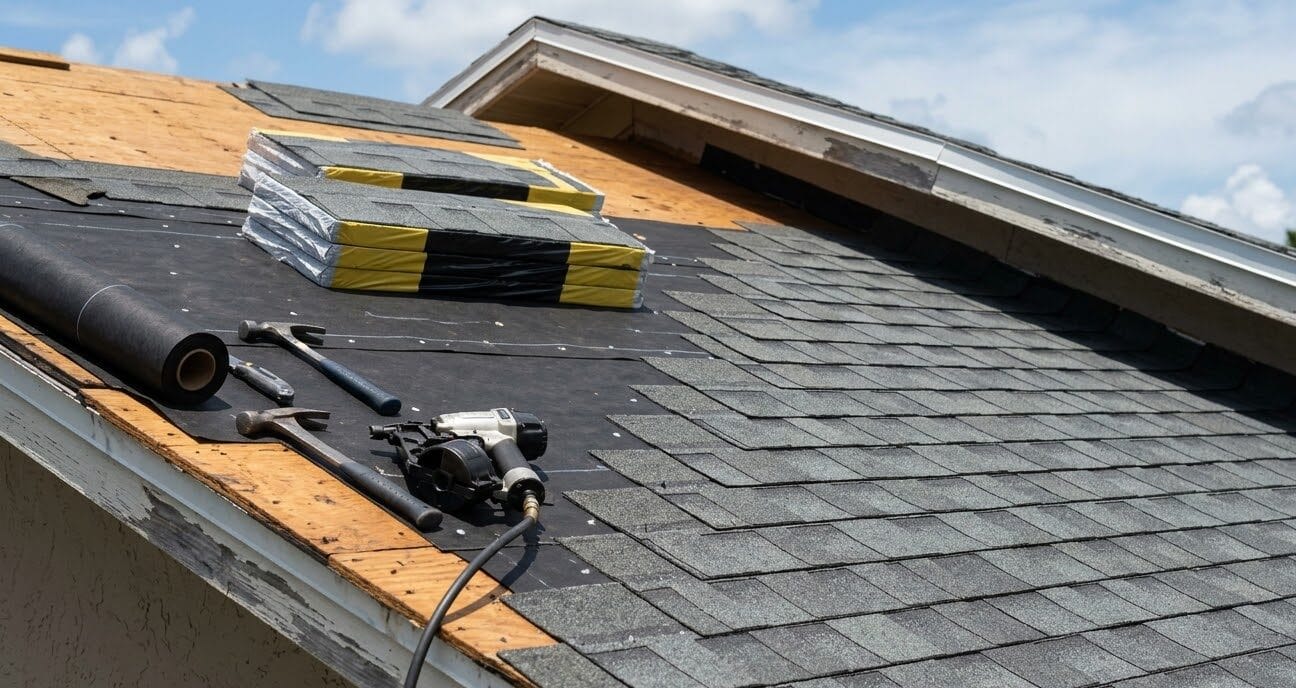
Shingles perform adequately in moderate tropical storms and Category 1 hurricanes when properly installed with the correct nailing pattern (6 nails per shingle in high-wind zones). However, they are the most likely material to fail during stronger storms for two reasons: the adhesive seal strip can break under sustained wind pressure, and the leading edge of each shingle tab creates a natural lift point for wind to exploit.

Pros

  • Lowest upfront cost of any quality roofing material
  • 130 mph rated options available that meet Florida code
  • Wide color and style selection
  • Fast installation (most homes completed in 1 day)

Considerations

Shingles have the shortest Florida lifespan (15 to 20 years for architectural), the highest wind failure rate during strong hurricanes, and they degrade faster under Florida UV than any other material. They are a practical choice for budget-conscious homeowners who accept the tradeoff of more frequent replacement cycles.

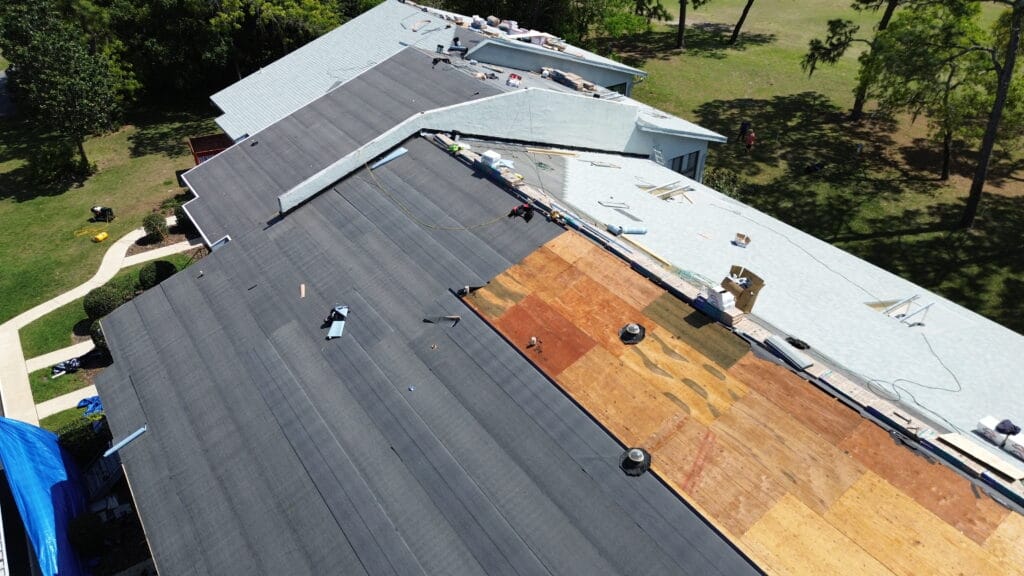
Commercial roof repair and storm damage mitigation in Brooksville, FL by Protech Roofing.

Head-to-Head Comparison

FactorMetal (Standing Seam)Stone-Coated SteelTile (Concrete/Clay)Shingles (Architectural)
Wind Rating140 to 180 mph120 to 140 mph150 mph (with clips)110 to 130 mph
Debris ImpactDents but stays sealedClass 4 (best available)Individual tiles crackShingles tear or fly off
Florida Lifespan40 to 50 years50 years40 to 50 (tiles) / 15 to 20 (underlayment)15 to 20 years
Cost (2,000 sq ft)$24,000 to $46,000$18,000 to $32,000$14,000 to $42,000$10,000 to $18,000
Weight1.5 to 3 lbs/sq ft1.4 lbs/sq ft9 to 12 lbs/sq ft2 to 4 lbs/sq ft
Insurance DiscountsBest availableBest availableStrongGood with proper install
HOA / ARC ApprovalOften needs committee reviewUsually approved (mimics tile/shake)Always approvedAlways approved
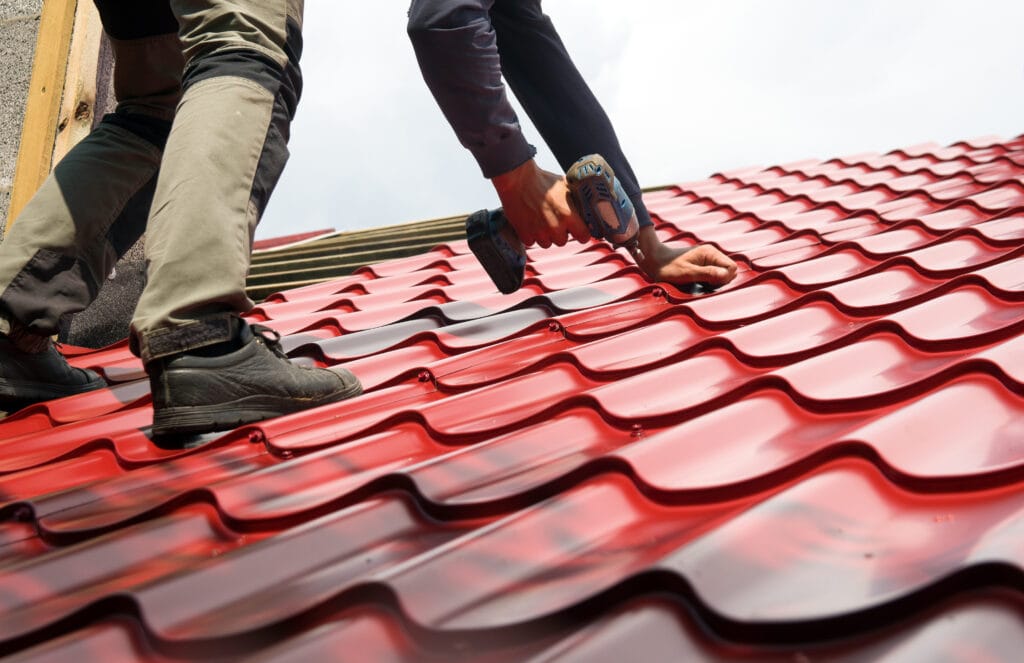
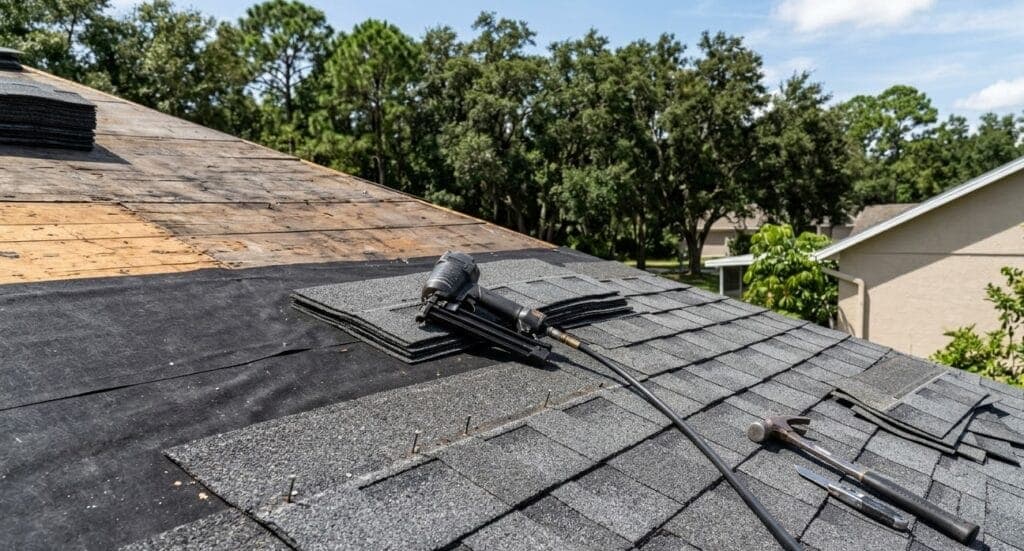
Professional shingle, tile, and metal roof repair in Brooksville, FL by Protech Roofing.

My Safe Florida Home Grant: Up to $10,000 Toward a Hurricane-Resistant Roof

Florida runs a state-funded program that matches $2 of homeowner spending for every $1 of state funding, up to a $10,000 grant cap. It is called My Safe Florida Home, and it is designed to push existing homes toward hurricane-resistant standards before the next storm.

Eligible wind mitigation work includes:

  • Roof deck attachment upgrades (8d ring-shank nails on a 6-inch pattern)
  • Secondary water resistance (peel-and-stick membrane on the seams)
  • Roof-to-wall connection upgrades (hurricane straps)
  • Opening protection (impact windows, hurricane shutters)

The grant pairs perfectly with a new roof. When you re-roof, the deck is already exposed and the secondary water barrier and improved nailing can be added at marginal cost. The state then reimburses up to $10,000, and the upgraded mitigation features lower your wind insurance premium by 30 to 50 percent in most Hernando County policies.

Protech is an MSFH-eligible contractor. We handle the inspection, application paperwork, and inspection follow-up. See our My Safe Florida Home program page for current eligibility and how to apply.

Which Roof Should You Choose for Your Florida Home?

The right choice depends on your budget, your home’s structural capacity, and how long you plan to own the property.

Choose metal if you want the strongest hurricane protection available, plan to stay in your home long-term, and can invest in the higher upfront cost. The combination of wind resistance, longevity, and insurance savings makes metal the best long-term value for most Florida homeowners.

Choose tile if you want the classic Florida aesthetic, your home’s structure can support the weight, and you understand that underlayment replacement will be needed at the 15 to 20 year mark. Tile delivers excellent wind protection with visual appeal that metal cannot match.

Choose architectural shingles if budget is the primary factor and you accept the shorter lifespan and higher hurricane vulnerability. Modern 130 mph rated shingles with proper installation provide adequate protection for most storms, and the lower cost allows for earlier replacement when the roof reaches end of life.

Regardless of material, the quality of installation matters as much as the product itself. Correct nailing patterns, proper underlayment, sealed deck attachment, and code-compliant flashing are what actually keep your roof attached during a hurricane. Protech Roofing is GAF-certified and licensed across Hernando, Pasco, Citrus, Sumter, and Polk counties. Call (352) 605-0696 for a free estimate and storm readiness assessment.

Hurricane Prep Checklist for Your Florida Roof

A storm-ready roof is not just about material. The week before hurricane season opens (June 1), run through this list. The five minutes it takes can save five figures in claim deductibles.

  • Annual roof inspection by June 1. Look for lifted shingles, loose ridge caps, cracked tiles, exposed nails, and rusted flashing. Protech offers a free pre-season inspection across Hernando, Pasco, Citrus, and Sumter counties.
  • Clear gutters and downspouts. A blocked gutter holds water against the fascia and can pull the gutter free in heavy wind, taking the drip edge with it.
  • Trim trees away from the roof line. Branches that overhang the roof become projectiles. Aim for 6 feet of clearance minimum.
  • Check attic vents and soffit screens. Wind-driven rain enters through compromised soffits. Tighten loose vent covers and replace any damaged soffit panels.
  • Document the roof with photos before the storm. Take wide and close-up shots of every roof slope. After a storm, insurance adjusters compare to your pre-storm photos. Without them, pre-existing wear can be used to deny claims.
  • Save your wind mitigation form. If you have an OIR-B1-1802 wind mitigation inspection on file, keep a copy with your evacuation documents. It is required for post-storm insurance credits.
  • Know your emergency roofer before you need one. Save Protech’s number now: (352) 605-0696. Tarp and emergency repair availability is limited in the 48 hours after landfall.

In communities like The Villages, ARC committees often dictate which materials qualify for approval. Metal upgrades from shingle typically need committee review even when the underlying performance case is straightforward.

FAQ

Frequently Asked Questions

What type of roof is best for hurricanes in Florida?

+
Standing seam metal roofing is the strongest option, rated for 140 to 180 mph winds. The interlocking panels and concealed fasteners resist wind uplift better than any other residential material. Stone-coated steel is the second-best option (120 to 140 mph with Class 4 impact rating) and is often a better fit for HOA communities because it looks like tile or shake. Post-hurricane surveys consistently show metal and stone-coated steel sustaining the least damage across all building types.

What roof can withstand a Category 5 hurricane?

+
No residential roofing material is fully hurricane-proof in a Category 5 (sustained winds of 157 mph or higher). Standing seam metal is the most likely to remain sealed and attached because it has no exposed fasteners or tab edges for wind to lift. The actual survival factor in Cat 5 conditions is the deck attachment underneath: 8d ring-shank nails on a 6-inch pattern plus a secondary water resistance membrane. The covering can lose sections and the home still stays dry if the deck stays attached to the trusses.

Can shingle roofs survive a hurricane?

+
Modern architectural shingles rated for 130 mph can survive Category 1 and moderate Category 2 hurricanes when properly installed with 6-nail patterns in high-wind zones. However, shingles have the highest failure rate among common materials during Category 3 and above storms. The adhesive seal strip can break under sustained wind pressure, and the leading edge of each tab creates a natural lift point.

Is stone-coated steel good for Florida hurricanes?

+
Yes. Stone-coated steel from manufacturers like DECRA and Boral Steel is rated for 120 to 140 mph wind uplift and carries the Class 4 impact rating (the highest available for hail and debris). It qualifies for the same wind mitigation insurance discounts as standing seam metal, weighs only 1.4 lbs per square foot (no structural reinforcement needed), and the granule surface mimics tile or shake so it passes most HOA reviews.

How much does a hurricane-rated roof cost in Florida?

+
Standing seam metal starts around $24,000 for a 2,000 square foot home. Stone-coated steel runs $18,000 to $32,000. Concrete tile starts at $14,000. 130 mph rated architectural shingles start at $10,000. The My Safe Florida Home program can reimburse up to $10,000 of wind mitigation upgrades performed with the new roof, and financing is available with no money down.

How much does the My Safe Florida Home grant cover?

+
My Safe Florida Home pays $2 for every $1 the homeowner spends on approved wind mitigation work, up to a $10,000 grant cap. Eligible work includes roof deck attachment upgrades, secondary water resistance, roof-to-wall hurricane straps, and opening protection (impact windows or shutters). The grant pairs naturally with a roof replacement because the deck is already exposed during the re-roof.

Does a metal roof lower my insurance in Florida?

+
Yes. A metal roof combined with proper deck attachment and secondary water resistance qualifies for the best wind mitigation insurance credits available. Homeowners typically see a 30 to 50 percent reduction on the wind portion of their premium, saving $500 to $1,500 or more per year in Hernando, Pasco, and Citrus counties.

Is tile or metal better for Florida hurricanes?

+
Metal has better wind uplift resistance (140 to 180 mph versus 150 mph for clipped tile) and is not vulnerable to debris shattering. Tile is heavier, which helps resist uplift naturally, but individual tiles can crack from flying objects. For pure hurricane performance, metal wins. For aesthetics combined with strong storm resistance, tile or stone-coated steel are both excellent.

What wind speed must my roof handle in Hernando County?

+
Florida Building Code requires roofs in Hernando, Pasco, Citrus, and Sumter counties to be rated for at least 120 mph sustained wind. Miami-Dade and Broward (the High Velocity Hurricane Zone) require 165+ mph. The actual rating of your roof depends on the material and installation: standing seam metal handles 140 to 180 mph, properly clipped tile handles 150 mph, stone-coated steel handles 120 to 140 mph, and architectural shingles handle 110 to 130 mph.

When should I replace my roof before hurricane season?

+
The ideal window is February to May, before insurance underwriters tighten policies and before contractor schedules fill with post-storm claim work. Florida insurance carriers often refuse new policies on roofs older than 15 years (shingles) or 25 years (tile/metal), and that age cutoff is checked at policy renewal. If your roof is approaching either threshold, replacing before June 1 lets you keep your wind mitigation credits and avoid the non-renewal letter.

Ready When You Are

Get your free roof inspection today.

No-pressure, written estimate. Same-week scheduling across Hernando County. Call us now or request a visit online.