Blog
Roofing in Bradenton FL: Why Manatee and Sarasota Owners Are Pricing Metal Against Tile
Call (352) 605-0696Drive any established Bradenton neighborhood and the roofscape tells you when the street was built. Barrel tile on the 1990s and 2000s stock, architectural shingle on the newer infill, and an increasing number of standing seam panels on houses that were tile a year ago. That last group is the story. Manatee County homeowners are not switching to metal because a magazine told them to. They are switching because an aging tile roof on the Gulf coast has become the most expensive line item in a homeowner policy, because the underlayment under that tile fails long before the tile does, and because the insurance credit structure now rewards the roof assembly rather than the roof material. This guide covers what a Bradenton re-roof actually costs in 2026, why the published averages disagree with each other by a factor of six, what the Manatee wind speed forces onto your specification, which parts of a Gulf coast roof fail first, how the county permit and inspection sequence runs, and what changed on the wind mitigation form on April 1, 2026.
What a Roof Replacement Costs in Bradenton in 2026
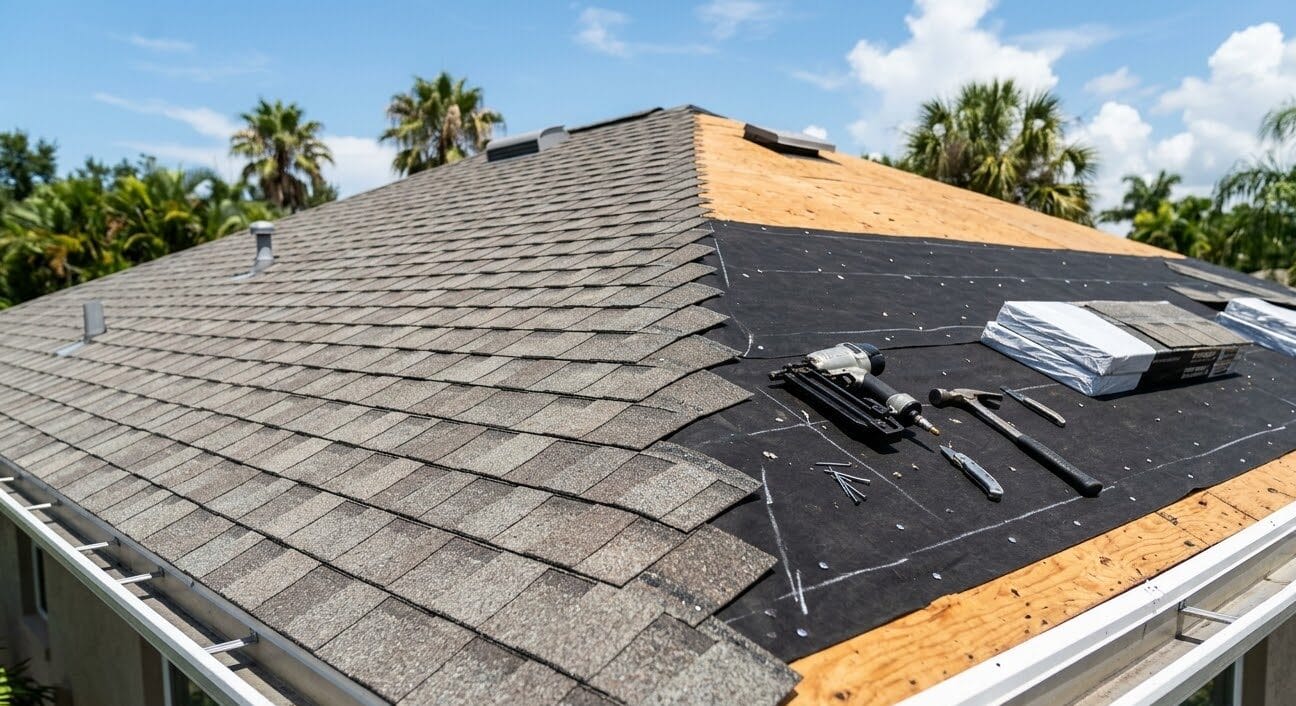
Search this question and you get numbers that cannot all be true at once. One widely cited estimator puts the Bradenton average at roughly $46,567. Another puts a standard 1,282 square foot asphalt shingle roof at about $7,348, which works out to roughly $6.12 per square foot. Both numbers are real and neither is wrong. They are measuring different houses. The high figure is dragged upward by tile and by large homes on the barrier islands. The low figure is a small, simple, low-pitch shingle roof with no deck work.
Roofing is priced by the square, which is 100 square feet of roof surface, and a typical Bradenton single family home carries roughly 20 to 28 squares once pitch and overhangs are counted. Here is the honest 2026 picture for this market.
- Architectural asphalt shingle: Roughly $6 to $9 per square foot installed on most Manatee homes, which puts a common re-roof between about $10,000 and $18,000. Statewide, standard 2026 Florida replacements run about $18,000 to $32,000 once larger homes and premium materials are included, and the Sarasota and Bradenton corridor trends toward the upper half of that band.
- Concrete or clay tile: The most expensive common assembly in the market, and the one where labor dominates. Tear-off of an existing tile roof is slow, heavy and disposal-intensive, and that cost lands before a single new piece goes on.
- Metal: Exposed fastener 5V panel commonly runs about $6 to $9 per square foot, which lands close to good shingle. Standing seam sits well above that. Complete metal roof projects in Florida commonly land between $15,000 and $35,000 against $7,900 to $15,000 for a quality shingle roof, which is the two to three times multiple most homeowners hear quoted.
- Labor component: Bradenton roofing labor commonly runs $45 to $75 per hour, or roughly $150 to $300 per 100 square feet, pushed up by the local wind code, by tear-off volume and by corrosion exposure near Port Manatee.
- Deck replacement: Priced per sheet and almost never included in the headline number. This is the single most common reason a Bradenton quote grows after the tear-off starts, and it is the line you want in writing before you sign.
If a quote in this market comes in dramatically under the ranges above, the savings are usually hiding in the accessories: the fastener metal, the flashing package, the underlayment and the deck allowance. On the Gulf coast those are the parts that decide how long the roof lasts, which is the whole subject of the next two sections.
Manatee Runs Near 150 mph, and the Number Belongs to Your Address
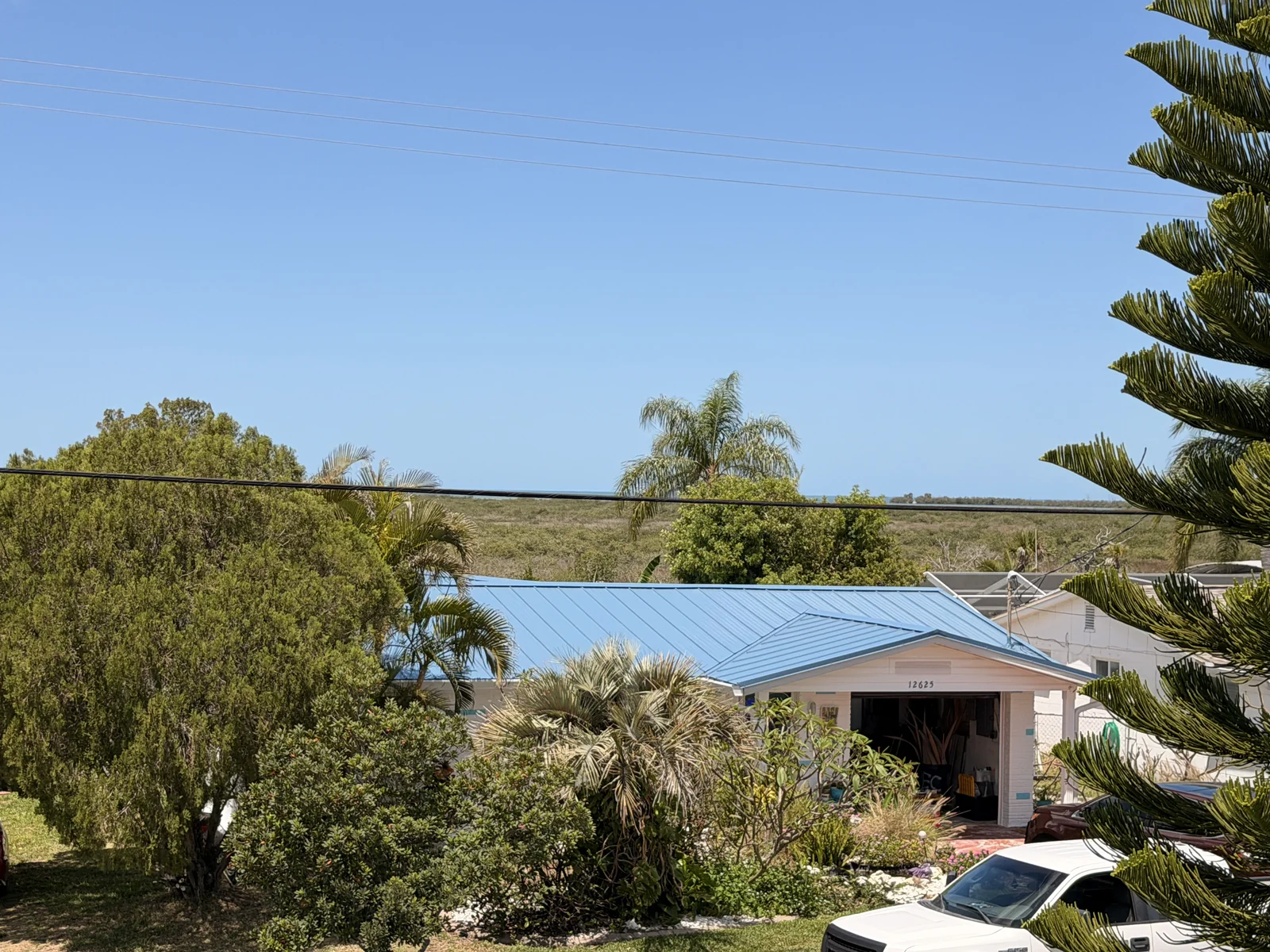
Manatee County sits at roughly 150 mph ultimate design wind speed inland, climbing as you move toward the Gulf. Most of the Tampa Bay region falls between 140 and 160 mph for Risk Category II structures. That spread matters more than it sounds, because the design wind speed is assigned to your project address rather than to the county, and every product on your roof has to be approved for the number at that address.
Two consequences follow. First, Manatee sits inside the wind-borne debris region, which is triggered where design speeds exceed 120 mph, or exceed 110 mph within one mile of the coast. That designation drives opening protection requirements on the house and it drives the tested assembly requirements on the roof. Second, every roof covering you install has to carry a current Florida Product Approval or a Miami-Dade Notice of Acceptance rated for that wind speed. The approval belongs to a tested configuration, not to a brand name, which means the underlayment, the fastener pattern and the edge metal are part of what was approved.
This is where a lot of Bradenton comparison shopping goes sideways. Two quotes can both say architectural shingle and specify different approvals, different fastener counts and different edge details. The cheaper one is frequently the one approved for a lower wind speed than the address requires. Ask for the Florida Product Approval number on the quote, then ask what design wind speed the address carries. A contractor who works this coast answers both without looking anything up. The broader code picture, including what changed in the current edition, is covered in our guide to the 2026 Florida Building Code roof changes.
Why Manatee and Sarasota Owners Are Pricing Metal Against Tile
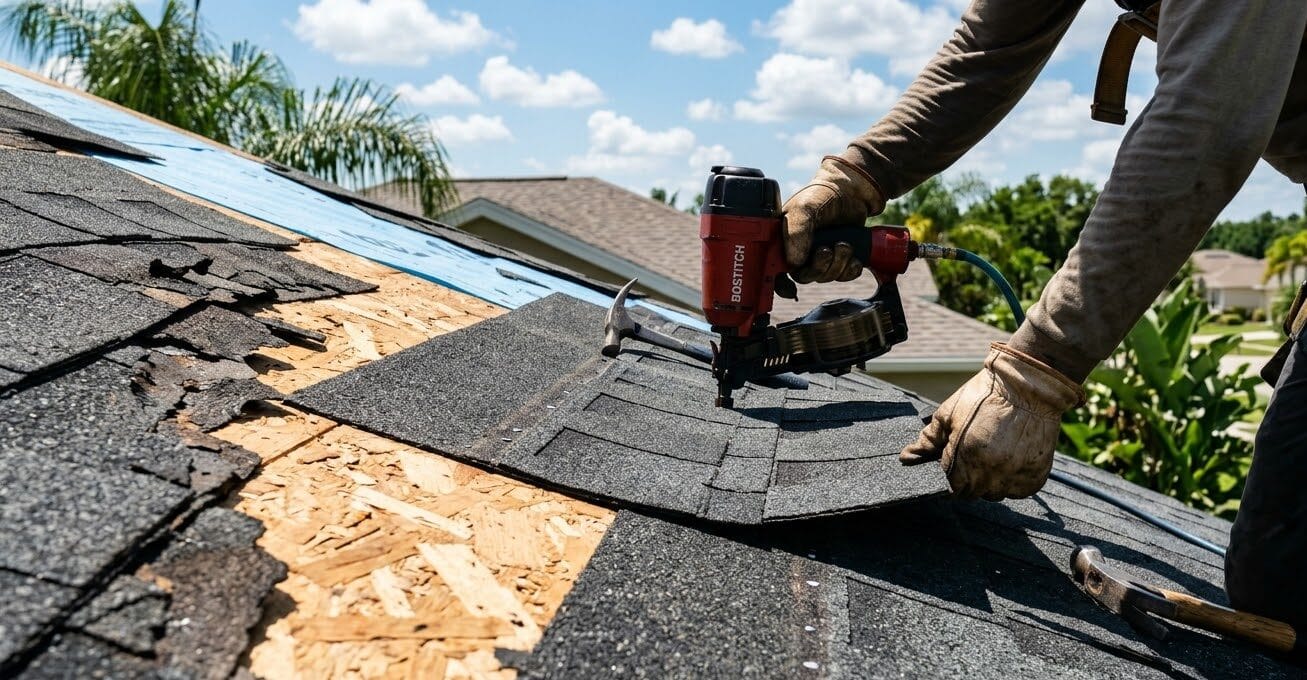
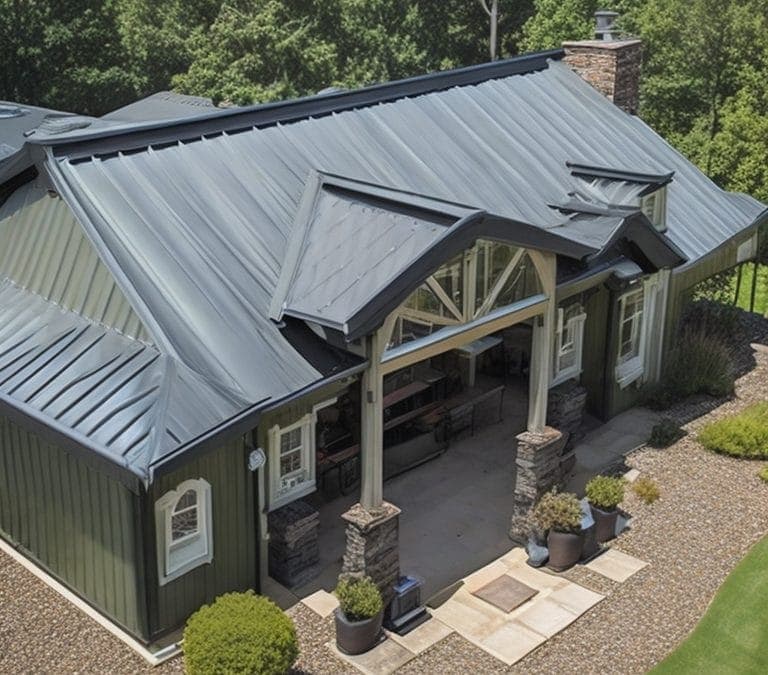
Tile is the signature roof of this coast and it is also the assembly that ages most deceptively. Concrete and clay tile can outlast the house. The underlayment beneath it cannot. In Florida heat the felt or synthetic layer that actually keeps water out of the structure is the wear item, and it typically reaches the end of its service life while the tile above it still looks showroom new from the street.
That gap creates the situation Manatee owners keep running into. The roof looks perfect. The insurance carrier looks at the permit date instead, and after the 2022 and 2024 storm seasons carriers tightened roof age cutoffs, raised deductibles and pushed back harder on claims across Florida. A tile roof past roughly 15 to 20 years old is now one of the harder things to place on the Gulf coast, and the quotes reflect it.
Then the replacement math gets examined and metal starts winning on two specific fronts.
- Service life: Metal commonly runs 40 to 60 years in Florida, with well specified systems cited as high as 70. Asphalt shingle in this climate runs 15 to 20. A tile re-roof buys new underlayment on a 20 year clock. A metal re-roof frequently outlives the mortgage.
- Wind rating: Standing seam metal systems are commonly rated at 140 to 150 mph and above. Architectural shingles typically sit at 110 to 130. In a county that runs near 150 and climbs toward the water, that difference is not academic.
- Insurance treatment: Metal, built-up, membrane and other roof types are called out on the wind mitigation form and can qualify for a policy discount. Many carriers offer 15 to 35 percent premium reductions for metal or impact-resistant roofing. On a $4,000 annual policy that is $600 to $1,400 a year.
- Weight: Metal is dramatically lighter than tile, which removes a structural question on older homes and speeds the tear-off, since the tile disposal volume disappears from the job.
The counterargument is real and worth stating. Metal costs more up front, the aesthetic does not suit every deed-restricted community, and a poorly installed metal roof on the coast fails faster than a well installed shingle roof. Metal is a system, not a product, and it is unforgiving about detailing. If you are weighing this seriously, start with an inspection of what is actually under your tile rather than a quote on what would replace it. Our metal roofing systems page covers panel profiles and where each one fits, and the roof inspection service is the step that tells you whether you are buying time or buying a roof.
Gulf Coast Corrosion Is a Fastener Problem Before It Is a Roof Problem
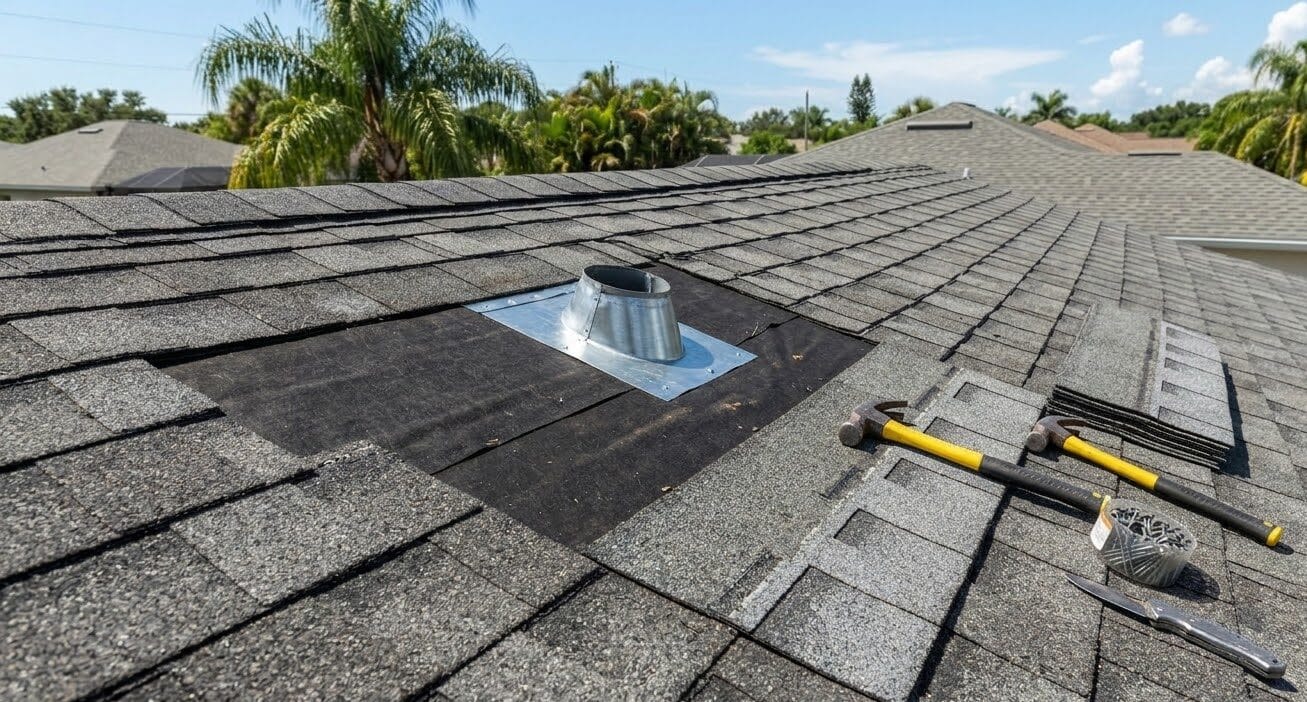
Homeowners near the water expect the roof covering to be the thing that degrades. On the Gulf side of Florida the covering is rarely first. The metal fails first, and the metal is everywhere on a roof even when the roof is not a metal roof.
Drip edge, valley metal, flashing at walls and chimneys, vent collars, pipe boots, ridge vent fasteners and the nails holding the whole assembly down are all steel or aluminum components living in salt-laden air. Salt accelerates galvanic corrosion, and mixing metals accelerates it further. A stainless or coated fastener driven into a dissimilar metal flashing will outlast a plain galvanized nail by years in this environment, and the cost difference across an entire roof is a rounding error against the cost of doing the job twice.
Three questions separate Bradenton contractors fast. Ask what fastener metal is being quoted and where each type is used. Ask what the flashing package is made of at the valleys and the wall terminations. Ask what happens at the pipe boots, which are the most common leak origin on any Florida roof and the cheapest thing to upgrade during a re-roof. The same corrosion logic drives coastal specification on the Atlantic side too, which we covered in the Daytona Beach coastal roof guide, and the failure sequence is nearly identical even though the geography is opposite.
Manatee County Permits: The Sequence and the 180-Day Clock
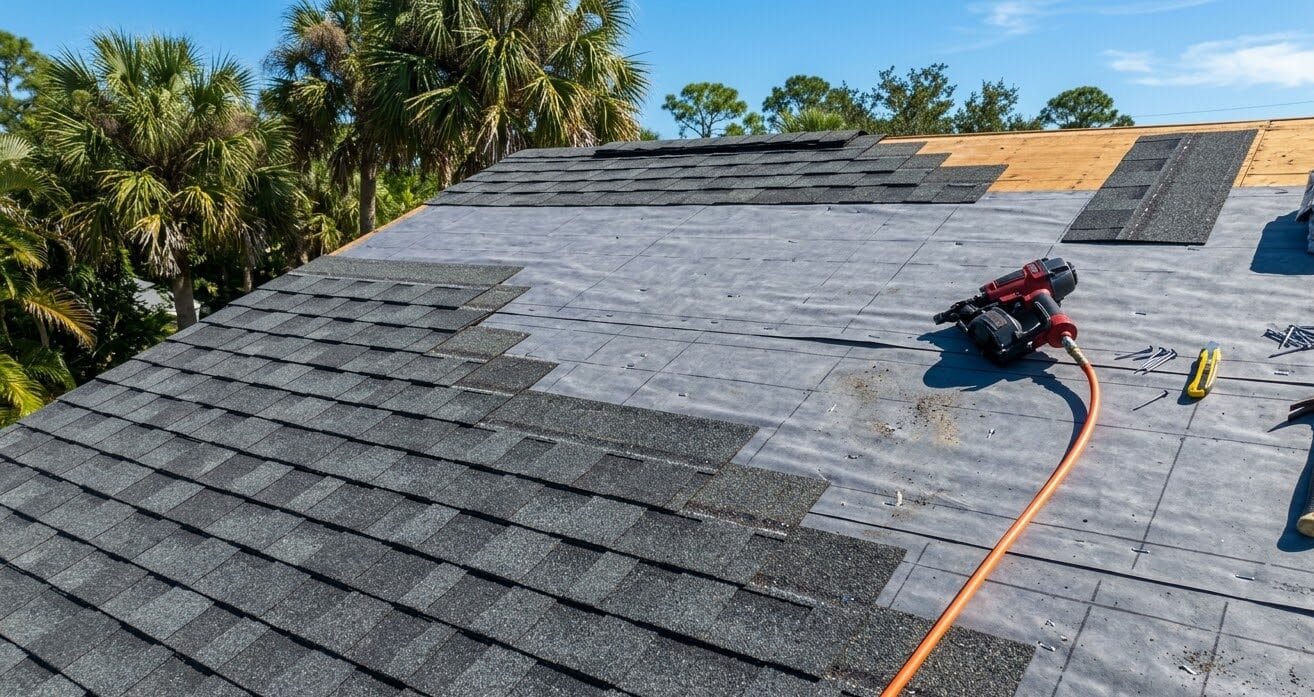
Roof covering replacement requires a permit in every Florida jurisdiction, and Manatee is no exception. Applications run through the county Development Services online portal, which requires an account before you can submit, and additional documents are required depending on the permit type. Your contractor pulls this, not you, and a contractor who suggests skipping it is telling you something important about the rest of the job.
The inspection sequence on a residential re-roof follows a predictable order.
- Nail-off: The sheathing fastening is inspected after tear-off, before anything covers it. This is the inspection that catches an under-nailed deck, and it is also the moment any rotten sheeting gets found and priced.
- Dry-in: Inspected after the underlayment goes down. On the Gulf coast this is the layer doing the real waterproofing work, so it is worth knowing what product is specified and how it is fastened.
- Final: After completion, typically within days of the crew finishing.
One detail catches people out. A Manatee permit expires after 180 days with no approved inspection, and each passed inspection resets that 180 day clock. On a job that stalls waiting for material or for a board approval, that clock is the thing that quietly kills the permit. Residential re-roof permit fees in Florida commonly run in the $150 to $500 range, and Manatee adjusted its impact fee schedule effective September 9, 2025, so confirm current amounts in the county fee schedule rather than budgeting from an old quote.
If your home sits in a deed-restricted community or on a barrier island, architectural review runs in parallel with the permit on a board calendar rather than a county calendar. That is the most common source of delay nobody budgets for, and it is entirely avoidable by starting the submission early.
The Wind Mitigation Form Changed on April 1, 2026
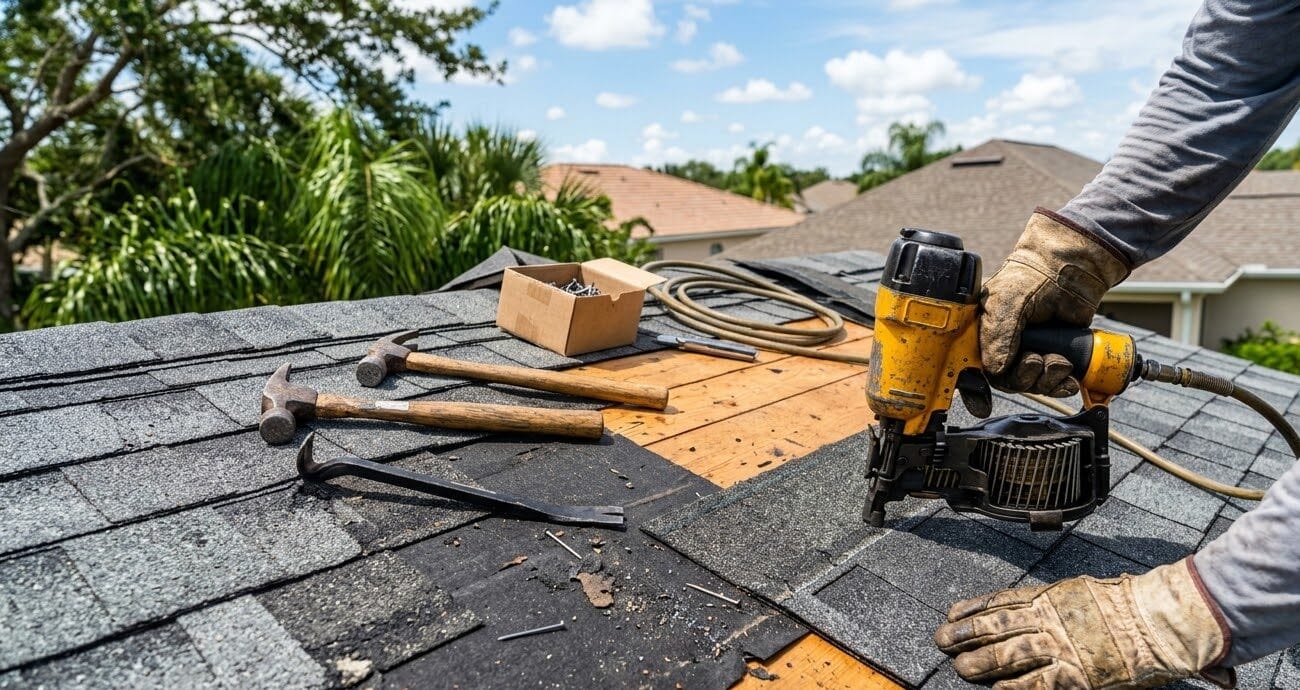
As of April 1, 2026, Florida wind mitigation credits are documented on a revised inspection form, the OIR-B1-1802 revision 04/26. If you are re-roofing this year, the sequence matters: schedule the wind mitigation inspection after the roof is finished and the final has passed, because the credits are tied to what an inspector can verify on the completed assembly.
The roof-related items on that form are where a Bradenton re-roof either pays you back or does not.
- Roof covering, FBC equivalent: The installed covering has to meet current Florida Building Code standards, documented with Florida Product Approval or NOA numbers. Asphalt shingles meeting ASTM D3161 Class F or ASTM D7158 Class H qualify, as do metal and tile systems with approved documentation. This item alone is commonly worth 5 to 10 percent of the wind premium.
- Roof deck attachment: Graded on fastener type, length and spacing. OSB or plywood decking nailed with 8d common nails of at least 2 1/4 inches, spaced 6 inches on center at the edges and 12 inches in the field, earns the intermediate credit. This is decided during your re-roof, at the nail-off inspection, and it is nearly impossible to improve afterward without tearing off again.
- Secondary water resistance: A separate barrier under the covering, evaluated on its own line. Worth asking about while the deck is exposed, because that is the only moment it can be added cheaply.
- Roof-to-wall connection and roof geometry: Straps, clips and hip versus gable. These are structural and mostly fixed, but they are visible during a re-roof and they belong in the inspection report.
Homes carrying the full package, meaning hip geometry, impact-rated openings, upgraded deck attachment and secondary water resistance, commonly see 20 to 30 percent off the total annual premium. The mechanics of the inspection, what the inspector photographs and how to avoid paying for one you cannot use, are covered in detail in our Florida wind mitigation inspection guide.
What Insurance Actually Pays For After a Manatee Storm
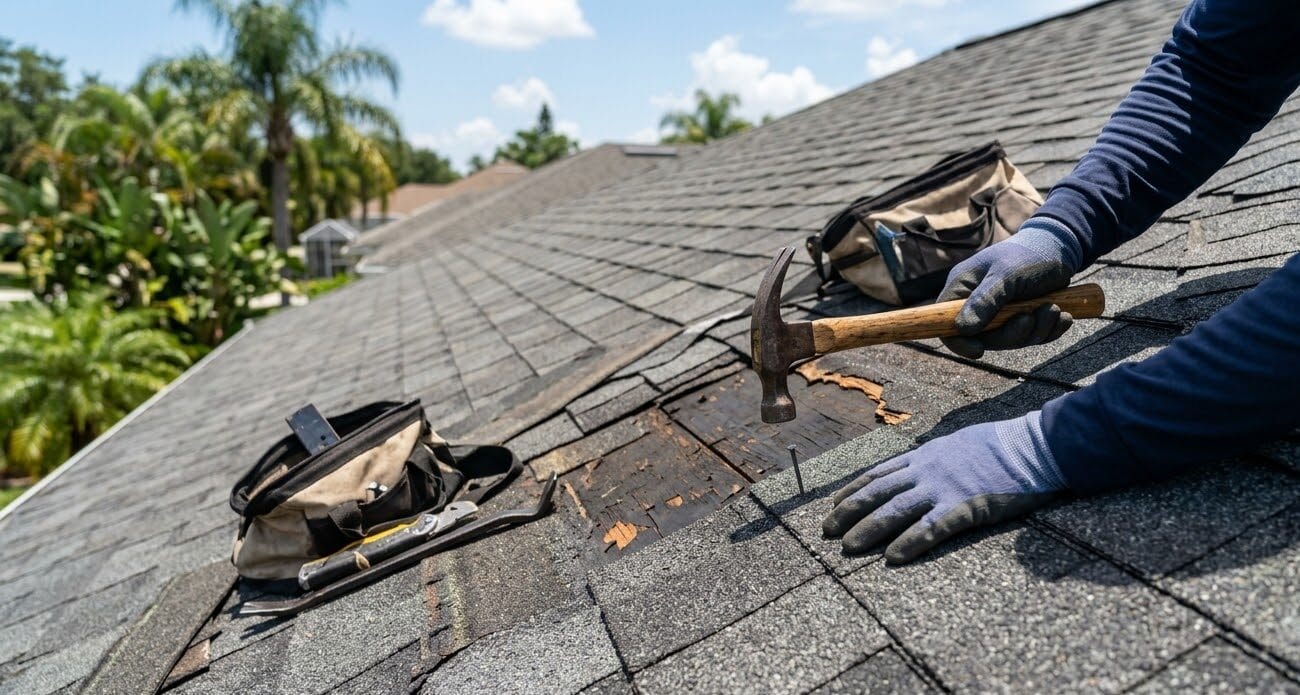
Two things get confused constantly in this market: the discount you earn for a good roof, and the claim you file after a storm damages one. They run on separate tracks and they reward different behavior.
On the claim side, the deciding factors are documentation and speed. Photograph the damage before anything is tarped or moved, keep every receipt including the emergency mitigation ones, and get an independent assessment of scope before the adjuster sets the number rather than after. On the Gulf coast the most commonly disputed items are the ones a homeowner cannot see from the ground: displaced tile with intact appearance, lifted shingle tabs that reseal on a warm day, and underlayment damage under a covering that photographs fine.
On the discount side, the roof you build today determines the premium you pay for the next fifteen years. That is the argument for specifying up during a planned replacement rather than after a storm forces one, because a planned re-roof lets you choose the deck attachment and the secondary water barrier that a rushed post-storm job usually skips. If you are already in a claim, our insurance claims assistance team documents scope before the adjuster meeting, which is the point at which the number is actually decided.
Timeline: What Four to Seven Weeks Looks Like in Manatee
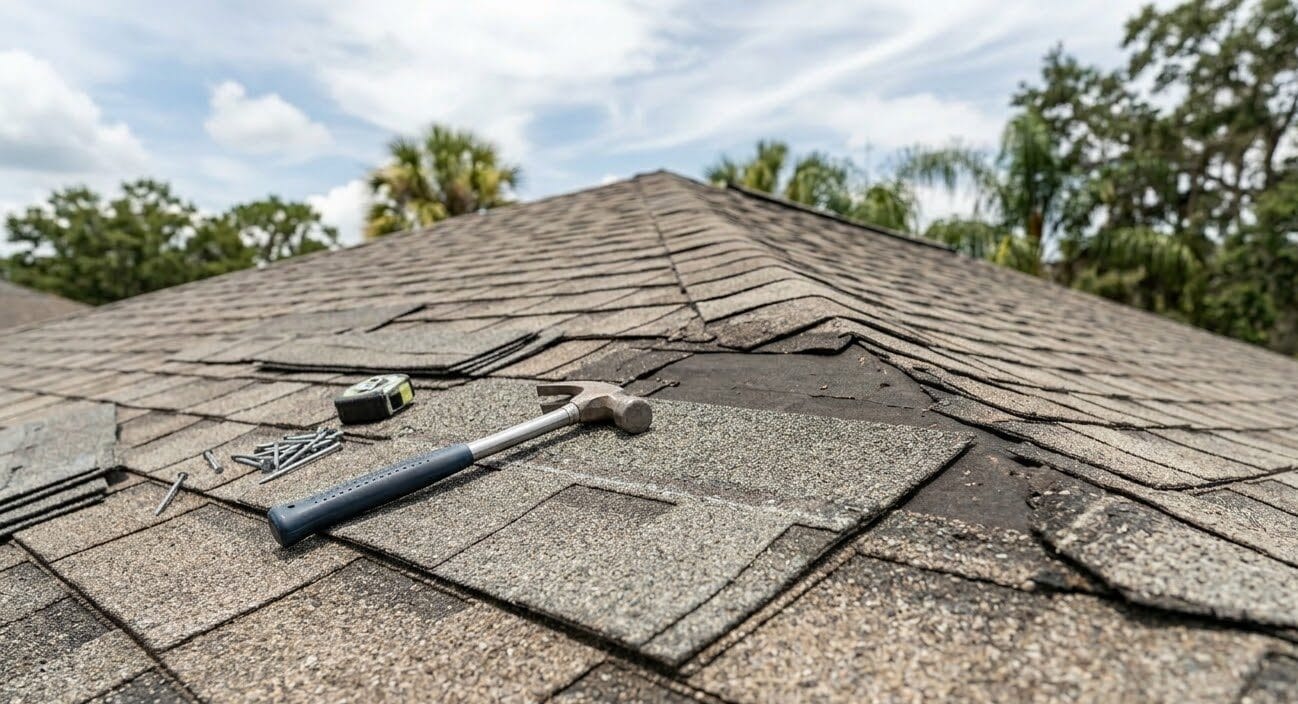
Plan the whole sequence, not just the install. From first call to final inspection, a straightforward Bradenton re-roof runs about four to seven weeks, and the install itself is the shortest part of it.
- Inspection and quote: A few days. This is where deck condition gets estimated and where the product approval and fastener spec should be written down.
- Architectural review, if applicable: Runs on the board calendar, commonly the longest single wait, and it happens in parallel with permitting rather than after it.
- Permit submittal and issuance: Through the county online portal, with document requirements that vary by permit type.
- Material lead time: Shingle is usually on the shelf. Tile and metal are ordered, and specific profiles and colors carry real lead times on this coast.
- Installation: One to three days on a typical single family home, with tile and metal at the longer end.
- Final inspection, then wind mitigation: In that order, because the mitigation inspector is verifying a finished, permitted assembly.
Two scheduling notes specific to Manatee. Hurricane season compresses everything, and a June through November replacement competes for crews with emergency work. And if the roof is already leaking, the sequence changes entirely, because temporary protection has to happen first regardless of where the permit stands. A full roof replacement planned in the spring is a different project, at a different price, than the same roof replaced in the middle of a storm week.
How to Read a Bradenton Roofing Quote
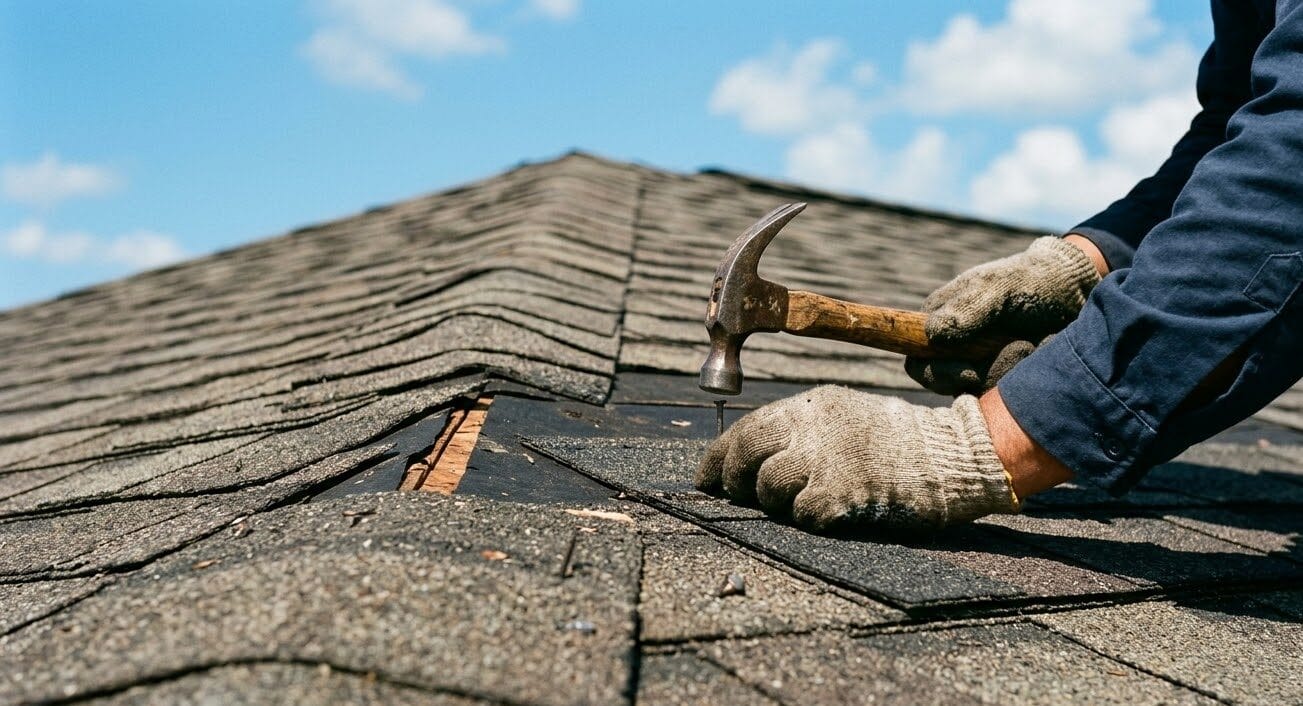
Quotes in this market are hard to compare because they describe different scopes using the same words. Five items make two bids comparable.
- Squares, not square feet: Confirm the roof area the bid is priced on. A difference of three squares between two quotes usually means one of them measured and one of them guessed.
- Florida Product Approval number: Written on the quote, matched to the design wind speed at your address.
- Deck replacement rate: Per sheet, in writing, with the allowance included in the base bid stated separately.
- Fastener and flashing package: Specific metals, specific locations. On the coast this is the difference between a 20 year roof and a 12 year roof.
- License and permit responsibility: Verify the contractor license number and confirm in writing that the contractor pulls the permit. Protech Roofing holds license CCC1335878.
Protech Roofing works across Central Florida and specifies coastal work differently from inland work as a matter of routine, because the failure modes are different and the code triggers are different. You can review the full Central Florida service area, call the team at (352) 605-0696, or start on the contact page and we will inspect the roof before quoting anything on it.
FAQ
Frequently Asked Questions
How much does a new roof cost in Bradenton, FL in 2026?
+
Why are so many Manatee County homeowners replacing tile roofs with metal?
+
What wind speed does a roof in Bradenton have to be rated for?
+
Do I need a permit to replace a roof in Manatee County?
+
What changed on the Florida wind mitigation form in 2026?
+
What fails first on a roof near the Gulf in Bradenton?
+
Related Articles
More guides for Florida homeowners
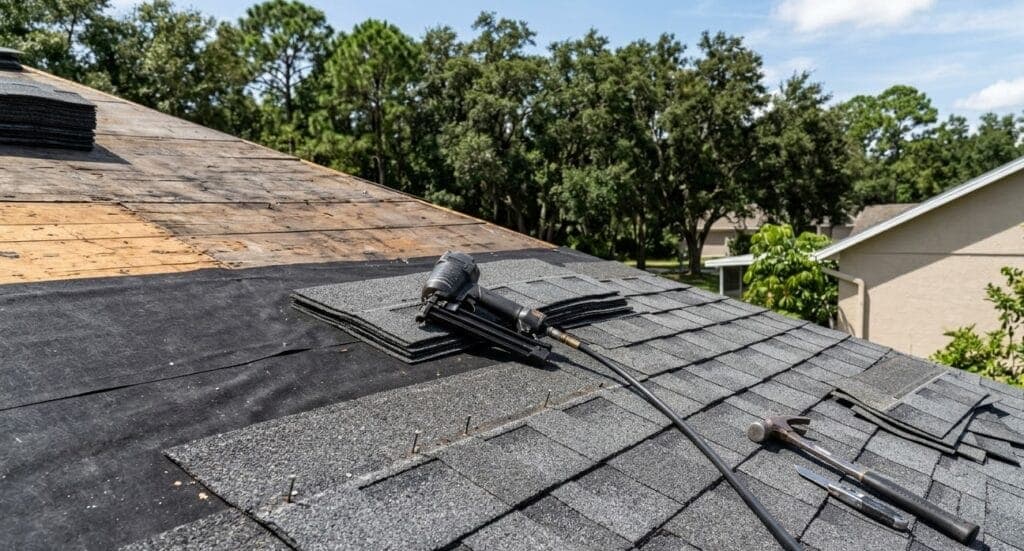
Roofing Warranties in Florida: What Voids Them
A new Florida roof usually carries two warranties: one from the manufacturer for the product and one from the contractor for the installation. Here is what each covers, what quietly voids them and how to keep your coverage.
Read ArticleSolar Roofing in Florida: Solar Shingles vs Panels (2026)
Every solar system on a Florida roof is either bolted to the roof or is the roof. Here is how panels and solar shingles compare in 2026, what changed with the federal credit, and why the cheapest solar project often starts with a re-roof.
Read Article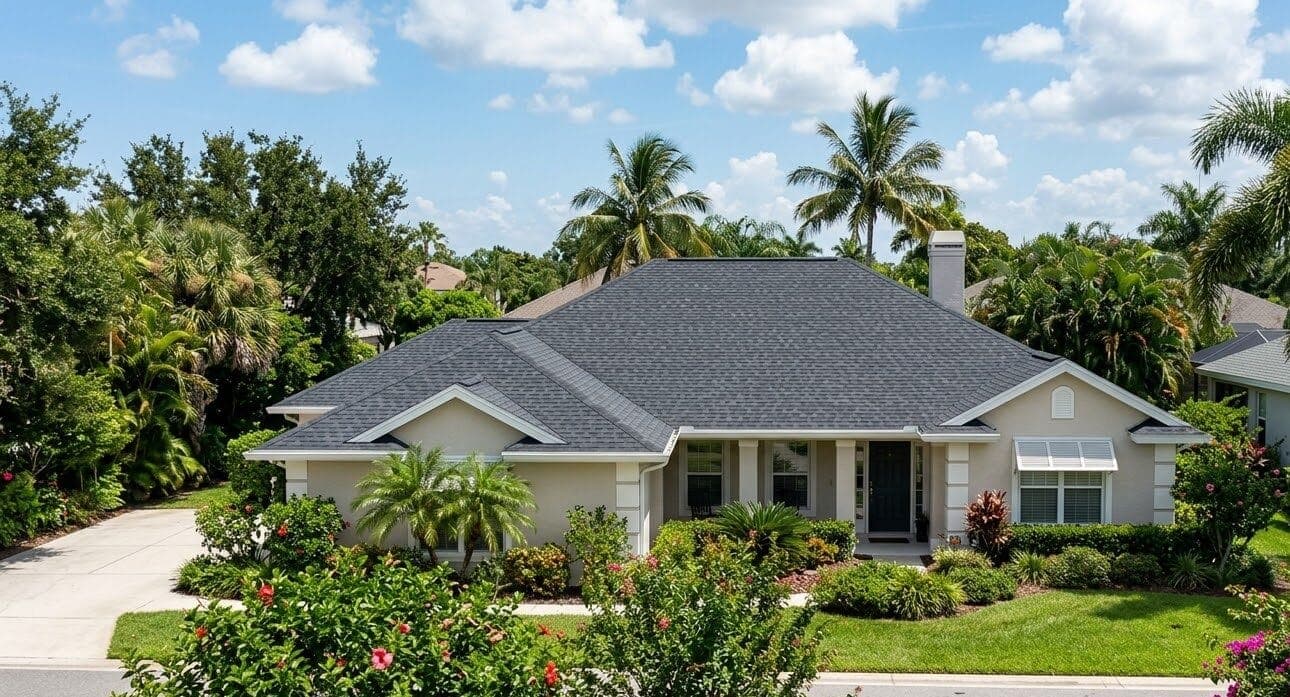
Pinellas Flood Zone Roofing: The 49% Rule Explained
Every article calls it the FEMA 50 percent rule. In unincorporated Pinellas County the number that governs your permit is 49 percent, measured against structure value without land. Here is what counts toward it, where a roof replacement actually lands in that math, and why simultaneous permits still aggregate even where the lookback period was repealed.
Read ArticleReady When You Are
Get your free roof inspection today.
No-pressure, written estimate. Same-week scheduling across Hernando County. Call us now or request a visit online.