Blog
Florida Building Code 9th Edition: The Roof Changes Taking Effect December 31, 2026
Call (352) 605-0696The 9th Edition of the Florida Building Code takes effect December 31, 2026, and the permit application date decides which edition governs your roof. The headline most people get wrong is that wind loads are changing: they are not, because the 9th Edition keeps ASCE 7-22. What is actually changing is more specific and more useful, from relaxed recover rules that can save you a full tear-off to stricter fastener corrosion standards near saltwater. Here is every roof change with its section number, what it costs, and what it saves. Call (352) 605-0696 for a free roof assessment.
What Actually Changes on December 31, 2026
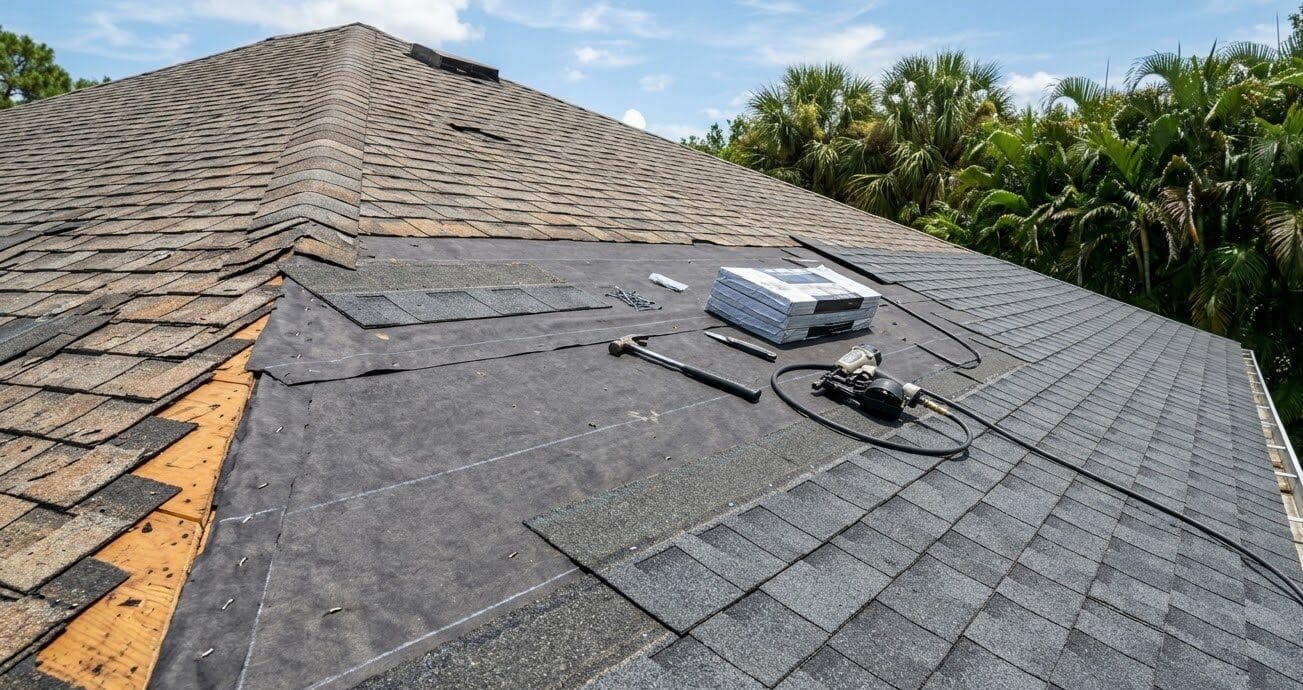
The 9th Edition of the Florida Building Code takes effect December 31, 2026. If you own a home or a commercial building in Florida and a roof is anywhere in your five-year plan, that date matters, because the permit application date is what determines which edition of the code your job is reviewed under.
Start with the single most useful thing to know, because it cuts through most of the noise online: the wind load standard is not changing. The 9th Edition continues to reference ASCE/SEI 7-22, the same standard the 8th Edition already used. Your design wind speed is not jumping overnight, and a roof permitted in January 2027 is not suddenly engineered to a different wind map than one permitted in November 2026.
What is changing is more specific and, in several places, more practical. The 9th Edition rewrites parts of how existing roofs may be recovered instead of torn off, adds a brand new section governing coatings over asphalt shingles, tightens fastener corrosion requirements near saltwater, extends drip edge requirements, and modernizes the tile roofing test protocols. Some of these save you money. A few of them will cost you. Here is the honest breakdown of each.
Recover Versus Replacement: Section 706.3 Gets More Flexible
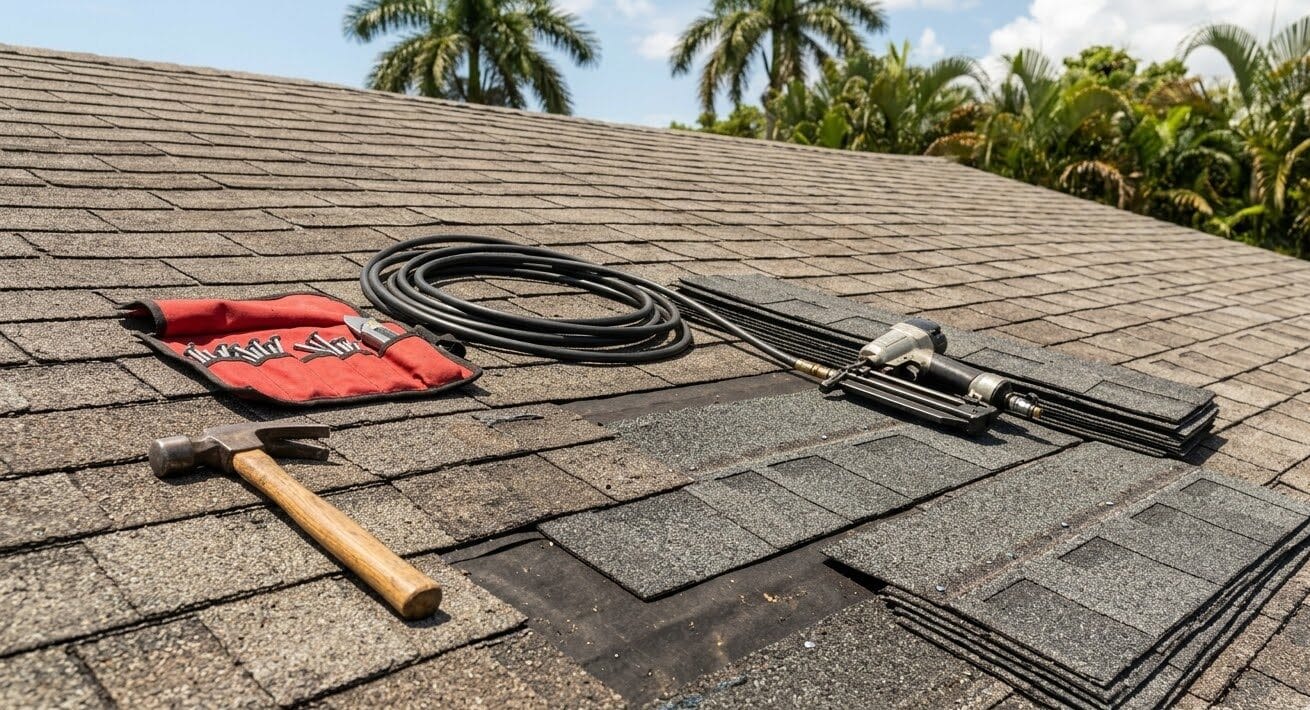
The change with the biggest dollar impact sits in Chapter 7 of the Existing Building volume, Section 706.3, which governs when a roof may be recovered and when it must be fully replaced. Florida has historically been strict here, and the strictness has often meant full tear-offs on roofs where the layers underneath were still sound.
The 9th Edition adds and revises exceptions that let more of the existing assembly stay in place. Exception 3 addresses the situation where two roof covering applications exist and the upper roof system or covering is removed, leaving an existing or repaired substrate that is adequate. Exception 5 addresses membranes: where the existing roof assembly includes a vapor barrier or self-adhering membrane that is adhered to the roof deck, that existing membrane is permitted to remain in place.
Read those two together and the practical effect is clear. If the layer under your failed roof is code-compliant and intact, the 9th Edition gives your contractor and your building official a defined path to keep it rather than demolish it. That is less tear-off labor, less dumpster, less exposure of your interior to weather mid-job, and less landfill. On a commercial building with an adhered membrane over deck, the savings can be substantial, which is why we walk owners through the recover option on every commercial flat roofing assessment.
The caveat is the word adequate. This is not permission to roof over garbage. The substrate still has to be sound or repaired to sound, and the building official still reviews it. What changed is that a compliant existing layer is no longer automatically condemned by default. If you are weighing an overlay against a tear-off on a low-slope roof, the tradeoffs are laid out in our guide to flat roof repair and replacement with TPO overlay.
New Section 1507.2.10: Coating Asphalt Shingles
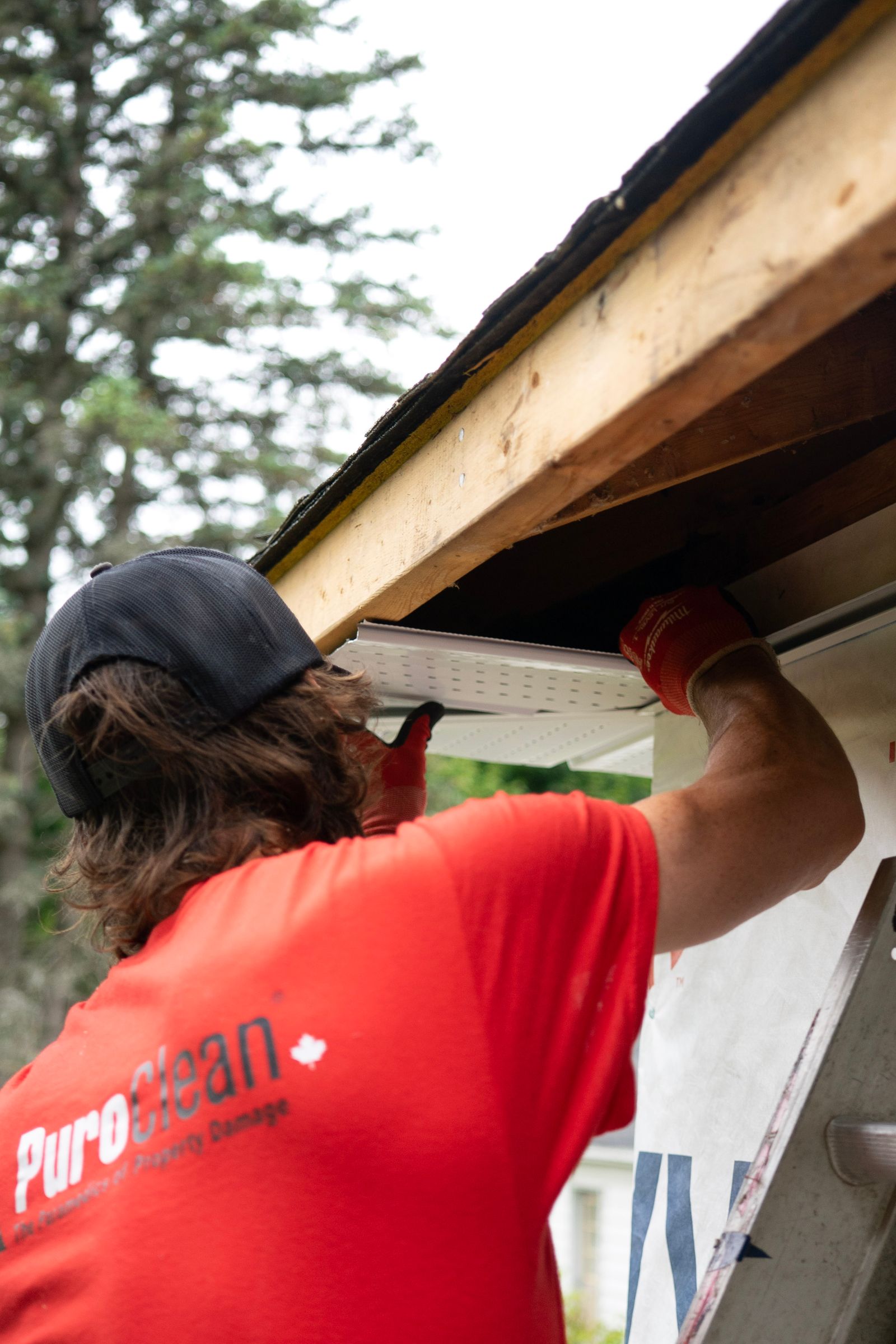
The 9th Edition introduces Section 1507.2.10, Coating of Asphalt Shingles, which did not exist as its own section before. It provides that application of elastomeric or maintenance coating systems over existing asphalt shingles shall be in accordance with the shingle manufacturer approved installation instructions.
This one deserves a plain-English warning, because a small industry has grown around spraying coatings on tired shingle roofs and calling it a roof restoration. The new section does not bless that practice. It does the opposite of what the sales pitch implies: it ties the legitimacy of any coating directly to whether the shingle manufacturer approved it in writing. If the manufacturer of your shingles does not have approved installation instructions covering that coating, the coating is not code-compliant.
There is a second consequence most homeowners will not see coming. Coating a shingle roof outside the manufacturer instructions is one of the fastest ways to void the material warranty on the shingles you already paid for. So the pitch that promises to extend your roof ten years for a fraction of replacement cost can, done wrong, end the only warranty protection you had. Ask for the manufacturer document by name before anyone sprays anything.
Fasteners Near Saltwater: Sections 1506.5 and 1506.6
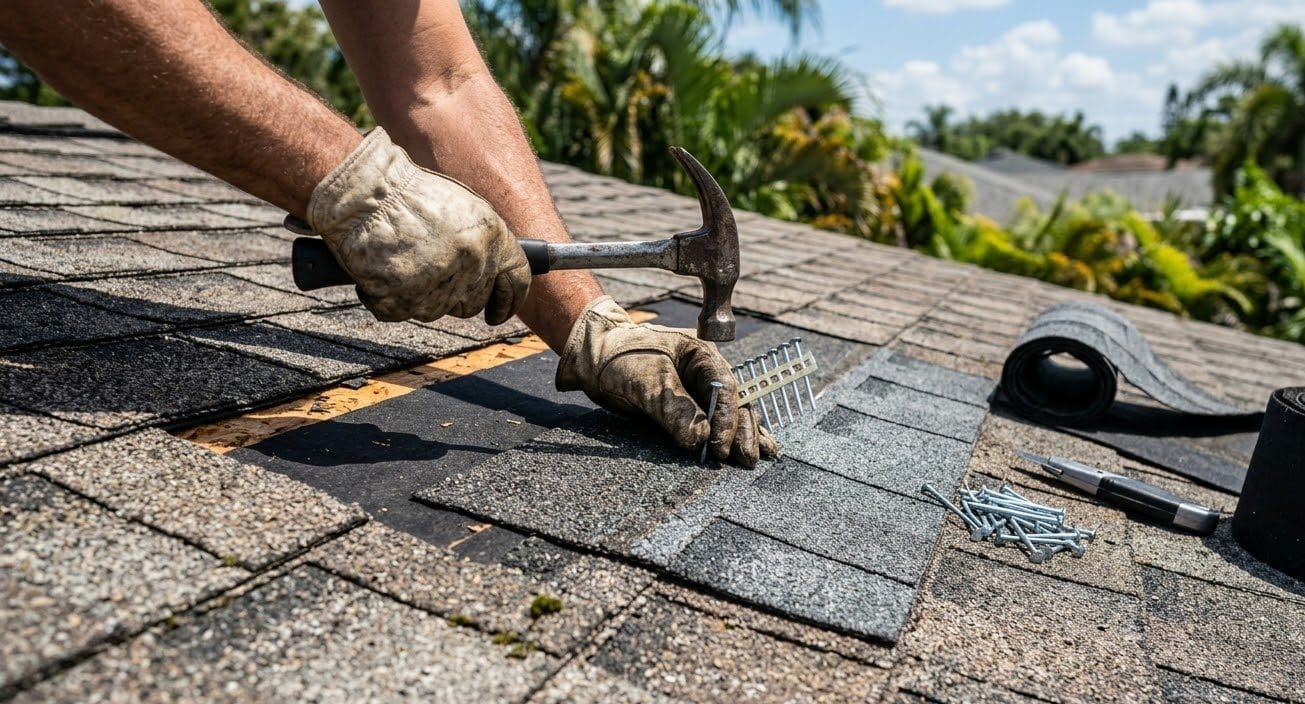
Coastal corrosion is where the 9th Edition gets noticeably stricter, and if you live anywhere along the Nature Coast or the Gulf, this section is about your roof specifically. Homes in Hernando Beach sit well inside both distance triggers.
- Nails, Section 1506.5: nails must be corrosion resistant in accordance with ASTM F1667. Where the building is within 3,000 feet of saltwater, the fasteners must comply with Section 1711, the stricter corrosion resistance provisions.
- Screws, Section 1506.6: screws must demonstrate corrosion resistance through ASTM A641 Class 1, TAS 114 Appendix E, or ASTM B117 salt spray testing. Within 300 feet of saltwater, screws must comply with Section 1711.
- HVHZ, Section 1517.5.1.1: in the High Velocity Hurricane Zone, fasteners within 3,000 feet of saltwater carry the same Section 1711 requirement.
Note the two different distances. The nail trigger is 3,000 feet from saltwater. The screw trigger is 300 feet. They are not typos and they are not interchangeable, and a contractor who treats them as the same number will fail an inspection or, worse, pass one and leave you with fasteners that rust out years early.
Why this matters more than it sounds: roofs near the Gulf almost never fail because the shingle gave up first. They fail because the fastener holding the shingle or the deck corroded, lost its grip, and the wind found the loose edge. Salt air is the reason Florida coastal roofs age faster than inland ones, a pattern we covered in how long a roof lasts in Florida heat, humidity and hurricanes. The 9th Edition is treating fastener metallurgy as a wind-resistance issue, which is exactly what it is.
Drip Edge Now Required at Gables, Not Just Eaves
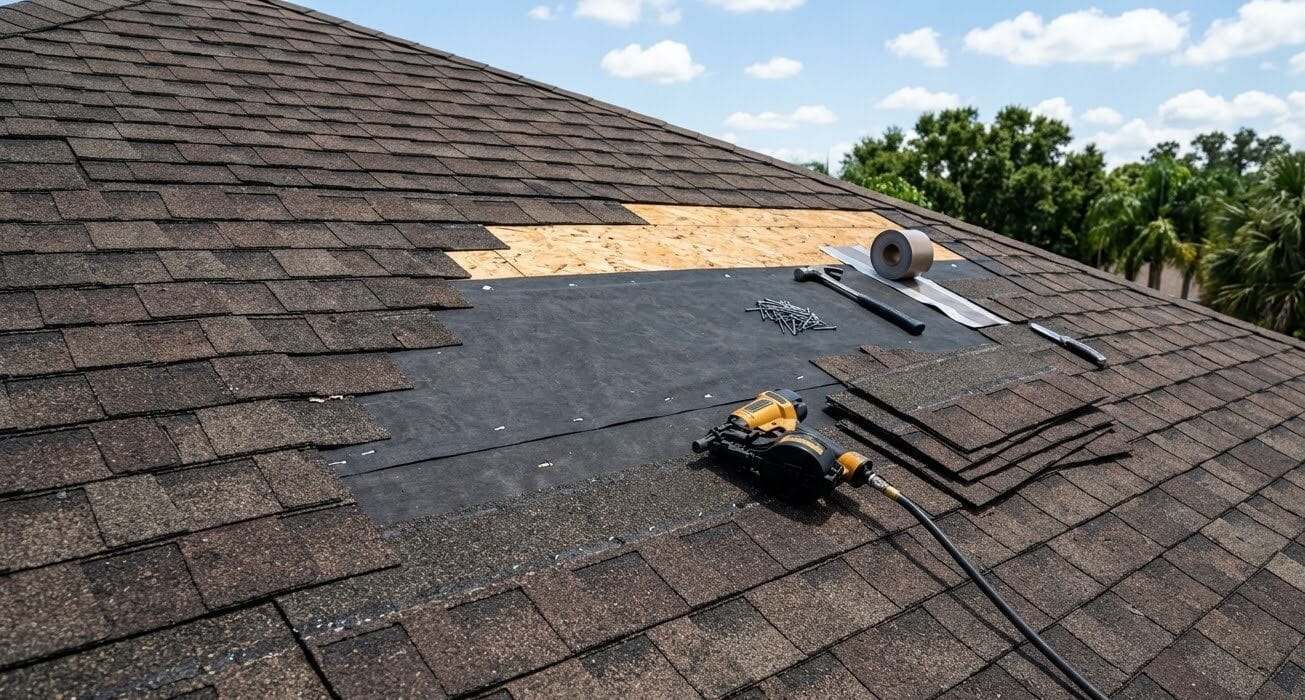
Section 1507.3.9.1 in the 9th Edition requires drip edge at eaves and gables for steep-slope roofs, meaning slopes of 2:12 and greater. Previously the requirement was commonly applied at the eave, with the gable treated far more loosely in the field.
Drip edge is the metal flashing that runs along the roof perimeter, directing water off the edge instead of letting it run back under the covering and into the fascia and sheathing. At the eave it protects against water wicking backward. At the gable, the rake edge, it protects against wind-driven rain being pushed sideways up under the shingle edge, which is precisely what a hurricane does.
This is a small line item that prevents an expensive failure. Rotted rake fascia and delaminated sheathing along the gable are among the most common findings on Florida roof inspections, and they usually trace to an unprotected rake edge over many seasons. Expect this to add a modest amount of metal and labor to your re-roof and to eliminate a recurring repair.
Tile Roofs: Section 1507.3.9, the FRSA/TRI Manual and the RAS Updates
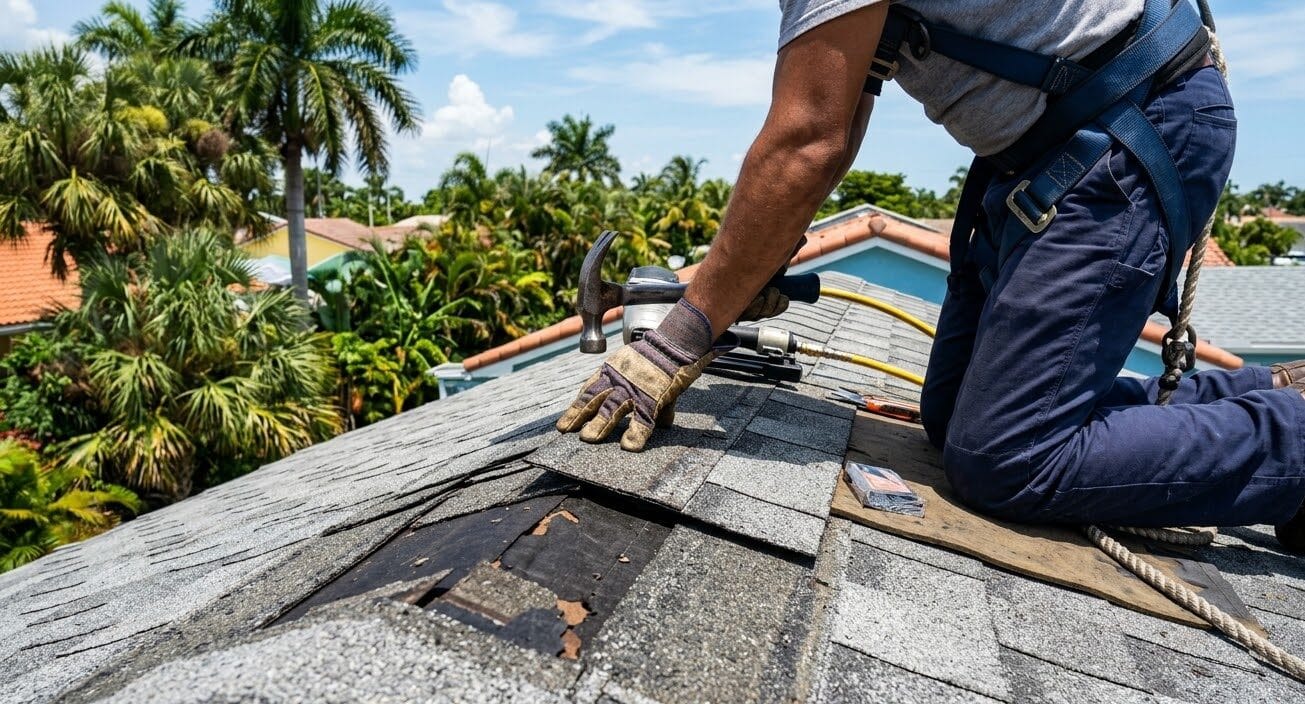
Tile gets the most technical rewrite in the 9th Edition, and the direction is a shift from prescriptive methods toward performance-based standards.
Section 1507.3.9 now references flashing requirements per the manufacturer installation instructions or the recommendations of the FRSA/TRI Florida High Wind Concrete and Clay Roof Tile Installation Manual. The referenced manual remains the Seventh Edition, and its tables were not revised in this cycle, which is good news for contractors who have already trained to it.
The Roofing Application Standards, RAS 118, 119, 120 and 127, are updated with performance-based standards replacing prescriptive methods. RAS 127 in particular provides uplift resistance tables, Tables 1 through 12, covering wind conditions up to 175 mph across various roof slopes, exposure categories and risk categories.
For a tile roof owner, the practical translation is that attachment is being tied more tightly to demonstrated uplift performance for your specific slope and exposure, rather than to a one-size rule of thumb. If you are on the coast in an open exposure, that likely means a more robust attachment schedule than an inland home with the same tile. That is the same logic that drives shingle ratings, which we broke down in wind uplift ratings for shingles in Florida.
Underlayment Testing and the HVHZ Provisions
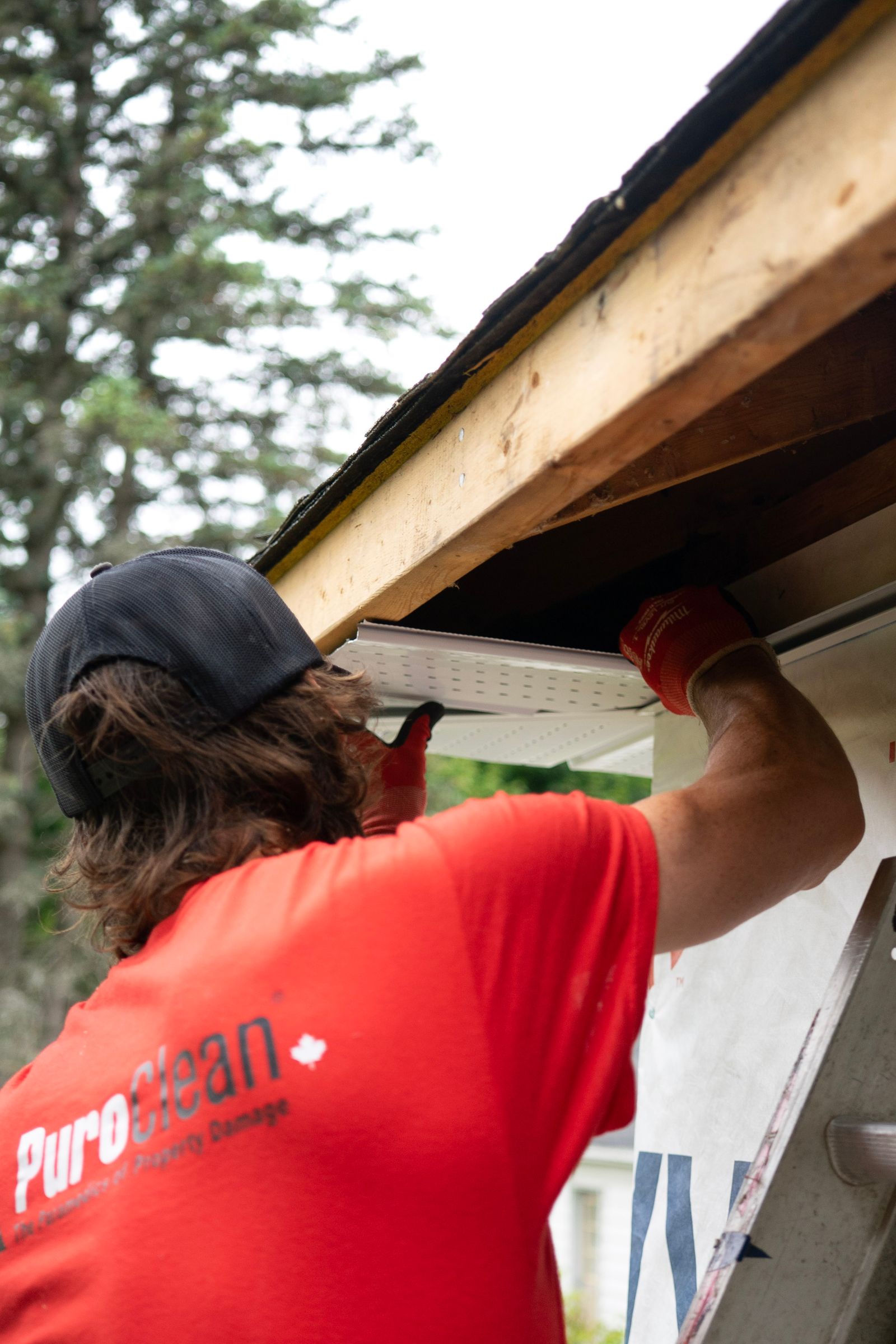
Section 1523.6.5.2.1 requires underlayment to be tested in accordance with TAS 110, TAS 103 and TAS 104, with uplift resistance established per FM 4474 or UL 1897. Section 1517.6.2.3 addresses drip edge installation over underlayment in the High Velocity Hurricane Zone, and Section 1517.5.1.1 carries the saltwater fastener rule described above.
The HVHZ is Miami-Dade and Broward counties, so these specific sections do not directly govern a permit in Hernando, Citrus, Sumter or Marion. They still matter to you for one reason: HVHZ protocols are where Florida tests things first, and provisions that prove out there tend to migrate into the statewide code in later editions. The underlayment scrutiny in particular is a preview of where the rest of the state is heading.
Underlayment is also the layer that decides whether a blown-off covering becomes an insurance claim or a catastrophe. It is the same principle behind the secondary water resistance credit on the wind mitigation form, which is one of the cheapest premium reductions available to a Florida homeowner. If you have not had that inspection, start with the Florida wind mitigation inspection guide.
What Is Still Under Discussion, Not Adopted
One proposal has generated more headlines than anything actually written into the code, and it is worth separating clearly. There has been ongoing discussion about expanding 160 mph impact-resistant envelope requirements for certain new construction within five miles of tidal waters.
That is a discussion item, and it is usually framed around windows and doors. Roofers pay attention to it because the roof is part of the building envelope, and stronger coastal envelope standards drive changes in attachment methods, assemblies, accessory components and inspection scrutiny. But do not let anyone sell you a roof today on the basis of a requirement that is still being debated. If a contractor quotes you a premium because of a rule, ask them for the section number. Adopted code has a section number. Proposals do not.
Who Pays for These Changes, and How Much
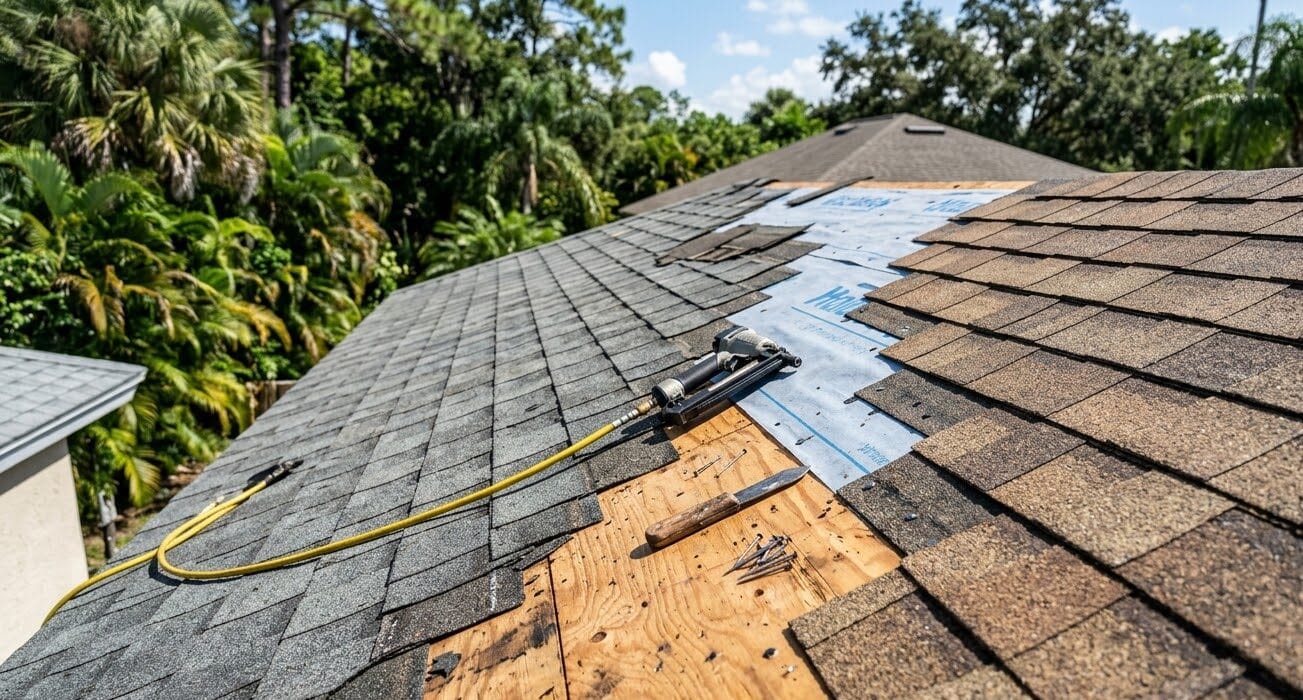
Mixed, and the mix depends on where you live and what is on your roof.
- Inland homeowners with shingle roofs: smallest impact. The gable drip edge requirement adds a modest amount of metal and labor. The recover flexibility in 706.3 may save you a full tear-off.
- Coastal homeowners within 3,000 feet of saltwater: a real increase. Corrosion-rated fasteners meeting Section 1711 cost more than standard fasteners. The offsetting value is a roof that does not lose its grip in year twelve.
- Tile roof owners: depends on slope and exposure. Performance-based attachment under the updated RAS standards may mean a heavier attachment schedule than your original roof had.
- Commercial and low-slope buildings: potential savings. The Exception 5 allowance to leave an adhered vapor barrier or self-adhering membrane in place can remove an entire demolition line from the estimate.
None of this changes the fundamental cost drivers of a Florida roof, which remain size, pitch, material, access and tear-off layers. For current numbers, see our Florida roof replacement cost guide.
What to Do Before December 31, 2026
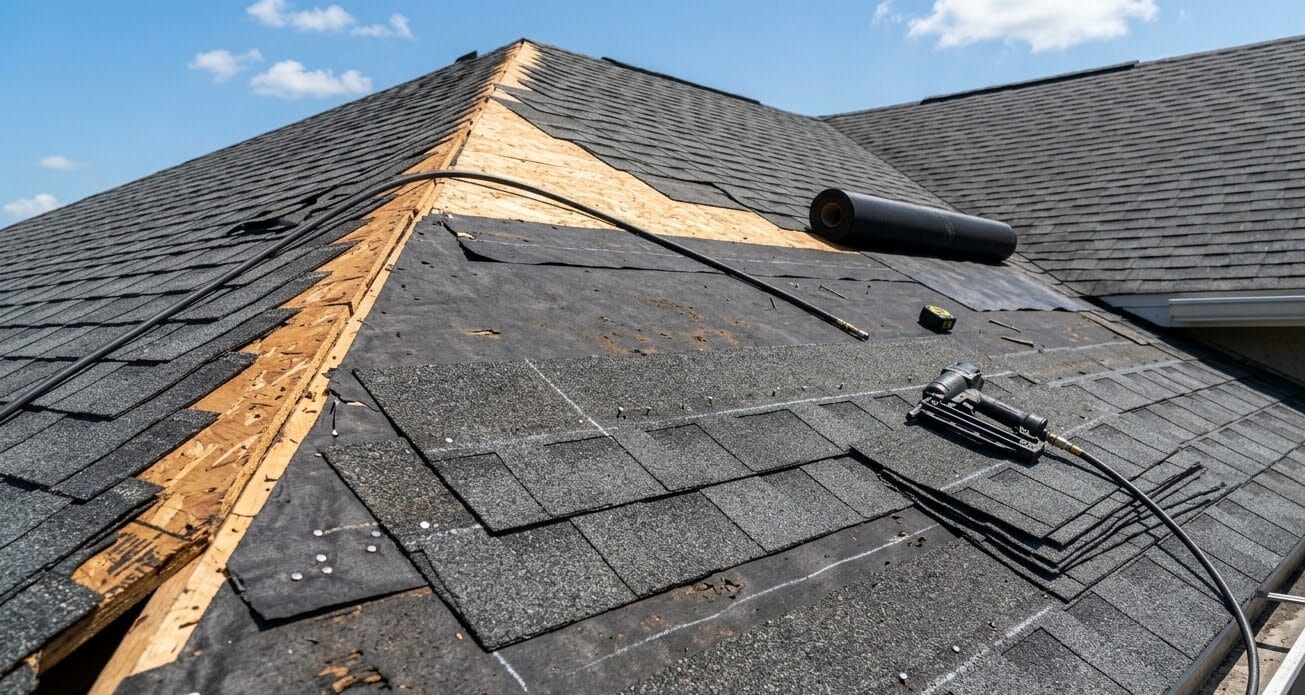
Two honest pieces of advice, and neither one is rush out and buy a roof.
First, if your roof is genuinely at end of life right now, permit it under the current edition rather than waiting. There is no advantage to timing a failing roof into a new code cycle, and hurricane season does not care which edition applies. A roof that needs replacing needs replacing.
Second, if your roof has years left, do nothing based on the code change. Get a wind mitigation inspection, keep your maintenance current, and let the roof finish its service life. The 9th Edition is not a reason to replace a healthy roof, and any contractor telling you otherwise is using a code date as a closing tool. If you are unsure which category you are in, we will tell you honestly which one applies to your roof. Call (352) 605-0696 for a free assessment.
And when the time does come, remember the paperwork side. Permits are required for roof replacement across Hernando County and its neighbors, and the permit date is what locks in your code edition. The process is walked through in do you need a permit for a roof replacement in Hernando County.
FAQ
Frequently Asked Questions
When does the Florida Building Code 9th Edition take effect?
+
Are wind load requirements changing in the 2026 Florida Building Code?
+
Does the 9th Edition make it easier to roof over instead of tearing off?
+
What are the new saltwater fastener rules for Florida roofs?
+
Can I coat my old asphalt shingle roof instead of replacing it?
+
Is drip edge required on gables under the 2026 code?
+
Related Articles
More guides for Florida homeowners
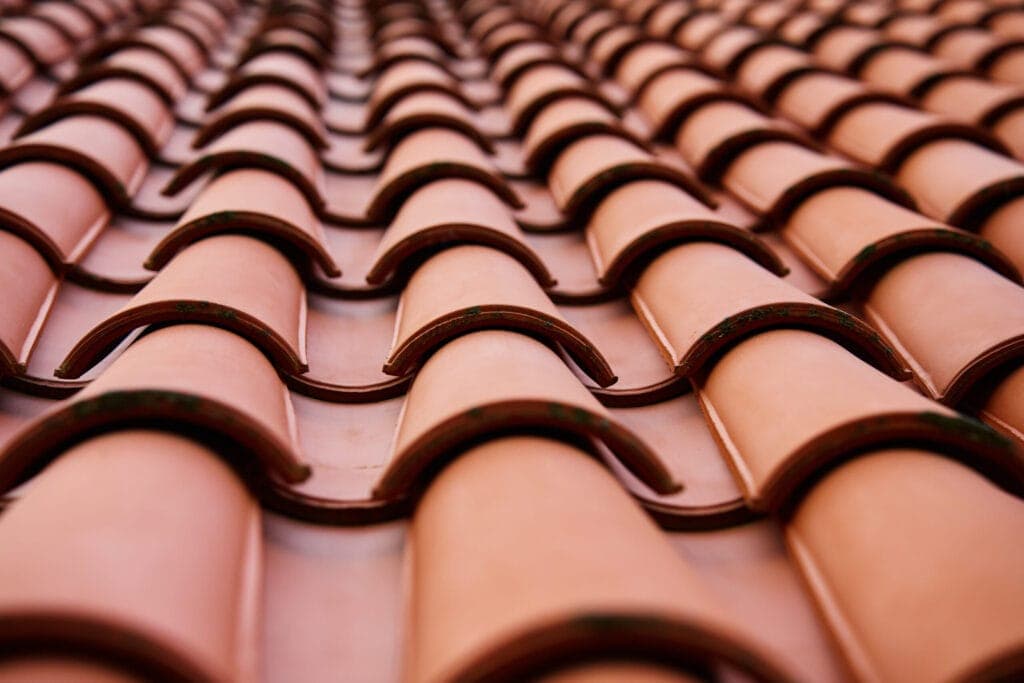
Florida Tile Roof Problems: Repair vs Re-Roof (2026)
Tile lasts for decades, the underlayment under it does not. Here are the tile roof problems Florida homeowners see most, what each repair costs in 2026, and how to tell when a repair is enough and when it is time to re-roof.
Read Article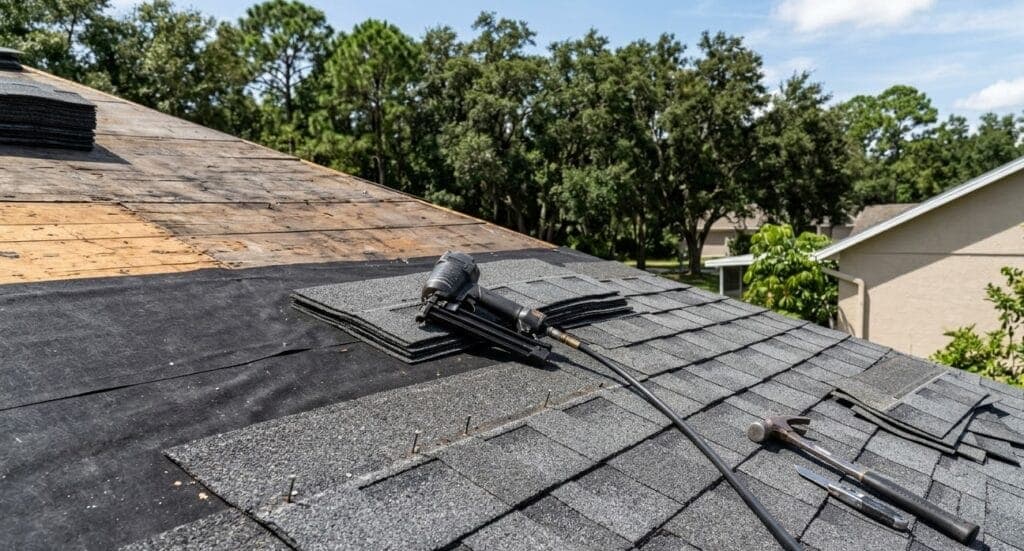
Solar Roofing in Florida: Solar Shingles vs Panels (2026)
Every solar system on a Florida roof is either bolted to the roof or is the roof. Here is how panels and solar shingles compare in 2026, what changed with the federal credit, and why the cheapest solar project often starts with a re-roof.
Read Article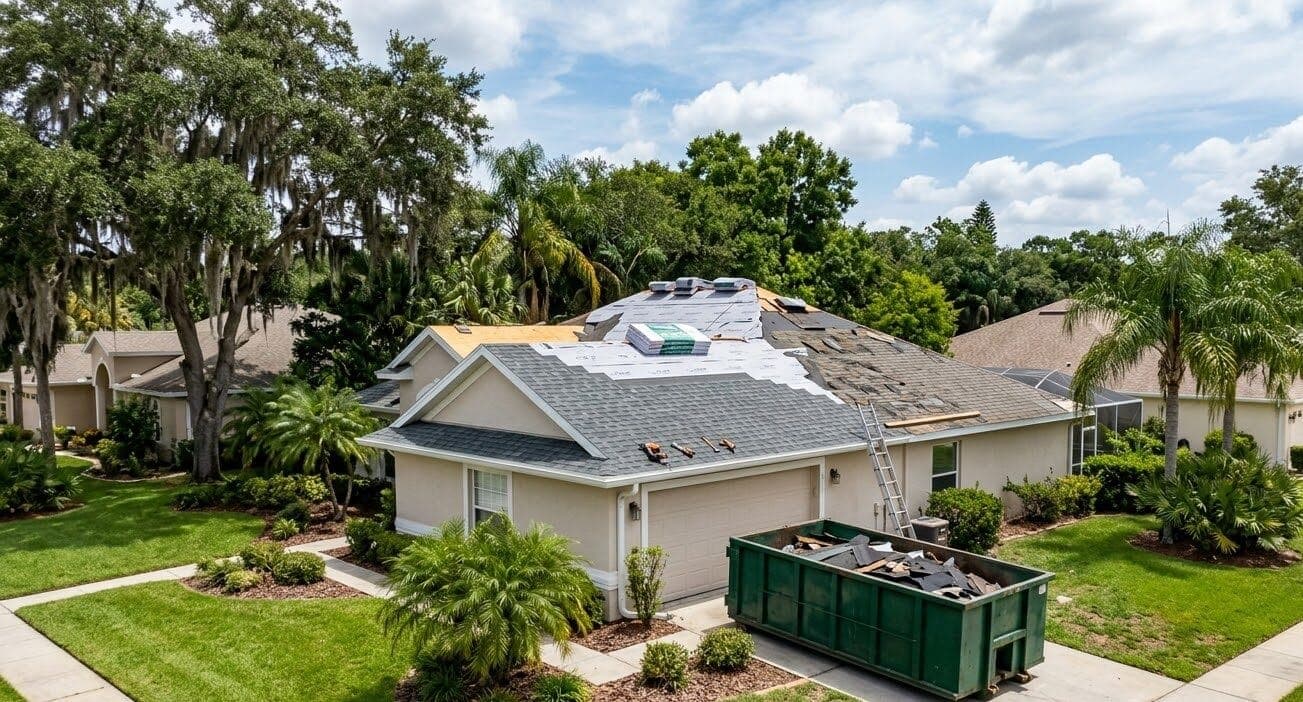
Chimney Flashing Leaks in Florida: Find the Real Cause
Roofs do not leak in the field, they leak at the terminations, and the chimney is the hardest termination on the roof. Here is what Florida code requires, the five failures behind almost every chimney leak, and what a correct reflash costs in 2026.
Read ArticleReady When You Are
Get your free roof inspection today.
No-pressure, written estimate. Same-week scheduling across Hernando County. Call us now or request a visit online.