Blog
Wind Uplift Ratings Explained: Why ASTM D7158 Class H Beats D3161 in Florida Wind Zones
Call (352) 605-0696Two lab standards produce the wind ratings printed on shingle wrappers, and they measure different things on different scales. That is why the same shingle is honestly advertised at 110 mph, 150 mph, and 190 mph. Here is what ASTM D7158 Class H and ASTM D3161 Class F actually mean, what the Florida Building Code accepts in every wind zone, and why the rating is a ceiling your installer either reaches or wastes.
What the Wind Rating on a Shingle Wrapper Actually Means
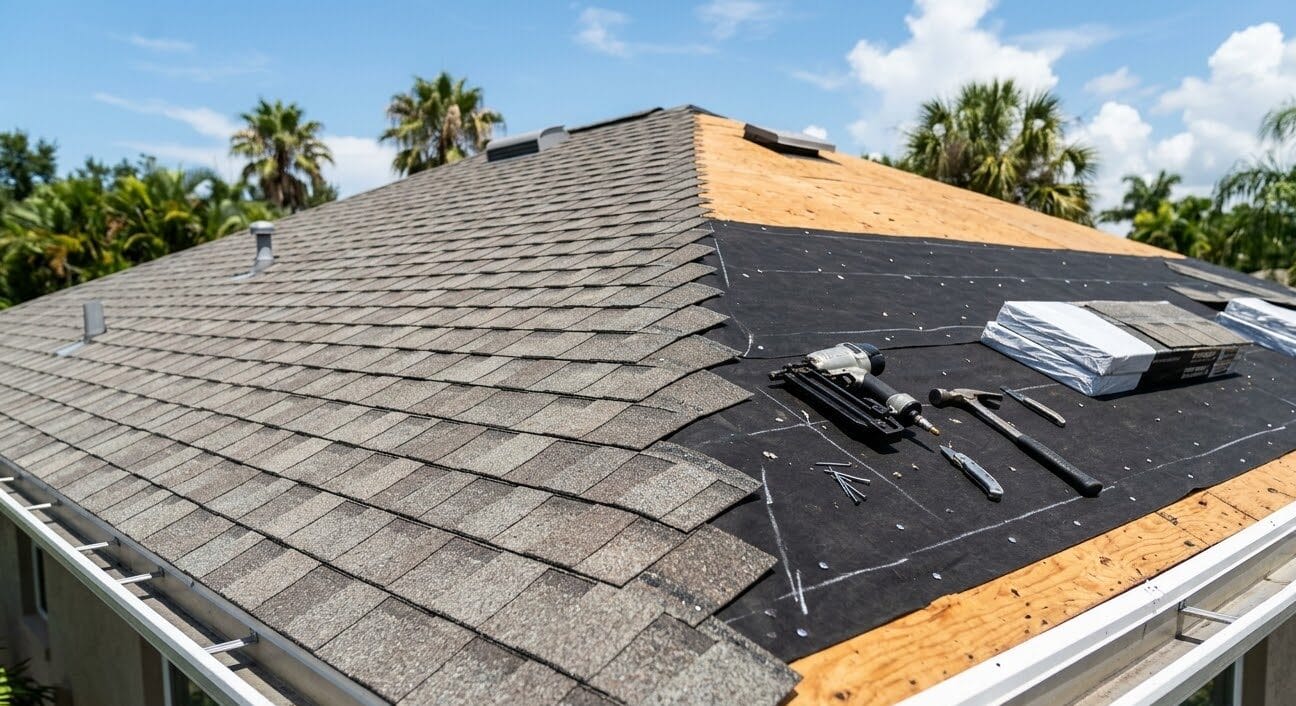
Every shingle bundle sold in Florida carries a wind rating, and almost every roofing quote repeats it back to you as a selling point. The number looks simple. It is not. Two different lab standards produce those ratings, they test completely different things, and the same shingle can honestly be advertised as a 110 mph product, a 130 mph product, or a 150 mph product depending on which standard the marketing department picked.
That confusion costs Florida homeowners real money. It leads people to pay extra for a rating their roof will never use, or to accept a rating that will not hold up when the contractor's own installation cuts it in half. This guide explains the two standards, what the Florida Building Code actually accepts, and why the rating printed on the wrapper is a ceiling rather than a promise.
ASTM D3161: The Fan Test
ASTM D3161 is the older of the two standards and the easier one to picture. Shingles are installed on a test deck at a 2:12 slope, and industrial fans blast air across them horizontally for two hours. If nothing lifts, tears, or unseals, the shingle passes at that speed.
- Class A: passes at 60 mph.
- Class D: passes at 90 mph.
- Class F: passes at 110 mph. This is the top D3161 class and the only one that matters in Florida.
The strength of D3161 is that it is a physical test on a real assembly. The weakness is that it fires air across the shingle rather than reproducing the force that actually pulls shingles off a roof. Wind does not push shingles sideways off a deck. It flows over the roof, drops the pressure above the surface, and sucks the shingle upward the way an airplane wing generates lift. A horizontal fan only approximates that.
ASTM D7158: The Uplift Standard
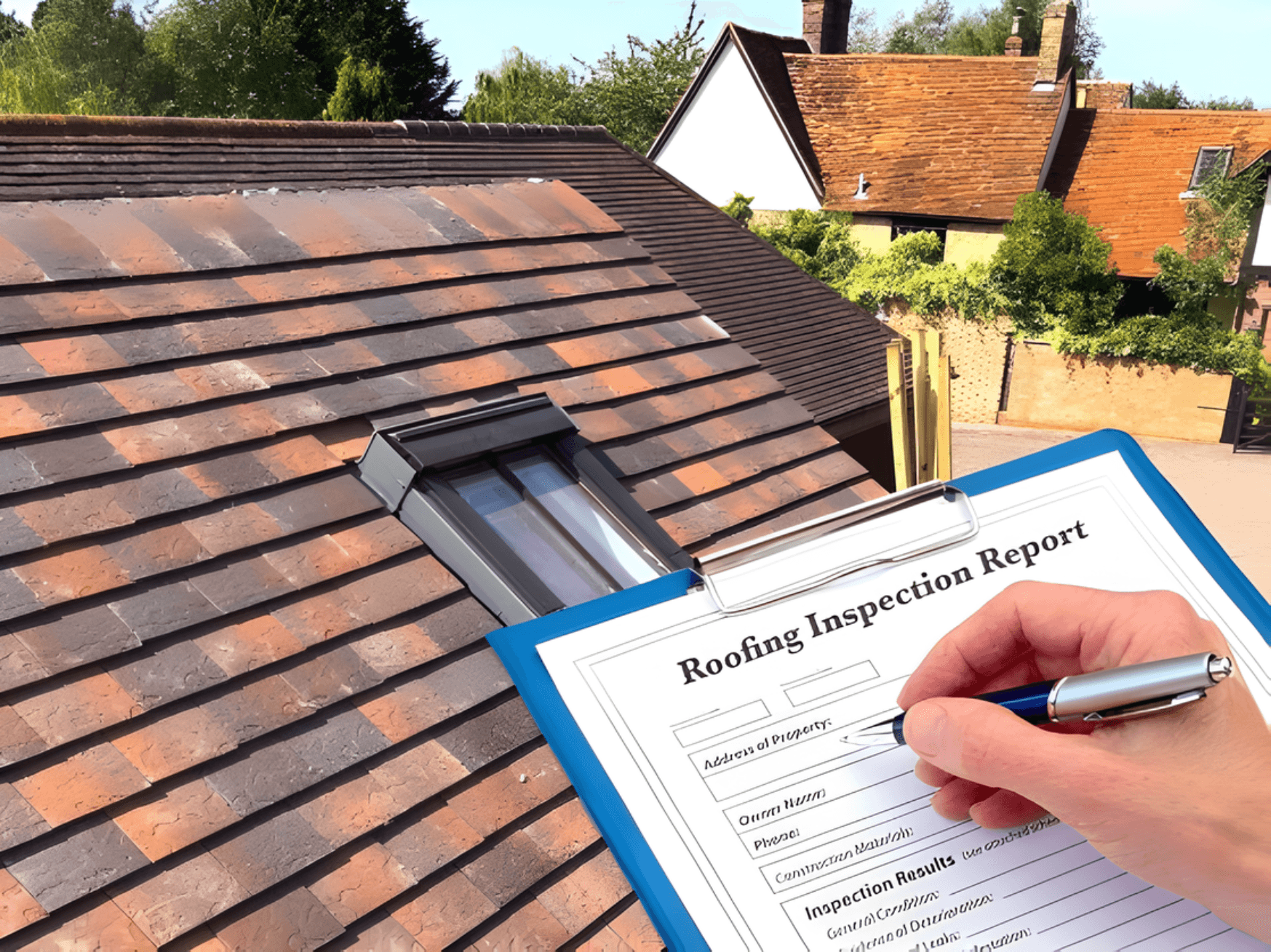
ASTM D7158 was written to measure the thing that actually happens. Instead of blasting a deck with fans, it measures the shingle's mechanical uplift resistance in the lab, then calculates the uplift force that a given wind speed would generate on that shingle. If resistance exceeds force, the shingle passes at that speed.
| D7158 Class | Design wind speed (ASD) | Ultimate wind speed (Vult) | Useful in Florida? |
|---|---|---|---|
| Class D | 90 mph | up to 115 mph | No |
| Class G | 120 mph | up to 150 mph | Only in limited zones |
| Class H | 150 mph | up to 190 mph | Yes, every zone |
Modern building codes point to D7158 as the primary standard for mainstream asphalt shingles, with D3161 applying to products that fall outside D7158's scope. If you are looking at a name-brand architectural shingle at a Florida supply house, the rating that matters is almost certainly a D7158 class.
Why the Same Class H Is Called Both 150 mph and 190 mph
This is the single most misunderstood point in roofing sales, and it is worth slowing down for, because it is where honest contractors and sloppy ones separate.
Wind speeds in the building code changed definition. Older versions of ASCE 7, the wind-load standard the code references, published nominal or allowable-stress-design speeds. Newer versions publish ultimate speeds, called Vult, which are larger numbers describing the same physical wind. Nothing about the weather changed. The bookkeeping changed.
So Class H is described as a 150 mph shingle under the old convention and as a shingle good to 190 mph Vult under the current one. Both statements describe the identical product. A contractor who tells you their Class H shingle is rated for 190 mph is not lying, and one who says 150 mph is not lying either. But if someone compares a competitor's 150 mph Class H against their own 190 mph Class H as though theirs is stronger, they are either confused or counting on you being confused. It is the same class.
The same trap catches D3161. A Class F shingle at 110 mph sounds weaker than a Class G at 120 mph, but they are measured by different methods on different scales. You cannot rank them by comparing the numbers, which is exactly why the code names acceptable classes instead of acceptable mph figures.
What the Florida Building Code Actually Accepts
Here is the part that cuts through everything above. Under the Florida Building Code, asphalt shingles classified as ASTM D7158 Class H, ASTM D3161 Class F, or TAS 107 are acceptable in all wind zones in the state.
Read that again, because it settles most arguments on a driveway. There is no separate premium tier above Class H that buys you code compliance in a windier part of Florida. Class H covers Brooksville, it covers Spring Hill, it covers Summerfield and The Villages, and it covers the coast. Most of Florida sits at 130 mph or above on the ultimate wind speed map, rising further along the coast and in the south of the state, and Class H's 190 mph Vult ceiling clears all of it.
What that means in practice: if a salesperson is upselling you to a costlier shingle on the argument that your wind zone demands more than Class H, the argument is wrong. There may be excellent reasons to buy that shingle, including impact resistance, warranty terms, or how it looks. Wind-zone compliance is not one of them. If you want the honest version of which roof actually survives a storm, our guide to the best roof for hurricanes in Florida compares systems rather than wrapper numbers.
Where the Rating Quietly Stops Applying
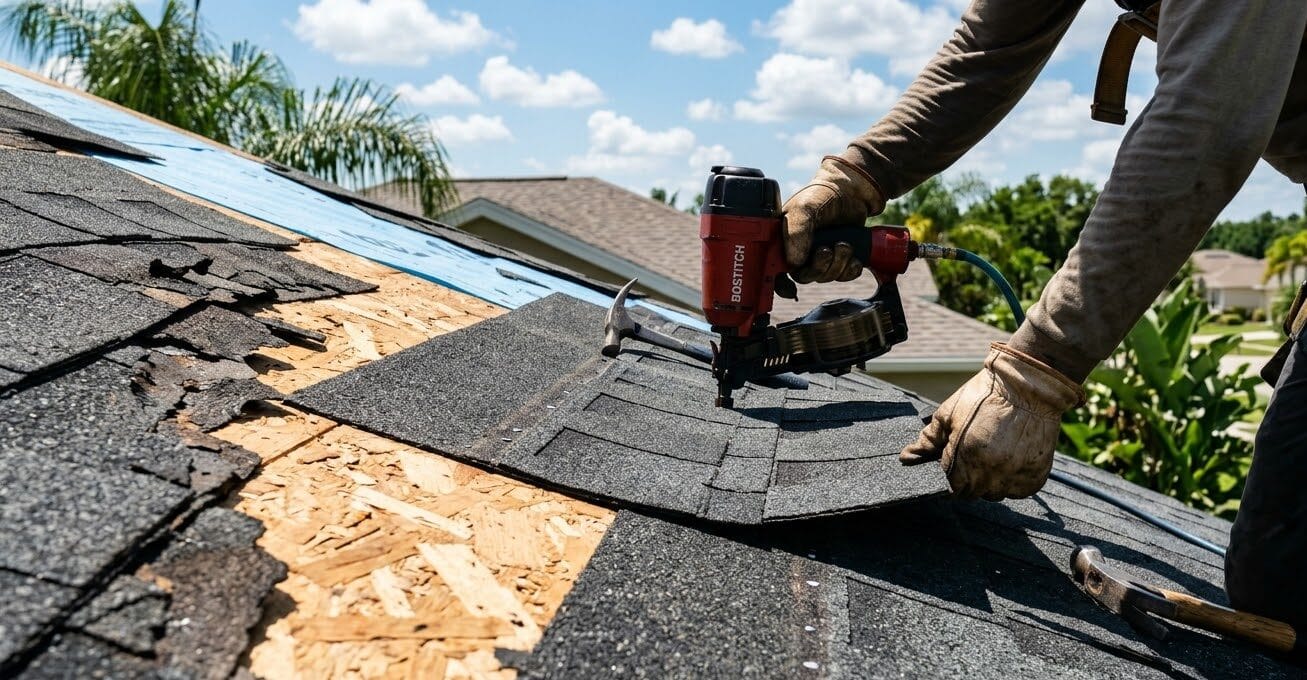
D7158's classifications are not universal. They are calculated for a defined set of conditions, and outside those conditions the class on the wrapper no longer answers the question by itself.
- Building height: the standard conditions assume a mean roof height of 60 feet or less. Taller buildings need engineering beyond the class.
- Exposure category: the calculations assume ground roughness B or C. Exposure D, which is the open-water condition that applies to homes fronting the Gulf, falls outside the standard assumptions.
- Everything else: when a project sits outside those parameters, additional engineering calculations are required rather than a wrapper reading.
This matters most for waterfront homes. A house directly on open water sees a rougher wind condition than the same house a mile inland, and the shingle class alone does not settle the design. That is one of several reasons coastal roofs age differently than inland ones, which we cover in how long a roof lasts in Florida heat, humidity, and hurricanes.
The Rating Is a Ceiling. Installation Decides Where You Land
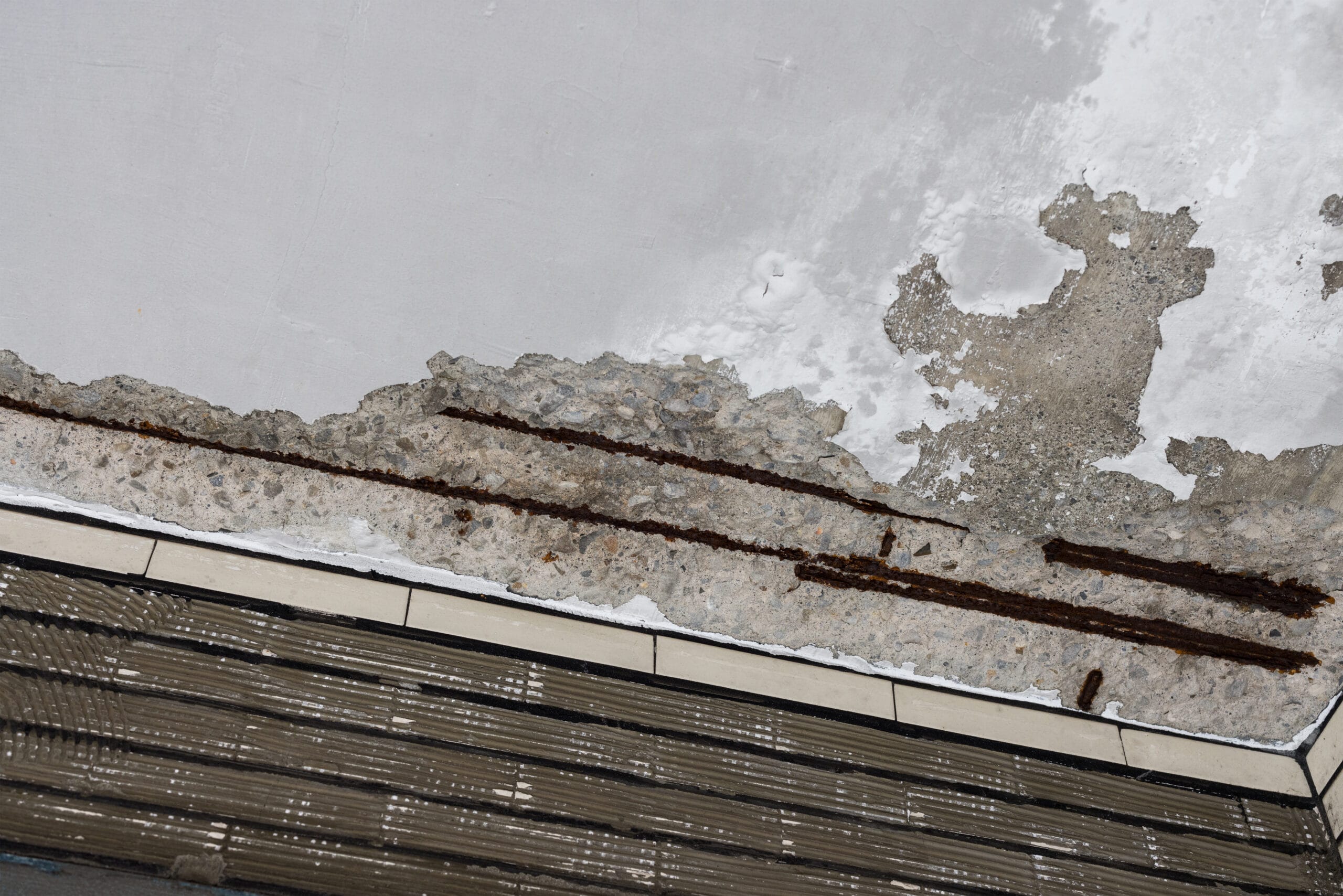
Every wind class is earned by a shingle installed exactly the way the manufacturer specifies, on a clean deck, with the sealant strip fully bonded. Miss any of that and you do not get the rated performance. You get whatever the installation gives you, and the wrapper number becomes decoration.
- Nail count and placement: high-wind installation means six nails per shingle, driven in the nailing strip. High nails miss the strip and leave the shingle held by sealant alone. Overdriven nails cut through the mat. Both fail early and neither is visible from the ground.
- Sealant activation: the self-seal strip bonds with heat. Shingles installed on a cool, overcast stretch may not fully bond before the next storm arrives, and a shingle that has not sealed is not a rated shingle yet. Hand-sealing is the answer when conditions call for it.
- Starter course: the perimeter is where uplift begins. A proper starter strip with its own sealant line along the eaves and rakes is what stops a peel from starting. Contractors who cut cost cut this first.
- Edge metal and deck condition: drip edge fastened to spec and a sound deck give the nails something to hold. Nails into soft or delaminated plywood pull out regardless of shingle class.
This is why two roofs with identical Class H shingles perform completely differently in the same storm on the same street. The shingle was never the variable. If your roof has already been through a storm, the post-storm roof inspection checklist walks the specific points where uplift damage shows up first.
What Changes When the 9th Edition Arrives
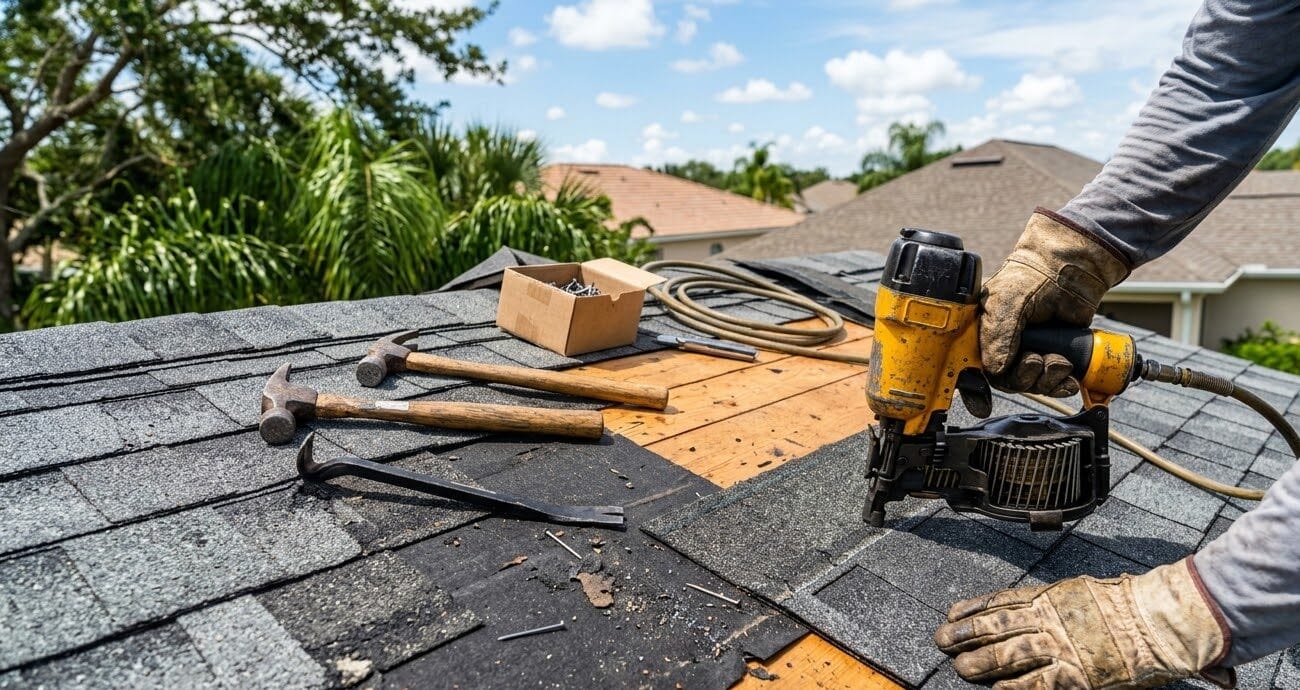
Florida is currently enforcing the 8th Edition (2023) of the Florida Building Code, which has been in effect since December 31, 2023. The 9th Edition takes effect December 31, 2026, and it carries a newer generation of wind-load rules along with a rewrite of the reroofing provisions.
Two changes are worth knowing about now if a roof is on your horizon. Full replacements face tightened fastening and underlayment requirements, including nail spacing and higher-rated secondary water barriers. And the long-standing 25 percent rule, under which repairing more than a quarter of a roof triggered bringing the whole roof to current code, is being relaxed to allow partial recovery where the lower system already complies.
None of that changes the shingle class you need. Class H remains the all-zone credential. What it changes is what goes under and around the shingle, which is where most of a roof's real wind performance lives anyway.
How to Verify a Rating Before You Sign
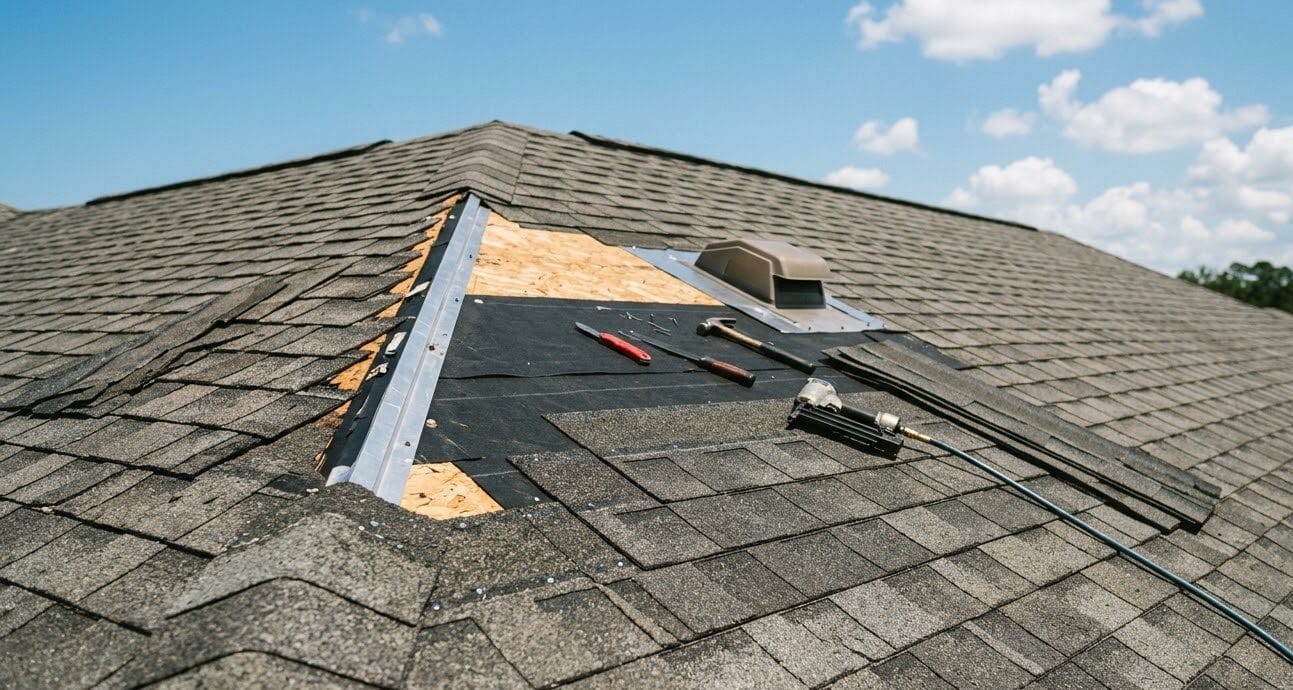
You do not need to take anyone's word for the number. Ask for four things in writing, and read the answers.
- The product's Florida Product Approval or Miami-Dade NOA number. These are public. You can look the number up and read the tested assembly rather than the brochure.
- The class, not the mph. Ask whether the shingle is D7158 Class H, D3161 Class F, or TAS 107. If the answer is a bare speed with no class attached, you are being sold marketing.
- The written nailing spec. Six nails per shingle for high wind, stated on the contract, not promised on the driveway.
- Starter and edge detail. Which starter product, and how the drip edge is fastened.
A contractor who answers all four without hesitating is telling you how they work. One who cannot is telling you something too. And because a documented, code-compliant roof is also what carriers reward, the same paperwork tends to pay you back at renewal. Our guide to Florida roof insurance claims covers how that documentation gets used, and the 2026 roof replacement cost guide shows where a properly specified roof actually lands on price. If wind upgrades are on your list, ask us about the My Safe Florida Home program.
Protech Roofing installs shingle systems across Hernando, Marion, and the surrounding counties, and we will show you the product approval and the nailing spec before you sign anything. Call (352) 605-0696 for a free assessment, or see our shingle roof installation options.
FAQ
Frequently Asked Questions
What is the difference between ASTM D7158 and ASTM D3161?
+
What wind rating do shingles need in Florida?
+
Why is Class H called 150 mph by one contractor and 190 mph by another?
+
Does a Class H shingle guarantee my roof survives a 190 mph wind?
+
When does the shingle wind class stop being enough on its own?
+
Does the 9th Edition of the Florida Building Code change shingle wind ratings?
+
Related Articles
More guides for Florida homeowners
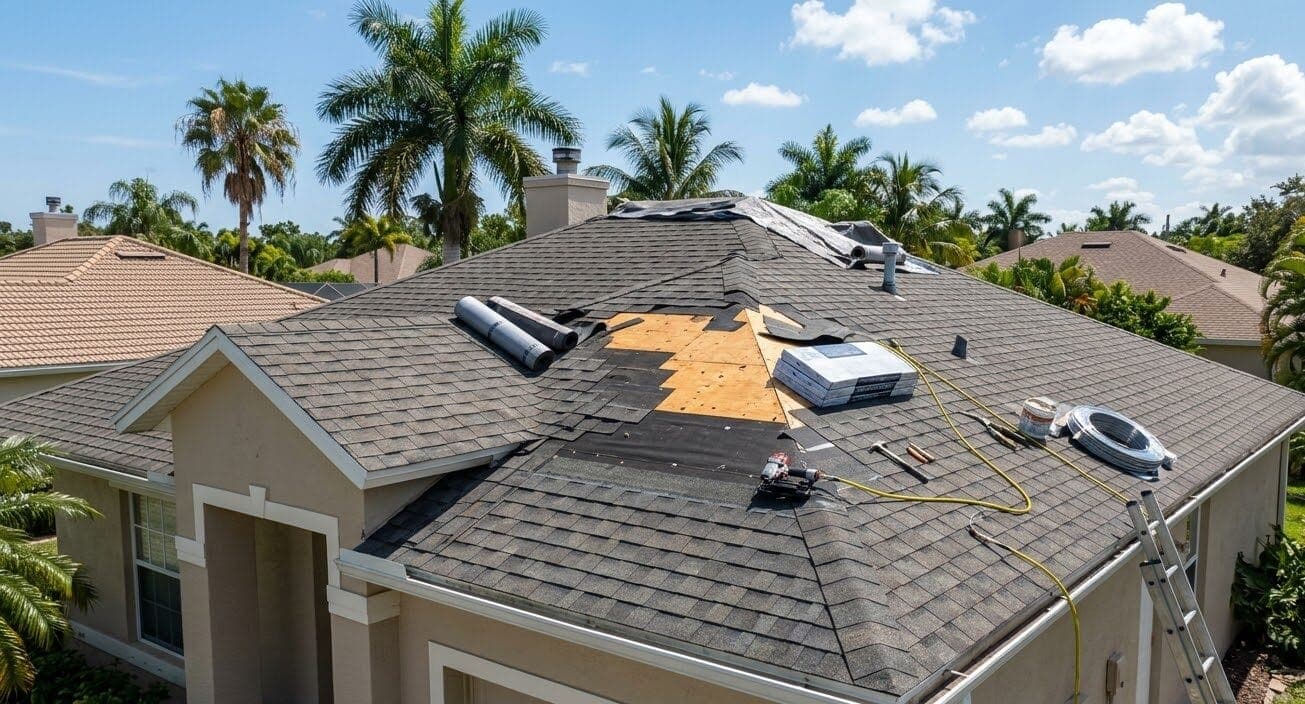
How Long a Roof Replacement Takes in Florida: 2026 Guide
A Florida shingle re-roof takes one to three days of physical work and about two to four weeks from contract to closed permit. Here is what happens each day, how metal and tile change the schedule and what causes delays.
Read ArticleBest Shingles for Florida: Impact-Rated Class 4 Guide
The best shingle for a Florida home is usually a Class H architectural shingle installed as a full system. Here is how 3-tab, architectural and Class 4 impact-resistant shingles compare on cost, wind, insurance and lifespan.
Read Article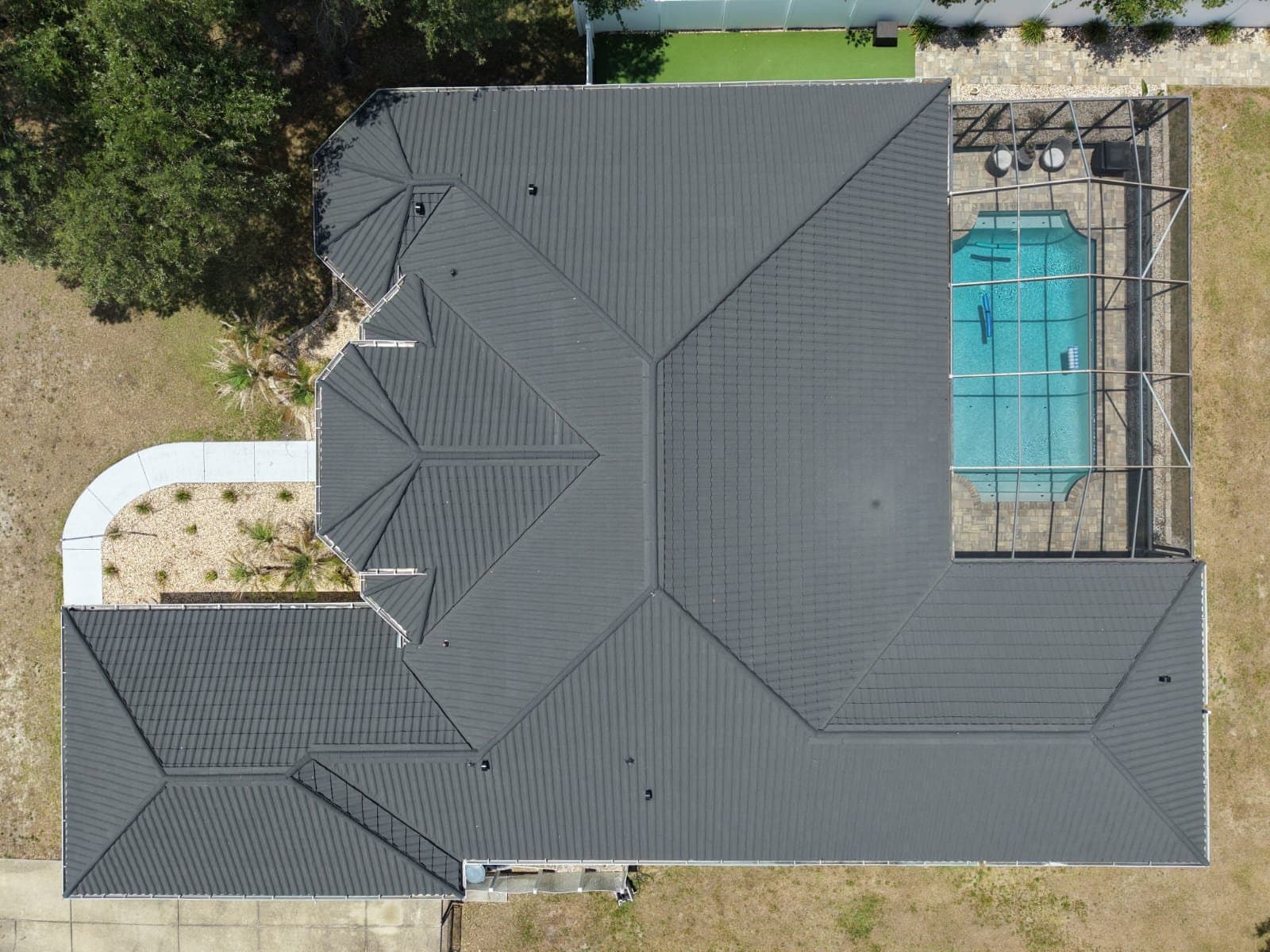
Metal Roof Cost in Florida 2026: Per-Sqft Guide
Metal roofs in Florida run about $8 to $23 per square foot installed, depending on the system. Here is what standing seam, stone coated steel and exposed fastener panels cost, what a typical home pays and how to compare quotes.
Read ArticleReady When You Are
Get your free roof inspection today.
No-pressure, written estimate. Same-week scheduling across Hernando County. Call us now or request a visit online.