Most commercial roof budgets in Florida are reactive. A tenant reports a ceiling stain, somebody calls a roofer, and the invoice lands in a month nobody planned for. The buildings that avoid that pattern are not the ones with better roofs. They are the ones running a calendar. Florida receives roughly 60 percent of its annual rainfall in the June through September window, according to the Southwest Florida Water Management District, which means your roof faces its hardest test on a schedule you can predict a year in advance. Here is the month-by-month maintenance calendar we use with property managers across Hernando, Pasco, Citrus and Marion counties. Call (352) 605-0696 to schedule a preventive inspection.
Why Florida Commercial Roofs Need a Calendar, Not a Phone Number
A commercial roof does not fail the way people imagine. It rarely goes from fine to leaking in one storm. It degrades in small, boring increments: a seam that opens a quarter inch, a pitch pan that dries out, a drain that clogs with palm debris, a service tech who drops a condenser panel on a membrane and never mentions it. Each of those is a cheap fix on the day it happens and an expensive one twelve months later.
The reason a calendar beats a phone number is that Florida weather is seasonal and therefore schedulable. The National Weather Service Tampa Bay office defines the rainy season for West Central Florida as roughly May 25 through October 10, and the Southwest Florida Water Management District puts average rainfall at about 7.8 inches per month across June through September, close to 60 percent of the annual total. On top of that, Atlantic hurricane season runs June 1 through November 30. Those dates do not move. Your maintenance should be built around them.
The National Roofing Contractors Association recommends inspecting a commercial roof at least twice a year, plus after any major storm event and after any work involving rooftop equipment. In Florida that minimum becomes a specific pair of anchor dates: one inspection before the rainy season starts and one after hurricane season ends. Everything else in this calendar hangs off those two.
If your roof is a low-slope membrane system, the seasonal stress points differ from a shingle roof, and the repair-versus-overlay decision has its own rules. That comparison is covered in our guide to flat roof repair versus replacement in Florida.
January Through March: Dry Season Repair and Budget Window
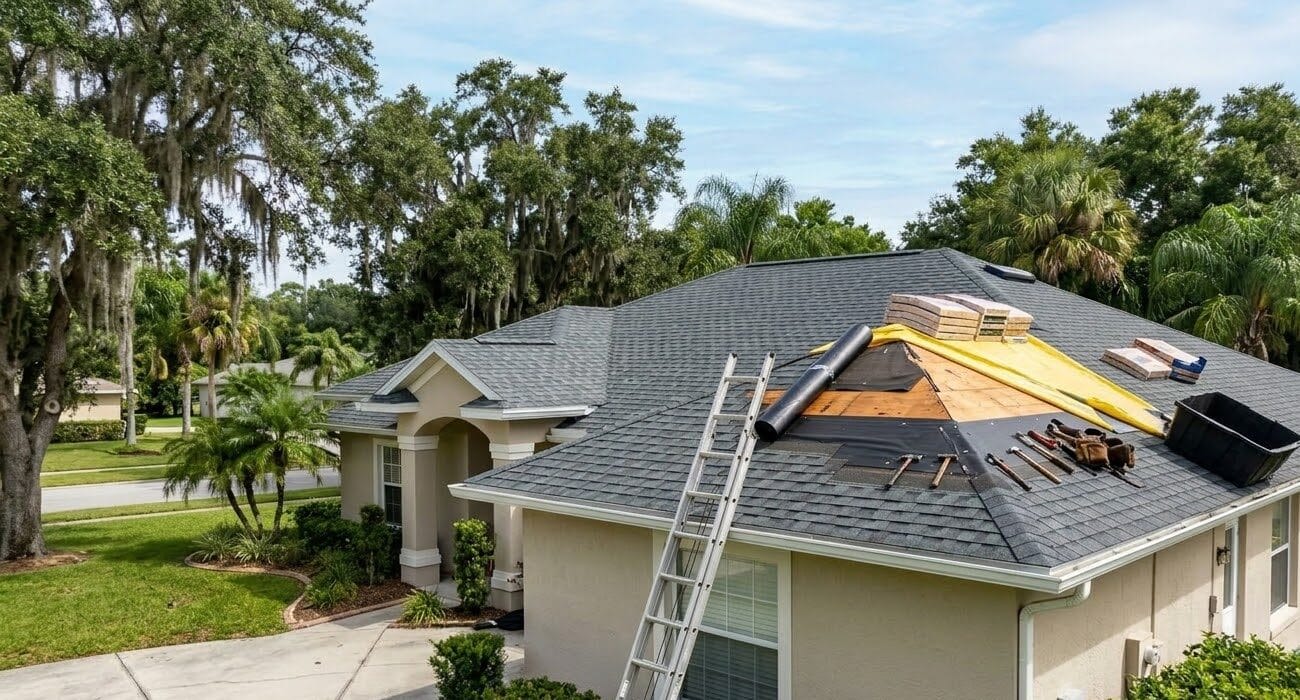
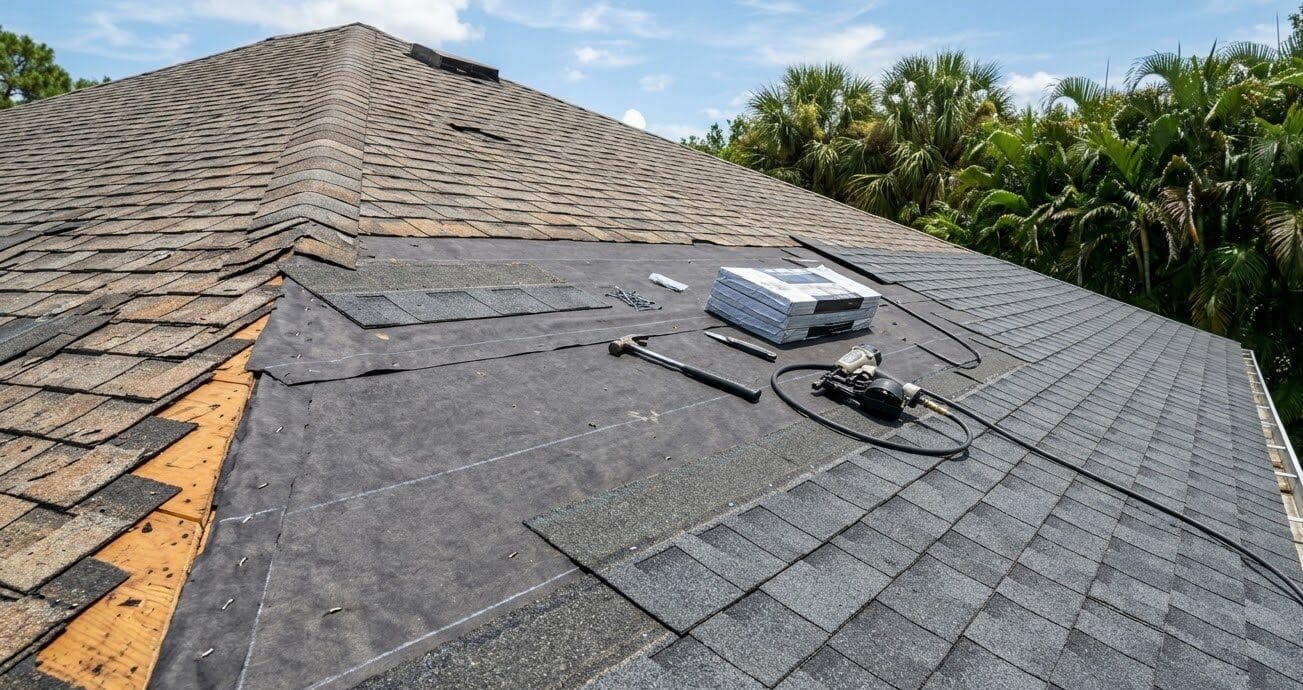
The first quarter is the cheapest time of year to do roof work in Florida, and almost nobody uses it. Rain is infrequent, temperatures are moderate enough for proper adhesive cure and membrane welding, and roofing crews are not stacked three deep behind storm work. If you have a repair you know is coming, this is when it costs the least and disrupts tenants the least.
Use January to pull last year's records together: inspection reports, repair invoices, warranty documents, and any tenant complaint tied to water. Patterns show up fast when the paperwork sits in one folder. Three ceiling stains in the same quadrant over eighteen months is not three incidents, it is one unresolved defect.
- January: Assemble the prior-year file. Confirm the warranty is still active and note what it requires of you.
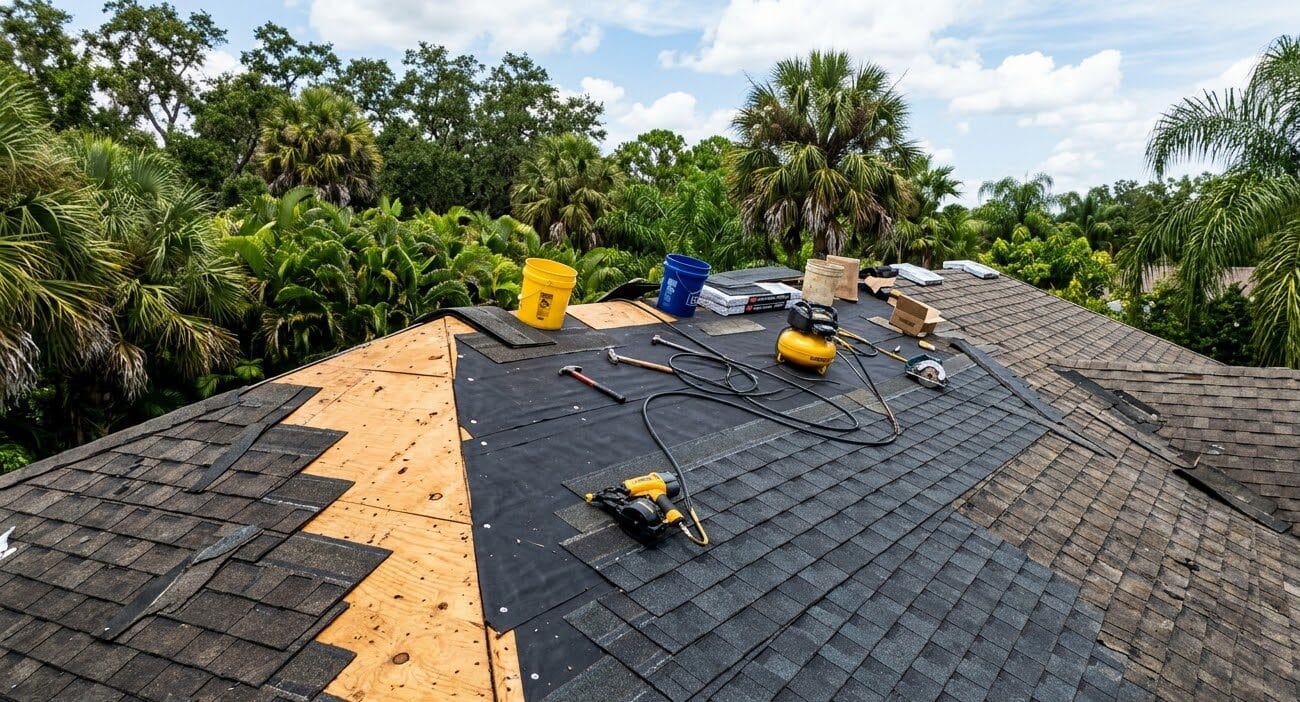
- February: Execute the deferred repairs identified last November. Seams, flashing, pitch pans and sealant work all cure better in dry-season conditions.
- March: Trim vegetation overhanging the roof, clear debris from drains and scuppers, and book the pre-season inspection before the calendar fills.
March is also when tree work should happen. Overhanging limbs do two things to a Florida commercial roof: they drop organic debris that clogs drainage, and they give squirrels and rats a bridge onto the roof, where they find their way into equipment curbs. Both problems are cheaper to prevent in March than to discover in August.
April and May: The Pre-Season Inspection That Carries the Year

This is the most important appointment on the calendar. The pre-season inspection needs to be complete, with repairs executed, before roughly May 25, when the West Central Florida rainy season typically begins. Everything you fix now is fixed under dry conditions. Everything you postpone gets tested by 7.8 inches of rain a month.
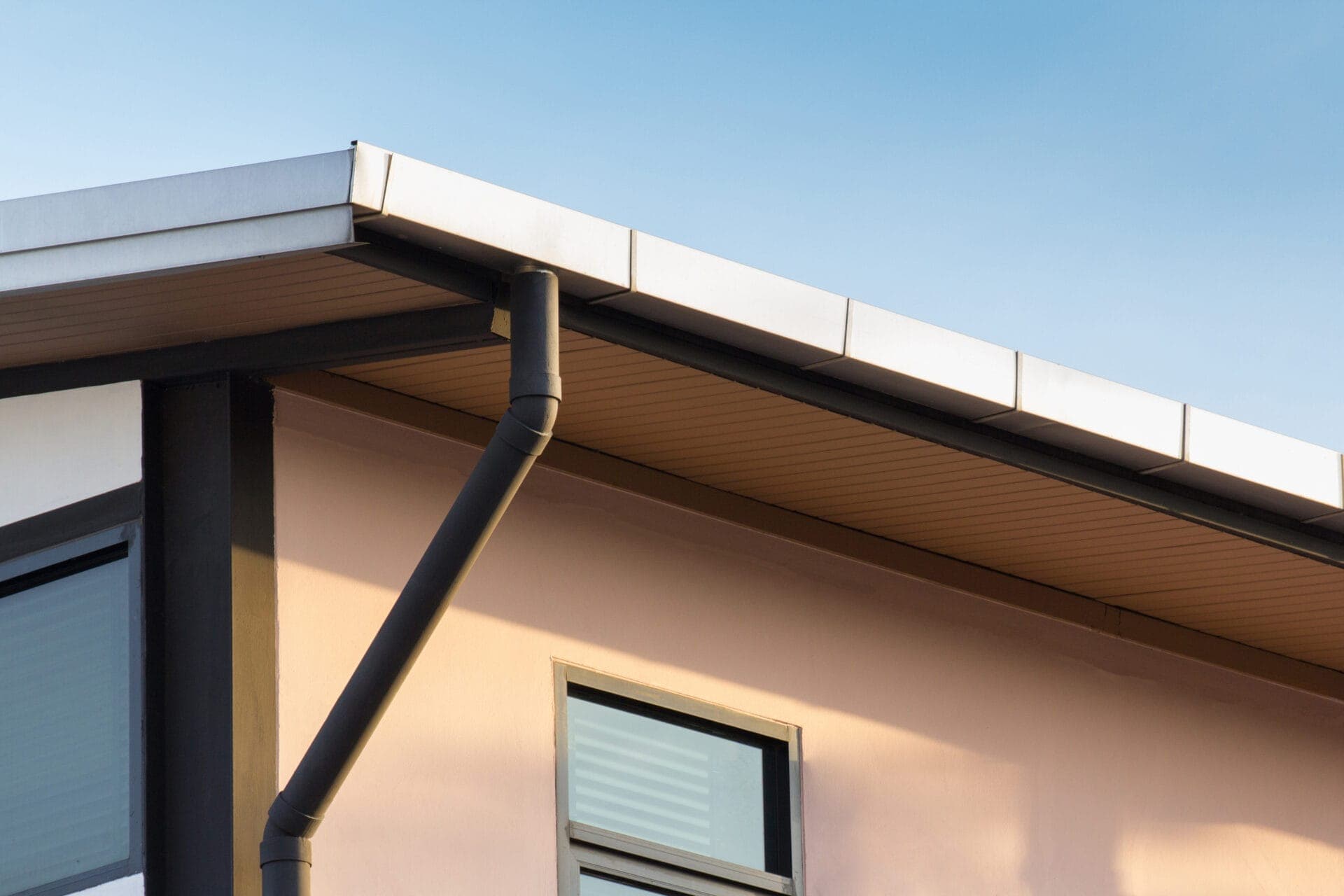
A proper pre-season visit is not a walk around the perimeter. It is a systematic survey of every penetration, termination and drainage path on the roof, with photographs and a written report you can hand to an insurer or a warranty carrier without editing.
- Drainage first: Every primary drain, scupper and gutter cleared and flow-tested. Secondary or overflow drainage confirmed clear, since that is the system that saves the deck when the primary clogs mid-storm.
- Perimeter and edge metal: Coping, fascia and edge terminations checked for loose fasteners and open laps. Edge failure is where wind damage starts on a low-slope roof.
- Seams and laps: Probed, not just looked at. A seam that has begun to open reads as a hairline from six feet away.
- Penetrations: Every pipe boot, pitch pan, curb, vent and conduit support inspected and resealed as needed.
- Rooftop equipment: Condensate lines flowing to a drain rather than onto the membrane, unit panels secured, and no dropped fasteners left on the roof surface.
May is also the month to confirm your emergency contact chain. When a storm passes and half the county calls a roofer at the same hour, the buildings that get tarped first are the ones already in a maintenance agreement. Our regular maintenance program exists for that reason, and it is worth setting up in April rather than in September.
June Through September: In-Season Rules and Storm Triggers
During the rainy season the objective changes. You are no longer doing preventive work, you are responding fast and documenting well. Three triggers should generate an inspection during these months, regardless of what your calendar says.
- Any named storm or severe wind event: A post-storm survey within days, with dated photographs, whether or not you see interior damage.
- Any rooftop trade visit: HVAC service, satellite installs, electrical work. Other trades cause a meaningful share of membrane punctures, and none of them report it.
- Any interior water report: Even a small stain. Water travels laterally under a membrane, so the entry point is rarely above the stain.
Documentation matters more in these months than in any other. Florida insurance carriers scrutinize the gap between the date of loss and the date of the claim, and a photographic record taken within days of the event is the difference between a covered loss and a denial based on long-term deterioration. We break down that timing in the 72-hour roof damage window and the specific items to check in the post-storm roof inspection checklist.
One in-season rule saves more money than the rest combined: do not authorize a permanent repair on a wet roof under an active leak. Get it dried in, stop the water, and schedule the permanent fix for a dry window. Adhesives and membrane welds applied to a damp substrate fail, and they fail after the invoice is paid.
October and November: Post-Season Assessment
Hurricane season ends November 30, and the West Central Florida rainy season typically closes around October 10. The post-season inspection is the second anchor date, and its purpose is different from the spring visit. In April you are preparing. In November you are assessing damage that accumulated across five months of heat, ultraviolet exposure, wind and water.
This is the inspection that should feed your capital budget. A roof that needed four small repairs this season and six last season is telling you something about its remaining service life, and that conversation is far better held in November with numbers than in July with a bucket under a ceiling tile.
- October: Full post-season survey. Compare against the April photographs, same angles, same locations.
- November: Clear the accumulated debris from the storm months, re-flow-test drains, and price the repairs you intend to execute in February.
- December: Close the warranty file for the year. Confirm your maintenance documentation satisfies whatever the manufacturer requires, and lock next year's budget line.
Roof coatings, where the substrate is sound and the system is a candidate, are typically best scheduled for the dry season rather than applied as an emergency measure. If your roof is heading that direction, the assessment belongs in this November window, not in a rush. Our roof coating service starts with that condition survey.
Ponding Water and the 48-Hour Rule
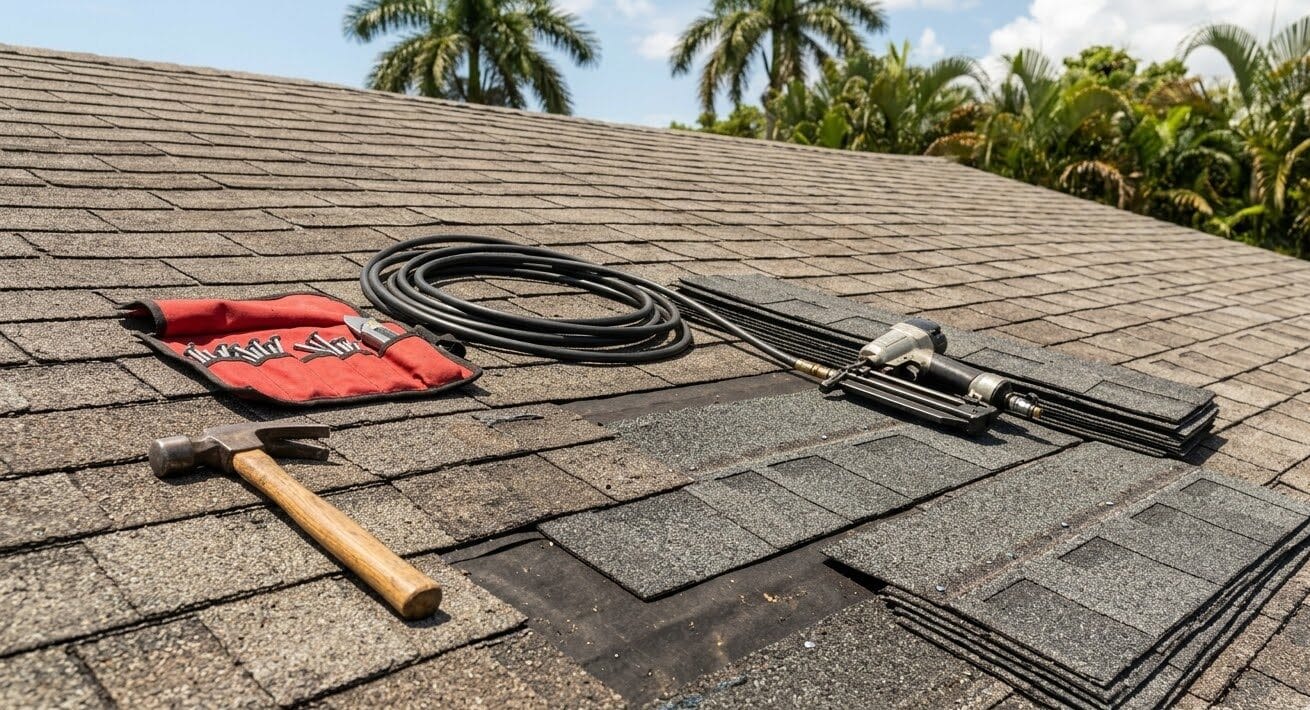
On a low-slope roof, the industry generally treats water still standing 48 hours after rainfall has stopped as ponding rather than normal drainage. That distinction matters commercially, because ponding is one of the most common exclusions written into membrane warranties, and it is one of the fastest ways to age a roof.
Standing water does three things. It concentrates dirt and organic material that hold moisture against the membrane. It magnifies ultraviolet exposure at the water line. And it adds real weight, roughly five pounds per square foot for every inch of depth, over an area that was never designed to carry it permanently.
Most ponding in Florida is not a slope problem. It is a drainage problem: a clogged drain, a crushed strainer, a scupper blocked with oak debris, or a new rooftop unit installed directly in a drainage path. Those are inexpensive to correct when found in April and expensive to correct after the deck has been loaded for a season.
If ponding persists after drainage is cleared, the fix moves into design territory: tapered insulation, additional drains, or crickets behind large curbs. That is a capital decision, and it belongs in the November budget conversation, not in an emergency call.
The Damage Nobody Reports: Rooftop Equipment and Other Trades
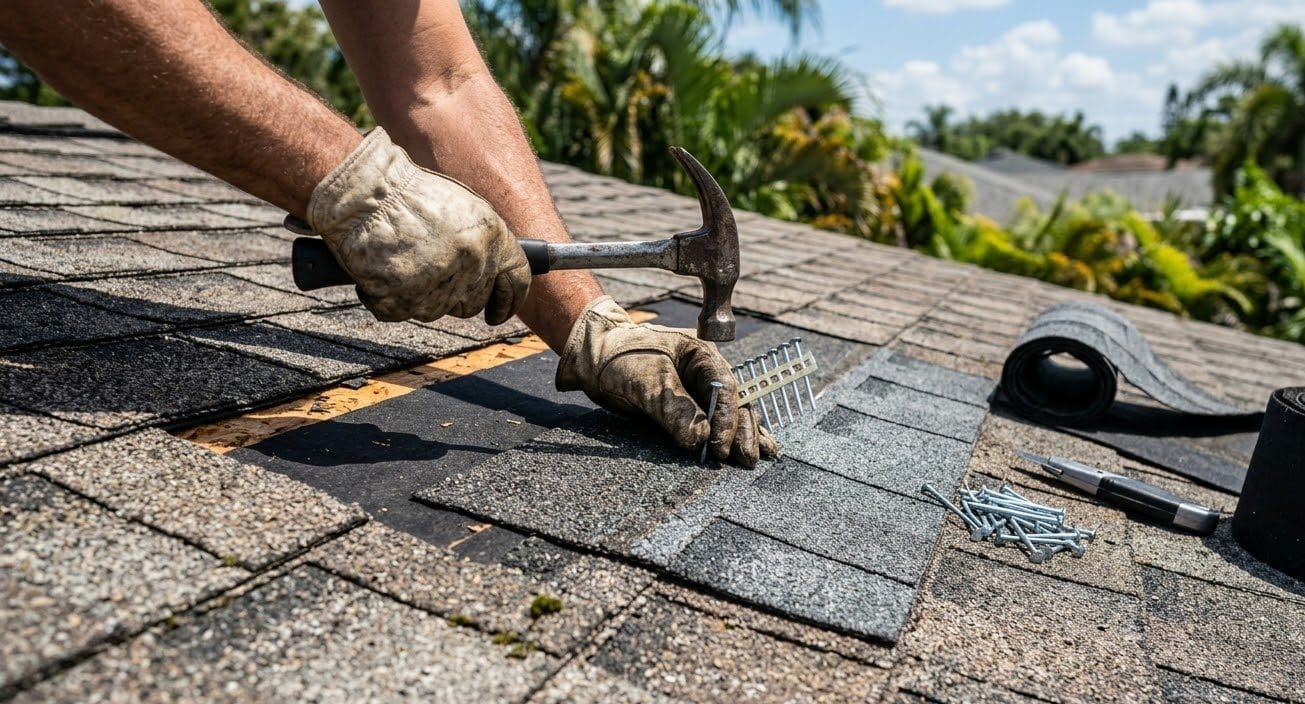
The single most under-managed source of commercial roof damage in Florida is not weather. It is foot traffic from trades who are not roofers. HVAC technicians, electricians, telecom installers and grease-hood cleaners all work on the roof, and none of them are responsible for the membrane under their feet.
The common failures are predictable: dropped screws that get stepped on and punch the membrane, condensate lines discharging directly onto the roof surface instead of into a drain, unsecured panels that become wind projectiles, and equipment set on blocks that abrade the membrane every time the unit vibrates.
The management fix is administrative and free. Require a roof access log. Anyone who goes up signs in and signs out. Then inspect after any trade visit involving tools or equipment. That policy alone catches the damage while the responsible vendor is still identifiable and still liable.
Grease-laden buildings deserve a separate note. Restaurant exhaust deposits degrade many membranes over time, and the area around a hood exhaust should be inspected on a shorter cycle than the rest of the roof. For multi-tenant retail, that means knowing which unit runs a kitchen and adjusting the schedule accordingly. Our commercial flat roofing team builds that into the inspection route.
What Maintenance Costs Versus What Deferral Costs
Preventive maintenance pricing in the commercial market varies with roof size, complexity and the number of penetrations, but industry figures generally place scheduled maintenance programs in the range of a few cents to a few tenths of a dollar per square foot per year, with individual inspections commonly quoted between a few hundred dollars and roughly one thousand for a standard building. Detailed surveys involving infrared moisture scanning or due diligence reporting run substantially higher.
Compare that against the alternative. A full commercial tear-off and replacement is a capital event measured in dollars per square foot, not cents. Industry analysis consistently finds that buildings without a structured maintenance program replace their roofs meaningfully sooner than comparable buildings that inspect on schedule. Every year of service life you add to a membrane system is a year you defer that capital expense.
There is a second cost that rarely gets modeled: warranty exposure. Most manufacturer warranties on commercial membrane systems require the owner to maintain the roof and to report damage promptly. When there is no maintenance record, a carrier reviewing a claim has an easy argument. The inspection reports are not just maintenance, they are the evidence that keeps the warranty enforceable.
The third cost is tenant related and specific to commercial property. An interior leak in a leased space is not only a roof repair. It is ceiling tile, carpet, drywall, potential inventory loss, possible rent abatement, and a tenant relationship that gets harder to renew. None of that appears in a roofing quote.
What to Require From Your Roofing Contractor in Writing
Maintenance agreements vary widely in what they actually deliver. Before signing one, get specific answers to five questions, in writing.
- How many scheduled visits per year, and in which months? Two is the industry minimum. In Florida they should land pre-season and post-season, not arbitrarily.
- What does the report include? Dated photographs, a roof plan marking each finding, and a repair recommendation with pricing. A one-page summary with no photos is not documentation.
- What minor repairs are included in the fee? Sealant, small seam work and drain clearing are commonly bundled. Get the boundary written down.
- What is the emergency response commitment? Specifically during hurricane season, when demand spikes across the whole county at once.
- Is the contractor licensed and insured for commercial work in your county? Verify it rather than assume it, the same way you would vet any other vendor.
The vetting standard is the same one that applies to any roofing relationship, and we wrote it out in how to tell whether you are hiring the right roofing company.
Build the Calendar Once, Run It Every Year
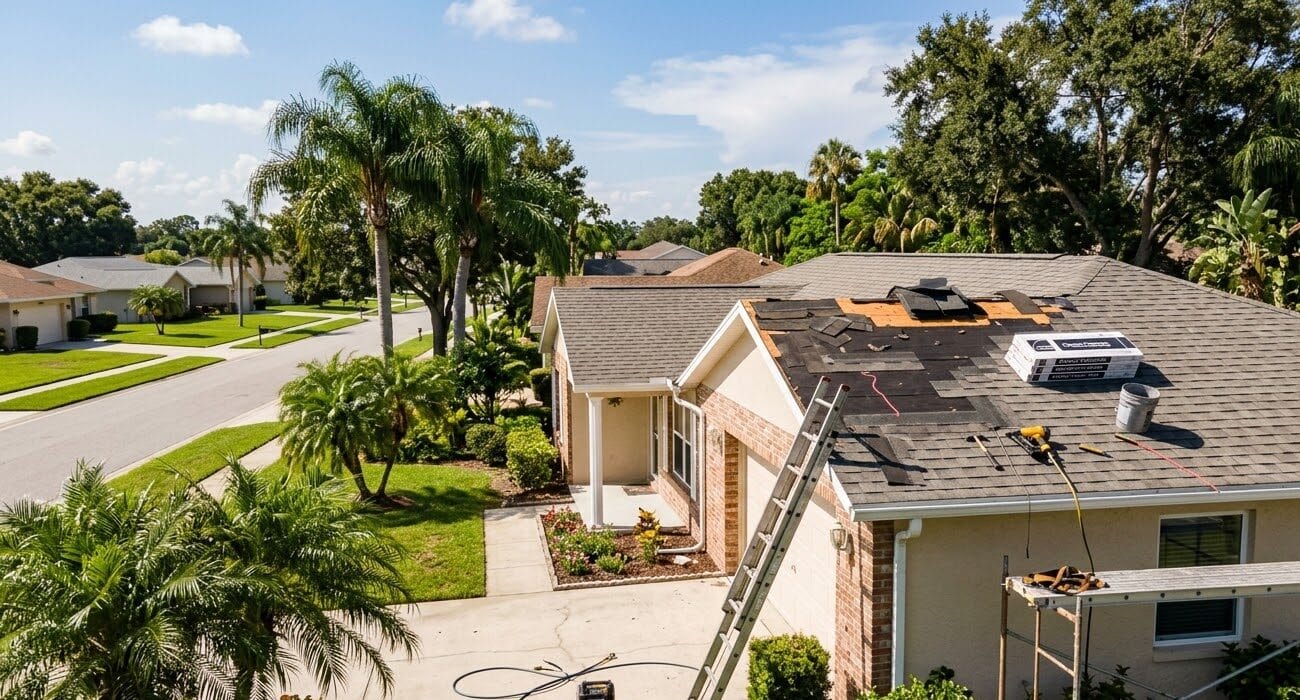
The reason this works is that none of it is clever. Two anchor inspections, dry season for repairs, storm triggers during the rainy months, and a paper trail that satisfies both your insurer and your warranty carrier. Set it once and it runs on its own.
Protech Roofing maintains commercial buildings across Hernando, Pasco, Citrus and Marion counties, including Brooksville, Spring Hill and the Summerfield area. If your building does not currently have a maintenance schedule, the right month to start is whichever one you are reading this in. Explore our commercial roofing services or request a roof assessment and we will build the calendar around your roof, your tenants and your budget cycle.
FAQ
Frequently Asked Questions
How often should a commercial roof be inspected in Florida?
+
What is ponding water and why does it matter to my warranty?
+
When is the best time of year to schedule commercial roof repairs in Florida?
+
Does a maintenance program really extend commercial roof life?
+
Who is responsible when an HVAC technician damages my roof?
+
What should a commercial roof inspection report contain?
+
Related Articles
More guides for Florida homeowners

Florida Tile Roof Problems: Repair vs Re-Roof (2026)
Tile lasts for decades, the underlayment under it does not. Here are the tile roof problems Florida homeowners see most, what each repair costs in 2026, and how to tell when a repair is enough and when it is time to re-roof.
Read Article
Solar Roofing in Florida: Solar Shingles vs Panels (2026)
Every solar system on a Florida roof is either bolted to the roof or is the roof. Here is how panels and solar shingles compare in 2026, what changed with the federal credit, and why the cheapest solar project often starts with a re-roof.
Read Article
Chimney Flashing Leaks in Florida: Find the Real Cause
Roofs do not leak in the field, they leak at the terminations, and the chimney is the hardest termination on the roof. Here is what Florida code requires, the five failures behind almost every chimney leak, and what a correct reflash costs in 2026.
Read ArticleReady When You Are
Get your free roof inspection today.
No-pressure, written estimate. Same-week scheduling across Hernando County. Call us now or request a visit online.