Blog
Roof Claim Denied in Florida? 6 Reasons Why and How to Appeal or Get a Second Opinion
Call (352) 605-0696A denied roof claim in Florida is not automatically final. Most denials come down to six reasons: wear and tear, late notice, a long-term leak, damage valued below the deductible, the 25 percent rule and policy exclusions. Florida law requires your insurer to explain the denial in writing and share its estimate, and you can respond with an independent roof inspection, request a reinspection, use free state mediation or invoke appraisal.
A Denial Letter Is a Starting Point, Not a Final Answer
You reported the damage, met the adjuster, waited weeks, and then the letter arrived: claim denied, or a payment so small it barely covers the deductible. Most Hernando County homeowners read that letter once, feel the floor drop, and assume the decision is final. It usually is not. Florida law gives you specific rights after a denial, a free state mediation program, and a set of deadlines that keep running whether you act or not.
This guide is about what to do after the no. It walks through the six reasons Florida roof claims get denied most often, what each one means in plain English, which ones are worth fighting, and the exact options you have: asking for the estimate, requesting a reinspection, getting an independent roof inspection, state mediation, appraisal and, for large disputes, a licensed public adjuster or attorney. If you are still at the beginning of a claim, our broader guide to roof insurance claims in Florida covers the full process from the first photo.
One note before we start. Protech Roofing is a licensed roofing contractor, not a law firm and not a public adjuster. Nothing here is legal advice. What we can do, and do every week, is tell you what the roof actually shows, document it properly and put it in writing.
What Florida Law Requires Your Insurer to Tell You
Before deciding whether to fight, understand what the insurer owed you. Florida Statute 627.70131 sets the claim handling clock for residential property claims. The insurer has 7 calendar days to acknowledge your claim communications, must begin its investigation within 7 days after receiving proof of loss, and, if it inspects the roof, has to do it within 30 days of receiving the proof of loss. It must pay or deny the claim, in whole or in part, within 60 days after receiving notice of the claim.
Two more requirements matter after a denial. The insurer must give you a written explanation of the basis for any payment, denial or partial denial. If it pays less than a detailed estimate, it must explain the difference in writing. And it must send you a copy of any detailed estimate of the loss within 7 days after its adjuster generates it, along with the adjuster's name and license number.
That means you are entitled to see the reasoning and the numbers. A one line denial that says "wear and tear" with no estimate attached is incomplete. Your first move after any denial is to ask, in writing, for the full adjuster estimate, the photos the adjuster took and the specific policy language the denial relies on. Keep every email and letter in one folder with dates.
Reason 1: Wear and Tear or Age of the Roof
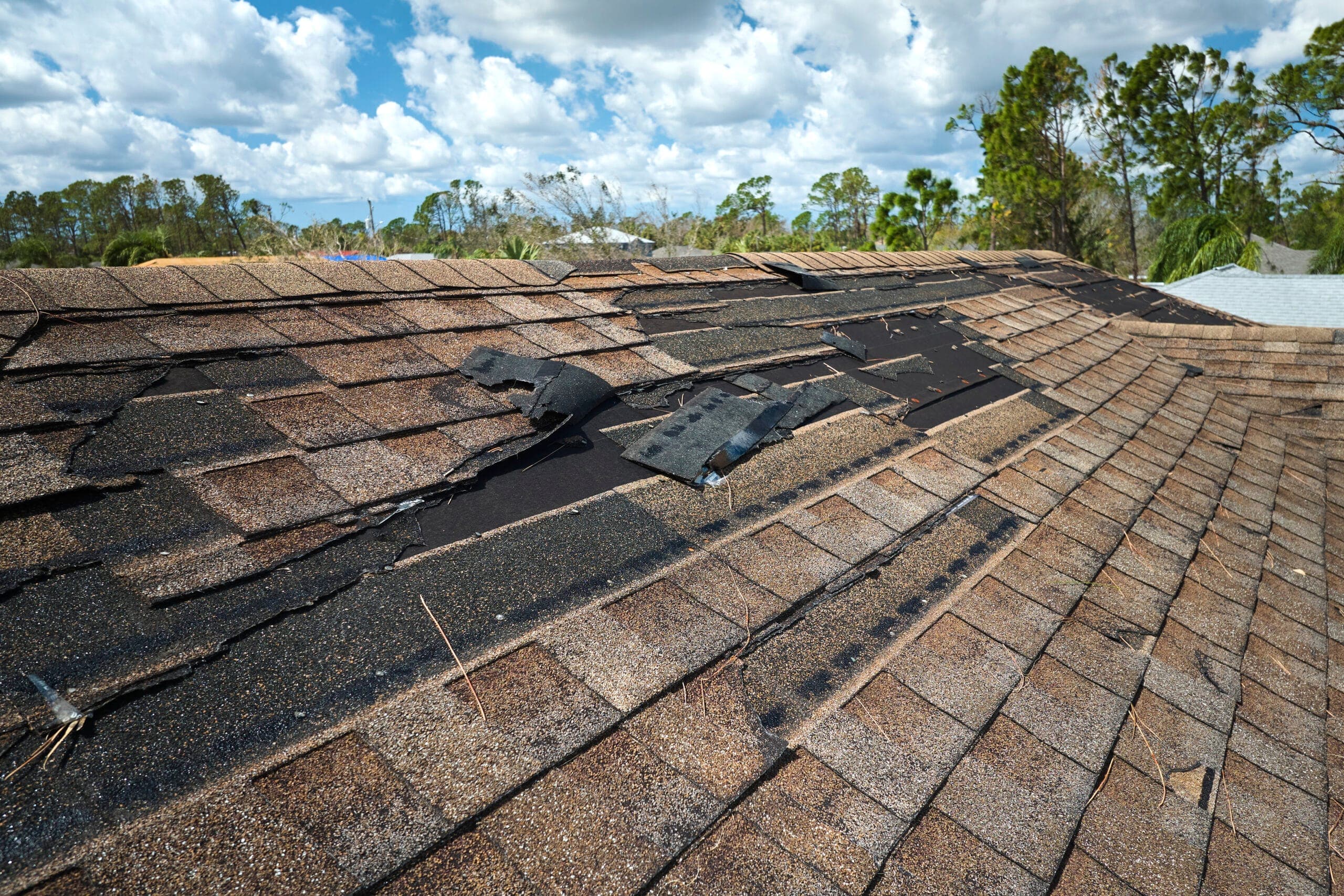
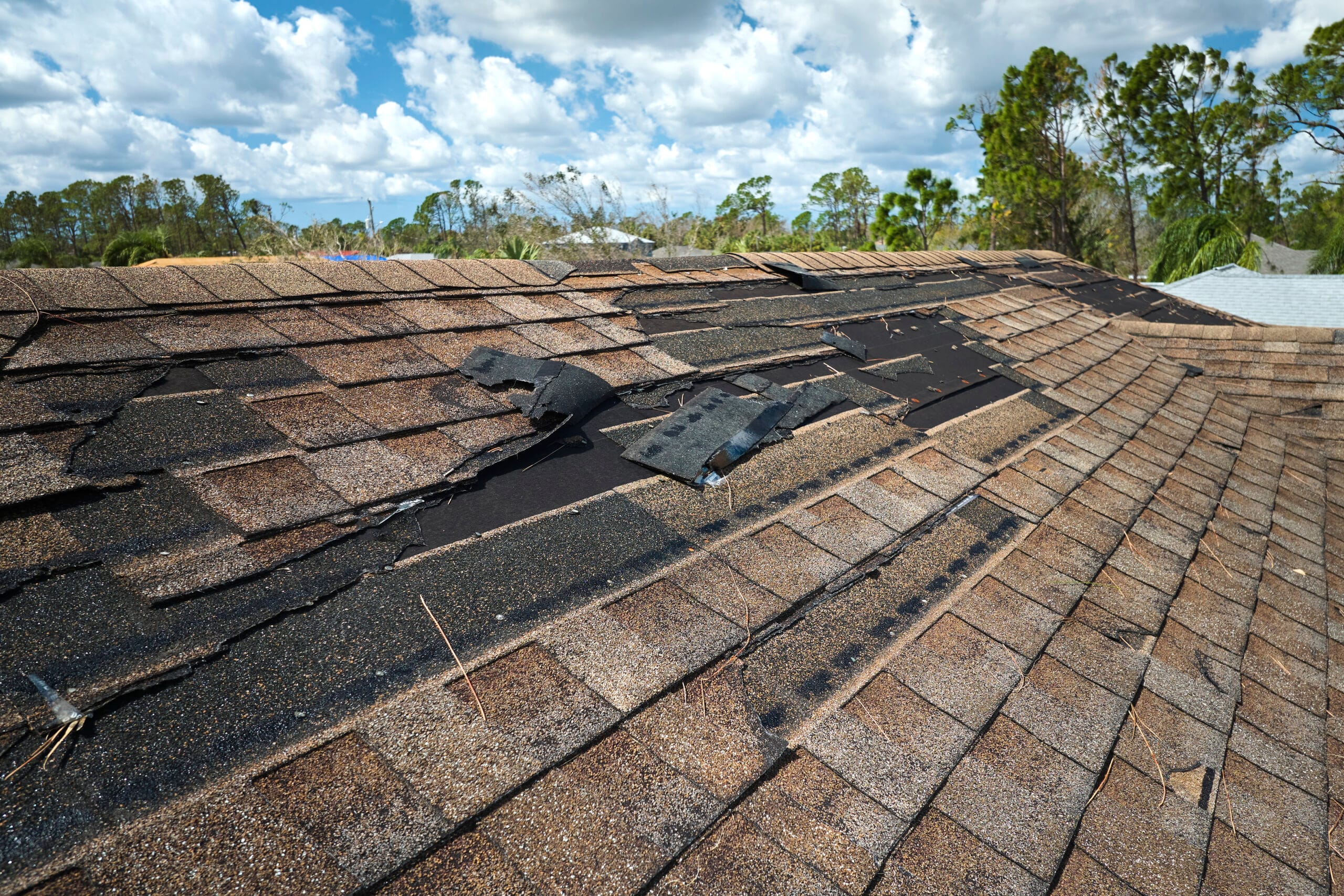
This is the most common denial on Florida roofs, and it is the one homeowners find most frustrating. Homeowners policies cover sudden, accidental damage from a covered peril such as wind or hail. They do not cover a roof that simply wore out. When an adjuster sees curled shingles, granule loss and brittle tabs on a roof that is 15 or 18 years old, the easy conclusion is that the roof failed from age, not from the storm.
The fight here is about evidence of a specific event. Wind damage leaves patterns: creased shingles where tabs lifted and folded back, missing shingles in the direction the wind came from, lifted ridge caps, sealant strips broken in a line. Age damage looks different: even granule loss across a slope, cracking at the same rate everywhere, curling on the sunniest side. A roofer who documents creases, missing tabs and directional patterns with dated photos gives you something concrete to put against a generic wear and tear finding.
Roof age also affects whether you can keep coverage at all. Under Florida Statute 627.7011(5), an insurer cannot refuse to issue or renew a homeowners policy solely because a roof is less than 15 years old, and for a roof 15 years or older it must let you get an inspection, and cannot non-renew solely on age if the inspection shows at least 5 years of remaining useful life. We explain that rule in our guide to roof insurance non-renewal in Florida.
Reason 2: Late Notice of the Claim
Florida tightened claim deadlines at the end of 2022. Under Florida Statute 627.70132, an initial or reopened property claim is barred unless notice is given within 1 year after the date of loss, and a supplemental claim within 18 months. For hurricanes and other weather events, the date of loss is the date of landfall or the date NOAA verifies the event. Miss those windows and the denial is very hard to overturn.
The more common problem is not missing the 1 year deadline. It is waiting four or five months and then filing. Insurers look hard at the gap between the storm and the report, because a long gap lets them argue the damage came from something else, or got worse because nobody mitigated it. Our Florida hurricane claim deadline guide lays out every clock that starts on the day of loss.
If you were denied for late notice but you reported within the legal window, the question becomes whether the delay actually prejudiced the investigation. That is a legal question and worth a conversation with a professional who handles claims. If you were genuinely past the statutory deadline, put your energy into the repair plan instead.
Reason 3: Pre-Existing Damage or a Long-Term Leak
Many policies exclude damage from continuous or repeated seepage or leakage of water over a period of time, often 14 days or more depending on the policy wording. When an adjuster finds rotted decking, dark rings on the ceiling, mold or soft wood around a leak, the denial letter often says the leak existed long before the storm.
Sometimes that is accurate, and sometimes the storm opened a new leak right next to an old repair. The evidence that helps here is timing: photos of the ceiling before the storm, a recent inspection report or 4 point inspection that showed the roof in good shape, receipts from a recent repair, and an inspector who can separate fresh damage from old staining. If you had a 4 point inspection for a policy renewal in the last year or two, find it. It is one of the best pieces of evidence you can have.
It also matters what you did after the storm. Most policies require you to take reasonable steps to prevent further damage. A tarp installed within days, with a receipt, shows you did your part. Our emergency roof repair service handles tarping and temporary repairs and gives you dated documentation for the file.
Reason 4: Damage Called Cosmetic or Below the Deductible
Some denials are technically not denials at all. The insurer agrees there was damage but values it below your hurricane deductible, which in Florida is usually 2 percent, 5 percent or 10 percent of the dwelling coverage. On a home insured for $300,000 with a 2 percent hurricane deductible, the first $6,000 is yours. An adjuster estimate of $4,800 means a zero dollar check, and the letter reads like a denial.
Underestimates come from a few predictable places: the adjuster counted only the visibly missing shingles, priced patching instead of replacing the slope, left out drip edge, underlayment and code required items, or used an actual cash value number with heavy depreciation. Our guide to ACV vs RCV roof claims in Florida explains how depreciation shrinks the check.
This is where a detailed contractor estimate does the most work. When we inspect a denied or underpaid roof, the estimate lists every line item the repair actually needs, including the parts the building code requires. That gives you a specific number to compare against the insurer's estimate, line by line, instead of a feeling that the check is too small.
Reason 5: The 25 Percent Rule and Code Upgrade Disputes
Florida Statute 553.844(5) changed an old rule that used to drive a lot of full roof replacements. If your roof was built, repaired or replaced under the 2007 Florida Building Code or later, and 25 percent or more of the roof or roof section is being repaired, replaced or recovered, only the portion being worked on has to be brought up to current code. Older roofs did not get that exception.
That creates two kinds of disputes. On newer roofs, an insurer may pay only for the damaged section, and the homeowner expected a full roof. On older roofs, the code may require more work than the insurer wants to pay for, which is where ordinance or law coverage in your policy comes in. If your denial or partial payment turns on how much of the roof must be replaced, the permit history of the roof and the exact square footage of damage per slope are the facts that decide it. Our Hernando County roof permit guide explains how the permit file works.
Reason 6: Excluded Causes, Neglect or Unpermitted Work
The last group is the hardest to fight because it is usually about policy language, not the roof. Common exclusions include flood and storm surge, which are covered by flood insurance, not the homeowners policy; damage from lack of maintenance; and limits or sublimits on mold. Some denials also point to unpermitted prior work, a roof material the policy excludes, or a misstatement on the application.
If the denial is based on a policy exclusion, read the exact clause cited in the letter. Then compare it with what the roof actually shows. A flood exclusion does not apply to wind that tore off shingles, even if the same storm also flooded the street. A maintenance exclusion does not apply to a sound roof that lost tabs in a named storm. If the cited exclusion does not match the damage, that mismatch is the core of your dispute.
Step One After a Denial: Get an Independent Roof Inspection
Before you call anyone else, get the roof itself looked at by someone who is not working for the insurer. A licensed roofer can tell you within an hour whether the denial matches what is on the roof. Sometimes the honest answer is that the adjuster was right and the roof is simply at the end of its life. That answer is worth having too, because it saves you months of a dispute you would lose.
When the inspection shows covered damage, the report should include dated photos of each damaged area, a diagram of the slopes with damage marked, the likely cause and date range, the square footage affected, and a line item estimate for the repair or replacement the code requires. Our roof inspection service produces that kind of report, and our insurance claims assistance team can meet a reinspection adjuster on site so both sides are looking at the same shingles.
- Ask for a reinspection: send the insurer your contractor report and photos and request a reinspection in writing. Many disputes end here.
- Respond to the specific reason: address the exact clause and finding in the denial letter, not the claim in general.
- Keep repairing what you must: do not let the roof keep leaking while you dispute. Document temporary repairs and keep the receipts.
State Mediation: Free, Fast and Nonbinding
Florida runs a residential property mediation program through the Department of Financial Services under Florida Statute 627.7015. For personal residential policies, the policyholder or the insurer can request it before appraisal or litigation. The insurer pays the cost of the mediation. You pay nothing unless you fail to show up and the session has to be rescheduled.
Mediation is nonbinding. If you do not like the offer, you walk away with your other options intact. If you sign a written settlement, you have 3 business days to rescind it, unless you have already cashed or deposited a check for the disputed amount. The program does not cover every dispute: claims where the insurer reasonably suspects fraud, where there is no coverage based on agreed facts, or where the whole claim was denied for a material misrepresentation are excluded, and disputes under $500 only qualify if both sides agree.
Requests go through the DFS Division of Consumer Services, which also takes complaints against insurers. The service is free, and DFS suggests contacting it before you hire anyone. For many Hernando and Citrus County homeowners, a well documented contractor estimate plus a mediation session is enough to move a stuck claim.
Appraisal, Public Adjusters and Attorneys
Appraisal is a clause in most homeowners policies. Each side picks an appraiser, the two appraisers pick an umpire, and the panel decides the amount of the loss. Appraisal is built for disputes about how much, not about whether the damage is covered at all. If the insurer agrees the storm damaged the roof but values it at half of what it costs to fix, appraisal can be the right tool. Read your policy for the exact process and who pays the appraisers.
A licensed public adjuster works for you, not the insurer, and is paid a percentage of the claim, with fees capped by Florida law. An attorney who handles property claims makes sense for large denials, coverage disputes and bad faith questions. Florida's 2022 insurance reforms changed the attorney fee rules that used to make these cases easier to bring, and they added a pre-suit notice requirement before you can file a lawsuit, so talk to a lawyer early rather than the week before a deadline.
Whatever route you pick, the roof facts stay the same. A professional representing you is only as strong as the inspection report, photos and estimate behind them.
A Simple Timeline for the First 30 Days After a Denial
- Days 1 to 3: request the full adjuster estimate, photos and cited policy language in writing. Check whether any active leak needs a tarp.
- Days 3 to 10: get an independent roof inspection with dated photos, a damage diagram and a line item estimate.
- Days 10 to 20: send the insurer a written response to the specific denial reason, with the report attached, and request a reinspection.
- Days 20 to 30: if nothing moves, request DFS mediation or talk to a public adjuster or attorney about appraisal or next steps. Track every statutory deadline from the date of loss.
Talk to a Local Roofer Before You Give Up
A denied roof claim is often a documentation problem, not a dead end. And when it is a true end of life roof, it is better to know that and plan a replacement on your terms, with roof financing if you need it, than to keep patching a roof that will not pass the next inspection.
Protech Roofing (license CCC1335878) inspects and repairs storm damaged roofs across Hernando County and nearby communities, including Spring Hill and Brooksville. When the roof does need to come off, our storm damage restoration crews handle the full replacement and the permit. Call (352) 605-0696 to schedule an inspection of a denied or underpaid roof.
FAQ
Frequently Asked Questions
Can I appeal a denied roof claim in Florida?
+
What is the most common reason roof claims are denied in Florida?
+
How long does my insurer have to pay or deny a roof claim in Florida?
+
Does Florida DFS mediation cost anything?
+
How long do I have to file a roof claim in Florida?
+
Should I hire a public adjuster or an attorney for a denied roof claim?
+
Related Articles
More guides for Florida homeowners
Black Streaks on Roof in Florida: Algae and Soft Wash (2026)
What the black streaks on Florida roofs really are, why Gloeocapsa magma algae thrives here, whether it harms shingles, streaks that are not algae, the soft wash cleaning method ARMA describes, why pressure washing damages shingles, prevention with zinc strips and algae resistant shingles, and when streaks point to a new roof.
Read Article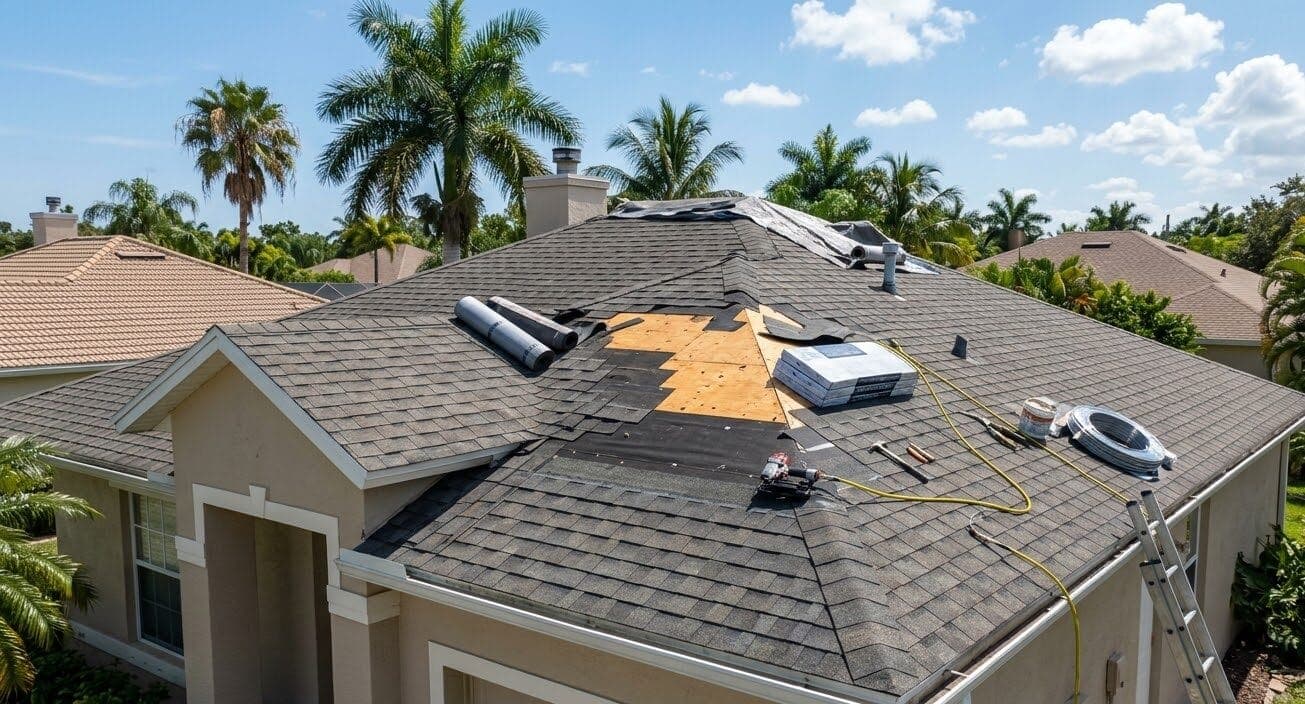
Roof Leak Mold in Florida: How Fast It Grows (2026)
How fast mold grows after a roof leak in Florida: the 24 to 48 hour drying window, where roof leak mold hides in attics and walls, warning signs, health risks, what to do in the first 48 hours, the 10 square foot rule, Florida licensing and how insurance treats mold.
Read Article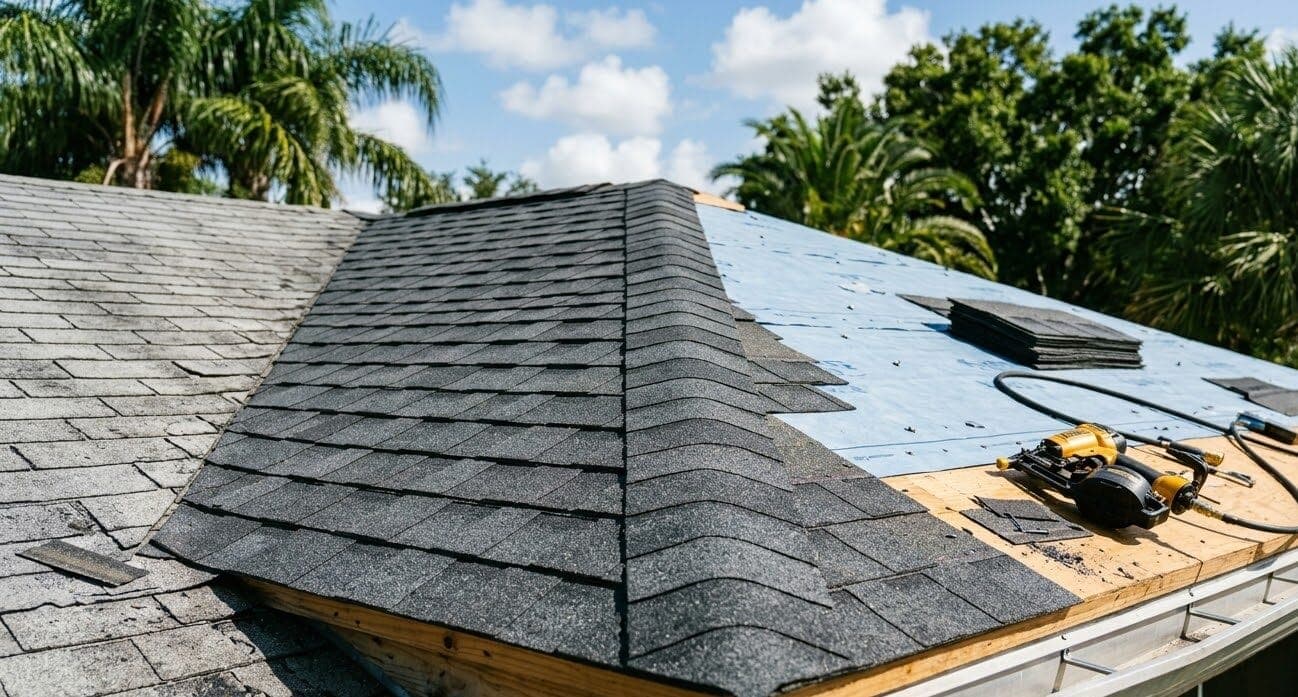
Florida Roof Maintenance Schedule for Homeowners (2026)
A seasonal roof maintenance schedule for Florida homeowners: monthly, quarterly and yearly tasks, what to do in the dry season, before and during the rainy season and through hurricane season, roof-type checks and why a maintenance log matters.
Read ArticleReady When You Are
Get your free roof inspection today.
No-pressure, written estimate. Same-week scheduling across Hernando County. Call us now or request a visit online.