Blog
Roof Leak Mold in Florida: How Fast Mold Grows and When a Leak Becomes a Health Hazard
Call (352) 605-0696Mold can start growing on wet drywall, wood and insulation within 24 to 48 hours of a roof leak, and Florida heat and humidity make it worse. Here is how fast roof leak mold grows, where it hides, when it becomes a health hazard, what you can clean yourself and when Florida requires a licensed professional.
A Roof Leak Becomes a Mold Problem Faster Than Most People Think
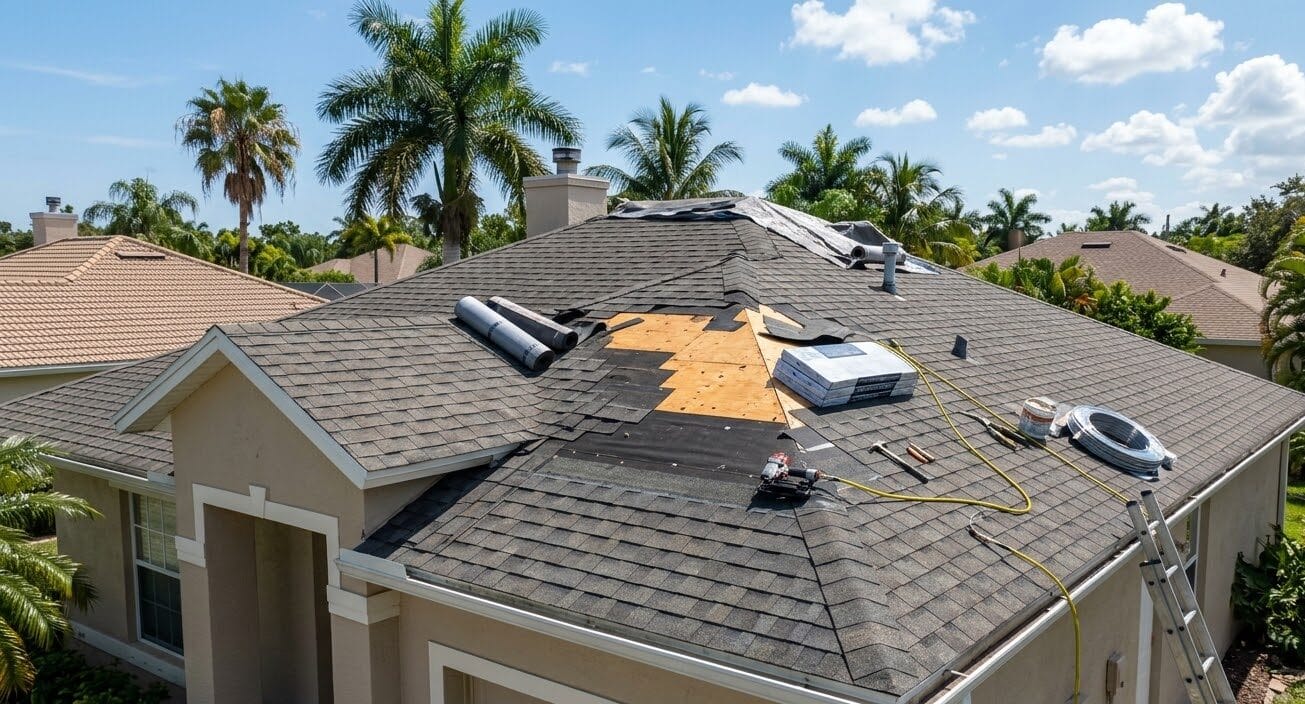
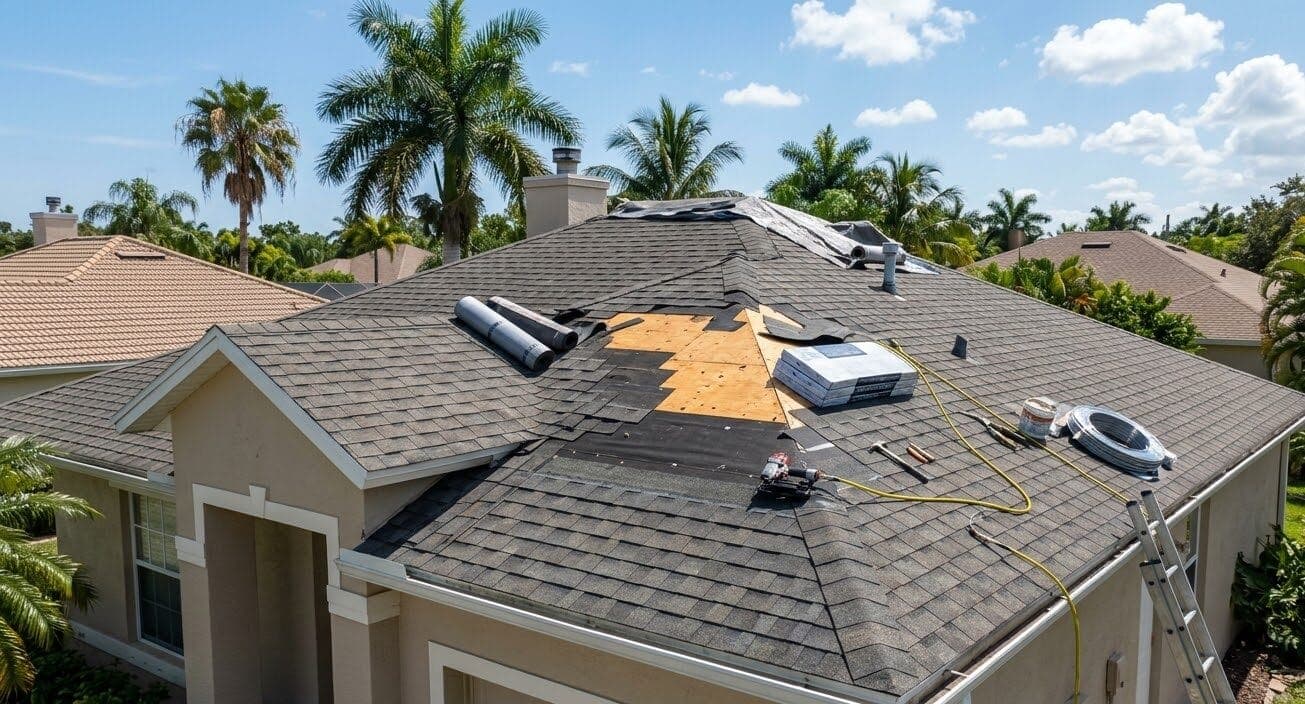
A roof leak in Florida rarely announces itself with a bucket-sized drip. More often it starts as a faint brown ring on the ceiling, a musty smell in a closet or a soft spot on the attic decking that nobody sees for weeks. The roof can be fixed in an afternoon. What turns a small leak into an expensive one is the water that sits in drywall, insulation and wood long enough for mold to take hold.
The U.S. Environmental Protection Agency puts the window plainly: dry water-damaged areas and items within 24 to 48 hours to prevent mold growth. In a Florida attic in July, with heat and humidity already high, that clock starts the moment water gets past the shingles. This guide explains how fast mold grows after a roof leak, where it hides, when a leak becomes a health hazard, what you can clean yourself and when Florida law requires a licensed professional.
How Fast Mold Grows After a Roof Leak in Florida
Mold spores are everywhere, indoors and outdoors. They do nothing until they land on something wet that they can feed on. Drywall paper, wood framing, roof decking, cardboard, carpet backing and dusty insulation all qualify. Once those materials stay wet, mold growth can begin within 24 to 48 hours, which is why the EPA and FEMA both use that window as the deadline for drying or removing wet materials.
That does not mean you will see a black patch on day two. Early growth is usually invisible or looks like faint discoloration. Over the following days and weeks, colonies spread across the wet surface and become visible, often with the musty smell arriving before anything you can see. A slow leak that rewets the same spot every time it rains is the worst case, because the material never gets a chance to dry out between storms.
Florida speeds all of this up. The EPA recommends keeping indoor relative humidity below 60 percent, ideally between 30 and 50 percent. Outdoor humidity in Central Florida summers routinely runs far above that, and an attic with a leak and poor ventilation can stay damp for days even after the rain stops. Our guide to attic ventilation for Florida roofs explains why a well-ventilated attic dries out faster after a small leak.
Where Roof Leak Mold Hides
Roof water rarely shows up directly below where it entered. It runs along rafters, the top of the drywall and the vapor side of insulation before it finds a place to drip or soak in. That is why mold from a roof leak often grows in places homeowners do not check:
- Attic decking and rafters: the underside of the plywood or OSB deck around pipe boots, valleys and chimneys. Look for dark staining, fuzzy spots or a darker color on one area of the deck.
- Insulation: blown or batt insulation soaks up water and holds it against the drywall below. Wet insulation feels matted and can smell musty long after the surface looks dry.
- The back of the ceiling drywall: the paper face on the attic side of the ceiling often grows mold before the painted side shows anything more than a water stain.
- Inside exterior walls: leaks at roof-to-wall flashing or the top of a wall send water down inside the wall cavity, where it can reach the baseboard without ever showing on the ceiling.
- Closets and HVAC areas: closed, unventilated spaces with less air movement, including the space around the air handler in the attic or garage.
If you know the house has had a leak, check these areas after every heavy rain for a few weeks, even after the roof has been patched.
Signs a Roof Leak Has Already Caused Mold
- A musty, earthy smell: often the first sign, especially in closets, the attic access or one particular room after rain.
- Ceiling stains with fuzzy or dark edges: a plain water stain is tan or brown. Dark gray, green or black spotting inside or around the stain points to growth.
- Peeling or bubbling paint: paint lifting on the ceiling or upper walls means moisture behind it.
- Sagging drywall: a soft or sagging ceiling has been wet for a while and should be treated as both a mold and a safety issue.
- Allergy symptoms that improve when you leave the house: sneezing, stuffy nose, itchy eyes or worsening asthma at home.
- Dark spots on the attic decking: visible from the attic with a flashlight, usually around penetrations, valleys and the lower edge of the roof.
When a Roof Leak Becomes a Health Hazard
Most people do not get seriously ill from a small patch of mold, but mold is not harmless either. According to the EPA, inhaling or touching mold or mold spores may cause allergic reactions in sensitive people, mold can trigger asthma attacks in people with asthma who are allergic to it and mold exposure can irritate the eyes, skin, nose, throat and lungs of people with and without allergies.
The risk goes up with the size of the growth and the people in the home. Treat a roof leak as an urgent health issue, not just a repair, when:
- Someone in the home is vulnerable: infants, older adults, people with asthma or allergies and anyone with a weakened immune system.
- The growth is large: more than about 10 square feet, roughly a 3 foot by 3 foot patch, which the EPA treats as the point where professional cleanup is usually needed.
- The ceiling is sagging or the drywall is soaked: wet drywall can collapse, and wet insulation above it will keep feeding mold.
- The leak has gone on for weeks: repeated wetting lets mold reach deeper into wood and drywall.
- The HVAC system is involved: mold near the air handler or ductwork can spread spores through the whole house.
What to Do in the First 48 Hours After You Find a Leak
The first two days decide whether you are dealing with a water stain or a mold job. Work through these steps in order:
- Stop the water: if rain is still coming in, put a bucket under the drip and, if water is pooling above a sagging ceiling, poke a small hole in the lowest point to drain it into the bucket. Call for an emergency tarp if the roof is open. Our emergency roof repair service handles tarping and temporary fixes after storms.
- Document everything: take dated photos of the ceiling, the attic, the roof if you can see damage from the ground and any wet belongings. Insurers will ask for them.
- Get air moving: run fans and a dehumidifier in the room and, if safe, in the attic. Keep the air conditioning running to pull moisture out of the air.
- Pull out what cannot dry: soaked insulation, ceiling drywall that is sagging and wet carpet padding usually cannot be dried in time and should be removed.
- Find the source: a leak in the ceiling is only where the water came out. Getting the roof itself fixed is what stops the cycle. Our leak detection and repair service traces the water back to the failed flashing, pipe boot or shingle.
Our guide on common roof leak causes in Florida walks through the usual entry points, from pipe boots to valley flashing, so you know what the roofer will be looking for.
What You Can Clean Yourself and When Florida Requires a License
The EPA guidance is that if the moldy area is less than about 10 square feet, in most cases you can handle the job yourself. That covers a small spot on the ceiling or a patch on the attic decking. Wear gloves, eye protection and an N95 respirator, scrub hard surfaces with water and detergent and let them dry completely. Porous materials like ceiling drywall and insulation that have mold growing in them usually need to be cut out and replaced rather than cleaned.
Above that size, Florida law changes the picture. Chapter 468, Part XVI of the Florida Statutes defines mold remediation and mold assessment in terms of mold growth greater than 10 square feet, and people who perform that work for pay must hold a Florida mold assessor or mold remediator license. If a company offers to remove a large area of mold, ask for the license number and check it with the Florida Department of Business and Professional Regulation.
One practical point: the roof repair and the mold remediation are usually two different jobs done by two different licensed trades. Fixing the roof first is what keeps the remediation from being wasted. Mold removed from a ceiling under a roof that still leaks will come back.
Does Insurance Cover Mold From a Roof Leak?
It depends on the cause and on your policy. Florida homeowners policies generally cover sudden and accidental water damage, such as a roof damaged by a storm, and may cover some resulting mold. They generally exclude damage from long-term leaks, wear and tear and lack of maintenance, and many policies limit mold coverage with a separate, much lower sublimit than the rest of the policy. Read the mold or fungi section of your own policy before you assume anything.
That is why fast action matters twice. Drying out within 48 hours limits the mold, and documenting the leak right away helps show the insurer that the damage is sudden, not something that went on for months. Our guides on the 72-hour roof damage window and insurance roof claims in Florida cover the documentation step by step, and our insurance claims assistance service helps you put the roofing side of the claim together.
How to Keep a Small Leak From Becoming a Mold Problem
- Inspect after every named storm and once a year: a professional roof inspection catches lifted shingles, cracked pipe boots and failing flashing before water gets in.
- Check the attic after heavy rain: a flashlight and five minutes in the attic after a big storm is the cheapest leak detector there is.
- Keep gutters and valleys clear: debris dams push water under shingles at the edges and in valleys.
- Fix small leaks right away: the repair is cheapest before the decking, insulation and drywall get involved. Our roof repair team handles flashing, boots and shingle repairs.
- Replace a roof that keeps leaking: an older roof that leaks in several places is often past the point where patching makes sense, and each new leak is another mold risk.
Get a Leak Found and Fixed Before Mold Sets In
If you see a water stain, smell something musty after a storm or find a damp spot in the attic, do not wait for the next rain to confirm it. The 24 to 48 hour window is short, and the roof is the part of the problem that keeps feeding the mold.
Protech Roofing (license CCC1335878) finds and fixes roof leaks across Hernando County and nearby communities, including homes in Spring Hill and Brooksville. Call (352) 605-0696 and we will track the leak to its source and stop the water before it turns into a mold job.
FAQ
Frequently Asked Questions
How fast does mold grow after a roof leak?
+
Is mold from a roof leak dangerous?
+
Can I clean roof leak mold myself?
+
Does homeowners insurance cover mold from a roof leak in Florida?
+
Should I fix the roof or remove the mold first?
+
Related Articles
More guides for Florida homeowners
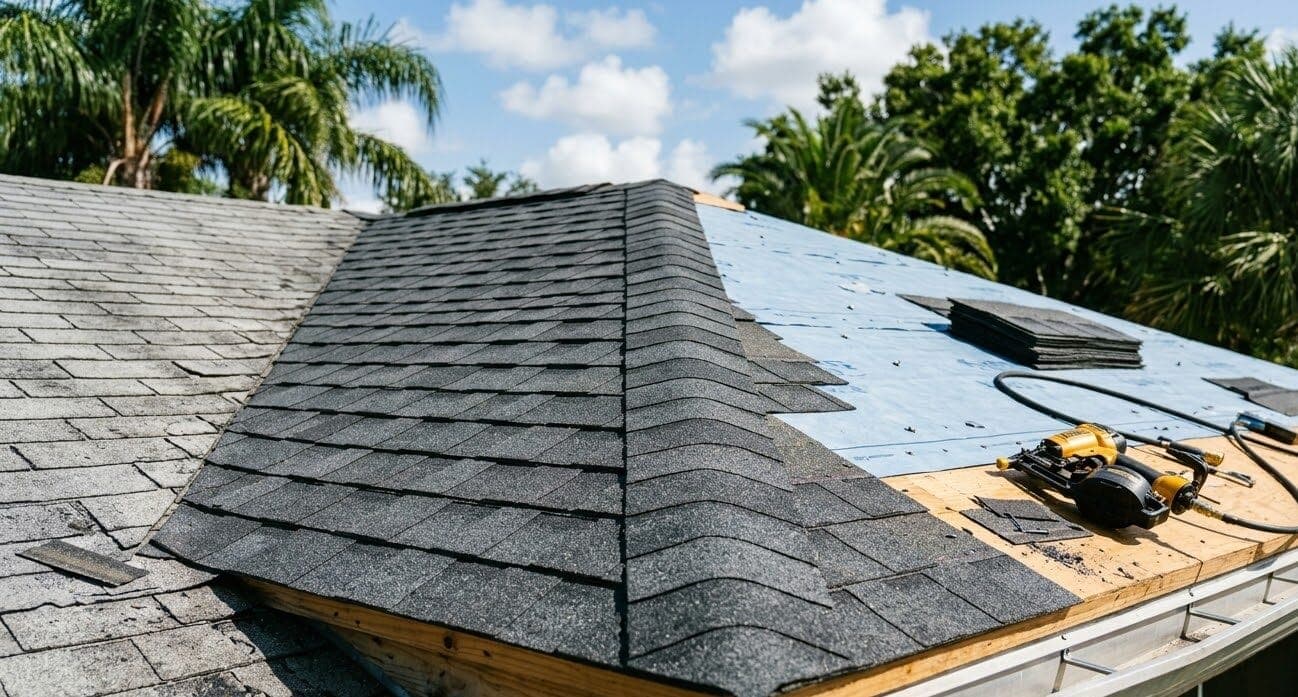
Florida Roof Maintenance Schedule for Homeowners (2026)
A seasonal roof maintenance schedule for Florida homeowners: monthly, quarterly and yearly tasks, what to do in the dry season, before and during the rainy season and through hurricane season, roof-type checks and why a maintenance log matters.
Read ArticleRoof-to-Wall Retrofit in Florida: Straps & Savings
How Florida roof-to-wall connections work, the toe nail, clip and wrap categories on the wind mitigation form, when Section 706.8 requires a retrofit during a reroof, what the 2026 form changed and how to pay for it.
Read Article
Florida Roof Insurance Non-Renewal: Why Carriers Drop Roofs
Why Florida insurers non-renew homeowners policies over older roofs, what FS 627.7011 and 627.4133 require, how to read the reason on your notice and the four paths forward: challenge, inspect, repair or replace, or move the policy.
Read ArticleReady When You Are
Get your free roof inspection today.
No-pressure, written estimate. Same-week scheduling across Hernando County. Call us now or request a visit online.