
Blog
Roof Leaks in Florida: 8 Common Causes and How to Find the Source Before Drywall Damage
Call (352) 605-0696Most roof leaks in Florida come from eight sources: failed pipe boots, flashing, wind-lifted shingles, worn underlayment, clogged gutters and valleys, nail pops, low-slope sections and look-alikes such as AC condensation. This guide explains each cause and how to trace the water to its entry point before it damages drywall in Hernando, Pasco and Citrus county homes.
Why Florida Roofs Leak More Often Than Most
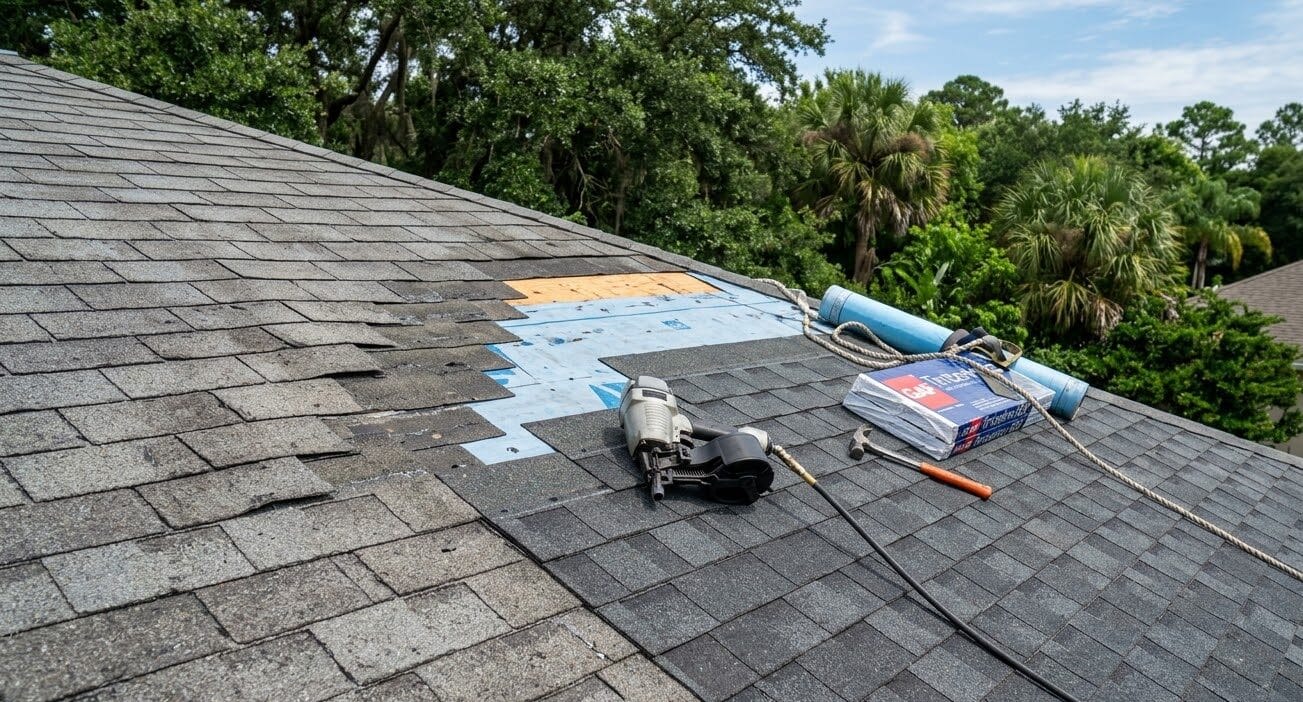
A roof leak in Florida rarely announces itself at the spot where water gets in. You see a brown ring on the ceiling of the hallway, a drip from a light fixture or a soft patch of drywall near an exterior wall. The actual entry point is often several feet uphill on the roof, sometimes on the other side of a rafter, and the water has been traveling along the underlayment, the decking or a truss before it showed up indoors.
Florida roofs work harder than roofs in most of the country. Intense UV breaks down rubber, sealants and asphalt faster. Afternoon thunderstorms from roughly June through September drop heavy rain in short bursts, often with wind that drives water sideways under shingle edges and into flashing seams. Tropical storms and hurricanes add uplift that loosens shingles and fasteners even when nothing visibly blows off. A small weakness that would stay dry for years in a milder climate can start leaking after one Florida summer.
This guide covers the eight causes we find most often on homes in Hernando, Pasco and Citrus counties, how to narrow down the source before the leak damages drywall and insulation, and when a leak points to a repair versus a bigger problem.
First Steps When You Find a Roof Leak
Before you look for the cause, limit the damage. Water that sits in drywall, insulation and ceiling joists for days leads to sagging ceilings and mold, and it makes the eventual repair larger.
- Contain the water: Put a bucket under the drip and move furniture, electronics and rugs out of the way. If the ceiling is bulging with trapped water, a small hole poked at the lowest point lets it drain in a controlled way instead of collapsing.
- Turn off power to wet fixtures: If water is coming through a light fixture, ceiling fan or near an outlet, turn off that circuit at the breaker.
- Document everything: Take photos and video of the ceiling, walls and anything wet, with the date. Note when it rained and how hard. This helps both the roofer and any insurance claim.
- Check the attic if it is safe: With a flashlight, look for wet decking, stained rafters, damp insulation or daylight. Step only on joists or trusses, never between them.
- Do not wait for the next storm: A tarp or temporary patch from a roofer is inexpensive compared with the damage a second storm can cause through the same opening.
Cause 1: Failed Pipe Boots and Roof Penetrations
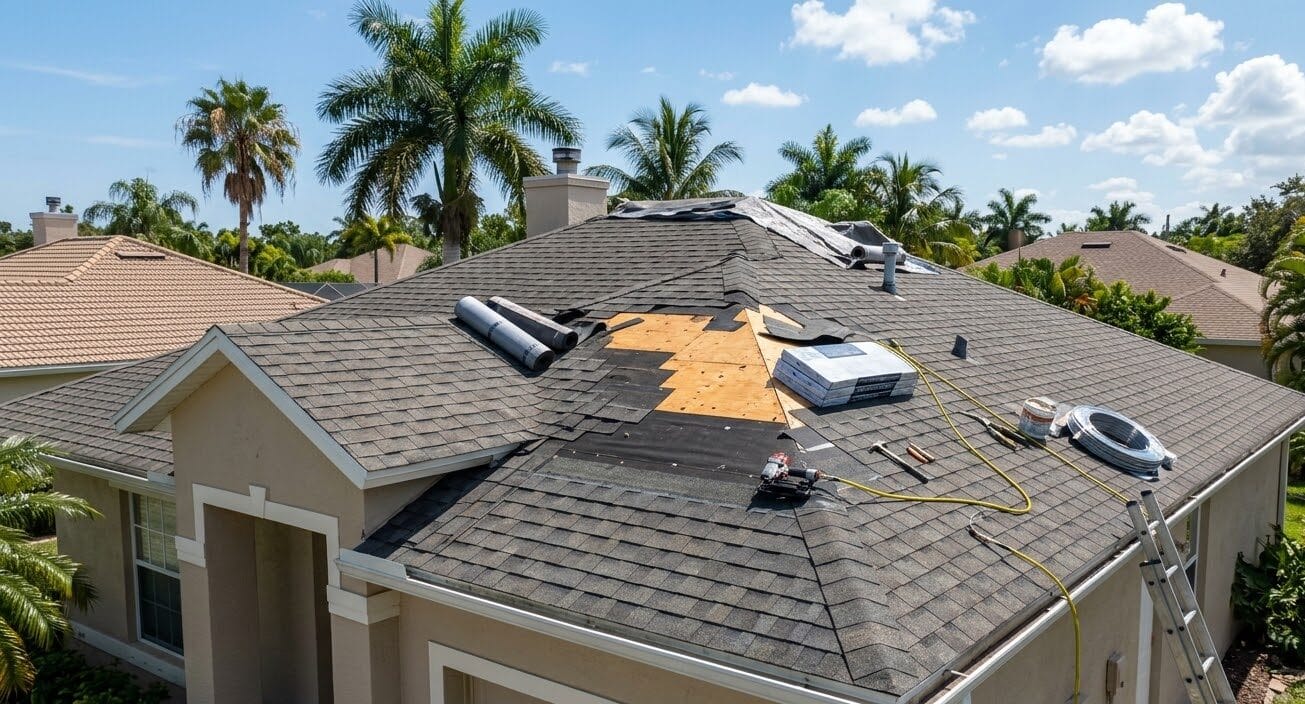
Every pipe, vent and fan that passes through the roof is a hole that depends on a seal. Plumbing vent pipes are usually sealed with a boot: a metal or plastic flange under the shingles with a rubber collar that hugs the pipe. In the Florida sun, those rubber collars crack and shrink. Contractor and inspector reports put the life of a standard neoprene collar at roughly five to ten years in sunny climates, sometimes less, which means it often fails long before the shingles around it.
Pipe boot leaks typically show up as a stain directly below or slightly downslope of a bathroom or kitchen vent. In the attic, look for a wet ring of decking around the pipe or water running down the outside of the pipe itself. The fix is usually simple: replace the boot or install a more durable lead or silicone boot. The same logic applies to exhaust fan housings, attic fans and satellite dish mounts screwed through the shingles.
Cause 2: Flashing Failures at Walls, Valleys and Chimneys
Flashing is the metal that turns water away from joints where the roof meets something else: a wall, a dormer, a chimney, a skylight or another roof plane. Flashing fails when it was installed without proper step or kickout pieces, when it was face-nailed and sealed with caulk instead of layered correctly, or when sealant dries out and pulls away.
A missing kickout flashing at the bottom of a roof-to-wall joint is a classic Florida problem. Water runs down the roof edge, gets behind the stucco or siding and shows up inside the wall, sometimes far from the roof. Valley leaks appear where two roof planes meet and channel a large volume of water during heavy rain. Chimney and skylight leaks have their own patterns, which we cover in detail in our guide to chimney flashing leaks in Florida.
Cause 3: Wind-Lifted, Cracked or Missing Shingles
High wind does not need to tear shingles off to cause a leak. It can lift the tabs enough to break the adhesive seal strip, after which the shingle flutters and lets wind-driven rain underneath. You may see creased shingles, a line of slightly raised tabs along a ridge or rake edge, or granules collected in the gutters below a specific section.
A Florida Building Commission review after Hurricane Michael identified damage to roof coverings as a primary source of water intrusion and pointed to secondary water barriers and better flashing practices as the defenses that keep water out when the covering is damaged. On older roofs, cracked or brittle shingles from heat aging behave the same way. A professional roof inspection after any named storm is the best way to catch lifted tabs before the next rain finds them.
Cause 4: Underlayment Breakdown and Missing Secondary Water Barrier
Under the shingles, tile or metal is the underlayment, the layer that actually keeps the decking dry when water gets past the roof covering. On older roofs, especially those with original felt underlayment, the felt dries out, tears at fasteners and stops shedding water. On tile roofs in particular, the tile is mostly a sun and wind shield, and the underlayment does the real waterproofing work. When it fails, tile roofs can leak with no broken tile in sight.
Current Florida rules for re-roofing existing homes require a secondary water barrier when a roof covering is replaced. Under the 2023 code, local building departments describe two accepted methods: a self-adhering polymer-modified bitumen underlayment over the entire deck, or a strip of self-adhering tape over the deck joints with an approved underlayment over the whole roof. A home that has not been re-roofed since before those rules may not have that second line of defense.
Cause 5: Clogged Gutters, Valleys and Debris Dams
Leaves, pine needles and oak tassels collect in valleys and behind chimneys and skylights. Wet debris holds water against the roof, rots the underlayment and creates small dams that push water under shingle edges. Clogged gutters back water up under the drip edge and into the fascia and soffit, which homeowners often mistake for a roof leak at the edge of a room.
If your stains appear along an exterior wall or near the edge of the ceiling, and your gutters overflow during storms, start there. Clearing valleys and gutters twice a year, before and after the rainy season, prevents many of these leaks entirely.
Cause 6: Nail Pops and Exposed Fasteners
As decking expands and contracts with heat and humidity, nails can back out and push up through the shingle above them. A raised nail creates a small hole, and on a low-slope section or in wind-driven rain, that is enough to drip. Exposed fasteners on ridge caps, flashing and vents are another source, especially when the original sealant has dried out.
Nail pop leaks are usually small, scattered and slow, and they often show up as tiny spots on the ceiling rather than one large stain. They are easy for a roofer to repair one at a time, but a large number of them can be a sign of deck movement or improper nailing at installation.
Cause 7: Low-Slope and Flat Roof Sections
Many Florida homes combine a pitched main roof with low-slope sections over porches, lanais, additions or carports. Low-slope areas drain slowly, and any ponding water finds every seam, blister and crack. Shingles installed on a slope that is too low for them are a common cause of leaks over additions.
If your leak sits under a porch roof or an addition, the low-slope section is the first suspect. These areas often need a membrane system rather than shingles. Our guide to flat roof repair and replacement explains the options, and our roof repair service covers patching and rebuilding these transitions.
Cause 8: Things That Look Like Roof Leaks but Are Not
Not every wet ceiling is a roof problem. In Florida, three other sources are common enough that a good roofer checks them before selling you a repair.
- AC condensation: A clogged condensate line, overflowing drain pan or sweating ductwork in a hot attic can drip onto the ceiling on dry days. If the stain grows when the AC runs hard and not when it rains, look at the air handler first.
- Attic ventilation and humidity: Poor ventilation lets humid air condense on the underside of the decking, especially on cool mornings. The result looks like a leak spread over a wide area. Our article on attic ventilation for Florida roofs covers how to tell.
- Plumbing and windows: A leaking supply line, a bathroom above or a failed window seal can send water into ceilings and walls. Stains under bathrooms or beside windows deserve a plumbing and window check.
How to Find the Source Before Drywall Damage Spreads
Finding the entry point is a process of narrowing down. Here is how roofers approach it, and how you can help.
- Map the stain to the roof: Measure from an exterior wall to the stain inside, then find the same point on the roof. Look uphill from there, since water travels down the slope before it drips.
- Note the weather pattern: A leak that appears only in wind-driven rain from one direction points to flashing or lifted shingles on that side. A leak in every rain points to a penetration, valley or underlayment failure.
- Inspect the attic during or right after rain: Wet trails on rafters and decking lead back toward the entry point. Mark them with tape so the roofer can find them quickly.
- Controlled water testing: A roofer can run a hose on one section at a time, starting low and moving uphill, while someone watches inside. It is slow, but it isolates the exact source.
- Professional leak detection: Moisture meters and thermal imaging can show wet decking and insulation that are invisible from below. Our leak detection and repair service uses these tools to find the source before opening anything.
Repair or Replace: What the Leak Tells You
One leak from a failed pipe boot or a few lifted shingles on an otherwise healthy roof is a repair. Several leaks at once, widespread brittle shingles, soft decking in multiple areas, or a roof that has reached the end of its expected life point toward replacement. Age matters in Florida for another reason: many insurers look closely at roofs around 15 years old or older, and repeated leak claims on an aging roof can affect coverage.
If the leak came from a storm, timing also matters. Under section 627.70132 of the Florida Statutes, notice of an initial or reopened property claim must reach the insurer within one year of the date of loss, and a supplemental claim within 18 months. Document storm damage promptly and get a written inspection report even if the leak seems small.
Get a Roof Leak Found and Fixed in Hernando, Pasco and Citrus Counties

Protech Roofing (license CCC1335878) finds and fixes roof leaks on shingle, tile, metal and low-slope roofs across the region. Homeowners can start with our local pages for roof repair in Spring Hill and roof repair in Brooksville. If water is actively coming in after a storm, our emergency roof repair team can tarp and stabilize the roof first, then return for the permanent fix.
Call (352) 605-0696 to schedule a leak inspection. We will trace the water to its source, show you photos of what we find and explain whether a repair will solve it or whether the roof needs more.
FAQ
Frequently Asked Questions
What is the most common cause of roof leaks in Florida?
+
Why does my roof leak only during heavy storms?
+
Can a roof leak without missing shingles?
+
How do I find where my roof is leaking?
+
Is a ceiling stain always a roof leak?
+
How long do I have to file an insurance claim for a storm roof leak in Florida?
+
Related Articles
More guides for Florida homeowners

ACV vs RCV Roof Claims in Florida: Insurance Payout Guide
Why the first insurance check on a Florida roof claim is smaller than the estimate: how actual cash value, replacement cost, depreciation and deductibles work, what Florida law requires and how to recover the holdback.
Read Article
How Long a Roof Replacement Takes in Florida: 2026 Guide
A Florida shingle re-roof takes one to three days of physical work and about two to four weeks from contract to closed permit. Here is what happens each day, how metal and tile change the schedule and what causes delays.
Read Article
Best Shingles for Florida: Impact-Rated Class 4 Guide
The best shingle for a Florida home is usually a Class H architectural shingle installed as a full system. Here is how 3-tab, architectural and Class 4 impact-resistant shingles compare on cost, wind, insurance and lifespan.
Read ArticleReady When You Are
Get your free roof inspection today.
No-pressure, written estimate. Same-week scheduling across Hernando County. Call us now or request a visit online.