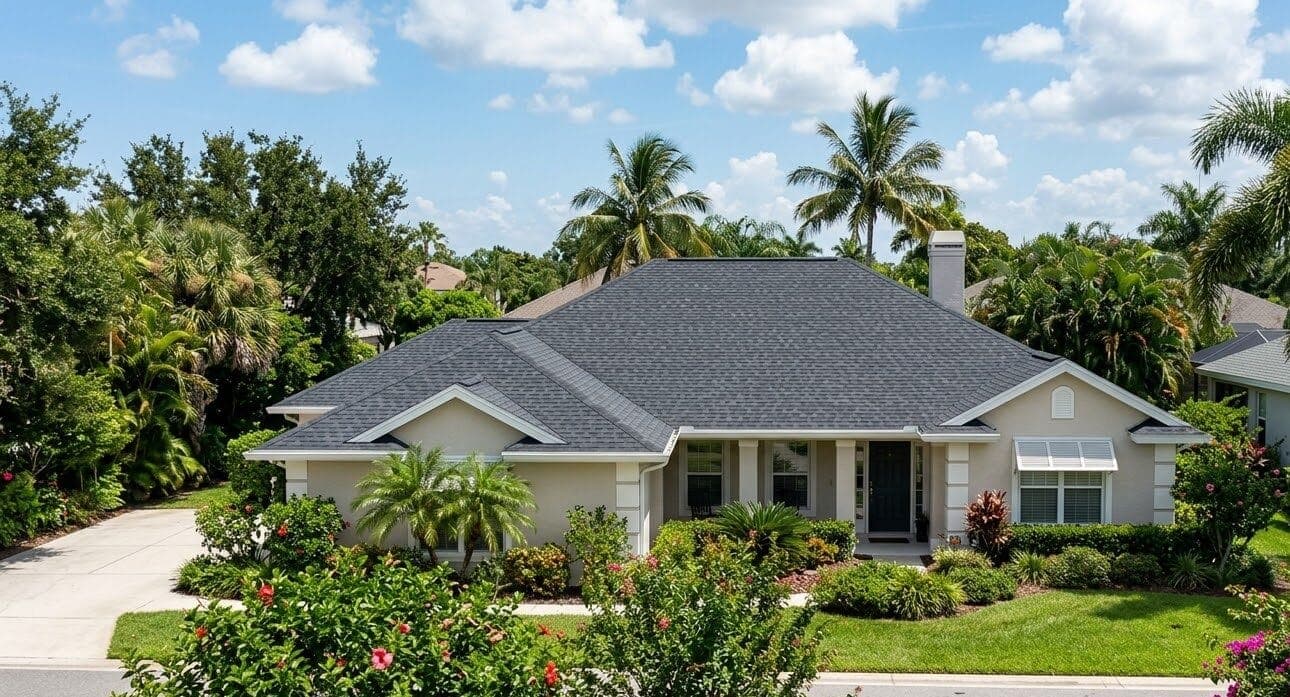
Marion County, FL
Roofing Services in Summerfield, FL
Roofing repair, replacement and storm damage in Summerfield, FL. We pull the permit and run final inspection. Call (352) 320-0062 for a free estimate.
Call (352) 320-0062Roofing Services for Summerfield Homes
Most roofing companies that answer a Summerfield call are driving in from Ocala or from farther south, and the drive shows up in how long it takes them to reach you and how quickly they want to leave. Protech Roofing runs Summerfield from a local office at 10935 SE 177th Place, Suite 404-M7. That address is not a mailbox. It is the hub we dispatch crews from, and it is the reason we can get to a Summerfield roof quickly for a routine estimate instead of scheduling you weeks out.
From this office we cover three counties at once. Marion County includes Summerfield, Belleview, and the south side of Ocala. Sumter County brings in Wildwood. Lake County brings in Lady Lake. The Villages sits right on the seam where those three counties meet, so a crew set up to serve The Villages is already set up to serve all three. If your street is anywhere in that footprint, you are inside our normal route, not a special trip.
Being based here also means we know the area, from the gated 55-plus communities off US-441 to the older streets closer to Belleview, and we know how the roofs in each tend to age. We are a full roofing contractor, not a patch-only crew, which means roof repair, full roof replacement, leak detection, storm damage restoration, and the smaller jobs in between such as tile repairs, gutter work, and roof coatings. Homeowners here have rated our work 4.9, and we would rather earn the next one by doing the boring parts right, like cleaning up every nail and closing out the permit, than by promising things we cannot put in writing.
Roof Repair or Roof Replacement: Which One You Actually Need
The first question almost every homeowner asks is whether they can repair the roof or whether it has to be replaced. The honest answer is that it depends on three things: the age of the roof, how widespread the damage is, and what is happening under the surface where you cannot see.
Age matters most. A roof in the last few years of its service life is rarely worth a large repair, because the money you spend patching one slope does nothing for the three slopes about to fail for the same reason. Shingles that are curling, losing granules by the handful, or tiles cracking across a wide area are signs the whole system has aged out, not signs of one bad spot.
Damage spread matters next. A single leak over a bedroom, a few tiles knocked loose by a limb, or flashing that pulled away from a chimney are classic repairs. Wind or hail damage that touches most of the roof at once is a different conversation, and it is often an insurance conversation.
What is underneath matters most of all, and it is the part cheap bids skip. When we assess a roof we look at the decking, the underlayment, the flashing at every penetration, and the ventilation. A roof that looks fine from the driveway can have soft, water-stained decking that will not hold a new fastener. We would rather find that on the inspection than have you find it two storms later. If a repair genuinely solves the problem, we will tell you to repair. If it only buys a few months, we will show you why.
Ventilation deserves its own mention, because it is the quiet killer of roofs in this climate. A poorly ventilated attic in Central Florida traps heat and moisture, and that cooks shingles from below and shortens the life of everything above the decking. When we quote a replacement we check whether the existing ventilation is actually doing its job, because putting a brand new roof over a bad ventilation setup is spending replacement money to buy a repair timeline.
Storm Damage and What Marion County Weather Does to Roofs
Summerfield roofs do not wear out from age alone. They wear out from weather, and Marion County gets more than its share. The Atlantic hurricane season runs from June 1 to November 30, and that six-month window is when most serious roof damage happens here, whether from a named storm or from an ordinary afternoon line of thunderstorms that packs a hard gust.
The wind is real. During Hurricane Irma, gusts in Marion County topped 100 miles per hour and damaged more than a thousand homes. A separate storm produced an EF-1 tornado in the county with winds up to 110 miles per hour and more than 12 million dollars in damage. Wind at those speeds does not always tear a roof off in one piece. More often it lifts and loosens shingles or tiles at the edges, breaks the seal that holds them down, and leaves a roof that looks intact but is no longer watertight.
Hail is the one people forget. In May 2007, Marion County recorded grapefruit-sized hail, one of only three hailstorms that large ever documented in the entire state of Florida. Hail does not have to be that big to bruise shingles and knock the protective granules loose, and that bruising is exactly the kind of damage that is invisible from the ground and easy for a rushed inspector to miss.
Then comes the rain. In the Ocala and Marion County area, July and August are the wettest months of the year, with roughly seven to eight inches of rain each and rain falling on most days from June through August. A roof with a broken seal or a hidden bruise will hold through a dry spring and then start leaking the week the summer rain arrives. That is why we push homeowners to have the roof looked at before the season, not during it.
Aging Roofs in Summerfield's 55-Plus Communities
Summerfield is built around planned, gated retirement communities, and Spruce Creek South is the largest of them. It is a gated 55-plus golf community sitting just north of The Villages along US-441 and US-27. Most of it was built through the 1990s and 2000s, which puts a large share of the homes at twenty to thirty years old or more.
That age is the important part. A lot of those houses are still wearing their original builder roof, and a roof installed in the late 1990s has passed the service life of most shingle systems and is deep into the back half for many tile systems. When a roof crosses that line, the risk is not that it fails on a calm day. The risk is that it fails during the first strong summer storm, when every roofer in the region is booked and an emergency job costs more and moves slower than planned work.
An inspection in one of these communities also catches the things a homeowner would never think to look for: nail pops backing out of the decking, pipe boots that have dried and cracked in the sun, sealant that has failed around skylights, and ridge vents loosened over two decades of heat. Any one of those can become an entry point for water long before the shingles themselves give out, and all of them are cheap to fix while they are still small.
If you own one of these homes, the smart move is to know where your roof stands before it forces the decision. An inspection tells you plainly how many years of life are realistically left, what is failing first, and whether you are looking at a repair, a few more seasons of monitoring, or a replacement you can plan and budget for on your own schedule. Planning a roof on your timeline is almost always cheaper and calmer than reacting to one on the weather's timeline.
Permits and Inspections: We Handle Them, Not You
A roof in Florida is not finished when the last shingle goes on. It is finished when the permit is closed and the final inspection passes. On many jobs the homeowner never even learns this, until a cut-rate crew disappears and leaves an open permit that surfaces later when the house is sold. Protech does it the other way. We pull the permit for the job, and we carry it through the final inspection ourselves. That is part of the service, not your responsibility and not an extra line you have to chase.
It helps to understand how permitting works here, because the rules are specific to the county. Marion County's Building Safety department no longer keeps a registry of state-certified contractors the way it once did. Instead it keeps an optional insurance database, and any contractor who does not participate has to present a current certificate of insurance every single time they pull a permit. Roofing is also not one of the trades that requires a local competency card in Marion County, unlike work such as aluminum, concrete, masonry, garage doors, and window and door installation.
None of that is your problem to sort out, and that is the point. We know which paperwork each job needs, and we handle it. What you should take from it is simpler: a legitimate roof on your Summerfield home is a permitted roof with a passed final inspection, and anyone offering to skip that step to save you a few dollars is handing you a problem, not a discount.
The same discipline applies to the code itself. Florida's building code is a floor, not a ceiling, and a roof that just barely scrapes past inspection is a roof built to the legal minimum. We build to meet or exceed code, because on a Central Florida roof the minimum is the starting point, not the goal, and the difference shows up the first time a real storm tests the edges and fasteners.
Storm Damage Inspections and Insurance Claims
When a storm hits, the hard part is usually not the roof. It is the claim. Insurers move fast to close files, adjusters see dozens of roofs a week, and damage that is real but subtle, like a hail bruise or a wind-broken seal, is easy to overlook if nobody points it out. That is where having a roofer in your corner changes the outcome.
We provide a storm damage inspection at no charge, because the whole process depends on having an accurate picture of the damage from day one. On that inspection we check the shingles for wind lift and hail bruising, look at the flashing around every penetration and in the valleys, examine the soffit and fascia for wind damage, and go into the attic when we can reach it to look for water intrusion the outside does not show.
Many of our customers ask us to be there when the adjuster comes, and we are glad to. When we meet the adjuster at your home, we walk through every area of concern from our written inspection report so nothing gets quietly left off the estimate. After a replacement, we also recommend scheduling a wind mitigation inspection right away, because a new roof built to current Florida Building Code standards usually qualifies for the highest available insurance credits, which can lower what you pay to insure the home going forward.
One thing worth calibrating for Summerfield: Marion County is not in Florida's High-Velocity Hurricane Zone, which by rule covers Miami-Dade and Broward in full plus parts of a few other counties. That does not mean weaker roofs. It means the specific HVHZ product approvals do not apply here, and any roofer telling you your Summerfield roof must meet Miami-Dade HVHZ rules is selling you something you do not need.
Roof Leaks: Finding the Real Source, Not Just the Stain
A ceiling stain almost never sits directly under the hole. Water gets in at one point, runs along the top of the decking or down a rafter, and drips through the ceiling several feet away. Chase the stain and you patch the wrong spot, the leak comes back, and you are convinced the roof is worse than it is. Finding the actual entry point is the whole job.
We start with an on-site inspection and a careful visual examination of the roof, then go into the attic where it is accessible to look for daylight coming through, water staining on the decking, and moisture in the insulation. When the visible clues are not enough, we bring in tools. A thermal scan finds the temperature differences that wet material creates, and once it flags a suspect area we press a moisture meter directly against the decking, insulation, and framing to get real readings instead of guesses.
When the scan and the meter narrow it to a general zone but we still need the exact penetration point, we run a controlled water test, spraying specific areas of the roof in a systematic pattern while a second technician watches the attic from inside for the moment water appears. It is slower than eyeballing it, and it is the difference between fixing the leak once and coming back three times. With Marion County's summer rain concentrated in July and August, a leak found and sealed in the spring is a small job. The same leak ignored until the rains arrive can soak decking and insulation and turn into a much larger one.
Not every leak is a roof leak, either, and a good inspection rules the impostors out. Condensation from a poorly ventilated attic, a failed plumbing vent boot, or a clogged gutter backing water under the drip edge can all mimic a roof leak from inside the house. Pinning down which one you actually have is the reason we test instead of guess, because the fix for each is completely different.
What a Written Estimate From Protech Includes
A roof is one of the largest single expenses a homeowner faces, and vague bids are where people get hurt. A number scrawled on the back of a card tells you nothing about what you are actually buying, and it leaves all the room in the world for surprise charges once the tear-off exposes something. We work from detailed written proposals that break out every cost component, so you can see exactly what you are paying for and compare bids on the same terms.
A proper estimate spells out every component so nothing is buried:
- Tear-off and disposal of the old roof
- Any deck repairs found once the old roof is off
- Underlayment type and specification
- The roofing material itself, with its type and specification
- Flashing at chimneys, valleys, and every penetration
- Warranty terms, both manufacturer and workmanship
When a bid leaves those pieces blank, it is not simpler, it is just hiding where the money goes. We would rather show the whole thing up front and let you ask questions than surprise you halfway through the job.
Material choice is part of that conversation, not an afterthought. Shingle, tile, metal, and stone-coated steel each behave differently under Florida sun, wind, and rain, and each carries a different price and a different service life. The right answer depends on your home, your budget, how long you plan to stay, and in a community like Spruce Creek South, any standards your association sets. We will lay out the trade-offs plainly rather than steering you to whatever is easiest for us to install.
Booking a Roof Inspection in Summerfield
The best time to look at a Summerfield roof is before the summer storms, not after. An inspection is straightforward: we evaluate the condition of your shingles or tiles, the integrity of the underlayment, the flashing at every penetration point, the health of the decking, and how well the roof is ventilated, and then we tell you plainly what we found and what, if anything, it needs.
There is no pressure attached to a look. Plenty of the inspections we run end with us telling the homeowner the roof is fine and to call again in a year, and that answer is worth having too. If you already have an active leak or fresh storm damage, though, do not wait for the calendar. Reaching out early, before the next rain, is what keeps a small repair from becoming a soaked ceiling and a claim.
Our Summerfield office is at 10935 SE 177th Place, Suite 404-M7, and we serve Summerfield, Belleview, Wildwood, Lady Lake, The Villages, and the surrounding Marion, Sumter, and Lake County area from there. Call (352) 320-0062 to confirm we cover your address and to schedule an inspection or an estimate. We will give you a written quote you can hold us to, handle the permit and the final inspection as part of the job, and leave your property cleaner than we found it.
Roofing By Area
Roofing services near Summerfield
FAQ
Frequently Asked Questions
Where can I find a roofer near me in Summerfield, FL?
+
Does Protech really serve Summerfield, or just The Villages?
+
Do I have to pull the permit for my roof myself?
+
Does my Summerfield roof have to meet Miami-Dade hurricane code?
+
When should I get my roof inspected in Summerfield?
+
From the Blog
Stay informed about roofing in Florida.

Florida Tile Roof Problems: Repair vs Re-Roof (2026)
Tile lasts for decades, the underlayment under it does not. Here are the tile roof problems Florida homeowners see most, what each repair costs in 2026, and how to tell when a repair is enough and when it is time to re-roof.
Read Article
Solar Roofing in Florida: Solar Shingles vs Panels (2026)
Every solar system on a Florida roof is either bolted to the roof or is the roof. Here is how panels and solar shingles compare in 2026, what changed with the federal credit, and why the cheapest solar project often starts with a re-roof.
Read Article
Chimney Flashing Leaks in Florida: Find the Real Cause
Roofs do not leak in the field, they leak at the terminations, and the chimney is the hardest termination on the roof. Here is what Florida code requires, the five failures behind almost every chimney leak, and what a correct reflash costs in 2026.
Read ArticleReady When You Are
Get your free roof inspection today.
No-pressure, written estimate. Same-week scheduling across Hernando County. Call us now or request a visit online.