Emergency Roof Repair The Villages FL

roof inspection in the villages fl
Central Florida’s severe thunderstorms and occasional tornado warnings send debris flying across The Villages every summer, and a single broken barrel tile or torn shingle section can let gallons of water into a home within minutes. Residents near Spanish Springs and throughout the newer sections south of CR 466A know how fast interior damage adds up once a roof is breached. Protech Roofing provides emergency roof repair in The Villages with fast arrival times, securing exposed areas with tarps and temporary seals before scheduling the permanent fix.

Roofing Emergencies in Florida’s Largest Retirement Community

Emergency roof repair in The Villages, FL presents challenges you won’t find anywhere else in Central Florida. With over 130,000 residents spread across portions of Sumter, Lake, and Marion counties, The Villages is essentially a small city. And that means thousands of roofs that all face the same storm threats at the same time.

What makes The Villages different from other communities we serve? Scale and timing. Many of the neighborhoods here were built during concentrated construction windows in the 2000s and 2010s. That means entire streets of homes have roofs that are approaching the end of their rated lifespans at the same time. When a storm hits, the damage is widespread because so many roofs are already at the age where materials start to weaken.

Hurricane Idalia in August 2023 proved this. Even though The Villages sits inland, the storm’s wind field extended well beyond the coast. Homes in Village of Hadley, Orange Blossom Gardens, and the Lake Deaton neighborhoods all reported shingle damage, and insurance claims flooded in for weeks afterward. The community’s inland location means lower storm surge risk, but wind and rain still do real damage to aging roof systems.

Protech Roofing provides 24/7 emergency roof repair throughout The Villages and the surrounding areas. We understand the unique requirements here, including the architectural review committees, deed restrictions, and the specific roofing standards that apply to Villages properties.

HOA and Architectural Review Boards Add Complexity to Emergency Repairs

One thing that separates The Villages from most other Florida communities is the architectural review process. Nearly every neighborhood in The Villages requires homeowners to submit applications and get approval from their district’s architectural review committee (ARC) before starting roof work. This applies to permanent repairs and replacements, not to emergency tarping.

So what does that mean when a tree punches through your roof at midnight? You can still get emergency stabilization done immediately. Tarping, temporary patches, and water mitigation don’t need ARC approval. But once you’re ready for the permanent fix, you’ll need to specify the roofing material, manufacturer, color, and profile you plan to use. And it has to match the community’s approved standards.

This is where working with a contractor who knows The Villages pays off. We know which materials are pre-approved in most Villages districts. We know the color palettes that pass review. And we can help you fill out the ARC application correctly the first time so you’re not waiting weeks for approval while your tarped roof sits exposed to Florida weather.

House Bill 293, enacted in 2024, changed the rules around hurricane protection products. HOAs can no longer deny applications for roofing materials that meet Florida Building Code hurricane ratings, even if they look different from the community’s traditional aesthetic. That gives Villages homeowners more options for impact-resistant materials that weren’t previously available under stricter ARC rules.

Protech Roofing handles the ARC paperwork as part of our repair process. You shouldn’t have to become an expert in your HOA’s bylaws while you’re dealing with a damaged roof.

Common Roof Failures We See Across The Villages

After years of working on roofs in The Villages, we’ve noticed patterns in how homes here fail during storms. Understanding these patterns can help you spot problems before they turn into emergencies.

The most common issue is ridge cap failure. The ridge caps are the shingle pieces that cover the peak of your roof where two slopes meet. They take the highest wind exposure on the entire roof, and in The Villages’ flat terrain, there’s nothing to break the wind before it hits your ridge line. We see ridge caps blow off on homes throughout Spanish Springs, Brownwood, and the Mallory Square area during storms that barely register as severe.

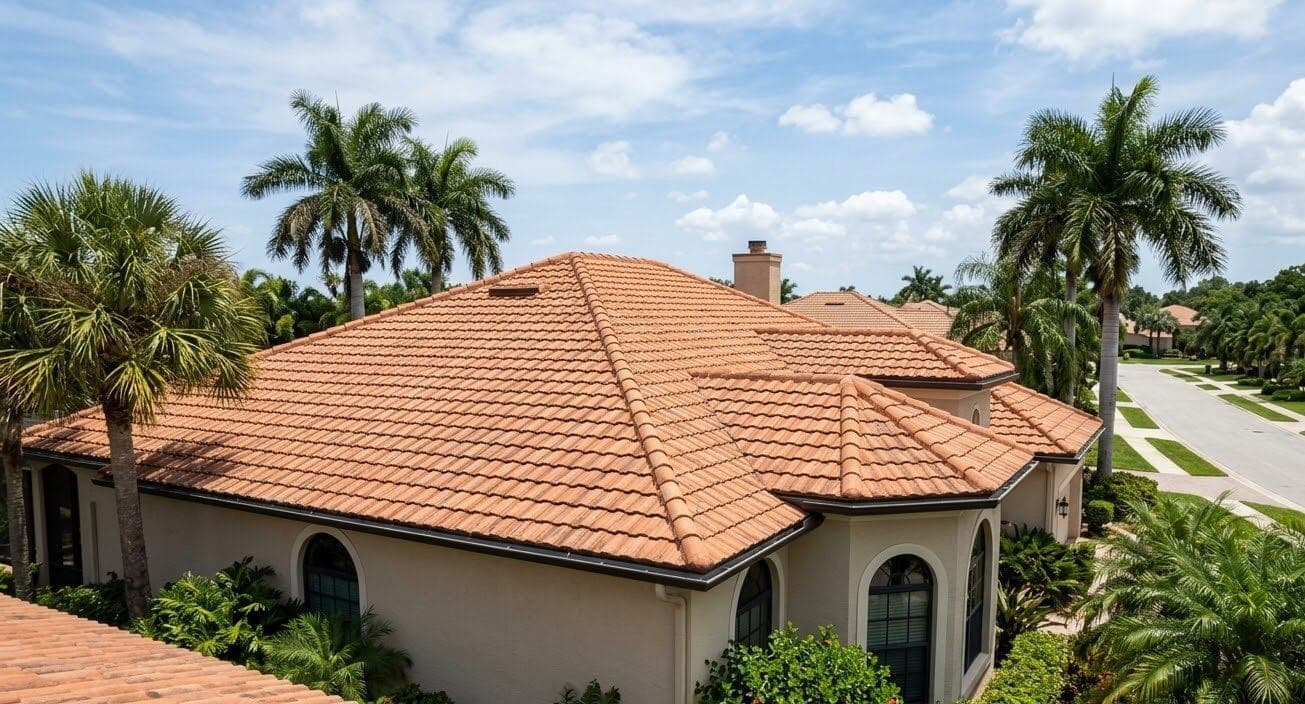
Tile roof issues are another frequent call. Many homes in The Villages, especially in the newer southern districts, have concrete or clay tile roofs. Tile is durable and long-lasting, but the individual tiles can crack from hail impact or shift during high winds. When a tile breaks or displaces, water finds its way under the underlayment and into your home. And tile repairs require specialized skills because you can’t just nail a new tile on top of the old system.

Flat roof sections on lanai enclosures and covered patios are a third common failure point. These low-slope areas collect debris, hold standing water, and deteriorate faster than the main roof. During heavy rain events, they’re often the first place that leaks.

Soffit and fascia damage rounds out the list. The Villages has a lot of homes with aluminum soffit panels that peel away in strong wind, exposing the rafter tails and roof edge to water intrusion. This damage often gets overlooked because homeowners focus on the visible roof surface and miss the damage happening at the edges.

What to Do When Your Roof Is Damaged in The Villages

Your roof just took a hit. Maybe you heard a branch land on it during the storm. Maybe you woke up to a water stain on your ceiling. Maybe your neighbor knocked on your door to tell you half your ridge caps are in the street. Here’s your action plan.

Call Protech Roofing at (352) 605-0696. Tell us what you’re seeing. We’ll ask a few quick questions to assess the severity and dispatch a crew. Don’t climb on the roof yourself. The Villages has strict rules about homeowners doing their own exterior work, but more importantly, it’s dangerous. Wet tile and storm-damaged decking can give way without warning.

While you wait for us, move furniture and valuables away from any active leak areas. Put buckets or containers under drips. If water is running down a wall, pull furniture away from that wall. Don’t try to catch the water at the ceiling level. Let it drip into containers on the floor where you can manage it.

Take photos of everything. The water stains, the drips, any visible exterior damage you can see from the ground. Time-stamp these photos. Your insurance adjuster will want to see the damage as it was found, and these photos become evidence in your claim.

Call your insurance company within 24 hours. Open the claim, get a claim number, and write it down. Don’t agree to any settlement over the phone during that first call. Just report the damage and let the process begin. You have time to get proper estimates and contractor assessments before agreeing to anything.

If you have a community liaison or property manager, notify them too. Many Villages districts track storm damage across the community, and there may be coordinated repair efforts for widespread damage events.

Insurance Realities for The Villages Homeowners

The Villages homeowners face a specific insurance situation that’s different from the rest of Hernando County. Most Villages properties are insured through private carriers rather than Citizens Insurance, and many have hurricane deductibles that are a percentage of the home’s insured value rather than a flat dollar amount.

Here’s what that means in real numbers. If your home is insured for $400,000 and you have a 2% hurricane deductible, your out-of-pocket cost before insurance kicks in is $8,000. That’s a significant amount, and it catches a lot of Villages homeowners off guard during their first major storm claim.

But here’s the important distinction: hurricane deductibles only apply when the governor declares a hurricane. For tropical storms, severe thunderstorms, and other non-hurricane events, your standard deductible applies, which is usually $1,000 to $2,500. So the type of storm that damaged your roof directly affects your financial exposure.

Emergency tarping and mitigation costs are typically covered separately from the main repair, and they often don’t count against your deductible. Your insurer wants you to protect the property from further damage. That’s in everyone’s interest. Protech Roofing provides the documentation your carrier needs to process the mitigation portion of your claim promptly.

We also meet with insurance adjusters at your property when they come to assess damage. Adjusters working The Villages after a major storm are often processing dozens of claims per day. Having a licensed contractor on site who can walk the roof with the adjuster and point out damage that’s easy to miss from the ground results in more accurate assessments and fairer settlements.

Florida’s 2023 roofing law changes also help Villages homeowners. If your roof was built to 2007 or newer code standards, you may no longer be required to replace the entire roof when more than 25% is damaged. Only the repaired sections need to meet current code. This can save thousands on a partial repair job.

Sumter County Permits and Building Code for Roof Repairs

The portions of The Villages that fall in Sumter County go through the Sumter County Building Division for roofing permits. The office is located at 7375 Powell Road in Wildwood. Homes in the Lake County or Marion County portions of The Villages go through their respective county building departments.

This multi-county setup confuses a lot of Villages homeowners. Your property’s county determines which building department handles your permit, which inspector reviews the work, and which local amendments to the Florida Building Code apply. Most of The Villages falls in Sumter County, but if you’re unsure, your property tax bill or deed will tell you which county you’re in.

All three counties follow the Florida Building Code, but Sumter County has specific wind zone designations that affect roofing requirements. The basic wind speed for most of The Villages is 115 mph, which determines the minimum ratings for shingles, tile, and metal roofing products. Every material needs Florida Product Approval documentation showing it meets that threshold.

Emergency tarping doesn’t require a permit. But permanent repairs do, and Sumter County takes this seriously. An unpermitted roof repair can create problems when you sell your home, and it may void your insurance coverage if the work fails during a future storm.

Protech Roofing pulls the correct permit from the correct county for every Villages job. We track which county each address falls in, and we know the permit requirements for all three jurisdictions. This is one of those behind-the-scenes details that matters a lot more than most homeowners realize.

Protecting Aging Roofs in The Villages Before They Fail

Here’s the reality for a lot of Villages homeowners: your roof is getting old, and you might not know it. Homes built in the early 2000s during the first major expansion phases are now 20+ years old. If those homes have architectural shingles with a 25-year rated lifespan, you’re in the final stretch. And shingle warranties measure lifespan under ideal conditions, not Florida conditions.

The intense UV exposure in Central Florida breaks down asphalt shingle granules faster than the manufacturer’s lab tests suggest. A roof that’s rated for 25 years in Ohio might only last 18 to 20 years in Sumter County. By year 15, many shingles have lost enough granule coverage that they’re significantly more vulnerable to wind and water penetration during storms.

Tile roofs last longer, 30 to 50 years for concrete tile and even longer for clay. But the underlayment beneath the tile doesn’t last nearly that long. The felt or synthetic underlayment that actually waterproofs your roof may need replacement at 15 to 20 years, even if the tiles on top still look perfect. When that underlayment fails, every rain event becomes a potential interior leak.

We recommend annual roof inspections for any Villages home over 10 years old. A $200 to $300 inspection that catches deteriorating flashing, cracked tiles, or worn underlayment can prevent a $5,000 emergency repair bill after the next storm. Protech Roofing offers these inspections throughout The Villages, and we give you an honest assessment of your roof’s remaining useful life.

A proactive inspection today beats an emergency repair bill tomorrow. The roofs that survive storms are the ones that were maintained before the weather turned.

Related Roofing Services in The Villages, FL

Frequently Asked Questions

Yes. Emergency tarping and temporary stabilization don’t require ARC approval, so we handle those immediately. For permanent repairs, we prepare and submit the ARC application on your behalf, including the specific material, manufacturer, color, and profile information your district requires. We know the approved materials for most Villages neighborhoods, which helps get applications approved faster.
It depends on which part of The Villages your home is in. Most homes fall in Sumter County, where permits go through the Building Division at 7375 Powell Road in Wildwood. Homes in the Lake County or Marion County sections go through their respective county building departments. Your property tax bill will tell you which county your home is in. Protech Roofing pulls permits from the correct county for every job.
Most Villages homeowner policies have a hurricane deductible that’s a percentage (typically 2%) of your home’s insured value, not a flat dollar amount. So a $400,000 insured home would have an $8,000 hurricane deductible. This only applies when the governor officially declares a hurricane. For tropical storms and severe thunderstorms, your standard deductible ($1,000 to $2,500 typically) applies instead. Emergency tarping costs are usually covered separately as mitigation expenses.
Ridge cap failures are the most frequent, especially in the flat terrain areas around Spanish Springs and Brownwood where wind hits roof peaks without obstruction. Cracked or displaced concrete and clay tiles are second, particularly in the newer southern districts. We also see a lot of flat roof failures on lanai enclosures and covered patio additions, plus soffit and fascia damage from wind that exposes roof edges to water.
Many Villages homes built during the early 2000s expansion now have roofs that are 20+ years old, approaching or past the rated lifespan for architectural shingles in Florida’s climate. UV exposure in Central Florida shortens shingle life compared to manufacturer ratings. We recommend annual inspections for any Villages home over 10 years old. A $200 to $300 inspection can catch developing issues before they become expensive emergency repairs during the next storm.

Get a Free Emergency Roof Repair Estimate in The Villages, FL