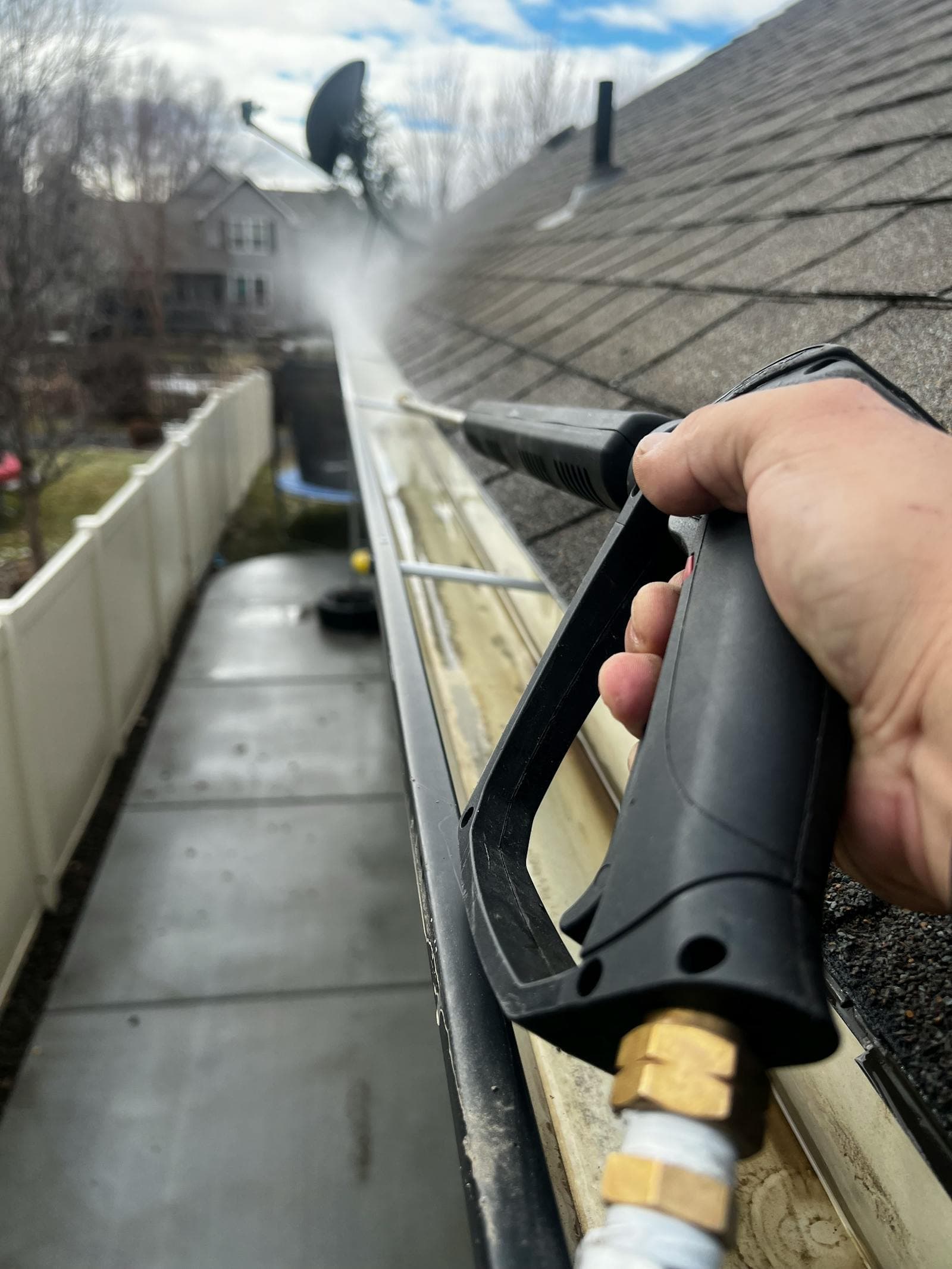
The Villages, FL
Gutter Cleaning in The Villages, FL
Gutter cleaning in The Villages, FL. Spring pollen, post-storm debris, super gutter service. Call (352) 320-0062.
Call (352) 320-0062Gutter cleaning in The Villages, FL isn't a once-a-year chore the way it is up north. Between live oak pollen catkins in March, summer thunderstorm debris from June through August, and the leaf drop that runs from September well into November, a Villages home really needs three visits a year to stay ahead of the clogs. Protech Roofing handles those visits across Fairway Village, Whispering Pines, Hadley, and every other Sumter, Lake, and Marion County district. Call (352) 320-0062 to book your next round.
You Are Viewing
Gutter Cleaning for homeowners and businesses in The Villages, part of Marion County, FL, Florida.
Three Seasonal Gutter Cleaning Windows for Villages Homes
Most homeowners moving down from Ohio or Michigan show up expecting one fall gutter cleaning and call it done. That timeline doesn't work in The Villages. Florida's growing season runs almost the entire calendar, and the trees here drop something every month. We recommend three distinct cleaning windows on every Villages home we service: a spring visit between mid-February and mid-April, a summer visit between June and August, and a fall visit between September and November. Each window targets a different debris load, and skipping one of the three is the most common reason gutters fail during a heavy storm.
The spring window catches the pollen catkin surge from live oaks. These small stringy clusters drop in dense waves over a two-week to four-week span, and they pack into a gutter trough like wet felt. The summer window catches the storm debris from afternoon thunderstorms, plus the early palm frond drop that starts when temperatures cross 90 degrees consistently. The fall window catches magnolia leaves, pine straw, and the slow leaf shed that runs from late September into Thanksgiving on the older Lake County canopy.
We've found the three-visit cadence costs a Villages homeowner about the same as one full year of water damage repair to a stucco wall or a lanai paver replacement. It's preventive maintenance, not a luxury. And the timing matters more than people think. A gutter cleaned in October won't help you when April pollen sealing builds up and overflow runs down the back side of your fascia during a May thunderstorm. So we schedule the visits on a calendar, not on a hunch, and we send a reminder before each window opens.
If three visits feel like too much, our most price-conscious plan is two visits a year (April after pollen, October after the first big leaf drop), but we tell customers honestly that two visits will leave gaps during summer storm season. Three is the right number for a home in any of the older Villages districts where the tree canopy is mature.
Live Oak Pollen and Catkin Debris in Marion County Villages
Spring gutter cleaning in the Marion County section of The Villages runs on a different clock than the Sumter side. If you live in one of the older Villages on the Lake or Marion County side, you already know about March. The live oak canopy here is older, denser, and produces a heavier pollen drop than the newer Sumter County villages where palms, magnolias, and crape myrtles dominate. The catkins look like small yellow-brown caterpillars, and they fall in waves over about three weeks, usually starting the last week of February and continuing through the second week of April depending on the year's temperature pattern.
Once those catkins hit a gutter trough, they soak up the next rain and turn into a dense brown mat that holds water rather than draining it. The mat then traps every leaf, twig, and seed pod that lands on top for the rest of the season. We've pulled mats six inches thick out of gutters in the Village of Orange Blossom Gardens, which sits on the original Lake County side and has some of the oldest oaks. The homeowner had no idea, because from the ground the gutter still looked clean, and the overflow was running quietly down the back of the fascia where nobody could see it.
Our spring visit specifically targets this catkin mat. We use a combination of soft-bristle brushes and water flushing rather than just blowing debris out with a leaf blower, because the catkins compact too tightly for air alone to dislodge them. The flush also lets us watch the downspout outlets to confirm the catkin mass isn't backed up inside the downspout itself, which happens often enough that we always check. A clogged downspout in March is invisible from above but turns into a waterfall down the wall the next time it rains hard.
Newer Sumter County villages in the south end of the community see less catkin pressure, but they're not immune. Wind carries pollen across district lines, and the palm and magnolia debris loads in Sumter neighborhoods are heavy in their own right. So even south-end homes benefit from the spring cleaning, just with a different debris mix than what we pull out of Marion or Lake County gutters.
Why Clogged Super Gutters Flood Birdcage Lanais
Almost every Villages home has a screened lanai out the back, the structure everyone here calls the birdcage. The roof transition between the main house roof and the birdcage uses a Super Gutter, which is a heavy-duty aluminum channel that bridges the gap between the two structures and carries water around the screen enclosure. It's a brilliant piece of Florida-specific engineering, but it has one big weakness: it's almost impossible to see into, and it's a magnet for debris that falls off the main roof slope above it.
When a Super Gutter clogs, the water has nowhere good to go. The trough fills up, then overflows the inner edge, then cascades straight down into the lanai. We've seen the damage this causes more times than we can count. Pavers stain and shift as water pools and undermines the sand bed. Outdoor furniture cushions soak and grow mildew within days. Aluminum frames around the screen panels corrode where standing water collects at low points. And the homeowner often doesn't notice until the next big rainstorm sends a sheet of water down across the patio table during dinner.
Cleaning a Super Gutter is genuinely different work from cleaning a standard gutter. The channel is narrower, deeper, and obstructed at intervals by the screen support beams that anchor into it. We can't just walk down the trough with a scoop. Our process starts with a careful inspection through the existing access points at each end, plus any maintenance cutouts the original installer left. We use shorter handled brushes and slim scoops to work around the screen beam supports, and we flush the entire length with low-pressure water from the inside out to push debris toward the downspout, never away from it. Pushing debris the wrong direction packs it into corners we can't reach without cutting the channel.
If we find the Super Gutter has reached a point where it can't be cleared through the access points (usually because someone went years between cleanings and the debris turned into compacted soil), we'll talk through options before doing anything. Sometimes that means cutting a temporary access panel, cleaning the channel, and patching with butyl tape and a riveted aluminum cover. Other times the channel itself needs replacement because corrosion at the bottom from years of standing water has eaten through the metal. Either way, the homeowner sees photos of the actual interior condition and approves the scope before we start.
Post-Hurricane Gutter Service After Idalia, Helene, and Milton
The three-storm stretch from August 2023 through October 2024 was rough on Villages gutters. Hurricane Idalia made landfall at the Big Bend on August 30, 2023 as a Category 3, and the wind field over central Florida sent palm fronds, oak limbs, and shingle debris into gutters across all three Villages counties. Hurricane Helene followed on September 26, 2024 as a Category 4 at landfall, and Hurricane Milton came right behind it on October 9, 2024 with a tornado outbreak that touched down inside Sumter County. By the time the trio finished, we were running gutter-cleaning emergency calls for weeks.
Post-storm gutter service is different from a routine seasonal cleaning. The debris load is heavier, the mix is unpredictable, and we often find structural items mixed in (broken fence pickets, pieces of neighbor's pool screen, sometimes whole tree limbs wedged between the gutter and the fascia). Our post-storm process starts with a debris assessment and continues with a full clean-out, downspout flush, and visual check for gutter spike pull-out or hanger separation. Wind during a named storm doesn't just clog the gutter, it can pull the gutter away from the fascia and crack the seal at every miter joint.
We also document storm damage during these visits with photos for insurance claims. Florida carriers expect prompt notification of named-storm damage, and a gutter that's pulled loose at the fascia is a covered loss under most policies. Homeowners who used us for post-Milton service got their photo packages within 48 hours of the cleaning visit, which made the claims move faster. We're not the public adjuster and we don't file the claim ourselves, but we provide the evidence package the carrier needs to evaluate the gutter portion of the loss.
If a Villages homeowner is reading this in the run-up to a named storm, the right time to schedule a pre-storm cleaning is 72 to 96 hours before landfall, not 12 hours before. At 12 hours we can't safely get on the roof, and the value of a pre-storm cleaning drops sharply once wind starts picking up. The pre-storm visit clears the trough so storm rain has somewhere to drain, and it identifies any loose sections that could become projectiles in the wind. Call us early when a storm enters the Gulf.
What We Pull Out of Villages Gutters and Why It Matters
Every gutter cleaning visit gives us a snapshot of what your roof is shedding. The contents of a Villages gutter tell a story about the property, the surrounding canopy, and the homeowner's maintenance history. After thousands of visits across all three counties, we can pretty much guess what we'll find based on the district. But there's always a surprise or two in the mix. Here's the actual menu we pull out, in rough order of frequency.
Live oak catkins lead the list, especially March through April on Lake and Marion County homes. Palm fronds come second, and they're the most physically damaging because the rigid stem can puncture a gutter bottom or crack a soldered seam if it lands wrong. Magnolia leaves are heavy and don't break down, which is why they pack into corners and sit there until we shovel them out. Pine straw from longleaf and slash pines (more common in transition zones at the edge of the community) forms dense mats once wet. Crape myrtle seed pods are tiny but pile up by the thousands during fall drop. Crepe myrtle flower petals stain aluminum if left to rot, which is a cosmetic issue more than a functional one but worth noting.
Then there's the granule wear we pull from asphalt shingle homes. Every Villages home with shingles sheds granules into the gutter at a low constant rate, and you can read the age of the roof by how much granule sediment accumulates between cleanings. A heavy granule load tells us the shingles are nearing end of life, and we mention that to the homeowner so they can plan for a roof replacement rather than getting surprised by a leak. Tile roofs shed almost no granules but can drop the occasional cracked tile fragment, which we flag for follow-up.
Surprises we've pulled include tennis balls, golf balls (no shortage of those in The Villages), bird nests, anole skeletons, frog skeletons, a child's plastic dinosaur, baseball-card-sized chunks of stucco that fell off the fascia trim, and once a complete intact Christmas ornament from three years prior. None of those are jokes. The point is that gutters collect everything that falls or blows by, and what's in there matters less than the fact that anything in there at all blocks the water flow your home is designed to direct to the downspouts.
Two-Story Designer and Premier Home Cleaning Safety
Most Villages homes are single-story Cottage, Patio Villa, or Ranch designs, which makes routine gutter cleaning a relatively low-risk job. But the Designer Series and Premier Series homes are often two-story, and the gutter cleaning on those properties is a fundamentally different job from a safety standpoint. The fall distance from a second-story eave is roughly twice the height, which means the impact energy in a fall is roughly four times higher. Insurance underwriters know that. Most homeowner policies in Florida exclude liability coverage for a homeowner injured while doing their own roof work.
We see at least one Villages emergency room story a year about a retiree who climbed a ladder to clean their own gutters and fell. The injury patterns are predictable: hip fractures, wrist fractures, head injuries from striking the patio or driveway on the way down. None of that is worth saving a few hundred dollars on a cleaning. Our two-story crews use OSHA-rated harness systems anchored to the ridge, ladder stabilizers that prevent the kick-out that causes most homeowner ladder falls, and a two-person buddy team so nobody's working alone at height.
The Designer and Premier homes also tend to have more complex roof geometries, with multiple slopes intersecting at valleys and dormers that drain into gutter sections that aren't visible from any single ground angle. We map the full gutter run on the first visit and photograph each downspout outlet so we can compare flow before and after the clean. That documentation lives in the customer file and we reference it on future visits to flag changes (sagging at a hanger, a new soft spot in the fascia under the gutter, paint blistering that suggests a slow leak from above).
Bundling Gutter Cleaning With a Roof Visual Inspection
Pairing a gutter cleaning with a quick roof check captures issues before they become claims. We're already on the roof when we clean gutters. The ladder is up, the harness is on, and the crew has eyes on the surface. So most of our Villages gutter customers also choose to bundle a quick visual roof inspection into the same visit. It's the most efficient way to catch small roof problems before they turn into leaks, and it costs a fraction of a separate inspection visit because the access cost is already covered by the gutter work.
The visual inspection covers shingle field condition (any lifting, cracking, missing tabs, or granule loss patterns), ridge cap adhesion, pipe boot rubber condition (these crack and split in Florida UV faster than the shingles around them), valley flashing for any rust or sealant failure, drip edge condition, and any visible nail pops or fastener back-out. On tile roofs we check for cracked tiles, slipped tiles, and the condition of the ridge mortar. On metal roofs we look at the panel seams, exposed fastener condition if the panels are through-fastened, and any seam separation.
If the visual inspection turns up something that needs follow-up, we provide photos and a written summary to the homeowner. We're not selling repairs we don't think are needed, and a clean inspection is a clean inspection. But when we do find a small problem (a cracked pipe boot is the most common, followed by a lifted ridge cap shingle), catching it during gutter cleaning means a $200 repair instead of a $4,000 interior water damage claim six months later when the small problem finally lets water in during a thunderstorm.
For Villages homeowners who already have an annual maintenance inspection from us, the gutter cleaning visit doesn't replace the formal inspection but adds a second set of touches to the roof each year. The combination of three gutter cleanings plus one annual inspection means we're up on the roof four times a year, and that cadence catches problems early enough to fix them with simple repairs rather than expensive replacements.
More in this area
Other roofing services in The Villages
FAQ
Frequently Asked Questions
How often should I clean my gutters in The Villages?
+
Do you clean super gutters on screened lanais in The Villages?
+
What's the best month to schedule gutter cleaning in The Villages?
+
Can you clean two-story Designer home gutters in The Villages?
+
Will you take photos and tell me if my Villages gutters need repair?
+
From the Blog
Stay informed about roofing in Florida.

Gutters for Florida Homes: Seamless vs Sectional Guide
Seattle gets 38 inches of rain a year and runs 5-inch gutters. Tampa gets 52.6 and overflows, because 30 of those inches fall in four months and mostly in short bursts. Gutters are sized on inches per hour, not inches per year. Here is the sizing math, what seamless actually buys you, and the two spec lines that matter more than the word seamless in a hurricane state.
Read Article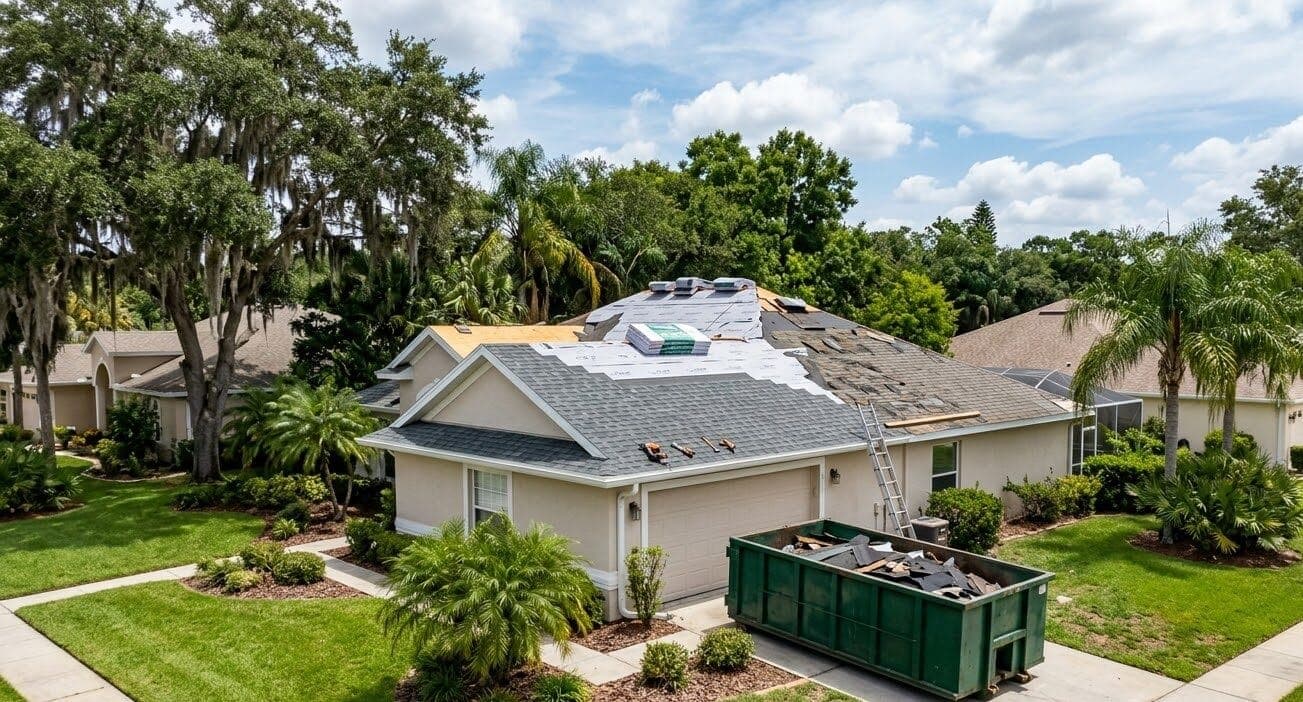
The Villages Roof Rules: ARC Color and Material Guide
In The Villages, the Architectural Review Committee is not a courtesy step you handle after the permit. Sumter County lists ARC approval on its own re-roof submittal requirements, which means the deed restriction and the building department are wired together. Here is the packet, the calendar, and the order to do it in.
Read Article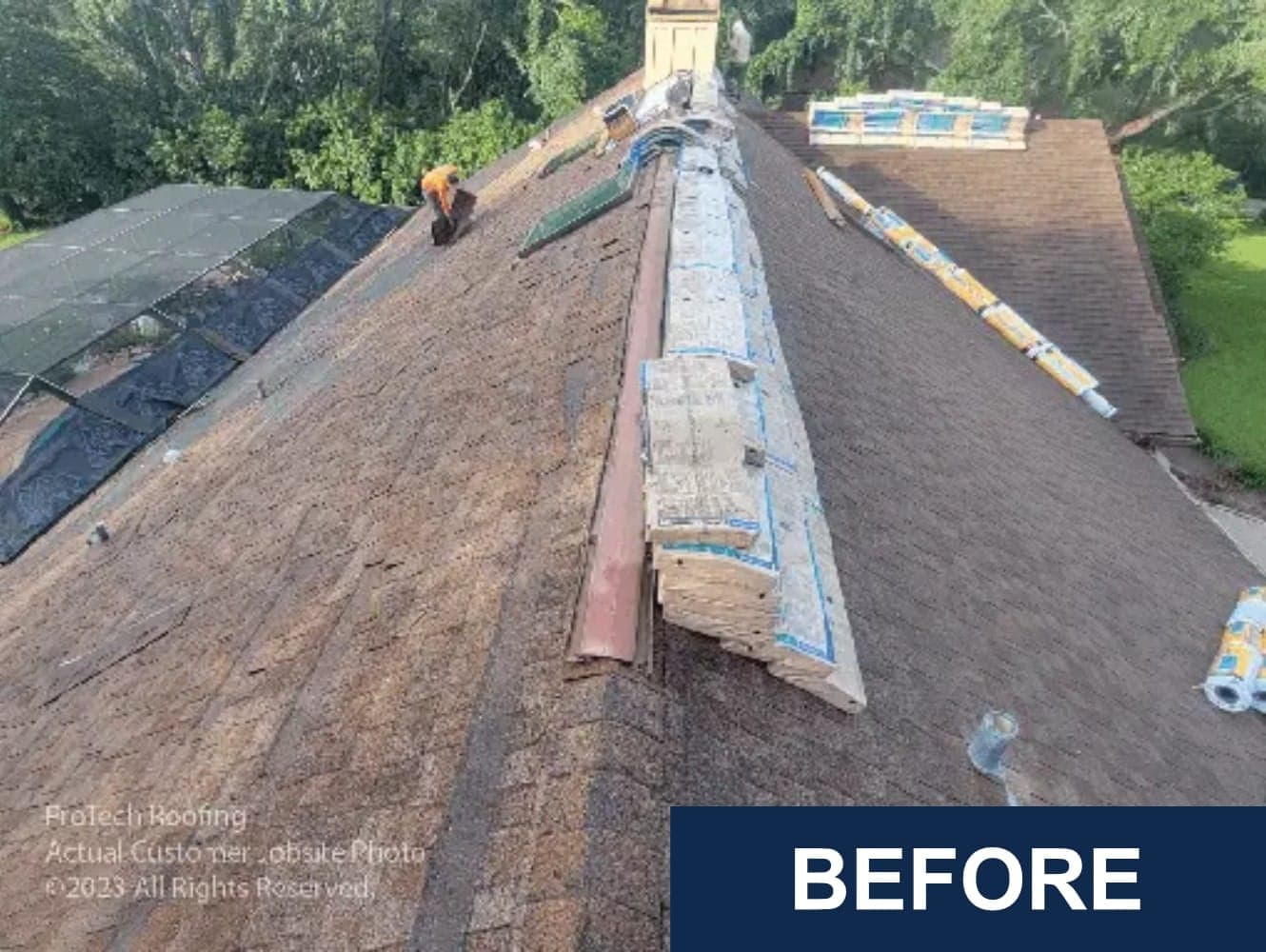
The Ultimate Guide to Roofing in The Villages, FL (2026)
2026 guide to roofing in The Villages, FL: tile vs shingle, costs, HOA and ARC rules, permits, insurance, and how to choose a local contractor.
Read ArticleReady When You Are
Get your free roof inspection today.
No-pressure, written estimate. Same-week scheduling across Hernando County. Call us now or request a visit online.