
The Villages, FL
Gutter Protection in The Villages, FL
Gutter protection in The Villages, FL. Protech Roofing installs micro-mesh and reverse-curve guards that block oak pollen and debris. Call (352) 320-0062.
Call (352) 320-0062Gutter protection in The Villages, FL is one of those upgrades retirees ask about after their third trip up a ladder in a single spring. Live oak pollen, palm fronds, magnolia leaves, and pine straw stack up faster than most homeowners want to deal with, especially when the home sits in Fairway Village or the older blocks of Orange Blossom Gardens under a heavy canopy. Protech Roofing installs and services every major gutter guard category on Villages homes from Spanish Springs down through Brownwood. Call (352) 320-0062 for a free walk-through.
You Are Viewing
Gutter Protection for homeowners and businesses in The Villages, part of Marion County, FL, Florida.
Why Standard Mesh Guards Fail Under Live Oak Pollen in The Villages
Gutter protection in The Villages has a problem most other Florida markets don't share at this scale. The single biggest reason guards underperform in The Villages has a name, and that name is the live oak catkin. From late February through April, mature live oaks across Lake County and the Marion County side of The Villages drop millions of pollen catkins. These look like small worm-shaped strings, about an inch or two long, yellow-green when fresh and brown when they dry. They are sticky on the way down and they pack together once they land.
Standard hardware-store mesh guards, the ones with 1/8 inch or 1/4 inch openings, were designed for oak leaves and pine straw. Catkins are smaller than the openings on most basic mesh, but they have a specific failure mode that bigger debris doesn't. They lay flat across the mesh, lock together, get wet, and form a felt-like mat. The mat doesn't fall off and it doesn't blow away. Water then sheets across the top of the mat instead of dropping through it. The first heavy rain after a pollen surge will run right over your gutter, down the stucco, and onto the slab around your house.
We see this every spring across Whispering Pines, Hadley, and the original 1980s-era blocks of Orange Blossom Gardens where the live oaks are mature and the canopy is dense. Homeowners call us in May or June assuming the guards are clogged with leaves, and what we actually pull off is a flat brown crust of dried catkins that the rain couldn't penetrate. So if a contractor sells you basic black plastic mesh and tells you it'll handle Villages debris, ask them directly whether they've tested it through a March pollen run on a live-oak street. The honest answer is no.
The fix is finer openings, not wider ones. Stainless steel micro-mesh in the 50-micron range catches catkins on the surface where wind and rain can sweep them off, instead of letting them settle into the mesh body. We'll walk you through why below.
Micro-Mesh vs Reverse Curve vs Foam Inserts for Villages Homes
Choosing the right gutter protection system means matching the material to your local debris load. If you have decided gutter protection is the right move for your Villages home, the next question is which system. Four guard categories show up on Villages homes: stainless micro-mesh, reverse curve (the Gutter Helmet style), foam inserts, and brush. Each has a real use case and each has a real failure mode. We install all four because no single system wins every house, and we'd rather pick the right one than upsell the most expensive option.
Stainless micro-mesh is what we recommend most often for Villages homes under heavy live oak canopy. The mesh is fine enough that catkins, pine pollen, and shingle grit sit on top instead of embedding. The stainless wire doesn't corrode in Florida humidity. The aluminum or steel frame screws to the front lip of the gutter and slips under the first row of shingles, so installation doesn't void the roof warranty. Cost typically runs $9 to $15 per linear foot installed depending on the brand. The downside is that micro-mesh still needs an occasional sweep, usually once a year, to brush off whatever sits on the surface.
Reverse curve guards work on a surface tension principle. Water clings to the curved nose and runs down into the gutter while leaves slide off the front. Gutter Helmet is the brand most Villages homeowners recognize. These do well on big oak leaves and heavy debris and they have a sleek aluminum finish that ARC committees usually approve without trouble. Where they struggle is in heavy downpours when surface tension breaks and water can overshoot, and on roof pitches under 4/12 where the curve doesn't engage properly. Pricing runs $12 to $25 per linear foot installed.
Foam inserts and bristle brushes are the budget tier. Foam fills the gutter channel and blocks debris from settling inside, while bristle brushes do something similar with stiff plastic fibers. Both work in light debris areas, like newer Sumter County villages with palms and crape myrtle. But under live oak catkin load, both clog from the top down and trap moisture against the foam, which then breeds mosquitoes and algae. We don't recommend foam or brush for the canopy-heavy parts of The Villages, even though they cost a third of micro-mesh. You'd be replacing them inside two seasons.
Gutter Protection on Super Gutter Birdcage Systems
Super gutter protection is a different problem than standard fascia gutter protection. The Super Gutter is the heavy aluminum channel that bridges the gap between your house roof and the screened lanai roof. Almost every Villages home built since the 1990s has one. It's also the single hardest gutter to protect because of how it's built, where it sits, and how debris finds it.
Super Gutters are wider than standard 5-inch K-style gutters, often 6 or 7 inches across, and the back wall ties into the birdcage screen frame. The screen frame creates obstructions every few feet that interrupt any continuous guard product. You can't just run a 30-foot strip of micro-mesh across a Super Gutter the way you can across a fascia-mounted standard gutter. The screen beams are in the way.
What works on a Super Gutter is a sectional approach. We cut micro-mesh panels to fit between each screen beam, fasten them with stainless screws into the gutter front lip, and seal the seams at each beam with butyl tape to keep small debris from sneaking through the gap. The job takes longer than a standard gutter guard install because of the cutting and fitting, and Super Gutter protection runs about 30 to 50 percent more per linear foot than the same product on a standard gutter. But the payoff matters. A clogged Super Gutter dumps water onto your lanai pavers, splashes onto your patio furniture, and saturates the birdcage screen frame, which then corrodes faster.
A second option some homeowners choose is a custom-fabricated aluminum shroud. We can bend an aluminum cap that closes the top of the Super Gutter and leaves a narrow slot at the front for water entry. This works well for heavy debris but it costs more than mesh and it makes inspection harder. So we typically only recommend shrouds for homes where the Super Gutter sits directly under a dense tree drop zone and nothing else has held up.
How Gutter Guards Hold Up Through Florida Hurricane Seasons
Any gutter protection we install on a Villages home has to survive the storms we get every June through November. The Villages sits in the 130 mph wind zone and the back-to-back hurricane stretch of 2023-2024 gave us a lot of real data on how guards survive Florida storms. Idalia in August 2023 brought Category 3 winds into the Big Bend and pushed gusts across The Villages. Helene came through in September 2024 as a Cat 4 at landfall, and Milton followed three weeks later as a Cat 3 with a confirmed tornado outbreak in Sumter County.
Here's what we saw across hundreds of post-storm gutter inspections. Properly installed micro-mesh with stainless screws into the gutter lip and tucked under the shingles held up well. Guards that lifted or tore were almost always the cheap snap-in plastic types from box stores, attached only with friction clips. Reverse curve aluminum guards held up too, though some came loose at the front edge where the original installer used short screws into thin gutter aluminum instead of through into the fascia. Foam inserts mostly stayed in place but the saturated foam added weight that pulled some older gutters off the fascia.
The bigger issue post-storm wasn't the guards themselves, it was what landed on them. Broken oak branches, palm fronds, shingle granules, and debris from neighbors' yards piled on top of guards in volumes that no system was designed to handle. That's a one-time post-hurricane cleaning issue, not a guard failure. We saw the same pattern across Fairway Village and Hadley after Milton, where well-installed guards stayed put and just needed a sweep and a flush within the first week.
If you're shopping guards specifically for hurricane resilience, look for products rated to at least 110 mph wind uplift and installed with screws into the fascia or the gutter front lip rather than friction clips or roof-shingle staples. Ask the installer what wind rating they'll certify in writing. A guard that flies off in a Cat 2 isn't actually protecting your gutter, it's adding to the storm debris.
ARC and District Standards for Visible Gutter Guards
The Villages ARC reviews visible exterior changes, and gutter protection counts when the guard profile changes how the gutter reads from the street. Each Village Community Development District has its own Declaration of Restrictions, and the Community Standards office handles both architectural review and deed compliance. Gutter guards fall in a gray area because they sit on top of an existing fascia component and most aren't visible from the street. But certain installs can trigger ARC review and you want to know that going in.
The general rule of thumb is that white or bronze aluminum guards that match the existing gutter color don't trigger a review. They blend with what's already there and the ARC committees treat them as a routine maintenance item, not an exterior modification. Where you can run into trouble is with copper guards, bright stainless that catches the sun, or visible plastic mesh in a color that contrasts with the gutter. Black plastic mesh on a white gutter shows up from the curb and reviewers have flagged it.
If your home is on a high-visibility lot, particularly along a championship golf course frontage or a designed streetscape in the newer Brownwood-area villages, we'd recommend submitting a one-page modification request to Community Standards before we install. The request goes to ARC, takes about 7 to 14 business days for a response, and typically gets approved when the product is bronze or white and matches the existing trim. Our crew will pull the spec sheet from the manufacturer so you have something to attach to the form.
For homes where the gutters sit behind a parapet or aren't visible from the street, no ARC submittal is needed. That covers a lot of Villages homes built with the recessed gutter detail along the back patio side. But if you're not sure, ask us at the estimate and we'll tell you straight whether your install needs paperwork or not.
Retrofit on Existing Gutters vs Install With New Gutters
Most gutter protection retrofits go onto existing channels, but a combined replacement-and-protection job has its own logic. Most Villages homes already have aluminum gutters, so most gutter protection jobs are retrofits over what is already on the fascia. Most Villages homes already have gutters, so the common path for protection is retrofit. That means we attach guards to your existing aluminum or galvanized gutters without replacing the gutter itself. It's the cheaper route and it usually takes one day for a typical Designer or Premier home. Cost difference between retrofit and new-with-guards is significant: retrofit on existing 5-inch gutters runs $9 to $15 per linear foot for micro-mesh, while a full tear-off and replacement with new gutters plus guards runs $18 to $30 per linear foot.
Retrofit works well when your existing gutters are sound. We check the gutter slope to make sure water still flows toward the downspouts, the seams aren't leaking, the fascia behind isn't soft from past overflow, and the hangers are spaced correctly. If all that checks out, retrofit is the right call. We've done retrofits on gutters from the original 1990s installs in Spanish Springs that were still in good shape and just needed the guards added.
Where we recommend new gutters along with the guards is when the existing gutters are undersized, sagging from years of holding wet debris, or already showing seam leaks. A common scenario in the older parts of Lake County's Villages neighborhoods is gutters that were originally 4-inch, which can't keep up with the storm flow off a wider Designer or Premier home. Putting guards on undersized gutters doesn't fix the underflow problem. So we'll suggest upgrading to 6-inch K-style at the same time, sized to match your roof area, with guards installed during the new gutter run.
One more retrofit note. If you're getting a new roof anytime soon, time the gutter guard install for after the new roof goes on. The shingle tear-off and replacement disturbs anything tucked under the shingle edge, including the back flange of a micro-mesh guard. Doing guards before a re-roof means paying twice. Doing them after means one clean install that lasts.
What Maintenance Looks Like With Guards In Place
No gutter protection in The Villages is truly maintenance-free, despite what national brands advertise. No gutter protection system in The Villages is truly maintenance-free, and any installer who promises zero maintenance over a Florida hurricane season is selling you a story. No gutter guard system eliminates maintenance. Any contractor who promises zero-maintenance is overselling. What good guards do is cut the cleaning frequency from twice or three times a year down to once, and they shift the work from inside-the-gutter scooping to outside-the-gutter sweeping. That's a real benefit, especially for Villages homeowners in their 70s and 80s who shouldn't be climbing ladders at all.
With micro-mesh guards in place, the annual maintenance visit looks like this. We arrive with a low-impact roof brush and a leaf blower. We sweep the top of the guards from one end to the other, knocking off accumulated leaves, catkins, and shingle grit. We blow out the downspouts to confirm flow. We inspect the gutter behind the guards by pulling a section at the corner, just to verify nothing has snuck through and built up underneath. We check the fascia for any signs of leak streaks. And we flush the system with a hose to confirm everything drains.
The right time of year for a guard maintenance visit in The Villages is late spring or early summer, after the live oak pollen drop and before hurricane season ramps up. May is usually the sweet spot. That timing catches the catkin accumulation, clears the gutters before any heavy summer storms, and gives us a chance to spot anything that needs repair before the wind events of August through October.
Cost for an annual guard maintenance visit at a typical Villages Designer home runs $175 to $275, depending on linear footage and whether the Super Gutter on your lanai is included. We bundle the visit with a quick roof condition photo report at no extra charge for our gutter guard customers, so you've got a paper trail year over year. And if you'd rather sign up for an every-other-year cadence instead of annual, we'll be straight about whether your home can support that. Heavy-canopy lots probably can't. Sumter County palm-and-magnolia lots probably can.
More in this area
Other roofing services in The Villages
FAQ
Frequently Asked Questions
Do gutter guards stop live oak pollen in The Villages?
+
What's the best gutter guard for a Villages birdcage super gutter?
+
Will gutter guards survive a Florida hurricane in The Villages?
+
Does The Villages ARC approve gutter guards on visible elevations?
+
Will I still need gutter cleaning after installing gutter protection in The Villages?
+
From the Blog
Stay informed about roofing in Florida.

Gutters for Florida Homes: Seamless vs Sectional Guide
Seattle gets 38 inches of rain a year and runs 5-inch gutters. Tampa gets 52.6 and overflows, because 30 of those inches fall in four months and mostly in short bursts. Gutters are sized on inches per hour, not inches per year. Here is the sizing math, what seamless actually buys you, and the two spec lines that matter more than the word seamless in a hurricane state.
Read Article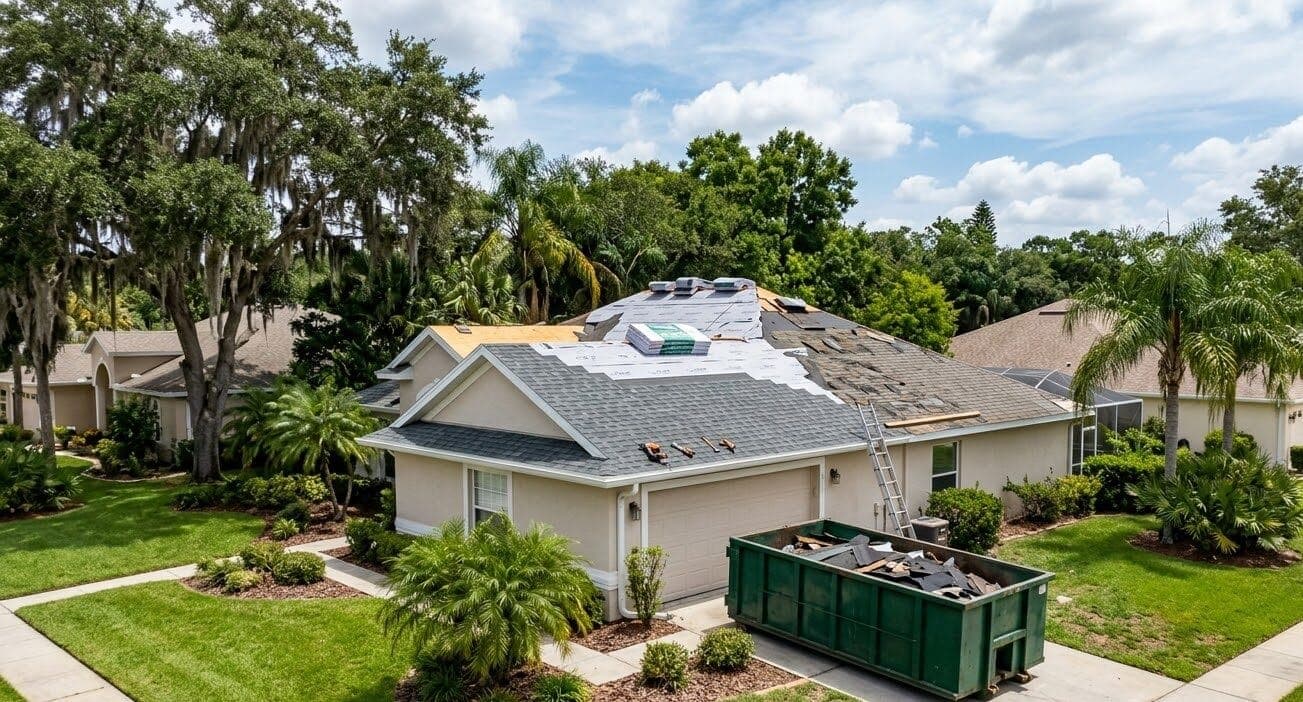
The Villages Roof Rules: ARC Color and Material Guide
In The Villages, the Architectural Review Committee is not a courtesy step you handle after the permit. Sumter County lists ARC approval on its own re-roof submittal requirements, which means the deed restriction and the building department are wired together. Here is the packet, the calendar, and the order to do it in.
Read Article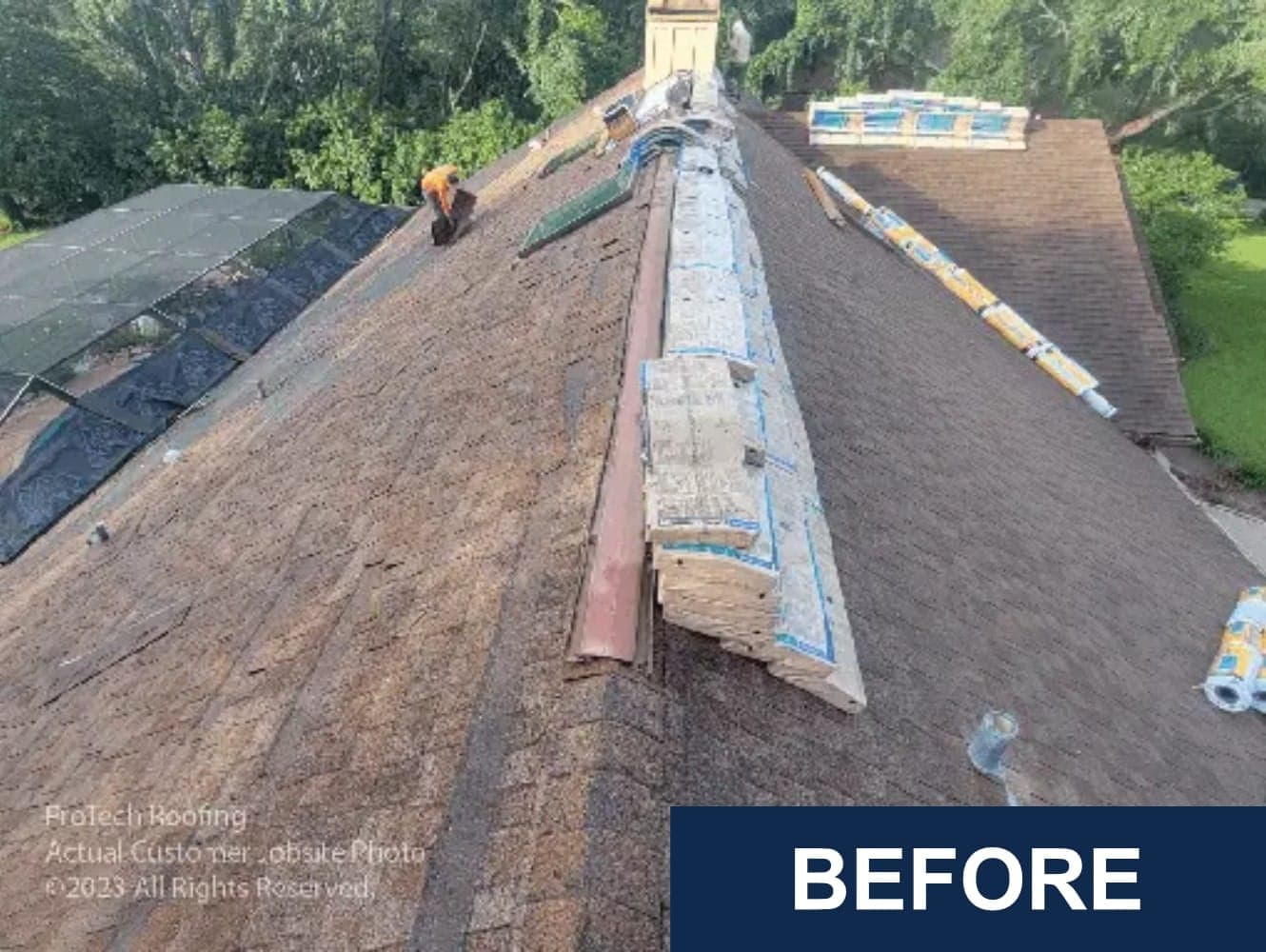
The Ultimate Guide to Roofing in The Villages, FL (2026)
2026 guide to roofing in The Villages, FL: tile vs shingle, costs, HOA and ARC rules, permits, insurance, and how to choose a local contractor.
Read ArticleReady When You Are
Get your free roof inspection today.
No-pressure, written estimate. Same-week scheduling across Hernando County. Call us now or request a visit online.