Blog
Roofing in Daytona Beach FL: How Atlantic Salt Air Takes 4 to 6 Years Off a Shingle Roof
Call (352) 605-0696A roof in Daytona Beach and a roof in Orlando can be the same product, from the same manufacturer, installed by the same crew, and still fail eight years apart. The 50 miles between them is the whole story. Daytona sits on the Atlantic, which means constant salt spray, a wind zone that triggers code requirements the inland metros never see, and a corrosion clock that runs on the metal parts of the roof rather than on the shingles themselves. Homeowners who price a Daytona re-roof against an inland quote almost always compare the wrong two things. This guide covers what a roof replacement actually costs in Daytona Beach in 2026, how much life salt air really takes, which components fail first in a coastal assembly, what the wind-borne debris region forces onto your specification, how Volusia County and the City of Daytona Beach handle re-roof permits right now, and the fee waiver window that closes on September 10, 2026.
What a Roof Replacement Costs in Daytona Beach in 2026
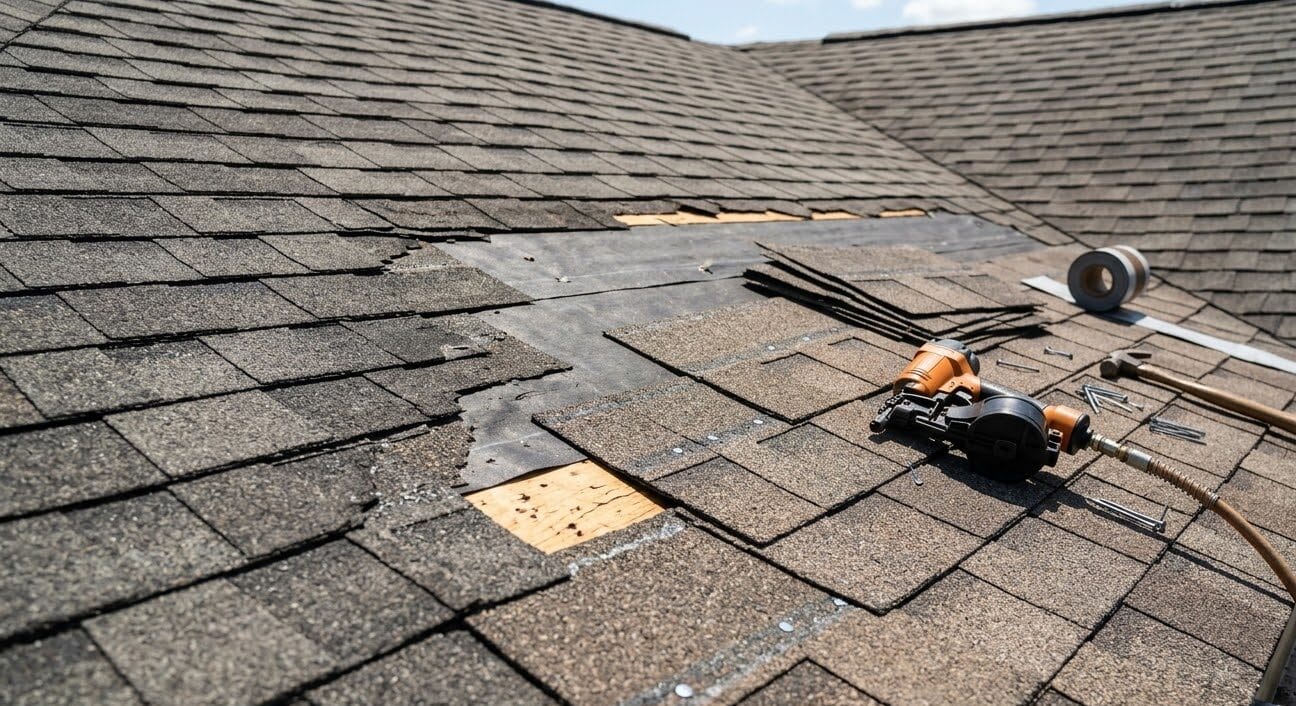
Roofing is priced by the square, which is 100 square feet of roof surface. A typical 1,900 to 2,100 square foot Daytona Beach home carries roughly 22 to 26 squares once pitch and overhangs are counted, which is why two homes with identical interior square footage come back with different numbers. Volusia labor sits close to the Orlando metro, with a coastal premium that shows up in the accessories rather than in the field shingle.
- Architectural asphalt shingles: Commonly quoted at $400 to $550 per square installed in the Daytona and Ormond market, which puts most standard homes in the $10,000 to $16,000 range.
- Impact-resistant Class 4 shingles: Roughly $11,500 to $18,500 on the same home. On the coast this upgrade is worth pricing every time, because the same product that resists hail impact also holds granules longer under salt-driven abrasion.
- Concrete or clay tile: Around $600 to $1,000 per square installed. Weight drives the number as much as the material, because tile requires deck and structural verification that shingles do not.
- Standing seam metal: Typically $900 to $1,500 per square installed, and the coastal question is not the panel but the coating and the fastener metallurgy behind it.
- Tear-off and disposal: Usually $1 to $2 per square foot on top of the covering. A second layer of old shingles roughly doubles that line, and it is the single most common reason a coastal quote moves after the crew opens the roof.
Two things move a Daytona number more than any brochure feature. The first is deck condition, which nobody can price from the driveway and which is worse on the coast because salt-driven moisture reaches the sheathing through failed fasteners long before it shows on the ceiling. The second is complexity: valleys, dormers, skylights and steep pitch all add labor hours a per-square average hides. A written scope that comes out of an actual roof inspection beats a phone estimate every time. For the inland comparison that most Daytona homeowners are unknowingly benchmarking against, our Orlando roofing guide lays out the same math without the salt penalty.
Why Atlantic Salt Air Takes 4 to 6 Years Off a Shingle Roof
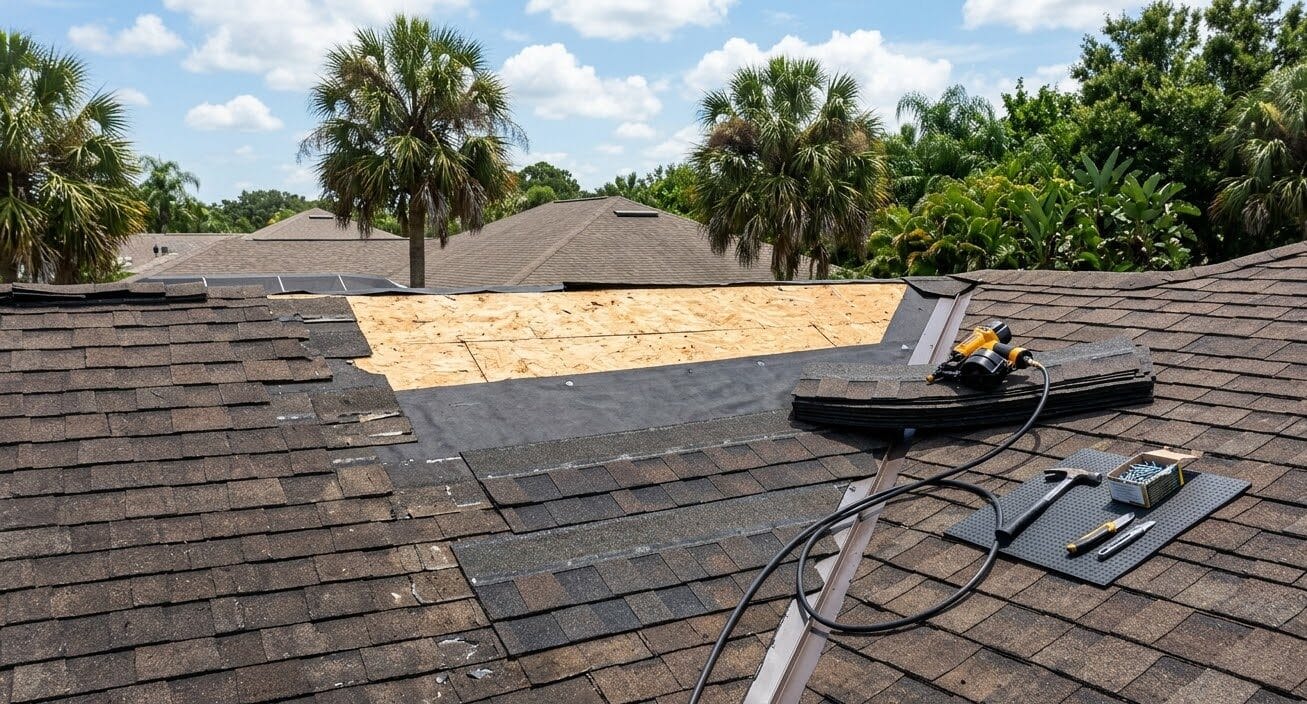
Architectural shingles are commonly rated for 20 to 25 years of service life. In coastal environments that working range drops to roughly 12 to 18 years, and properties inside about 1,500 feet of the ocean, which covers most of the beachside grid in Daytona Beach, Daytona Beach Shores and Ormond Beach, take a direct salt spray exposure that subtracts four to six years on its own. Homes a few miles inland along the Halifax River lose less, but they do not escape it, because onshore wind carries salt aerosol well past the dune line.
The mechanism is granule loss. The mineral granules on an asphalt shingle are the sunscreen for the asphalt underneath. Salt crystals and wind-driven sand abrade them, rain carries them off, and each season the exposed asphalt takes more direct ultraviolet. Once the mat is exposed it goes brittle, and brittle shingles crack at the fastener line during the next storm rather than lifting cleanly. That is why coastal roofs often look acceptable from the street in year 12 and fail catastrophically in year 13.
The practical consequence is planning, not panic. If you buy a Daytona beachside home with a roof that a seller describes as ten years old, you are not buying a roof with 12 years left. You are buying one with somewhere between two and eight, and the spread depends on details you can actually inspect. Granule accumulation in the gutters is the cheapest early-warning system there is, and it costs nothing to look.
Insurance follows the same clock even faster than the shingles do. Carriers in coastal Volusia have grown aggressive about roof age on non-renewal, and a 15-year-old asphalt roof within a mile of the Atlantic is a common trigger. That timing matters because it is cheaper to plan a replacement than to be forced into one during a renewal cycle.
The Shingles Are Not What Fails First on a Coastal Roof
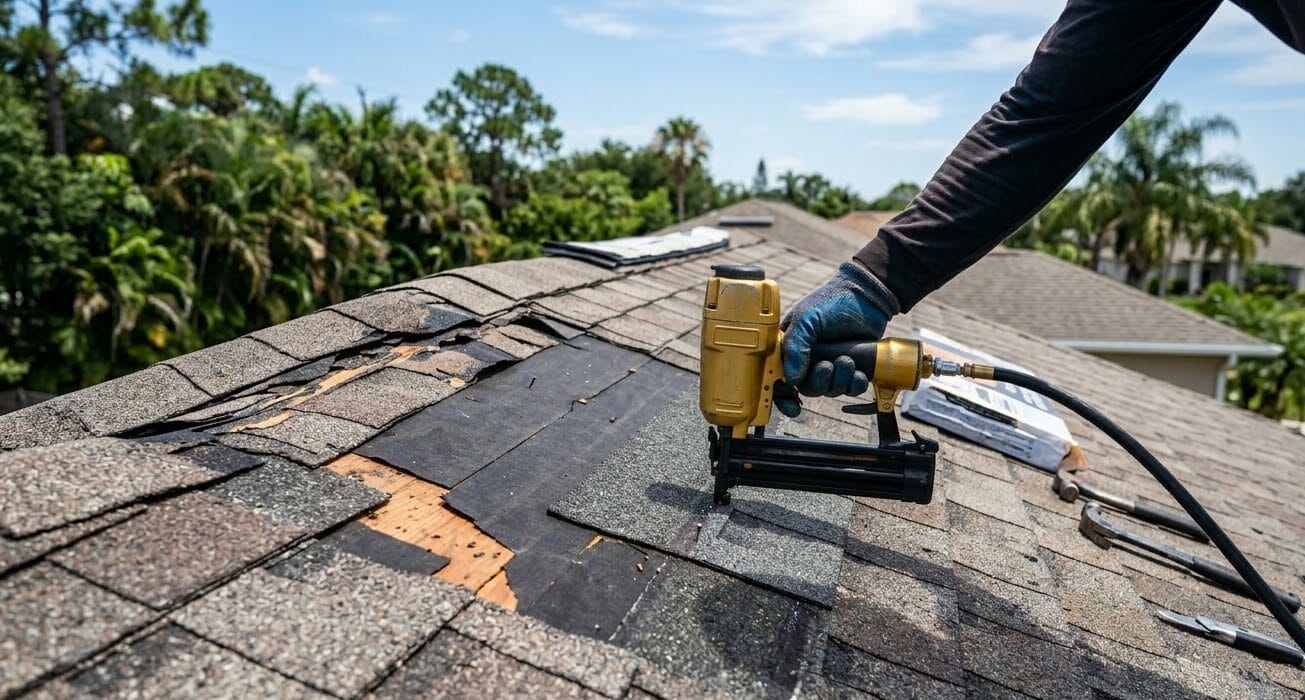
This is the part that separates a coastal roofer from a good inland roofer. Asphalt itself is fairly salt tolerant. The vulnerability on an oceanfront assembly lives almost entirely in the metal: nails, drip edge, valley metal, step and counter flashing, vent boots, and the fasteners holding all of it. Salt attacks those first, and once a fastener head corrodes through, the shingle above it is no longer attached to anything even though it still looks perfect.
Florida code already requires corrosion-resistant fasteners on a re-roof, hot-dipped galvanized or stainless steel, long enough to penetrate the deck by at least three quarters of an inch. On the coast, treat that as the floor rather than the target. Stainless in the high-exposure areas costs a small fraction of the job and removes the single most common cause of a premature coastal failure.
The same logic applies to the flashing package. Aluminum drip edge is standard inland and is a short-life item within sight of the Atlantic. Galvanized valley metal pitting out at year eight will leak long before the field shingles are worn. When you compare two Daytona quotes and one is $1,800 cheaper, the difference is usually hiding in exactly these line items, and it is the difference between a roof that reaches its rated life and one that does not.
Ask for the metal specification in writing. A proposal that names the shingle brand in bold and describes the flashing as included is not a specification, it is a brochure. Our roof repair crews open more coastal roofs on failed flashing than on failed shingles, and the repair bill is always larger than the upgrade would have been.
Wind Zone: Why Beachside Daytona Sits in the Wind-Borne Debris Region
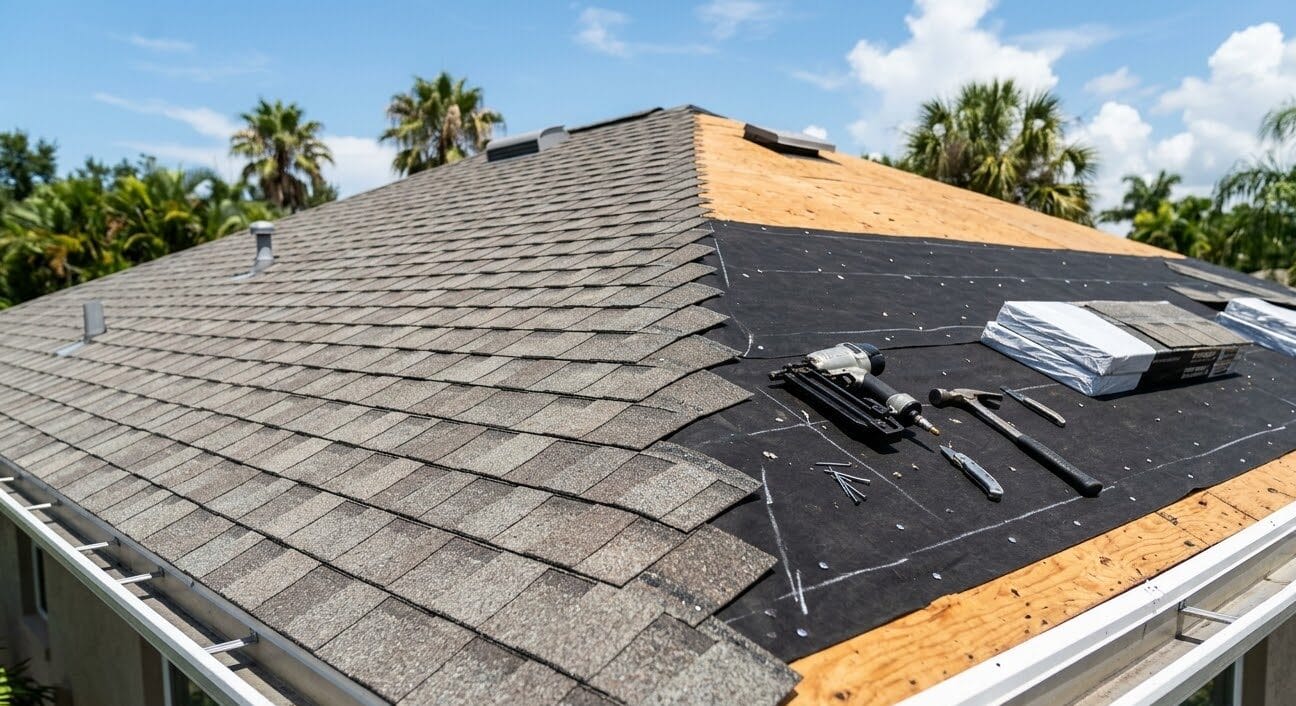
Florida defines the wind-borne debris region as areas inside hurricane-prone regions that are either within one mile of the coastal mean high water line where the ultimate design wind speed is 130 mph or greater, or anywhere the ultimate design wind speed reaches 140 mph or greater. Volusia County's coastal band sits at or above that 130 mph threshold, which puts the beachside neighborhoods of Daytona Beach squarely inside the region while properties well inland fall outside it.
Two consequences follow for a roof project. First, in design wind speeds above 120 mph, shingles require six nails per shingle rather than the four used in lower zones. That is not an upsell, it is a code requirement, and it is one of the easiest things to verify against your proposal. Second, opening protection rules apply to the building envelope, which is where windows, doors and skylights enter the conversation on any project that touches them.
Do not guess your parcel's number. Volusia County publishes a parcel-level wind speed map and the Chief Building Official's office confirms values directly at 386-626-6591. Two houses on opposite sides of the same street can land in different bands, and the answer changes what your permit application has to show. Our breakdown of the current code cycle in the Florida Building Code 2026 roof changes guide covers what shifted statewide this year.
Volusia County Permits and the Daytona Beach Fee Waiver Closing September 10
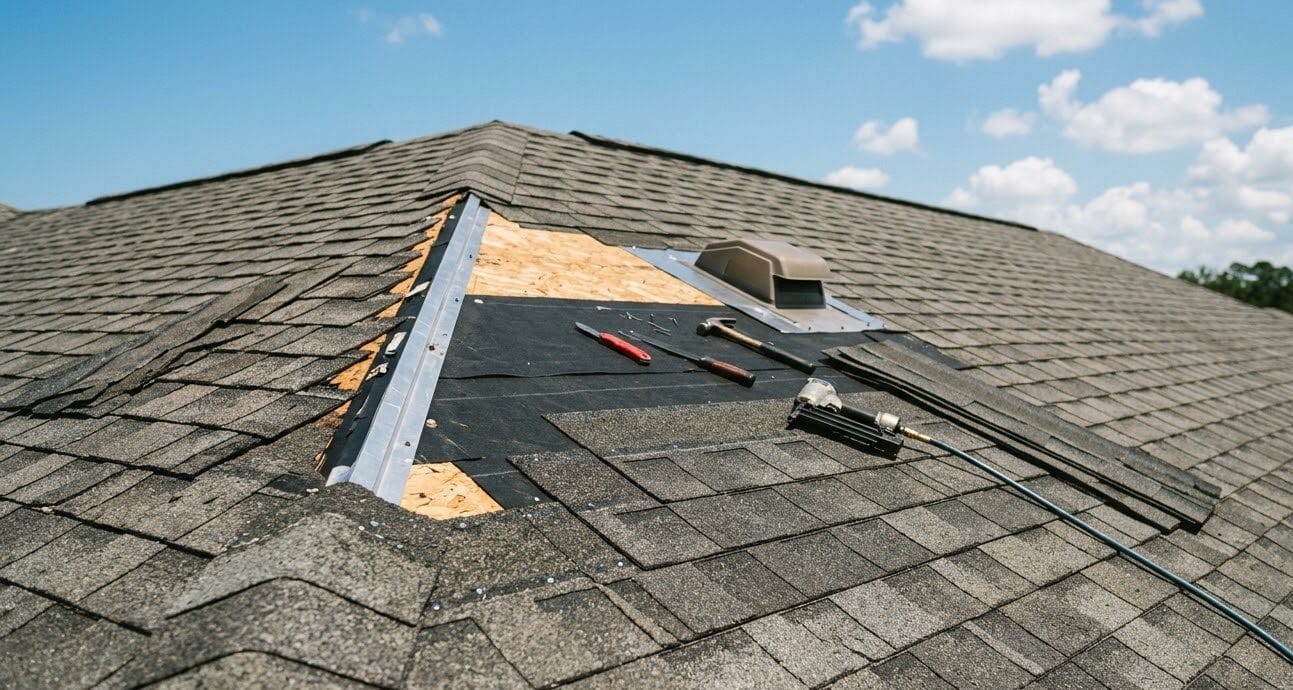
Every roof replacement in Volusia County requires a permit, and jurisdiction depends on the address. Property inside Daytona Beach city limits goes through the city's Permits and Licensing office, reachable at 386-671-8140, while unincorporated Volusia goes through the county Permit and Zoning Center at 386-736-5929 or PermitCtr@volusia.gov. The county also runs a Daytona Beach branch office at 386-254-4680. Application fees are non-refundable, so getting the jurisdiction right the first time matters.
There is a live opportunity worth acting on. The City of Daytona Beach is waiving permit and inspection fees for residential and commercial projects from March 19 through September 10, 2026, and roof replacements are among the eligible project types. If your roof is already on the replacement horizon, moving the application inside that window removes a real line item from the job. After September 10 the standard fee schedule returns.
An unpermitted roof is not a shortcut, it is a deferred bill. It surfaces at resale when the title search finds an open or missing permit, at insurance renewal when the carrier asks for documentation, and during any future claim when the adjuster asks who inspected the work. Resolving it after the fact costs multiples of doing it correctly, and in coastal Volusia it can stall a closing outright.
Final inspection is what closes the permit. Schedule it, attend it if you can, and keep the closed permit with your insurance documents. Any contractor who tells you the final is optional has told you everything you need to know about the rest of their process.
The 25 Percent Rule and What Statute 553.844 Forces Onto a Re-Roof
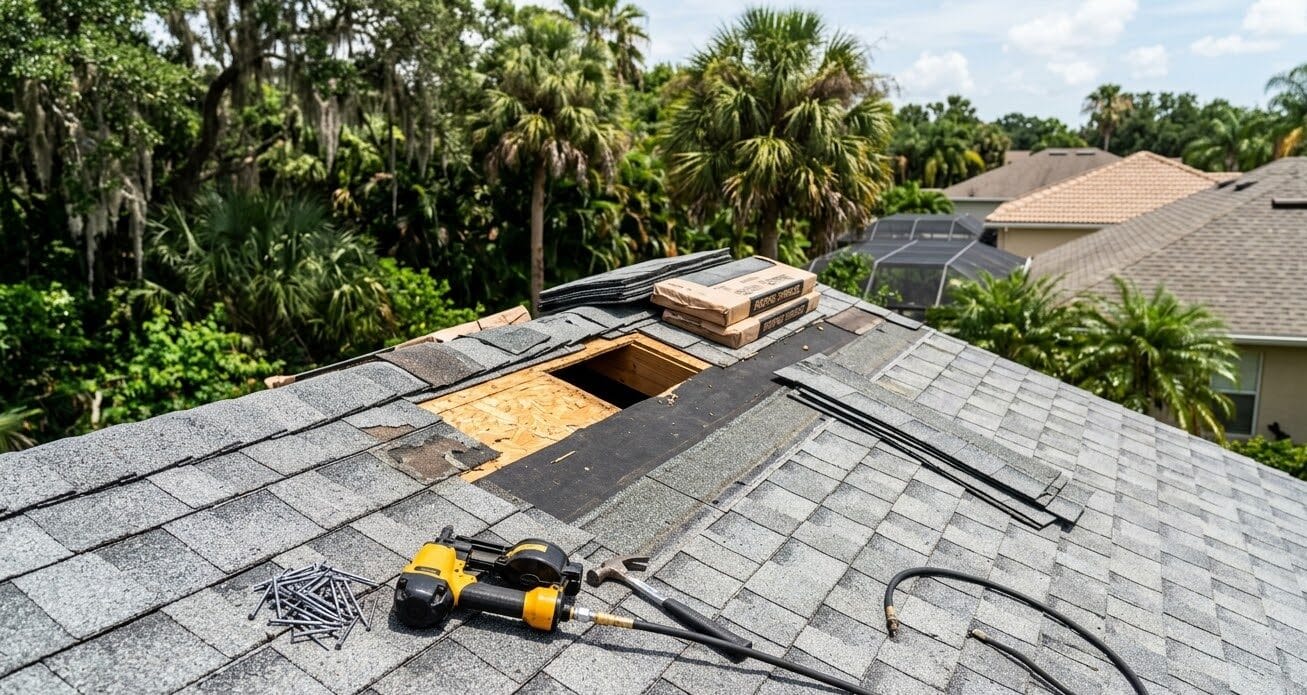
Florida's 25 percent rule historically required that when more than a quarter of a roof was repaired, replaced or recovered within any 12-month period, the whole roof had to be brought to current code. Senate Bill 4-D amended Florida Statute 553.844 and created the exception most homeowners have never heard: if the existing roof was built or replaced in compliance with the 2007 Florida Building Code or later, only the damaged section has to meet current code. That exception is still in force in 2026.
For a Daytona Beach home this is worth checking before you accept the premise that partial repair is impossible. Pull the permit history on the address. A roof permitted in 2009 after a storm may qualify for a sectional repair that a roof last permitted in 1998 will not. The answer is in county records, not in the contractor's opinion.
When a full replacement is triggered, statute 553.844 also brings the hurricane mitigation retrofits into scope: sealed roof deck, the enhanced nailing pattern connecting sheathing to trusses, a secondary water barrier and roof-to-wall connections where they are accessible. The statute caps the mandatory retrofit portion at 15 percent of the reroof price, which is the number to point at when a quote line looks open-ended.
On the coast the sealed deck is the single most valuable of those requirements. When wind removes shingles during a storm, the sealed deck is what stands between a damaged roof and a gutted interior. It is also the item that survives salt exposure best, because it is not a metal component. If you are weighing a full replacement against staged repairs, our roof replacement team walks the permit history first and prices both paths.
Which Roofing Material Actually Wins Within a Mile of the Ocean
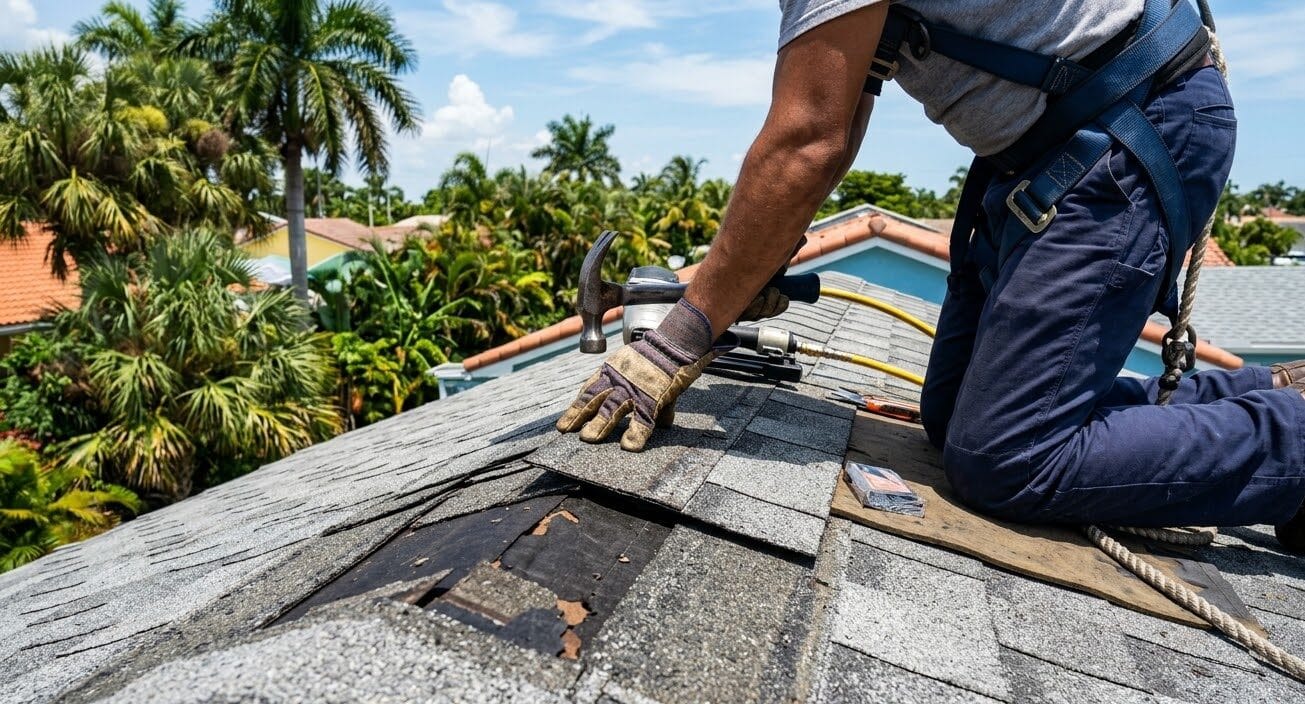
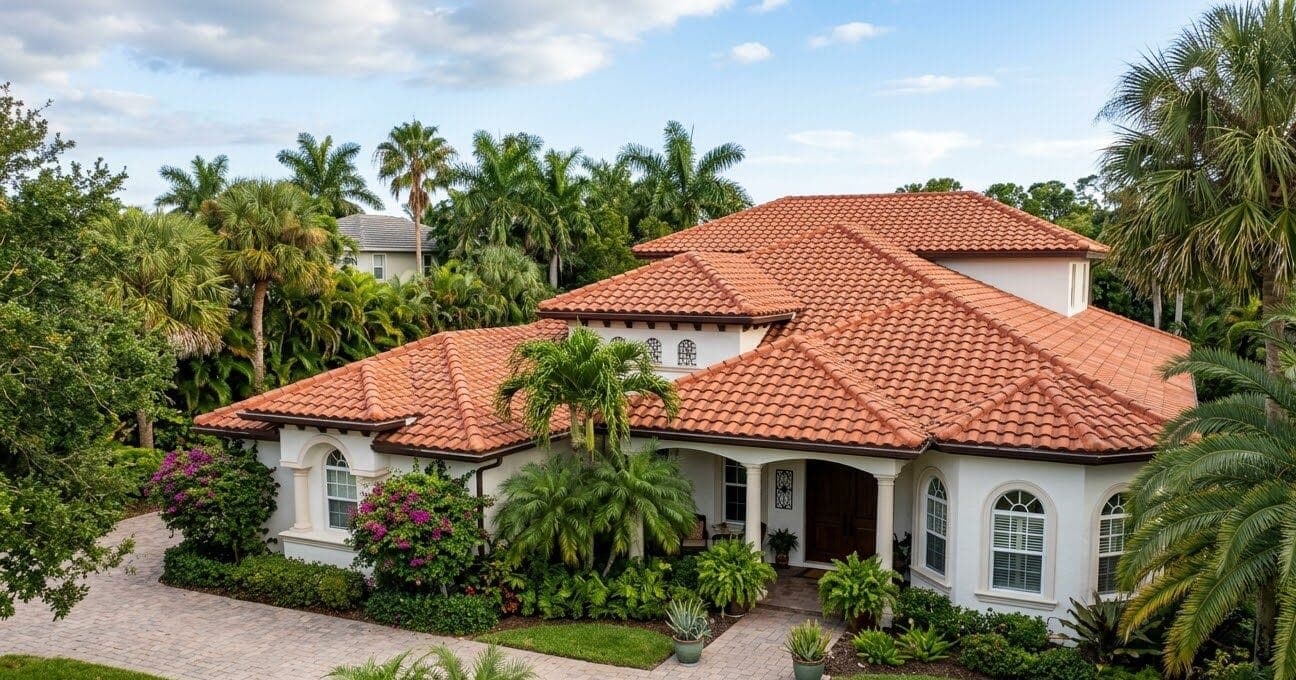
Asphalt shingle remains the volume answer in Daytona Beach because the entry cost is the lowest and the repair network is the deepest. Specified correctly, with Class 4 impact rating, stainless fasteners in high-exposure areas and an upgraded flashing package, a coastal asphalt roof can reach the upper end of the 12 to 18 year band rather than the bottom. Specified as a builder-grade default, it lands at the bottom every time.
Metal changes the math but only if the coating and fasteners are chosen for marine exposure. A standing seam panel with a concealed fastener system removes hundreds of exposed penetration points, which is exactly where a coastal roof usually starts leaking. The upfront number is roughly double asphalt, and the service life commonly doubles it as well, which makes the decision a cash flow question rather than a durability question. Our metal roofing systems page covers the profiles that hold up in salt exposure.
Tile has a real place on the barrier island, particularly on homes designed for it, because the tile itself is inert against salt. The failure mode moves to the underlayment and the fasteners, which means tile is only as good as the layer nobody sees. A tile roof at year 25 with original underlayment is not a 50-year roof, it is a roof due for a lift and relay.
Stone-coated steel sits between the categories and is often the best fit for a beachside home that wants tile appearance without tile weight. Whatever the covering, the coastal ranking of what matters is consistent: underlayment first, fasteners and flashing second, covering third. Most homeowners rank that list exactly backwards.
What a Daytona Beach Coastal Roof Specification Should Say
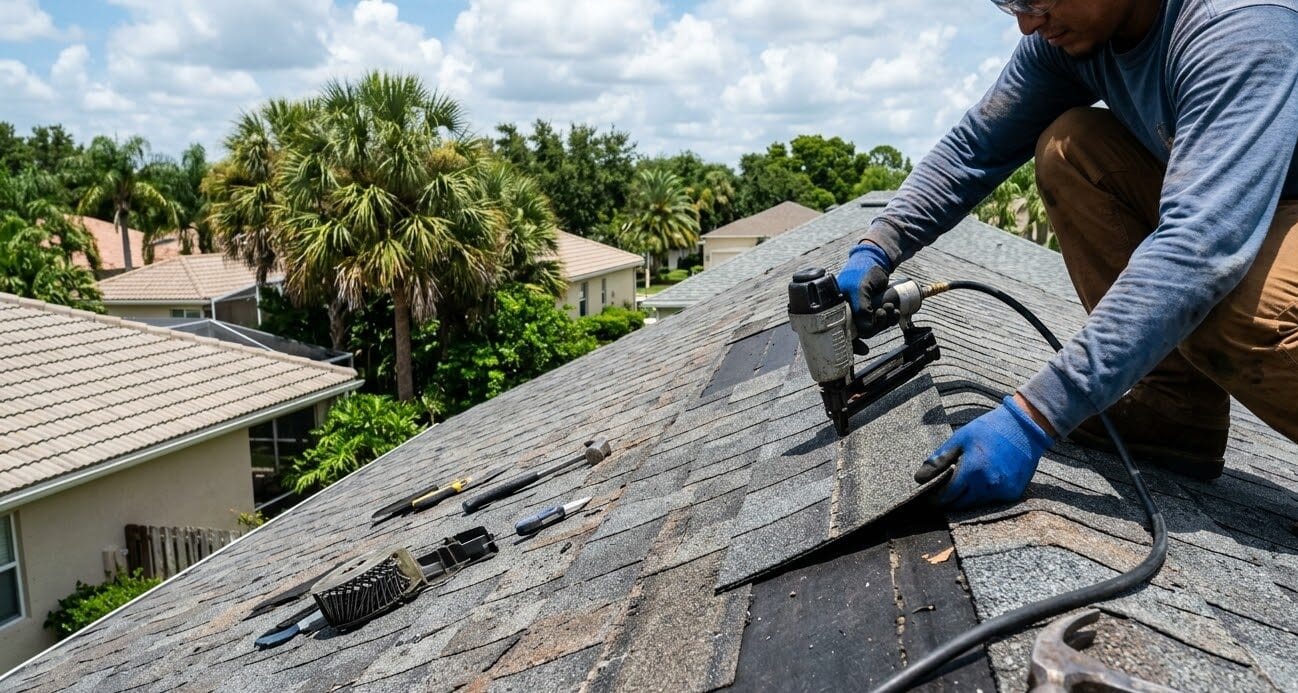
Use this as a checklist against any proposal you receive on the beachside. Every item below is either code, an insurance lever, or a known coastal failure point, and every one of them is verifiable in writing before you sign anything.
- Fastener metallurgy named: Hot-dipped galvanized as the minimum, stainless in valleys, at penetrations and along the windward exposure. A proposal that does not name the fastener is not specifying one.
- Nailing pattern stated: Six nails per shingle in design wind speeds above 120 mph, with penetration into the deck of at least three quarters of an inch.
- Sealed roof deck and secondary water barrier: Required under Florida Statute 553.844 when a full replacement is triggered, with the mandatory retrofit portion capped at 15 percent of the reroof price.
- Flashing package itemized: Drip edge, valley metal, step and counter flashing and vent boots listed by material, not bundled under the word included.
- Deck repair rate agreed upfront: A per-sheet price for rotten sheathing written into the contract before the tear-off, so the change order is arithmetic rather than a negotiation on a roof with no covering.
- Permit and final inspection in scope: Named as the contractor's responsibility, with the closed permit delivered to you at completion.
- License verified: Ask for the number and check it. Protech Roofing holds Florida license CCC1335878, and any licensed contractor should hand theirs over without hesitation.
Insurance in Coastal Volusia: Wind Mitigation and Roof Age
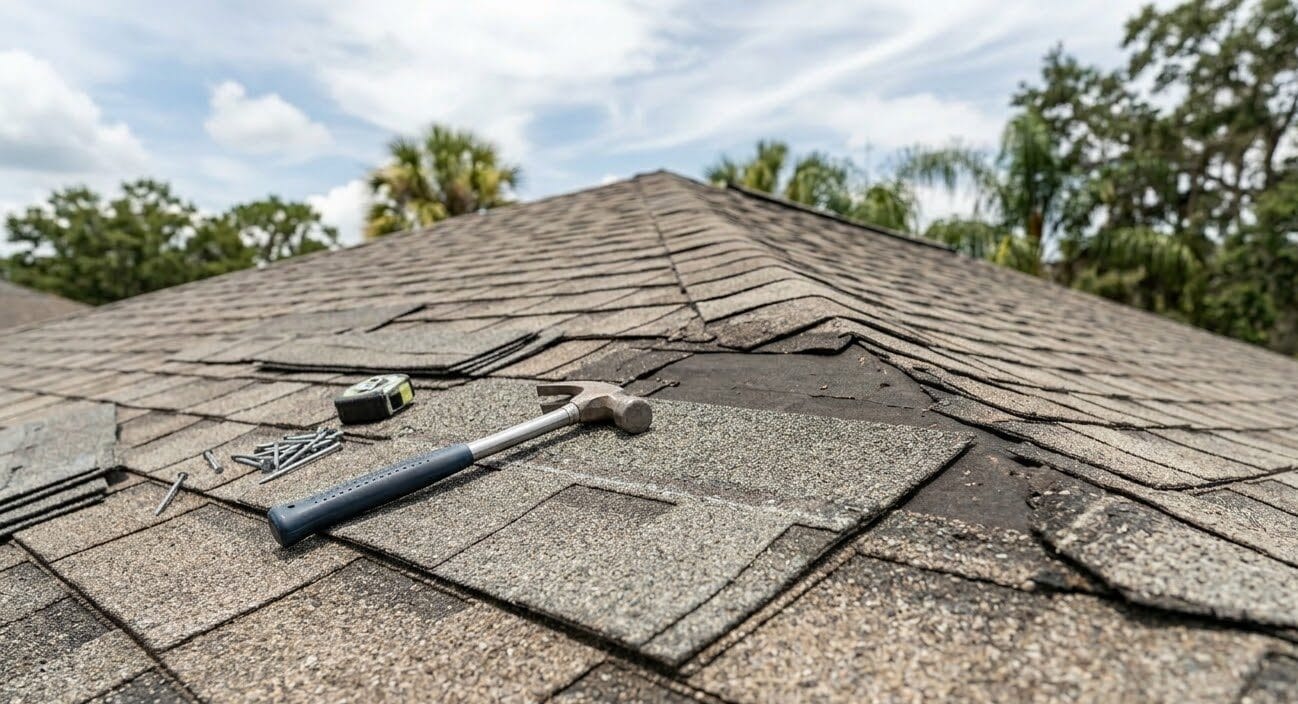
A wind mitigation inspection is the highest-return hour a Daytona Beach homeowner can spend after a re-roof. It documents the features carriers discount for: roof covering compliance, roof deck attachment, roof-to-wall connection, roof geometry, the sealed deck and opening protection. On the coast, where base premiums are already elevated, the credits carry more absolute dollars than they do inland.
Time it correctly. The inspection should happen after the new roof is complete and the permit is closed, because the report captures what is actually installed. Homeowners who order it before the work, or who never order it at all, pay the ungraded rate for years without knowing a discount was available. Our full walkthrough sits in the wind mitigation inspection guide.
The other coastal reality is non-renewal by roof age. Carriers writing in beachside Volusia increasingly decline older asphalt roofs regardless of condition, which converts a maintenance decision into a coverage decision. If your roof is approaching 15 years within a mile of the Atlantic, treat the renewal notice as a deadline rather than a surprise.
When a storm does hit, documentation decides the settlement. Photograph the roof before hurricane season, keep the closed permit and the wind mitigation report together, and involve a roofer in the adjuster meeting. Our storm damage restoration and insurance claims assistance teams handle both sides of that on Volusia claims.
Timeline and What to Ask a Daytona Beach Roofer
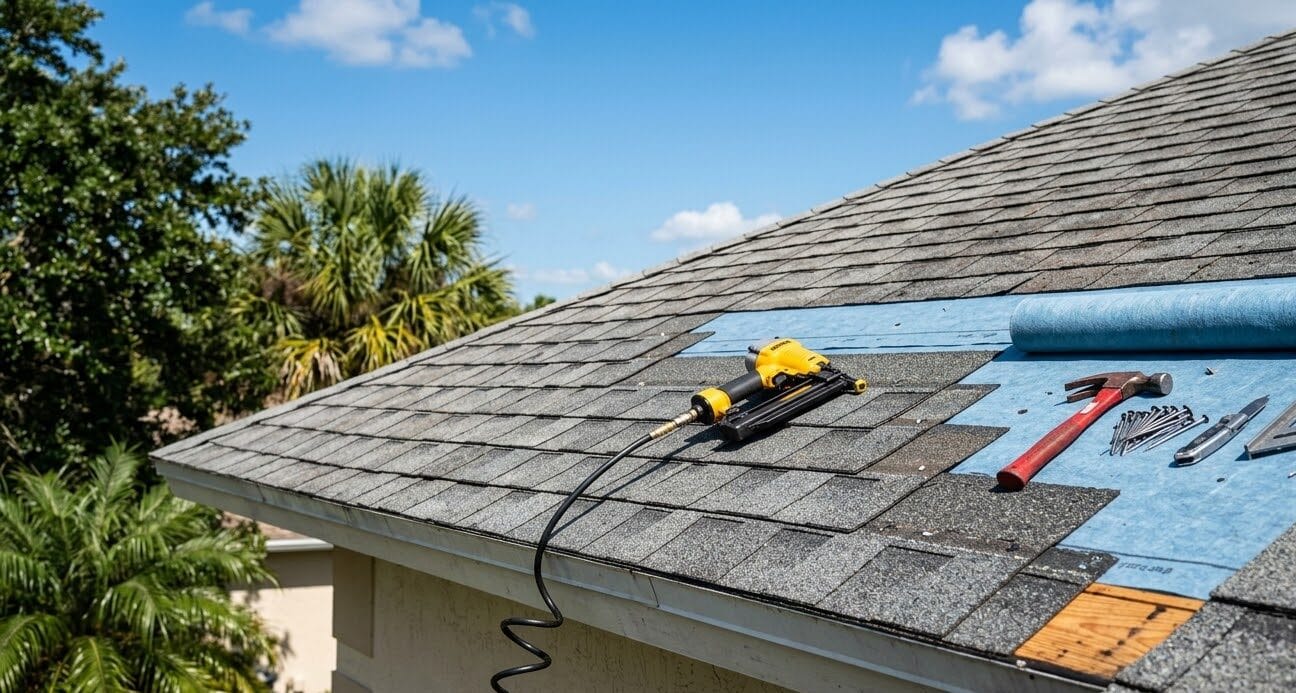
A standard Daytona Beach re-roof runs in four stages. Inspection and written proposal take two to five days. Permitting through the city or county typically runs one to three weeks for a straightforward residential re-roof, longer in the weeks after any named storm when the queue fills. HOA or condominium association approval, which applies to a large share of the beachside inventory, runs in parallel on a board cycle and is the most common source of delay nobody budgets for.
Installation on a typical single-family home takes one to three days depending on size, pitch and material, with tile and metal at the longer end. Final inspection follows within days of completion. Plan the whole sequence at four to seven weeks from the first call, and start earlier than that if you are trying to land inside the city fee waiver before September 10.
Three questions separate contractors quickly on the coast. Ask what fastener metal they are quoting and where. Ask for the per-sheet deck replacement rate in writing. Ask whether they pulled the permit history on your address to check whether the 2007 code exception applies. A coastal roofer answers all three without pausing.
Protech Roofing works across Central Florida from Hernando and Marion into the Volusia and Orlando corridors, and coastal work is specified differently from inland work as a matter of routine. You can see the full Central Florida service area, reach the team at (352) 605-0696, or start with the contact page and we will book an on-site inspection before quoting anything.
FAQ
Frequently Asked Questions
How much does a new roof cost in Daytona Beach, FL in 2026?
+
How long does a shingle roof last in Daytona Beach?
+
Do I need a permit to replace a roof in Daytona Beach?
+
Is Daytona Beach in the wind-borne debris region?
+
Does the Florida 25 percent rule force a full re-roof in Volusia County?
+
What is the best roofing material for a beachside home in Daytona?
+
Related Articles
More guides for Florida homeowners
Roofing Warranties in Florida: What Voids Them
A new Florida roof usually carries two warranties: one from the manufacturer for the product and one from the contractor for the installation. Here is what each covers, what quietly voids them and how to keep your coverage.
Read ArticleSolar Roofing in Florida: Solar Shingles vs Panels (2026)
Every solar system on a Florida roof is either bolted to the roof or is the roof. Here is how panels and solar shingles compare in 2026, what changed with the federal credit, and why the cheapest solar project often starts with a re-roof.
Read Article
Pinellas Flood Zone Roofing: The 49% Rule Explained
Every article calls it the FEMA 50 percent rule. In unincorporated Pinellas County the number that governs your permit is 49 percent, measured against structure value without land. Here is what counts toward it, where a roof replacement actually lands in that math, and why simultaneous permits still aggregate even where the lookback period was repealed.
Read ArticleReady When You Are
Get your free roof inspection today.
No-pressure, written estimate. Same-week scheduling across Hernando County. Call us now or request a visit online.