Blog
Skylights in Florida: Curb-Mount vs Deck-Mount, Leak Fixes and Hurricane Ratings
Call (352) 605-0696A skylight is a hole cut on purpose through the one part of your house whose whole job is keeping water out. Done right, it runs twenty years dry. Done the way most of them are done, it leaks in year two. Florida code puts skylight glazing through the same gauntlet as your windows: a nine pound 2x4 fired at 34 miles per hour, then 9,000 cycles of pressure with wind driven rain. Here is what to ask for, why these units leak in this state specifically, and what the work costs in 2026.
A Skylight Is a Hole in Your Roof That Someone Sold You on Purpose
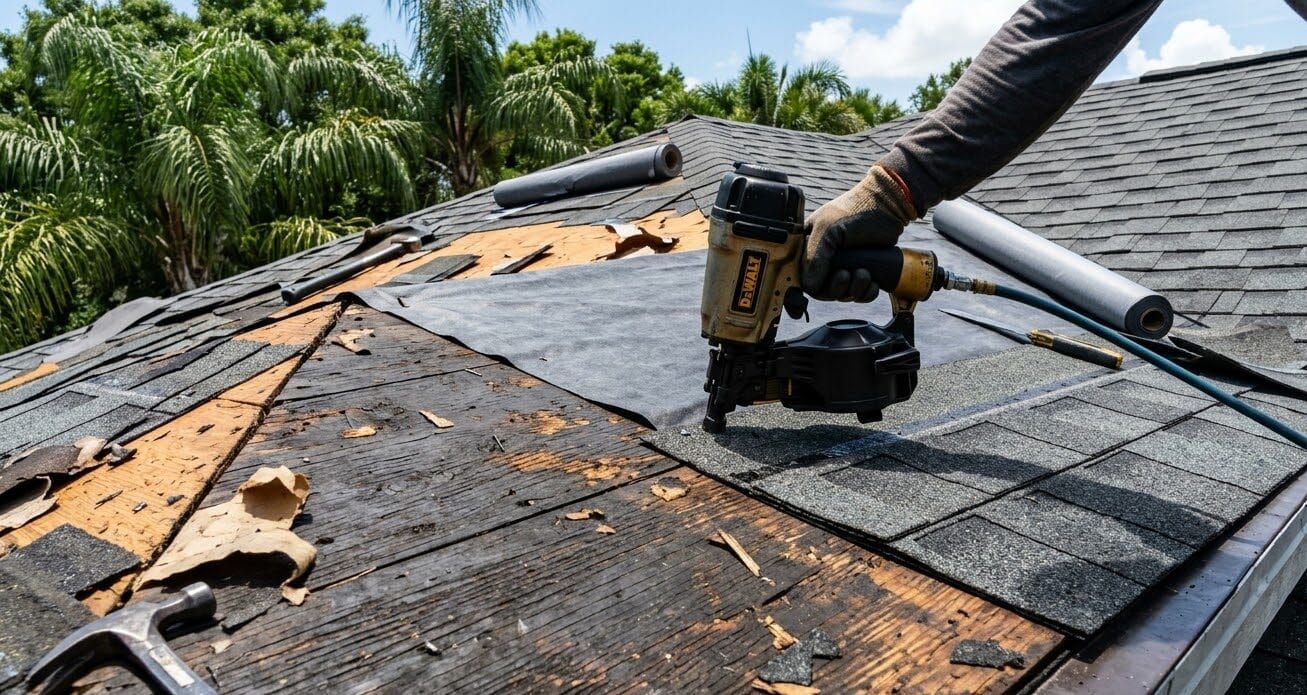
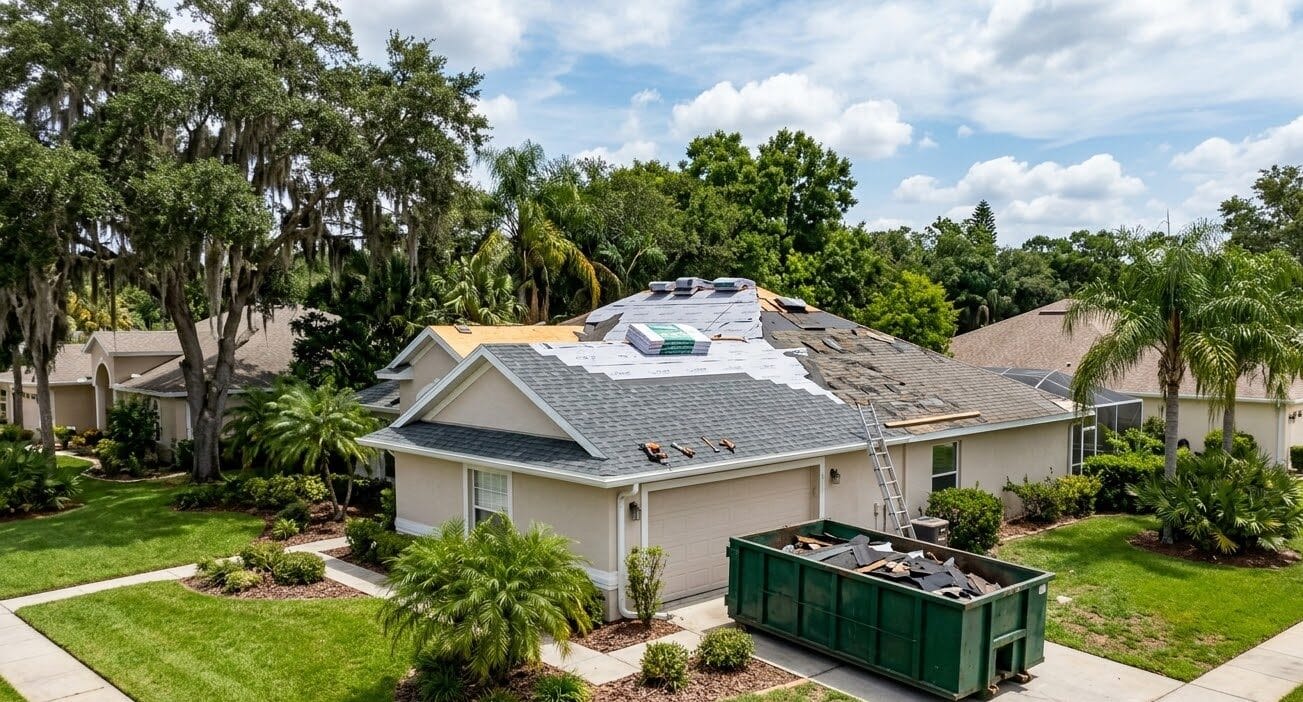
Every skylight starts as a deliberate opening cut through the one assembly on your house whose entire job is keeping water out. That is not an argument against skylights. A well chosen skylight, installed with the right flashing on the right roof, can run twenty years without a drop of water and cut the lights off in a room that never had a window. It is an argument for being unsentimental about how they are specified and installed, because the difference between the twenty year version and the two year version is almost never the skylight itself.
We get called to skylights in two situations. The first is a leak that the homeowner has already tried to caulk, usually twice. The second is a roof replacement where there is an existing skylight and someone has to decide whether it goes back or comes out. Both decisions get made badly and often, so this guide covers what Florida code requires, how the two mounting styles actually differ, why these units leak here specifically, and the cost math for 2026.
If you already have water coming in, the honest first move is not a skylight decision at all. It is figuring out whether the skylight is the source, because a surprising share of the leaks blamed on skylights start uphill of them. That is a job for leak detection and repair, and doing it in that order saves people from buying a new skylight that does not fix anything.
What Florida Code Actually Requires of a Skylight
Start here, because this is the part most quotes skip. Nearly all of Florida sits inside what the code calls the wind-borne debris region. Inside that region, glazed openings have to either be impact resistant or protected by an impact resistant covering, and the test standards named are TAS 201, TAS 202 and TAS 203. A skylight is a glazed opening. It is not exempt because it points at the sky.
Those three tests are worth knowing by name, because they explain what you are paying for when a unit costs more than the one on the big box shelf:
- TAS 201, large missile impact. A nine pound section of 2x4 lumber is fired out of a pneumatic cannon at roughly 50 feet per second, about 34 miles per hour, at the glazing.
- TAS 202, structural performance. After being hit, the same specimen gets tested for structural integrity, air infiltration and water penetration under simulated storm pressures.
- TAS 203, cyclic pressure. The impacted specimen then takes 9,000 cycles of alternating positive and negative pressure at 1.5 times its rated design pressure, with wind driven rain applied at the same time.
The practical translation: an impact rated skylight is a unit that has been hit with a piece of lumber and then shaken nine thousand times while being sprayed, and still held. In the High Velocity Hurricane Zone in Miami-Dade and Broward the unit needs an integrated system certified under a Notice of Acceptance. Everywhere else in the wind-borne debris region, what your inspector wants to see is a Florida Product Approval number that covers the unit, the mounting method and the design pressure for your roof.
That last clause is where installations fail paperwork. The approval covers a system, not a part. A skylight approved for curb mounting, installed deck mounted with someone else's flashing, is not an approved assembly anymore, and the permit file will not match the roof. Ask for the approval number before the unit is ordered, not after it is on the roof.
Curb-Mount vs Deck-Mount: the Difference That Actually Matters
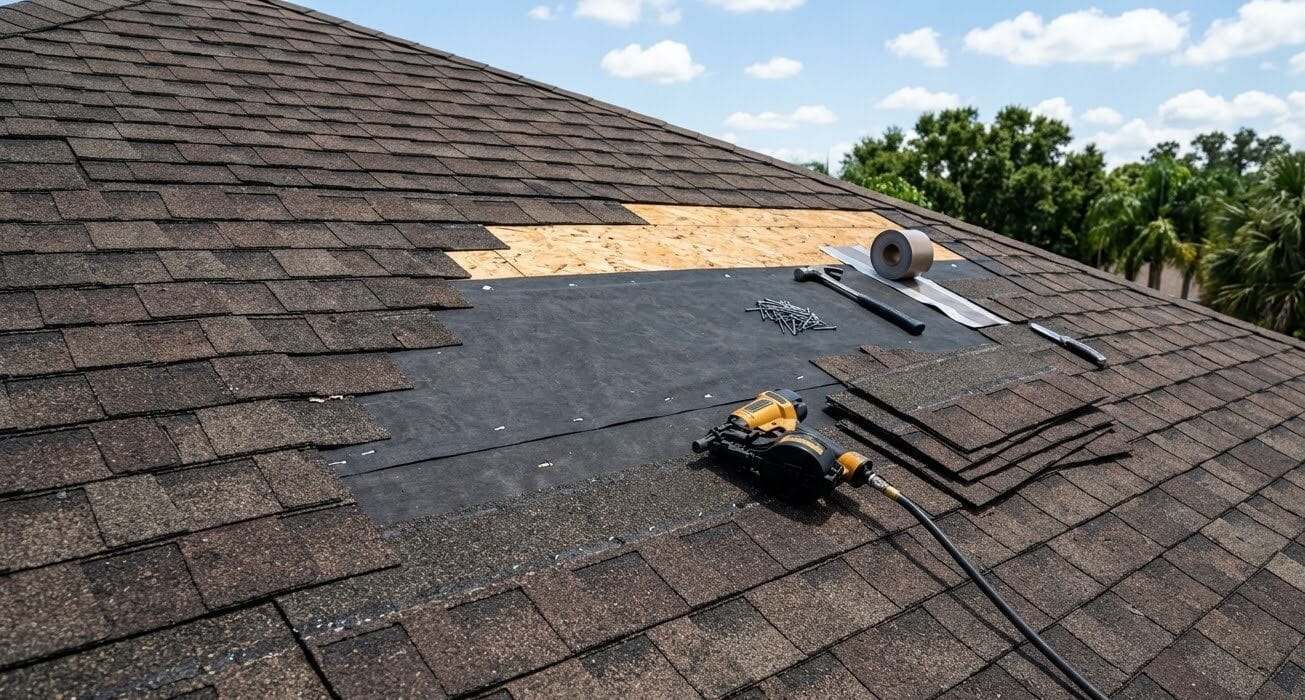
Every skylight is one of two things. A curb-mount unit sits on top of a raised wooden box, the curb, that is framed up off the roof deck. A deck-mount unit sits down on the deck itself, flush into the roof plane, with its own integral flashing.
People argue about which is better. The correct answer is that they fail in different places, and the right pick depends on the roof.
| Curb-mount | Deck-mount | |
|---|---|---|
| How it sits | On a framed box raised above the roof plane, typically 4 to 6 inches. | Down in the roof plane, flush, with factory flashing lapped into the shingles. |
| Water behavior | Water is diverted around a raised obstacle. More forgiving of debris and standing water. | Water runs over a low profile. Looks better, less tolerant of a bad flashing lap. |
| Where it fails | The curb itself. Rotted wood, bad counterflashing, sealant used as flashing. | The head flashing lap and the deck around it, once anything gets past the factory kit. |
| Replacement later | Easier. The curb stays, the unit lifts off and a new one drops on. | Harder. The surrounding shingle field gets opened up to redo the flashing. |
| Best fit in Florida | Low slope areas, tile roofs, retrofits where a curb already exists and is sound. | Shingle roofs at normal slope where the unit and roof are being done together. |
The industry consensus is that curb-mounted units are generally the more leak resistant and the easier to replace of the two, and on tile roofs and anything approaching low slope that is our view as well. Deck-mounted units look better and sit cleaner on a shingle roof, and when they are installed with the manufacturer's own flashing kit into a new roof, they perform. The mistake is mixing eras: dropping a modern deck-mount unit into a hole that was cut for a curb, or reusing a twenty year old curb under a new unit because it looked fine from the ladder.
Why Florida Skylights Leak, Ranked by What We Actually Find
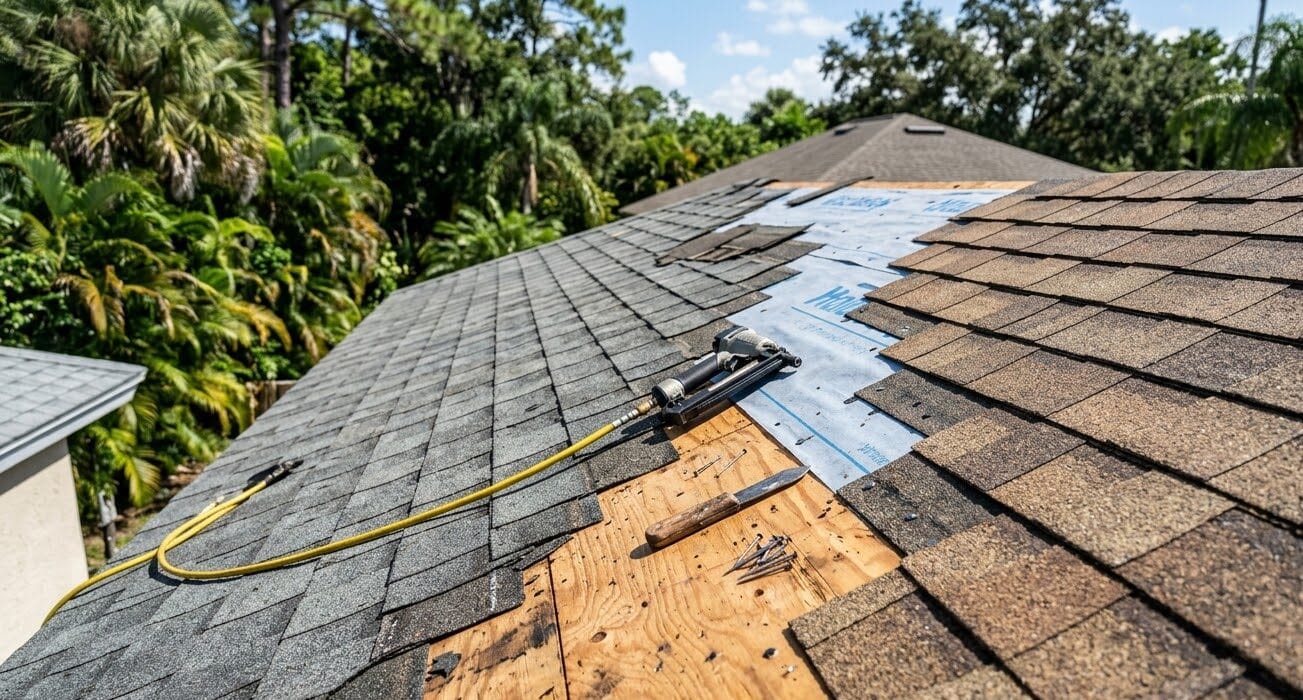
This list is in the order we run into it on service calls, not in the order the internet lists it.
1. The flashing kit was never used
Every reputable manufacturer sells a flashing kit matched to the unit and to the roof covering. It is a stack of metal pieces, apron at the bottom, step or soaker pieces up the sides, head flashing at the top, each one lapped so water always meets a piece that sends it downhill. Kits get skipped to save a couple hundred dollars, and the installer substitutes sealant. That is the single most common cause of a skylight that leaks in year two.
2. Sealant was used as the waterproofing instead of as a supplement
Sealant in a Florida roof assembly has a job, and the job is secondary. UV exposure at this latitude plus a daily thermal cycle on a dark roof plane hardens and shrinks most sealants years before the rest of the assembly ages out. When sealant is the only thing between the sky and your drywall, the leak is not a possibility, it is a schedule. A bead of caulk is a countdown, not a repair.
3. The head flashing was not lapped under the roofing above it
Water coming down the slope has to run on top of the head flashing and then back onto the roof covering. If the shingle course above was cut around the flashing and sealed to it instead of over it, water gets behind the metal and into the deck. This one leaks intermittently, usually only on wind driven rain, which is exactly why it gets misdiagnosed for years.
4. The old curb was reused
A curb is wood. Wood that has been inside a Florida roof for two decades with a marginal counterflashing detail is often rotted on the uphill face, the face nobody can see without removing the unit. New skylight, old curb, same leak, and now the homeowner believes skylights are junk.
5. It is on a slope the unit was never approved for
Deck-mounted units carry a minimum roof slope in their installation instructions, and that minimum exists because below it, water moves slowly enough to find laps. Installing below the stated minimum voids both the approval and the warranty.
6. The leak is not the skylight
Water travels. A failed pipe boot, a nail pop or a bad valley detail uphill can deliver water that surfaces at the skylight curb, because the curb is the first thing to interrupt its path. A dye test or a controlled water test during a roof inspection settles this in an hour and saves a replacement that would not have fixed anything.
Glass or Acrylic Dome: One Ages, One Ages Badly
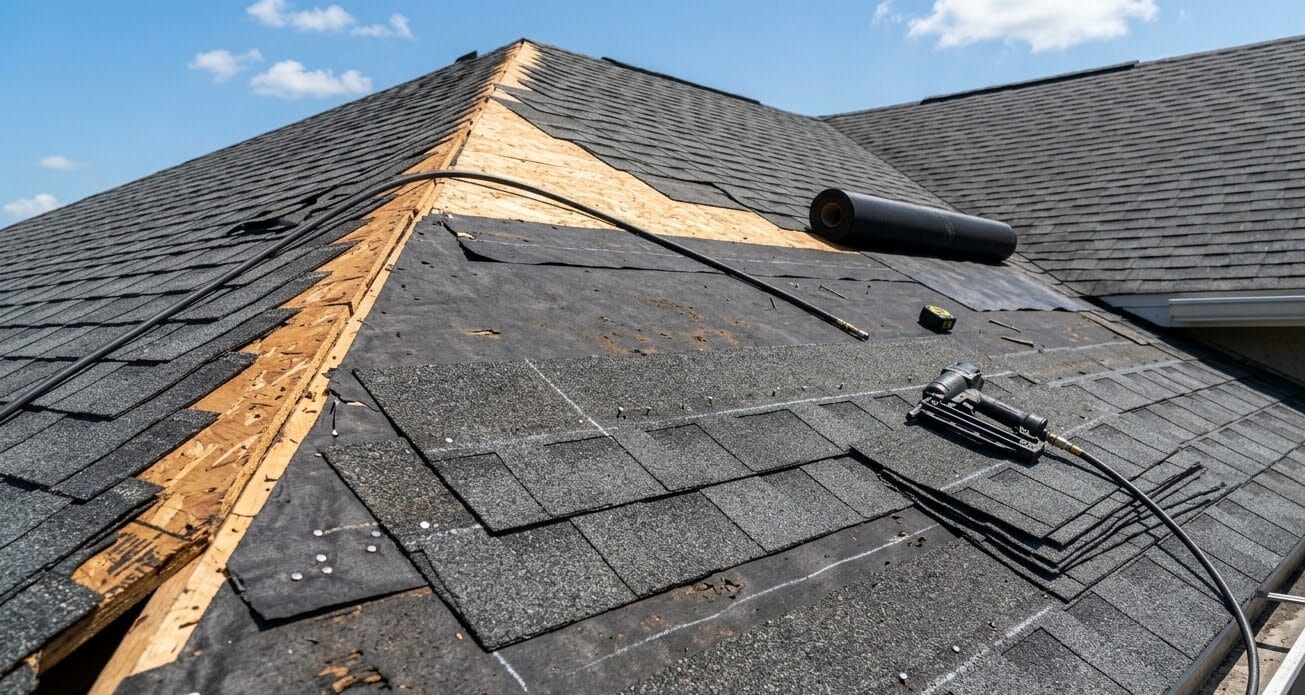
Older Florida homes are full of acrylic dome skylights, often the bubbles that were standard on 1980s and 1990s builds. Acrylic is cheap, light and impact tolerant, and under this much UV it yellows, crazes into a spider web of fine cracks and goes brittle. A dome that has yellowed is not a cosmetic problem. It is a plastic part that has lost impact toughness on a roof in a hurricane state.
Modern glass units are laminated, which matters for two reasons beyond the code test. Laminated glass holds together when something hits it instead of raining down into the room, and the interlayer blocks the bulk of the UV that fades floors and furniture under the opening. Most current units also carry a low-E coating that changes the heat story in the next section.
If your skylight is an acrylic dome that has gone amber or cloudy, its remaining service life is a question of when, not whether. Budget it into the next roof rather than waiting for the storm that finds it.
What a Skylight Does to a Florida Cooling Bill
Sunlight through glass is heat, and in Florida heat is money eleven months a year. The number that governs this is Solar Heat Gain Coefficient, SHGC, on a scale where lower lets in less solar heat. The Florida energy code treats skylights differently from windows here: skylights may be excluded from the glazed fenestration SHGC requirement in climate zones 1 through 3, which covers the whole state, when the skylight SHGC does not exceed 0.30. That is the number to ask for.
Practical version, without the code language:
- Ask for the SHGC on the sticker before you buy. A unit at or under 0.30 is doing real work against Florida sun. A clear uncoated dome is not.
- Orientation matters more than people expect. A skylight facing north brings in the most even light with the least heat. South and west facing units on a low slope deliver the most heat exactly when the afternoon is already worst.
- Size is not free daylight. Doubling the glass area doubles the heat gain along with the light. Two modest units usually beat one oversized one for both comfort and glare.
- Factory blinds are worth the upcharge on west facing openings. Retrofitting shade into a finished light shaft later is expensive and rarely looks right.
One more thing that gets missed: the light shaft through the attic should be insulated and air sealed like any other part of the thermal envelope. An uninsulated shaft turns into a chimney of attic heat pouring into the room, and the homeowner blames the glass. If the attic itself is not moving air properly, the whole assembly suffers, which is the subject of attic ventilation for Florida roofs.
Condensation Is Not Always a Leak, and Knowing the Difference Saves Money
A meaningful share of the skylight water calls we take in winter are condensation, not intrusion. Both show up as water on the inside of the glass or dripping at the corner of the shaft, and they get treated very differently.
| Symptom | Points to condensation | Points to a leak |
|---|---|---|
| Timing | Cool mornings, humid rooms, no rain needed. | During or shortly after rain, especially wind driven rain. |
| Location | Evenly along the bottom edge of the glass or the full perimeter. | One corner, one edge, or a stain running down one side of the shaft. |
| Room | Kitchen, bath, laundry. Anywhere producing moisture. | Any room. Follows the weather, not the room use. |
| Stain | Clean water, no discoloration over time. | Brown or ringed staining on the drywall that grows with each storm. |
Condensation on a skylight in a bathroom is usually an exhaust and ventilation problem, sometimes made worse by a single glazed or poorly insulated unit. Chasing it with sealant on the roof accomplishes nothing at all.
Repair or Replace: the Honest Line
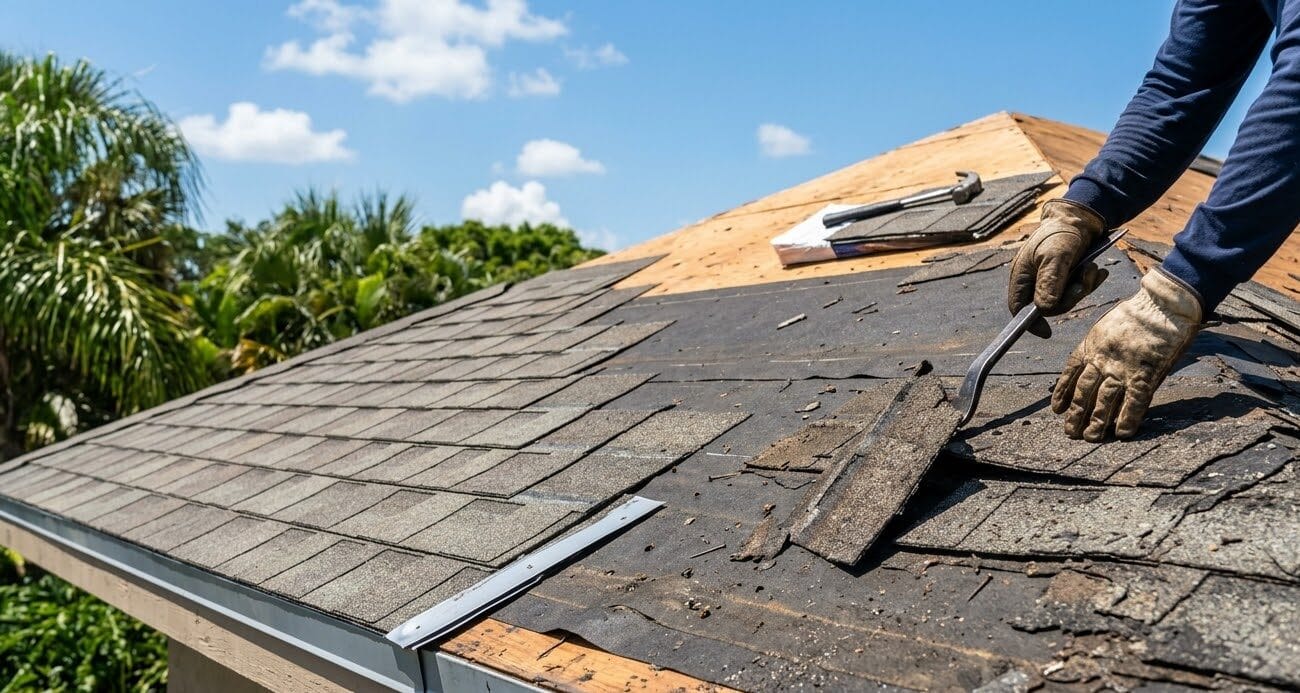
Here is how we actually decide on a service call, and it comes down to what has failed.
- Flashing failed, unit is sound and under about 12 years old. Repair. Strip back the surrounding roof covering, install a correct flashing kit, reroof around it. The glass and the frame still have life.
- The seal between the glass panes has failed. Replace the unit. A fogged or hazed insulated glass unit cannot be resealed in place, and the fog will only spread.
- The acrylic dome is yellowed, crazed or brittle. Replace the unit. Its impact performance is gone whatever the label once said.
- The deck or the curb around it is soft. Replace and repair the structure. There is no flashing detail that seals to rotten wood, and a new unit on bad framing fails again in the same spot.
- The unit is 20 plus years old and the roof is being replaced anyway. Replace it with the roof. The next section explains why this one is not close.
The failure that decides the most cases is the simplest to check. Push up on the drywall at the bottom inside corner of the light shaft. If it gives, water has been there for a while and the scope is bigger than the skylight.
Never Put an Old Skylight Back Under a New Roof
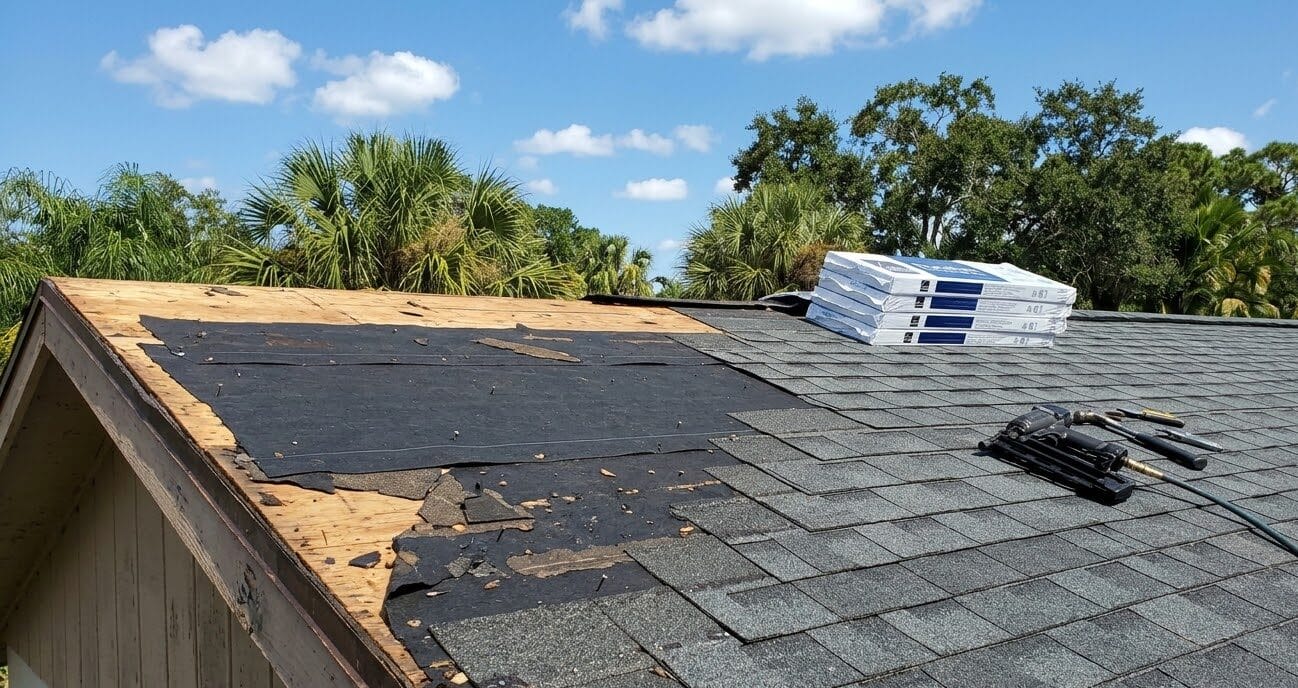
This is the one place we are genuinely stubborn with clients, because the math is not subtle.
When a roof comes off, the labor to properly flash a skylight is already being spent. The shingle field around the opening is open, the deck is exposed, and a new unit goes in with its factory flashing kit as part of the normal sequence. Doing that same work later, into a finished roof, means cutting back a new roof you just paid for, and it puts a seam through an assembly that was watertight the day before.
The dollars: setting a new unit during a full roof replacement typically adds the price of the unit plus modest labor, because the access is free. Doing it two years later as a standalone job costs the unit plus a full roof repair mobilization plus the reroofing of the field around it. The same skylight, done at the wrong moment, can cost roughly twice as much.
There is a warranty angle too. Manufacturers back their skylight systems with long coverage when the unit and its matched flashing kit are installed together by a qualified installer, with figures in the range of a 10 year installation warranty, 20 years on glass, 10 years on the product and 5 years on shades and controls. Reusing a 20 year old unit under new roofing gives away every one of those years. You are putting the oldest component of the assembly under the newest one.
What Skylight Work Costs in 2026
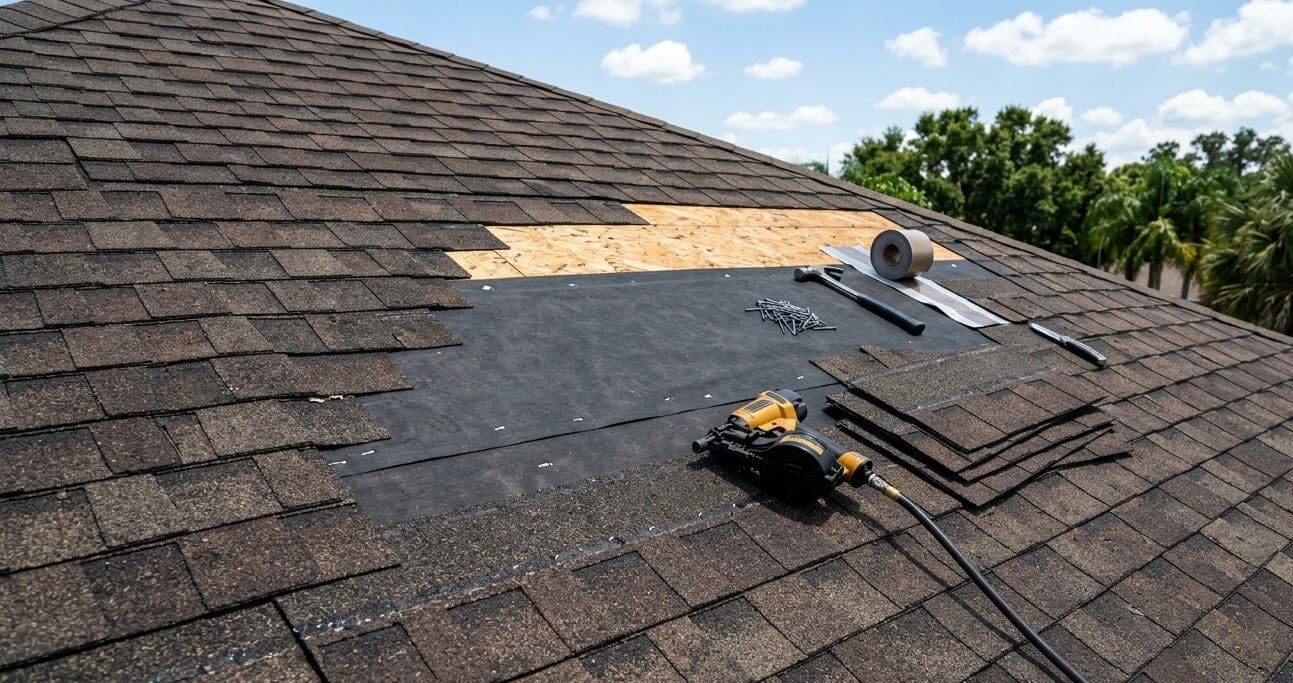
Numbers move with the unit, the roof covering and the access, but the 2026 market ranges look like this.
| Job | Typical 2026 range | What drives the number |
|---|---|---|
| Replace an existing skylight | $800 to $2,400 | Unit type, size, whether the curb and deck are sound, roof covering. |
| Branded unit installed, fixed | About $900 to $2,400 | Fixed glass, standard size, flashing kit included, normal access. |
| Branded unit installed, full range | About $900 to $5,800 | Venting and solar powered models, large sizes, controls, blinds. |
| Flashing rebuild, unit kept | Lower end of the repair range | Stripping and relaying the surrounding field is most of the labor. |
| Added to a full roof replacement | Unit cost plus modest labor | Access is already paid for as part of the reroof. |
Three Florida specific cost drivers to expect in a quote. Tile roofs cost more at every step because the field has to be carefully unloaded and reset around the opening. Impact rated units in the wind-borne debris region cost more than the unrated equivalents sold in states that do not require them. And any unit that has to be craned or carried up a steep, high or barrel tile roof carries access labor that has nothing to do with the skylight.
If the skylight is leaking after a named storm, the path may not be out of pocket at all. Sudden wind or impact damage to a skylight is generally treated as part of the overall windstorm claim rather than as its own event, which is the same logic covered in storm damage restoration. Wear, seal failure and slow leaks are not covered anywhere, which is why documenting the date and the weather matters.
Timing, and the 9th Edition Question
The 9th Edition of the Florida Building Code takes effect on December 31, 2026, and the edition your job is reviewed under is set by the permit application date. For skylights specifically, the wind standard behind the impact and pressure requirements is not what is changing, so a skylight specified correctly today does not become non compliant in January. What the 9th Edition does change around roofs, including recover rules, fastener corrosion near saltwater and drip edge, is walked through in the 9th Edition roof changes guide.
The practical takeaway is not to rush a permit for skylight reasons. It is that if a roof replacement is already in your two year window, the skylight decision belongs to that project rather than to a separate service call.
The Hernando, Pasco and Citrus Version of This Problem
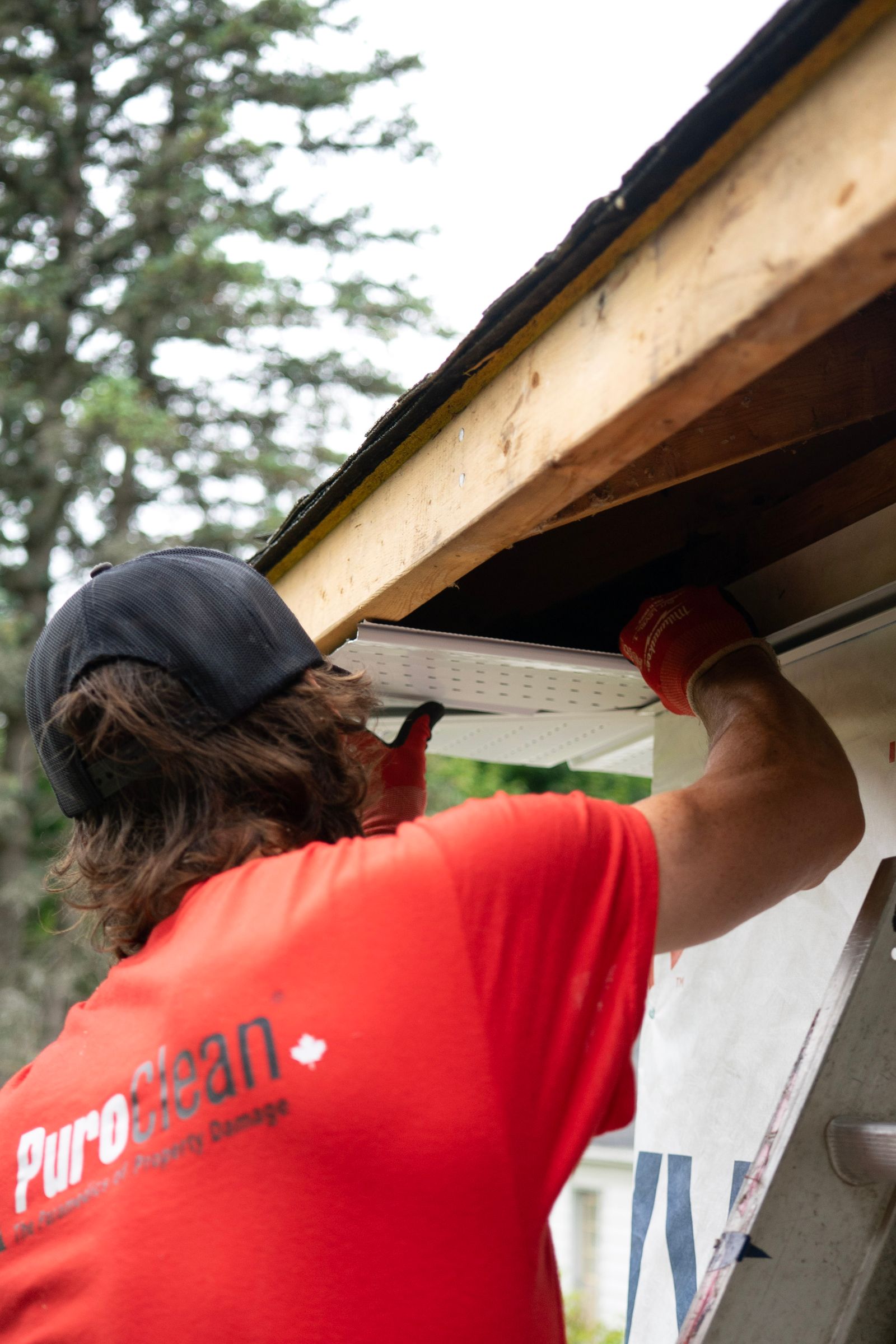
Three local patterns come up over and over in our service area.
The first is the aging acrylic dome. A large share of the housing stock in Spring Hill went up in the era when the bubble skylight was standard, which means a lot of roofs out there carry a 25 to 35 year old plastic dome that has been through decades of UV. Those units are past their service life whatever they look like from the ground, and on a reroof they should not go back.
The second is tile. Around Brooksville and the newer tile roofed subdivisions, skylight flashing has to be detailed for tile, not adapted from a shingle kit. Tile transitions are where we find the most improvised metalwork, and improvised metalwork on a tile roof is expensive to diagnose because the field has to come apart to see it.
The third is coastal exposure. Closer to the water around Hudson, fastener and flashing corrosion is the thing that ends a skylight installation rather than the glass. Salt air eats the cheapest metal in the assembly first, and in a skylight that metal is usually the fasteners holding the flashing.
What We Would Check Before the Next Storm
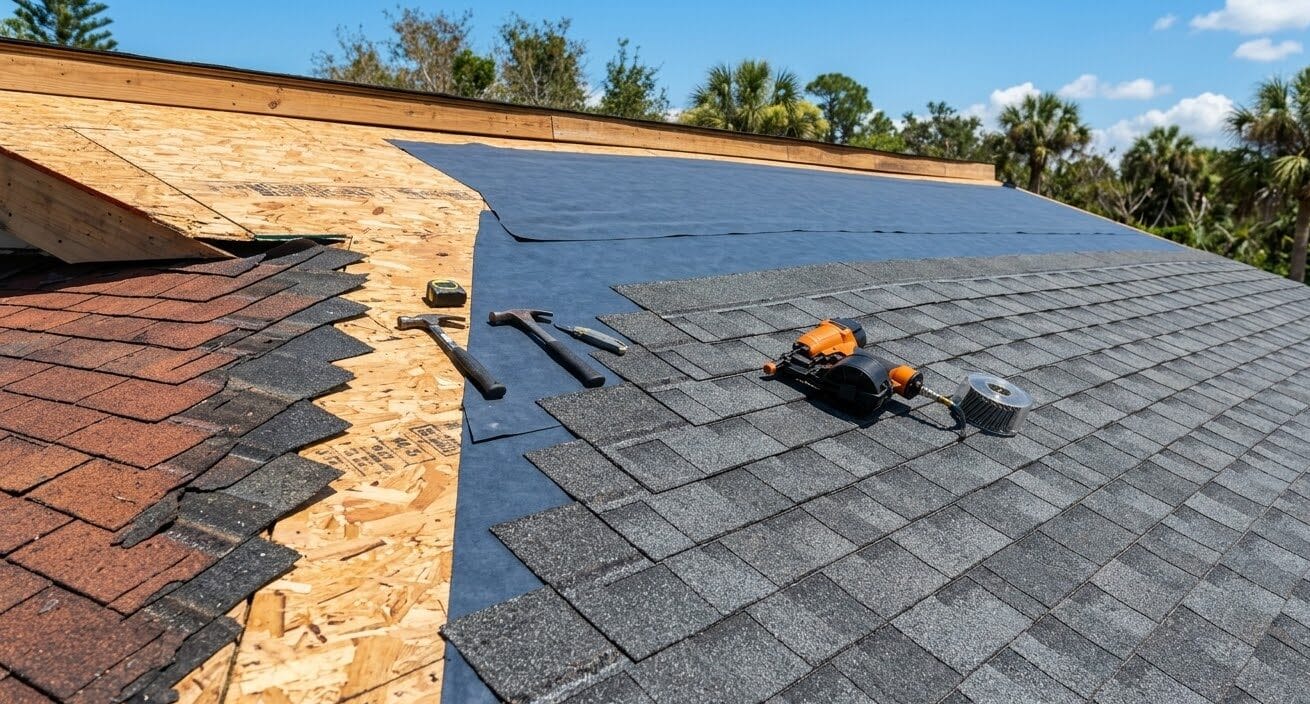
None of this requires getting on the roof. Most of it is visible from inside, and the rest is visible from the ground with a pair of binoculars.
- Look up at the inside corners of the light shaft. Ringed or brown staining that has grown since last season means water, not humidity.
- Press the drywall at the bottom of the shaft. Any softness means the water has been there long enough to matter.
- Look at the glass or dome itself. Fog between panes means a failed seal. Yellowing or fine crazing on acrylic means the unit is done.
- From the ground, look at the metal around the unit. Lifted edges, visible sealant smeared along a seam or rust streaking below the unit all point to a flashing that is being asked to do something it was not designed to do.
- Check the age against the roof. If the skylight predates the roof covering it sits in, plan on replacing it with the next roof.
- Keep the uphill side clear. On a curb-mount, debris piled against the uphill face dams water right where the detail is most vulnerable, which is part of what regular maintenance is for.
If any of those turn up something, the fastest way to a real answer is a water test with eyes inside the attic at the same time. We do that as part of an inspection, and it ends the guessing in a single visit. Get in touch and we will tell you honestly whether you are looking at a flashing repair, a unit replacement or a leak that has nothing to do with the skylight at all.
FAQ
Frequently Asked Questions
Do skylights have to be impact rated in Florida?
+
Are skylights more likely to leak than the rest of the roof?
+
Is curb-mount or deck-mount better for a Florida roof?
+
How much does it cost to replace a skylight in Florida in 2026?
+
Should I replace my skylight when I replace the roof?
+
My skylight has water on the inside. Is it leaking?
+
What SHGC should a skylight have in Florida?
+
My skylight dome is yellow and cloudy. Does that matter?
+
Related Articles
More guides for Florida homeowners
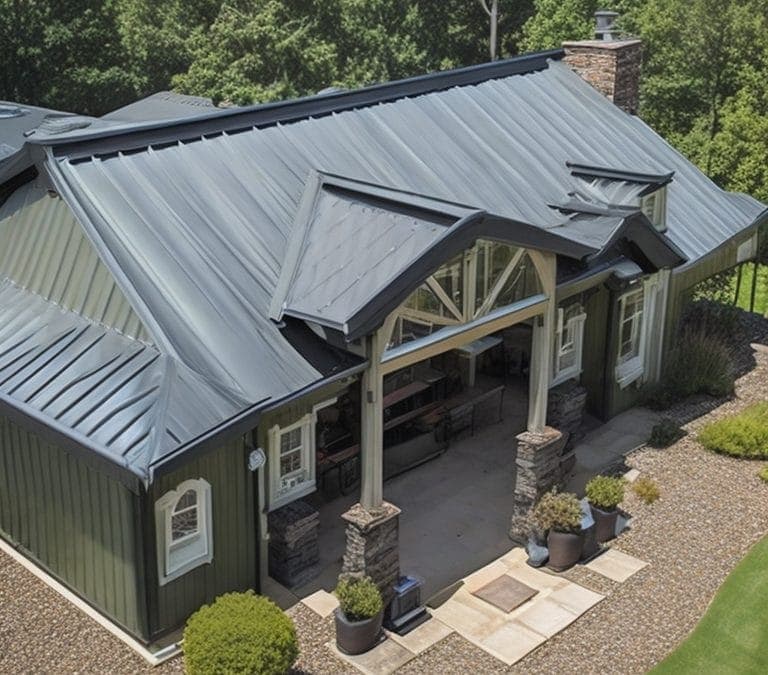
Best Roof Color for Florida Heat: Cool Roofs Explained
Florida test homes show a white shingle saves only 3 to 5 percent on cooling while reflective white metal or tile saves 18 to 26 percent. Here is how to choose a roof color that actually keeps your attic cooler.
Read Article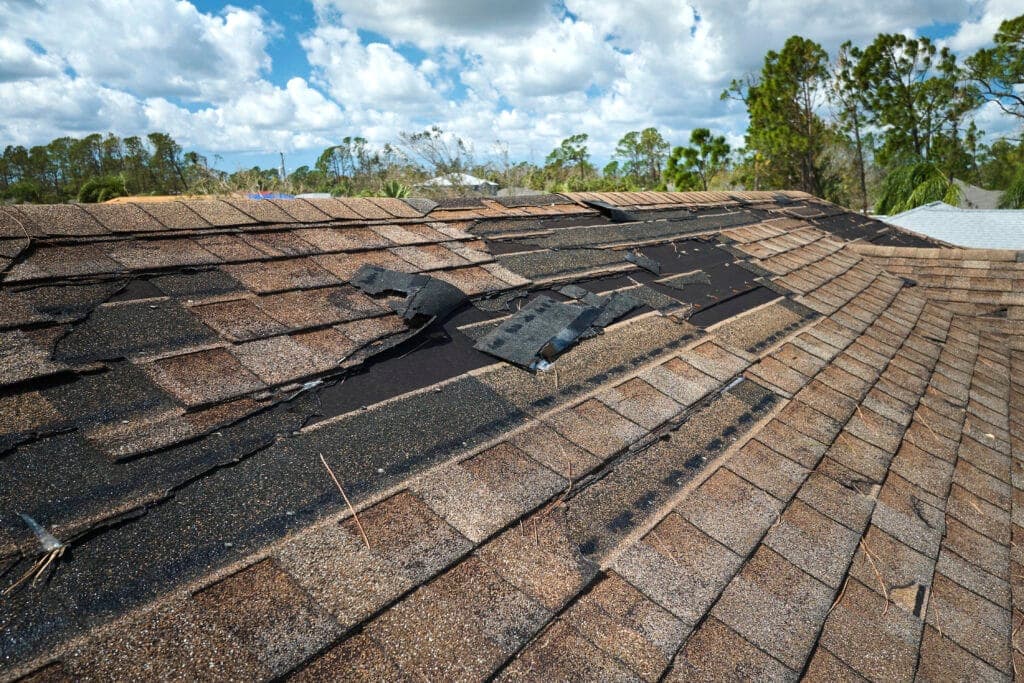
Roof Underlayment in Florida: The Hidden Layer Explained
Underlayment is the layer that decides what happens to your house when wind strips the shingles. Here is how felt, synthetic and peel-and-stick compare, what Florida code requires on a re-roof, and what each option costs in 2026.
Read Article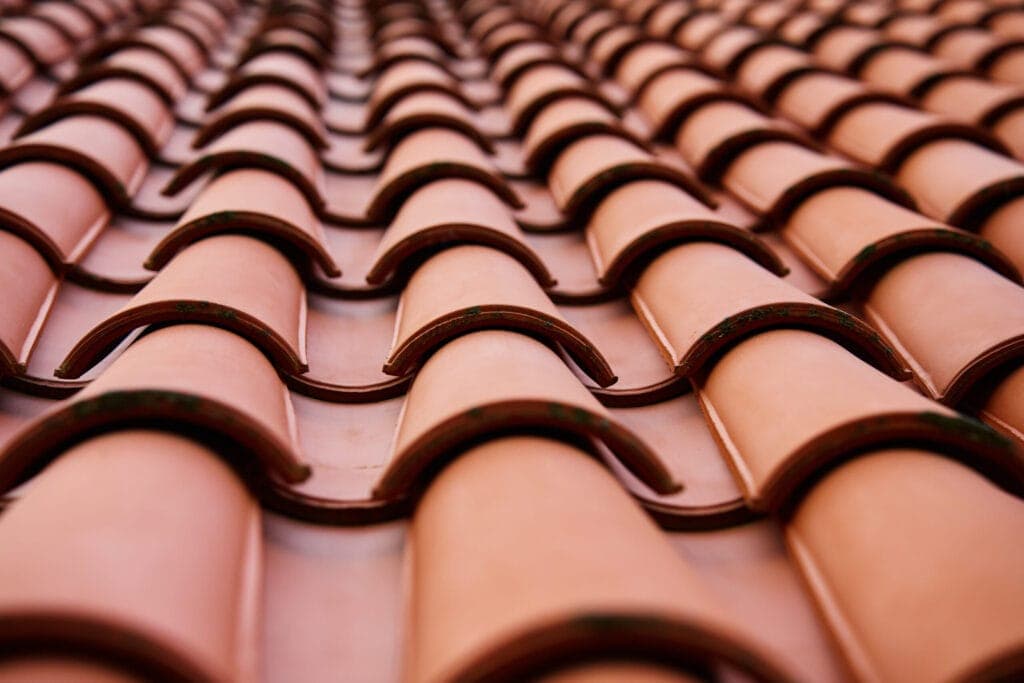
Florida Tile Roof Problems: Repair vs Re-Roof (2026)
Tile lasts for decades, the underlayment under it does not. Here are the tile roof problems Florida homeowners see most, what each repair costs in 2026, and how to tell when a repair is enough and when it is time to re-roof.
Read ArticleReady When You Are
Get your free roof inspection today.
No-pressure, written estimate. Same-week scheduling across Hernando County. Call us now or request a visit online.