
Tampa, FL
Gutter Protection in Tampa, FL
Gutter protection in Tampa, FL. Micro-mesh and reverse curve guards for oak debris and storm winds. Call (352) 605-0696.
Call (352) 605-0696Good gutter protection in Tampa, FL pays for itself within a couple of cleaning cycles if you live anywhere under the live oak belt that runs through Seminole Heights, Hyde Park, Tampa Heights, and the bayfront blocks off Bayshore. The wrong guard, though, makes things worse. We've pulled cheap foam inserts out of Hyde Park bungalow troughs that turned into compost factories within six months. We've watched plastic-screen guards rip off Davis Islands fascia in a Helene gust. Protech Roofing installs micro-mesh and reverse curve systems sized for Tampa's debris, salt, and 130 to 150 mph wind zones. Call (352) 605-0696 for a walkthrough and a written quote.
You Are Viewing
Gutter Protection for homeowners and businesses in Tampa, part of Hillsborough County, FL, Florida.
Why Tampa's Oak Canopy Makes Standard Gutter Guards Fail
The pitch every gutter protection brand makes is the same: install our product, never clean your gutters again. In a northern climate with maple and birch debris that's the truth most years. In Tampa under live oak canopy, it isn't. We've removed more failed guards from Seminole Heights and Hyde Park homes than we've installed new ones, and the failure pattern is almost always the same. The guard worked fine on dry oak leaves. It choked the first time live oak catkins dropped in March and turned into the bio-sludge mat we pull out of unguarded gutters by the truckload.
Live oak catkins are unlike any debris northern guard systems were designed to shed. They're stringy, sticky when wet, and small enough to pass through any mesh larger than 50 microns. Once they pass through a coarse screen guard, they pile up in the trough underneath the guard, where the homeowner can't see them and can't reach them without removing the guard first. So the catkins keep accumulating, the trough fills up, and the water that the guard was supposed to be shedding starts pouring over the front lip of the gutter because there's no room in the channel to hold it.
The neighborhoods that take the heaviest catkin pressure in Tampa are Seminole Heights, Old Seminole Heights, Hyde Park, Tampa Heights, parts of Ybor City, and the inland blocks off Bayshore that sit under continuous canopy. Davis Islands, Westshore, and Carrollwood see lighter pressure because the canopy is younger or more broken. New Tampa subdivisions see almost no catkin pressure because the lots were cleared and replanted with newer ornamentals. The right guard recommendation changes block by block, and we walk the canopy with the homeowner before we quote anything.
There's also the salt question on bayfront addresses. Standard guard frames and screens are aluminum or galvanized steel with a polyester coating. Inland that holds up for 15 to 20 years. On Bayshore Boulevard or the eastern edge of Davis Islands where chloride aerosol settles on every metal surface, those same materials show pitting within five years and structural failure within ten. So the guard recommendation on a Tampa bayfront home isn't the same as the recommendation on a New Tampa stucco home, and we make that distinction at the estimate visit.
Micro-Mesh vs Reverse Curve vs Foam for Tampa Homes
There are roughly three categories of gutter guard worth a serious conversation in Tampa, plus a handful we steer homeowners away from. Micro-mesh is the surgical stainless screen with apertures small enough to block catkins, pollen, and shingle granule. Reverse curve uses the surface tension of water to pull rain into the gutter while letting debris roll off the curved nose. Foam inserts sit inside the gutter and let water filter through. There's also brush-style and plastic-screen-style guards, which we don't recommend on Tampa homes and won't install.
Micro-mesh with a stainless steel screen of 50 microns or finer is what we install on most Tampa homes under live oak canopy. The mesh is fine enough to stop catkins, pollen, granule, and most pine straw. It mounts to the front lip of the gutter and slopes back toward the roof, so debris that lands on the screen slides off rather than mounting up. Cost runs $9 to $14 per linear foot installed depending on profile and frame material. Stainless mesh on an aluminum frame is the inland default. Stainless mesh on a Type 304 surgical-grade stainless frame is the bayfront upgrade, and that's the same fastener and frame spec we use on Bayshore Boulevard new installs.
Reverse curve guards work on the same surface tension principle as the original Englert system from the 1970s. Rain follows the curved nose and drops into the gutter through a small slot at the bottom of the curve. Debris that lands on the curve rolls off the front. The advantage on a Tampa home is debris shedding during a heavy storm, because the curve sheds wind-driven leaf litter that micro-mesh can sometimes trap. The trade-off is that reverse curve systems can overshoot during peak intensity storms when rainfall exceeds the surface tension threshold, which Tampa does see during summer thunderstorms and tropical systems. Cost runs $12 to $20 per linear foot installed.
Foam inserts are the cheap option, the easy option, and the option we tell Tampa homeowners not to buy. Foam works fine in a Phoenix yard with dry pine needles. In Tampa humidity under live oak canopy, foam becomes a wet sponge that retains catkin material, grows algae and mildew, and turns the inside of the gutter into a slow-decomposition compost bed within one season. We've pulled foam inserts out of Hyde Park bungalow gutters that had to be replaced along with the foam because the aluminum underneath had been chemically attacked by the rotting organic load. Same answer on brush guards. Don't.
Hurricane Wind Survival of Gutter Guards in 130-150 mph Tampa Zones
Tampa sits in the 130 mph design wind zone under the Florida Building Code 8th Edition, and bayfront addresses on Bayshore Boulevard, Davis Islands, Harbour Island, and the eastern Westshore edge sit in the 140 to 150 mph exposure category. Any gutter guard installed in Tampa has to survive those wind loads without becoming a projectile, and the manufacturer's wind rating is the first thing we ask about before we recommend a product. A guard that lifts off a fascia during a Cat 3 storm doesn't just stop protecting the gutter, it becomes a flying piece of metal that can damage neighboring property and trigger a separate liability issue.
Stainless micro-mesh systems with screw-down attachment to the gutter front lip and the fascia carry the strongest wind ratings we've seen in independent testing. The mesh frame distributes load across multiple fasteners, and the screen itself sits flat against the frame so there's nothing for wind to grab. We spec stainless screws on every Tampa install rather than the zinc-plated screws some installers default to, because zinc heads corrode in Tampa humidity and lose their bracket grip well before the next major storm cycle. On bayfront homes we go further and use 316 marine-grade stainless screws because chloride exposure shortens 304 service life by half compared to inland.
Reverse curve systems are more vulnerable to high-wind uplift because the curve creates an aerodynamic surface that wind can catch from below. Manufacturer ratings vary widely, with the better systems independently tested to 110 to 130 mph. We don't install reverse curve on Tampa bayfront addresses where wind exposure exceeds the rating. Inland Tampa homes with 130 mph design wind can use reverse curve from a tested brand, but we always specify the brand and the rating in writing on the quote so there's no confusion about what the homeowner is getting.
Foam, brush, and plastic-screen guards have no meaningful wind rating because the manufacturers didn't design them for hurricane country. We've pulled plastic-screen sections off Tampa fascia after every named storm since Idalia in 2023, and the cleanup work runs the homeowner more than the original guard installation. So we don't install those products, and we'll remove them on request when a homeowner asks us to replace them with a tested system.
Salt Air and Material Compatibility for Bayfront Tampa Guards
A guard system on a Bayshore Boulevard or Davis Islands home faces a different chemistry problem than the same guard inland. Chloride aerosol from Hillsborough Bay settles on every metal surface inside a half-mile band, and the salt deposits react with whatever metals the guard is built from. Aluminum frames pit and chalk. Galvanized steel frames lose their zinc coating and rust. Standard 304 stainless mesh holds up reasonably well but the frame around it often fails first. The right specification for a bayfront Tampa home is Type 304 surgical-grade stainless mesh on a 304 or 316 stainless frame, with 316 marine-grade stainless screws at every fastener point.
We pair the bayfront guard specification with our Bayshore Salt-Flush maintenance service, which runs twice a year on every Bayshore, Davis Islands, Harbour Island, and Ballast Point home we service. The Salt-Flush removes chloride crust from the guard surface and the frame before it has time to build up and bond to the metal. Combined with the right material specification at install, the Salt-Flush extends bayfront guard service life into the 20 to 25 year range, which matches the service life of the gutter system underneath.
Copper guards are a less common option that show up on Hyde Park and Bayshore historic homes where the gutter system itself is copper. Copper is essentially immune to salt corrosion and develops a protective patina that improves performance over time in coastal exposure. The cost is high. A copper micro-mesh system runs $25 to $40 per linear foot installed, and it's almost always paired with a copper gutter that runs another $28 to $45 per linear foot. We do a handful of these jobs each year in Tampa, almost always on architecturally significant homes where the homeowner wants the entire system to be a visual feature.
One thing we tell every bayfront Tampa homeowner. The guard manufacturer's standard warranty almost never covers salt-zone failures. Manufacturers know that chloride exposure shortens service life dramatically, and the warranties are written to exclude that exposure. Our installation warranty on the bayfront specification is different. We warranty the install for the rated service life of the materials, with the understanding that the homeowner stays on the Salt-Flush schedule. Walk away from the schedule and the warranty walks with it.
Historic Hyde Park Review for Visible Gutter Guards
Hyde Park is a City of Tampa local historic district, and the Architectural Review Commission has authority over any visible exterior change to a contributing structure. That includes gutter guards if the system changes the visible profile of the gutter from the street. Most micro-mesh systems sit flush with the front lip of the gutter and don't visibly change the elevation, which means they get staff-level approval rather than a full Commission hearing. Reverse curve systems change the visible profile because the curved nose extends past the gutter line, and those often require formal review.
Tampa Heights and the Seminole Heights historic districts follow similar review procedures through the same Architectural Review Commission. The approval timeline runs roughly two to six weeks for staff-level approval and 30 to 60 days for a full Commission review. We handle the application paperwork, take the elevation photos the application requires, and submit the package with the homeowner's signature so the install schedule doesn't stall waiting for sign-off. The application also has to include a product spec sheet with the manufacturer's photo and dimensions, which we keep on file for the systems we install.
Color matters on historic district reviews. White and bronze frames blend with most fascia colors and tend to get pre-approved at staff level. Copper frames trigger formal review because the patina color changes over time, which the Commission considers a visible alteration. Dark brown and black frames are usually fine on bungalows with dark trim packages. We bring color samples to the estimate visit so the homeowner can see what the guard will look like against their existing fascia before we submit the application.
Outside the historic districts, modern Tampa HOAs in Tampa Palms, Westchase, New Tampa, and the Cory Lake Isles area have their own architectural review procedures. Most pre-approve white and bronze guard frames and require a formal application for any other color or finish. We carry a folder of approved swatches for the larger Tampa HOAs and check the homeowner's covenant documents before recommending a color, so nobody ends up with a guard the HOA later asks them to replace.
Retrofit on Existing Tampa Gutters vs New Install With Guards
There are two paths to a guarded gutter system on a Tampa home. The first is retrofitting guards onto existing gutters. The second is replacing the existing gutter and installing guards as part of the new system. The right answer depends on the age and condition of the existing gutter, the material the gutter is made from, and what the homeowner wants out of the system long term.
A retrofit makes sense when the existing gutter is structurally sound, less than 10 years old, the right size for the home's water load, and made from a material compatible with the guard system. We inspect the gutter before we quote a retrofit, looking at hanger spacing, miter integrity, slope, downspout sizing, and visible corrosion. If the gutter passes, retrofitting micro-mesh runs $9 to $14 per linear foot installed, which is the same range as installing guards on a new gutter system. The savings on a retrofit are real, because the homeowner avoids the $1,100 to $4,400 cost of a new gutter system.
A retrofit doesn't make sense on gutters that are sagging, undersized, or close to end of life. Installing $1,500 worth of guards on a 20-year-old gutter that's going to need replacement in three years is wasted money, because the guards usually can't be reinstalled on the new gutter without modification. We tell homeowners directly when a retrofit isn't the right call, and we'll quote both options so the math is clear. The break-even point is usually around 10 to 12 years of remaining gutter life. Less than that, replace and guard together. More than that, retrofit and save the cost of the gutter swap.
On bayfront Tampa homes, the retrofit conversation is different because the gutter material matters more. A retrofit only makes sense if the existing gutter is .032 aluminum or heavier with stainless or copper fasteners. Lighter aluminum or zinc-plated fasteners won't carry the additional weight of the guard plus the wind load during a tropical system, and the install will fail at the bracket. We've removed failed guard retrofits from Bayshore homes where the original gutter wasn't built for the additional load. So on bayfront addresses we recommend new gutter and guard together more often than retrofit, even when the existing gutter looks fine from the ground.
The Maintenance Reality of Gutter Guards in Tampa
Every gutter guard brand sells the same dream: install our product, never clean your gutters again. In Tampa under live oak canopy that dream isn't real, and homeowners who buy it end up disappointed within a year. The honest answer is that guards reduce cleaning frequency by 60 to 80 percent on most Tampa homes, but they don't eliminate cleaning entirely. The gutter still needs an annual check, the guard still needs a periodic wipe-down, and the downspouts still need a flow test.
Here's what changes on a guarded Tampa home. The interior of the gutter trough stays clean for years at a time, because catkins and pollen that make it through the mesh are flushed through by the next rain rather than building up as a wet mat. The downspouts stay clear because nothing larger than a granule particle enters them. The fascia stays drier because overflow events are rare. But the top of the guard collects debris that has to come off, and a fine layer of catkin residue and dust builds up on the mesh surface over the seasons. If that residue isn't periodically wiped off, the mesh becomes hydrophobic and rain starts running off the top rather than passing through.
Our maintenance recommendation for guarded Tampa homes is one annual visit in late fall after the worst of the seasonal debris has dropped. The visit clears any debris piled on the guard, wipes the mesh with a neutralizing solution to restore the surface tension that lets water pass through, flushes the downspouts to confirm flow, and inspects every fastener for movement or corrosion. Bayfront homes still need our twice-a-year Salt-Flush because chloride builds up regardless of debris load. Three-quarters of the cleaning visits a guarded Tampa home would need without guards go away. The remaining quarter is still real work and worth doing on a calendar.
If a Tampa homeowner is comparing the cost of guards plus reduced cleaning against the cost of no guards plus full seasonal cleaning, the break-even point is usually four to six years on inland homes and three to five years on bayfront homes where corrosion-driven gutter failure shortens the comparison window. After break-even, the guards are saving real money every year for the rest of the gutter system's service life. That's the honest economic case for gutter protection in Tampa, and it's the one we walk through with homeowners at the estimate visit.
More in this area
Other roofing services in Tampa
FAQ
Frequently Asked Questions
Do gutter guards really work under Tampa's live oak canopy?
+
Will gutter guards survive a hurricane in Tampa's 130-150 mph wind zone?
+
Do I need historic district approval for gutter guards in Hyde Park or Tampa Heights?
+
Can I retrofit gutter guards onto my existing Tampa gutter, or do I need to replace it?
+
Will I never have to clean my Tampa gutters again with guards installed?
+
From the Blog
Stay informed about roofing in Florida.

Gutters for Florida Homes: Seamless vs Sectional Guide
Seattle gets 38 inches of rain a year and runs 5-inch gutters. Tampa gets 52.6 and overflows, because 30 of those inches fall in four months and mostly in short bursts. Gutters are sized on inches per hour, not inches per year. Here is the sizing math, what seamless actually buys you, and the two spec lines that matter more than the word seamless in a hurricane state.
Read Article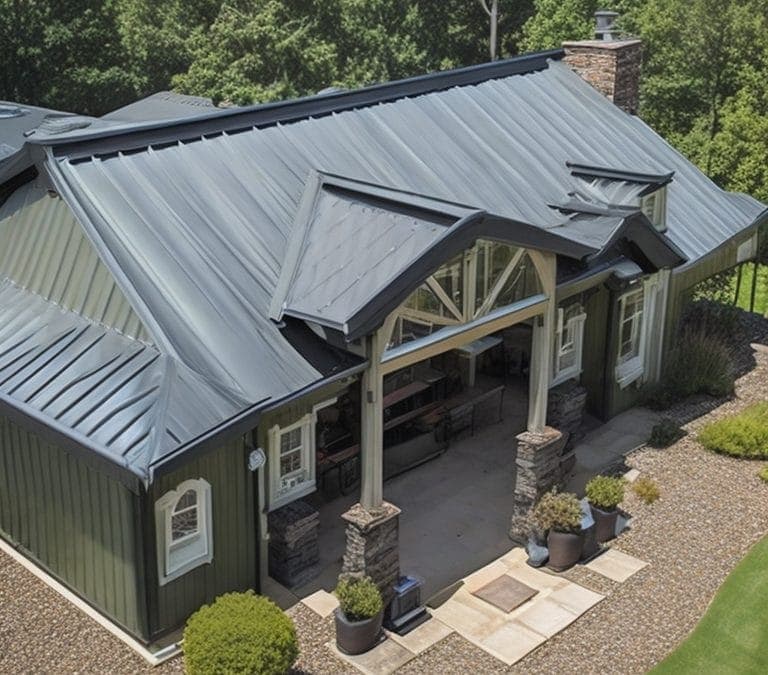
Salt Air Roof Damage in Tampa Bay: Coastal FL Guide
Coastal roofs almost never fail because the covering wore out. They fail because the metal holding the covering down corroded, let go, and the wind found the loose edge.
Read Article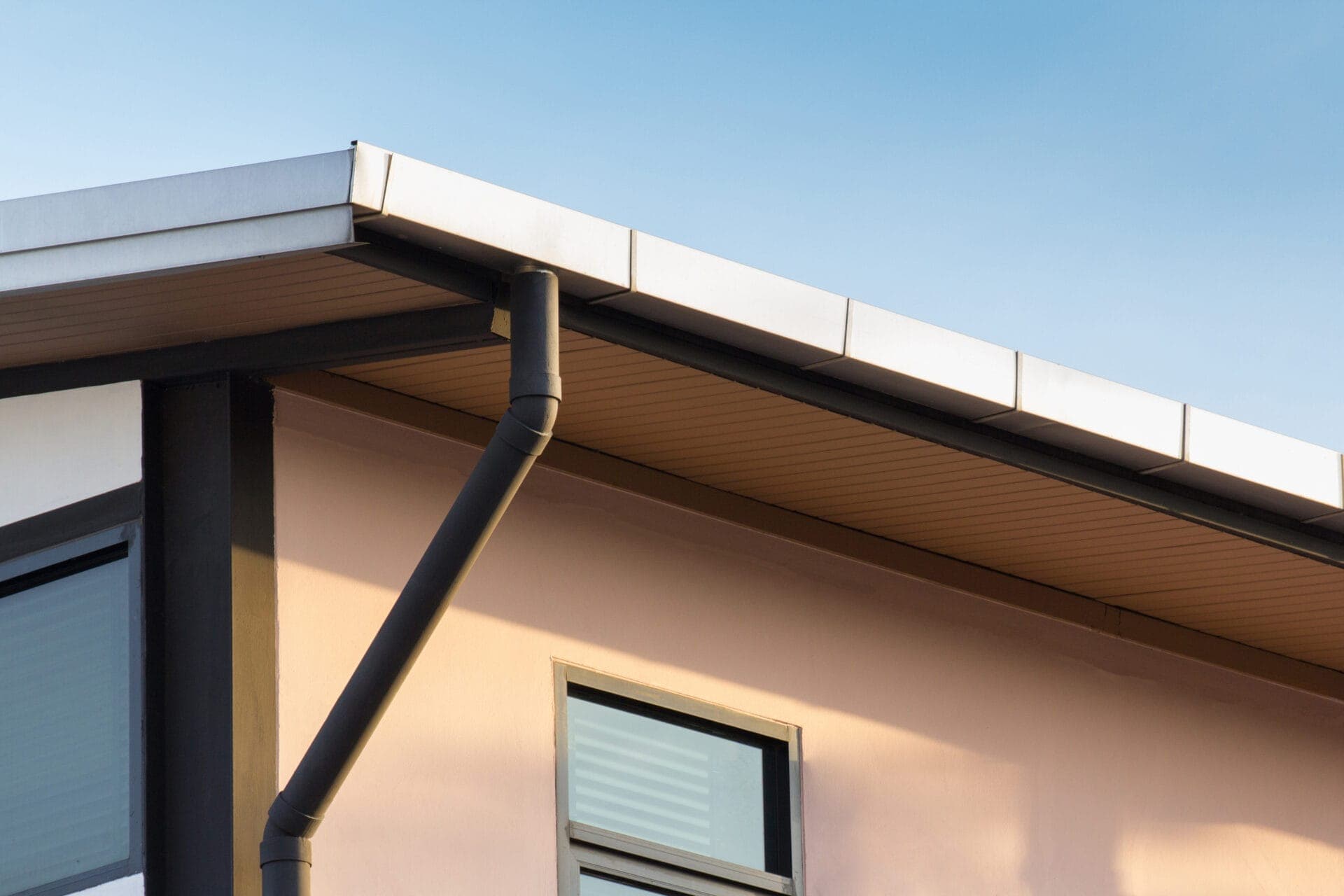
Box Gutter Solutions for Commercial Roofs in Central Florida
Complete guide to box gutter systems for commercial flat roofs in Central Florida. Types, materials, sizing for Florida rainfall, common problems, repair costs, and maintenance. Call (352) 605-0696.
Read ArticleReady When You Are
Get your free roof inspection today.
No-pressure, written estimate. Same-week scheduling across Hernando County. Call us now or request a visit online.