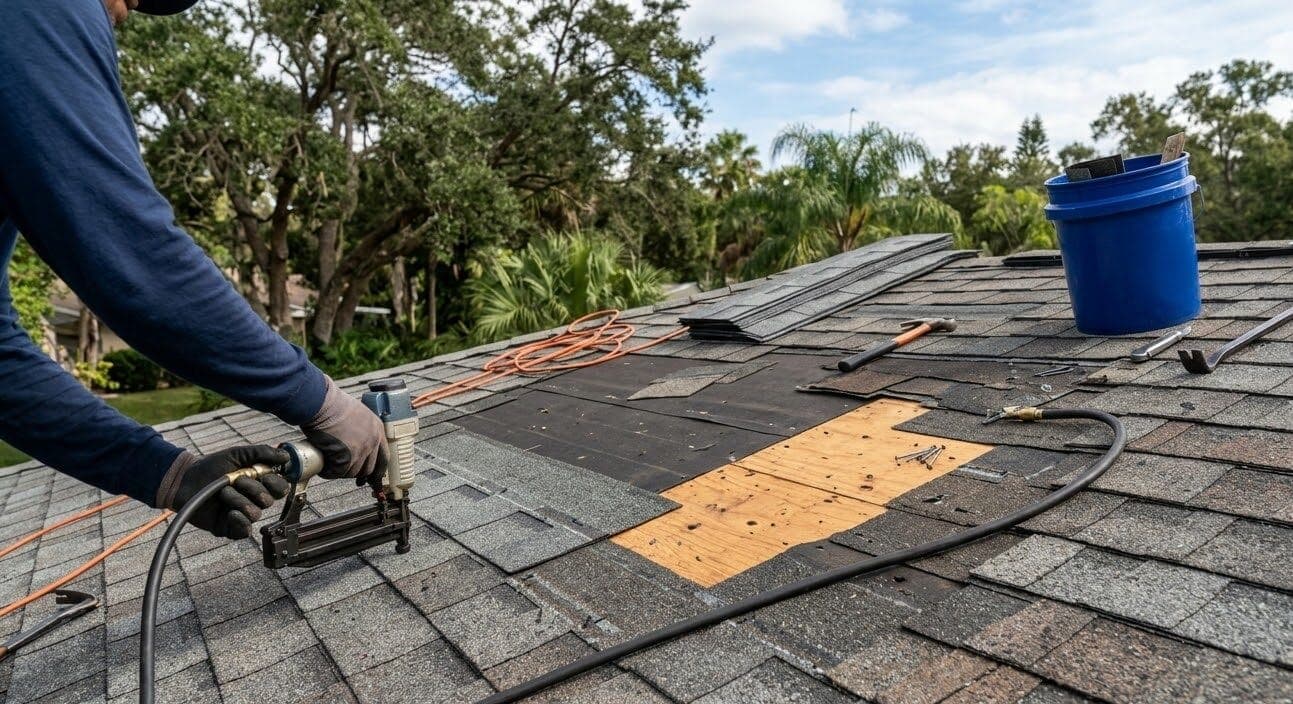
Tampa, FL
Roof Repair in Tampa, FL
Roof repair in Tampa, FL. Post-Milton leaks, tile cracks, flashing and shingle fixes across Hyde Park to New Tampa. Call (352) 605-0696.
Call (352) 605-0696Protech Roofing Services handles roof repair for Tampa homeowners across Hyde Park, Seminole Heights, Davis Islands, Tampa Palms, Westshore, and everything in between. Our trucks run Tampa routes out of Brooksville every week, and we have been tracking the city's post-Milton repair patterns street by street since October 2024. Whether you are staring at a fresh ceiling stain, a missing ridge cap, a cracked Spanish tile, or a rusted flashing joint on Bayshore Boulevard, call (352) 605-0696 for a free inspection and a written quote.
You Are Viewing
Roof Repair for homeowners and businesses in Tampa, part of Hillsborough County, FL, Florida.
Where Tampa Leaks Actually Start
If you searched for roof repair in Tampa, FL, you are probably staring at a ceiling stain, a dripping light fixture, or a pile of granules in a downspout. We have been fixing roofs in Tampa and the rest of Hillsborough County since 2008, and the truth most homeowners do not hear is that the stain on the ceiling is rarely directly under the leak. Water runs along rafters, follows the underside of decking, pools on drywall, and then shows up three feet away from where it actually entered. So when we get a repair call from Hyde Park, Westshore, or Tampa Palms, the first thing we do is not climb the roof. We read the ceiling.
On Tampa homes, the top five leak entry points in our own service log are cracked pipe boots around plumbing vents, separated flashing where the roof meets a chimney or wall, missing ridge caps blown off during Hurricane Milton, tile slips on older Spanish-style roofs, and nail pops that lift shingles just enough for wind-driven rain to get under the tab. A professional roof repair in Tampa, FL starts with a full photo survey of the roof surface, then a chalk-and-hose test if the entry point is not obvious from above. We write the report, we give you the photos, and we quote only what the roof actually needs. Call (352) 605-0696 and we will have a truck out to your Tampa address this week.
The 12 inches of rain that Milton dumped on Tampa on October 9, 2024 found every weak seam in the city. A year and a half later, we are still catching leaks that were not reported at the time because the homeowner thought the stain was old. It is not. If you have a new discoloration on a ceiling or a wall that did not exist before October 2024, it is a post-Milton leak and the damage is growing every storm.
Post-Milton Repair Patterns We See Across Tampa
Milton was a Category 3 at landfall at Siesta Key with 120 mph sustained winds, and Tampa Bay took a 6 to 9 foot storm surge. Wind patterns across the city were not uniform. Homes on the east side of Bayshore Boulevard and the west side of Davis Islands saw the strongest gusts. Neighborhoods east of I-275 like Seminole Heights and Tampa Heights saw less wind but more oak-limb impact damage because the century-old canopy there is not going anywhere. Tampa Palms and New Tampa were far enough inland that the bigger issue was prolonged wind-driven rain, which pushed moisture sideways under tile and shingle laps.
What that meant in our repair log: South Tampa calls were heavy on tile slips and underlayment saturation. Central Tampa calls were heavy on limb punctures and soffit damage. North Tampa calls were heavy on underlayment failure and valley leaks. When we schedule a repair visit, we already have a shortlist of the most likely issues based on the address and the roof type, which is how we keep inspection time on the homeowner's side of an hour and not half a day.
Two specific failures have become our most common post-Milton repair: lifted ridge caps on 12 to 18 year old architectural shingle roofs, and cracked Spanish S-tile at the ridge on older Hyde Park and Palma Ceia homes. Both are fixable without a full replacement if caught within a season or two. Both will escalate into replacement territory if ignored another hurricane season.
Tile Repair in Hyde Park and Davis Islands
Tampa's wealthiest neighborhoods wear tile for a reason. Clay and concrete tile handle salt air, shed water fast, and can last 40 or 50 years if the underlayment is right. But tile is heavy and brittle, and a single cracked piece on a Mediterranean-Revival home in Davis Islands can put thousands of dollars of water into the decking over a single rainy season. The trick with tile repair is that you almost never replace just the cracked piece. You lift the surrounding tiles, pull the damaged one, check the felt underlayment and batten beneath it, repair the underlayment if needed, and set a matching tile back in place with the correct foam adhesive and mechanical attachment.
Matching tile is the other challenge. An original 1920s Hyde Park home might have a tile profile that is no longer in production. We keep relationships with three Tampa-area salvage yards and two custom tile fabricators who can match or cast replacements. For homeowners who want to skip the hunt, we also offer color-matched concrete tile that passes historic district design review for most Hyde Park blocks. The goal is that the repair is invisible from the street and watertight from above.
One note specific to Davis Islands and Harbour Island: the salt air coming off Seddon Channel and Hillsborough Bay eats steel fasteners. When we repair tile here, we default to stainless or copper nails and clips on every penetration. If your existing tile was set with galvanized fasteners in the 1990s or earlier, we usually find rust bleed at the battens when we open the roof. That is an easy fix during a repair visit and a much bigger fix if it gets ignored until the next full replacement.
Flashing and Fastener Corrosion Near Tampa Bay
Chloride salt deposits from the bay do not just attack tile fasteners. They attack every metal component on a roof. Step flashing at chimneys and walls, drip edge along the eaves, vent stack collars, and the nails holding shingles down all lose life span when a home sits within a mile of salt water. Ballast Point, Bayshore Beautiful, Harbour Island, Davis Islands, and parts of Westshore all fall into this zone, and we run different repair specifications in these neighborhoods than we do inland.
On a coastal Tampa repair, we replace galvanized flashing with aluminum or stainless. We swap exposed fasteners for copper or stainless. We check the drip edge for pinhole corrosion along the bottom lip, which is a common failure point that shows up as water streaks on the fascia board. And we reseal every flashing joint with a polyurethane or silicone sealant rated for marine exposure, not the standard roofing caulk that holds up fine in Brandon but fails in two years on Bayshore.
Fastener corrosion is often the real reason a shingle tab keeps lifting. The nail has rusted enough to lose its grip on the deck, and the wind does the rest. If your roof is over 10 years old and within sight of the bay, a fastener check should be part of any repair quote. We document every failed fastener with photos and replace them with coated or stainless options rated for the Florida Product Approval requirement in Hillsborough.
Shingle Repair in Seminole Heights and Tampa's Bungalow Belt
Seminole Heights, Tampa Heights, and the blocks near Sulphur Springs still have a heavy population of 1920s to 1940s bungalows with newer asphalt shingle roofs on top of original plank decking. These are some of our favorite repair calls because the fixes are usually straightforward and the homeowners care about the work. The most common issue on these bungalows is wind-lifted shingles on the front-facing slope after any storm with gusts over 50 mph. Three tab shingles on homes re-roofed in the early 2010s are especially vulnerable because the adhesive strips have degraded enough that the original 110 mph rating no longer holds.
Our shingle repair process on a bungalow starts with a hand-seal test on the surrounding tabs. If tabs on the same slope lift with light pressure, we are looking at an entire slope re-seal or a full replacement, not a spot repair. If the lifted area is isolated, we replace the damaged tabs with a matching product, re-nail with the six-nail Hillsborough 130 mph pattern, and hand-seal the new tabs with roofing cement to force-cure the adhesive strip. On an older home with plank decking, we also check for nail-pop damage at the plank edges because planks expand and contract more than modern plywood and can telegraph through the shingle tabs as visible ridges.
Oak canopy adds another wrinkle. Seminole Heights and the older blocks of Tampa Heights have heavy oak overhead, and falling limbs during summer storms and hurricane season punch shingles or crack decking on a regular basis. Limb impact repair is often bigger than it looks from the ground because the impact compresses the decking fibers around the puncture point and weakens the nail grip across a wider area. We always pull back the surrounding shingles to check the deck when we repair a limb strike.
When Tampa Roof Repair Stops Making Sense
Every repair call eventually reaches a threshold where replacement is the smarter money. In Tampa, that threshold arrives earlier than in inland Florida because of the combination of humidity, UV intensity, salt air, and hurricane exposure. Here is how we think about it on the roof during an inspection.
Repair makes sense when the damage is localized, under 25 percent of the roof slope, and the surrounding material still has five or more years of useful life. A wind-torn section on a seven year old architectural shingle roof is a repair. A cracked vent boot on a 10 year old roof is a repair. A few slipped tiles on a 20 year old tile roof with good underlayment is a repair.
Replacement makes sense when the damage is widespread, when the surrounding material is past its rated lifespan, or when the insurance non-renewal threshold is already looming. Tampa shingle roofs that hit 20 years are usually in the replacement conversation whether or not they have a visible leak, because Citizens and most private carriers now treat 25 years as the formal cutoff for shingle coverage and inspectors routinely flag roofs two to three years before that line. Tile, slate, metal, and concrete get 50 years, which is why Tampa's higher-end neighborhoods default to tile and never look back.
If an insurance inspector has already visited your Tampa home and the carrier is asking for documentation, we can help. We write condition reports and photo surveys for insurance appeals at no charge for our customers. The goal is a repair quote that gets the roof back to insurable condition without pushing you into a replacement you do not need yet. And when replacement is the right call, we say so plainly and document why.
More in this area
Other roofing services in Tampa
FAQ
Frequently Asked Questions
How much does roof repair cost in Tampa, FL?
+
Do I need a permit for a roof repair in Tampa?
+
Can you still fix Hurricane Milton damage on my Tampa roof?
+
My insurance company inspected my Tampa roof and said I need repairs. Can you help?
+
How fast can Protech get to a Tampa roof emergency?
+
From the Blog
Stay informed about roofing in Florida.
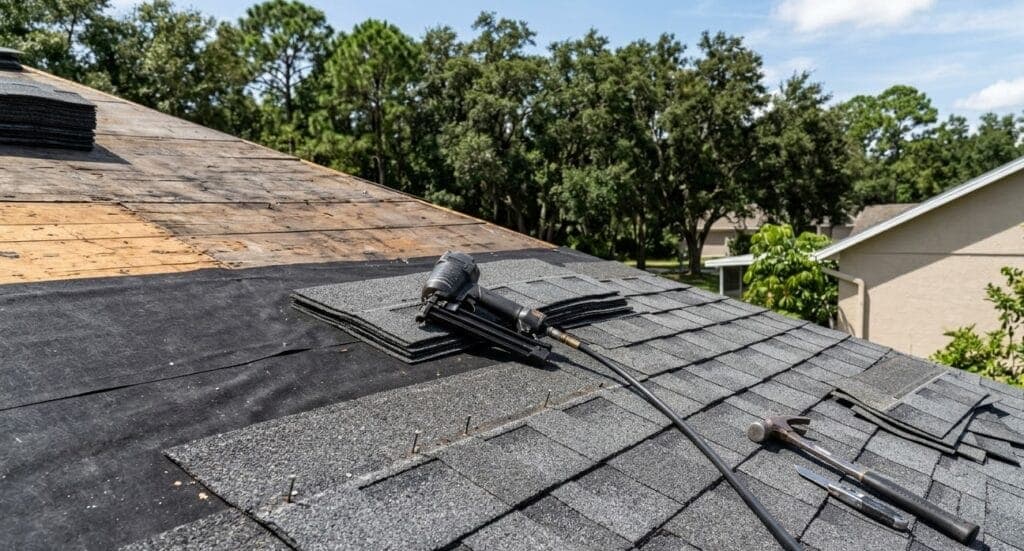
Roofing Warranties in Florida: What Voids Them
A new Florida roof usually carries two warranties: one from the manufacturer for the product and one from the contractor for the installation. Here is what each covers, what quietly voids them and how to keep your coverage.
Read Article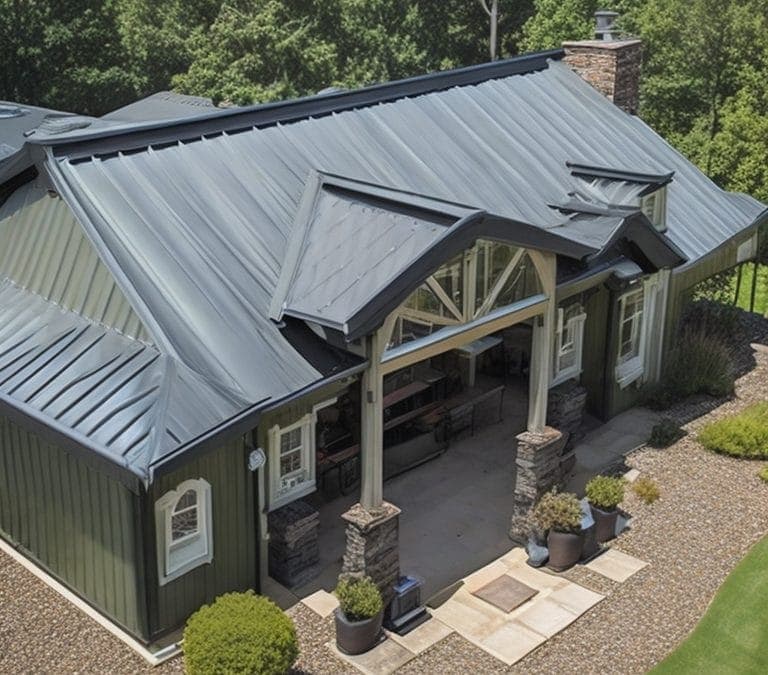
Best Roof Color for Florida Heat: Cool Roofs Explained
Florida test homes show a white shingle saves only 3 to 5 percent on cooling while reflective white metal or tile saves 18 to 26 percent. Here is how to choose a roof color that actually keeps your attic cooler.
Read Article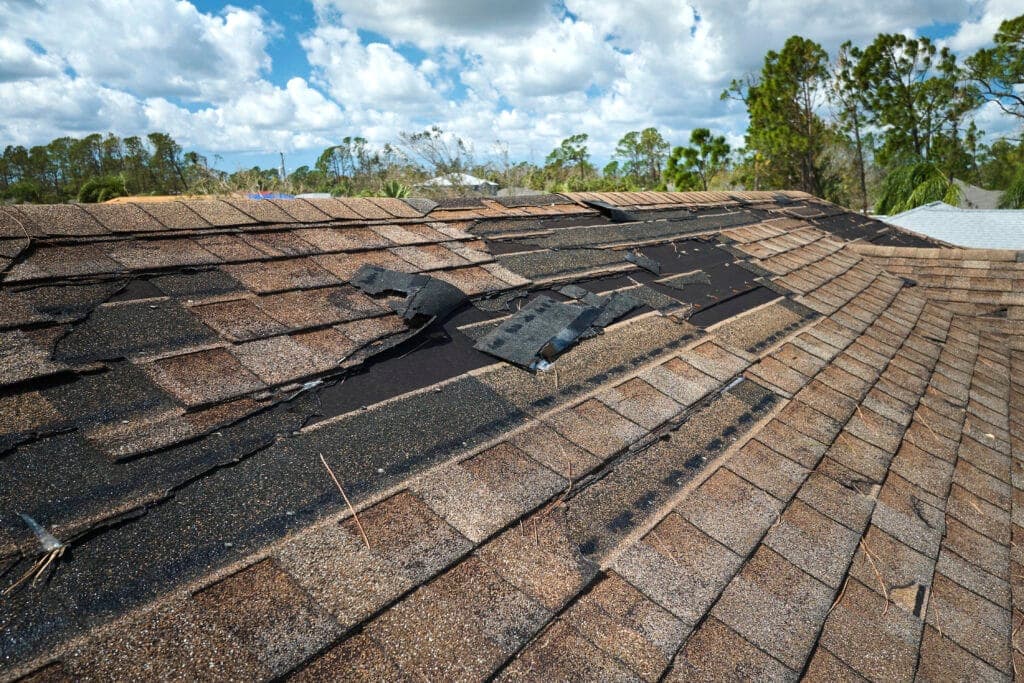
Roof Underlayment in Florida: The Hidden Layer Explained
Underlayment is the layer that decides what happens to your house when wind strips the shingles. Here is how felt, synthetic and peel-and-stick compare, what Florida code requires on a re-roof, and what each option costs in 2026.
Read ArticleReady When You Are
Get your free roof inspection today.
No-pressure, written estimate. Same-week scheduling across Hernando County. Call us now or request a visit online.