How long does a roof last in Central Florida?
+
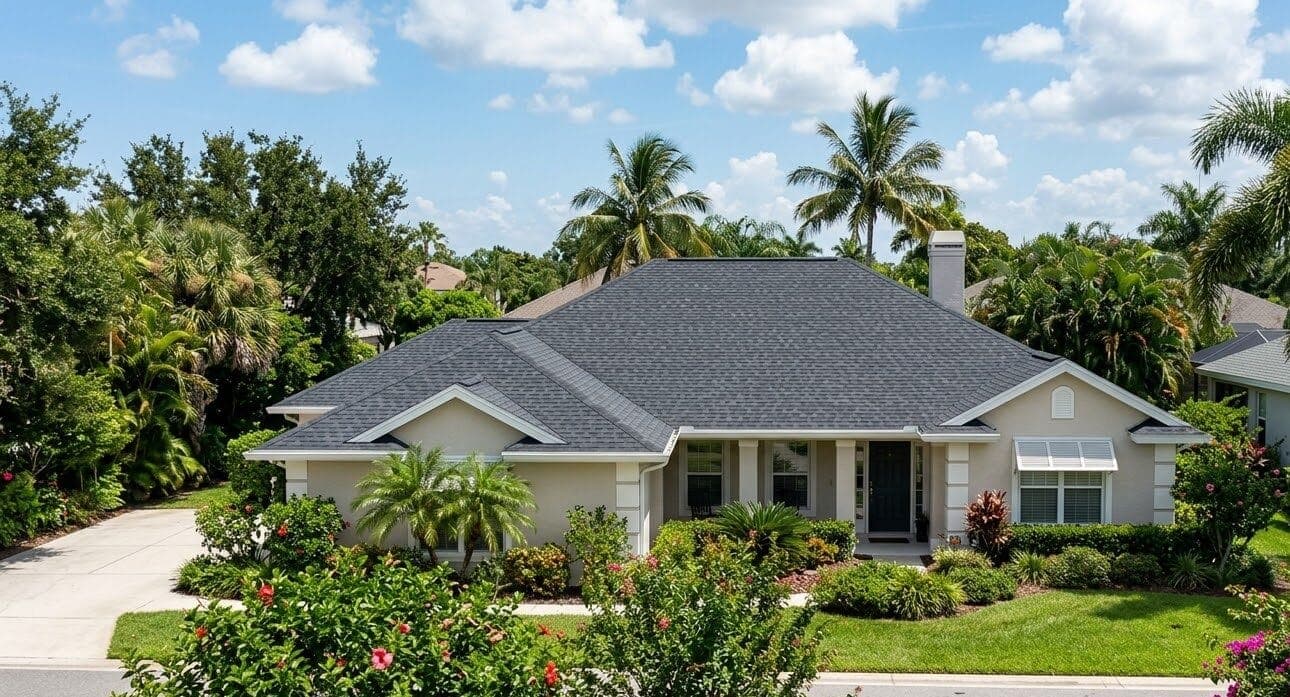
Architectural shingles last 15 to 20 years in Florida, compared to 20 to 30 years nationally. Metal roofing holds 40 to 50 years and is the only material that keeps close to its full rated lifespan here. Concrete tile lasts 40 to 50 years for the tiles themselves, but the underlayment beneath fails at 15 to 20 years and must be replaced separately. Flat roofing systems like TPO and modified bitumen last 15 to 25 years. The shorter Florida lifespans are caused by UV radiation running 30 to 60 percent above the national average, roof surface temperatures reaching 150 to 170 degrees, and persistent humidity averaging 75 percent year-round.
What is the best roofing material for Florida homes?
+
For long-term value and hurricane protection,
standing seam metal roofing is the strongest choice. It lasts 40 to 50 years, resists winds up to 180 mph, requires virtually no maintenance, and qualifies for the highest insurance discounts available. For homeowners on a tighter budget, architectural shingles rated for 130 mph winds provide solid protection at roughly half the cost. Stone coated steel tile offers a middle ground with tile aesthetics and metal performance.
Are 3-tab shingles still worth installing in Florida?
+
3-tab shingles are the cheapest option at $4,000 to $10,000 for a standard home, but they last only 10 to 15 years in Florida, carry lower wind ratings than architectural shingles, and do not qualify for the best insurance discounts. Most roofing contractors in Hernando County now recommend architectural shingles as the minimum standard. The cost difference between 3-tab and architectural is typically 30 to 40 percent, but architectural shingles last 50 percent longer, making them a better investment per year of service.
Is metal roofing worth the higher upfront cost?
+
For most Florida homeowners who plan to stay in their home 10 or more years, yes. Metal costs roughly twice as much as shingles upfront but lasts two to three times longer. Factor in zero maintenance, insurance premium reductions of 30 to 40 percent on the wind portion, energy savings of 15 to 25 percent from reflective surfaces, and the
My Safe Florida Home program grant of up to $10,000, and the lifetime cost of metal is often lower than replacing shingles multiple times.
Why does my tile roof leak when the tiles look fine?
+
Concrete and clay tiles can last 50 or more years, but the waterproofing underlayment beneath them degrades at 15 to 20 years in Florida conditions. Water passes between the tiles, through the failed underlayment, and into the roof deck. The tiles look perfect from the street while the structure underneath is deteriorating. The fix is a tile-off and re-lay: removing every tile, replacing the underlayment, and reinstalling the tiles. This costs nearly as much as a full replacement with new tiles.
How much does a roof replacement cost in Florida in 2026?
+
For a standard 2,000 square foot home in Hernando County: architectural shingles cost $10,000 to $18,000, standing seam metal costs $24,000 to $46,000, concrete tile costs $14,000 to $38,000, and stone coated steel costs $20,000 to $38,000. The most common project we complete, an architectural shingle replacement with single tear-off and minor deck repair, falls between $12,000 and $16,000. See our full
2026 pricing guide for detailed cost tables.
How do I know if I need a repair or a full replacement?
+
Repair makes sense when damage covers less than 20 percent of the roof, the roof is under 15 years old, and the repair cost stays below 30 percent of replacement cost. Replace when the roof has exceeded its expected Florida lifespan, damage is widespread, repair costs exceed 50 percent of replacement, or you see signs of deck deterioration like sagging or multiple interior water stains. Florida Building Code Section 553.844 also requires a full code upgrade if more than 25 percent of the roof is repaired in a 12-month period. Our
repair vs. replacement guide breaks down the full decision framework.
What is the Florida 25% roofing rule?
+
Florida Building Code Section 553.844 states that if more than 25 percent of the total roof area is repaired, replaced, or recovered in any 12-month period, the entire roof must be brought up to current code. For homes built before March 2009, this means a full code upgrade including new underlayment, upgraded fastening patterns, and potentially secondary water resistance. This rule often tips the repair-vs-replacement decision toward full replacement because the code upgrade costs close to what a new roof would cost anyway.
How long does a roof replacement take?
+
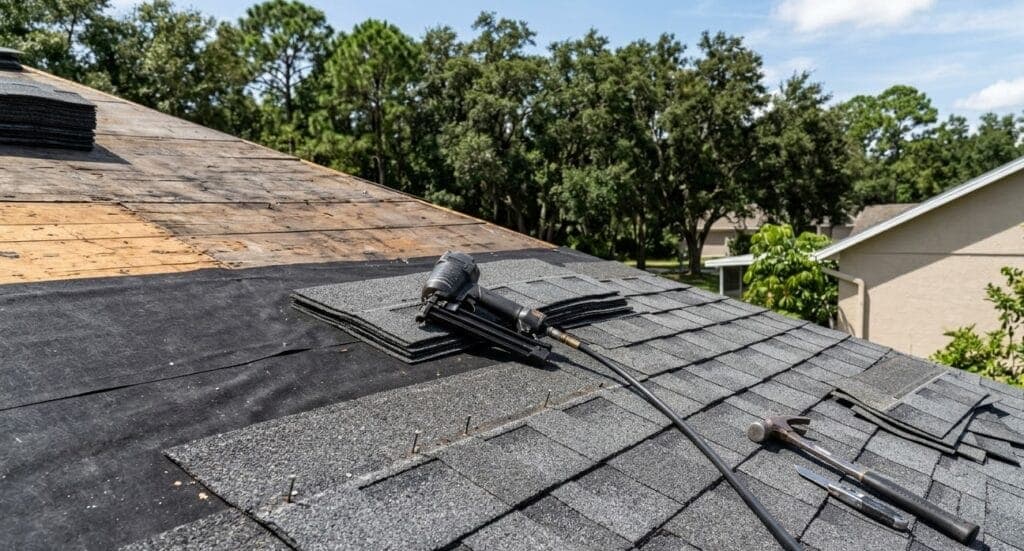
Most residential shingle replacements take 1 to 2 days. Metal roofing takes 3 to 5 days. Tile takes 3 to 5 days. Weather delays can extend the timeline during summer when afternoon storms are common. We schedule around weather forecasts and typically avoid starting new projects during active storm warnings. Permits are pulled before work begins and final building inspection is coordinated by our team.
Does Florida insurance cover roof replacement?
+
Insurance covers damage from covered perils like hurricanes, windstorms, hail, and fallen trees. Normal wear and aging are not covered. Many Florida policies now pay actual cash value (depreciated amount) for roofs over 10 to 15 years old rather than full replacement cost. A 15-year-old shingle roof may receive only 25 percent of its replacement cost under ACV coverage. Our
insurance claims team helps maximize settlements and navigate the process.
What is the 15-year roof rule in Florida?
+
Florida Statute 627.7011 prevents insurers from refusing coverage solely because of roof age if the roof is under 15 years old. After 15 years, carriers can require an inspection and proof that the roof has at least 5 years of remaining useful life. If the inspector determines your roof does not meet that standard, the carrier can non-renew your policy. Citizens Property Insurance considers shingle roofs “old” at 25 years and requires at least 3 years remaining life. Replacing your roof resets the clock with your insurer.
Can I finance a new roof with bad credit?
+
Yes. Our
financing partners work with a broad range of credit profiles. Many homeowners with scores in the 500s and 600s have been approved. The initial application uses a soft credit pull that does not affect your score. Terms range from 12 to 144 months with no money down. Monthly payments on a $15,000 replacement start around $142 on a 144-month term.
What is the My Safe Florida Home program?
+
A state-funded program that provides free wind mitigation inspections and matching grants up to $10,000 for hurricane-hardening improvements including roof replacement with secondary water resistance. The state pays $2 for every $1 you spend. Low-income homeowners can receive the full $10,000 with no matching requirement. The Legislature allocated $280 million for the 2025-2026 cycle. Most homes in Hernando County built before 2008 qualify. See our full
My Safe Florida Home guide.
How much is my hurricane deductible?
+
Most Florida policies have a separate hurricane deductible of 2 percent of your dwelling coverage (Coverage A). On a home insured for $300,000, the hurricane deductible is $6,000. Damage must exceed that amount before the policy pays. Some policies offer flat dollar deductible options like $2,500 or $5,000 at a higher premium. Check your declarations page or ask your agent which type applies to your policy.
How do hurricanes damage roofs?
+
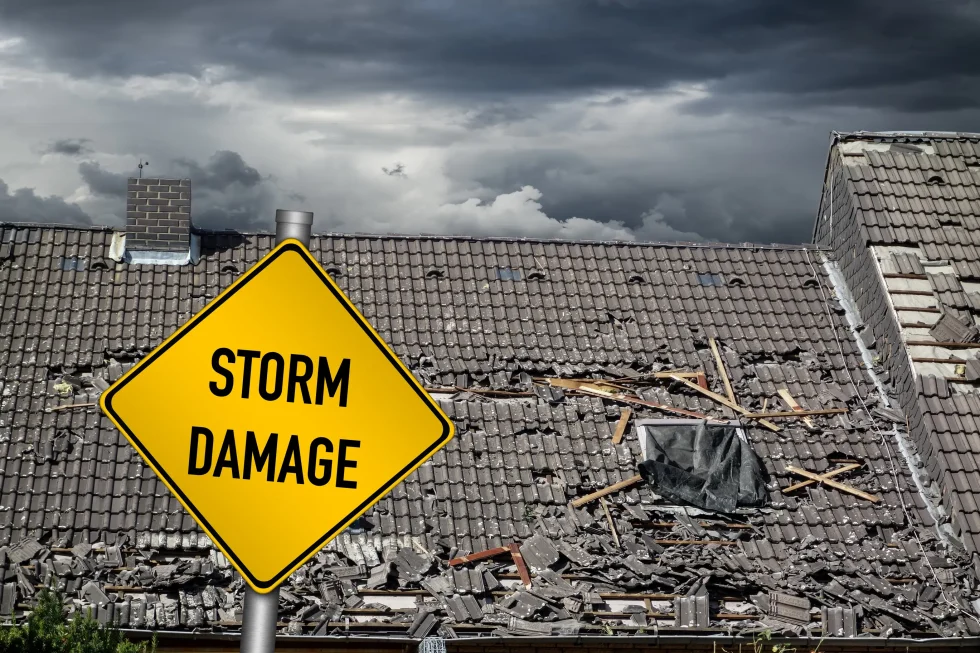
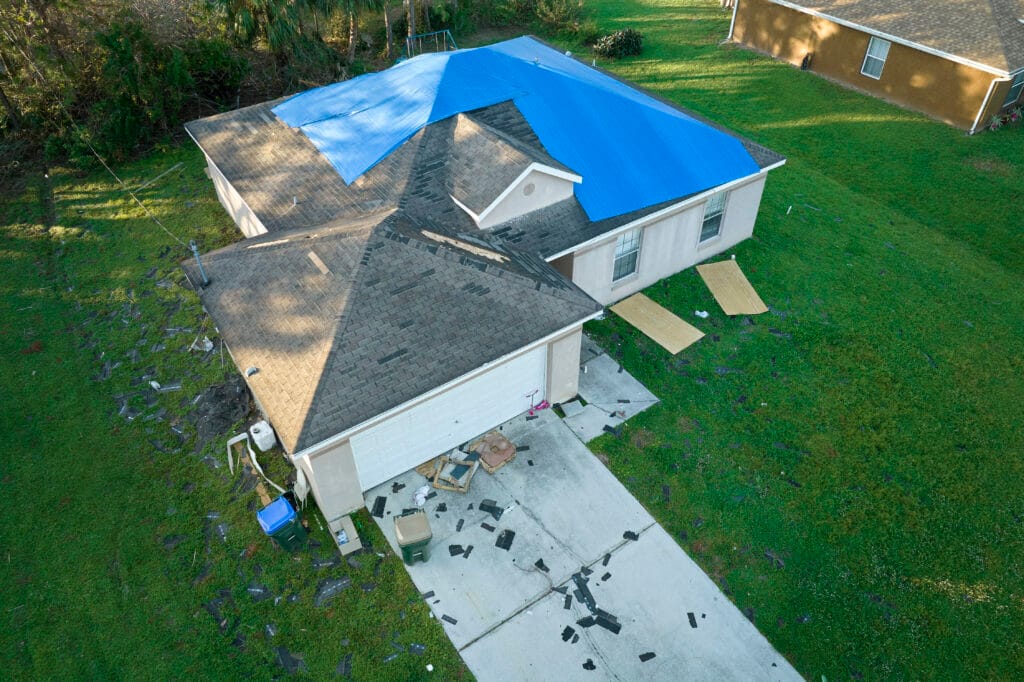
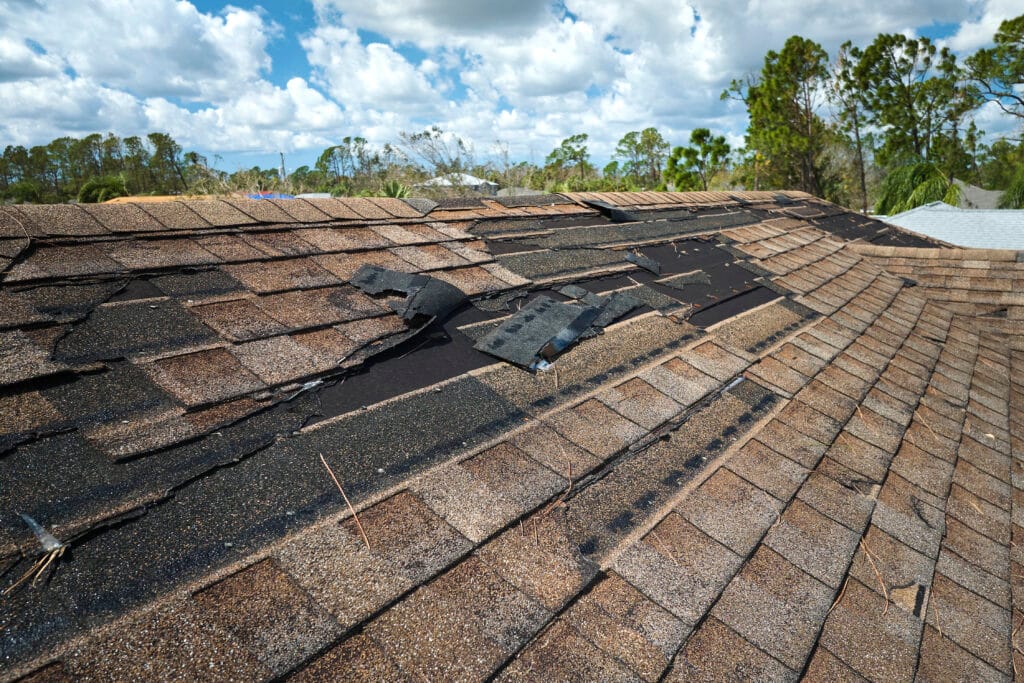
Hurricanes attack roofs through three mechanisms: wind uplift that peels off shingles and panels, wind-driven rain that forces water through gaps and damaged flashing, and flying debris that punctures or shatters roof covering. Much of the damage is invisible from the ground. Wind loosens fasteners and breaks adhesive seals between shingle layers without removing them. These hidden failures cause leaks weeks or months after the storm when normal rain exploits the weakened areas. Read our detailed
hurricane damage guide.
Should I inspect my roof after every storm?
+
After any named storm (tropical storm or hurricane) that passes within 50 miles, yes. For regular thunderstorms, a visual check from the ground after unusually strong events is sufficient. Professional inspections should happen at least once per year before hurricane season in May. Post-storm inspections catch loosened fasteners, broken adhesive seals, and bent flashing before they turn into active leaks.
What should I do immediately after storm damage?
+
First, document everything with photos from multiple angles before any repairs. Second, call for
emergency tarping to prevent additional water damage. Third, file your insurance claim promptly. Fourth, schedule a professional inspection that covers the entire roof, not just visible damage. Do not sign contracts with storm chasers who knock on your door. Get multiple estimates from licensed local contractors.
Which roof type survives hurricanes best?
+
Standing seam metal has the lowest hurricane failure rate of any residential material, rated for 140 to 180 mph winds. The interlocking panels give wind no entry point. Properly clipped concrete tile handles 150 mph due to its weight and mechanical fastening. Architectural shingles handle 110 to 130 mph but have the highest failure rate in strong storms because individual tabs can lift once the adhesive seal breaks. See our full
hurricane roof comparison.
How often should I have my roof inspected?
+
At minimum once per year. In Hernando County, we recommend twice: before hurricane season in May and after it ends in November. Add an inspection after any named storm within 50 miles, before selling your home, and whenever you notice interior signs like water stains or musty smells. A professional inspector catches problems invisible from the ground: pipe boot cracks, lifted flashing, nail pops, and early deck moisture.
What is a wind mitigation inspection?
+
A wind mitigation inspection evaluates seven features that affect your home’s hurricane resistance: roof covering type, roof deck attachment method, roof-to-wall connections, roof geometry, secondary water resistance, opening protection, and opening protection type. The results determine your eligibility for insurance discounts that can reduce the wind portion of your premium by 30 to 40 percent. The inspection costs $75 to $150 if done privately, but is free through the
My Safe Florida Home program.
Can regular maintenance really extend my roof's life?
+
Yes. Annual inspections and prompt repairs add 3 to 5 years to shingle roofs and 5 to 10 years to tile and metal systems. The three highest-impact actions: keep the roof clear of debris (trapped moisture accelerates deterioration), maintain proper attic ventilation (reduces heat buildup that cooks shingles from beneath), and fix small problems immediately (a $300 repair today prevents a $3,000 repair next year). Our
maintenance programs handle all three on a semi-annual schedule.
What are the warning signs my roof needs attention?
+
Exterior signs: granule buildup in gutters, curling or cupping shingles, missing shingles or tiles, dark algae streaks, visible sagging or dips in the roofline, cracked or displaced flashing. Interior signs: water stains on ceilings (especially after rain), daylight visible through attic boards, musty smell in upper rooms, rising energy bills. If you notice three or more of these signs, the roof needs professional evaluation, not just a patch.
How do I verify a roofing contractor's license in Florida?
+
Search by name or company at myfloridalicense.com. The license should start with CCC (certified roofing contractor) or CC (registered roofing contractor). A general contractor license does not authorize roofing work in Florida. Verify the license is active, check for disciplinary actions, and confirm the contractor is registered with your county building department to pull local permits. If they cannot provide a verifiable license number, walk away.
What insurance should my roofer carry?
+
General liability insurance (covers damage to your property from their work) and workers compensation insurance (covers crew injuries on your property). Request current certificates and verify directly with the insurance company. If a worker falls and the contractor lacks workers comp, Florida law may hold you liable for medical bills. Never let work begin without verified coverage.
What certifications matter for Florida roofers?
+
GAF Master Elite, Owens Corning Preferred, or CertainTeed SELECT ShingleMaster certifications demonstrate manufacturer-level training and quality standards. These certifications directly affect your warranty. A GAF-certified contractor can offer the Golden Pledge warranty covering materials and workmanship for up to 25 years. A non-certified installer using identical shingles can only offer the basic material warranty. HAAG certification indicates forensic storm damage assessment expertise, valuable for insurance claims.
How do I avoid roofing scams after a storm?
+
Never sign a contract with someone who knocks on your door after a hurricane. Never pay more than 30 percent upfront before work begins. Never accept a verbal estimate without a written line-item breakdown. Avoid “assignment of benefits” (AOB) clauses that transfer your insurance claim to the contractor. Verify licensing independently at myfloridalicense.com. Get at least three estimates from licensed local contractors. Legitimate roofers do not need to pressure you into signing the same day.
Why choose a local roofer over a national company?
+
Local contractors understand Hernando County permit requirements, building department timelines, and Florida Building Code specifics. Response times are faster for inspections and emergencies. They are accountable to the community they live in and are still here when warranty work is needed years later. Protech has been headquartered in Hernando County since 2008 with Florida license CCC1335878, GAF certification, and HAAG inspection credentials.
Does Protech Roofing offer free estimates?
+
Yes. Every estimate is free, no-obligation, and includes a detailed written breakdown of materials, labor, tear-off, deck repair, permits, and cleanup. We also provide free roof condition assessments. Call (352) 605-0696 or visit our
contact page to schedule.
What areas does Protech Roofing serve?
+
We serve seven counties across Central Florida: Hernando County (Spring Hill, Brooksville, and 30+ communities), Pasco County (Hudson, Dade City), Citrus County (Inverness, Crystal River), Sumter County (The Villages, Bushnell), Polk County (Lakeland, Winter Haven), Hillsborough County (Tampa), and Pinellas County (St. Petersburg, Clearwater). Our headquarters is in Hernando County.
How do I prepare my home before the roofing crew arrives?
+
Move vehicles out of the driveway and away from the house. Take down wall decorations in rooms directly below the roof, as vibrations from tear-off can knock items loose. Cover belongings in the attic with tarps or move them to another room. Trim any bushes or plants tight against the house so the crew has access to the roof edge. Let your neighbors know about the project so they can move their vehicles if parked nearby.
Can I stay in my home during a roof replacement?
+
Yes. Most homeowners stay home during the project. The noise is significant during tear-off and nailing but typically lasts one to two days for shingle replacements. We maintain a secure work zone and your home stays protected throughout. If you have pets that are sensitive to noise, you may want to arrange for them to stay elsewhere during the loudest phase of tear-off.
What happens if it rains during my roof replacement?
+
We monitor weather forecasts closely and plan accordingly. If rain is predicted, we ensure every open section is sealed or tarped before the crew leaves for the day. We never leave a roof exposed overnight without protection. If an unexpected storm hits mid-project, we immediately deploy tarps and secure the work area. Florida afternoon thunderstorms are part of every summer roofing schedule and our crews are trained to manage them.
Does a new roof increase my home value?
+
Yes. Studies show a new roof recoups 60 to 70 percent of its cost at resale and can increase overall home value by up to 15 percent. In the current Florida market where buyers check roof age before making offers, a recent replacement eliminates one of the biggest objections and can be the difference between a quick sale and months on the market.
What warranty does Protech offer on roofing work?
+
Every project includes a workmanship warranty from Protech in addition to the manufacturer material warranty. As a GAF-certified contractor, we can offer the GAF Golden Pledge warranty covering both materials and workmanship for up to 25 years. Non-certified installers using the same shingles can only offer the basic material warranty with no labor coverage. The warranty details are included in writing with every estimate.
Do I need a permit for roof work in Hernando County?
+
Yes. Hernando County requires a building permit for all roof replacements and most significant repairs. The permit ensures the work meets Florida Building Code requirements and includes a final inspection by the county building department. Protech handles all permit applications, fee payments, and inspection scheduling. You do not need to visit the building department yourself.