Roof Repair Aripeka FL

roof repair in aripeka fl
Aripeka sits along the Gulf Coast of Hernando County where salt air and tropical storms put constant pressure on roofing materials across this small community of roughly 320 residents. Homes here face sustained winds that can reach 130 mph during hurricane season, making reliable roof repair essential for protecting coastal properties. Protech Roofing delivers expert roof repair in Aripeka, helping homeowners maintain strong, weather-resistant roofing systems built to handle the demands of waterfront living.

Coastal Roofing Challenges in Aripeka

Roof repair in Aripeka, FL comes with a unique set of challenges you won’t find in most Hernando County communities. This tiny Gulf Coast town of about 320 residents sits directly on the water, surrounded by marshes, natural springs, and salt air that’s constantly working against every roofing component on every home. Aripeka covers just 120 acres along the shoreline, and every property here gets the full force of Gulf weather without anything to buffer it.

The salt air is the biggest factor for Aripeka roofs. Salt accelerates corrosion on metal flashing, nail heads, and drip edge components at rates significantly faster than homes even 10 miles inland. We’ve seen flashing that would normally last 20 years fail in under 12 in Aripeka. Standard galvanized fasteners corrode faster here, and the adhesive strips on asphalt shingles break down quicker from the combination of salt, humidity, and UV exposure.

Aripeka straddles the county line between Hernando and Pasco counties, with South Hammock Creek Bridge serving as the dividing line. Which county your property sits in determines your building permit jurisdiction and inspection process. Most Aripeka properties on the Hernando side fall under the Hernando County Building Division.

Protech Roofing services Aripeka and understands the specific demands of coastal roof maintenance in this community. We use materials rated for salt-air environments and repair methods that account for the accelerated weathering these roofs experience.

How Salt Air and Gulf Storms Damage Aripeka Roofs

Living on the Gulf means your roof fights two enemies simultaneously: salt corrosion and direct storm exposure.

Salt doesn’t just rust metal. It also degrades the organic components in asphalt shingles. The petroleum-based compounds that give shingles their flexibility and waterproofing break down faster in salt-laden air. Shingles that might last 20 years in Brooksville may only give you 14 to 16 in Aripeka. You’ll notice granule loss happening earlier, and the shingles becoming brittle sooner than expected.

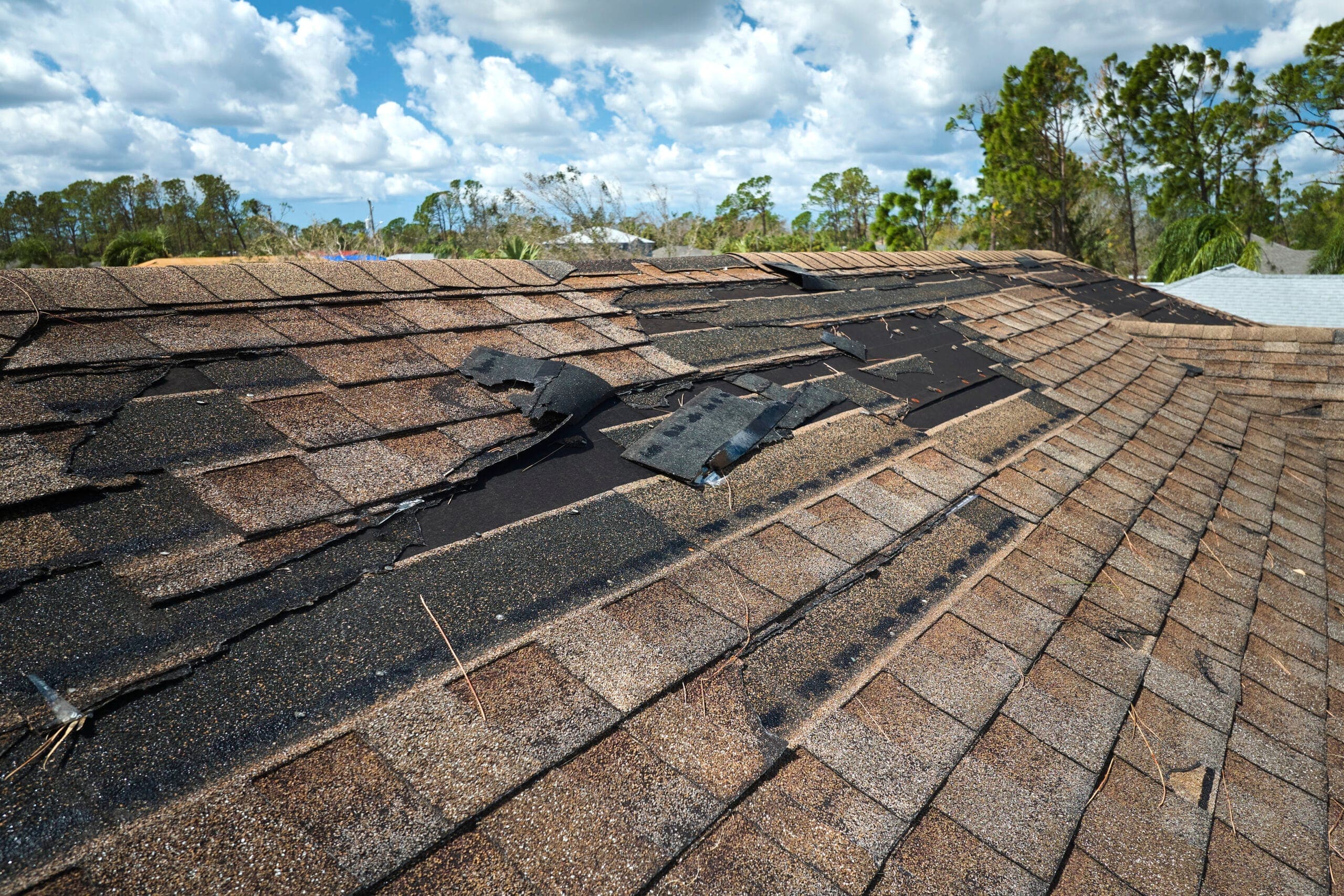
Storm exposure in Aripeka is more severe than inland communities because there’s no terrain or vegetation to break wind coming off the Gulf. During Hurricane Idalia in August 2023, coastal communities like Aripeka took the first hit before the storm moved inland. Even tropical storms that don’t make direct landfall push strong winds and rain across these Gulf-front properties.

Moisture is the constant companion. Between the Gulf humidity, the surrounding marshes, and the five natural freshwater springs in the area, Aripeka properties exist in a perpetually damp environment. Roofing materials that aren’t properly ventilated develop mold and algae growth on the underside faster than inland homes. Dark streaks on shingles from algae aren’t just cosmetic here. They trap moisture against the shingle surface and accelerate deterioration.

Wind-driven rain is another concern specific to waterfront properties. Standard rain falls vertically and runs off a pitched roof. Wind-driven rain during Gulf storms pushes water horizontally, finding entry points at flashing transitions, ridge vents, and under shingle edges that would be fine in normal rain. These lateral water intrusion paths are the source of many Aripeka roof leaks.

Common Repairs for Aripeka Waterfront Properties

The repair calls we get from Aripeka follow a consistent pattern tied to the coastal environment.

Flashing failures top the list. Metal flashing at wall transitions, chimney surrounds, and roof valleys corrodes faster in salt air. We recommend stainless steel or aluminum flashing for Aripeka homes instead of standard galvanized steel. The material costs slightly more, but the corrosion resistance in a coastal environment makes it last dramatically longer.

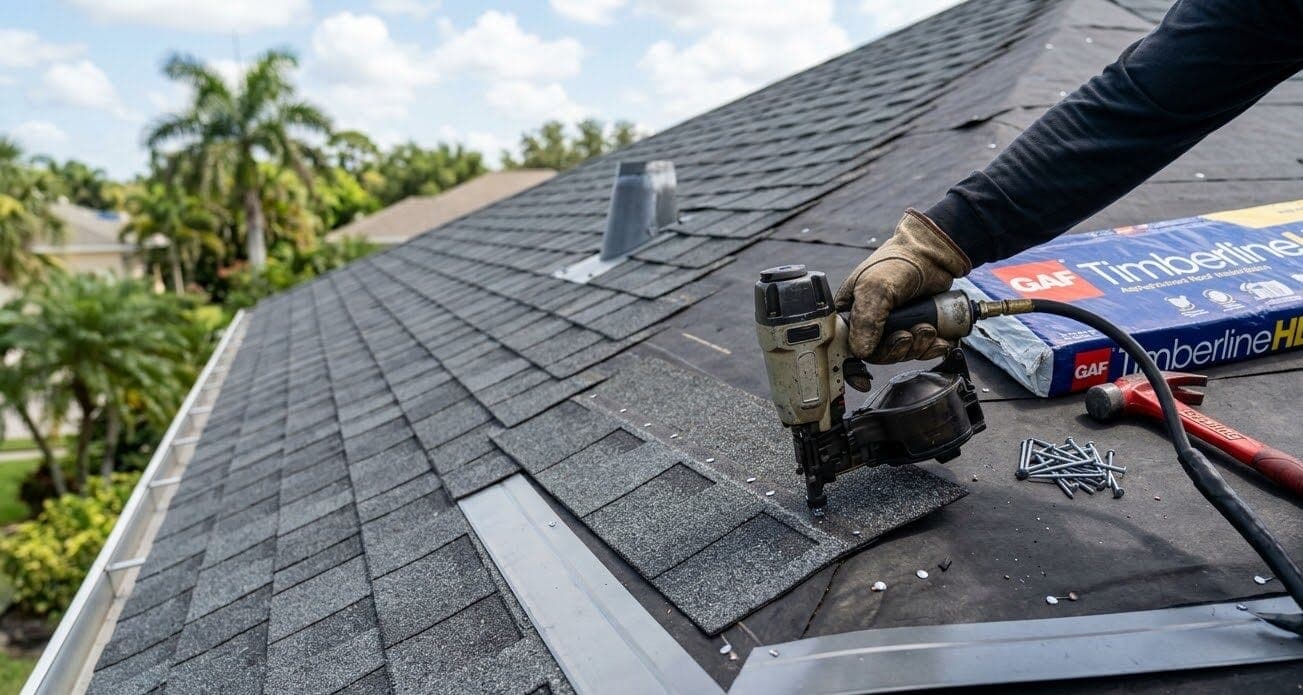
Fastener corrosion is common on homes where standard galvanized nails were used during the original installation or previous repairs. As nails corrode, they lose holding power. Shingles that were properly fastened when installed gradually loosen as the nail shafts thin from rust. During a storm, these weakened fasteners let go, and shingles blow off in sections. We replace corroded fasteners with stainless steel ring-shank nails when doing repairs in Aripeka.

Ridge cap and hip cap failures happen frequently because these components sit at the highest points of the roof where wind exposure is greatest. Combined with salt degradation of adhesive strips, ridge caps on Aripeka homes tend to fail sooner than on inland properties.

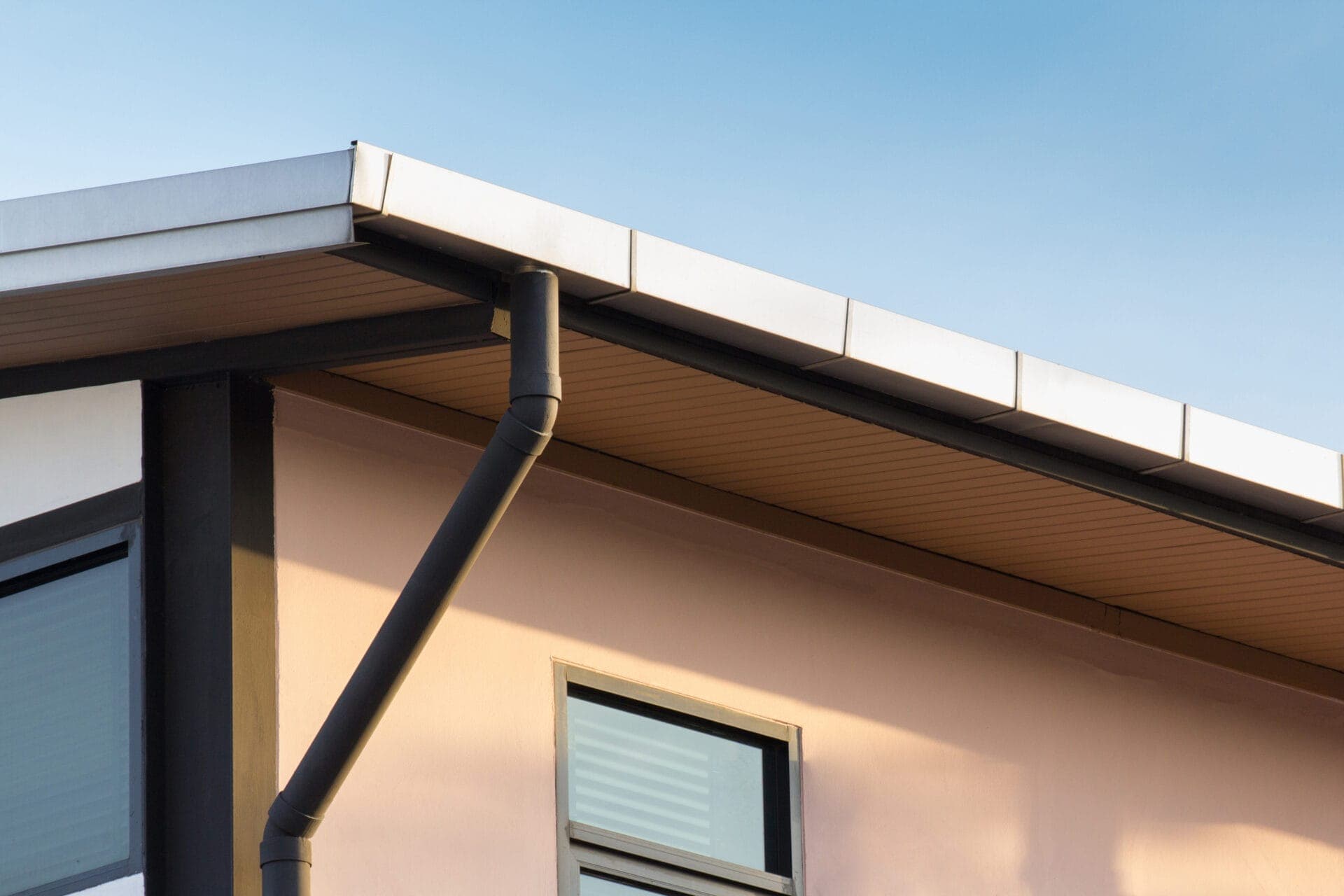
Soffit and fascia damage from salt air and wind-driven rain is another regular repair. Aluminum soffit panels resist corrosion well, but the mounting hardware corrodes, loosening panels that then flap in wind and eventually detach. Wood fascia boards absorb moisture from the humid environment and rot if not properly sealed and maintained.

Permits and Building Code for Aripeka Roof Work

Because Aripeka spans two counties, knowing which jurisdiction covers your property is essential before any roof work begins. Properties north of South Hammock Creek Bridge fall under Hernando County. Properties south of the bridge fall under Pasco County.

For Hernando County properties, roofing permits go through the Building Division at 789 Providence Boulevard in Brooksville. The process is the same as for any Hernando County property: submit the application with Florida Product Approval documentation for the roofing materials, wait for approval (typically 1 to 3 business days), complete the work, and schedule the final inspection.

Aripeka sits in the 130 mph basic wind speed zone due to its coastal exposure, which is higher than the 120 mph zone that applies to most of inland Hernando County. This means roofing products need a higher wind rating. Make sure any contractor working on your Aripeka roof is using materials approved for the 130 mph zone, not the 120 mph zone they might be using on jobs 10 miles inland.

The higher wind zone requirement applies to every component, not just shingles. Underlayment, flashing, drip edge, and fasteners all need to meet the enhanced specifications. Protech Roofing verifies product ratings for the specific wind zone before pulling any Aripeka permit.

Insurance Considerations for Aripeka Coastal Properties

Insuring a waterfront property in Aripeka costs more than insuring an inland home, and the roof condition plays a major role in determining your premium and eligibility. Many Florida carriers apply coastal surcharges, and an aging roof on a coastal property is one of the fastest ways to trigger a non-renewal notice.

Wind mitigation discounts are especially valuable for Aripeka homeowners because the base premiums are higher. A 20 percent wind mitigation discount on a $5,000 annual premium saves $1,000 per year. After any roof work, getting a wind mitigation reinspection is worth the $100 to $125 cost.

Storm damage claims in coastal areas like Aripeka receive extra scrutiny from adjusters. Insurers know coastal properties take more weather damage, and they want to verify that reported damage is from a specific storm event rather than ongoing wear from the marine environment. Professional damage documentation from a licensed roofer helps establish that the damage is storm-related and covered under your policy.

If you’re having trouble finding coverage for your Aripeka property, keeping your roof in good repair condition is one of the strongest moves you can make. Carriers are more willing to write policies on coastal homes with recently repaired or replaced roofs in documented good condition.

Repair Costs for Aripeka Properties

Repair costs in Aripeka tend to run slightly higher than inland Hernando County because of the upgraded materials we recommend for coastal environments.

Shingle replacement: $250 to $900 depending on the area affected. We use shingles with algae-resistant granules and enhanced adhesive ratings when available for coastal installations.

Flashing replacement with stainless steel or aluminum: $300 to $1,000 depending on length and complexity. The premium over standard galvanized flashing is $100 to $200 per section, but the corrosion resistance in salt air makes it worthwhile.

Pipe boot replacement: $150 to $400 per boot. We use boots with stainless steel clamps and UV-resistant rubber compounds that hold up better in coastal conditions.

Fastener replacement and resecure: $400 to $1,200 for targeted areas where corroded nails need replacement with stainless steel ring-shank nails.

Emergency tarping: $300 to $1,500, typically covered by insurance as a mitigation expense.

Protech Roofing provides free estimates for all Aripeka roof repairs. We specify which materials are standard and which are upgraded for coastal conditions so you can see the value in the recommendations.

Protecting Aripeka Roofs With Preventive Maintenance

Coastal roofs need more maintenance than inland roofs. The salt, humidity, and wind exposure accelerate every form of deterioration. Here’s what keeps Aripeka roofs performing longer.

Inspect your roof after every significant storm, not just hurricanes. Gulf squalls that barely make the local news can produce enough wind to lift shingles and enough rain to expose developing leaks. A quick visual check from the ground after storms catches obvious damage early.

Keep gutters clear and functioning. The marsh environment around Aripeka drops organic debris on roofs constantly. Leaves, pine needles, and salt residue accumulate in gutters and valleys, holding moisture against roofing materials and promoting corrosion. Clean gutters at least quarterly in this environment.

Have a professional inspection done annually. In a coastal environment like Aripeka, annual inspections are the minimum. The accelerated deterioration from salt air means problems develop faster than they would on an inland home. An inspector catches corroding fasteners, failing sealant, and early flashing deterioration before they become expensive repairs.

Consider zinc or copper strips along the ridge line to inhibit algae growth. As rainwater runs over these metal strips, it releases ions that prevent the dark algae streaks that trap moisture against shingles. This is a $200 to $400 addition during any roof work that extends shingle life in humid coastal environments.

Related Roofing Services in Aripeka, FL

Frequently Asked Questions

Aripeka sits directly on the Gulf of Mexico, exposing roofs to salt air that corrodes metal components, degrades shingle adhesives, and accelerates granule loss. The lack of terrain or vegetation to break Gulf winds means storm exposure is more severe. Shingles that last 20 years inland may only last 14 to 16 in Aripeka. This combination of salt, humidity, and direct storm exposure means more frequent maintenance and repair.
Aripeka straddles the Hernando-Pasco county line at South Hammock Creek Bridge. Properties north of the bridge fall under Hernando County (permits at 789 Providence Boulevard, Brooksville). Properties south fall under Pasco County. Aripeka also sits in the 130 mph wind speed zone due to coastal exposure, which is higher than the 120 mph zone for most inland Hernando County. All materials must be rated for the higher wind speed.
We recommend stainless steel or aluminum flashing instead of standard galvanized steel, stainless steel ring-shank nails instead of galvanized nails, and pipe boots with stainless steel clamps and UV-resistant rubber. For shingles, algae-resistant granules and enhanced adhesive ratings help combat the salt and humidity. These upgraded materials cost slightly more but last significantly longer in salt-air environments.
Costs run slightly higher than inland due to upgraded coastal materials. Shingle replacement ranges from $250 to $900, stainless steel flashing replacement from $300 to $1,000, pipe boot replacement from $150 to $400, and fastener replacement from $400 to $1,200. Emergency tarping runs $300 to $1,500 and is usually covered by insurance. Protech Roofing provides free itemized estimates.
At minimum annually, which is more frequent than the recommendation for inland homes. Salt air accelerates deterioration of every roof component, so problems develop faster. After any significant storm (not just hurricanes), a visual check from the ground is worthwhile. Gutters should be cleaned quarterly in the coastal marsh environment. Professional inspections catch corroding fasteners and failing sealant before they become expensive repairs.

Get a Free Roof Repair Estimate in Aripeka, FL