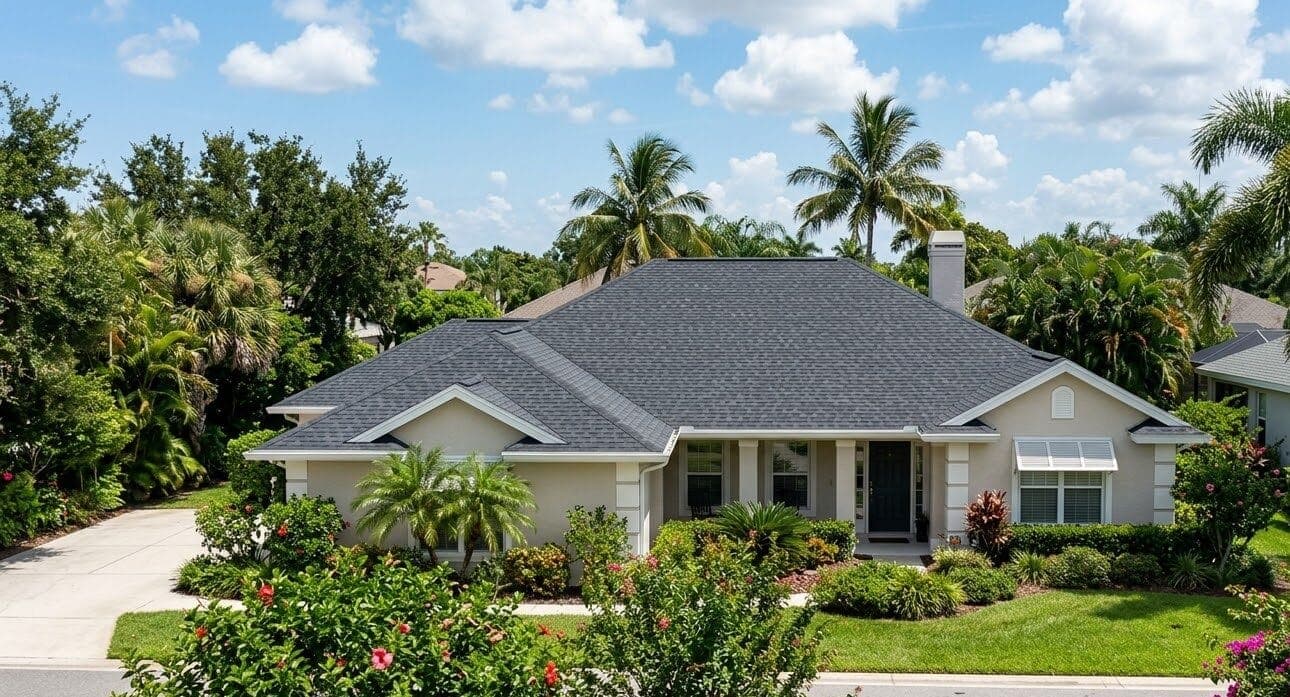
Citrus County, FL
Roofing in Floral City, FL
Roofing contractor for Floral City, FL: repair, replacement, leak detection, storm damage. We handle the Citrus County permit. Call (352) 605-0696.
Call (352) 605-0696How Protech Roofing Covers Floral City From Brooksville
Floral City is a small community in the southern part of Citrus County, just south of Inverness. The 2020 Census counted 5,261 residents, up slightly from 5,217 in 2010, and the median age was 58.0 years. In practice that means a lot of people here have owned their homes for years, have probably paid for at least one roof already, and want a contractor who explains things clearly and does not push.
Protech Roofing Services runs from our headquarters at 9035 Jayson Dr in Brooksville, in neighboring Hernando County. Citrus County is part of the territory our Brooksville team serves every week. When you call (352) 605-0696 from a Floral City address, you reach the office that books the inspection, writes the estimate, pulls the permit, and follows the job through to final inspection. You will not be handed off to a call center or to a crew you never heard of.
Our Google rating is 4.9. We would rather you judge us by how we handle your roof than by a number, so this page sets out what we actually do, what the county and the state require, and where the real decision points are. It covers:
- Who issues roofing permits for a Floral City address, and what we take care of for you
- What decades of Florida weather do to roofs on homes built in the 1970s and 1980s
- How Florida's repair rule decides whether a big repair can stay a repair
- How the rainy season and hurricane season should shape when you schedule work
- Insurance claims, wind mitigation, and the My Safe Florida Home program
- Every roofing service we offer, and how to check any roofer's license before you sign
Floral City Has No Town Hall, So the Permit Comes From the County
Many homeowners are surprised to learn this: Floral City is not an incorporated municipality. It is a census-designated place inside Citrus County. There is no city building department, no town permit counter, and no local amendment from a city council. A roofing permit for a Floral City home is issued by the Citrus County Building Division, and the work is inspected by the county.
The division's own fee schedule states that it enforces the Florida Building Code under Chapter 553 of the Florida Statutes, together with the Citrus County Code, Chapter 18. The most recent listing we have puts its office at 3600 W Sovereign Path, Suite 111, in Lecanto. If you ever need to reach the division yourself, check the county's website first for the current address and hours, because office listings change.
What we take care of
For a Floral City roof, Protech pulls the permit and conducts the job through final inspection. That is included in our service. It is not something you have to arrange, and you do not need to drive to Lecanto or learn the county's online system. Our part includes:
- Preparing and submitting the permit application for your address
- Scheduling the inspections the county calls for during the job
- Being on site to meet the inspector and answer questions about the work
- Carrying the permit to a passed final inspection, so it is closed and not left open on your property record
An open or never-pulled permit causes trouble years later. It can come up when you sell the house, when an insurer asks for the roof's age, or when you try to prove the roof was built to code for a wind mitigation inspection. A closed permit is the simplest paperwork you can have on a roof, and it is the paperwork we leave you with.
Which code applies, and which does not
Floral City roofs are built to the Florida Building Code as enforced by Citrus County. The stricter High-Velocity Hurricane Zone provisions of that code cover Miami-Dade and Broward counties. Citrus County is not on that list, so HVHZ rules and Miami-Dade product approvals are not normally required here. If a salesperson tells you your Floral City roof must meet Miami-Dade standards, ask them to show you where the county requires it. The code is updated on a regular cycle, and we build to the edition in force when your permit is issued, not to whatever edition was current when your house went up.
Forty-Year-Old Houses and the Roofs That Sit on Them
Housing data for the 34436 ZIP code, which covers Floral City, shows that the largest groups of homes were built in the 1970s and the 1980s, with a third sizable group from the 2000s. In plain terms, many houses here are 35 to 50 years old. A house that old has probably been reroofed at least once, and sometimes the current roof sits on decking, flashing, and framing details that date back to the original build.
That changes what a good inspection looks for. On an older home, the shingles or tiles are only part of the story. When we inspect a roof, we check:
- The covering itself. Shingle or tile condition, lifted or missing pieces, granule loss, cracked or slipped tiles.
- The underlayment. The layer under the covering that actually keeps water out once the surface fails.
- Flashing at every penetration. Plumbing vents, chimneys, skylights, wall joints, and valleys. Old flashing that was reused during an earlier reroof is a common source of slow leaks.
- The decking. Soft spots, delamination, and old water damage that only shows up when you walk the roof or look from the attic.
- Ventilation. Whether the attic can move heat and moisture out. Poor ventilation shortens the life of almost any roof in Florida heat.
Older homes also tend to collect changes over the years: a screened porch tied into the main roof, a room addition, a carport converted to living space. Each of those joints is a place where two roofs meet, and joints are where water finds its way in. We look at those transitions closely, because a leak there is often blamed on the main roof when the real cause is a detail added decades later.
Homes from the 2000s
If your house was built in the 2000s, your original roof is likely around twenty years old by now, which is the age when most owners start asking whether to repair or replace. There is a legal detail that matters for these homes in particular, and we cover it in the next section: whether the roof was permitted before or after Florida's 2007 building code took effect changes what happens when a large repair is needed.
When a Big Repair Can Stay a Repair Under Florida Law
For years Florida had what roofers call the 25 percent rule: if 25 percent or more of a roof needed repair or replacement within a year, the whole roof section had to be brought up to current code, which usually meant replacing it. Homeowners with a few storm-damaged areas were often told they needed a full roof.
In 2022 the Legislature changed that with Senate Bill 4-D, now in Section 553.844(5) of the Florida Statutes. Here is how it works:
- Roofs built or replaced under the 2007 Florida Building Code or later (in practice, roofs permitted from about March 1, 2009 onward) do not have to be fully replaced just because 25 percent or more is being repaired. Only the repaired portion has to meet the current code.
- Roofs built before that are still subject to the 25 percent rule. On those roofs, a large repair can require replacing the entire roof section.
For Floral City, that line falls right through the local housing stock. A 1970s or 1980s home whose roof was last replaced before 2009 is still under the old rule. A home whose roof was replaced after 2009, or a newer house with a roof permitted after that date, gets the protection of the new law.
Why the roof's permit date matters so much
That is why one of the first things we try to establish on any large repair is when the current roof was installed and permitted. Your closing papers, an old contractor invoice, or the county's permit record can usually answer it. Once we know, we can tell you honestly whether the damage you have is a repair job or whether the law pushes it toward replacement, before you spend money on either.
We would rather tell you a repair will hold than sell you a roof you do not need. And when a repair truly is not the right call on an older roof, we will show you why with photos and measurements from your own house, not a general warning.
Rainy Season Afternoons and the Leaks They Uncover
The National Weather Service office in Tampa Bay, whose coverage area includes Citrus County, defines the West Central Florida rainy season as running from about May 25 to October 10. The start is usually a gradual shift rather than a fixed date. Summer storms in the region bring short bursts of heavy rain, strong gusts, and frequent cloud-to-ground lightning. We have not found weather records specific to Floral City, so treat this as a regional pattern, but it is the pattern every roof in this part of Florida lives with.
That kind of weather tests a roof differently from a slow, steady rain. Heavy downpours push water sideways under loose shingles and against flashing. Gusts lift shingle edges a little at a time. Gutters that drain fine in a light shower overflow in a summer cloudburst, and water backs up under the roof edge. Many leaks that started months ago only become visible during the first weeks of rainy season.
How we find the actual source
A water stain on a ceiling rarely sits under the spot where water gets in. Water runs along decking, rafters, and insulation before it shows up. Our leak detection and repair process is built to find the real entry point before we price a repair:
- We begin with a visual inspection of the roof and, when it is accessible, the attic, looking for daylight, stained decking, and wet insulation.
- A thermal scan helps identify suspect areas where moisture is sitting.
- We press a moisture meter directly against decking, insulation, and framing to get precise readings.
- When the readings point to a general area but not an exact spot, we spray water on the roof in a systematic pattern while a second technician watches from inside the attic.
We keep the images as part of your permanent inspection record, which is useful if the leak later becomes part of an insurance claim.
Gutters carry more of the load than people think
Overflowing gutters send water down the fascia, into the soffit, and toward the foundation. We recommend a professional gutter inspection at least once a year, ideally in the fall, after the summer storms and before leaves come down. If your gutters are undersized for heavy rain or keep clogging, we offer gutter cleaning, gutter installation, and gutter protection.
Planning Around Hurricane Season, Before and After
The Atlantic hurricane season officially runs from June 1 to November 30, and those dates cover more than 97 percent of tropical activity. The peak comes in early to mid September. We have not found a source tying a specific named storm to Floral City, so we will not tell you stories about one. What we can tell you is how the season should shape your planning.
Before June
The best time for a roof inspection is in the spring, before the season starts. Problems found then can be fixed at a normal pace, without competing with storm repair calls across the region. A spring roof inspection tells you whether your roof is ready for another season, needs a few repairs, or is close to the end of its service life. If you are on a regular maintenance schedule, the spring visit is the one that matters most.
If an inspection shows that replacement is coming, starting the conversation early gives you time to review options, compare materials, and look into whether you qualify for state grant money (covered below) without making decisions in a hurry.
After a storm
After high winds pass through, look from the ground for missing shingles, lifted edges, displaced tiles, damaged gutters, or debris on the roof. Do not climb up yourself. Inside, check ceilings and the attic for new stains or dripping. If you see damage, call us. We provide our storm damage inspection at no charge, because an accurate record of the damage from the start matters for everything that follows. If water is coming in, our emergency roof repair service can protect the house while the full scope of repair is worked out. Larger events are handled through our storm damage restoration work.
Insurance Adjusters, Wind Mitigation, and the State Grant
Storm damage often turns into an insurance claim, and claims are where homeowners most need someone on their side who knows roofs. Our insurance claims assistance starts with a thorough inspection. We check shingles for wind lift and hail bruising, examine flashing around penetrations and valleys, look at the soffit and fascia for wind damage, and check the attic for signs of water intrusion.
Many of our customers ask us to be there when the adjuster inspects the roof. When we meet the adjuster at your property, we point out every area of concern documented in our report, so nothing is missed. You still make the decisions about your claim. Our job is to make sure the person estimating it has seen the whole roof.
Wind mitigation after a new roof
After we complete a roof replacement, we recommend scheduling a wind mitigation inspection right away. A new roof built to the current Florida Building Code will typically qualify for the highest available credits, and those credits can lower the wind portion of your premium. The closed permit from your replacement is part of the documentation an inspector looks for.
My Safe Florida Home: what the rules really are
The My Safe Florida Home program, created under Section 215.5586 of the Florida Statutes, offers a free hurricane mitigation inspection and, for eligible homes, a matching grant toward improvements such as a roof. The details matter, so here they are straight:
- The home must be a site-built, single-family house, occupied by the owner, with a homestead exemption.
- Condominiums, mobile homes, multi-family buildings, second homes, and rental properties are excluded.
- The grant goes up to $10,000 and is a match: the program contributes $2 for every $1 the homeowner puts in.
- The money is reimbursed after the local building authority's final inspection, which is one more reason a properly closed permit matters.
- The program depends on yearly funding from the Legislature and may be closed to new applications at any given time.
Before you plan around a grant, check the current status at mysafeflhome.com. If the program is open and your home qualifies, we can talk through how a roof replacement fits into it.
The Roofing Work We Do in Floral City
Protech is a full-service roofing company, not a one-product shop. Here is everything we offer, with a link to each service page if you want the details:
Repair and diagnosis
- Roof repair for shingle, tile, and metal roofs
- Leak detection and repair, using the methods described above
- Tile repairs for cracked, slipped, or broken tiles
- Emergency roof repair when water is getting in
- Storm damage restoration after wind events
Replacement and new roofs
- Total roof replacement, including tear-off, decking repair, and the permit
- Shingle roof installation
- Metal roofing systems
- Stone coated steel tile, which gives the look of tile with a steel base
- New construction roofing for builders and owners putting up a new home
Keeping a roof in service
- Roof inspection
- Regular maintenance
- Roof coating
- Gutter cleaning, gutter installation, and gutter protection
Insurance and programs
Commercial and multi-family
Floral City also has churches, small businesses, and other buildings with low-slope roofs. We handle commercial roofing, commercial flat roofing, and multi-family roofing. For most commercial buildings in Central Florida, we recommend TPO for general use and PVC for restaurants, chemical environments, or owners who want the longest warranty options. Commercial owners get detailed written proposals that break out tear-off and disposal, deck repairs, insulation, membrane, flashings, drainage changes, permits, and warranty, so you can see exactly what you are paying for.
What every estimate looks like
Whatever the job, you get a written estimate that breaks the work into its parts, so you know exactly what is included before you agree to anything. If you want time to think it over, ask a family member, or get another quote, that is fine with us.
Checking a Roofer's License Before You Sign Anything
After storms, door-knockers and out-of-area crews show up across Central Florida. Some are legitimate. Some are not. Florida gives homeowners a clear way to tell the difference, and it takes about two minutes.
Roofing contractors in Florida are licensed under Chapter 489 of the Florida Statutes, through the Department of Business and Professional Regulation and its Construction Industry Licensing Board. There are two kinds of roofing license:
- Certified licenses, with a number starting in CCC, are valid anywhere in the state.
- Registered licenses, with a number starting in RC, are valid only in the local jurisdiction that issued them.
That distinction matters. A contractor with a registered license from somewhere else may not be allowed to work in Citrus County at all. Contracting without a license in Florida can bring criminal charges ranging from a first-degree misdemeanor to a third-degree felony, and a homeowner who hires an unlicensed roofer can be left with work that cannot be permitted, cannot pass inspection, and may not be covered by insurance.
How to check
- Ask for the license number in writing, before any contract.
- Look it up at myfloridalicense.com and confirm the name, license type, and status match the company you are talking to.
- Ask who will pull the permit. A contractor who suggests you pull it yourself as an owner-builder is shifting responsibility onto you.
- Ask for a written estimate that lists what is included.
We encourage you to run the same check on us. You should never have to take a contractor's word for it.
Getting started
Call (352) 605-0696 to set up an inspection at your Floral City address. Tell us what you are seeing, whether it is a stain on the ceiling, shingles in the yard after a storm, or just an older roof you want looked at before the next hurricane season. We will come out, look at the whole roof, show you what we find, and give you a written estimate. The permit, the inspections, and the county paperwork are ours to handle.
Our Services
Some of the roofing services we offer in Roofing in Floral City
Roofing By Area
Roofing services near Roofing in Floral City
FAQ
Frequently Asked Questions
How does Protech serve Floral City if your office is in Brooksville?
+
Floral City has no city government. Who approves a roofing permit here?
+
My roof is from the 1980s. If a big section is damaged, do I have to replace the whole thing?
+
How can I tell if a roofer's Florida license is real?
+
Will Protech meet my insurance adjuster at the house?
+
Ready When You Are
Get your free roof inspection today.
No-pressure, written estimate. Same-week scheduling across Hernando County. Call us now or request a visit online.