Brooksville, FL
Gutter Cleaning in Brooksville, FL
Gutter cleaning in Brooksville, FL. Oak and pine debris removal, post-storm service. Protech Roofing. Call (352) 605-0696.
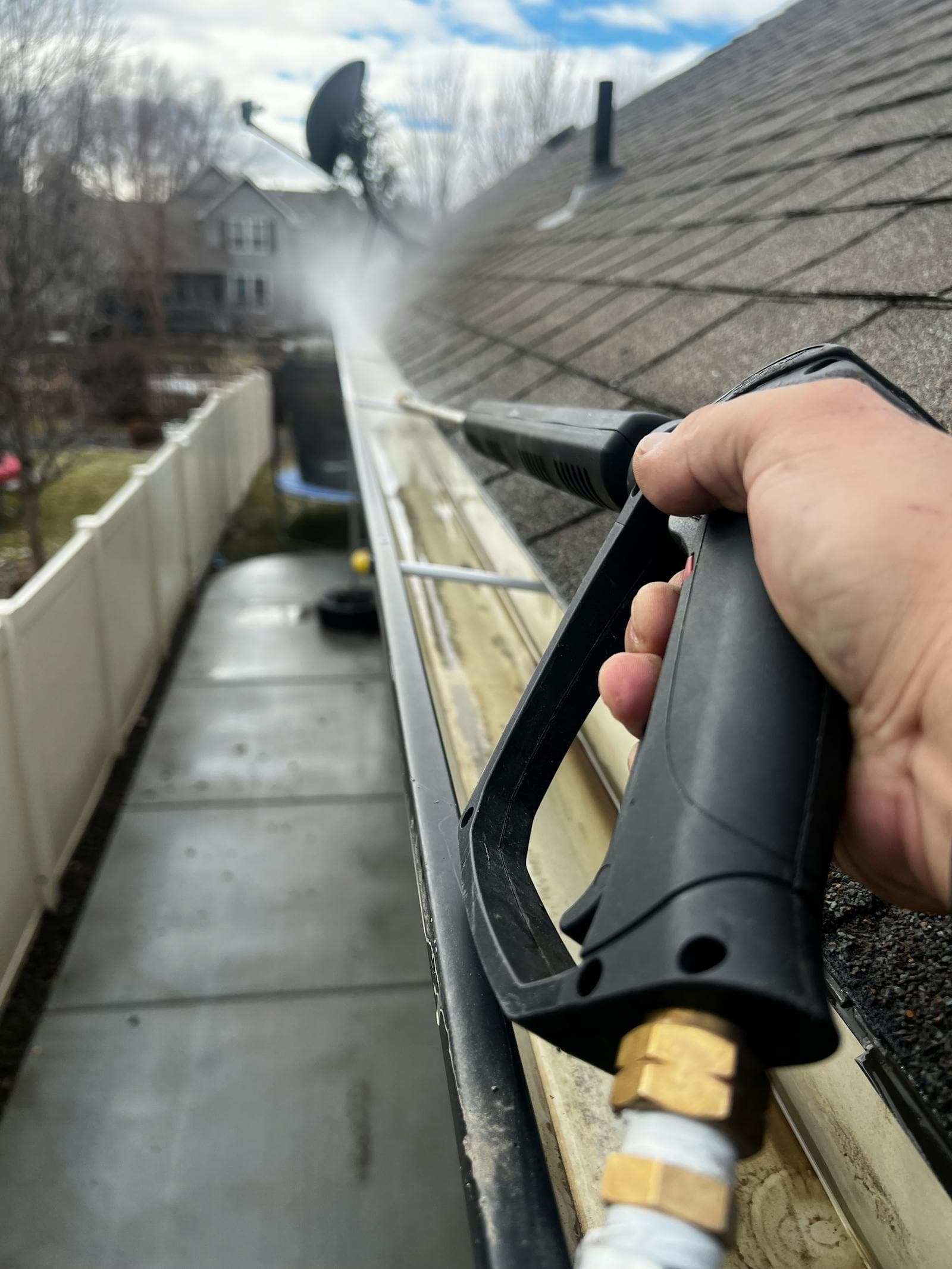
Call (352) 605-0696If your gutters in Brooksville haven't been cleared since the last hurricane, there's a strong chance they're already half-full of oak catkins, pine straw, and the sticky black sludge those leave behind when they sit through a wet season. Proper gutter cleaning in Brooksville, FL isn't about chasing one big leaf jam, it's about staying ahead of the three debris cycles the live oak and slash pine canopy drops on this ridge every year. Protech Roofing services homes from the historic downtown grid through Silverthorn, Sherman Hills, Spring Ridge, Villages of Avalon, and Southern Hills Plantation. We're based at 9035 Jayson Drive a few minutes from the Hernando County Building Department, and our trucks carry the right ladders, hose extensions, and harnesses for two-story ridge-top properties. Call (352) 605-0696 to get on the schedule.
You Are Viewing
Gutter Cleaning for homeowners and businesses in Brooksville, part of Hernando County, FL, Florida.
The Brooksville Gutter Cleaning Schedule That Actually Works
Most homeowners ask us how often gutters need cleaning, and the honest answer for Brooksville is three times a year minimum, not the once-a-year cadence you'll see in generic homeowner advice written for the Midwest. Our tree canopy doesn't drop on a single fall cycle. It drops in three distinct waves, and a system that's only cleaned in November overflows three other times before the next service.
The first window runs February through April. That's the live oak catkin drop, and it's the heaviest debris event of the year on most Brooksville lots. Catkins are those long stringy pollen flowers that turn the driveway yellow for two weeks, and they pack into gutters so tightly that even a heavy rainstorm can't flush them through. They also bring the worst of the spring pollen with them, which gets bound into a felt-like mat that has to be lifted out by hand. Cleaning during or just after the catkin drop is the single highest-value visit of the year.
The second window is June through August. That's the convective storm season, and the same thunderstorms that bring 9 inches of July rain also tear small twigs, leaf clusters, and lichen off the oak canopy. By August, even gutters that were spotless in May are usually 30 to 50 percent loaded. The third window is September through November, after the fall pine straw drop and during peak hurricane season. That visit clears whatever the storms have blown into the system and gets you into the dry winter with clean flow at every downspout.
For homes with heavy oak canopy directly overhanging the eave, like much of South Brooksville and the original downtown grid, we recommend four visits a year instead of three. The extra spring visit, usually mid-March, catches the catkin drop at its peak before the felt mat sets. For newer Spring Ridge and Villages of Avalon homes where the canopy hasn't matured yet, three visits is usually enough. We tailor the schedule per property at the first visit based on what's actually overhanging the roof.
Live Oak and Pine Debris Patterns Across Brooksville Neighborhoods
Debris loads aren't the same across Brooksville, and the neighborhood you live in usually tells us before we ever look at the roof what we're going to find in the gutters. South Brooksville, the old grid around Liberty Street and Howell Avenue, and the historic district downtown all sit under mature live oak canopy that's been growing since the houses were built. Those gutters fill fastest, and they fill with a heavier mix of catkins, leaves, and the small acorn caps that drop year-round.
Silverthorn, Sherman Hills, and the ridge-top sections of Southern Hills Plantation have a different debris signature. The canopy there is mixed, with slash pine and longleaf pine standing alongside the live oak, and pine straw becomes the dominant debris by volume. Pine straw doesn't pack into a felt mat the way catkins do, but it bridges the gutter opening from front to back and forms a sieve that traps everything else. We pull pine straw out of those gutters by the bagful, especially in late October after the natural fall drop and any tropical system passes through.
Spring Ridge and Villages of Avalon, both newer subdivisions on the east and south sides of the city, generally have lighter canopy because the original land clear stayed in place and the trees that have grown back are younger. Debris loads there are 40 to 60 percent of what we'd see in South Brooksville. But ridge-top exposure means wind drives debris from neighboring lots into the gutters in ways you don't see on flat lots, so we still find plenty to clear at every visit.
One pattern we've noticed across all Brooksville neighborhoods is that the back-of-house gutters always fill faster than the front. That's because the back yards usually have more mature trees, less pruning, and more wind-driven debris from the canopy upwind. So when we quote a cleaning we don't average across the perimeter, we weight the time and labor toward the heavier sections. That's why our cleanings consistently come back clear at every downspout instead of half-clear at the obvious sections only.
Why Clogged Gutters Hit Brooksville Historic Homes Harder
A clogged gutter on a 1990s tract home is annoying. A clogged gutter on an 1890s Queen Anne in the Brooksville historic district is expensive. The difference comes down to what the water hits when the gutter overflows. On a new home with synthetic fascia, modern flashing, and sealed soffits, an overflow event causes some splashback against the stucco and some staining of the soffit, but the structural damage is usually limited.
On a historic home with original wood fascia, hand-cut soffit boards, and lime-based plaster or lap siding that hasn't been sealed against modern moisture standards, the same overflow event sets off a slow chain of damage. Water that runs back behind the gutter into the fascia wicks into the end grain, sits there during humid Brooksville summers, and starts the wood-decay cycle that historic preservation contractors charge a premium to undo. We've seen original Liberty Street fascia boards that survived 130 years of Florida weather fail within three or four years of a clogged gutter overhead.
The same goes for the porch posts and the lower siding courses. When gutter overflow drops water concentrated at the front edge of the porch roof instead of spreading evenly, the runoff hits the porch decking, the porch posts, and the column bases. Original cypress and longleaf pine porch posts on the older Brooksville homes are nearly impossible to source as direct replacements today. So preserving them with a clean gutter system above is dramatically cheaper than recreating them after rot sets in.
For historic district homeowners, we generally recommend the four-visit annual schedule plus a post-tropical-storm visit any time a named system passes near Brooksville. That extra visit isn't expensive, but it catches the storm debris before the next thunderstorm pushes it through the gutters as a sticky organic slurry. And it gives us a chance to spot any fascia or trim issues early, before they turn into full historic preservation contracts.
Post-Hurricane Cleanup After Idalia, Helene, and Milton in Brooksville
Brooksville took three major hurricane hits in 13 months between August 2023 and October 2024, and we're still cleaning gutters that were never properly serviced after those storms. Hurricane Idalia made landfall at the Big Bend on August 30, 2023 as a Cat 3 and dropped serious rainfall and wind inland through Hernando County. Helene followed on September 26, 2024 as a Cat 4 at landfall with heavy outer-band activity over Brooksville. Then Milton hit Siesta Key on October 9, 2024 as a Cat 3 and dropped a tornado outbreak through Pinellas and Hillsborough, with strong wind reaching Brooksville from the north side of the system.
After each of those storms, the debris loads on Brooksville gutters jumped 200 to 400 percent above a normal summer cleaning. That's not an exaggeration. We were pulling intact small branches, palm fronds blown in from neighboring lots, roof granule wash from older shingle roofs, full pine boughs, and in a few cases entire bird nests that had been picked up and dropped into the gutter by the wind. The standard 45-minute service call turns into a two-hour project when the gutter is that loaded.
The bigger issue after a hurricane isn't the debris itself, it's the secondary damage that happens when nobody clears it. Wet organic matter sitting in a gutter for two or three weeks after a storm starts to compost. The bottom of the channel develops a sticky black sludge that's acidic enough to corrode aluminum from the inside out. We've seen gutters from the 2017 Hurricane Irma cycle where the bottom seam failed three years later because the homeowner didn't clear the post-storm debris and the corrosion got into the metal.
So our post-hurricane cleaning protocol is a full debris removal, a hose flush of every section, a check of every downspout for jams below the eave, and a visual inspection of the fascia behind the hangers for any signs of water entry. If we find issues, we flag them in writing for the homeowner before we leave. That way you're not finding out about hurricane damage three months later when the first big winter cold front pushes the failure into a bigger repair.
What We Find Inside Brooksville Gutters
After years of cleaning gutters across Hernando County, we keep a mental list of the things we routinely pull out. Some of them are expected. Some surprise homeowners every time we mention them. Live oak catkins are the universal find on every Brooksville property with mature canopy, and they often come out compressed into a dense brown mat that has to be loosened with a trowel before it'll lift free.
Pine straw shows up on most Sherman Hills, Silverthorn, and Southern Hills Plantation properties, sometimes packing the entire channel from front to back. Acorns and their caps drop year-round from the live oaks and accumulate at the downspout openings, where they form effective plugs that back up entire runs. Spanish moss strands blow in from neighboring trees and tangle into mats that hold water like a sponge. Lichen and small twigs come down with every thunderstorm.
We also find plenty of things that didn't come from trees. Tennis balls and other yard toys end up in gutters more often than you'd think. Squirrel nests get built in the bend of the downspout elbows. Wasp nests show up under the front lip of the gutter, especially on the south-facing runs that catch the most sun. After one Spring Ridge job we pulled three lizard skeletons out of the same downspout where they'd been trapped behind a compacted leaf jam. None of that's a complaint about the property, it's just the reality of an open channel exposed to the canopy for months between cleanings.
The find we never want to make is roof granule wash. When shingle roofs in their later years start to lose granules, those granules wash into the gutter at every storm and settle at the bottom of the channel. Heavy granule deposits are the canary in the coal mine for an aging shingle roof, and we always flag that for the homeowner before we leave. It's not the gutter's fault, but it's information you want to know before the next inspection cycle.
Two-Story and Ridge-Top Cleaning Safety on Brooksville Homes
A lot of Brooksville homes are single-story, but the ridge-top properties in Sherman Hills, Spring Ridge, and Southern Hills Plantation often have two-story elevations, and the historic district downtown has plenty of Queen Anne and Folk Victorian homes with steeply pitched roofs that reach 25 to 35 feet at the eave. Cleaning those gutters safely isn't a job for a homeowner with a 24-foot extension ladder from the hardware store, and we say that as people who do this for a living.
Our two-story crews use 32 and 40-foot fiberglass extension ladders with proper standoff stabilizers that hold the ladder off the gutter face and the fascia. That prevents the weight of the ladder from crushing the front of the gutter into a permanent dent, which is what happens when you lean a standard ladder directly against the channel. We also tie off at every two-story setup using a roof anchor and a personal fall arrest harness, even though OSHA only requires that for commercial work. The exposure isn't worth the savings.
For the steeply pitched historic homes downtown, we sometimes bring a small powered lift instead of relying on ladders alone. The lift sets up in the driveway or the street, extends the platform to the eave, and lets the technician reach the gutter with both hands free and stable footing. It's slower to set up than a ladder, but on a 30-foot eave with a 10-in-12 pitch above, it's the only way to do the work without putting somebody at unnecessary risk.
Ridge-top exposure on properties like the higher Cobb Road and Cortez Boulevard addresses adds wind to the safety equation. Wind that's barely noticeable at street level can be 15 to 20 mph at the eave of a two-story home on a ridge, and that changes how we approach the work. We watch weather windows carefully, hold off cleaning if a front is moving through, and never put a technician on a ladder when winds are above 20 mph at the platform. Cleaning a Brooksville gutter the right way means cleaning it once, doing it safely, and leaving the homeowner with a written report of what we found.
Bundling Gutter Cleaning With a Roof Inspection in Brooksville
Since we're already on a ladder at every section of the perimeter, we offer a discounted roof inspection bundled with any gutter cleaning service in Brooksville. The inspection isn't a marketing add-on, it's a real evaluation by a technician who's looking at every fascia, every drip edge, every eave shingle, and every flashing detail from a position you can only get to with the right ladder setup. You can't see those things from the ground, and most homeowners haven't been up on their roof since the day they bought the house.
The inspection covers the visible roof surface for granule loss, lifted shingle tabs, exposed nail heads, and any storm damage that hasn't been claimed yet. We check every penetration on the roof, which on a typical Brooksville home includes the plumbing vent boots, the bathroom and kitchen exhaust caps, the gas furnace flue if there is one, and any solar penetrations on the newer homes. Pipe boot failure is the number-one source of roof leaks in Hernando County, and we catch it during gutter cleanings on properties where the homeowner didn't know there was anything wrong.
We also document everything with photographs taken from the ladder. Those photos go into a written report you receive the same day, with notes on anything that needs attention now versus anything you can put off until the next service cycle. For homes that took damage during Idalia, Helene, or Milton but never filed a claim, that documentation is sometimes the basis for an insurance conversation later. For homes that didn't take damage, the report becomes part of your maintenance record and helps with property value when you eventually sell.
The bundled pricing is a flat discount off the inspection fee when scheduled with a cleaning visit, and most Brooksville homeowners take advantage of it once or twice a year. The combined visit takes about 90 minutes on a typical single-story home, and you get a clean gutter system plus a written roof report at the end. It's the most useful single visit we offer in Brooksville, and the one we'd recommend if you're not sure where to start with home maintenance after the last three storm seasons.
More in this area
Other roofing services in Brooksville
FAQ
Frequently Asked Questions
How often should I clean gutters on a Brooksville home?
+
What's the difference between oak catkin and pine straw debris in Brooksville?
+
Do I really need a post-hurricane gutter cleaning in Brooksville?
+
How do you safely clean gutters on two-story Brooksville homes?
+
Can I bundle gutter cleaning with a roof inspection in Brooksville?
+
From the Blog
Stay informed about roofing in Florida.

Gutters for Florida Homes: Seamless vs Sectional Guide
Seattle gets 38 inches of rain a year and runs 5-inch gutters. Tampa gets 52.6 and overflows, because 30 of those inches fall in four months and mostly in short bursts. Gutters are sized on inches per hour, not inches per year. Here is the sizing math, what seamless actually buys you, and the two spec lines that matter more than the word seamless in a hurricane state.
Read Article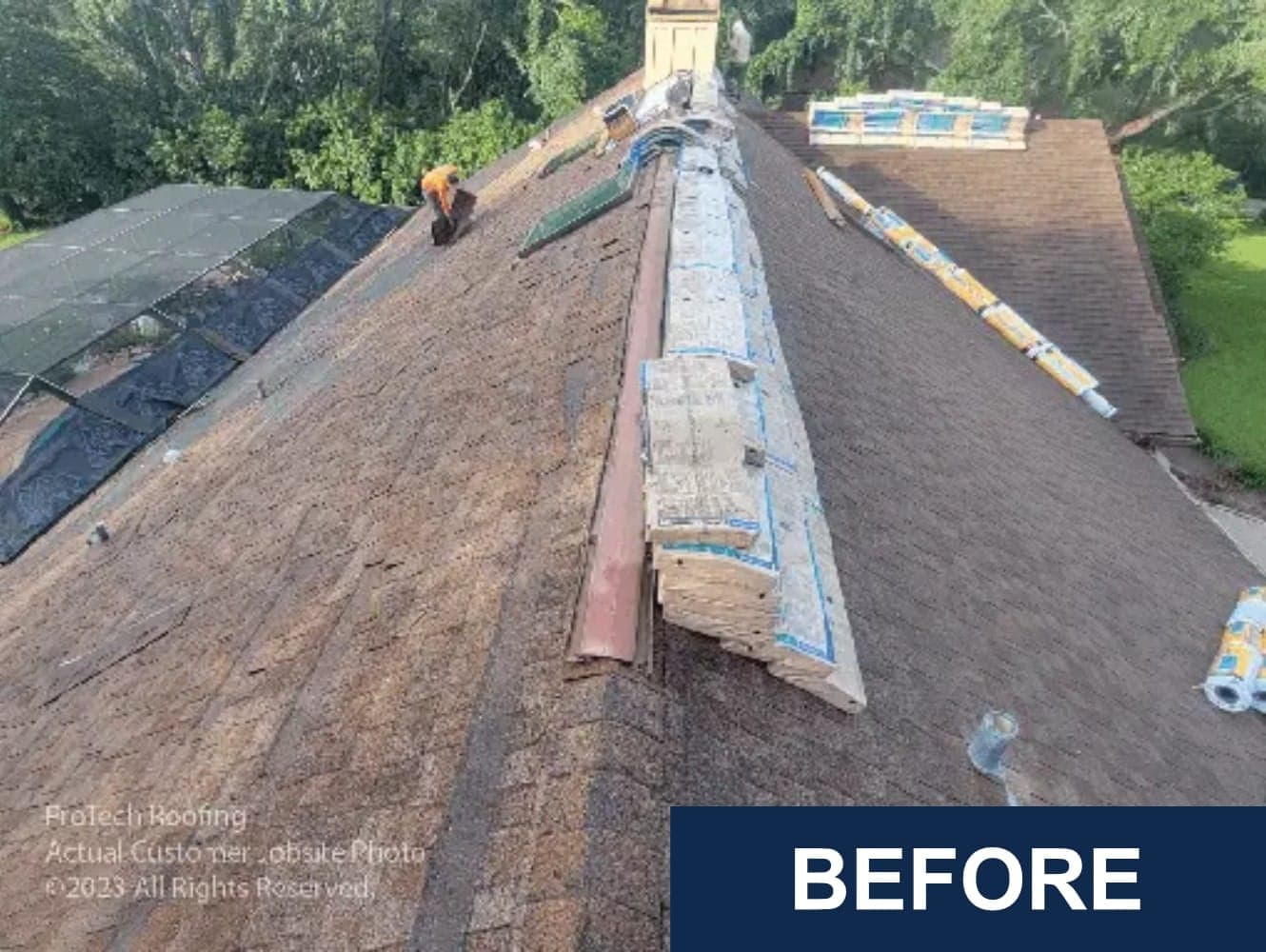
The Ultimate Guide to Roofing in Brooksville, FL (2026)
Complete 2026 guide to roofing in Brooksville, FL. Costs, the 25 percent rule, permits, storm damage, insurance, and how to choose a local contractor in the county seat.
Read Article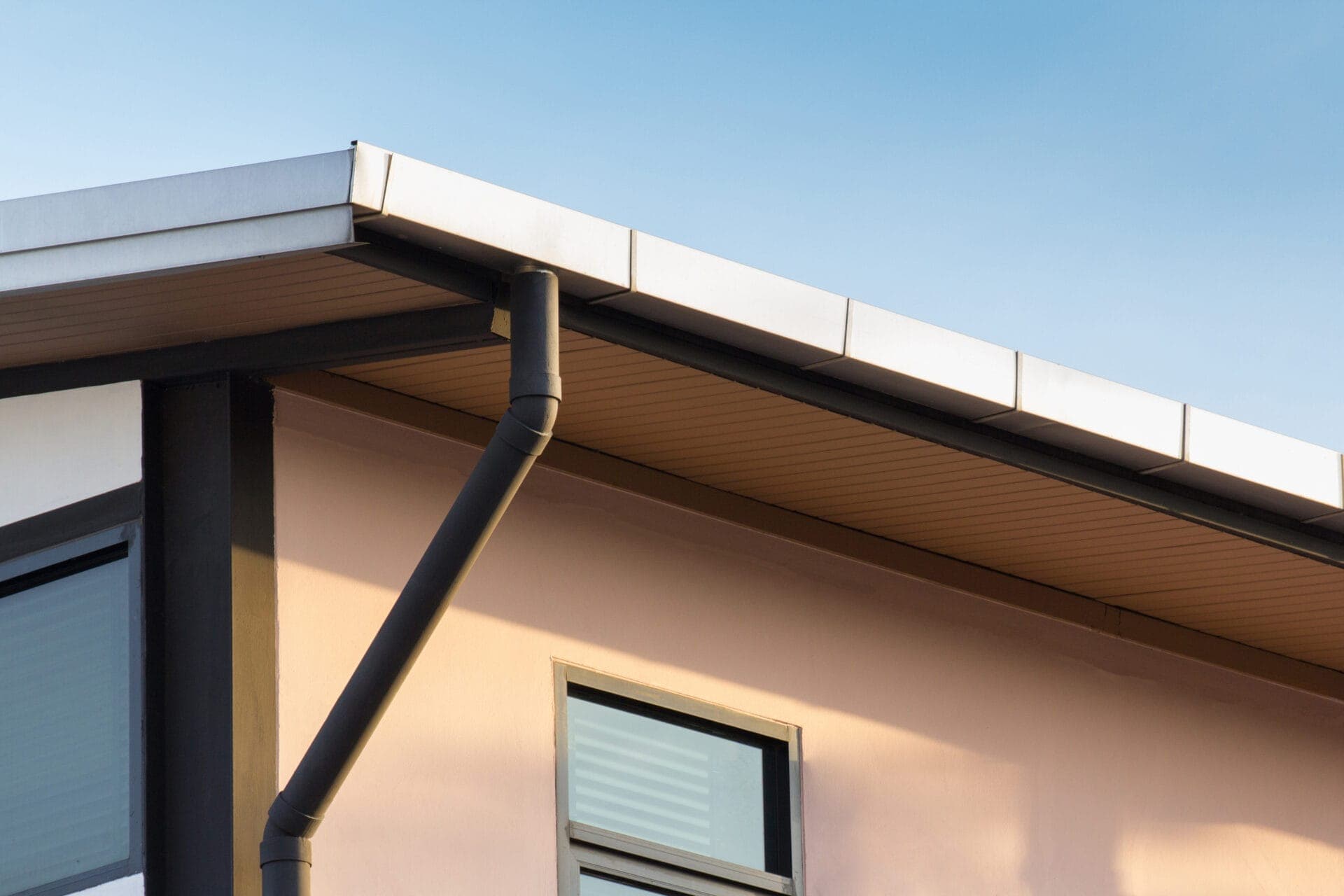
Box Gutter Solutions for Commercial Roofs in Central Florida
Complete guide to box gutter systems for commercial flat roofs in Central Florida. Types, materials, sizing for Florida rainfall, common problems, repair costs, and maintenance. Call (352) 605-0696.
Read ArticleReady When You Are
Get your free roof inspection today.
No-pressure, written estimate. Same-week scheduling across Hernando County. Call us now or request a visit online.