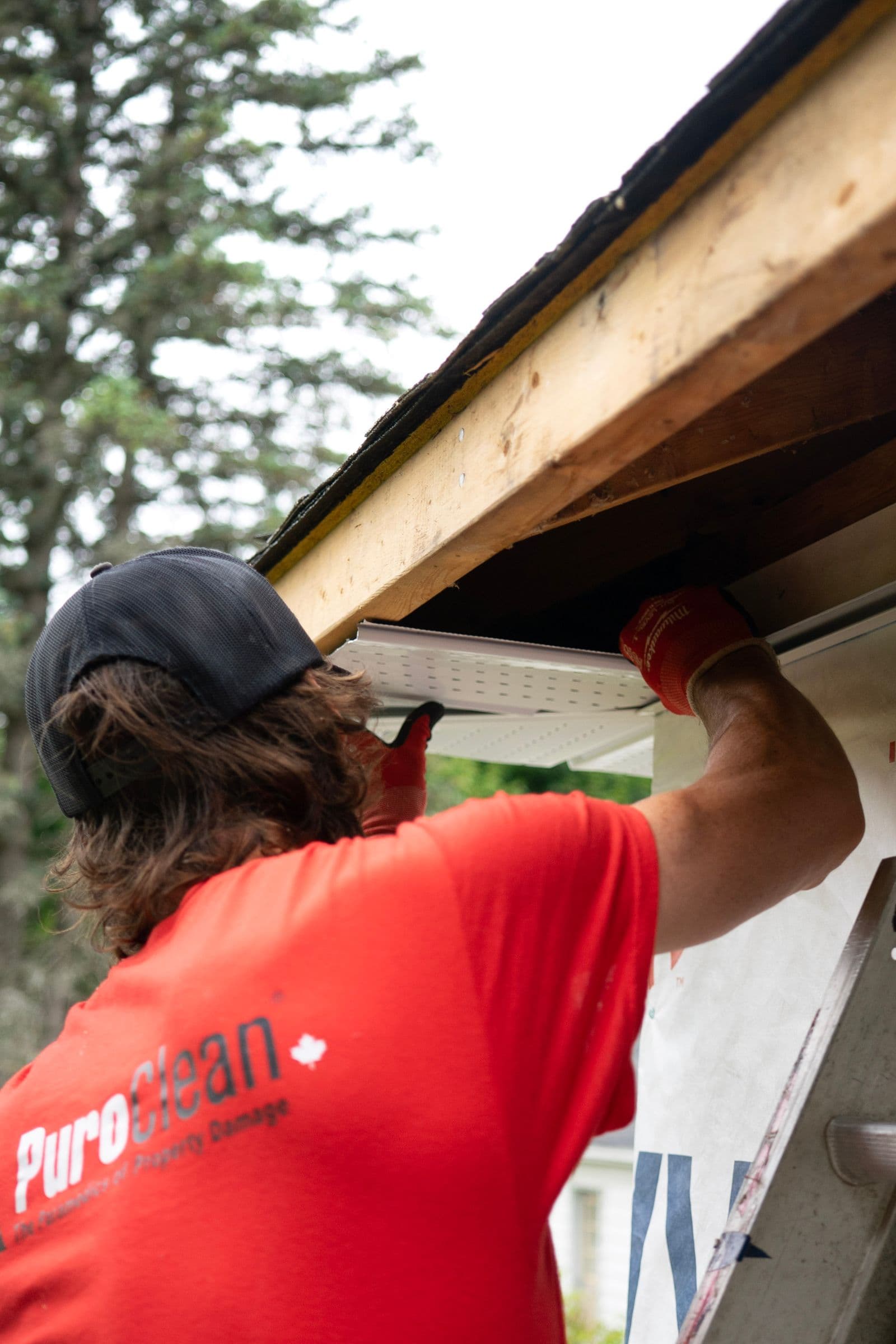
Brooksville, FL
Gutter Installation in Brooksville, FL
Seamless gutter installation in Brooksville, FL. Aluminum, copper, downspouts sized for Hernando rainfall. Call (352) 605-0696.
Call (352) 605-0696Brooksville sits 200-plus feet above the Tampa Bay flats, and that single fact reshapes every conversation about gutter installation in Brooksville, FL. Ridge-top wind drives rain sideways across roof planes. Sheet flow accelerates down hillside lots. And the historic downtown, with its 1880s-to-1900s cypress-trimmed homes on lime mortar footings, behaves nothing like the slab tract houses you'll find south of the county line. We're Protech Roofing, our shop sits inside Brooksville city limits, and we build seamless aluminum, copper, and oversized profiles for the Cobb Road ridgeline, Sherman Hills, Silverthorn, Spring Ridge, Villages of Avalon, Southern Hills Plantation, and the downtown historic district. Ring (352) 605-0696 when you're ready for a written quote.
You Are Viewing
Gutter Installation for homeowners and businesses in Brooksville, part of Hernando County, FL, Florida.
Why Gutters Are Non-Negotiable on Brooksville's Ridge-Top and Historic Homes
Topography is the first thing we measure on a Brooksville job. The Brooksville Ridge runs north-south through the heart of town, lifting roofs into a wind exposure most central Florida installers never plan for. Where a flat-lot home outside town might catch rain at 80 degrees off the eave, a Cobb Road ridgeline roof catches it closer to 60 degrees on a stormy afternoon. That angled drive pushes water past any drip edge and straight at the wall.
Now layer the construction stock on top of that geography. Downtown around the courthouse square, you've got Folk Victorian, Queen Anne, and early Craftsman houses still wearing their original cypress fascia, cypress soffit, and lime-stucco-over-shiplap walls. None of it was built for sustained perimeter saturation. Lime mortar is gentler than modern Portland cement, and it'll wick groundwater up into a sill plate without complaining until rot's already three boards deep.
South Brooksville and the older blocks off Liberty Street tell the same story in a different vocabulary. Heart-pine flooring, sill beams resting on local fieldstone or low brick piers, and exterior trim cut from old-growth cypress that handles wet-dry cycles but loses to chronic splashback every time. Ungutter eaves on these houses send a torrent into the planting beds, and that torrent works its way under the porch skirts and into spaces nobody inspects until something's already gone.
Newer construction has its own version of the same problem. Sherman Hills lots tilt downhill. Southern Hills Plantation roofs run steep gables that funnel water at speed. Silverthorn fairway homes sit on grading that pushes runoff back toward the slab corner under heavy rain. So the case for gutters across Brooksville isn't theoretical. It's a direct response to elevation, slope, age of stock, and the way Hernando's August storms hit the ridge. We're not going to talk you into something you don't need, but on a Brooksville lot, it's usually the project that returns the most for the least.
Seamless Aluminum vs Copper Choices for Brooksville Properties
Three materials cover almost every Brooksville install we do. Each one earns its place on a different kind of house, and the choice usually decides itself once we walk the property.
Copper goes on the historic district homes. There's no substitute. When you're hanging gutter on a Folk Victorian off Howell Avenue or a Queen Anne near the old depot, copper half-round matches what the original builder would've installed in 1898. The Brooksville Historic Preservation Board approves it on first submission almost every time because it's period-correct. Patina shifts from raw penny to brown to verdigris over a decade and a half, the metal lasts longer than anyone reading this will own the house, and the visual match keeps the elevation honest. Pricing on copper runs $4,800 to $9,500 for a downtown historic home, depending on roof footprint, half-round versus K-style, and how many miters the gable layout demands.
Aluminum carries the ridge-top tract homes. Silverthorn, Sherman Hills, Spring Ridge, Villages of Avalon, Southern Hills Plantation. These houses don't need the historic-match conversation. They need a clean white or bronze line under the fascia, real wall thickness to fight the heat-cycle waving that thinner stock develops, and downspouts that won't shake loose in a 90 mph gust. We brake-form .032-gauge aluminum on-site into one continuous run per fascia, which is what makes them seamless. Most ridge tract installs land between $1,100 and $1,800 for a single-story plan.
Galvanized steel earns the call on Sherman Hills properties facing the open ridge with the kind of wind exposure that turns a thunderstorm into a sustained lateral push. Steel is heavier, holds its shape under wind load better than aluminum, and resists denting from the small branches that come down off the live oak canopy during storms. The trade-off you accept with steel in Hernando County is the rust battle at cut edges. We use galvalume-coated stock and seal every cut and seam, but a steel gutter in this climate is still a 12-to-15-year decision rather than a 25-year one. Steel runs about 30 percent more than aluminum installed.
Three houses, three answers. The framing matters because picking the wrong metal for the wrong elevation either costs you twice the budget for no extra protection, or fails inside a decade. We'd rather have the materials conversation in person at the estimate visit, with the actual roof in front of us, than guess.
Sizing Downspouts for Brooksville's Elevation and Rainfall Patterns
Forget the catalog charts for a second. The reason downspouts matter so much on a Brooksville job comes down to two mechanics that you don't see south of the ridge. The first is runoff velocity. The second is what happens when sheet flow meets a grade change at the property line.
Velocity is the easy one to visualize. A roof on a flat lot drops water at gravity speed across a short slope, the gutter catches it, the downspout handles it. A roof on the Cobb Road ridgeline or a Sherman Hills upslope lot is doing the same thing, but the eave height above the grade is higher and the lot itself is pitched. So the water leaving the eave is already accelerating before it hits the gutter lip. Undersized downspouts can't release water as fast as the gutter is collecting it during a real Hernando thunderstorm, and the gutter overtops at the front edge. We pre-empt that by stepping up to 3x4-inch downspouts whenever the lot grades more than about 5 percent across the building footprint.
Sheet flow into elevation change is the second mechanic, and it's where most retrofit failures originate. Picture a downspout discharging onto a splashblock at the corner of a Silverthorn home. The lot slopes down and away at maybe 3 feet of drop across the next 20 feet. Water hits the splashblock, runs across the lawn, and accelerates as the grade steepens. By the time it reaches the property edge, you've got a small concentrated stream cutting a channel into the sod, and that channel will route the next storm's water right back along its own trough, sometimes back toward the foundation if the geometry's wrong. The fix isn't a bigger splashblock. It's either a buried 4-inch PVC line that carries the water further out before daylighting, or an extended downspout boot that throws past the grade transition.
Historic downtown homes need a different read. Lot sizes are tight, the original cypress sill on lime mortar bedding rots fast under chronic splashback, and the planting beds against the foundation often run a foot or more above the original grade because nobody's reset them in 60 years. So splashback there isn't bouncing off topsoil. It's hitting raised mulch beds and ricocheting up into the soffit. On those installs, we extend the downspout boot well past the bed and route to either the alley or the public swale, whichever the lot allows. Buried PVC adds roughly $15 to $25 per linear foot. On a downtown historic home, that's usually $300 to $700 of additional drainage work, well worth it given what cypress sill replacement costs.
Permits, Historic District Review, and HOA Approval in Brooksville
Good news first. Hernando County doesn't pull a building permit for residential gutter work. The Building Division at 789 Providence Boulevard categorizes gutters as accessory exterior trim, which means no permit fee, no inspector visit, and no scheduling delay on the county side. That's a real time advantage over jurisdictions where a gutter retrofit triggers the same paperwork as a re-roof.
Bad news, sort of, if your address falls inside the downtown historic district boundaries. The Brooksville Historic Preservation Board reviews any exterior change visible from the public right-of-way, and gutters absolutely qualify. We've been through enough of these submissions to know the rhythm. Submit before installation, attach elevation photos, specify the material and color, and wait for the next monthly board meeting. White aluminum and bronze finishes clear without much discussion. Copper clears immediately because it's period-correct for the 1880s-to-1900s homes the district was built to protect. The board pushes back on dark anodized finishes that didn't exist before 1950, and they'll redirect those to a more historically appropriate color.
Outside the historic boundaries, HOA review takes over. Each Brooksville-area subdivision runs its own architectural committee, and we've worked with all the active ones. Silverthorn, Sherman Hills, Spring Ridge, Villages of Avalon, Southern Hills Plantation. None of these are unusually strict on gutter color, but most want the application submitted before the install. We bring the elevation photos and the material specifications to the estimate visit so the homeowner can sign once, and the HOA package goes out the same week. Turnaround typically runs 7 to 14 days for standard white or bronze, longer if you're requesting an unusual finish.
One detail worth flagging upfront. Historic downtown homes often have original cypress fascia that's already showing rot, soft spots, or termite damage when we arrive. We can't hang a 200-pound water-loaded gutter on compromised wood and stand behind the warranty. If the fascia needs work, we'll quote it as a separate line and explain the structural permit implications when applicable. The walkthrough catches this every time, so install day stays clean.
What a Gutter Installation Day Looks Like in Brooksville
There's a logistics advantage to Brooksville that doesn't apply to most of our service map. Our shop sits inside Brooksville city limits, so a crew rolling to a Sherman Hills or downtown job is on-site within 10 minutes of leaving the yard. Compare that to a Villages job 50 miles south, where a forgotten elbow fitting means a two-hour round trip. On Brooksville installs, we can grab a missing color match, an extra splashblock, or a replacement hanger and be back inside half an hour. That proximity translates to fewer half-days and tighter scheduling.
Most installs run start to finish in one workday. A standard ridge-top single-story in Silverthorn or Spring Ridge with 110 to 140 linear feet of gutter, four downspouts, and splashblock discharge wraps in 6 to 8 hours. Two-story Southern Hills Plantation or Villages of Avalon homes with 200 to 280 linear feet stretch into a day and a half. Downtown historic copper installs take longer because copper miters by hand at every transition, and we don't rush that work. Plan on two days for a Folk Victorian with multiple gable returns and dormers.
The sequence runs the same on every job. Crew arrives between 7:30 and 8:30. Walkthrough with the homeowner confirms every downspout location, every miter angle, and every discharge endpoint. Brake machine sets up in the driveway with the aluminum coil loaded. Each gutter run gets formed as one continuous piece on-site, carried up to the eave, and dropped onto temporary cleats while the crew lines up the slope. We pull about 1/4 inch of fall per 10 feet, which is gentle enough that you can't see the slope from the street but steep enough that water doesn't pond.
Hidden internal hangers go in every 24 inches on aluminum, every 18 inches on copper. Screws drive through the back of the gutter into sub-fascia behind the visible board. Spike-and-ferrule hangers, the old-school style you still see on cheap installs, don't survive Florida heat cycles past about 5 years. We've replaced too many of them to use them ourselves. After the runs are up, downspouts go on, elbows get sized, and splashblocks or buried drain ends get set. Last step is the hose test. Water through every run, eyes on every downspout, walkthrough with the homeowner to spot anything that needs adjustment before we pack the truck.
Cost Ranges for Gutter Installation in the Brooksville Market
Honest pricing matters more in Brooksville than people sometimes realize, because the spread between a downtown historic copper install and a ridge tract aluminum install is dramatic. So here's the breakdown by housing type.
Ridge tract aluminum, single-story. Silverthorn, Sherman Hills, Spring Ridge, newer Villages of Avalon sections. 100 to 140 linear feet of 5-inch K-style, three or four downspouts, splashblock discharge. Most quotes land between $1,100 and $1,800. That's where the volume of our Brooksville work happens, and the numbers stay tight because the layouts repeat across phases of each subdivision.
Larger ridge homes, two-story. Southern Hills Plantation, larger Silverthorn footprints, custom builds along Cobb Road. 200 to 280 linear feet, four to six downspouts, often a 6-inch K-style upgrade for the higher water volume coming off steeper roof planes. These quotes typically run $2,600 to $4,400. Buried drain lines instead of splashblocks add $15 to $25 per linear foot. Gutter guards installed concurrently run another $4 to $9 per linear foot depending on the guard system.
Historic downtown copper. Folk Victorian, Queen Anne, early Craftsman near the courthouse square and along Howell Avenue. Half-round or K-style copper, hand-cut miters at every gable transition, copper downspouts, copper splash extenders. Pricing runs $4,800 to $9,500 depending on roof footprint and complexity. We do a handful of these every year, and the homeowners who commission them aren't shopping price. They're matching the architecture and accepting that the system will outlast their ownership of the house.
All quotes include the on-site brake forming, hidden hanger system, downspouts, splashblocks or extended boots, written warranty, and the hose test signoff. We don't bid Brooksville jobs sight unseen. Linear footage varies more than people guess once you measure the actual fascia, and lot grading affects discharge planning enough that an over-the-phone number would just be wrong. Free estimates take 30 minutes on-site. The post-Idalia, post-Helene, post-Milton backlog from August 2023 through October 2024 finally cleared earlier this year, so the calendar's healthier than it's been in 30 months.
How New Gutters Protect Your Brooksville Roof and Foundation
Wall protection gets all the marketing attention, but on Brooksville's ridge-top and historic lots, the bigger long-term win is what gutters do for the roof edge and the foundation footing. Two systems most homeowners don't connect to drainage at all.
Start with the roof edge. When water runs off an ungutter eave, it doesn't just exit the roof cleanly. It hits the fascia first, then curls back under the drip edge by capillary action, and starts working on the sealant where the underlayment meets the metal edge flashing. That's how a Sherman Hills shingle roof with 10 useful years left starts leaking at the eave at year 6. The leak doesn't show up at the eave itself either. Water tracks back across the deck and shows up as a stain on the ceiling 4 feet inboard, and by then you're chasing damage that started two seasons earlier.
Foundation footings tell the same story with different details. On the modern ridge tract homes, the slab edge takes repeated soakings from splashback, and the soil supporting the slab corner softens enough that you'll see hairline interior tile cracks within five seasons. On the downtown historic homes, the math is different but the outcome's worse. Cypress sill plates resting on lime mortar bedding can absorb water all day without showing surface failure, but the wood fibers below the paint line keep rotting. By the time you can see damage from the porch, the sill's already lost half its bearing strength.
Live oak canopy adds the maintenance layer. Brooksville's older neighborhoods sit under mature oaks that drop catkins through March and April, then leaves and small branches through hurricane season. A gutter that fills with debris will overflow at the front lip regardless of whether it's new or old. So part of the protection conversation is the cleaning schedule that follows the install. Twice-yearly cleaning, or gutter guards installed at the same time as the system, decides whether you've bought a 7-year solution or a 20-year one.
If you're still on the fence, walk the south and west elevations of your Brooksville home after the next thunderstorm and look at the wall. A mud stripe 12 to 18 inches above the slab tells you splashback is already happening. New gutters pay back in stucco repair and repaint cycles inside a few years on those properties, and the protection at the roof edge and footings is the part that doesn't show up on a quote line but matters longer than anything else we install.
More in this area
Other roofing services in Brooksville
FAQ
Frequently Asked Questions
Does Hernando County require a permit for gutter installation in Brooksville?
+
What's the right gutter material for a downtown Brooksville historic home?
+
How does Protech's Brooksville location affect scheduling and install quality?
+
How do you size downspouts for ridge-top Brooksville homes?
+
Can you protect the cypress sill plates on my downtown Brooksville historic home?
+
From the Blog
Stay informed about roofing in Florida.
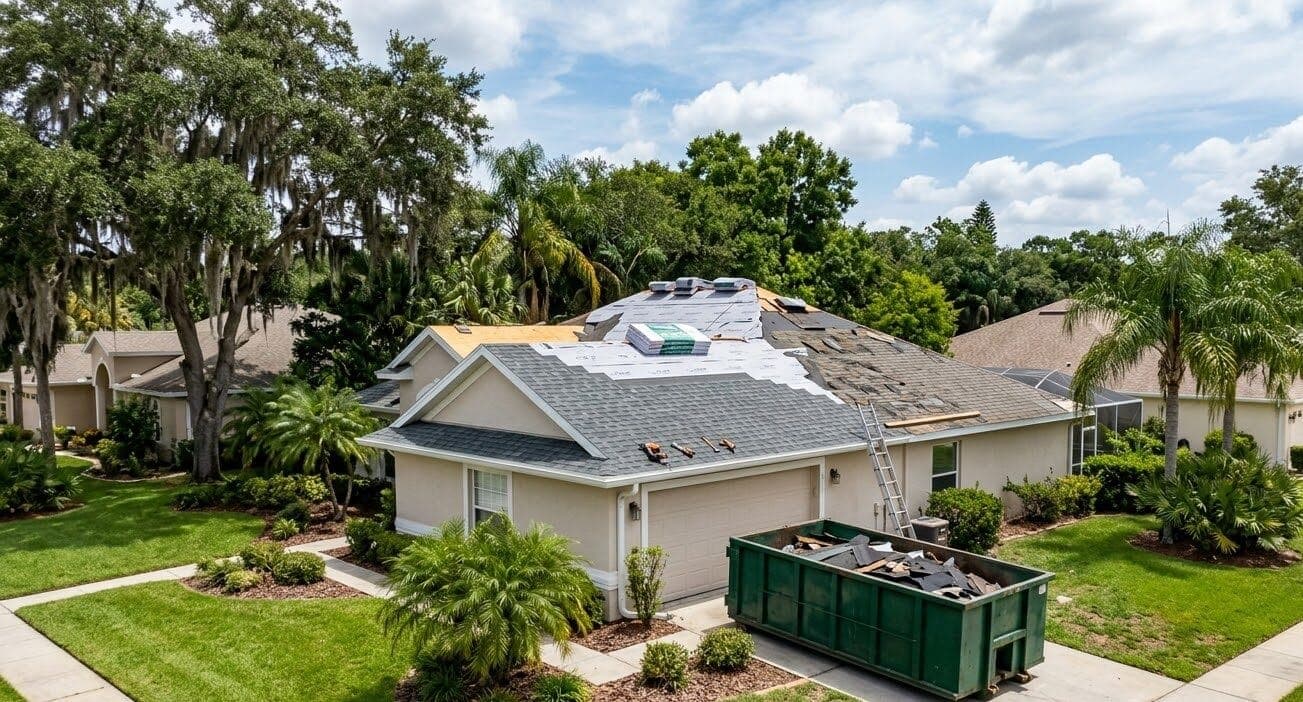
Skylights in Florida: Install, Leaks and Hurricane Ratings
A skylight is a deliberate hole in the one assembly built to keep water out. Florida code puts it through a 9 pound 2x4 at 34 mph and 9,000 pressure cycles. Here is what that means for specifying one, why they leak here, and what replacement runs in 2026.
Read Article
Gutters for Florida Homes: Seamless vs Sectional Guide
Seattle gets 38 inches of rain a year and runs 5-inch gutters. Tampa gets 52.6 and overflows, because 30 of those inches fall in four months and mostly in short bursts. Gutters are sized on inches per hour, not inches per year. Here is the sizing math, what seamless actually buys you, and the two spec lines that matter more than the word seamless in a hurricane state.
Read Article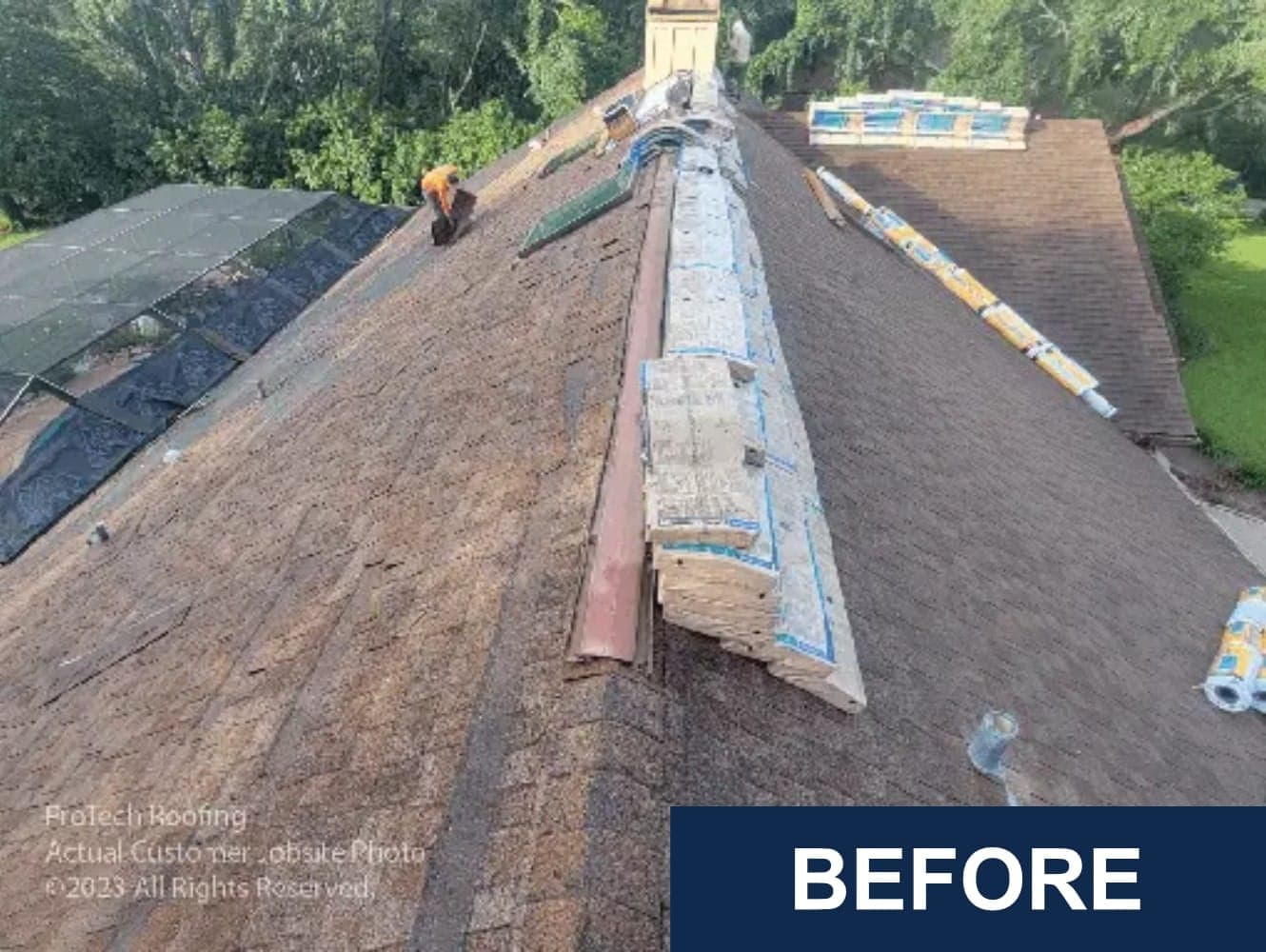
The Ultimate Guide to Roofing in Brooksville, FL (2026)
Complete 2026 guide to roofing in Brooksville, FL. Costs, the 25 percent rule, permits, storm damage, insurance, and how to choose a local contractor in the county seat.
Read ArticleReady When You Are
Get your free roof inspection today.
No-pressure, written estimate. Same-week scheduling across Hernando County. Call us now or request a visit online.