Spring Hill, FL
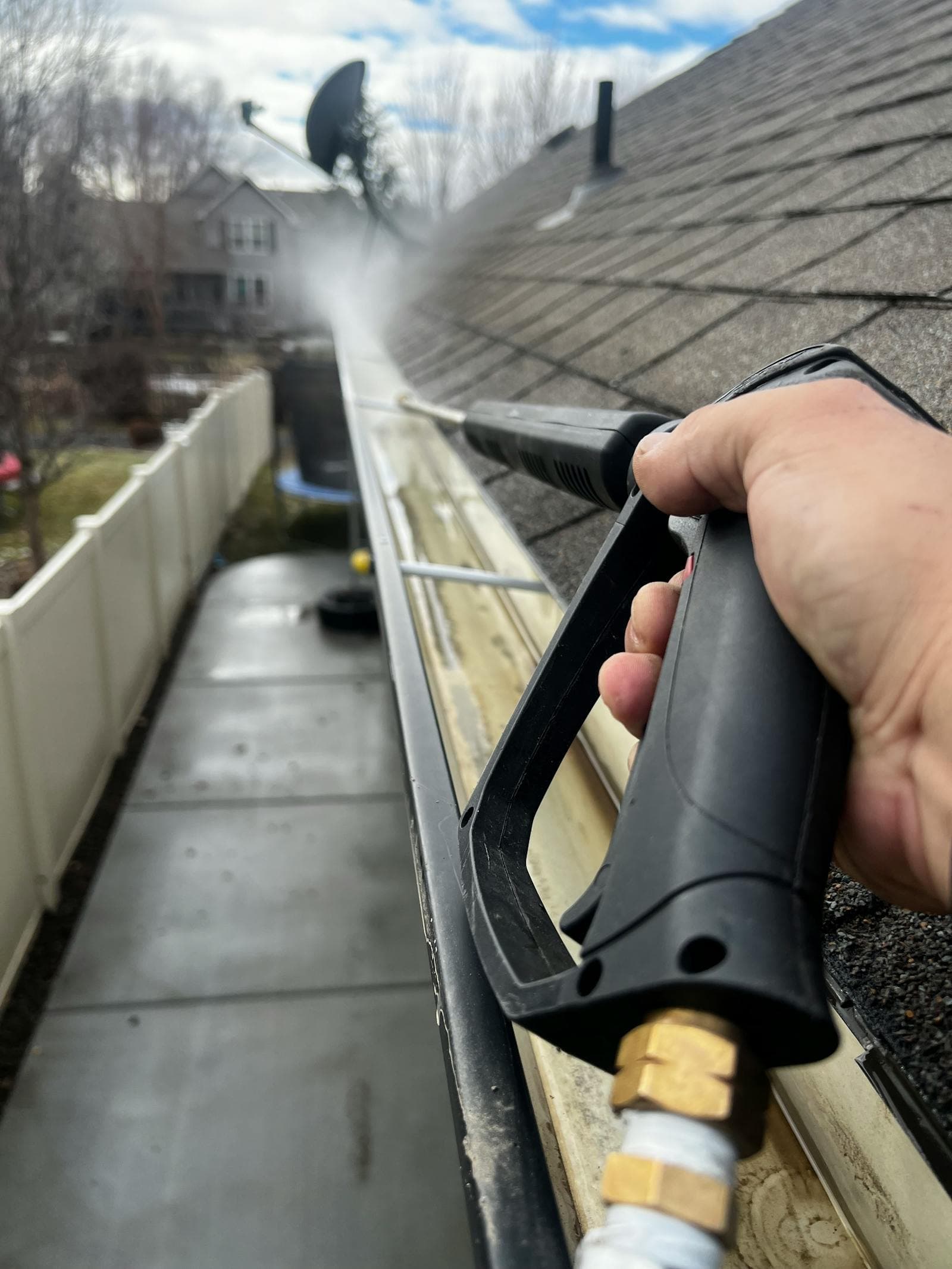
Gutter Cleaning in Spring Hill, FL
Gutter cleaning in Spring Hill, FL. Pine straw, oak debris, super gutter service. Protech Roofing. Call (352) 605-0696.
Call (352) 605-0696Walk any wooded street in Spring Hill on a windless October afternoon and you'll hear something most newcomers don't expect: a soft, steady tick of pine needles landing on metal roofs and asphalt driveways. That sound is the reason gutter cleaning in Spring Hill, FL behaves more like a quarterly maintenance subscription than a chore. Hernando County sits on top of what was once a continuous longleaf and slash pine forest, and the surviving canopy across Timber Pines, Glen Lakes, Sterling Hill, and Forest Oaks dumps wet needle mats into gutter troughs from late May through Christmas. Protech Roofing services the whole footprint from our Brooksville yard 15 minutes up US-41. Call (352) 605-0696 to get on the schedule.
You Are Viewing
Gutter Cleaning for homeowners and businesses in Spring Hill, part of Hernando County, FL, Florida.
The Three-Window Gutter Cleaning Calendar for Spring Hill
There's a particular kind of phone call we get every November from a homeowner who just bought in Wellington or Berkeley Manor. The owner moved down from Pennsylvania or Indiana, asked the neighbor when gutters get cleaned, and was told "after the leaves fall." Then a tropical system rolled through and water came pouring down the back of the stucco. The lesson lands hard the first time. Hernando County does not run on a single-cleaning-per-year northern calendar. The canopy here works year-round, the rainy season hammers gutters during the same months the trees are still dropping debris, and one annual visit is structurally too few.
What works on a Spring Hill home is a three-window cadence. Window one runs late February into mid-April. Window two falls between June and August. Window three happens September through November. Each window targets a debris source that peaks during that stretch, and the windows are spaced so no single overflow event catches the troughs already loaded with the next season's load. That's the practical reasoning behind the schedule, and it's the cadence we put on our own homes here in Hernando County.
Spring Hill's calendar diverges from what works for inland Florida communities in one important way. Because we sit close enough to the Gulf that wind-driven debris reaches us from over the water, our summer visit carries more weight than most inland markets. A June or July tropical squall pushes everything in the canopy into the gutter at once, and if window two has been skipped, the August storms hit a trough already three-quarters full. That's the failure pattern we see over and over on retrofit calls.
For homeowners who absolutely will not pay for three visits, the two-visit fallback is April and October. We're honest that two leaves gaps during peak storm season, but two beats one by a wide margin. What doesn't work is the single-visit November schedule that's standard up north. Anyone running that schedule in Spring Hill is one summer thunderstorm away from a stucco repair bill that would have paid for years of proper cleanings.
Pine Straw and Oak Catkin Buildup Across Spring Hill
Pine straw is the single biggest reason Spring Hill gutters fail, and it's worth explaining the mechanics because most homeowners underestimate what's happening inside the trough. A mature longleaf pine sheds needles in two ways: a constant background drip of individual needles year-round, and a heavy concentrated shed in late October and November when the older inner needles cycle out. The needles measure six to ten inches long on a healthy tree, and they fall in clusters of two or three still bonded at the base. Once those clusters hit a wet gutter, the basal sheath releases and the needles fan out and interlock with whatever's already in the trough.
Interlocking is the part homeowners don't see. A pine needle on its own would float and flush through a downspout. But three needles tangled into a small bundle catch on a hanger spike, then ten more catch on that bundle, then within a week the entire trough section between two hangers is a knit mat. Water doesn't drain through that mat. It rides over the top, and depending on the gutter pitch it either spills out the front lip onto the lawn or backs up over the rear edge onto the fascia. Front-spill is annoying. Rear-spill is what rots fascia boards and stains stucco.
Timber Pines, the 55-plus gated community wrapped around its golf course, sits inside what used to be virgin longleaf canopy, and the residents who've lived there longest will tell you the pine straw load on their gutters is heavier than anywhere else in Spring Hill. Glen Lakes runs a close second because the back fairways back up to undeveloped pine flatwoods. Sterling Hill catches a moderate load on the older blocks closer to the entry. Forest Oaks gets a hybrid load because the canopy mix includes mature live oaks alongside the pines, which brings the second piece of the debris puzzle into play.
Live oak catkins matter, but they're the secondary actor in Spring Hill, not the lead. The catkins fall in a narrow window from roughly the third week of February through the first week of April, depending on temperature. They're stringy, yellow-brown, and about the size of a small earthworm. The damage they do alone is moderate. The damage they do mixed with leftover pine straw from the previous fall's window three visit is severe, because the catkins fill the voids between knitted needles and turn the whole mat into a sealed felt. That's the precise debris combination our spring window targets, and it's why we schedule that visit late enough in March that the catkin shed is complete.
Newer Wellington and Berkeley Manor blocks with thinner canopy see a much lighter pine straw load, sometimes none. Their dominant debris is palm frond fragments and crape myrtle seed pods, with seasonal pollen drift from upwind streets. So the three-window schedule still applies, but the volume per visit drops and the cleaning goes faster. We price those homes accordingly.
Why Clogged Super Gutters Flood Spring Hill Lanais
Summer thunderstorms in Spring Hill produce a specific kind of super gutter failure that doesn't get talked about enough, and it's worth pulling apart because the mechanics are different from the slow-clog overflow that happens with standard fascia gutters. A super gutter on a birdcage lanai is essentially a closed channel feeding one or two downspouts at the ends of a long run. When a heavy summer cell drops two inches of rain in twenty minutes, the volume coming off the main roof slope above hits the super gutter all at once, and any restriction at the downspout causes immediate back-pressure inside the channel.
Back-pressure is what destroys super gutters. A clogged standard gutter overflows the front edge and stains the wall below. A super gutter under back-pressure can pop seams, lift the channel away from the screen support beams, and force water out through the screen attachment points into the lanai ceiling cavity. We've opened up super gutter ceiling soffits on Wellington and Sterling Hill homes where the homeowner thought they had a roof leak and found instead that a clogged super gutter had been pressure-spraying water up against the underside of the soffit panel for two summer seasons. The repair bill on that scenario climbs fast because it involves both gutter work and ceiling reconstruction.
Service-wise, super gutters require a different approach than standard troughs. The channel sits behind the birdcage frame, the screen support beams interrupt access at regular intervals, and the channel depth makes it hard to scoop debris out without dragging it across the seam at the bottom. Our crews work with short curved scoops sized to fit between the beam intersections, and we flush only after the bulk debris is out by hand. Flushing through a partially clogged super gutter just packs the clog tighter against the downspout entrance, and we've corrected that exact mistake left behind by other contractors more than once.
If a super gutter has been neglected for years, the debris inside compresses into something closer to potting soil than gutter waste. At that point cleaning through the existing access points stops being possible, and the honest conversation has to happen. The two options are cutting a temporary access panel and patching with butyl tape plus a riveted aluminum cover, or replacing the channel entirely if the bottom seam has corroded through. We photograph the interior condition first, walk the homeowner through the photos, and get written approval on the scope before any cutting tools come out.
Post-Storm Gutter Cleanup After Idalia, Helene, and Milton in Spring Hill
Hernando County took a different beating than inland counties during the 2023 to 2024 storm cycle. Our Gulf proximity, roughly twelve miles from the coast at the closest, means the wind field arrives at Spring Hill with more energy than it has by the time it reaches the inland communities to our east. The mechanical consequence is wind-driven debris, which is a different problem than rain-saturated debris. Wind-driven means whole branches, palm fronds traveling sideways, fence sections, and roofing material from neighbors several blocks upwind. All of it lands in gutters with kinetic energy a standing-rain event never produces.
Idalia made landfall at Keaton Beach as a Category 3 on August 30, 2023, and the western edge of its wind field swept across Hernando County with sustained 70 to 85 mph gusts. Helene arrived September 26, 2024 as a Category 4 at the Big Bend, and the surge plus wind on the Hernando coast was the worst many longtime residents could remember. Milton followed thirteen days later on October 9, 2024, and the tornado outbreak that spawned ahead of the eye dropped multiple confirmed tornadoes in nearby Pasco and Hillsborough counties. The cumulative effect on Spring Hill gutters was a debris load mixed with structural damage we don't see during routine seasonal work.
What changes in our post-storm process is sequence. A routine cleaning starts with debris extraction. A post-storm visit starts with a damage assessment, because if the gutter has separated from the fascia or a hanger has pulled out, scooping debris before reattachment risks tearing the gutter loose entirely. We walk the perimeter first, document every hanger and miter joint, photograph anything that's moved, and only then clean. The cleaning itself often reveals damage that was hidden under the debris pile, so we re-photograph the trough condition after extraction as a second pass.
Insurance documentation is where the Gulf-proximity wind difference matters most for Spring Hill homeowners. A gutter pulled away from the fascia by named-storm wind is a covered loss under most Florida policies, but the carrier needs photographs showing the failure mode and a written description tying it to the storm. Our post-Milton documentation packages went out within 48 hours of each visit, and the homeowners who used those packages saw faster claim resolution than neighbors who tried to document on their own. We're not adjusters and we don't file claims, but we hand you what the carrier needs to evaluate the gutter portion of the loss properly.
Pre-storm cleaning is worth scheduling when a system enters the Gulf, with the caveat that timing matters. The right window is 72 to 96 hours ahead of projected landfall. Inside 48 hours the value drops because the trough may already be filling with wind-driven debris. Inside 24 hours we can't safely get on the roof. Spring Hill homeowners who called during the early track-uncertainty phase of Helene got pre-storm visits done; the ones who waited until the cone narrowed didn't get on the schedule in time.
What We Pull Out of Spring Hill Gutters
Every gutter cleaning in Spring Hill produces a small archaeological record of the property, the canopy, and the previous maintenance history. We've kept rough mental tallies across thousands of visits, and the distribution is consistent enough that we can predict a Timber Pines bucket's contents before the crew comes down the ladder. The list below ranks roughly by weight, not by count, because what matters for gutter performance is debris mass more than item count.
Pine straw dominates the weight ranking on any home under longleaf or slash pine. We're talking 60 to 80 percent of total bucket weight on heavily canopied Timber Pines lots after a fall window cleaning. Live oak catkins come second by weight during the spring window, particularly on Forest Oaks blocks where mature oaks share the canopy with pines. Pine cones are a distant third by count but their individual weight is significant when wet, and a single saturated pine cone wedged into a downspout outlet is a complete blockage. We pull a half-dozen pine cones from a typical Glen Lakes service, more from Timber Pines.
Palm fronds and frond fragments come next, contributing the most physical damage per pound because a rigid frond stem can punch through a gutter bottom or crack a soldered seam if it lands wrong. Magnolia leaves accumulate slowly but don't break down, so they pack into corners on homes with mature magnolias in the yard. Crape myrtle seed capsules and bottlebrush flower spent stems show up on the newer neighborhoods. Asphalt shingle granules sediment the bottom of every gutter trough on a shingle-roofed home, and the granule volume per cleaning is one of our most useful diagnostic signals for shingle age. Heavy granule equals near-end-of-life shingles, and we mention that finding to the homeowner so they can plan ahead.
The oddities are the part our crews remember. A pair of reading glasses that turned out to belong to the previous owner from before the house sold. A nest of baby anoles in a downspout elbow, evacuated unharmed. Half a dozen golf balls from Timber Pines lots inside the course perimeter. A weathered hockey puck on a Berkeley Manor property whose owner had no explanation. A complete intact paper wasp nest from a homeowner who'd been wondering all summer where the wasps were coming from. Anything in the gutter that isn't water is debris, and debris of any kind disrupts the drainage your roof was designed around. We bag it all, weigh the load on heavy visits, and the homeowner gets the photo at signoff.
Cleaning Two-Story Homes in Wellington and Forest Oaks
Spring Hill's two-story housing stock is concentrated in specific places. Wellington has a cluster of Designer homes on its newer streets, Forest Oaks has scattered two-story Designer builds on the larger lots, and the newer Sterling Hill phases include some two-story product. Most of the rest of Spring Hill is single-story slab-on-grade tract product from the original Deltona platting, which is straightforward to service safely. Two-story work is a different category of job entirely.
The math of a fall from a second-story eave is unforgiving. The eave sits roughly 18 to 22 feet above grade, which produces about four times the impact energy of a fall from a single-story eave at 8 to 10 feet. The injury patterns we read about in the Hernando County emergency room reports are consistent: hip and pelvis fractures from striking the patio, wrist fractures from the instinctive arm-extension reflex, and traumatic head injuries from striking a hard surface. None of this is necessary. Most Florida homeowner policies explicitly exclude coverage for owner-caused injuries during roof or gutter work, so the financial fallout from a fall hits twice.
Our two-story protocol uses OSHA-rated harness systems anchored to a ridge point we evaluate before climbing, ladder stabilizers that prevent the side-kick that causes most homeowner ladder falls, and a two-person crew minimum at all times. Wellington Designer homes often have complicated roof geometry with multiple slopes, second-story dormers, and gutter sections that aren't visible from any single ground vantage. The first visit on a new two-story customer always includes a mapping pass where we walk the entire perimeter, sketch the gutter run, and photograph each downspout outlet for the customer file. That documentation pays off on the second visit when the crew already knows the layout cold.
Bundling Gutter Cleaning With Inspection in Spring Hill
There's a cost efficiency in stacking work onto a single roof access that we lean into with most of our Spring Hill cleaning customers. The ladder is already up. The harness is on. The crew has their hands on the surface and direct sight lines across every slope. Adding a visual roof inspection to that visit costs a fraction of what a standalone inspection runs, because the expensive part (getting safely up there) is already paid for by the gutter scope.
The visual inspection covers shingle field condition (lift, crack, missing tab, granule loss pattern), ridge cap adhesion, pipe boot rubber condition (these crack in Hernando County UV faster than anything else on the roof), valley flashing for rust or sealant separation, drip edge integrity, and nail pop or fastener back-out anywhere in the visible field. Tile roofs get a separate checklist that includes cracked or slipped tiles and the condition of ridge mortar. Metal roofs get a seam-and-fastener pass, with particular attention to exposed-fastener panels where the rubber washers degrade in our UV.
When the inspection finds nothing, the homeowner gets a clean report at signoff. We don't manufacture findings to sell repairs. When the inspection does find something, the most common item is a split pipe boot, followed by a lifted ridge cap shingle and a separated valley flashing seam. A pipe boot replacement caught early runs $200 to $400 and takes 30 minutes. The same boot ignored until it leaks into a ceiling produces a multi-thousand-dollar interior damage claim plus the original repair. The math of bundling is straightforward.
For Spring Hill homeowners on our annual maintenance inspection program, the gutter visits don't replace the formal inspection but add three additional roof touches per year. Four roof contacts annually is the cadence we'd run on our own homes if we lived in Timber Pines or Glen Lakes, and it's the cadence that catches small problems before they become storm-season disasters. That's the case we make to every customer who asks whether the bundling math actually works in their favor.
More in this area
Other roofing services in Spring Hill
FAQ
Frequently Asked Questions
Why is pine straw worse for Spring Hill gutters than oak leaves?
+
Do super gutters fail differently during Spring Hill summer storms?
+
Did Spring Hill get worse hurricane gutter damage than inland Florida?
+
Which Spring Hill neighborhoods need the heaviest cleaning schedule?
+
Do you charge a flat rate or per-trough-foot for Spring Hill cleanings?
+
From the Blog
Stay informed about roofing in Florida.

Gutters for Florida Homes: Seamless vs Sectional Guide
Seattle gets 38 inches of rain a year and runs 5-inch gutters. Tampa gets 52.6 and overflows, because 30 of those inches fall in four months and mostly in short bursts. Gutters are sized on inches per hour, not inches per year. Here is the sizing math, what seamless actually buys you, and the two spec lines that matter more than the word seamless in a hurricane state.
Read Article
Box Gutter Solutions for Commercial Roofs in Central Florida
Complete guide to box gutter systems for commercial flat roofs in Central Florida. Types, materials, sizing for Florida rainfall, common problems, repair costs, and maintenance. Call (352) 605-0696.
Read Article
The Ultimate Guide to Roofing in Spring Hill, FL (2026)
Complete 2026 guide to roofing in Spring Hill, FL. Materials, costs, permits, contractors, and hurricane-ready options for Hernando County homeowners.
Read ArticleReady When You Are
Get your free roof inspection today.
No-pressure, written estimate. Same-week scheduling across Hernando County. Call us now or request a visit online.