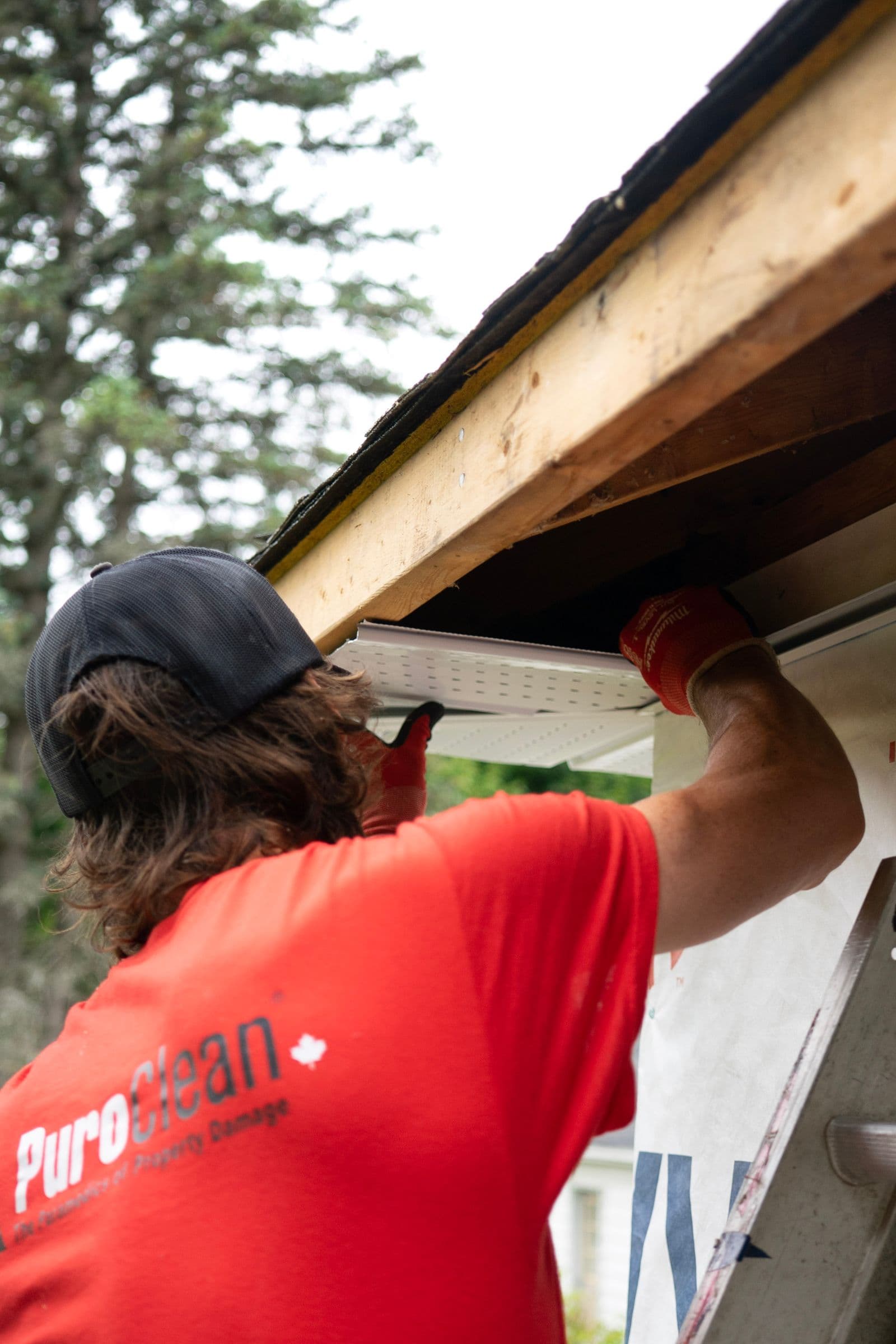
Largo, FL
Gutter Installation in Largo, FL
Seamless gutter installation in Largo, FL. Aluminum, copper, downspouts for ranches and manufactured homes. Call (352) 605-0696.
Call (352) 605-0696Walk through almost any street in central Largo and you'll see a housing pattern you don't get in most Pinellas cities: 1960s and 1970s slab ranches sitting next to manufactured home parks, with a 55+ community a block away. That mix is exactly why gutter installation in Largo, FL takes a different playbook than what works on a Snell Isle waterfront or a Clearwater Beach barrier-island home. Protech Roofing installs seamless aluminum, copper, and downspout systems on ranches near Lake Seminole, retrofits gutters onto manufactured homes in parks off Ulmerton and East Bay, and handles the visible-from-the-street review boards in Highland Lakes and Imperial Cove. Call (352) 605-0696 for a free measurement and a written quote.
You Are Viewing
Gutter Installation for homeowners and businesses in Largo, part of Pinellas County, FL, Florida.
Why Largo's Mix of Ranch, 55+, and Manufactured Homes Need Custom Gutter Approaches
There isn't one right gutter answer for Largo because there isn't one Largo home. The city's housing stock breaks into three big buckets, and each bucket wants a different approach at the eave. The mid-century block ranches around Lake Seminole and Ridgewood Highlands need standard 5-inch or 6-inch K-style seamless aluminum because the rooflines are straightforward and the fascia is solid wood. The 55+ communities like Highland Lakes and Imperial Cove want the same materials but with stricter color matching and an HOA paperwork step. And the manufactured home parks off Ulmerton, East Bay, and 113th Street North are a different animal entirely.
That last bucket is where Largo separates itself from every other city we serve. Mobile and manufactured homes don't have the same fascia structure a stick-built house has. The eave is often a narrow drip rail or a thin aluminum facing strip, and the home itself sits on piers above a vapor barrier that protects the underbelly. When rain pours off an ungutter manufactured roof, it doesn't just splash the siding. It saturates the soil right at the pier line, washes out the gravel pad, and worst of all soaks the underbelly insulation through tears in the vapor barrier. We've pulled off underbelly panels in Belleair Bluffs parks and found 40 pounds of waterlogged batt insulation hanging where the gutters should've been catching that water.
So the conversation we have at a Largo estimate visit isn't just about color or profile. It's about which of those three home types you have, what the slope and fascia situation actually looks like up close, and whether the goal is straightforward foundation protection on a ranch, HOA-compliant matching on a 55+ Designer, or full underbelly defense on a manufactured home. Each path gets different brackets, different downspout sizing, and a different conversation about discharge.
We don't bundle Largo into a one-size install template. Each quote is built around the actual home in front of us, because that's how you avoid the failures we get called to fix from cheaper installers who treated a 1972 ranch the same as a manufactured home in a 55+ park.
Aluminum vs Copper for Largo Mid-Century Block Homes
The 1960s and 1970s block-and-stucco ranches that fill Ridgewood Highlands, the Lake Seminole neighborhoods, and pockets near Belleair Bluffs are some of the best candidates for seamless aluminum gutter installation in Pinellas County. Solid plywood fascia, modest roof pitches, and continuous eave runs make these homes a clean install. We brake-form the aluminum on-site in the driveway, hang one continuous piece per run with no field seams, and the whole job usually wraps in a day.
For most Largo ranches we install .032-gauge aluminum in 5-inch K-style with 2x3-inch downspouts as the baseline. We bump up to 6-inch K-style with 3x4-inch downspouts when the roof pitch is steeper, the eave run is over 35 linear feet between downspout positions, or the home sits on a lot that tilts toward the slab instead of away. The 6-inch upgrade adds about $2 per linear foot but roughly doubles the carrying capacity, and in a city that gets 50-plus inches of rain a year, that headroom matters when an August thunderstorm dumps three inches in 40 minutes.
Copper is the upgrade conversation we have with Largo homeowners who want their gutter system to be a permanent feature rather than a maintenance item. Copper develops the green patina you see on historic buildings, never needs paint, and outlasts aluminum by a wide margin. The cost is the catch. Copper runs $25 to $40 per linear foot installed depending on profile, transitions, and the number of miters. We've installed copper on a few Largo mid-century blocks where the homeowner restored the home to its original mid-century look, and the copper at the eave ties the elevation together. For the average Largo ranch, though, aluminum is the right answer.
We don't usually push galvanized steel on Largo homes. Steel rusts at cut edges and seams within a decade in Pinellas humidity, and the salt-air influence from the Gulf side reaches inland farther than people expect. Aluminum doesn't have that failure mode, and copper handles it indefinitely. If a homeowner specifically wants steel, we'll install it with the right primers, but we tell them up front the maintenance cycle is shorter than what they'd get on either of the other two materials.
Gutter Installation on Manufactured and Mobile Homes in Largo
Manufactured home gutter installation in Largo is the work we get asked about more than almost any other gutter question in the city. Largo has a high concentration of mobile and manufactured home parks, and most of those homes either never had gutters or had a thin builder-grade strip that failed years ago. When we walk a park lot, the first thing we look at isn't the fascia. It's the underbelly.
A manufactured home sits on piers above a vapor barrier, and that barrier is what keeps moisture out of the floor system, the insulation, and the duct chase below the home. When water from an ungutter roof sheets off the eave, it doesn't just hit the siding and bounce. It pools at the perimeter, soaks into the gravel pad, and eventually finds any tear or seam in the vapor barrier underneath. Once that happens, the insulation gets wet, the floor structure starts to rot, and the energy bills climb because warm humid Florida air is moving freely through the underbelly. We've torn down rotted underbellies in Largo parks where the only fix was a full re-belly with new insulation, and every one of those jobs traces back to no gutters at the roof.
Our install approach on a manufactured home starts with adding a proper attachment surface. Many manufactured homes don't have a fascia board behind the drip rail, so we add a backer strip that gives the hidden hangers something solid to bite into. We use lighter-gauge aluminum on these jobs because the eave structure isn't engineered to carry the same load a stick-built fascia can, and we space the hangers tighter than we would on a ranch. Downspouts get sized based on roof area, and we always discharge well away from the pier line with splashblocks or short PVC runs that throw water 6 to 8 feet out toward the lot drainage. The goal isn't just to keep water off the siding. It's to keep the soil at the pier line dry so the vapor barrier underneath stays sealed.
Most park boards in Largo allow gutter retrofits without much paperwork because the install is reversible and protects the home. Some parks have a specific color requirement, and a couple require the resident to coordinate the discharge points with the park manager so runoff doesn't end up on a neighbor's pad. We handle those conversations during the estimate visit and make sure the install meets whatever the park's written rules call for before we cut a single piece.
Sizing Downspouts for Largo's Stormwater and Low-Lying Drainage
Downspout sizing on a Largo install isn't a guess. We calculate it based on roof area feeding each downspout, then factor in the peak rainfall intensity Pinellas County gets during the wet season. The shortcut math we use is simple: a 2x3-inch downspout handles about 600 square feet of roof in a Pinellas storm, and a 3x4-inch downspout handles roughly twice that. So a 30-foot eave run with a 20-foot deep roof slope feeding into one downspout puts us at 600 square feet, which is the limit of the smaller size. Anything beyond that and we either upsize the downspout or add a second one.
Largo has another wrinkle the inland Hernando cities don't have. Big sections of the city sit at lower elevation, and after Hurricane Helene in September 2024 and Hurricane Milton in October 2024, neighborhoods near Lake Seminole and the lower-lying parts of Ridgewood Highlands saw standing water for days. That drainage situation matters at the downspout. If your lot already pools after a normal afternoon storm, dumping a thousand gallons of roof runoff onto a splashblock 4 feet from the slab just adds to the puddle. So we map the lot before we set discharge points.
On a flat lot we'll often run buried PVC drain lines from the downspout out to the property edge or to a daylight pop-up emitter that discharges into a swale or street curb. That keeps the water moving away from the house instead of soaking the foundation perimeter. Buried drains add $15 to $25 per linear foot to the project but they pay off fast on a lot that doesn't drain well naturally. We've installed buried discharge lines on dozens of Largo homes after Helene and Milton, and the homeowners tell us the difference at the next afternoon storm is night and day.
For manufactured homes the discharge math is the same but the priority is different. The water has to get past the pier line, period. We won't sign off on a manufactured home install if the downspout dumps within 6 feet of the pad edge, because that's the failure mode that ruins the underbelly. So you'll see us using extension elbows, splashblocks angled outward, or short PVC runs more aggressively on manufactured home jobs than on stick-built ranches.
55+ Community HOA Standards for Visible Gutters in Highland Lakes and Imperial Cove
Highland Lakes and Imperial Cove are the two 55+ communities that show up most often in our Largo gutter installation work, and they each have their own architectural review process for any visible exterior change. Gutters fall under that review because they change the elevation of the house from the street. The good news for homeowners in either community is that the standard aluminum colors are typically pre-approved, so the paperwork moves quickly.
White aluminum is the default in both communities and almost never triggers extended review. Bronze and dark brown are also commonly accepted to match darker fascia trim packages. The case where homeowners run into the review process is when they want copper, an unusual color, or a profile that visibly differs from neighboring homes. We walk through the application together at the estimate visit, take the elevation photos the review board wants to see, and submit the package with the homeowner's signature so the install doesn't get held up.
Highland Lakes also has community-wide standards around downspout placement on the visible street-facing elevation. The boards generally don't want a downspout running down the front center of a home where it interrupts the elevation, so we work with the homeowner to either tuck the downspout near a corner, route it down a less visible side, or use a copper-look aluminum downspout that the board has approved as a decorative element on a few homes. Each case is different, and we work the layout around what gets approved rather than what we'd do on a non-HOA home.
Imperial Cove tends to be slightly more flexible on placement but stricter on color matching to existing fascia. Before we order materials we'll bring a couple of physical color samples to compare against the actual fascia in real daylight, because what looks right in the showroom doesn't always read right under a Florida noon sun. That five-minute step has saved us from a couple of return trips, and it keeps the homeowner from staring at a finished install that's slightly off-tone for the next ten years.
What a Gutter Installation Day Looks Like in Largo
Most Largo gutter installs are a one-day job. A mid-century ranch with 100 to 140 linear feet of 5-inch K-style gutter and three downspouts usually wraps in 5 to 7 hours from crew arrival to final hose test. A larger Designer in Highland Lakes with 180 to 240 feet and four or five downspouts can run into the early afternoon of day two. A manufactured home install in a Largo park is often shorter, sometimes 4 to 5 hours, because the perimeter footprint is smaller and the runs are simpler.
The crew shows up between 7:30 and 8:30 in the morning. First thing is a walkthrough with the homeowner to confirm every downspout location, every corner miter, and every splashblock or buried drain endpoint. Then the brake machine comes off the truck and gets set up in the driveway. The aluminum coil loads into the brake, and the homeowner watches the first run get formed and pulled off the machine as one continuous piece. That moment is usually when the homeowner gets why we keep calling it seamless aluminum.
Hangers go in every 24 to 30 inches on a stick-built ranch and a little tighter, every 18 to 22 inches, on a manufactured home where the eave structure is thinner. We use hidden hangers with internal screws because spike-and-ferrule systems loosen in the Florida heat cycle within a few summers. After the gutters are hung and pitched, we install the downspouts, the elbows, the splashblocks or buried drain lines, and any optional gutter guards if the homeowner ordered them as part of the install. Guards can always be added later but installing them with the gutter saves a return trip.
Final step is the hose test. We run water through every section, check that every downspout is flowing free with no overflow at the corners, and walk the homeowner around the perimeter to confirm nothing drips back at the wall and the slope looks right at every termination. If anything needs an adjustment we fix it before the truck packs up. The homeowner signs off, gets a written warranty document covering material defects and install issues, and gets a care guide that explains when to schedule cleaning and what to check for after a hurricane.
Cost Ranges for Largo Gutter Installation Across Home Types
Largo gutter installation pricing varies more than it does in cities with uniform housing stock, because the home types are so different from each other. A small to mid-size mid-century ranch in Ridgewood Highlands or near Lake Seminole, with 100 to 140 linear feet of 5-inch K-style seamless aluminum, three downspouts, and standard splashblocks, usually runs $1,100 to $2,100 all in. That's the most common quote we write across Largo and it covers a big slice of the city's housing.
A larger Designer or two-story home in Highland Lakes or Imperial Cove with 180 to 240 linear feet, four to five downspouts, and a 6-inch K-style upgrade for the higher water volume runs $2,200 to $3,900. Adding buried drain lines instead of splashblocks pushes the project up another $15 to $25 per linear foot of trenching, which on a typical layout adds $400 to $900 to the total. Gutter guards at install time run another $4 to $9 per linear foot depending on which system the homeowner picks, and we cover those options in detail during the estimate.
Manufactured home gutter installs are usually the smallest dollar number on our Largo schedule. A typical single-wide or double-wide perimeter is shorter than a stick-built ranch, the eaves are simpler, and the downspouts are smaller. A complete install on a Largo manufactured home with backer strip prep, lighter-gauge aluminum, two or three downspouts, and discharge extensions to clear the pier line usually runs $700 to $1,400. Even at the lower end of that range, the underbelly protection alone pays the project back the first time the home would've otherwise taken on water.
Copper installs are a different cost world. A full copper system on a mid-century ranch runs $5,500 to $11,000 just for the copper materials and labor, plus any HOA review costs if the home sits in Highland Lakes or Imperial Cove. We do a handful of copper jobs each year in Largo, usually on homes where the homeowner is restoring a mid-century look or wants a permanent gutter system that becomes part of the architectural detail. All of our quotes include the standard warranty, the on-site brake forming, the hidden hanger system, downspouts, splashblocks, and the hose test signoff. We don't bid jobs without seeing the house in person, because the linear footage, fascia condition, and access all affect the final number.
More in this area
Other roofing services in Largo
FAQ
Frequently Asked Questions
Do you install gutters on manufactured homes in Largo mobile home parks?
+
Does Largo or Pinellas County require a permit for gutter installation?
+
What gutter material works best on Largo mid-century block ranches?
+
How do you handle downspout discharge on low-lying Largo lots?
+
How long does gutter installation take on a typical Largo home?
+
From the Blog
Stay informed about roofing in Florida.
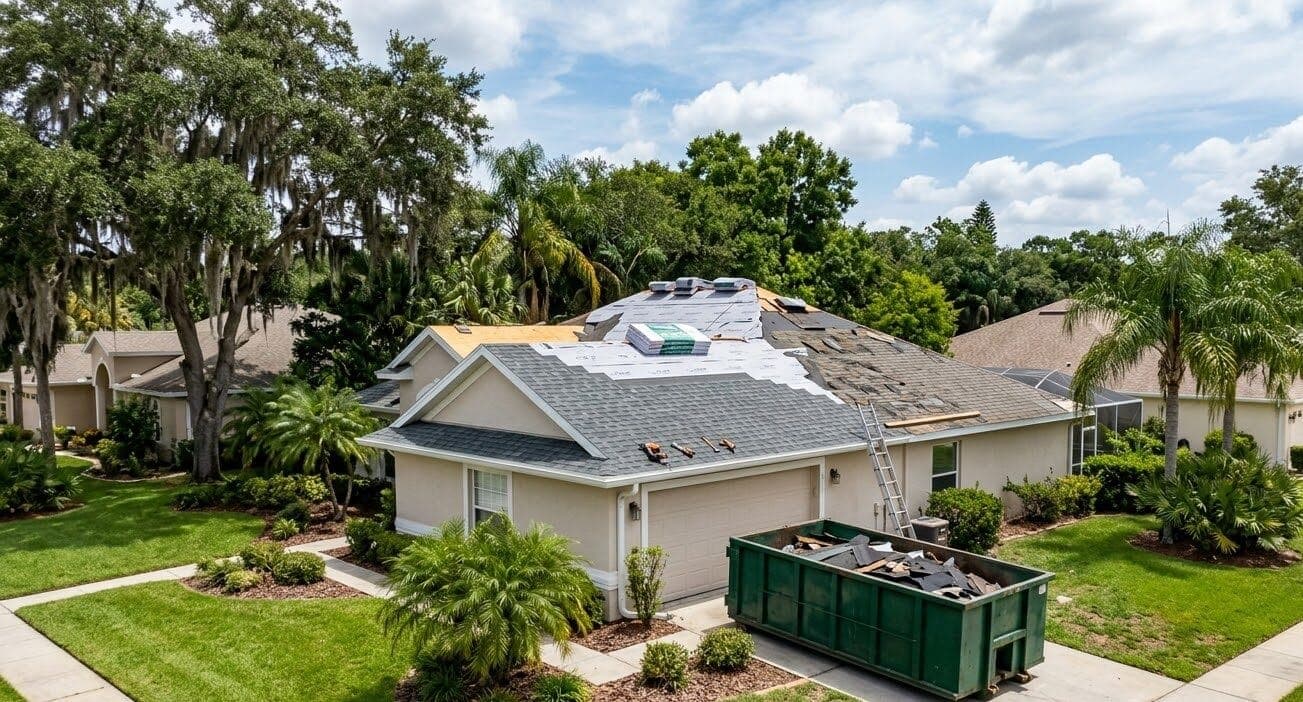
Skylights in Florida: Install, Leaks and Hurricane Ratings
A skylight is a deliberate hole in the one assembly built to keep water out. Florida code puts it through a 9 pound 2x4 at 34 mph and 9,000 pressure cycles. Here is what that means for specifying one, why they leak here, and what replacement runs in 2026.
Read Article
Gutters for Florida Homes: Seamless vs Sectional Guide
Seattle gets 38 inches of rain a year and runs 5-inch gutters. Tampa gets 52.6 and overflows, because 30 of those inches fall in four months and mostly in short bursts. Gutters are sized on inches per hour, not inches per year. Here is the sizing math, what seamless actually buys you, and the two spec lines that matter more than the word seamless in a hurricane state.
Read Article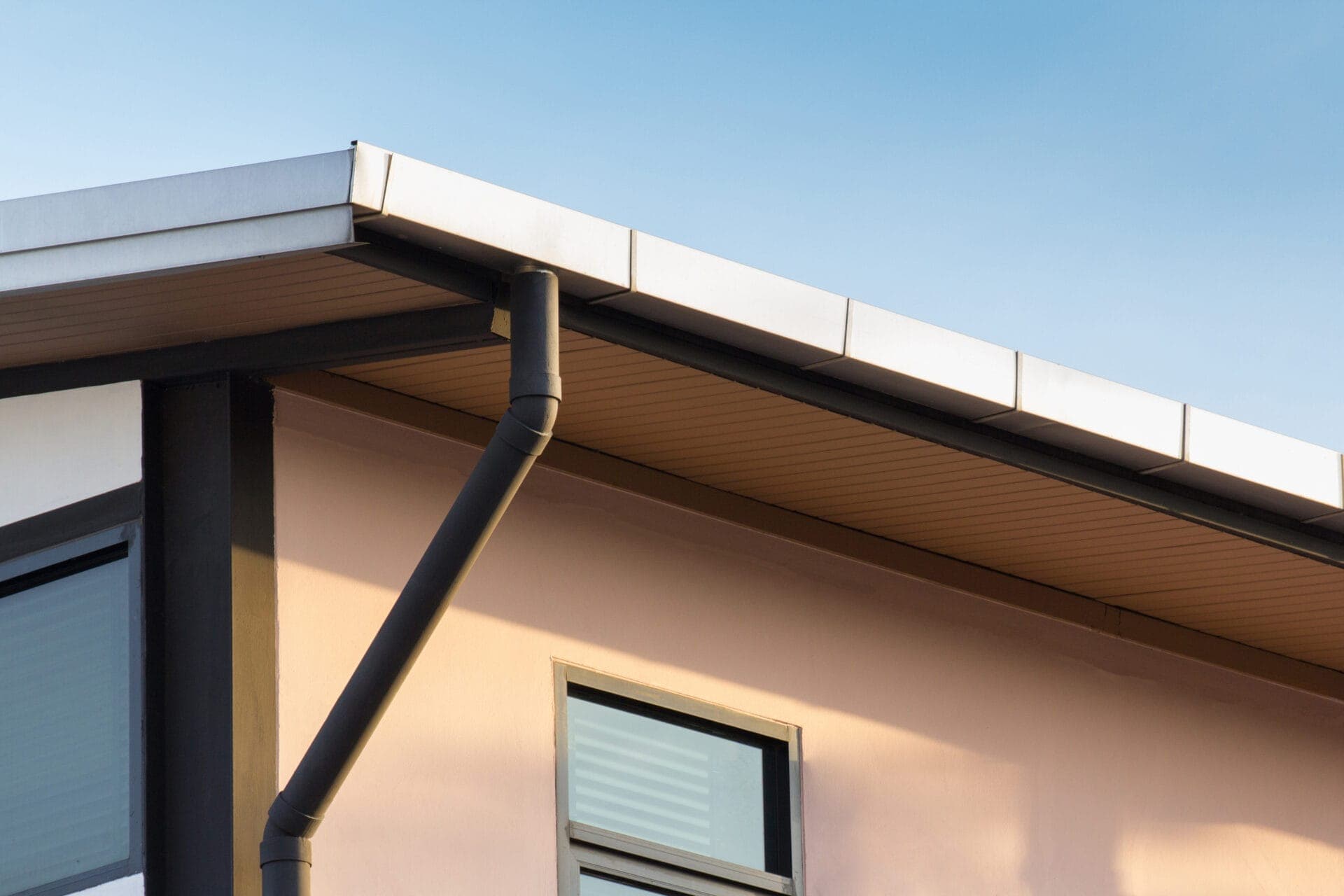
Box Gutter Solutions for Commercial Roofs in Central Florida
Complete guide to box gutter systems for commercial flat roofs in Central Florida. Types, materials, sizing for Florida rainfall, common problems, repair costs, and maintenance. Call (352) 605-0696.
Read ArticleReady When You Are
Get your free roof inspection today.
No-pressure, written estimate. Same-week scheduling across Hernando County. Call us now or request a visit online.