
Brooksville, FL
Gutter Protection in Brooksville, FL
Gutter protection in Brooksville, FL. Micro-mesh and reverse curve for oak pollen and storm debris. Call (352) 605-0696.
Call (352) 605-0696If you've stood under a Brooksville live oak in early April and watched the catkin pollen rain down for two solid weeks, you already understand why most cheap gutter protection fails fast on the Brooksville Ridge. Proper gutter protection in Brooksville, FL has to handle three things most product brochures don't talk about: a sticky pollen mat that seals mesh from above, 130 mph hurricane gusts that test every attachment, and a historic district review process that limits what's visible from the street. Protech Roofing installs micro-mesh and reverse curve guard systems on homes from the downtown grid through Silverthorn, Sherman Hills, Spring Ridge, Villages of Avalon, and Southern Hills Plantation. We're based at 9035 Jayson Drive. Call (352) 605-0696 for a walk-through and an honest recommendation on what'll actually work on your roof.
You Are Viewing
Gutter Protection for homeowners and businesses in Brooksville, part of Hernando County, FL, Florida.
Why Brooksville's Oak Canopy Makes Gutter Protection a Real Investment
Brooksville's tree canopy isn't background scenery. It's the dominant factor in every gutter maintenance decision on the ridge, and it's why a cheap big-box gutter guard fails on most local properties inside two years. Mature live oak overhangs much of the historic district downtown, the older South Brooksville grid, and large portions of Silverthorn and the Cobb Road ridge. Where the oak isn't dominant, slash pine and longleaf pine take over, and pine straw becomes the heavier debris by volume.
The reason oak canopy specifically defeats most guards is the catkin drop. Catkins are the long stringy male flowers of the live oak, and they fall for two to three weeks every March and April. They're sticky with pollen, they're thin enough to slip through most mesh openings, and once they sit on top of a guard for a few days they bind together into a felt-like mat that doesn't blow off in the wind. We've inspected guards on Brooksville homes where the catkin mat was thick enough to hold standing water above the gutter opening, which is the exact failure mode the guard was supposed to prevent.
Pine straw has its own version of the same problem. Long straws don't fall through guard openings, but they sit on top of the guard surface, bridge front-to-back, and trap the smaller debris that does come through. After a few months of compounding load, the guard surface is buried under three or four inches of debris and the gutter underneath is being skipped entirely by the runoff. That's why we don't recommend protection products without first looking at what's actually overhanging the eave on your specific property.
The investment case for protection on Brooksville homes is real, but it has to be calibrated. A property under mature oak in South Brooksville pays back a quality micro-mesh system in 18 to 36 months of avoided cleaning visits. A newer home in Villages of Avalon with light young canopy might take five to seven years to pay back the same system. We walk the perimeter at every estimate, count the trees, look at the canopy density, and give you an honest payback estimate before we quote anything.
Micro-Mesh vs Reverse Curve vs Foam for Brooksville Homes
There are three real categories of gutter protection on the market today, and they perform very differently under Brooksville's specific debris and weather profile. Micro-mesh is the most common premium option, and it's what we install on the majority of Brooksville properties. Reverse curve guards are an older design that still has a use case. Foam inserts are the cheapest option and we generally don't recommend them, but homeowners ask about them so it's worth being honest about why.
Micro-mesh guards use a fine stainless steel mesh, usually around 50 microns in opening size, mounted on a rigid aluminum frame that screws onto the gutter front lip and the roof drip edge. The mesh is fine enough to keep out catkins, pine straw, acorn caps, and even most of the granule wash from aging shingle roofs. Water passes through by surface tension and gravity. The trade-off is that the mesh surface still collects debris on top, so the guard has to be brushed off or rinsed every six to twelve months even though the gutter itself stays clean. On the right property, that's a 90 percent reduction in cleaning labor.
Reverse curve guards use a solid curved nose that wraps over the front of the gutter. Water adheres to the curve and follows it into a slot at the back, while debris is supposed to fall off the curve to the ground. The design works reasonably well in light debris but it fails under heavy oak catkin or pine straw load, because the debris that should slide off instead clumps on the curve and breaks the water-tension flow. Heavy thunderstorm rain at over 3 inches per hour can also overshoot the curve entirely, sending water straight off the eave like there was no gutter at all. We install reverse curve where the homeowner specifically wants it but it isn't our default recommendation for Brooksville.
Foam inserts are blocks of black or grey open-cell foam that drop into the gutter channel and let water pass through while supposedly blocking debris. They're cheap and easy to install, which is why big-box stores stock them. The problem is that they collect organic matter inside the foam structure, hold it wet against the bottom of the gutter, and create exactly the corrosion environment we install seamless aluminum to avoid. Within two to three Brooksville summers, foam inserts usually have to be removed and the gutter itself shows the chemical aging from the trapped debris. We don't install them, and we generally remove them when we find them.
Hurricane Wind Survival of Guards in Brooksville's 130 mph Zone
Hernando County sits in the 130 mph design wind zone per the Florida Building Code 8th Edition, and any product attached to the eave has to survive that wind load to be worth installing. Hurricane Idalia in August 2023 brought sustained inland winds well into tropical storm range across Brooksville. Helene in September 2024 and Milton in October 2024 both brought gusts that tested every attachment on every home in the county. We saw what survived and what failed on guards installed by various crews across the region.
Cheap snap-in guards, including the plastic and aluminum drop-in styles sold at big-box stores, did poorly. We pulled hundreds of those guards out of yards and off neighboring roofs after Helene and Milton. They're held in place by friction or by short clips into the front lip of the gutter, and 100 mph gusts lift them out like they were never installed. Once they're gone, the gutter is open to whatever the storm is depositing, which is usually the worst possible debris load all at once.
Quality micro-mesh systems with rigid aluminum frames mechanically fastened to both the gutter front and the roof drip edge survive Brooksville's wind events well. The attachment is essentially the same as the shingle starter strip, which means it's only failing if the roof itself is failing. We install our micro-mesh with stainless steel screws every 12 to 18 inches into the drip edge and matching screws into the gutter front lip, plus a continuous sealant bead at both edges. Those installations came through the 2024 storm cycle without a single failure.
Reverse curve guards that are properly riveted or screwed to the gutter front also do well, because the wrap-around design adds rigidity. The failure mode on reverse curve in high wind isn't usually the guard itself, it's debris impact damage. Branches or palm fronds carried by hurricane winds can dent or bend the curve, which destroys the water-tension flow the design depends on. Once a reverse curve guard is damaged it usually has to be replaced as a section, which costs more than re-cleaning a standard open gutter would have.
Historic District Review for Visible Gutter Guards in Brooksville
If your home is inside the Brooksville historic district downtown, gutter guards fall under the same Historic Preservation Board review process that covers any visible exterior change. The board cares about what's seen from the public right-of-way, and gutter guards are usually only marginally visible from the street, but they do show on closer approach and the application has to address that.
The good news is that quality micro-mesh systems are usually approved without modification, because the mesh sits flush with the top of the gutter and doesn't change the profile of the eave from a distance. We've had clean approvals on properties along South Brooksville Avenue, Liberty Street, and the historic district streets near the old courthouse square. The application takes 30 to 60 days on average, and we don't order materials until the approval letter is in hand.
Reverse curve guards are sometimes denied or require a bronze or dark finish to clear review, because the curved nose changes the silhouette of the eave visibly. On homes where the original architecture was designed with a specific eave detail, like the Queen Anne and Folk Victorian properties downtown, the board can be particular about anything that alters the line. We work with the homeowner to choose a finish and a profile that addresses both the protection need and the historic character.
Outside the historic district, HOA review applies in most subdivisions. Silverthorn, Sherman Hills, Spring Ridge, Villages of Avalon, and Southern Hills Plantation all have architectural standards that cover gutter guards as a visible exterior change. Most approvals come back inside 2 to 3 weeks for standard micro-mesh in white or bronze finish to match the existing gutter color. We handle the paperwork at the estimate visit so the install schedule isn't held up waiting for forms.
Retrofit on Existing Brooksville Gutters vs Install With New
A common question we get from Brooksville homeowners is whether to retrofit guards onto existing gutters or wait until the next full gutter replacement to add protection. The answer depends on the condition of the existing system, the material, and the gauge of the gutter you already have. If the existing gutter is 5-inch or 6-inch aluminum in good condition with hidden hangers and no obvious sag or pull-away from the fascia, retrofit guard installation works well and saves the cost of new gutters.
If the existing gutter is spike-and-ferrule mounted, which a lot of older Brooksville installations are, retrofit guards are risky. The added wind load on the guard surface plus the weight of any retained debris transfers through the guard to the hangers, and spike hangers in 30-year-old fascia don't hold up well to that extra load. In those cases we recommend replacing the gutter system first with proper hidden hangers, then installing guards as part of the same project. The combined cost is higher upfront but the system lasts decades instead of failing at the hangers within a few years.
For gutters that have visible corrosion, dented sections, or signs of bottom-seam failure, retrofit guards just delay the inevitable. Adding protection to a failing gutter is throwing good money after bad. We'll tell you that during the estimate, and we'll usually quote both options so you can see the comparison side by side. The honest answer on a 25-year-old gutter system with rusted hangers is to replace it before adding any protection.
Cost-wise, retrofit micro-mesh on existing 5-inch aluminum gutters typically runs $4 to $9 per linear foot installed depending on the guard product and any sealing work needed at the existing miters. New gutters with guards installed together adds the gutter system cost to the protection cost, but the total is usually 30 to 40 percent less than scheduling the two projects as separate visits. So if you're already past the 15-year mark on the existing system, doing both at once usually makes more sense than retrofitting.
Cost vs Cleaning Savings: The Brooksville Math
Gutter protection is an investment decision, and the math depends on three things: the cost of the guard system, the cleaning frequency you'd otherwise pay for, and the lifespan of the guard before it needs replacement or major service. We'll walk through real Brooksville numbers so you can see how it pencils out on your property.
A typical Brooksville home in Sherman Hills or Silverthorn with 180 linear feet of gutter pays roughly $200 to $300 per cleaning visit, and we recommend three to four visits per year depending on canopy density. That's $600 to $1,200 per year in cleaning labor without protection. Quality micro-mesh installed retrofit on the same home runs $720 to $1,620 total, with the guard surface needing a light brush-off or rinse once a year for $80 to $120. Net annual cost after install drops to $80 to $200.
The payback on that math is 12 to 24 months in straight cleaning labor savings. After year two, the guard is paying for itself in real money. Over a 15-year guard lifespan, the cumulative savings can run $8,000 to $14,000 against the cleaning baseline, depending on how many storms force extra service visits during hurricane season. That's the strongest case for protection on Brooksville's mature-canopy properties.
For lighter canopy homes in Villages of Avalon or newer Spring Ridge sections, the math shifts. With cleaning frequency dropping to two or three visits a year and lower debris load per visit, the annual baseline is closer to $400 to $700. Payback on the same guard system stretches to 36 to 48 months. The math still works, just on a longer horizon. We'll walk you through your specific numbers at the estimate so you're making an informed decision rather than buying on a generic pitch.
The Honest Maintenance Truth About Guards in Brooksville
Here's something most gutter guard companies won't tell you up front. There is no zero-maintenance gutter system on the Brooksville Ridge. The marketing language around lifetime no-clean guards is the single biggest reason homeowners feel burned after a few years. The truth is that a quality micro-mesh system reduces gutter cleaning labor by about 90 percent compared to an open gutter, but it still requires a light annual brush-off or rinse to keep the mesh surface free of debris.
What you're really buying with protection isn't no maintenance. You're buying the ability to do that maintenance from a hose at ground level instead of climbing a 32-foot ladder. You're also buying time on your shingles and your fascia, because dry gutters don't overflow, don't trap moisture against the eave, and don't shorten the life of the surrounding system. Those are real benefits, but they're not the same as never having to touch your gutters again.
On the post-hurricane side, protection doesn't eliminate the need for a storm-check service visit. Major storms can deposit large debris on top of the guard surface, dent the frame, or push organic matter into the gutter through the seams. We recommend an inspection visit after any named storm passes near Brooksville, even on homes with quality guards installed. The visit is usually quick if the guards held up, but catching damage early prevents bigger problems three months later.
The other honest piece is that no guard system handles every debris type equally well. Live oak catkin season is the hardest test, and even good micro-mesh systems will show some catkin loading on top of the screen during peak drop. We schedule a complimentary post-catkin rinse for every guard install in the historic district and South Brooksville areas, and we recommend the same proactive cleaning for homes in heavier canopy areas of Silverthorn and Sherman Hills. That's the difference between a protection system that ages well and one that the homeowner regrets after three Brooksville springs.
More in this area
Other roofing services in Brooksville
FAQ
Frequently Asked Questions
What's the best gutter protection for Brooksville's oak canopy?
+
Will gutter guards survive a hurricane in Brooksville?
+
Do I need historic district approval for gutter guards in Brooksville?
+
Is it worth retrofitting gutter guards on existing Brooksville gutters?
+
How much do gutter guards cost in Brooksville and how fast do they pay back?
+
From the Blog
Stay informed about roofing in Florida.

Gutters for Florida Homes: Seamless vs Sectional Guide
Seattle gets 38 inches of rain a year and runs 5-inch gutters. Tampa gets 52.6 and overflows, because 30 of those inches fall in four months and mostly in short bursts. Gutters are sized on inches per hour, not inches per year. Here is the sizing math, what seamless actually buys you, and the two spec lines that matter more than the word seamless in a hurricane state.
Read Article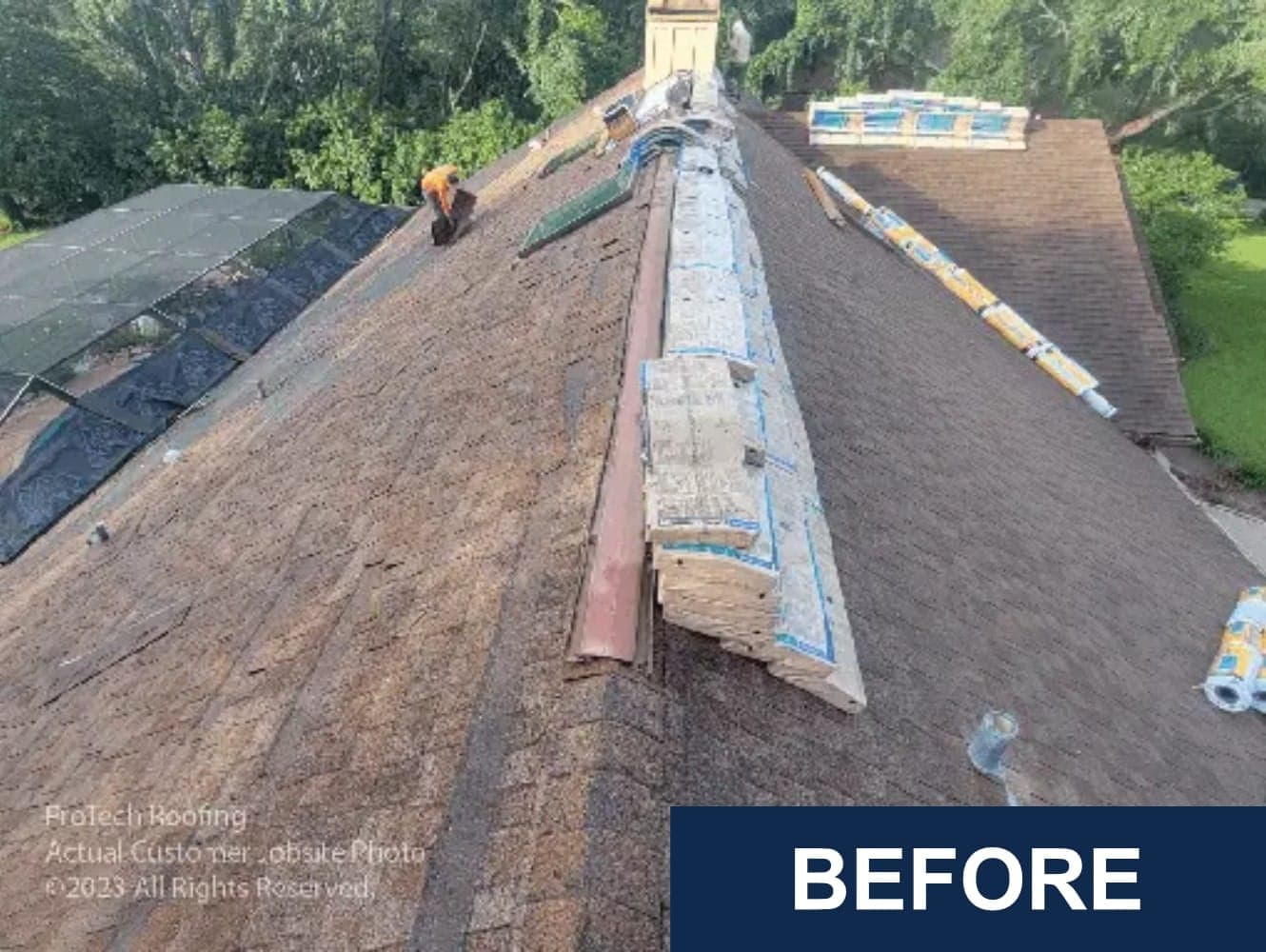
The Ultimate Guide to Roofing in Brooksville, FL (2026)
Complete 2026 guide to roofing in Brooksville, FL. Costs, the 25 percent rule, permits, storm damage, insurance, and how to choose a local contractor in the county seat.
Read Article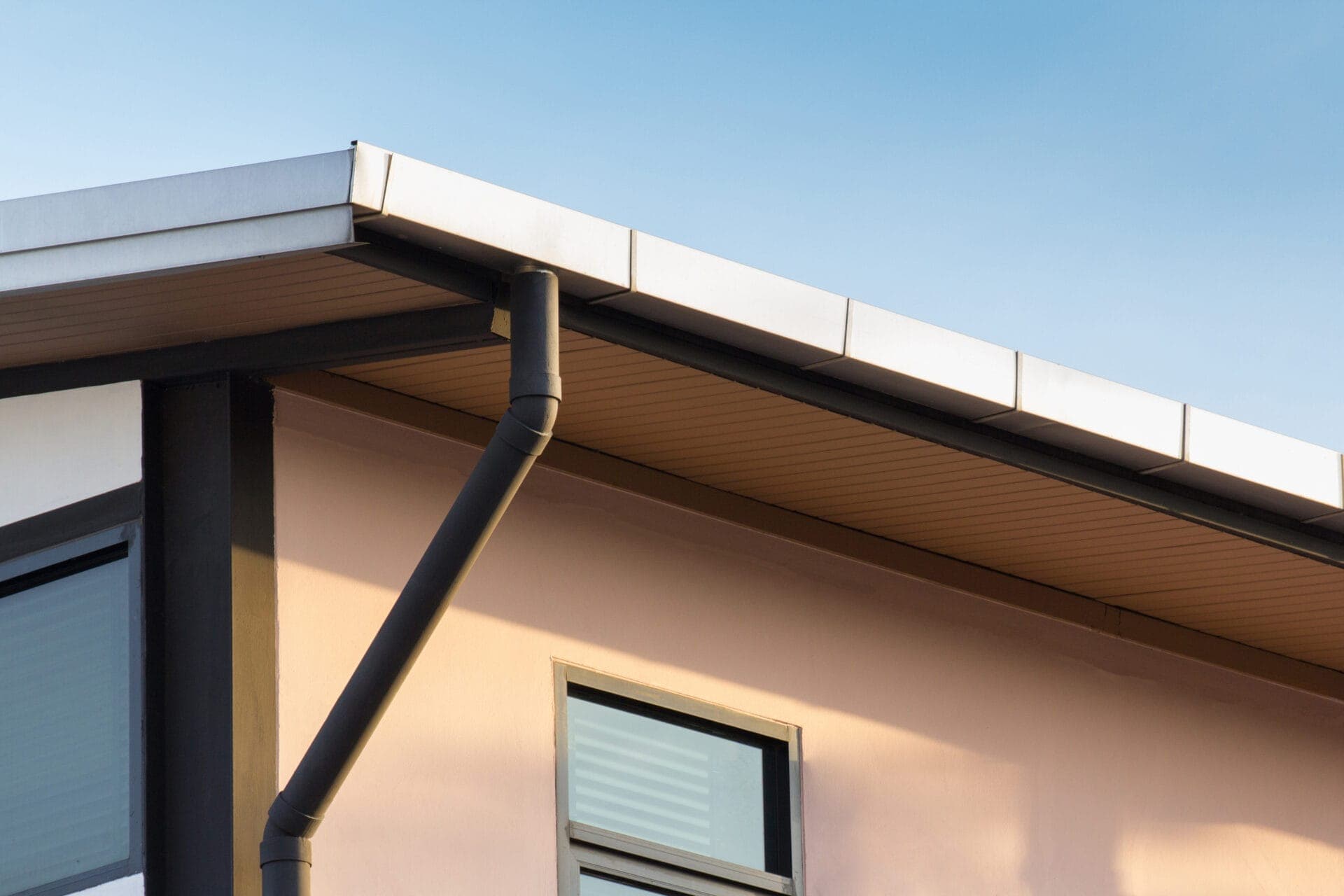
Box Gutter Solutions for Commercial Roofs in Central Florida
Complete guide to box gutter systems for commercial flat roofs in Central Florida. Types, materials, sizing for Florida rainfall, common problems, repair costs, and maintenance. Call (352) 605-0696.
Read ArticleReady When You Are
Get your free roof inspection today.
No-pressure, written estimate. Same-week scheduling across Hernando County. Call us now or request a visit online.