
Spring Hill, FL
Gutter Protection in Spring Hill, FL
Gutter protection in Spring Hill, FL. Micro-mesh and reverse curve guards for pine straw and oak pollen. Call (352) 605-0696.
Call (352) 605-0696Ask any roofer in Hernando County which neighborhood eats gutter guards for breakfast and you'll hear the same three words: Spring Hill canopy. Effective gutter protection in Spring Hill has to solve a debris problem that doesn't really exist anywhere else in Central Florida, because slash pine, longleaf pine, and live oak share the same lot on most blocks. The result is a one-two punch on every cheap guard system the box stores sell. Protech Roofing installs, services, and tears off failed guards across Timber Pines, Glen Lakes, Sterling Hill, Wellington, Forest Oaks, Berkeley Manor, and Seven Hills every week. Reach the crew at (352) 605-0696 for a no-pressure inspection.
You Are Viewing
Gutter Protection for homeowners and businesses in Spring Hill, part of Hernando County, FL, Florida.
Why Pine Straw and Oak Pollen Defeat Cheap Gutter Guards in Spring Hill
There's a specific reason guard products that perform fine in Ocala or Lakeland fail inside two seasons here, and it isn't just "more leaves." Spring Hill's failure mode is a compound one. Pine straw and oak catkins arrive together, hit the same guard from two different angles, and break the system in two different ways at once. We've torn off enough busted mesh in Timber Pines to fill a dumpster proving it.
Start with the pine straw mechanic. Slash pine and longleaf pine needles in Spring Hill measure 6 to 12 inches long, fall in clusters, and have a stiff waxy shaft. When they hit a standard 1/8 inch or 1/4 inch hardware-store mesh, they don't sit on top the way leaves do. They thread vertically through the openings like a sewing needle through fabric. Once two or three needles wedge into one mesh hole, they form an anchor, and the next dozen needles pile onto that anchor. Within ninety days you've got a forest of pine straw stuck halfway through the guard, with the bottom ends submerged in standing water in the trough below.
Now layer the oak catkin behavior on top of that. From late February through April, the mature live oaks across Forest Oaks, Glen Lakes, and the older Berkeley Manor blocks drop catkins by the millions. These are sticky strands an inch or two long, yellow when fresh, brown and matted when wet. They don't thread through mesh. They drape across it horizontally and bond to whatever's already there, which in Spring Hill means the forest of pine straw already wedged into the holes. The catkins fill the gaps between the threaded needles and seal the surface into a tight crust. Water then runs across the crust like it's running across a roof, not a gutter.
That's the compound failure: pine straw threads through, catkins mat over, and the homeowner gets the worst of both worlds. The basic mesh guard that worked in the brochure photos becomes a literal lid sealing a clogged trough. We pulled one off a Wellington home last fall where the trough underneath held nineteen pounds of wet pine straw. The fix isn't a bigger opening or a different shape. It's a much finer opening (stainless steel micro-mesh in the 50-micron range) that stops pine needles before they can thread and gives catkins nothing to bond into. The four guard categories below each handle this debris compound differently, and one of them handles it pretty badly.
Micro-Mesh vs Reverse Curve vs Foam for Spring Hill Homes
Spring Hill homeowners typically see four guard families in estimates: stainless steel micro-mesh, reverse curve aluminum (Gutter Helmet and its competitors), foam channel inserts, and bristle brush. We've installed every one of these on Hernando County roofs. Here's how they actually behave under the pine-and-oak compound load, ranked by what survives.
Stainless micro-mesh wins for the canopy-heavy parts of Spring Hill, and it isn't particularly close. The 50-micron stainless weave stops pine needles before threading can start, denies catkins any pocket to bond into, and lets the surface self-clean during rain because there's nothing for debris to hook onto. The wire holds up against Hernando County humidity without corrosion. The frame screws into the front gutter lip and tucks the back flange under the first course of shingles, which keeps the roofing manufacturer warranty intact. Installed pricing falls between $9 and $15 per linear foot. The one honest caveat: even micro-mesh accumulates a thin surface layer of dust, pollen film, and shingle granules over a year, so it benefits from a light brush-and-flush visit each May.
Reverse curve guards are second tier in Spring Hill, not third. The Gutter Helmet style uses surface tension to pull rain around a curved nose and into the gutter, while bigger debris slides off the front. Reverse curve handles broad oak leaves cleanly and clears the HOA color test in Timber Pines and Glen Lakes because the aluminum can be color-matched to existing trim. Where it loses points here is twofold. First, in a hard summer downpour the surface tension can break and water sheets past the nose entirely, missing the gutter. Second, pine straw and catkin debris occasionally finds the rear slot where the curve meets the shingle, and a clog at that back slot is awful to access. Expect $12 to $25 per linear foot installed.
Now the part most contractors skip. Foam inserts (the dense open-cell channel-fill products) are the wrong call for Spring Hill, and it's worth being specific about why. Pine straw is the killer here. A pine needle landing on foam doesn't sit on the surface. The waxy shaft wicks water through the open cell structure by capillary action, the same way a paper towel pulls liquid against gravity. Once a few hundred needles embed in the foam, the foam stays permanently saturated. Permanently saturated foam rots from inside in roughly six months under Hernando County humidity. We've removed foam inserts from Forest Oaks homes that were spongy black mush by the second spring, with the underlying gutter aluminum pitted from sitting against wet decomposing foam. Bristle brushes fail the same way slower, with stiff plastic fibers trapping pine straw at the base and breeding mosquitoes inside the brush body. Foam and brush both cost about a third of micro-mesh and both need replacement inside two seasons in Spring Hill. The math doesn't work for the homeowner.
Gutter Protection on Spring Hill Super Gutter Birdcage Systems
The super gutter on a Spring Hill lanai is the heavy 7 or 8 inch aluminum channel that connects the main house roofline to the screened pool cage. Almost every home from the late 1980s forward has one, and almost every one of them fills up with debris faster than the main fascia gutters. There are two reasons. The lanai sits in the lee of the main roof, so wind doesn't sweep it clean. And the screen beams from the birdcage cross the gutter top every few feet, creating dead-air pockets where pine straw and catkins settle and stay.
A continuous guard product won't work on this geometry. The screen beams break the run every 4 to 6 feet, so any 30-foot strip of mesh has to either bend around the beams or get cut to fit. We take the sectional route on Spring Hill super gutter protection. Stainless micro-mesh panels get cut to fit between each pair of beams, fastened with stainless screws into the front gutter lip, and sealed at the beam edges with butyl tape. The butyl matters: it's the only thing that keeps a single pine needle from finding the quarter-inch gap between mesh and beam and walking the whole compound through.
Pricing on super gutter protection runs about 30 to 50 percent above the same product on a standard fascia gutter, mostly because the cutting, fitting, and beam-by-beam sealing add roughly twice the labor hours per linear foot. It's worth it. A clogged super gutter overflows directly onto your lanai deck pavers, splashes pool furniture, and runs back along the cage frame where it corrodes the powder-coated aluminum from the inside. The repair bill on a corroded screen cage frame across a typical Sterling Hill or Wellington lanai runs $2,800 to $6,500 depending on length, and it's preventable.
For homes where pine straw load is genuinely extreme (typically Timber Pines lots backing onto preserve or Glen Lakes lots adjacent to undeveloped pine flatwoods), we'll occasionally recommend a fabricated aluminum shroud over the super gutter instead. The shroud closes the trough top entirely and leaves a narrow front slot for water entry. It rejects more debris than mesh and it costs more, somewhere in the $22 to $34 per linear foot range. The trade-off is inspection access. With a shroud in place you can't easily look inside the trough, so you're committing to a fully annual maintenance contract for the life of the system. Most homeowners pick the mesh route. A few with severe pine drop pick the shroud.
Hurricane Wind Survival of Guards on Spring Hill Roofs
Spring Hill sits in the 130 mph wind zone under the Florida Building Code 8th Edition, but here's the wrinkle most contractors ignore: Spring Hill is roughly 20 miles closer to the Gulf than The Villages or Brooksville. That coastal proximity matters during hurricane events because gusts arriving from the Gulf still have storm-system energy that inland counties lose to friction. Helene on September 26, 2024 and Milton on October 9, 2024 both demonstrated this. We logged peak gust readings in the 95 to 110 mph range across Hernando County's western edge during Helene, versus 75 to 90 mph in similar terrain 30 miles inland.
The specific failure mechanic those storms exposed on gutter guards wasn't tearing or shredding. It was fastener pull-out. Higher sustained gust pressure on a guard's leading edge creates an upward lever force on whatever screw or clip holds the front lip down. If the original installer used short stainless screws driven only into the thin gutter aluminum (rather than through the aluminum into the wood fascia behind), the screws back out under cycled load and the guard hinges upward from the front. Once the front lifts even an inch, the next gust catches the entire panel like a sail. We pulled dozens of these from Wellington, Sterling Hill, and Berkeley Manor in the two weeks after Milton.
The micro-mesh installations that survived shared a specific install pattern. Long screws (1-1/4 inch minimum) driven through the gutter front and into the fascia board behind. Back flange tucked at least 1-1/2 inches under the second course of shingles, not just slipped under the drip edge. Spacing every 12 inches along the run, not every 18 or 24 inches. Reverse curve guards survived this storm cycle when fastened the same way. The products that flew off and ended up in neighbors' yards or pool screens were almost universally snap-in plastic or foam-clip systems that depended on friction rather than mechanical fasteners. Foam channel inserts that had absorbed water during the storms became unexpectedly heavy and yanked entire gutter sections off the fascia in a few Forest Oaks cases we documented.
If you're shopping guards specifically with Helene and Milton in mind, ask the contractor what wind uplift rating they'll certify and what fastener length they install. A guard rated to 110 mph but screwed in with the wrong hardware will fail at 80 mph in a Spring Hill gust. We won't quote anything that hasn't been engineered for the Gulf-proximity gust profile our zip codes actually see.
HOA Review for Visible Gutter Guards in Spring Hill Communities
Hernando County itself doesn't require a building permit for gutter or guard installation. That's a meaningful difference from Pinellas or Pasco. But Spring Hill's gated communities each enforce their own architectural rules, and the approval process varies enough that you should know which community you're in before you sign anything.
Timber Pines is the strictest. The Timber Pines Architectural Review Committee requires a written modification application, the manufacturer specification sheet for the proposed guard product, a color sample if the guard color differs from existing gutters, and a 14-day review window before installation begins. The committee meets every other Thursday and applications submitted off-cycle wait for the next meeting. Bronze and white anodized aluminum guards typically clear on first submission. Black plastic mesh and copper accents draw a denial about half the time. We pull the spec sheet directly from the manufacturer's distributor portal and attach it to your application before the estimate visit ends.
Glen Lakes operates a two-tier review based on lot type. Golf course frontage lots (the homes whose rear elevations face the course or the practice green) trigger a more detailed application that requires a site sketch showing guard location and color rendering. Non-golf interior lots run through a simplified one-page form that approves within 5 to 7 business days for color-matched aluminum products. Sterling Hill runs the most lenient review of the three gated communities we work in regularly. Color-matched aluminum guards on Sterling Hill homes typically clear within 3 to 5 business days with just a one-page form, and the committee has been accepting email submissions since 2024.
Wellington, Berkeley Manor, and Seven Hills sit between Sterling Hill and Timber Pines on the strictness scale. The general rule across all six communities holds: if the guard is white or bronze aluminum that matches your existing gutter color, the paperwork is mostly procedural and the answer is yes. If you're asking about copper, bright stainless, or any visible plastic mesh, expect questions. Homes built on the older Deltona-platted blocks outside the gated communities (which covers a big chunk of Forest Oaks and the original southern Spring Hill plat) have no HOA at all and no architectural review whatsoever. Those installs go in the same week we estimate them.
Retrofit on Existing Spring Hill Gutters vs New Install
Most Spring Hill estimates start with a question the homeowner doesn't always know to ask: are your existing gutters big enough to deserve a guard system, or are you about to spend money protecting a gutter that's already underperforming? The answer matters because the cheapest path (retrofit guards onto existing gutters at $9 to $15 per linear foot) only saves money if the underlying gutter is actually doing its job. A guard on an undersized gutter is lipstick on a leak.
Here's the Spring Hill-specific issue. The original 1970s Deltona Corporation tract homes in the older parts of Forest Oaks were spec'd with 4-inch K-style gutters. Four-inch was the standard residential size at the time and the homes were designed around modest roof areas, with low pitches and shorter run-offs. Many of those homes have since had additions, lanai pour-on extensions, or full re-roofs that increased the effective collection area without increasing gutter capacity. The result is a 4-inch gutter trying to carry storm-volume flow from a 2,400-square-foot roof area, when the math says you needed a 6-inch gutter to handle that load fifteen years ago.
When we open the estimate on one of those Forest Oaks homes, we measure roof area, walk the existing gutters, check for fascia rot streaks that prove past overflow, and check the gutter slope to the downspouts. If we find a 4-inch gutter carrying a 2,000-plus-square-foot roof, retrofitting guards is the wrong move. The right move is removing the 4-inch run, installing fresh 6-inch K-style sized to actual roof area, adding downspouts on each end of the run, and installing micro-mesh guards on the new gutters during the same visit. The combined cost runs $18 to $30 per linear foot, which is roughly double the retrofit-only price, but you stop the overflow problem and add guard protection in one trip.
For homes where the existing gutters check out (sound seams, correct slope, no fascia damage, properly sized for roof area), retrofit is absolutely the right call. We've added micro-mesh to original 1990s gutters in Wellington and Berkeley Manor that had another 15 years of life left in them and just needed protection. One additional retrofit timing note worth knowing: if you've got a re-roof coming in the next two years, schedule the guard install for after the new shingles go down. The roof tear-off process disturbs anything tucked under the existing shingle edge, including the back flange of a micro-mesh guard, and reinstalling guards after a roof job is a paid second visit that nobody enjoys.
The Honest Maintenance Reality of Guards in Spring Hill
Every guard manufacturer in America wants to sell you a zero-maintenance fantasy. Nobody in Hernando County actually delivers that. What good guards genuinely deliver in Spring Hill is a frequency reduction (from the typical three to four cleanings a year that bare gutters need under pine canopy down to a single annual visit) plus a safety upgrade, because the work shifts from inside-the-gutter scooping with both arms in the trough to outside-the-gutter brushing across the top. For homeowners in the Timber Pines 55+ blocks or Glen Lakes who shouldn't be on a ladder at all, that safety shift is the actual product.
A typical Spring Hill annual guard service visit looks like this. The crew arrives with a soft roof brush, a backpack leaf blower, and a sectional hose. Step one is a top-down sweep of every linear foot of guard, knocking pine pollen film, dried catkin residue, and surface debris off the mesh. Step two is a downspout flow test (water in from a hose at the upper end, watching for full discharge at the bottom). Step three is a corner panel pull, where we lift one mesh section at a downspout corner to inspect what (if anything) has snuck into the gutter trough below. Step four is a fascia walk-around looking for leak streaks, separation, or fastener back-out. Step five is a written photo report sent the same day.
Timing matters more in Spring Hill than in most Central Florida markets. The single best annual visit window is mid-May. Late May catches the back end of the live oak catkin drop (typically finishing late April into early May), clears the surface load before the rainy season starts in June, and leaves the system in optimal shape entering hurricane season on June 1st. Homes under heavy slash pine canopy (the Forest Oaks lots backing onto preserve, the wooded edges of Glen Lakes) frequently benefit from a second visit in November after the heaviest fall pine straw drop. That second visit usually runs about half the cost of the spring visit because we're already in the neighborhood and the work is lighter.
Pricing on a standard annual maintenance call for a single-story Spring Hill home falls in the $175 to $275 range, with the variables being total linear footage, super gutter inclusion, and whether you've got a particularly nasty pine canopy. Two-story Wellington and Forest Oaks Designer homes run a bit higher because of the ladder time. We bundle a roof condition photo summary at no extra cost for our Spring Hill guard customers, which gives you a year-over-year paper record that helps if you ever file an insurance claim or sell the home. And if you've got a low-debris lot in Berkeley Manor where you genuinely don't think you need an annual visit, we'll say so during the estimate and quote you for biennial instead. We don't sell maintenance contracts that homes don't actually need.
More in this area
Other roofing services in Spring Hill
FAQ
Frequently Asked Questions
Why do gutter guards fail faster in Spring Hill than in other Hernando County towns?
+
Why do foam gutter inserts rot so fast in Spring Hill?
+
How well did gutter guards hold up after Helene and Milton in Spring Hill?
+
Does my Spring Hill HOA actually need to approve gutter guards before installation?
+
I have an older Forest Oaks home with 4-inch gutters. Should I just add guards or replace the gutters too?
+
From the Blog
Stay informed about roofing in Florida.

Gutters for Florida Homes: Seamless vs Sectional Guide
Seattle gets 38 inches of rain a year and runs 5-inch gutters. Tampa gets 52.6 and overflows, because 30 of those inches fall in four months and mostly in short bursts. Gutters are sized on inches per hour, not inches per year. Here is the sizing math, what seamless actually buys you, and the two spec lines that matter more than the word seamless in a hurricane state.
Read Article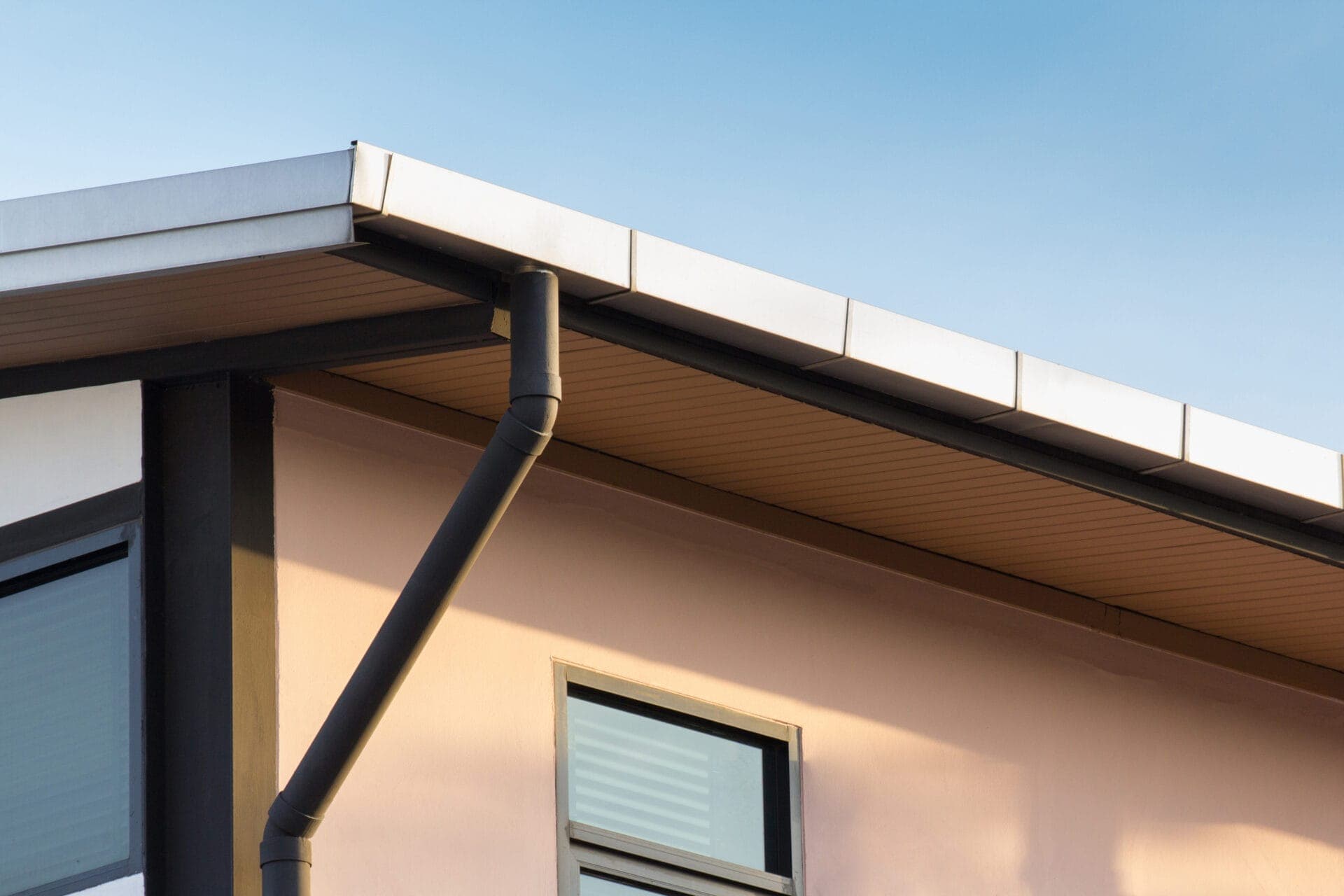
Box Gutter Solutions for Commercial Roofs in Central Florida
Complete guide to box gutter systems for commercial flat roofs in Central Florida. Types, materials, sizing for Florida rainfall, common problems, repair costs, and maintenance. Call (352) 605-0696.
Read Article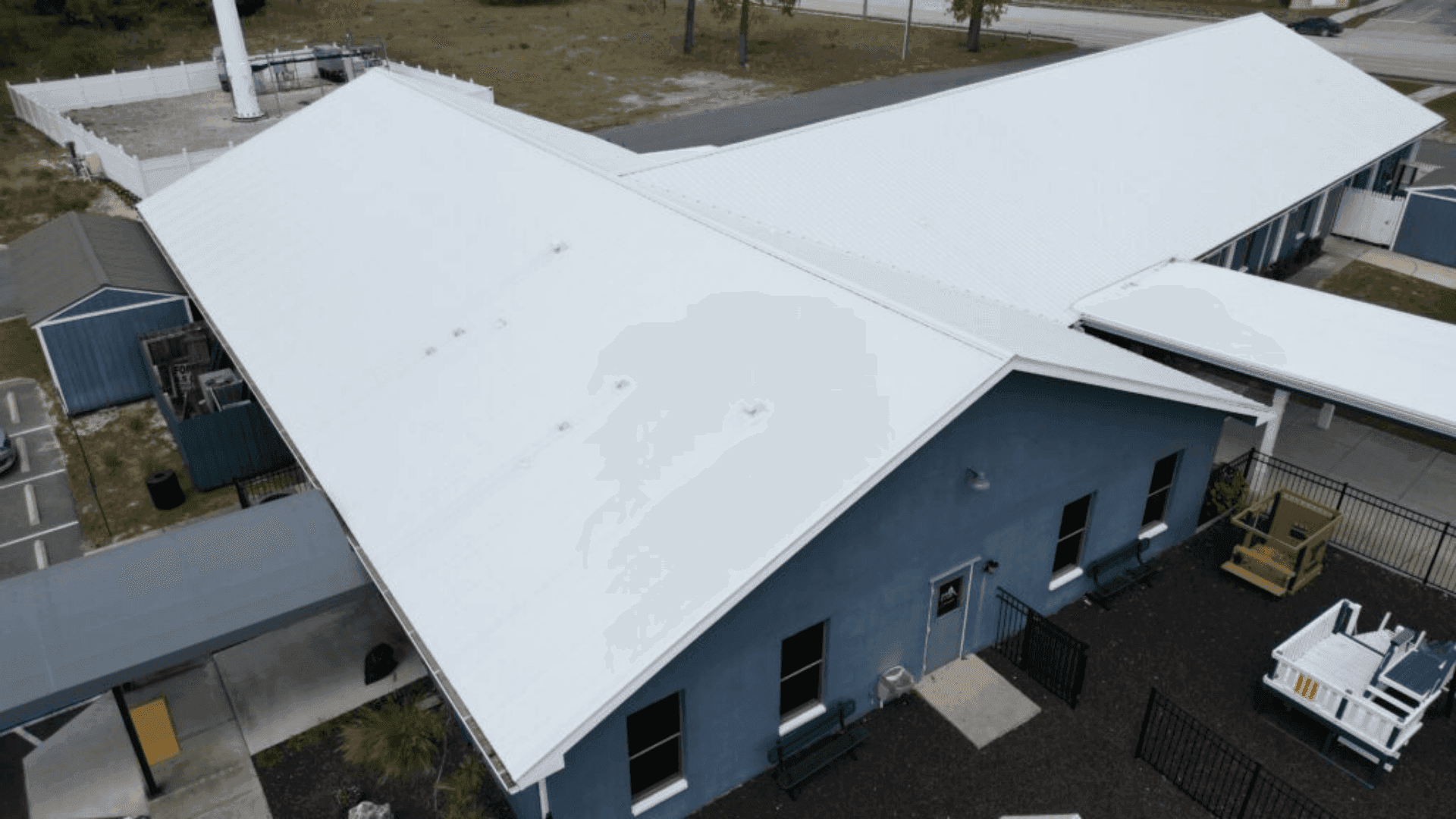
The Ultimate Guide to Roofing in Spring Hill, FL (2026)
Complete 2026 guide to roofing in Spring Hill, FL. Materials, costs, permits, contractors, and hurricane-ready options for Hernando County homeowners.
Read ArticleReady When You Are
Get your free roof inspection today.
No-pressure, written estimate. Same-week scheduling across Hernando County. Call us now or request a visit online.