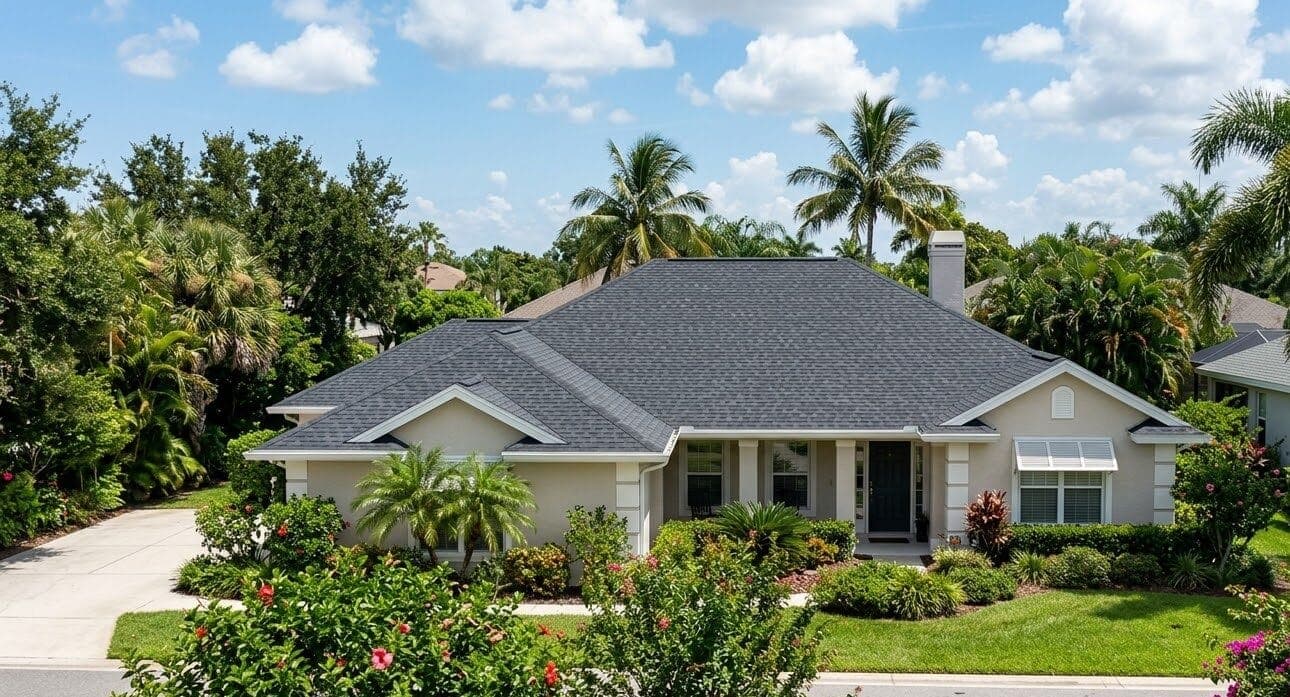
St. Petersburg, FL
Metal Roofing in St. Petersburg, FL
Metal roofing in St. Petersburg, FL. Standing seam and metal shingle by Protech Roofing. Call (352) 605-0696 for a free estimate.
Call (352) 605-0696Salt-heavy wind off Tampa Bay and the open Gulf chews through steel fasteners in ten years flat, which is why more St. Pete homeowners are choosing metal roofing every year. Protech Roofing installs aluminum standing seam, PVDF-coated metal shingle, and engineered commercial metal systems for homes and businesses across the city. Metal roofing in St. Petersburg, FL is a 40 to 50 year decision, and we do it right. Call (352) 605-0696 for a free estimate.
You Are Viewing
Metal Roofing for homeowners and businesses in St. Petersburg, part of Pinellas County, FL, Florida.
Why Metal Roofing Makes Sense on Coastal St. Petersburg Homes
Metal roofing in St. Petersburg, FL solves a specific problem that shingle and tile can't match on the coast. Salt-laden air moving off Tampa Bay on the east and the Gulf of Mexico to the west corrodes steel fasteners, vent flashings, and drip edge at roughly twice the rate of inland Hillsborough or Pasco. By year 12 on an asphalt shingle roof in Shore Acres or Snell Isle, we're already seeing rusted fasteners, streaked flashing, and granule loss that would take 18 to 20 years on an inland home.
Properly installed aluminum metal roofing changes the math. No rust, because aluminum doesn't rust. 40 to 50 year service life, which is double or triple what a shingle roof delivers. 150 mph wind ratings available with the right profile and engineering. Class A fire rating. And reflective coatings that can drop attic temperatures by 20 to 40°F during a St. Pete August, lowering cooling bills for the life of the roof. The upfront cost runs 30 to 60 percent higher than a quality shingle roof, but the total cost of ownership over 40 years usually comes in lower, and the insurance and HOA-adjacent benefits add up fast.
Metal isn't right for every house. Historic Old Northeast barrel-tile homes typically stay on tile both for design review reasons and because concrete tile performs fine in the same environment at a lower price point. Inland Crescent Lake or Euclid-St. Paul ranches several miles from the water can stay on shingle and get comparable service life. But if you're within two miles of the coast, or if you plan to own the home for more than 15 years, or if you've replaced shingle roofs twice already, metal starts to pencil out quickly.
Aluminum vs. Steel on a Salt-Heavy Coast
The single most important metal roofing decision in St. Pete is aluminum vs. steel. We default to aluminum for anything within a mile of the water, and we usually recommend it within three miles of the water too. Galvalume-coated steel holds up in inland Florida, and it's used plenty in Pasco and Hernando. But on the St. Pete peninsula, chloride deposits attack Galvalume coatings faster than the manufacturer's salt-spray test numbers suggest, especially on south-facing slopes that take driving rain off Tampa Bay.
Aluminum doesn't rust. Period. It develops a thin aluminum oxide layer on the surface that self-heals scratches and resists salt chemistry indefinitely. The downside is that aluminum is softer than steel, so it dents more easily under hail or heavy debris impact. For most St. Pete homes that tradeoff is the right call, because hail is rare here while salt corrosion is daily.
Steel can still work in St. Pete if the coating is specified correctly. 24-gauge Galvalume with a high-quality PVDF topcoat runs 30 to 40 years inland, and on some non-coastal St. Pete blocks that's fine. But for Snell Isle, Shore Acres, Coquina Key, Bayway Isles, Coffee Pot Bayou waterfront, and anything on the barrier islands proper, aluminum is the safer long-term play.
PVDF Coatings and Why They Matter for St. Pete Sun
All metal roofing products come with some kind of painted finish on top of the bare metal. The difference between a cheap finish and a premium one shows up after 15 years in the St. Pete sun. Polyester or silicone-polyester paints fade noticeably within 10 to 12 years and can show chalking, color shift, and surface degradation that looks terrible on a lighter color.
PVDF coatings, branded as Kynar 500 or Hylar 5000, are the premium standard. They resist UV-driven fade, hold their color for 30-plus years, and don't chalk. On a white, light gray, or cool-color metal roof in St. Pete, the reflective performance from a PVDF finish stays consistent through year 25. That's 25 years of energy savings you don't get from a cheaper finish that fades at year 10.
Every Protech metal roof specification in St. Petersburg uses PVDF finishes as standard. The upcharge over a silicone-polyester alternative is usually 8 to 12 percent of material cost, which on a typical $32,000 aluminum standing-seam re-roof works out to $2,000 to $3,500 more. Over a 40-year ownership window, that's nothing compared to the fade and replacement costs you dodge.
Standing Seam vs. Metal Shingle and Where Each Fits in St. Pete
Two main metal roof profiles compete in St. Petersburg, and they fit different homes. Standing seam is the modern premium profile. Vertical ribs running from eave to ridge, concealed fasteners that clip the panel to the decking rather than nail through the surface, and a tight mechanical or snap-lock seam along every rib. Standing seam gets the highest wind ratings, the longest warranties, and the best aesthetic on contemporary and transitional architecture. It's the right choice for most new construction and for homes without strict historic-district aesthetic requirements.
Metal shingle is the profile that looks like a traditional shingle or tile from the street but performs like metal. Individual stamped panels that interlock on four sides, concealed fasteners, and profile options that mimic architectural shingle, Spanish tile, or wood shake. Metal shingle is the answer for historic-district homes in Old Northeast, Granada Terrace, and Historic Kenwood where standing seam would stand out too much during a Certificate of Appropriateness review. It also passes more HOA design guidelines than standing seam in deed-restricted communities across St. Pete.
Pricing runs close between the two profiles. Aluminum standing seam lands $14 to $22 per square foot fully installed in St. Pete. Aluminum metal shingle lands $16 to $24 per square foot. Steel versions come in a bit lower. Both run 40 to 50 year service life when installed correctly. The choice comes down to aesthetics, HOA requirements, and local historic preservation review more than cost.
HOA and Historic District Review on Snell Isle and Old Northeast
St. Pete has two kinds of review processes for metal roofing. Local historic districts like Old Northeast, Granada Terrace, Historic Kenwood, Driftwood, Roser Park, and Round Lake require Certificate of Appropriateness review through the City of St. Petersburg historic preservation office. That review looks at profile, color, and visibility from the public right-of-way. Standing seam usually doesn't clear that review on original 1920s bungalow blocks. Metal shingle in a profile that mimics the original roof material usually does.
Deed-restricted HOAs on Snell Isle, Bayway Isles, Venetian Isles, Coquina Key, and parts of Pinellas Point have their own Architectural Review Committee processes. ARC approvals take two to six weeks typically, and they require material samples, color chips, and manufacturer documentation. Some Snell Isle HOAs specifically allow concrete tile and ban metal entirely. Others allow metal shingle in tile-mimicking profiles but not standing seam. Each community is different.
We handle the paperwork. Our Protech team submits the ARC or preservation application, provides the required samples and documentation, attends review meetings when needed, and adjusts the specification if the committee requests changes. We've been through the Old Northeast preservation process and the Snell Isle ARC enough times to know which profiles and colors typically approve, and we steer homeowners toward options that will clear review rather than waste a month on submissions that won't.
Code Compliance for 130 to 150 mph Wind Zones in St. Petersburg
Every metal roof we install in St. Petersburg carries Florida Product Approval Numbers matched to the specific wind zone for your address. Mainland St. Pete is 130 mph. Exposed waterfront and barrier-island blocks step up to 150 mph. The approval paperwork lists the exact clip, panel, fastener, and edge-metal combination that's been tested to your zone.
Clip spacing is the variable that moves most with wind zone. At 130 mph, standing seam clips typically space at 16 inches on center in the field and tighten at the perimeter and eave. At 150 mph, that field spacing drops to 12 inches or less, and the perimeter gets tighter fasteners plus additional hold-down hardware. Panel gauge stepping up from 24 to 22-gauge also helps in the highest-exposure zones, though the aesthetic difference from the street is invisible.
Underlayment is the other code-driven variable. Self-adhered modified-bitumen underlayment across the entire deck is the St. Pete standard for metal roofing now, and it earns the secondary water resistance wind-mitigation credit that cuts insurance premiums. Cheaper felt underlayment is still code-legal in some scenarios, but we don't recommend or install it on metal roofs in St. Petersburg because the long-term performance gap doesn't justify the small material savings.
Heat Reflectivity and Energy Savings on St. Petersburg Metal Roofs
Summer cooling bills are a real line item for St. Pete homeowners. July and August highs hit 90°F regularly, and an asphalt shingle roof can push attic temperatures past 150°F on a sunny afternoon. That heat radiates into the living space through the ceiling, forcing the AC to work harder and run longer. Metal roofing with a reflective coating changes that equation.
A PVDF-coated aluminum metal roof in a cool color like white, light gray, or reflective bronze can reduce attic temperatures by 20 to 40°F compared to a dark asphalt shingle roof on the same house. On a typical 2,000 square foot St. Pete home with a central AC system, that translates to roughly 15 to 25 percent cooling energy savings during peak summer months. Over a 40-year metal roof life, those savings add up to tens of thousands of dollars on the electric bill.
Energy Star certified cool-roof products qualify for federal and state tax credits in some years. We stay current on what's available and provide the product-approval documentation homeowners need to claim any active credits. The paperwork is usually simple, but having it in hand at tax time matters. And some Pinellas utilities offer small rebates for cool-roof installations too, though those programs come and go.
Noise, Condensation, and Other Metal Roofing Concerns We Hear About
The most common concern from St. Pete homeowners considering metal is noise. Will it sound like a tin can during a thunderstorm? The honest answer is no, not when installed properly. A modern metal roof goes over a layer of underlayment and typically has attic insulation beneath it, and the sound profile inside the living space is almost identical to a shingle roof. What people remember as noisy metal is usually old barn-style panels nailed directly to purlins over no insulation. That's not how residential metal gets installed today.
Condensation under metal is a secondary concern, and one we design around. Metal panels can get cold on clear winter nights when temperatures drop into the 40s, and warm moist attic air can condense on the underside of the cold panel. Proper underlayment, ventilation, and in some cases a thin condensation control felt on the underside of the panel solve this. We've installed hundreds of metal roofs in St. Pete and we haven't had a condensation call-back when the system is designed correctly.
Lightning attraction is a myth. Metal roofs don't attract lightning any more than shingle or tile does. What they do is conduct it safely to ground if a strike happens, which means less structural damage than a wood-deck roof would sustain from the same strike. Insurance carriers know this, which is why metal roofs often earn better rates than comparable shingle roofs in high-lightning areas like Pinellas.
More in this area
Other roofing services in St. Petersburg
FAQ
Frequently Asked Questions
How much does metal roofing cost in St. Petersburg, FL?
+
Why do you recommend aluminum metal roofing for coastal St. Pete homes?
+
Can I install metal roofing on a historic Old Northeast or Kenwood home?
+
What wind rating does metal roofing need to meet in St. Petersburg?
+
How long does a metal roof last in salt-air St. Pete conditions?
+
From the Blog
Stay informed about roofing in Florida.
Roofing Warranties in Florida: What Voids Them
A new Florida roof usually carries two warranties: one from the manufacturer for the product and one from the contractor for the installation. Here is what each covers, what quietly voids them and how to keep your coverage.
Read ArticleSolar Roofing in Florida: Solar Shingles vs Panels (2026)
Every solar system on a Florida roof is either bolted to the roof or is the roof. Here is how panels and solar shingles compare in 2026, what changed with the federal credit, and why the cheapest solar project often starts with a re-roof.
Read ArticlePinellas Flood Zone Roofing: The 49% Rule Explained
Every article calls it the FEMA 50 percent rule. In unincorporated Pinellas County the number that governs your permit is 49 percent, measured against structure value without land. Here is what counts toward it, where a roof replacement actually lands in that math, and why simultaneous permits still aggregate even where the lookback period was repealed.
Read ArticleReady When You Are
Get your free roof inspection today.
No-pressure, written estimate. Same-week scheduling across Hernando County. Call us now or request a visit online.